Date: 13 Aug 2020
An unknown Florida native Swamp Lily?
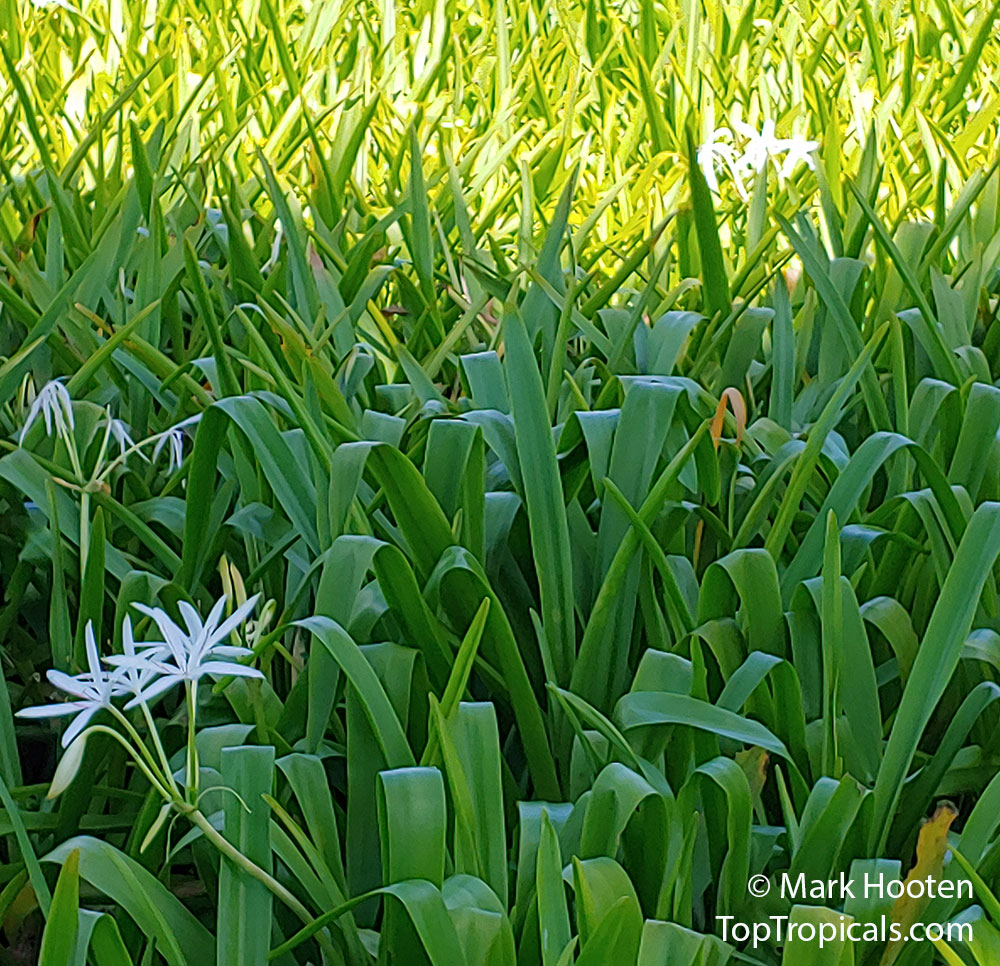
Crinum americanum Punta Rassa Giant
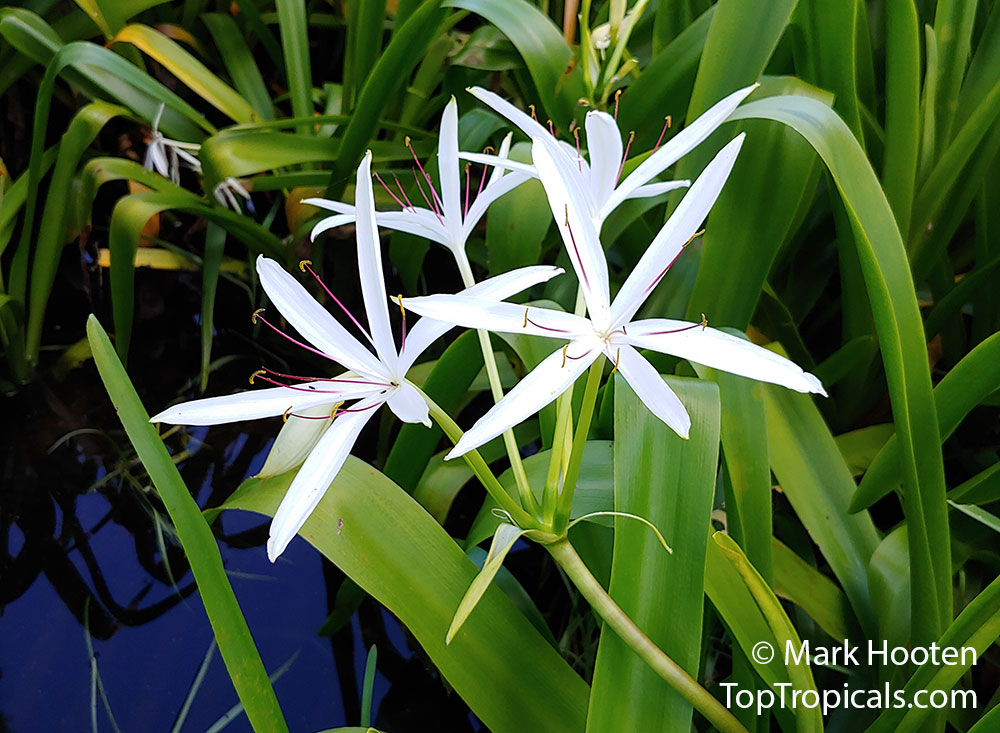
by Mark Hooten, the Garden Doc
This unknown Florida native form of Crinum americanum might actually
represent an unpublished species! We have a few of these, they are very special
and now nearly 2 years old plants.
This most beautiful and fragrant of Florida's native lilies, most commonly
known simply as "Swamp Lily", has a very wide native range, extending from
the Everglades northward across all of the Gulf states. While being wide-spread
in distribution, natural colonies generally occur widely separated from one
another, often by miles. Because isolation of breeding populations often
leads to speciation due to intense in-breeding, many of these populations develop
traits which make them distinct...
CONTINUE READING >>


Date: 7 Aug 2020
Top Tropicals Golden Reaper
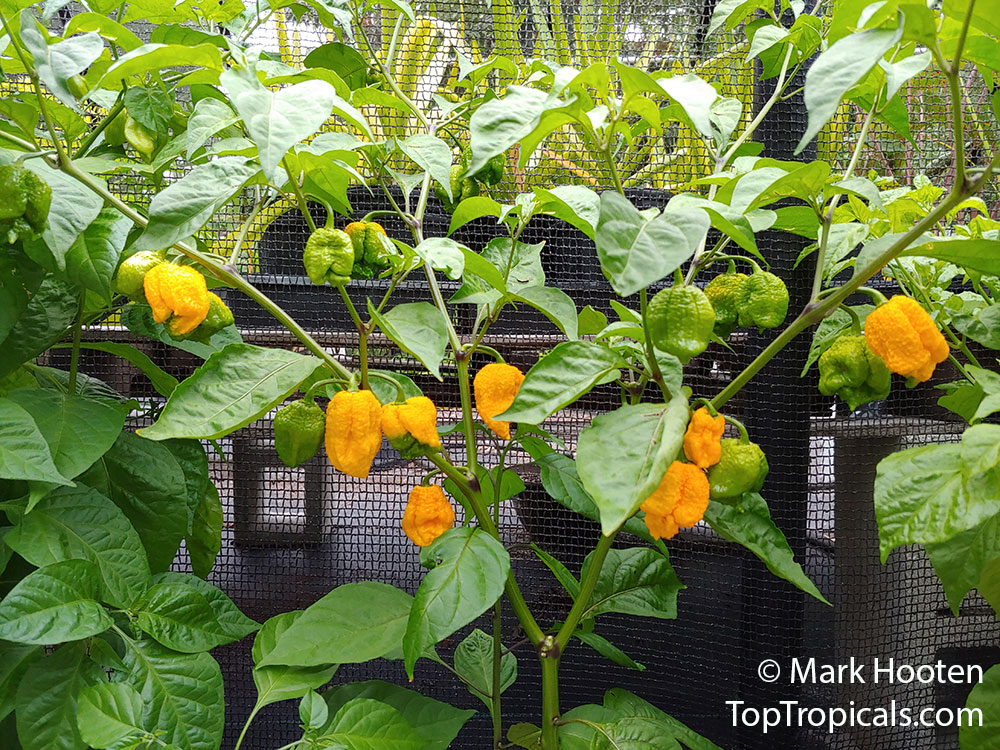
Gold Carolina Reaper pepper plants
by Mark Hooten, the Garden Doc
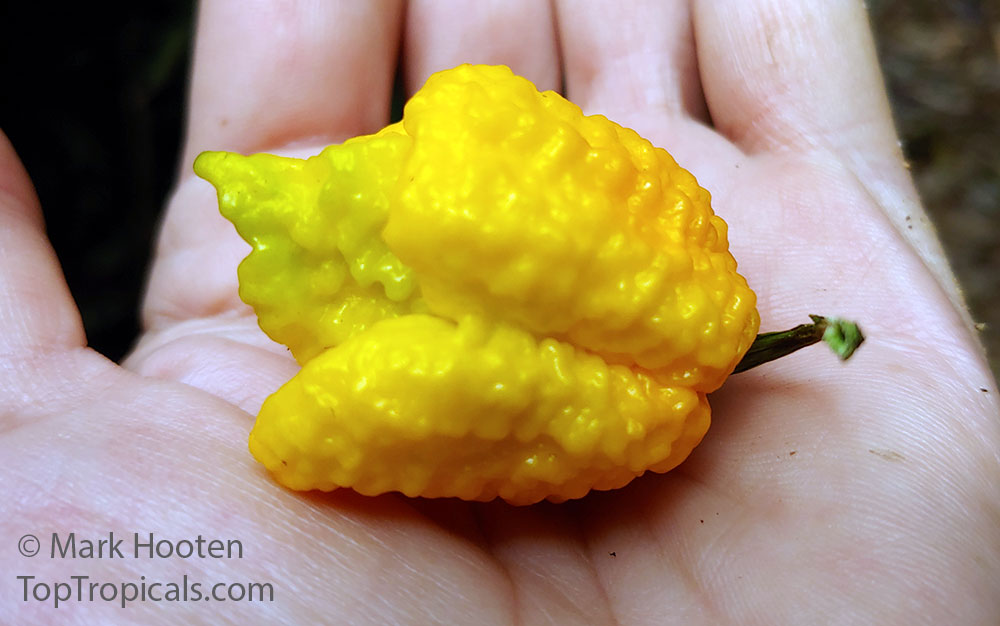
Because only people who are already well informed about SUPER HOT chili varieties are likely to be curious about these, there is no need for discussion about the history of what could be termed the "Hot Chili Wars"... Anyone reading this likely knows the chili variety which currently holds the official world's record for heat is a red one called 'Carolina Reaper'. They have a very unusual shape and texture.
Our distinct variety - Gold Carolina Reaper Pepper - originated from a batch of seeds of the
regular red fruited 'Carolina Reaper' (received directly from the breeder).
Out of the regular red fruited seedlings grew a plant producing truly brilliant
orange-gold colored fruits. As this plant was much more healthy, vigorous,
and productive than the normal red ones, (even producing considerably larger
fruits and just as searingly hot), we segregated and isolated that one. Seeds
from that specimen were then grown out to see the result, which, happily all
came out exactly identical to and as vigorous as the original gold parent.
Our plants have been grown from those.
We have very strong plants beginning to bud-up!
Date: 2 Aug 2020
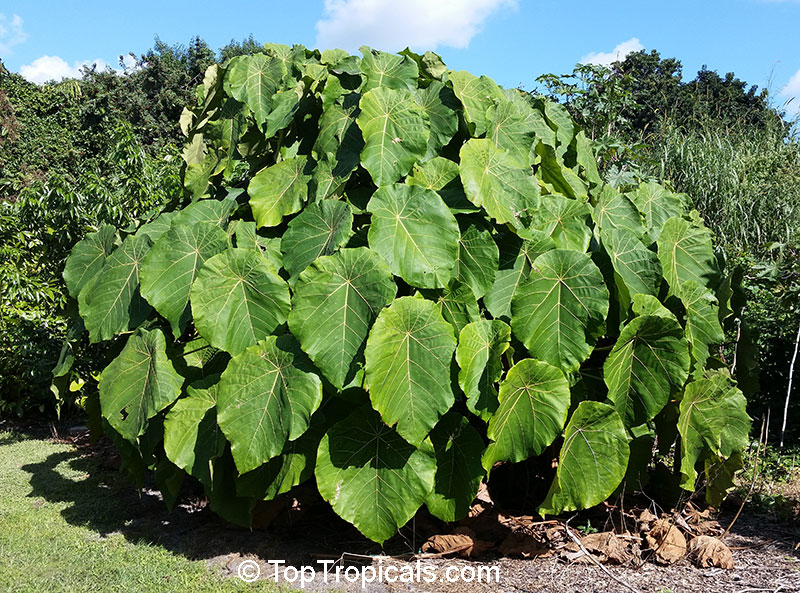
Macaranga grandifolia - Elephant Ear Tree
The very quintessence of tropical foliage luxury
by Mark Hooten, the Garden Doc
Why is this wonderful little tree so unknown here in Florida? I can only guess it's because people don't see them, and therefor don't know about them, and that basically no nurseries grow them. Yet it's one of the most utterly spectacular foliage plants conceivable... Provided with an appropriately warm climate such as South Florida or elsewhere, there is no reason they should not be seen more often (for purposes of utter awe).
CONTINUE READING >>
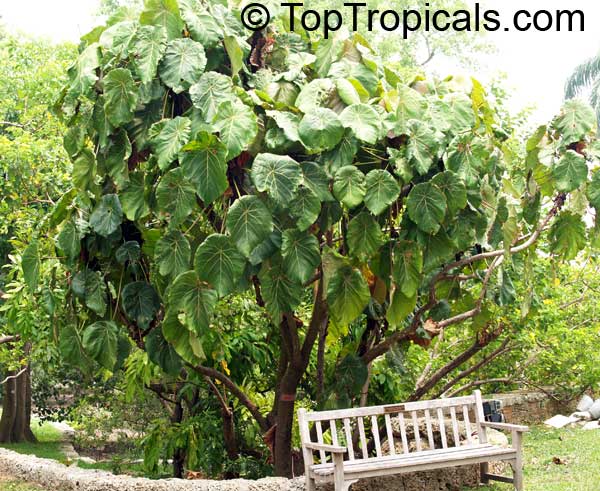

Macaranga's genuinely grand foliage much more resembles the ears of actual elephants (esp. the Asian species) than do the leaves of the much more commonly known and grown "elephant ears" meaning certain Alocasia and Colocasia
Date: 19 Jul 2020
Sugar grains on leaves?
by Mark Hooten, the Garden Doc
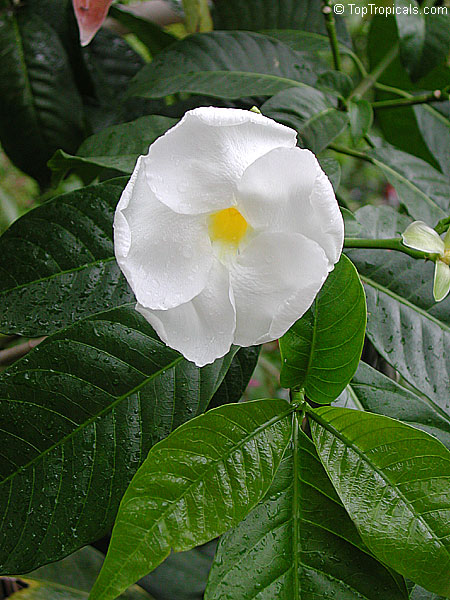
Q: On my Stemmadenia tree I noticed tiny drops (like white sand grain or sugar crystals) and wonder if this is a disease or some kind of insect and what can I do about it?
A: Sometimes certain vigorously growing (mostly tropical) plants
develop suspiciously-looking tiny "growths" mostly on the undersides of their
leaves. Without strong magnification, they can be easily mistaken for mealy
bugs, scale insects, or any number of parasitic disease vectors.
However, according to plant pathologists, these are actually harmless
excretions actually exuded by the plants themselves. A chemical analysis of these
tiny granules shows that they are nothing more than polysaccharides.
Polysaccharides are basically complex chains of sugar/glucose molecules which are
simply a production of all plants undergoing photosynthesis. Polysaccharides are
at the beginning of the entire food-chain. These odd tiny sugar-grained
nodules are actually only semi-crystalline complex sugars which certain plants
have over manufactured and have had no choice but to excrete through their
stomata (breathing pores).
I have personally observed Cecropia, Psychotria, Spondias (Hog Plum), and Guavas doing this... there are many others. Nothing to worry about,
they are harmless, but if they bother you - wash them off with a hose water.
Date: 12 Jul 2020
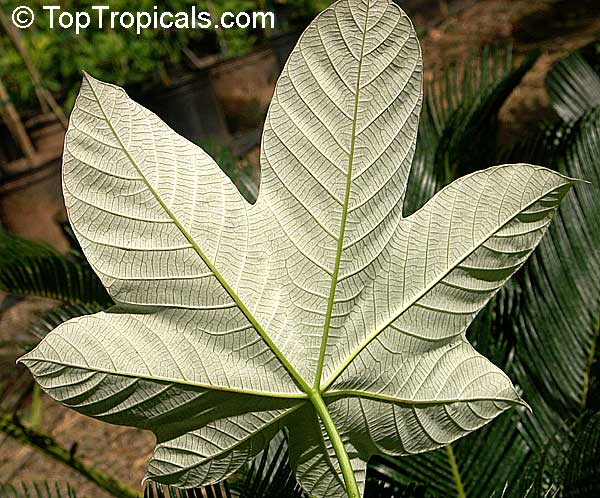
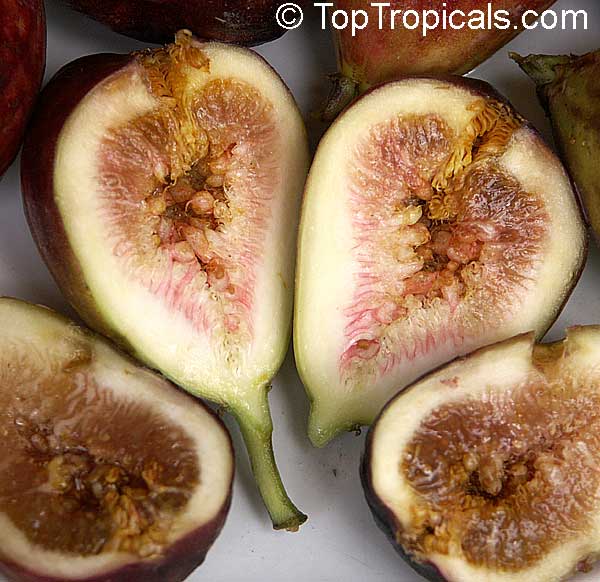
Delicious Turkish Brown Fig
by Onika Amell, tropical plant expert
...Did you know that figs were among the very first plants grown in the
hot and arid Middle East? Fast growing and utterly delicious, they soon made
their way all over the Mediterranean, transported aboard ships and on the
backs of camels...
If you are a fig lover, you may be tempted to grow your own. Market-bought
figs are never as good and tasty as your own, homegrown figs. They just
simply do not keep well in supermarkets. Fast growing, undemanding and low
maintenance, figs will bear fruit in just two years, often bearing two crops in a
year. Another plus is that they are not bothered by too many pests and are
self-fertile. Apart from the delicious fruit, any fig tree will add beauty and
shade to a garden...
CONTINUE READING >>
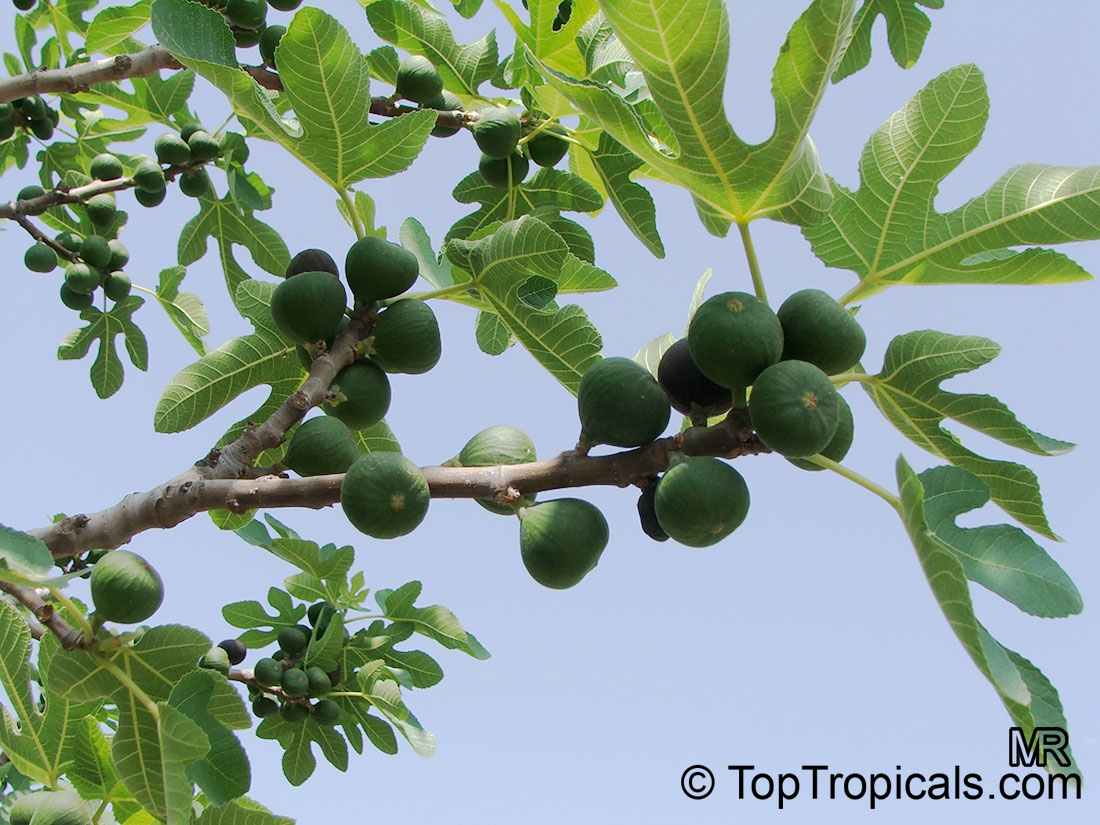
Read more about fig trees:
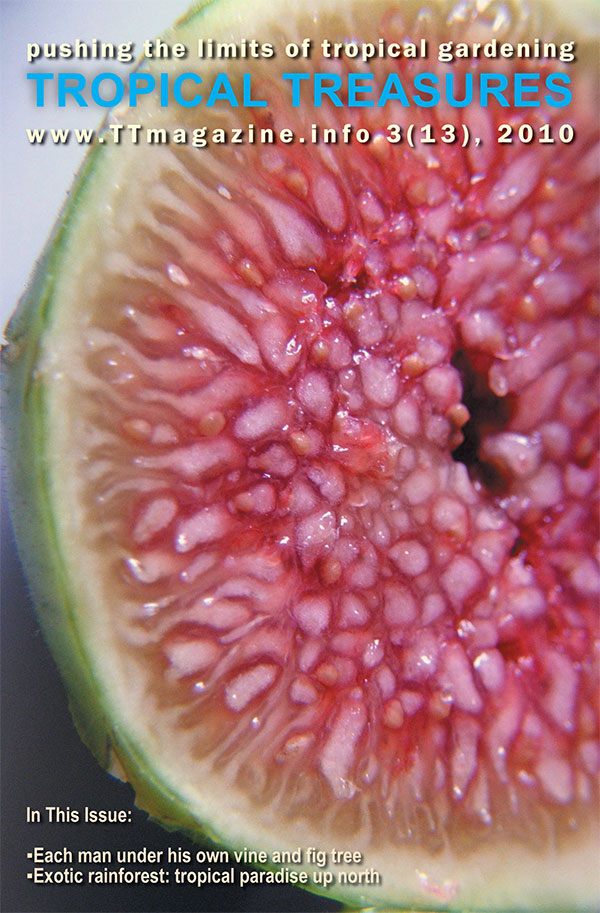
Tropical Treasure magazine # 13 (3) 2010:
- Hard
copy
- PDF
Download