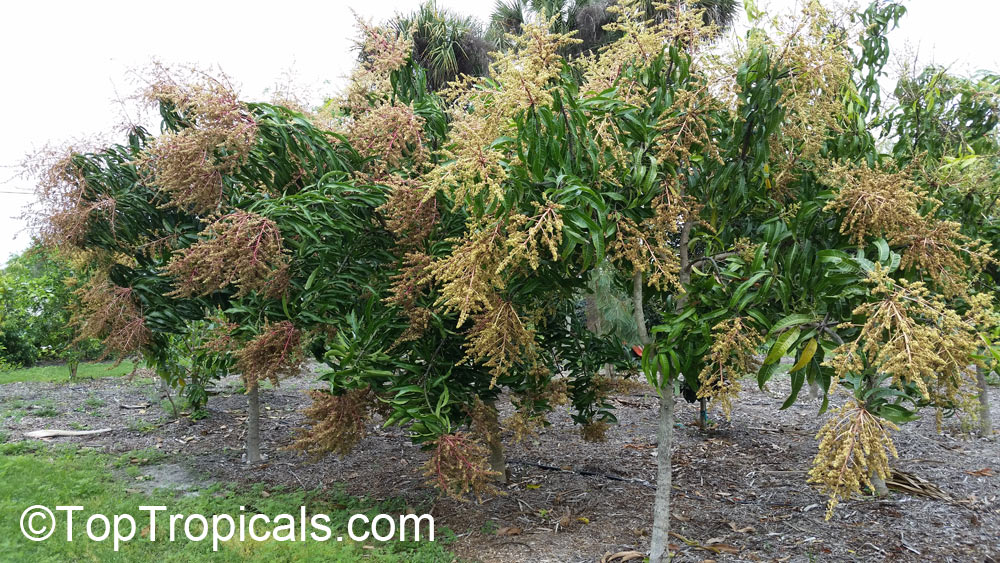
Q: I just ordered a mango tree. I live in Southern California and
was wondering if you have any tips on how to acclimate the mango to our
climate. I know it is coming from hot and humid Florida to hot and dry Southern
California and don't want to kill it because of the differences in climate.
A: Mangos in fact prefer dry conditions rather then humid. It may
be perfect conditions for a mango tree at your place. Plant your tree in a
pot size of the root ball; give it ample water and then let the soil surface
slightly dry before watering again. Keep the plant in bright shade and
gradually move into full sun. Once the tree is recovered from shipping stress, you
may plant it in the ground and make sure to protect from freezing temperatures
in winter. Use Mango Food for quick establishing and better fruit production. More to
read:
Mango boosters How to grow Mango in hot climates Growing Mango in Arizona.
Date: 12 Jul 2025
Whats inside the Napoleons Hat?
Napoleon's Hat - Napoleonaea imperialis
🎩 What's inside the Napoleons Hat? False Kola experience!
🎩 Napoleon's Hat (Napoleonaea imperialis), lives up to its name with large, saucer-shaped flowers that bloom straight from the leaf axils or even directly from the trunk!
🎩 The hat-shaped, brightly colored flowers smell like butterscotch!
🎩 The reddish seeds resemble kola nuts and even have a similar taste, giving you a fun, "false kola" experience.
🎩 An instant conversation starter, Napoleon's Hat is a quirky, fragrant addition to your garden - perfect for those looking for something a little different.
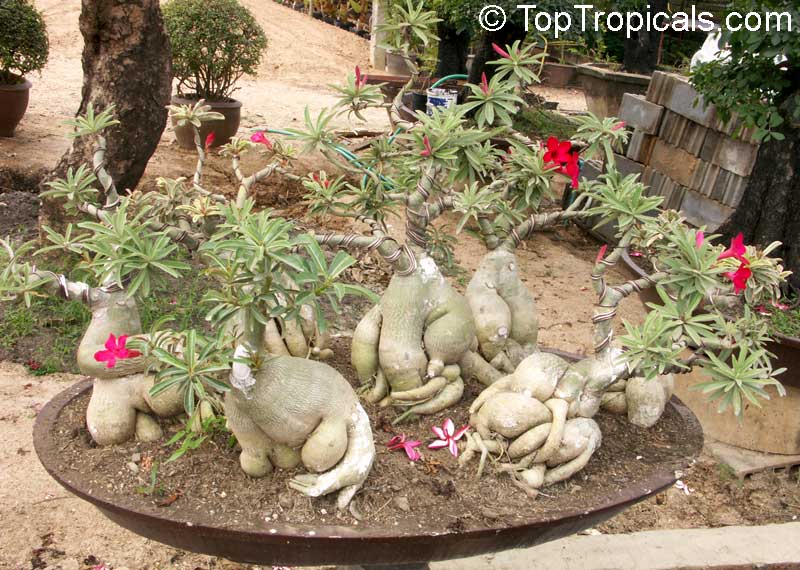
Q: I purchased a Desert Rose and planted it in Adenium mix. I
keep it in full sun with once a week watering assuming this is a desert plant
that likes lots of sun. Some leaves turned yellow and now I am not sure should
I move it into shade or need to water more? Or maybe fertilize with
something?
A:Desert Rose - Adenium, unlike cacti and other succulents, prefers
filtered light. It can grow in full sun but leaves look healthier in light shade.
Watering must be very moderate, however don't let soil harden like a rock:
water again right after the soil gets dry. We suggest to use special Adenium Mix. Cactus mix may work well, as well as regular potting mix,
in which case it is recommended to add a bit of limestone (we simply put sea
shells on top of the pot - it looks very pretty!) - because adeniums prefer
slightly alkaline soil (while most of tropical plants like acidic soils). If
leaves turn yellow, this may be a sign of underwatering. Use water soluable fertilizer with high phosphate as foliage spray, and
only on healthy plants, according to label dosage. It helps both caudex growth
and flowering. Make sure to avoid fertilizer contact with a caudex.
How to propagate plants from cuttings. Top (Tropicals)
secrets.
Q: After pruning my jasmine, I have so many branches and I don't
have a heart to through them away, can I use them to make more plants? Please
tell me what size cuttings and do I need to remove leaves? Should I just
stick them in the ground? Will they root? I don't know if you will be willing to
share your secrets?
A: We are always happy to know that you grow more plants, and
make our World better! These are some useful tips for the propagation of
tropical plants using cuttings:
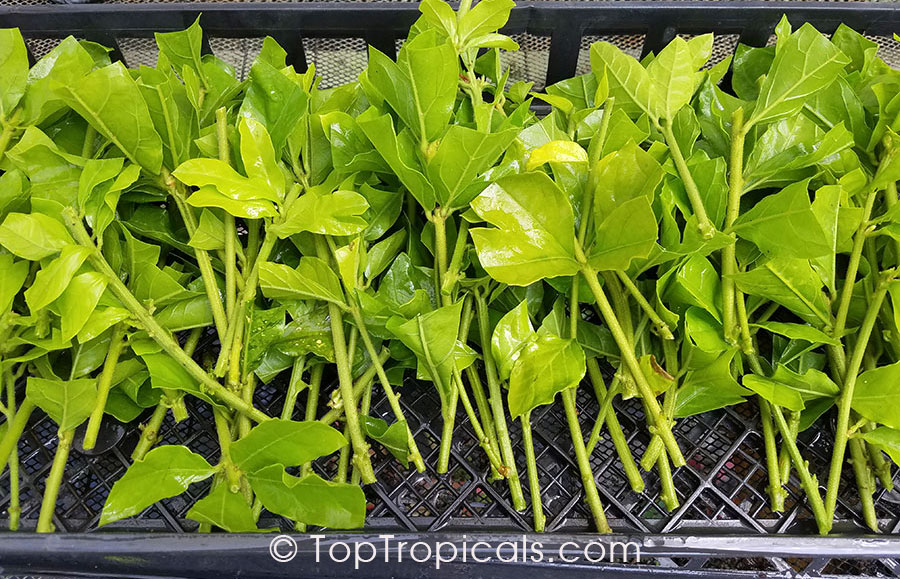
- Cuttings and leaves. Use cuttings 2-5" long. Strip leaves from
the bottom. Cut larger leaves in half to reduce evaporation.
- Soak cuttings for 15-30 min in SUNSHINE solution.
- Mix. Use special well-drained mix with lots of soil conditioner: we
have a special professional propagation mix for cuttings.
- Mist. Put community pots or trays with cuttings in mist, or if you
don't have mist - cover the pot with a clear plastic bag to create a
mini-greenhouse.
- Shade. Keep propagation pots in bright shade and never allow direct
sun rays.
- Rooting hormone: yes, use it if you have it. Not only it promotes
root formation but also prevents from fungus so the cuttings won't rot. We use
Dip-N-Grow.
- Rooting and food. Check in 2-3 weeks for roots. Once you see the
little roots, begin fertilizing with a special Baby-Plant Food and make sure never exceed recommended doze otherwise
you may kill the cuttings.
- Establishing. Once roots start growing, plant in 4" pots in a well-drained potting mix and watch the beauty grow! Gradually move to
the full sun only when little plants establish and start new growth.
If you are lucky to make more rare plants than you can use, contact us, we will buy them from you or trade for your dream plants!
In fact, one of our customers from many years ago started selling us baby
plants that he propagated from our plants, and now has a successful business
(Karma Nursery); we buy a lot of plants from him every month!
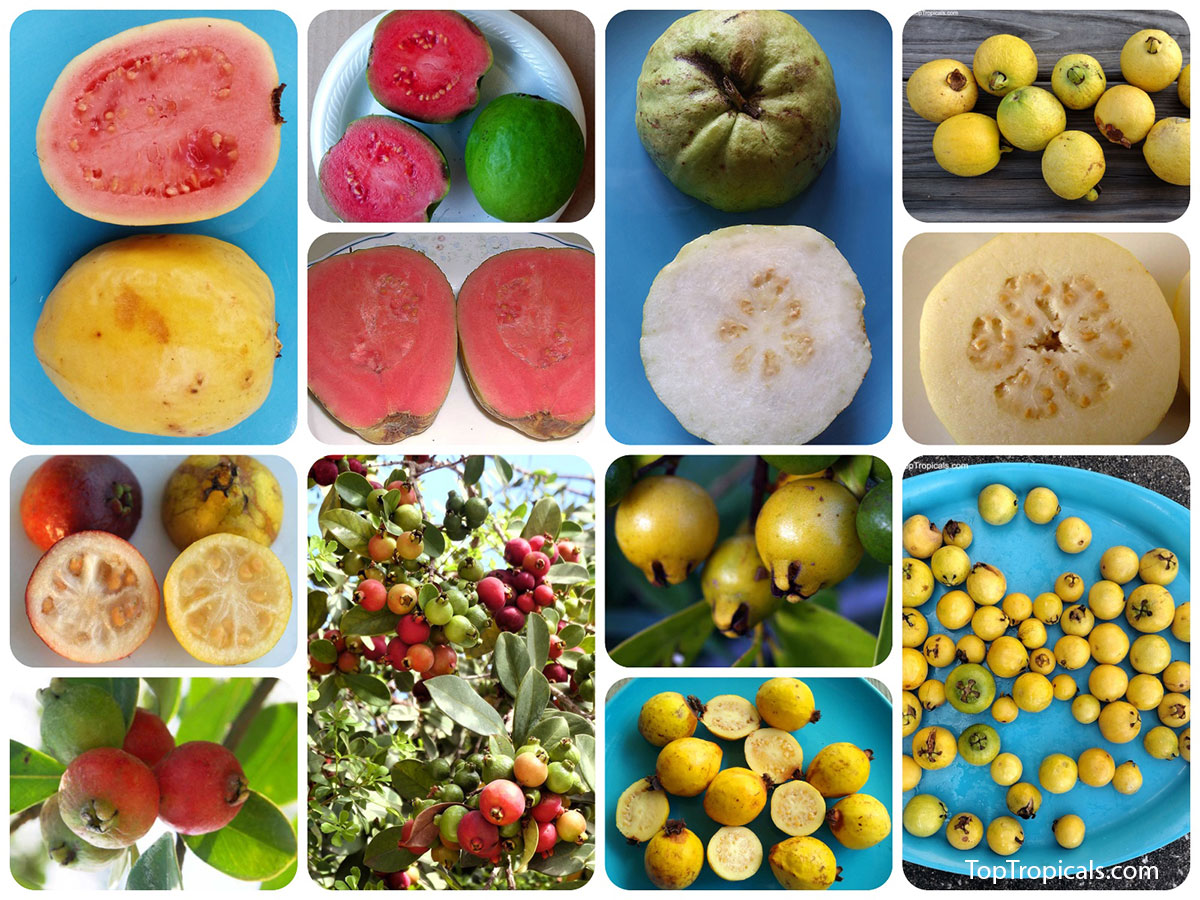
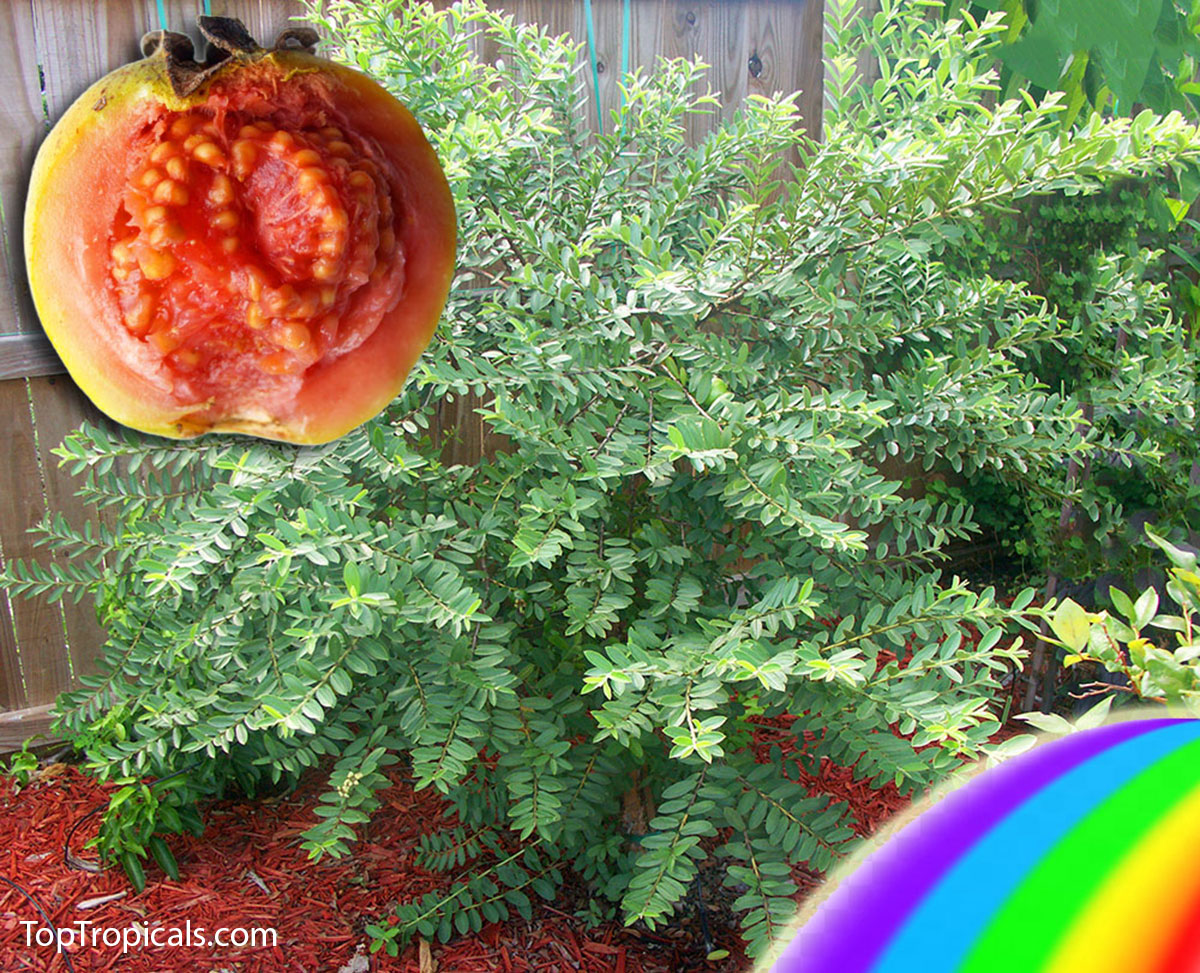
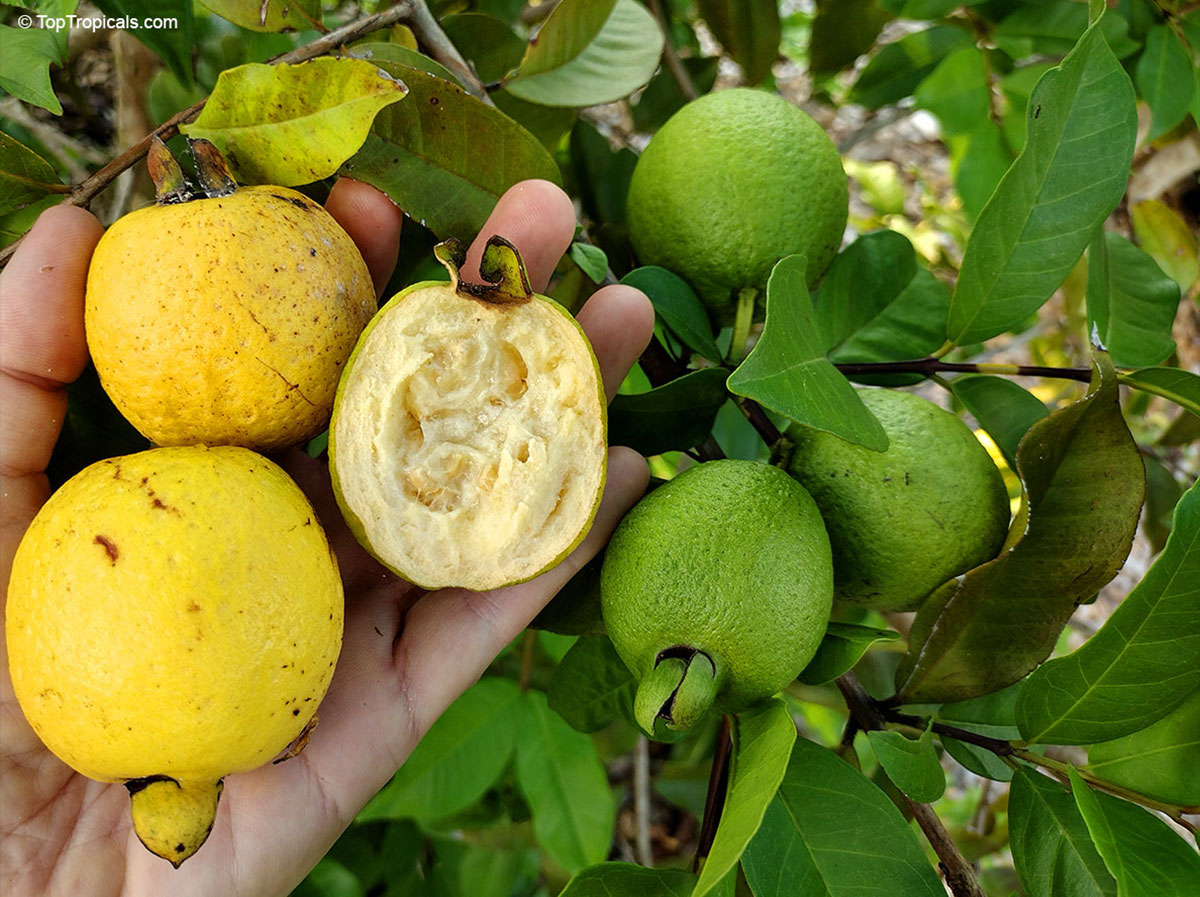
Guava varieties: Pink flesh (upper left quarter), White flesh and Cas
(upper right quarter), Red Cattley Guava (bottom left quarter) and Golden
Cattley (bottom right quarter).
Let’s talk Guava. Few fruits check as many boxes: flavor,
productivity, health, and adaptability. We’ve grown guava trees at Top
Tropicals for years here in Florida, and it never fails to surprise people
with how
easy it is — and how quickly it rewards you.
🌿 Health Benefits
We know the first question: "Why guava in addition to all the other
fruit trees I could plant?" Because guava is one of the healthiest tropical
fruits you can eat and grow — and it produces faster than almost
anything
else.
Vitamin C powerhouse — guava has four times more vitamin C than
oranges. One fruit covers your daily needs and then some.
Potassium and fiber — good for balancing blood pressure and
keeping your heart strong.
Antioxidants like lycopene and vitamin C — these keep your skin
glowing and help protect your cells from damage.
Dietary fiber — aids digestion and helps keep blood sugar
steady.
Guava is a true "food as medicine" tree you can plant right in your
backyard or in pot.
♥️ Our Favorite Varieties are Available Now
We currently have a DOZEN excellent guava varieties in stock selected by
our plant expert Tatiana Anderson — something special for every
garden. Our top picks are:
Pink Guavas
Barbie Pink
– Yellow pear-shaped fruit with thick pink flesh, sweet and juicy.
Cold
hardy for a tropical fruit. The best seller.
Hong Kong
– Large, round, smooth pink fruit. Sweet flavor, very few seeds, and
very
productive.
Tikal
– Our top pick. Fast-growing, disease-resistant, and produces the
sweetest
pink guavas with very few seeds.
White Guavas
Indonesian White
– Aromatic, classic white-fleshed guava with an excellent
tropical flavor.
Kilo White
– Giant fruit up to 2 lbs (1 kilo) each! Few seeds, creamy white
flesh,
and fruits even in containers.
Brazilian Araca
Pera – Rare hybrid used for Guava Wine in Brazil. Tart,
concentrated juice makes excellent wine, sorbet, or jelly. Learn more...
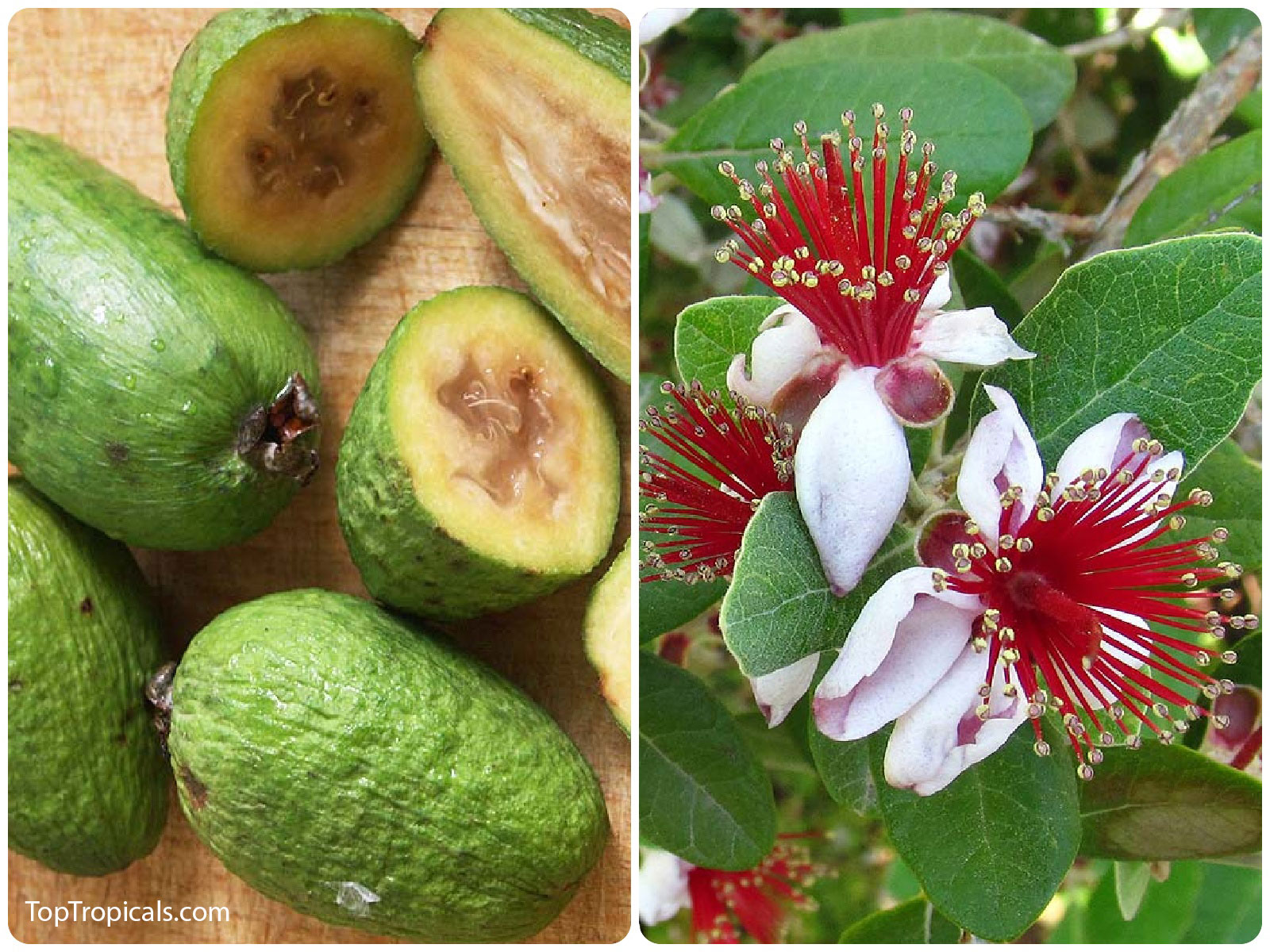
Pineapple Guava,
Guavasteen – Feijoa sellowiana. Strongly perfumed fruit, best
enjoyed when the pulp is mixed with sugar – like forest strawberries.
Cold-hardy, tolerates freeze, and doubles as a great windbreak. Learn more...