Date: 17 Sep 2023
NEW VIDEO:
How to properly cook Akee - quick recipe
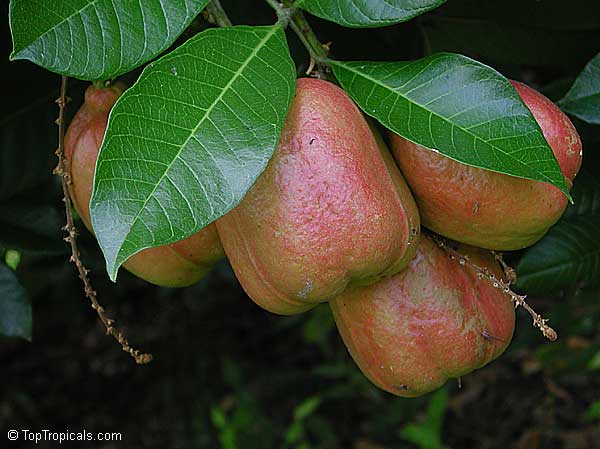
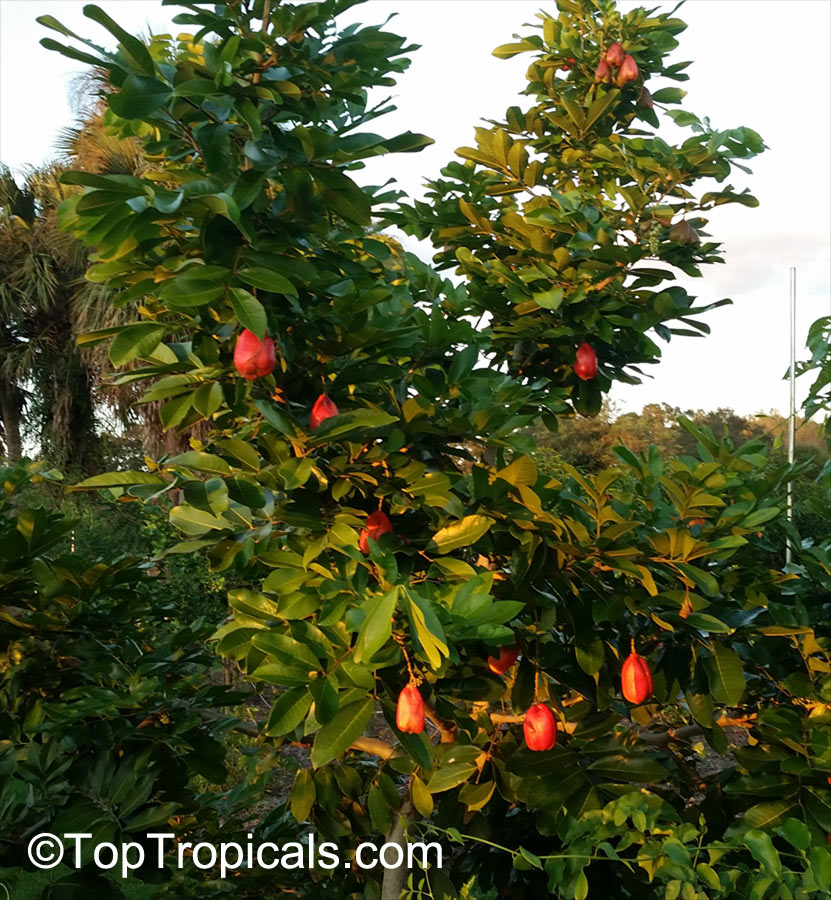
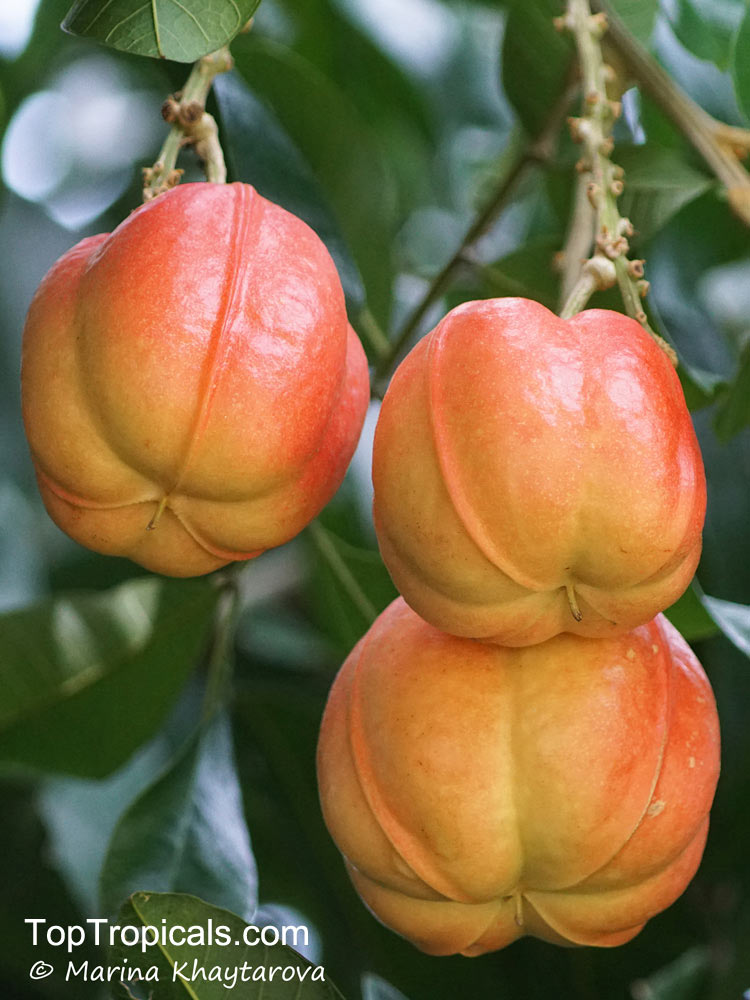
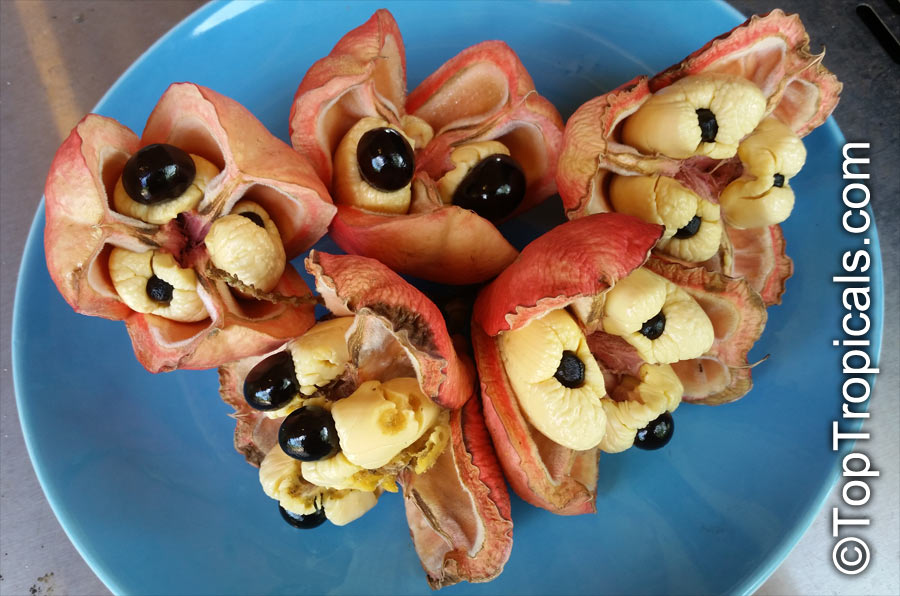
Akee is a close relative of Lychee, Longan, and Rambutan. You can find delicious akee meals only in Jamaican restaurants! But no need to search for it - grow your own tree, it can't be easier. It will start fruiting for you the next season, you don't have to wait long. Sometimes it fruits twice a year! However, the fruit is used as a vegetable, and is not eaten raw. It must be picked after the fruit has opened naturally. After the fruit has "yawned", the arils are parboiled and lightly fried in butter. Then they are really delicious! Watch the QUICK RECIPE provided by our PeopleCats!
The Akee tree - scientific name Blighia sapida - is easy in cultivation, fast growing and can be maintained compact. It is not bugsy or picky about soil/water conditions, and is relatively cold tolerant for being a tropical tree. Now it's the perfect time to plant it!
Subscribe to our Channel:
Stay updated with TopTropicals Videos by subscribing to our channel at YouTube.com/TopTropicals and get our latest video news of what is fruiting and blooming!
Date: 11 Sep 2023
We remember 9/11. We must never forget.
As September 11th arrives once again, our hearts are heavy with memories of the fateful day that forever changed our nation. We remember the lives lost, the heroes
who emerged, and the enduring resilience of our country.
As we pay tribute to the past, we recommit ourselves to building a brighter future. Remember to focus on the beauty that surrounds us every day - the kindness of a stranger, the laughter of loved ones, the warmth of a sunrise. In these simple moments, we will find
solace and inspiration.
"The Royal Poinciana is one of the most spectacular flowering trees in the USA, and probably among the top 10 on this planet. In full bloom, it is like a regal elephant caparisoned in red and yellow brilliance." (Larry M. Schokman, The Kampong, National Tropical Botanic Garden)
Date: 1 Aug 2023
Yuca root, Cassava, Manihot, Tapioca...
Food and Beauty
Q: Can you recommend a pretty plant for my edible garden? Something that is not only useful but also very ornamental.
A: Introducing the fabulous and flamboyant star of the garden - Manihot esculenta, better known as the Yuca Root! This tropical root vegetable plant is the epitome of botanical fashion, showing off its cheerful and showy foliage like it's walking the runway of a tropical paradise...
The most stunning variety is Variegated Yuca root. You won't find this rare and remarkable variety of Yuca root just anywhere! It's like the unicorn of the edible plant world, combining practicality with pure visual delight. Not only can you feast on its starchy goodness, but you can also proudly display it as a stunning ornamental piece in your garden.
This tropical root vegetable knows how to put on a show, making its home as a shrub in subtropical zones across Asia, Africa, the Caribbean, and South America. Its roots and leaves are the real stars of the show, packed with all that starchy goodness. But hold on, there's a little twist to this drama! The root contains low levels of protein, while the green leaves are practically gym buffs with high protein levels.
Now, we must address the elephant in the botanical room - the mistaken identity crisis. Some folks confuse our lovely Yuca Root with Yucca, but let's clear things up: Yucca is a no-go in the culinary world. It's a non-edible plant from the Agave family, and you definitely don't want to cook that up for dinner!
So there you have it, folks! The Yuca Root, a true superstar of both the kitchen and the garden. Delicious, eye-catching, and ready to add a dash of tropical charm to your life. Get one for yourself, and let the good times yuca-roll!
Date: 16 Jun 2023
NEW VIDEO:
ABC7 Fort Myers News:
Avocado Varieties at Top Tropicals
We continue the series of ABC-7 News on Top Tropicals selections. Previously, we showed you segments about Butterfly Plants, Rare Fruit Trees, and Mango varieties. Today's video is about growing an Avocado tree in your home garden.
Growing your own avocado tree has many benefits. You can enjoy fresh, delicious avocados right from your garden. Avocado trees are attractive, provide shade, and enhance your landscape. There are many avocado varieties to choose from, offering unique flavors, sizes, and ripening times. You will find Avocado trees for sale online right here at TopTropicals.com. Our trees can be shipped to you!
Watch the news segment by Rachel Anderson for ABC-7:
Avocado Varieties at Top Tropicals.
Subscribe to our Channel:
Stay updated with TopTropicals Videos by subscribing to our channel at YouTube.com/TopTropicals and get our latest video news of what is fruiting and blooming!
Date: 26 Apr 2023
The Benefits of Companion Planting
Q: What is companion planting?
A: Companion planting is a gardening technique that involves planting different crops or types of plants together in a way that benefits all plants. This practice has been used for centuries, and it can be especially useful in tropical gardens where there is a diversity of plant life: trees, shrubs, vines and climbers, ground covers, fruit and edibles, and different flowering ornamentals. It is a great way to improve the health and yield of fruit tree crops while reducing the need for fertilizers and pesticides. By choosing the right companion plants and planning your garden layout carefully, you can create a vibrant and diverse ecosystem that will benefit both your plants and the environment.
Companion planting involves:
Planting different crops together to repel insects: adding such plants as Lemon grass, Patchouli leaf, or Moujean Tea near your vegetables can deter aphids and other pests.
Attracting pollinators - Butterfly plants. Many tropical crops, such as passion fruit, papaya, mango, and avocado, rely on pollinators to produce fruit. Companion planting can help to attract pollinators such as bees, butterflies, and hummingbirds to your garden.
Providing nutrients to the soil, adding mulch and low growing plants (ground covers) to preserve moisture.
Planting a variety of different types of plants together in order to create a more resilient ecosystem that is less susceptible to pests and diseases.
To get started, plan your garden layout and choose companion plants with
similar water and light requirements.
For example, plant in the same group lush foliage plants, gingers, and flowering brunfelsias in shady areas; plant jasmines and gardenias in full sun and very well-drained spots.
Rotate annual crops regularly and experiment with combinations to find what
works best. By doing this, you can create a thriving ecosystem that benefits
both your plants and the environment, reducing the need for harmful
chemicals.