Date: 23 Dec 2023
Butterfly Bush: Fast, Pretty, Low Maintenance...
Five unbeatable reasons to plant Butterfly Cassia
Q: I am trying to find some easy flowering shrub to screen the ugly corner of my neighbor's yard, can you suggest something fast growing and pretty?
A: One of our favorite flowering shrubs in Florida is the Cassia bicapsularis, commonly known as Scrambled Egg Bush or Butterfly Bush. It is one of the most desirable plants for the southern landscape. It has all the benefits any gardener may dream of, whether a beginner or an expert:
1. Very fast growing, can screen unwanted views and create a beautiful flowering hedge. Cassia bicapsularis is known for its rapid growth, making it an excellent choice for quickly transforming an unsightly corner into a vibrant and lush area. Its dense foliage and attractive yellow blooms add both beauty and privacy to your outdoor space.
2. Easy to grow, not fussy about soil or water, drought and flood tolerant, cold tolerant. Butterfly Bush is incredibly adaptable and resilient. It thrives in a variety of soil types, is not demanding when it comes to water, and can withstand both drought and occasional flooding. Additionally, it is cold tolerant and can withstand occasional frosts once established.
3. Blooms for many months, featuring especially in winter flowers from Fall to spring. Very pretty, large "sunny" flowers resembling bright yellow butterflies, hence the name. It is a generous bloomer, gracing your garden with vibrant yellow flowers for an extended period, particularly from fall to spring. The large, sunny blooms not only add visual appeal but also attract pollinators, enhancing the ecological balance of your garden.
4. Attracts lots of butterflies. As the common name suggests, the Butterfly Bush is a magnet for butterflies. If you enjoy the presence of these beautiful winged creatures in your garden, planting Cassia bicapsularis is an excellent way to encourage and support butterfly populations.
5. Low maintenance. Butterfly Bush can be trimmed and controlled at the desired shape if needed, but if you have room for a big bush in a full sun area - just let it go and it will form a nice dense bush without any pruning: this shrub is a low-maintenance delight. While it can be pruned and shaped according to your preferences, it also flourishes when left to grow naturally. Its ability to form a dense and attractive bush without constant pruning makes it an ideal choice for those seeking a fuss-free gardening experience.
If you're looking for a fast-growing, low-maintenance, and aesthetically pleasing solution to screen an unsightly corner, Cassia bicapsularis is an unbeatable choice. It ticks all the boxes for a beautiful and resilient flowering shrub in the southern landscape.
"...Without a doubt, Butterfly Cassia became one of my favorite plants during my visit to Florida for Christmas a few years ago. I only wish I could have taken it back home with me to Latvia. If only my windowsill hadn't already reached its greenhouse capacity!.." - Alex Butova.
To see more options for flowering shrubs, check out the reference chart Hedges with Benefits Chart.
Date: 5 Dec 2023
Cat Horoscope:
Sagittarius Zodiac Cats 11/22-12/21
By Alex Butova, the Witch of Herbs and Cats
How to know the astrological sign of your cat?
The astrological sign of a cat can be determined by either their date of
birth or adoption, as adoption is often considered a second birth for
cats...More >>
Cats that help regain faith
in one's future...
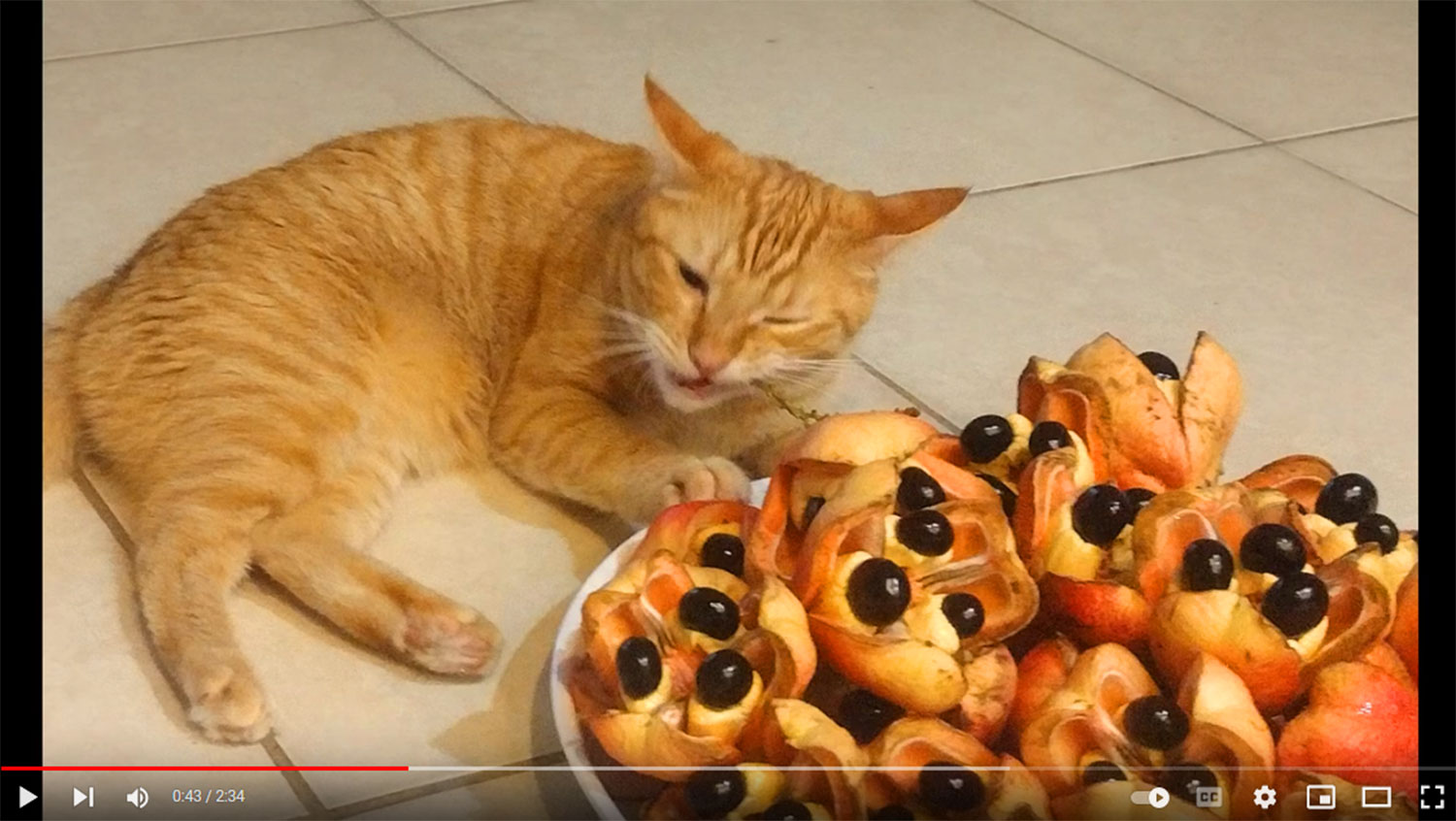
Sagittarius cats are natural explorers, keen on investigating every nook and cranny of their abode and surroundings... Consequently, they may find themselves in situations requiring rescue, such as descending from a lofty tree pursued by curiosity or rescue from large birds of prey to whom your favorite decided to indicate who exactly is the sheriff of this district...
Restlessness characterizes Sagittarius cats, as they possess boundless energy and an insatiable curiosity for new experiences...
Sagittarius cats are exceptional healers for their human companions, alleviating physical and mental distress. Their mere presence, coupled with a soothing aura, helps individuals overcome serious illnesses and regain faith in their future...
Sagittarius cats are drawn to plants with large, striking, elongated, leathery leaves. Fruits, nuts, and chestnuts are particular favorites, satisfying their gourmet inclinations. Alocasias and Colocasias with their heart-shaped leaves and arrow-like (named also sagittate!) shouts, resonate well with both Sagittarius humans and Sagittarius cats, offering the vibrations necessary for achieving their goals. Opting for fragrant herbs, fruits, nuts, and aesthetically pleasing and fragrant flowering plants ensures the satisfaction of these feline aesthetes and gourmets.
Note: The bird was fine and flew away! Sushi the Cat was very gentle.
Date: 31 Oct 2023
Cat of the day:
Shaka. The Tail of Two Kitties...
By Kristi VanBenschoten
For those of you who have been following the Cat of the Day stories, you may remember the heartbreaking story about Little Raja... When Raja passed, I was heartbroken and vowed, "No more new cats." Well, wouldn't you know, I would eat those words...
One of our shipping experts, Rob, came in and said that a feral cat
around his house had just given birth to a kitten on his front porch, but the
mother had left and not returned. I immediately asked him to go get me the
kitten, knowing it was going to be cold and hungry and could not be left without
warmth and food for long...
Rob rushed off to get the kitten and, within what felt like the blink of an
eye, returned with the tiniest (about 4 inches), yet astonishingly vocal,
kitten I had ever met.
And this is what happened next...
Date: 4 Oct 2023
Most useful Hibiscus plants
Grow your edible flower landscape in no time!
Who doesn't adore hibiscus flowers? We usually think of the fancy Hibiscus rosa-sinensis in all its colorful glory or the Exotic Garden Hibiscus. But guess what? There's a whole bunch of other hibiscus species out there that are not only drop-dead gorgeous but also surprisingly practical. They can jazz up your garden and your dinner plate! Today, we're dishing out a sneak peek at a few of these charming hibiscus varieties. These beauties aren't just a treat for your taste buds; they're also a gardener's dream. They practically grow themselves and are always wearing a smile!
Hibiscus sabdariffa - Flor de Jamaica, Karkade Sorrel
Hibiscus acetosella - African Cranberry Hibiscus
Hibiscus cannabinus (furcellatus) - Salad Hibiscus, Sleepy Hibiscus
Hibiscus mutabilis Cotton Candy - Mallow
Hibiscus
Hibiscus variegated Snow
Queen
Hibiscus schizopetalus - Coral
Hibiscus
Tea or Salad Hibiscus
Hibiscus acetosella - African Cranberry Hibiscus. Leaves are acidic, rich of vitamin C, good for salads and teas.
Hibiscus cannabinus (furcellatus) - Salad Hibiscus, Sleepy Hibiscus. Vinous flowers open in the morning, and by 3-4 pm they convolve into a curious fico-like knot. Very similar to acetosella, only with green leaves, this edible hibiscus is great for salads, rich of vitamin C. Seeds, flowers, and leaves are also used for making delicious tea. Very fast growing, forms a large bush.
Hibiscus sabdariffa - Flor de Jamaica, Karkade: the most delicious, fruity Jamaican Hibiscus tea. It makes our favorite Summer drink!
Hibiscus with a smile :)
Hibiscus variegated Snow Queen. Green foliage is dramatically splashed with bright white which provides striking contrast to the large red flowers. A festival of color!
Hibiscus mutabilis Cotton Candy - Mallow Hibiscus. Flowers open pure white and change color over a three-day period until they are deep pink and then as they die assume a dark "blue-pink" hue. The three distinct colors appear on the bush simultaneously as the blooms color cycle independent of one another. Quite large blossoms are up to 5 inches across!
Hibiscus schizopetalus - Coral Hibiscus. A weeping tree hibiscus, rare and hard to find and every gardener wants it! Grows rapidly and blooms freely. Flowers look like parachutes and can be recognized by the fringed and lacy petals which are bent backward.
Date: 30 Sep 2023
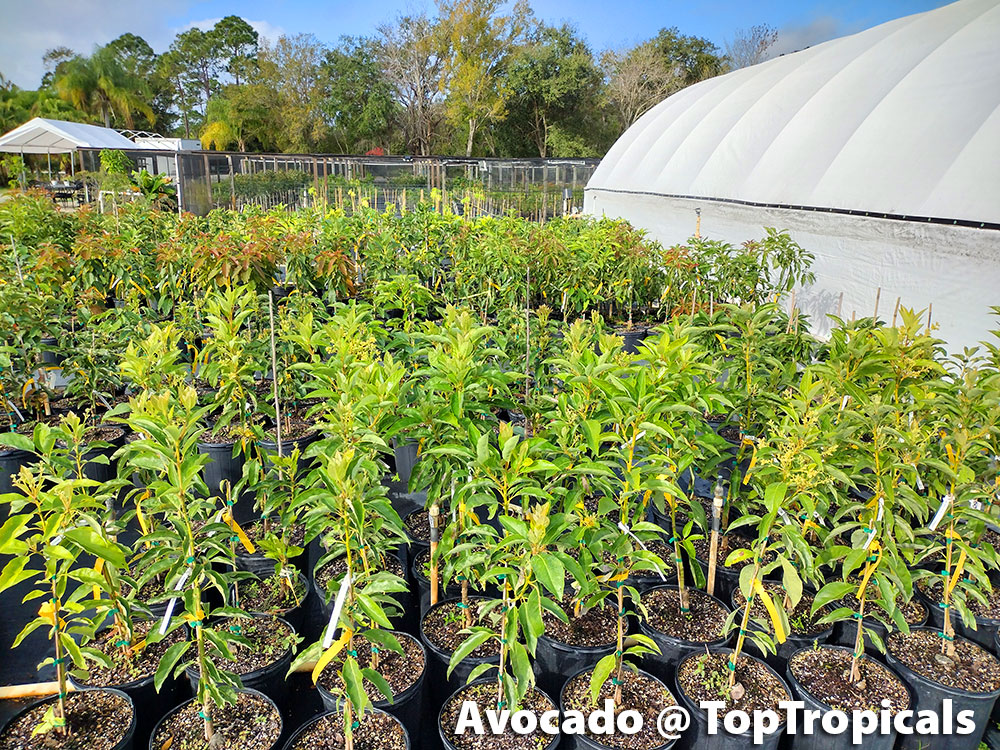
Avocado Variety Guide: Snack or Guacamole?
Collector's inspiration
Photo above: It's NOT an egg plant! It's a Red Russell :)
A comprehensive guide to Avocado varieties by: flower type A or B, tree habit, fruit shape and quality, cold hardiness, origin, season and more!
Many gardeners who are eager to purchase their first avocado tree often wonder which variety to choose. Most people are familiar with two primary classifications commonly found in grocery stores: Small & Black or Large & Green.
Frequently, we hear customers ask, "Do you have the one I like, the smaller fruit with bumpy skin? Not that big, tasteless, and watery one!" What they may not realize is that this basic (but practical!) classification doesn't encompass all the wonderful qualities avocados have to offer. There are numerous hybrids in cultivation, and once you plant your first tree and taste the REAL fruit (not from the grocery store), you'll be eager to explore other varieties. It's a guarantee! While it's true that avocado fruit can vary in "butter" content and how "watery" or "buttery" it is, most superior varieties are equally delicious. Or perhaps we should say they are so versatile and distinct in taste that you'll start building your collection of these trees, much like fruit enthusiasts do with mango varieties.
Every garden has unique requirements based on climate, temperature, and property size. These factors must be considered before planning your avocado garden. Additionally, many gardeners may wonder about Type A vs. Type B classifications and whether they need more than one tree to yield fruit. You'll find all this valuable information in our Avocado Variety Guide.
Basic classifications of avocados
1) By flowering pattern and pollination behavior: Type A and Type B
2) By origin: Mexican, Guatemalan, and West Indian (along with many hybrids)
3) By fruit appearance, texture and taste: Guacamole Avocado ("Smooth skin") and Snack Avocado ("California" or "Hass" type)
4) By growth habit: full size trees, free branching or upright, semi-dwarf low growing, and dwarf ("condo avocados")
5) By cold hardiness: Cold sensitive (requiring frost-free conditions), cold tolerant (able to withstand light frost), and cold hardy (capable of enduring some hard freezes once established)
6) By ripening season: Early or Spring (March-June), Mid or Summer (July-September), and Late or Fall-Winter (October-February).