Garden Blog - Top Tropicals

Date: 4 May 2026

🍲 Where the Garden Becomes the Kitchen
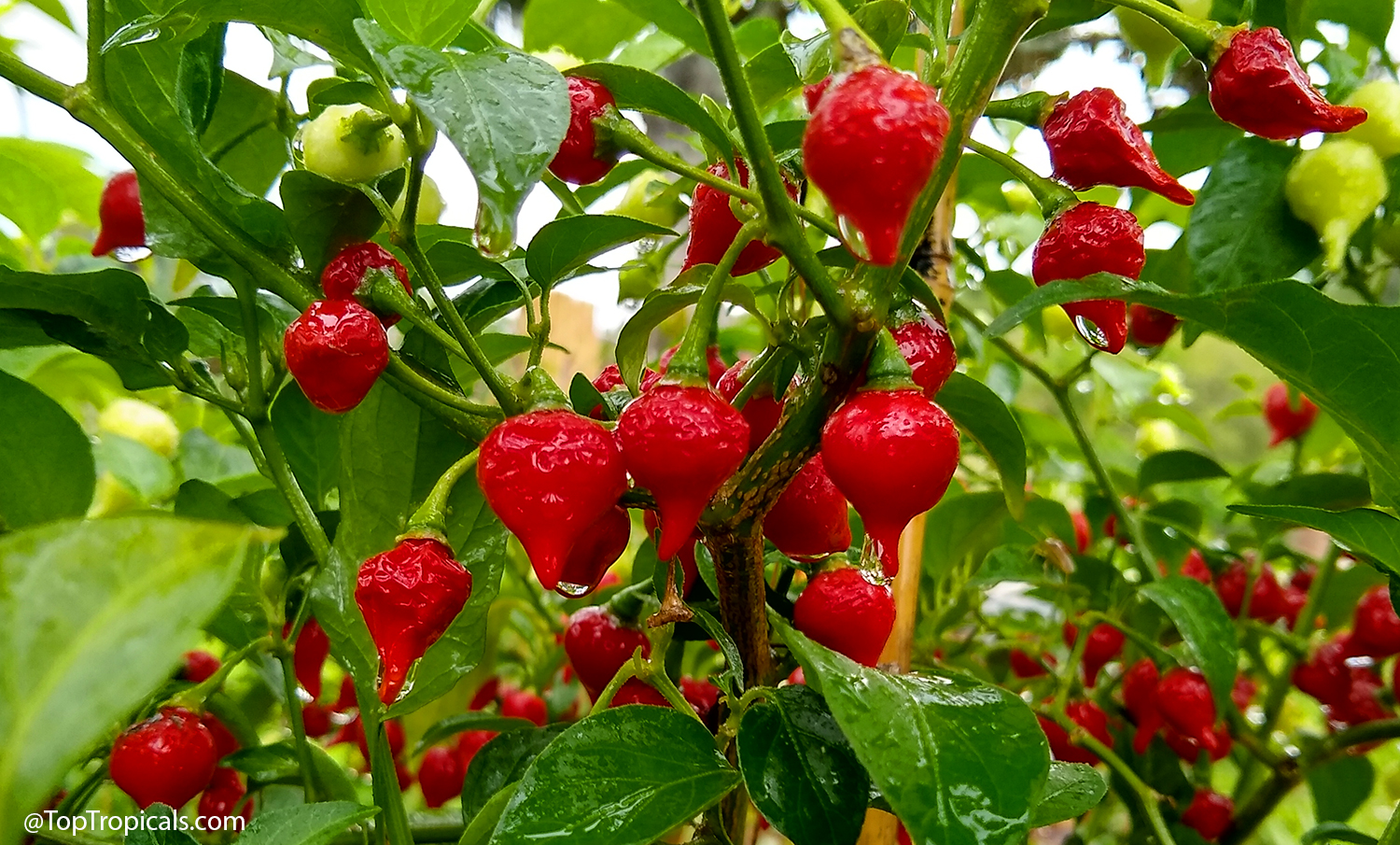
Close-up  of  Capsicum  annuum  x  chinense  Biquinho  pepper  plant  with 
 clusters  of  small,  bright  red,  teardrop-shaped  fruits  hanging  among  glossy 
 green  leaves,  some  still  green,  with  water  droplets  visible  after  rain.

Biquinho pepper loaded with fruit - small, beak-shaped peppers ripen from green to bright red, offering intense fruity habanero flavor with little to no heat on a compact, heavy-producing plant.

A lot of plants that thrive in Florida heat have deep roots in Mexico, and not just as ornamentals. Think coral vine or flame vine climbing a fence in summer, or bird of paradise sitting at the edge of a patio like it owns the place. These are not plants that need coaxing. They grow fast, full, and unapologetically. Then there are the plants you actually eat: peppers, prickly pear , sweetleaf, and fruit trees like avocado, guava, and sapodilla. They do not just decorate the yard. They change how the yard works, and how the kitchen feels all year.

That is the part that sneaks up on you. Gardening stops being about having a pretty yard and starts becoming a way of living. Mango tacos taste different when you picked the mango yourself. Everything does.
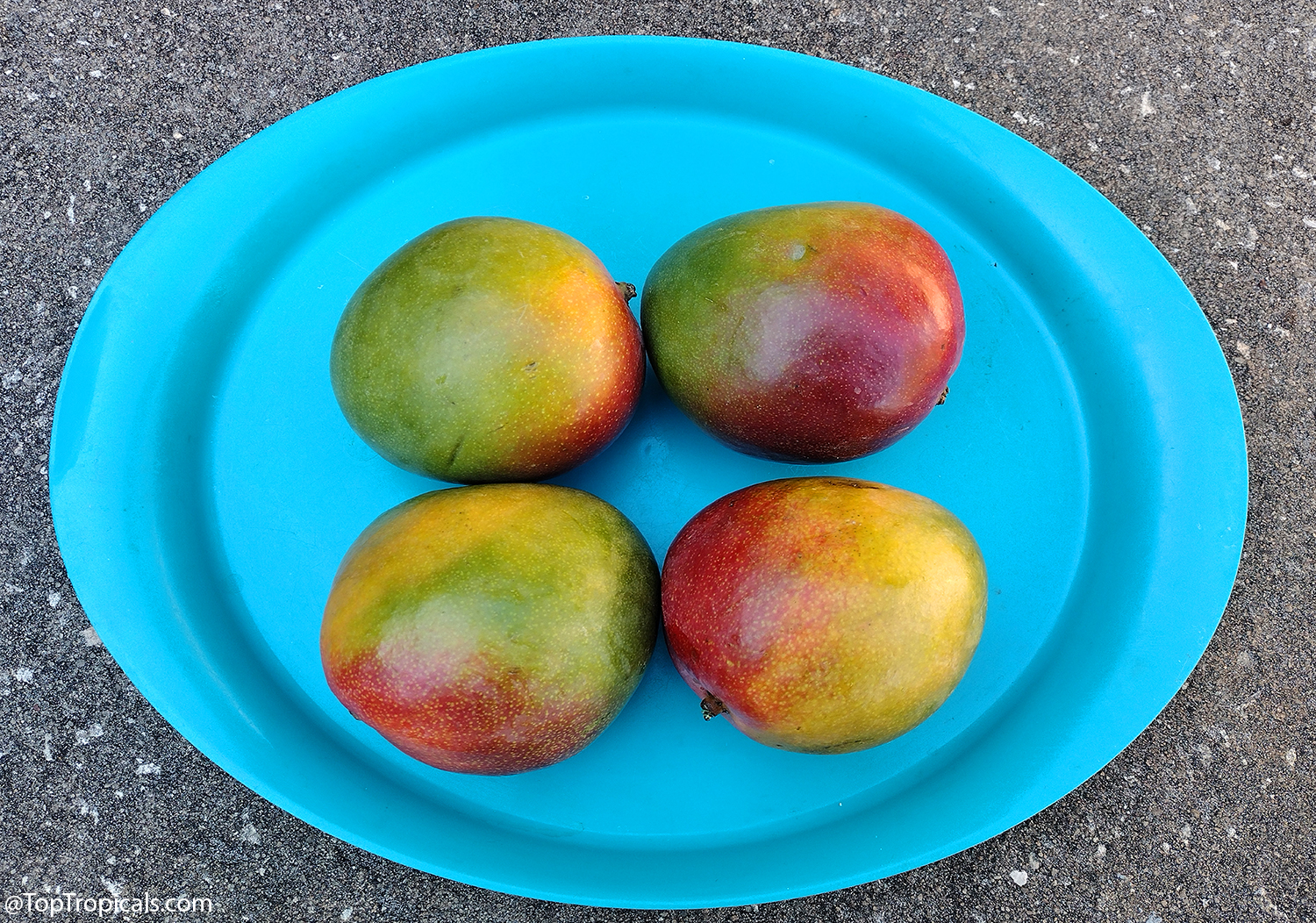
Four  Kent  mangoes  with  red,  green,  and  yellow  blush  arranged  on  a 
 plate.

Kent mango - classic late-season variety with smooth, fiberless flesh and rich, sweet flavor.

🍀Mexican Plants That Thrive With Minimal Effort

by Tatiana Anderson, Top Tropicals Garden Expert
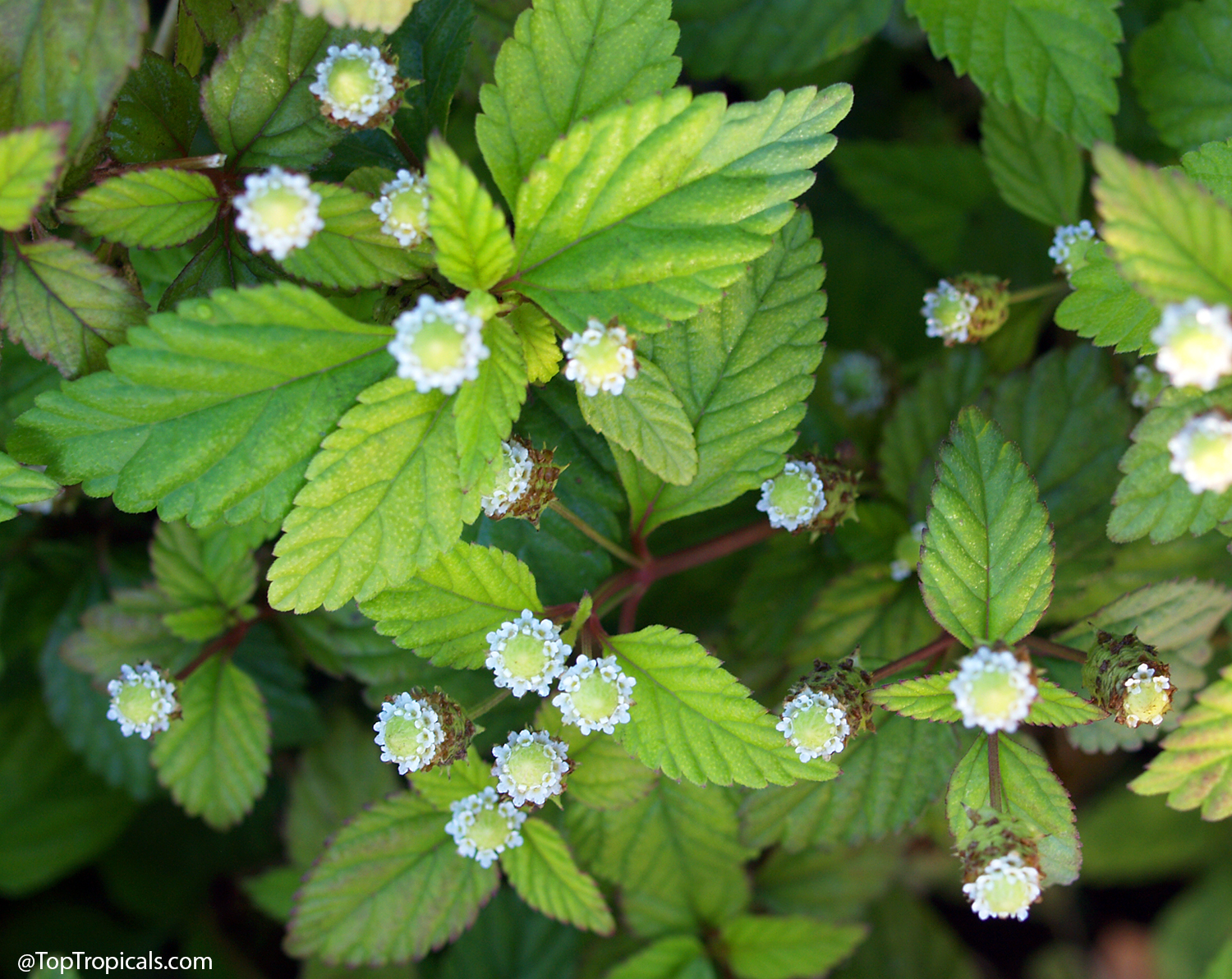
Close-up  of  Lippia  dulcis  (Aztec  Sweet  Herb)  showing  small  white 
 button-like  flowers  with  pale  green  centers  surrounded  by  serrated  bright 
 green  leaves  on  a  low-growing  plant.

Lippia dulcis - Aztec Sweet Herb in bloom - a low-growing Mexican herb with tiny white flowers and remarkably sweet leaves that can be eaten fresh or added to fruit dishes, traditionally used since Aztec times for coughs and colds.

These Mexican plants are surprisingly easy to grow if you give them what they expect: sun, heat, and good drainage. Most of them are built for tough conditions and will grow fast with minimal care once established.

The one rule that matters: fill the planting hole with water. If it does not drain in 5-10 seconds, plant on a mound or use a container.

Flowering vines will take off quickly, edibles like peppers and sweetleaf lippia are very forgiving, and cactus types prefer to be left alone rather than overwatered.

For full, step-by-step growing tips and plant-specific advice, read our blog - we break everything down in practical, real-world terms.
📚 Top Tropicals Garden Blog

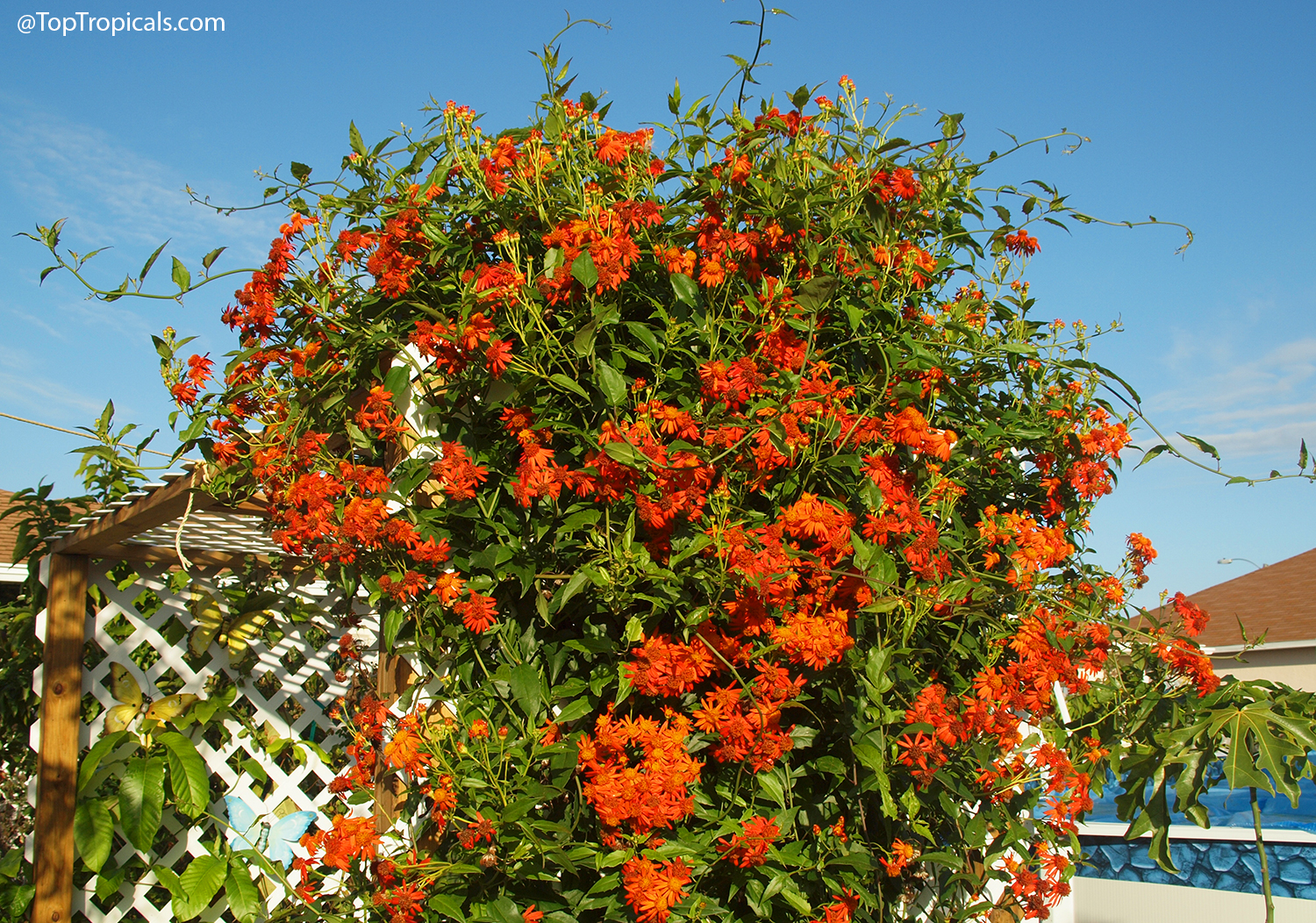
Large,  dense  Senecio  confusus  (Mexican  Flame  Vine)  covered  in  clusters 
 of  bright  red-orange  daisy-like  flowers  climbing  over  a  trellis  against  a 
 blue  sky.

Mexican Flame Vine in full bloom - a fast-growing, drought-tolerant climber that quickly covers fences with vivid red flowers, attracting pollinators and adding bold color with minimal care.

🛒 Shop heat tolerant plants

🌮 Sunshine’s Mango Taco 😺

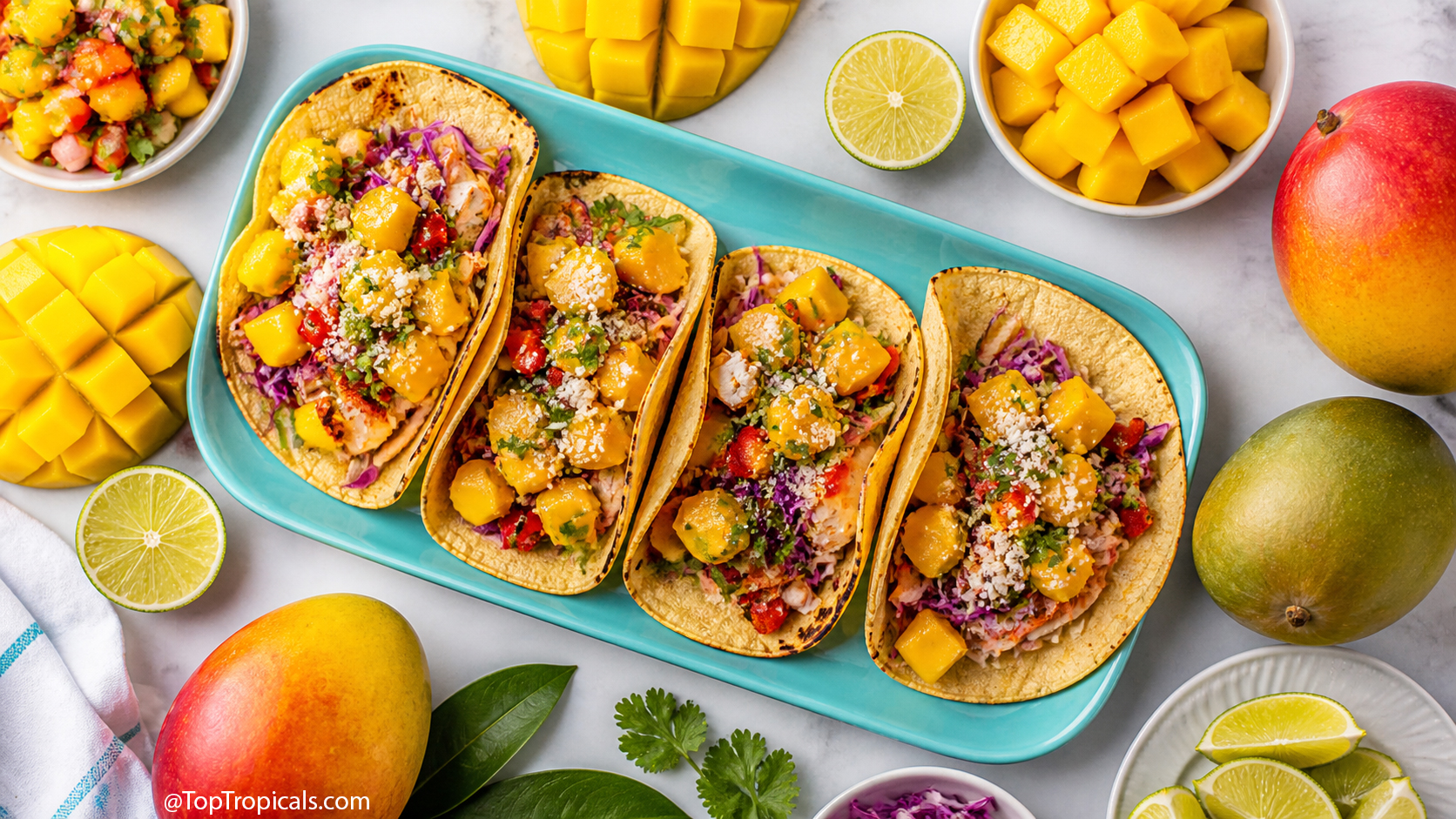
Fresh  mango  tacos  loaded  with  juicy  chunks  and  bright  toppings, 
 surrounded  by  whole  and  sliced  mangoes  for  that  tropical  feel.

Mango Tacos

This is not cooking. This is assembly.

What you need

  • Tortillas
  • 1 ripe mango (diced)
  • Something warm (sweet potato, chicken, or leftovers)
  • A little onion (optional)
  • Lime (or bottled lime juice)
  • Sour cream or yogurt
  • Salt and pepper

How Sunshine does it

  1. Heat whatever you have in a pan
  2. Put mango in a bowl, add lime and a pinch of salt
  3. Mix sour cream with lime (this is your sauce)
  4. Put everything into a tortilla
  5. Enjoy with a margarita

Sunshine's rules

  • No measuring
  • No recipes
  • If it tastes good, it is correct

Want this to be normal?
Start with a mango tree. That is usually how it begins.

🛒 Plant your own mango tree

💌 Mother's Day is one week away

Still deciding? A gift card is the easiest option. With our bonus, it is also the best value.

Mother’s  Day  themed  Top  Tropicals  gift  certificate  with  a  pink 
 decorative  frame  filled  with  jasmine,  plumeria,  magnolia,  and  champaka 
 flowers,  tropical  fruits  across  the  center,  and  a  Happy  Mothers  Day  banner 
 at  the  top,  with  space  for  certificate  details  and  message.

Mother’s Day Top Tropicals gift certificate

🎁 Get a Gift Card

Date: 10 May 2026

🍑 Tree-Ripened Peaches Change Everything

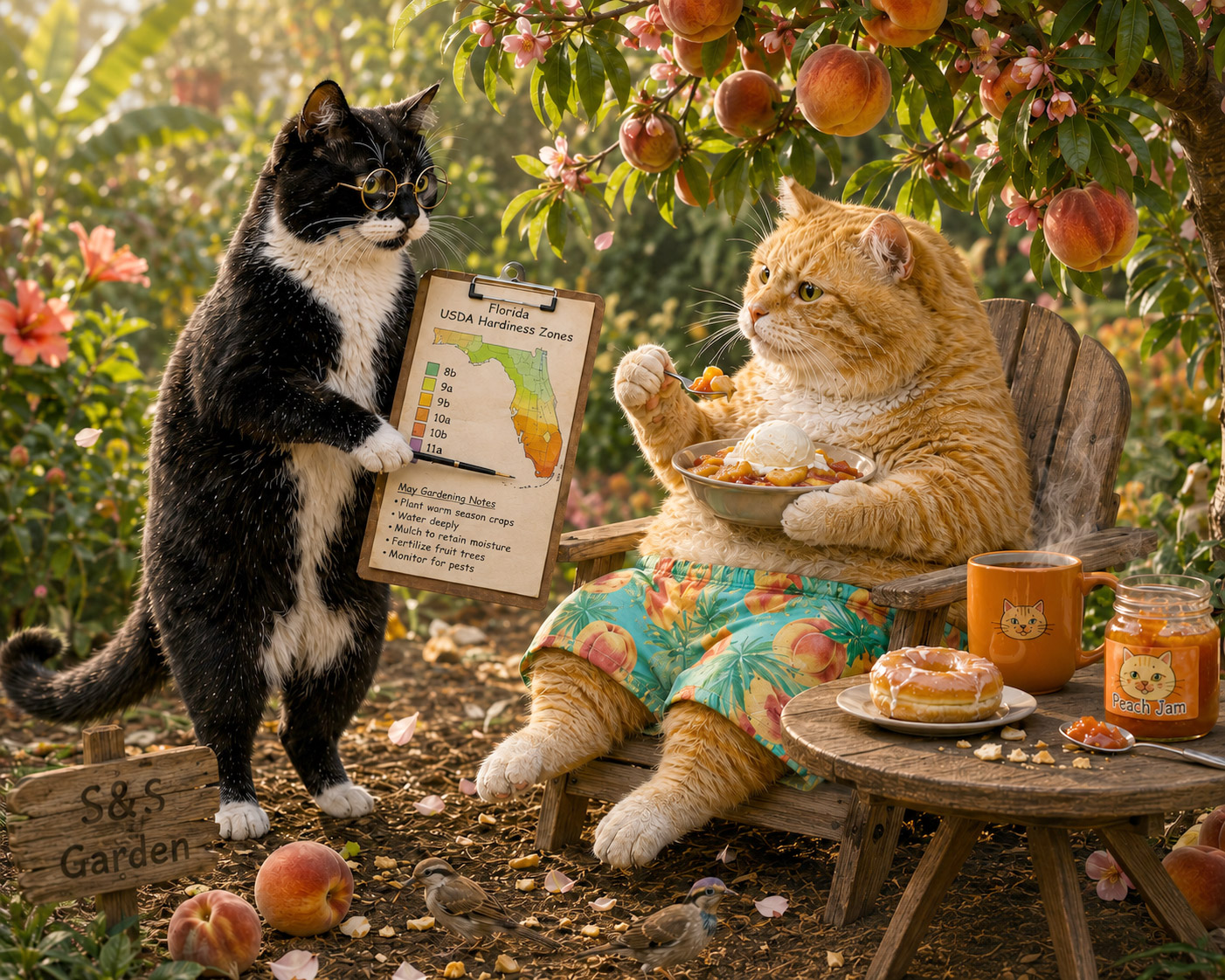
Smokey  and  Sunshine  relax  under  a  peach  tree  in  the  S&S  Garden, 
 discussing  low-chill  peaches  for  Florida  while  enjoying  peach  cobbler  with 
 ice 
 cream.
Sunshine: I love peach cobbler. Smokey, why are peaches on the tree so early?
Smokey: Low-chill peach varieties for Florida. They ripen much sooner.
Sunshine: I thought peaches were for Georgia.
Smokey: Not if you plant low-chill peaches. And speaking of peaches, do you know about donut peaches?
Sunshine: Donut peaches? Finally, horticulture I can understand.

Some fruits carry memories before you've even tasted them.

There's something about a peach still warm from the tree - the way it gives a little when you pick it, the smell that hits you before you even take a bite. It makes you slow down. It makes summer feel like it actually meant to show up.

For Florida gardeners, that moment used to feel borrowed. Peaches were a Georgia thing, a Carolina thing. You'd admire someone else's harvest and quietly file it under not for us.

Low-chill peaches rewrote that story.

Here's the thing about regular peaches - they need cold. Not just a cool night or two, but a real winter. We're talking 600 to 1,000 hours below 45F. That's how they know to wake up in spring and actually fruit. South Florida just doesn't deliver that. The trees will grow fine, look healthy even, and then give you almost nothing come harvest time. Frustrating doesn't cover it.

Low-chill varieties are different. They were bred specifically for places like ours - warm winters, mild springs. Some only need 100 hours of chill. A hundred. That's a few cold fronts, not a season. And because they're working with our climate instead of against it, they fruit reliably. Every year.

They're not just a Florida trick either. Gardeners in coastal Texas, southern Louisiana, southern California - anywhere in that Zone 8b to 10 range - have been growing these successfully. If you've got warm winters and thought peaches weren't for you, they probably just weren't the right peaches.

🛒 Shop Low-Chill Peach trees

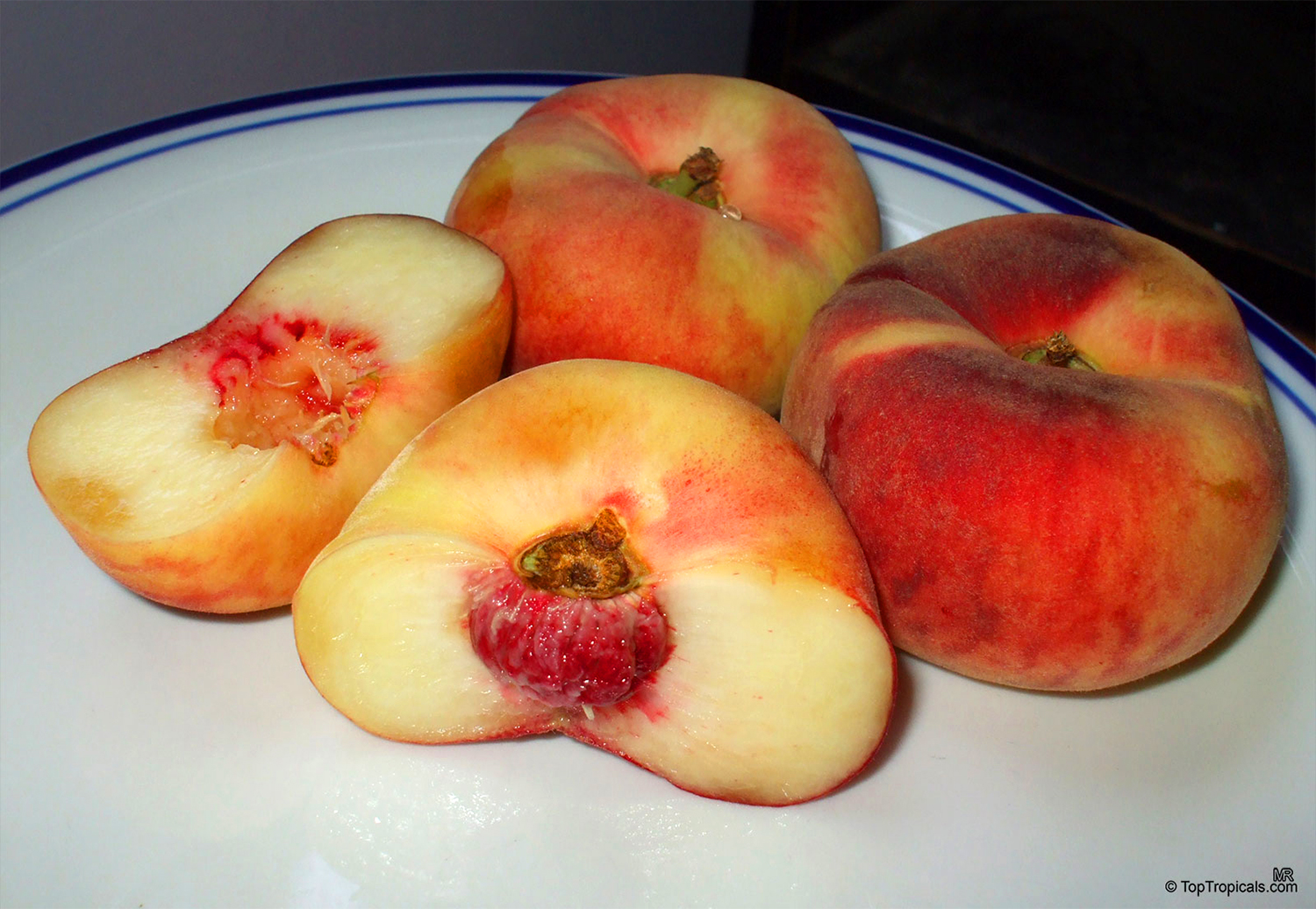
Several  ripe  flat  peaches,  also  known  as  donut  peaches  or  Saturn 
 peaches,  displayed  on  a  white  plate.  Two  peaches  are  cut  open,  showing  the 
 pale  white  flesh  and  small  central  pit  with  pink-red  coloring  around  the 
 seed 
 area.

Flat peaches - sometimes called DONUT peaches - are known for their sweet white flesh, low acidity, and fun squashed shape.

Date: 15 Jan 2021

Healthy Plants: Q&A from Mr Booster

New Boosters for the New Year!
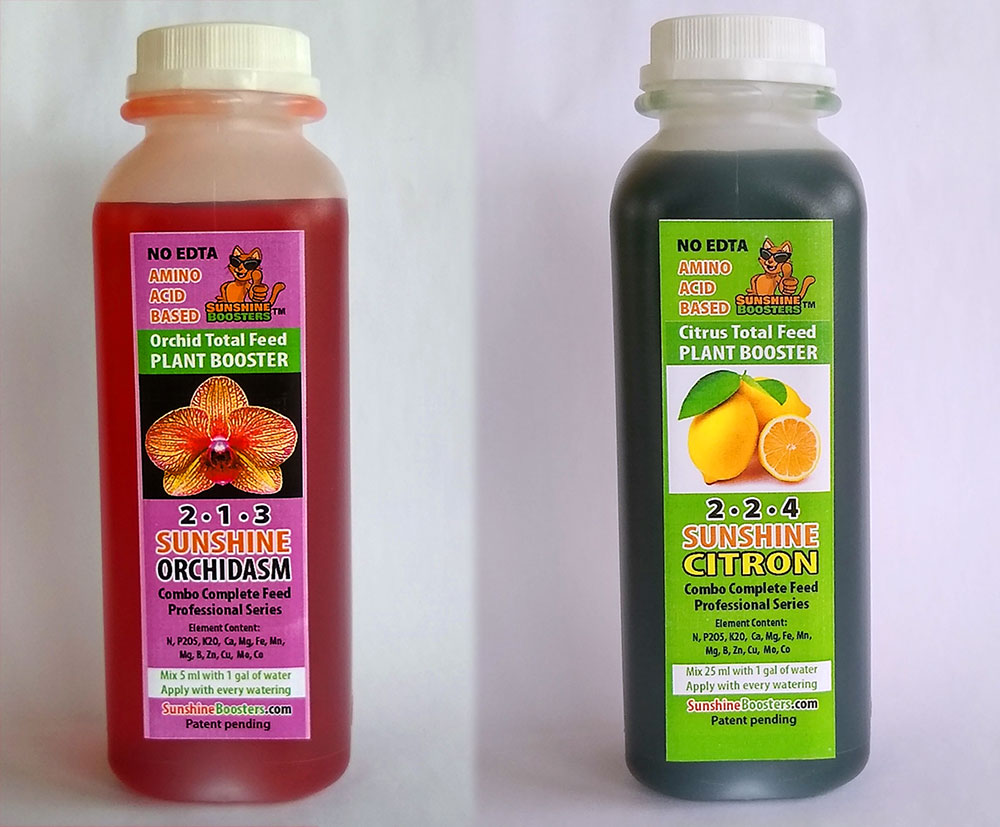
Sunshine Total Feed: Orchidasm and Citron

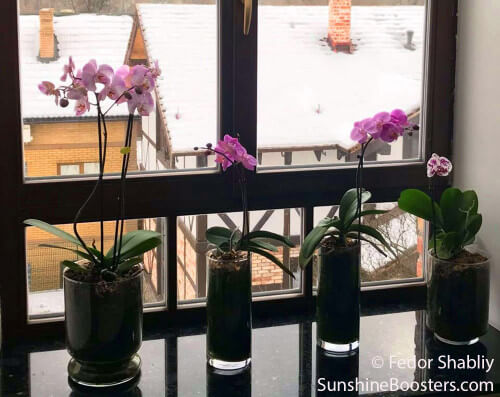
How to grow everblooming orchids?

Q: I ended up with a large collection of orchids that I was given as presents... They grow well but unfortunately after the showy blooms were gone, I don't see any more flowers, just green leaves. What do I need to do to make them bloom again? Should I fertilize them with Azalea bloom booster?

A: Orchids culture is different from garden ornamental plants. First big difference, they are epiphytes, growing in a loose bark medium rather than soil, and benefit from daily mist. Second difference is a type of fertilizer. You can not use a regular garden fertilizer on orchids, because they are very sensitive to salts. Orchids need special, acidic type of fertilizer, very mild in action.
Luckily, Sunshine Boosters formulas are exactly what orchids need! They are amino-acid based, have very mild formulas, and do not create nutrient lock up (building up salts is one of the biggest enemies of tender orchids).
A new Sunshine Boosters Orchidasm TotalFeed is scientifically balanced orchid food that contains all necessary nutrients, including micro-elements, for healthy, happy, vigorous orchids. It can be used as often as daily with every foliage spray. From our testing experience, after using Orchidasm Booster, orchids not only got happy and thriving - they also bloom more often - up to several times a year, shooting new flower spikes one after another! (while normal blooming cycle for most orchids is once a year). It gets even better - the flower display lasts twice longer!
To enjoy these beautiful flowers year around - treat them with Love, give them some Orchidasm!

See more information with pictures in Sunshine Boosters Orchid Blog

Secrets of a healthy Citrus tree

Q: We planted several citrus trees in our yard - Meyer Lemon, Grapefruit and Blood Orange. The trees came from the store full of flowers and even had a few fruit, but a year after planting - no more flowers! The old leaves are green, but new growth doesn't look healthy, leaves are yellowish and have spots, maybe eaten by bugs (?), and how do we get them to fruit?

A: Citrus plants are not the easiest trees to grow; they are susceptible to various diseases, pests, and deficiencies, especially in areas with high humidity/rainfall like Florida. Fungi, viruses, leaf minors, chlorosis - this is not a complete list of citrus common problems. In commercial groves, these conditions are kept under control by using harsh chemicals on solid schedule.
For home gardeners, growing citrus trees may become a challenge. Many people don't want to use harsh chemicals on their edibles; and those who do, may not always have time to apply treatments on a professional schedule. So as much as we all love a fresh juicy orange, growing your own may become quite a pain!
Sunshine Citron TotalFeed is your simple, eco-safe solution to a healthy looking, productive citrus tree with organic fruit! Amino-acid based formula provides all necessary elements to strengthen the tree and make it resistant to possible problems.
Did you know that treatment of leaf chlorosis (yellow leaves with dark green veins), commonly treated with iron supplements, in fact requires a complex combination of nutrients - both balanced NPK and micro-elements?
Use Sunshine Citron in combination with Sunshine GreenLeaf and Sunshine SuperFood and never see yellow chlorotic leaves again!
Apply Sunshine Epi on regular basis (every 2 weeks) and help your tree boost its immune system and stay virus-free.
Add Sunshine Honey, and you will have large, juicy fruit that are much sweeter and more flavorful than those from the store! All these boosters are compatible with each other, and perfectly natural. Eat your fruit safely and enjoy...

Read more about treating citrus tree defficiencies in Sunshine Boosters Citrus Blog.

Date: 16 Feb 2019

Featured plant. Randia formosa - Blackberry jam fruit

TopTropicals.com

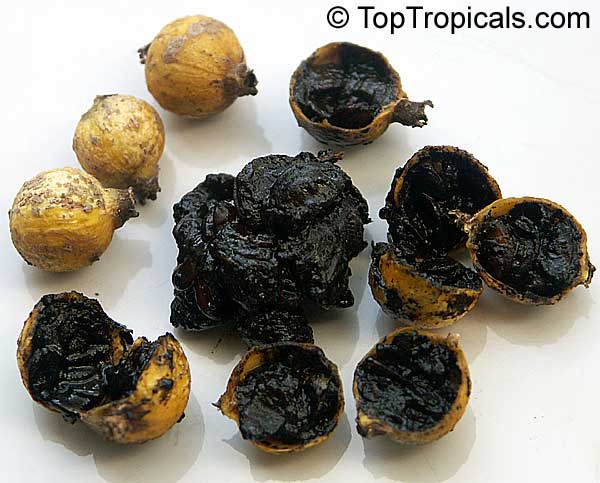
Randia formosa - Blackberry jam fruit

This unique compact plant, perfect for container culture, combines features of a fragrant flower and tasty desert fruit. Kids love it! Originally from Central and South America, this rare tropical small evergreen tree bears fruit which tastes like fresh Blackberry jam. Many claim that it's even better than preserves. Closely related to the gardenia, its flowers are sweetly fragrant. This relatively hardy tropical has attractive foliage and can be grown in a container as well as in the ground. The Randia formosa (or Rosenbergiodendron formosum) produces as many as 25 to 30 fruits at a time. Since it blooms for a few months in the fall and winter, fruiting and flowering can be enjoyed when many other plants are dormant. Large tubular white flowers that attract nocturnal moths... Read more about this plant...

Get it from our store... Limited quanity!

Date: 10 May 2024

5 best plant gift ideas for any occasion

These plants are large, developed and beautiful NOW!

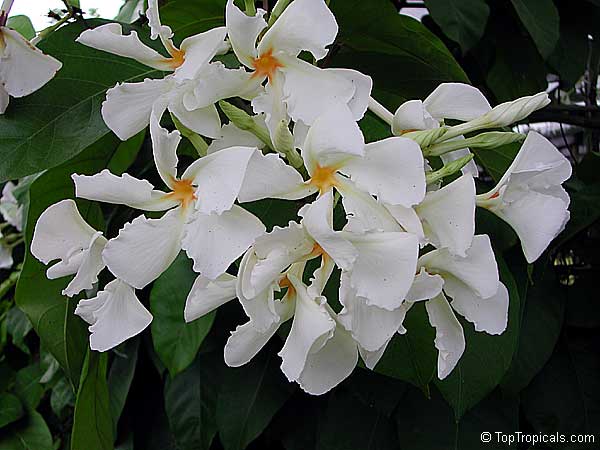
Chonemorpha  fragrans  -  Frangipani  vine

The Chonemorpha fragrans, also known as the Frangipani vine, is truly a botanical marvel. With its exquisite clusters of perfume-fragrant, large flowers and lush green foliage, this vine captivates with its beauty and charm. Not only does it adorn gardens with its elegant presence, but its intoxicating scent also fills the air, creating a sensory delight for anyone nearby. The leaves, reaching up to 12 inches in size, further enhance its appeal. As a large, woody vine, it requires sturdy support such as a fence or robust structure to thrive, adding to its majestic presence in any garden landscape or indoor setting.


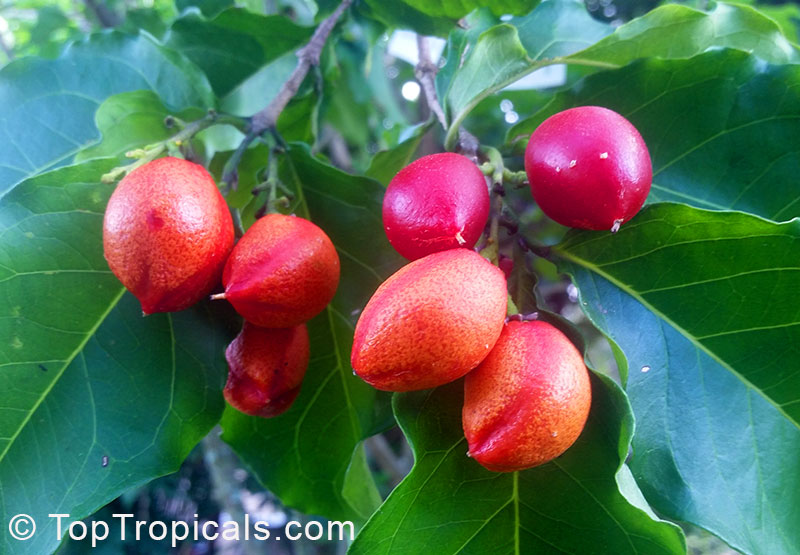
Bunchosia  argentea  -  Peanut  Butter  Tree

Bunchosia argentea - Peanut Butter Tree - gets its name because its small fruits taste like peanut butter. Isn't that cool? This attractive small tree has clusters of yellow flowers that are followed by an abundance of dark red fruit. The rich, sweet flesh has a texture very similar to peanut butter. Yes, it tastes exactly like peanut butter! Sweet, soft pulp with a peanut flavor. One of the most fascinating exotic fruits, as amazing as Miracle fruit, Peanut Butter Fruit is loved by both kids and adults. The tree is small in size, grows only 10-15 ft, or can be kept as a bush. It starts fruiting within 2-3 years from seed! Keep it in a pot if you have limited space; it can be grown indoors, too. Very rare in cultivation.


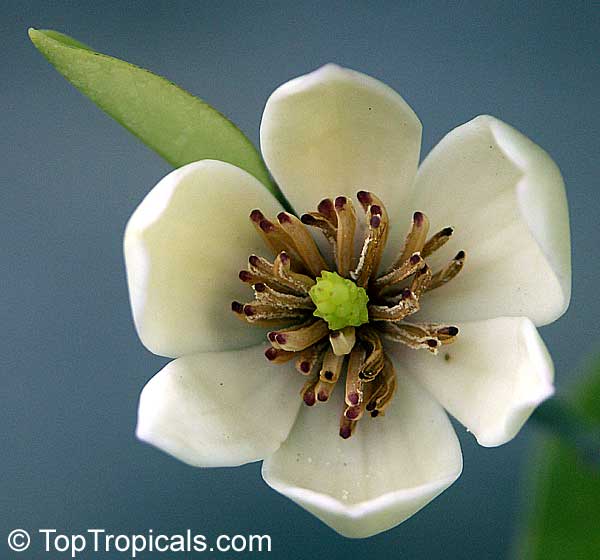
Magnolia  Michelia  figo  -  Banana  Magnolia

Magnolia figo commonly known as the Banana Magnolia, is a botanical wonder. Its creamy yellow, banana-shaped flowers release a sweet, fruity fragrance that fills the air with a delightful aroma (slightly resembling banana), making it a standout among flowering shrubs. The glossy, deep green foliage provides an elegant backdrop to the striking blooms, further enhancing its visual appeal. Growing up to 10 feet tall, this dense and bushy evergreen shrub or a small tree adds a touch of sophistication to any landscape, whether as a focal point in a garden bed or a graceful accent in a container. As a very cold-hardy tropical plant, it thrives in zones as low as zone 8. Great container plant.


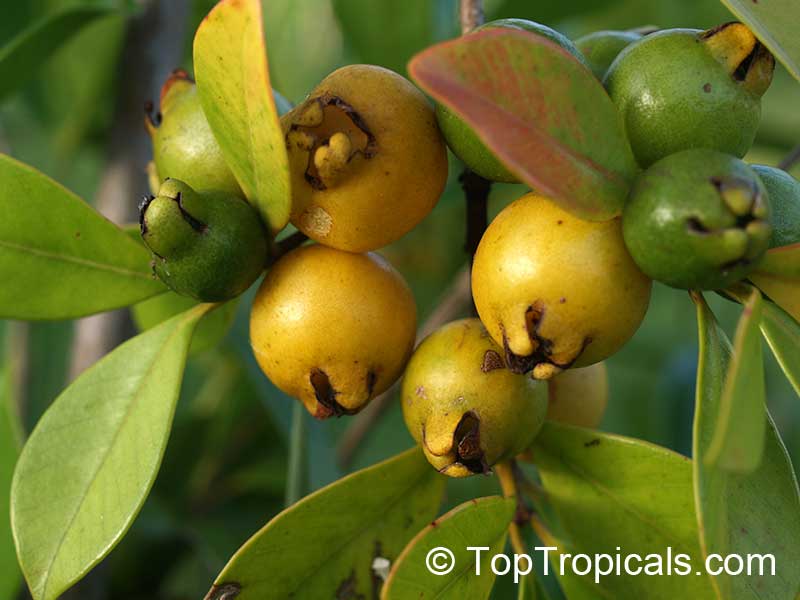
Cattley  Guava  tree,  Psidium  littorale

The Cattley Guava, scientifically known as Psidium littorale, is a delightful small tropical fruit tree that adds both beauty and flavor to any landscape. With its pretty round fruits - miniature guavas - this tree offers a unique culinary experience. The fruits boast a sweet and tangy flavor, making them perfect for jams, jellies, and desserts. You can make lots of guava juice just out of one tree! Cattley Guava is not only a tropical delight but also surprisingly cold-hardy plant. Great container fruit tree.


Gardenia  (Kailarsenia)  vietnamensis  -  Vietnamese  Gardenia

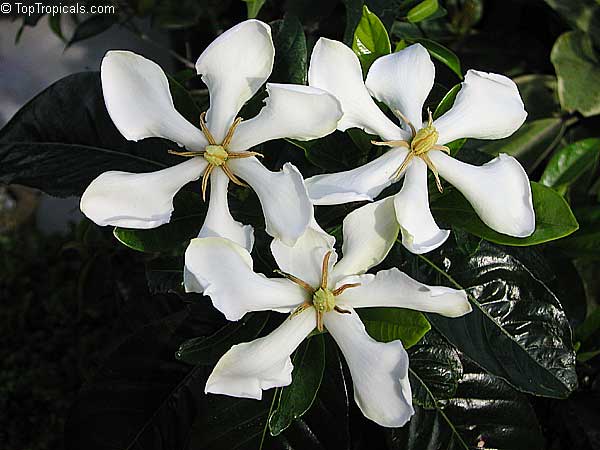
Kailarsenia vietnamensis - Vietnamese Gardenia, is a stunning botanical treasure. It stands out for its large, fragrant flowers and remarkable ease of cultivation. Unlike most gardenias that can be not easy to grow, this variety demonstrates resilience, tolerating overwatering, poor soils, and showcasing exceptional cold hardiness. The flowers are like beautiful artworks, and they give off a lovely smell that fills the air. Whether grown in containers or planted directly in the ground, this bushy beauty thrives, offering versatility and charm to any garden or indoor setting. Learn more about Vietnamese Gardenia.