Date: 1 Jan 2019
NEW VIDEO:
Malpighia punicifolia - Dwarf Barbados-Cherry, Dwarf
Acerola. This dwarf form of Acerola makes a wonderful low-growing shrub or
beautiful bonsai tree with edible fruit. Profuse bloomer, it is also a nice
ornamental! Due to its shallow and smaller root system, Acerolas can be interplanted
with other crops more closely than many trees. Acerolas grows in marl,
limestone, clay and other heavy soils as long as it drains well. Has the highest
vitamin C content of any fruit. 1 Cherry is equal to 12 oranges. Used in
jellies, jams, freezes without losing its vitamin C content. The plant is drought
tolerant and easy to grow.
Malpighias are available from our store

Stay updated with TopTropicals Videos by subscribing to our channel at YouTube.com/TopTropicals
Date: 20 Oct 2018
Featured Plant. Bilimbi, Cucumber tree, Tree Sorrel
Bilimbi, Cucumber tree, Tree Sorrel
Ethnic names are: Kamias, Belimbing Asam, Belimbing
Buloh, Bimbiri. This rare exotic fruit is very popular
in Thailand, Malaya and Singapore. In India, where it is
usually found in gardens, the bilimbi has gone wild in
the warmest regions of the country. Outside native
habitat, Bilimbi is hard to find plant, very few growers
produce them, although it is not so hard in cultivation.
The bilimbi is closely allied to the carambola but quite
different in appearance, manner of fruiting, flavor and
uses. The only strictly English names are"cucumber
tree"and"tree sorrel"."Bilimbi"is the common name in
India and has become widely used. Many people are more
familiar with the close ralative - Averrhoa carambola - Star
Fruit, which foliage looks very similar to bilimbi. The
bilimbi leaves and taste of fruit are quite similar to
those of the
Phyllanthus acidus - Otaheite Gooseberry),
although these plants are not related.
Continue reading...
Date: 12 Oct 2018
Portlandia - rich hot chocolate with vanilla
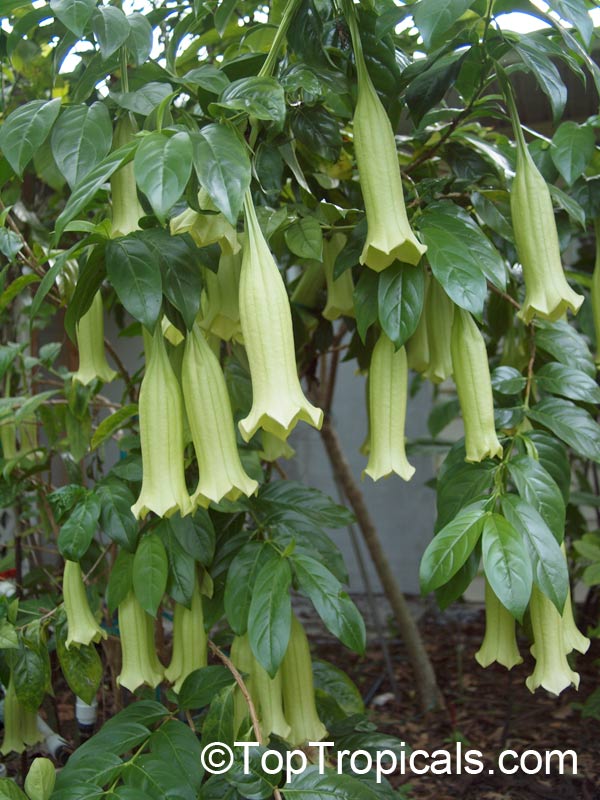
From Mark, the Garden Whiz. Since working in the horticultural field for nearly 50 years, at either nurseries or botanical gardens both in Florida and southern California, I have come into contact with a LOT of very cool plants. So many of them in-fact, that it's becoming increasingly difficult to run across new ones that really make me take special notice. Since being at Top Tropicals for a while now, there are a few species I had not met before which really stand out. Among them are a couple of kinds of Portlandia. Continue reading...
See our selection of Portlandias...
Date: 7 Oct 2018
Multi-flowering Hoyas:
from Mark, the Garden Whiz
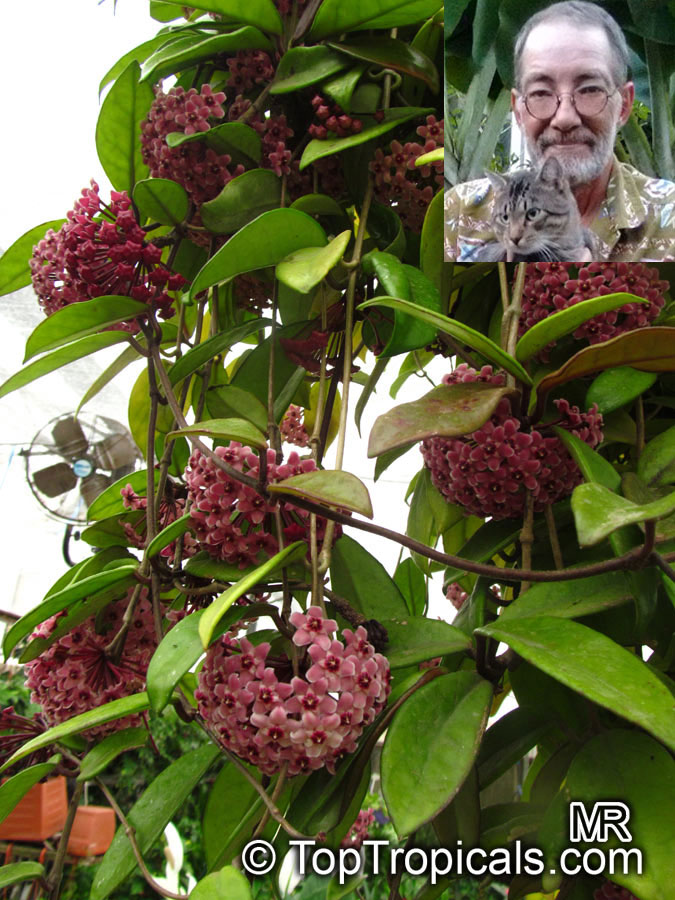
Q: A few months ago, i was given a Hoya vine. At the time, I was told to not cut-off the flowers but was never told why. However now that it IS flowering, they are so wonderful I would like to. Is there really a reason to not clip them off?
A: Actually, that was very good advise. Unlike most plants we encounter, hoyas develop perennial flower spikes. This means that each spike flowers more than just once! In other words, after the flowers on such a spike have gotten old and fall off, the knobby ended spike remains. Then, after a period of time, that same spike will develop another ring of flower buds. Depending on what kind of hoya it is, these perennial flower spikes may continue to periodically make more flowers for several years! And while the plant will continue to make more of these perennial spikes its whole life, the flowering display becomes better all the time as more and more spikes grow. (By the way, these are technically called "flowering spurs"). So every time a spur might be cut for ornamental purposes, it'll be one less place the vine can flower from in future years.
Date: 13 Sep 2018
Season Colors from Kristi, TopTropicals Flower Queen
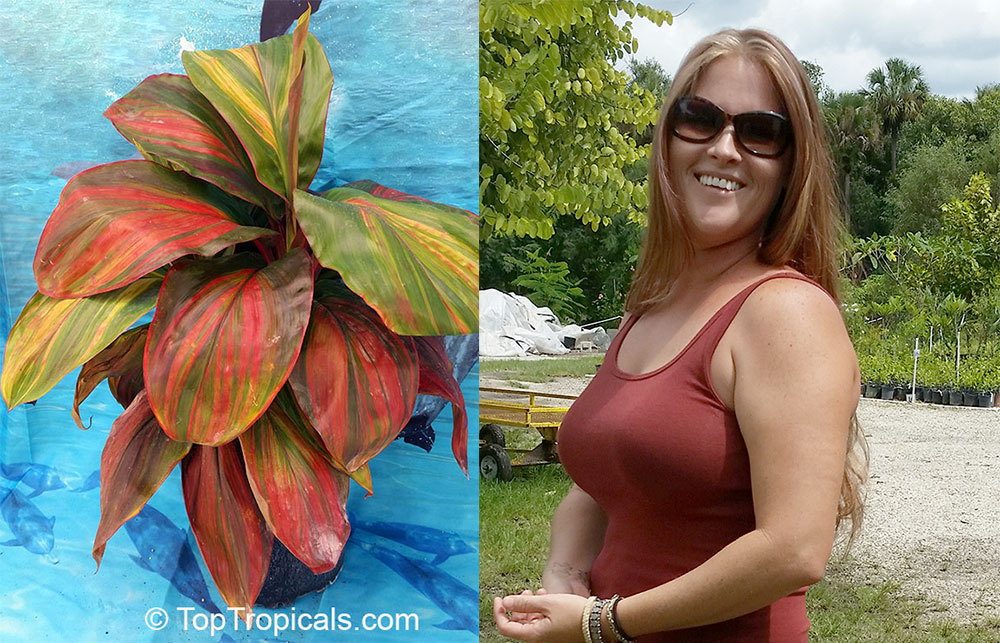
Q: I live in New Jersey and I have a collection of potted tropical plants in my sun room. Our Fall season comes in bright colors, do you have something with colorful foliage for Fall?
A: For our northern customers it's almost time for the changing of the seasons. It is a very exciting and enjoyable time. The onset of fall means, less humidity, cooler nights and the Fall foliage. Here in Florida we do not get the chance to see the changing of the leaves, except maybe a few like Florida Maple Tree. So we use plants that mimic the season change, for all year round color! These are a few examples of the plants with colorful leaves that you may use for your Fall colors, plus remember - there is always a big list of Fall and Winter Flowering Tropicals!
Colorful tropical plants for Fall
Hibiscus tiliaceus - Variegated MahoeAcalypha wilkesiana - Chicago Brick Copper Leaf - see all acalyphas
Mussaenda philippica x flava - Calcutta Sunset Marmelade
Pseuderanthemum atropurpureum Purple Haze
Acer rubrum - Red Maple
Adenium Nil with red veined leaves
Cerbera x manghas hybrid - Enchanted Incense
Cordyline fruticosa Willies Gold - see all codyline
Graptophyllum pictum Chocolate Queen
See Fall and Winter Flowering Tropicals.