🥭 Ice Cream mango: tiny tree, big flavor!
Mango Rainbow🌈
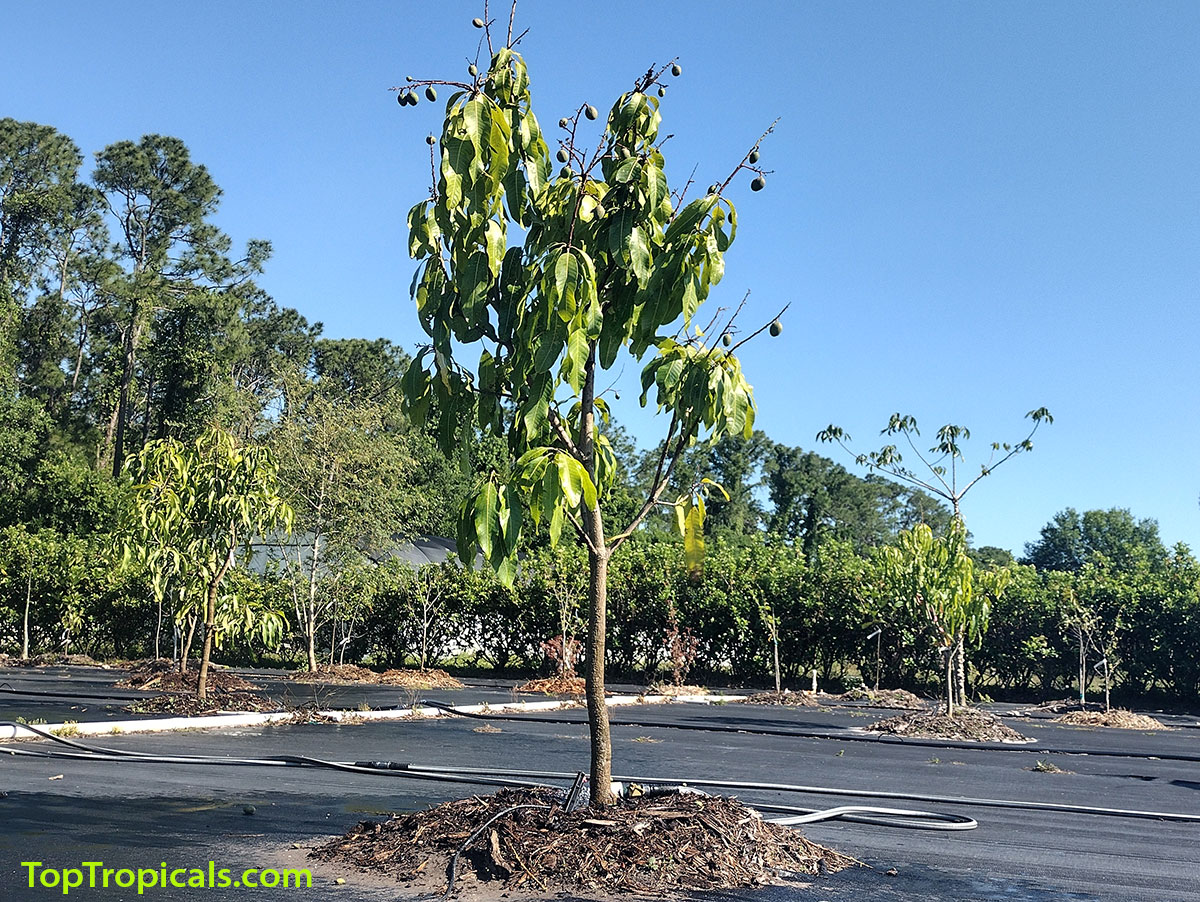
🟡Ice Cream is the king of condo mangoes - and for good reason! This tiny tree stays under six feet and still gives you a full size fruit that tastes like mango sorbet.
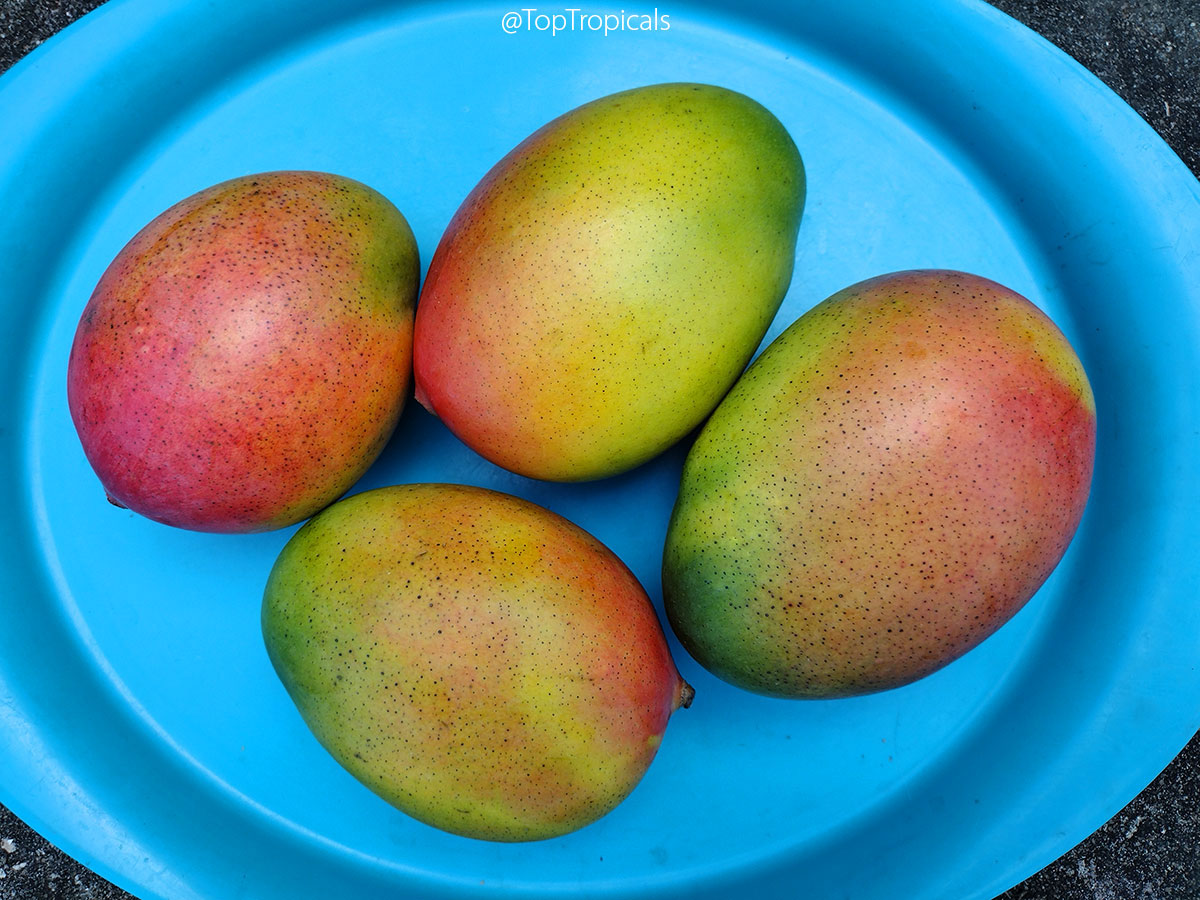
🟡The fruit may be small and green, but inside? Bright yellow flesh that's rich, sweet, and unbelievably smooth.
🟡It is the perfect pick for containers, patios, or small spaces. If you want big flavor from a little tree, Ice Cream mango is the one.
Q: I got a large mango tree from your garden
center recently, planted in the ground, but noticed the corners of the leaves
turning brown. It was full of little fruit when I planted it but now they are
falling off... I wonder how much should I water the mango tree? We have lawn
sprinkler system that runs daily, is this enough?
A: Generally speaking, never rely solely on your
sprinkler system when planting a new tree, especially during the first week
or even several weeks if you have no rain. By rain, we mean a nice downpour.
Here in Florida, we usually have a hot and dry spring, and while springtime is
great for starting new trees, additional hose-watering becomes essential for
establishing them during the first months.
Dry leaves are a signal of under-watering. Make sure to hand water your
mango tree every day for at least the first week after planting. Even if you
have an individual sprinkler for the tree, ensure that the soil around the
rootball receives enough water, not only around the trunk. Surprisingly, the
bigger the tree, the more it may suffer from a lack of water, and sprinkler
watering does not saturate the large root system, sometimes only reaching around
the trunk. Big tree means lots of leaves and branches - they all get
thirsty!
Mangos are pretty drought-tolerant trees, but only once established.
They even benefit from hot, drier air (means less leaf fungus). However, young
trees require regular irrigation until they start growing new leaves and
branches.
Note that fertilizing your Mango tree is especially important during the
spring and summer seasons - the period of active growth. This ensures that
the tree takes the best advantage of nutrients with a faster metabolism
encouraged by high temperatures. Give your tree a chance to build up lots of energy
for the cooler winter as well as for the next flowering and crop season. To
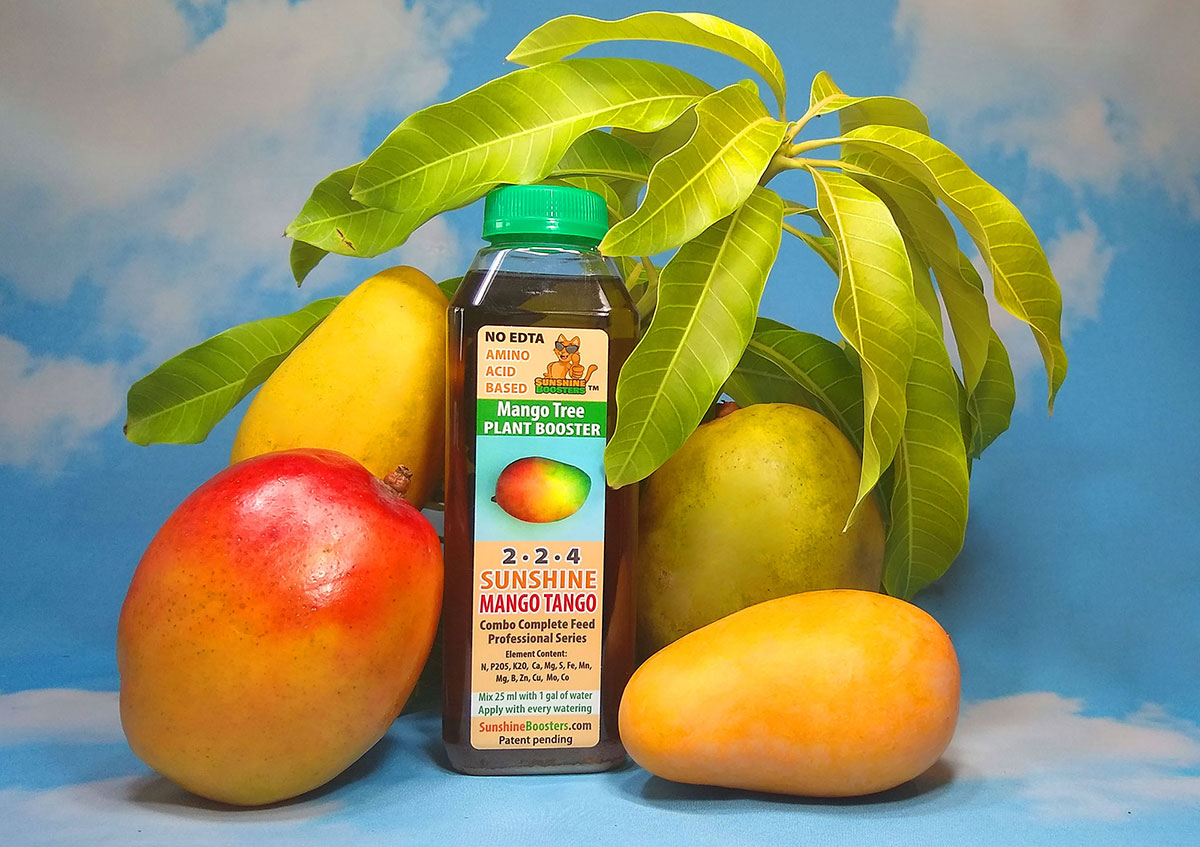
ensure a strong tree and reliable crop with no fruit drop, apply Sunshine Mango Tango liquid fertilizer with every watering and watch
your mango tree become a Champ!
Q: I bought a few mango trees from you this
year, and they're doing great! So far, winter's been pretty mild here in Florida, but I know January and February can get chilly. Is there
anything special I should do to keep my trees happy so I can enjoy fruit next year?
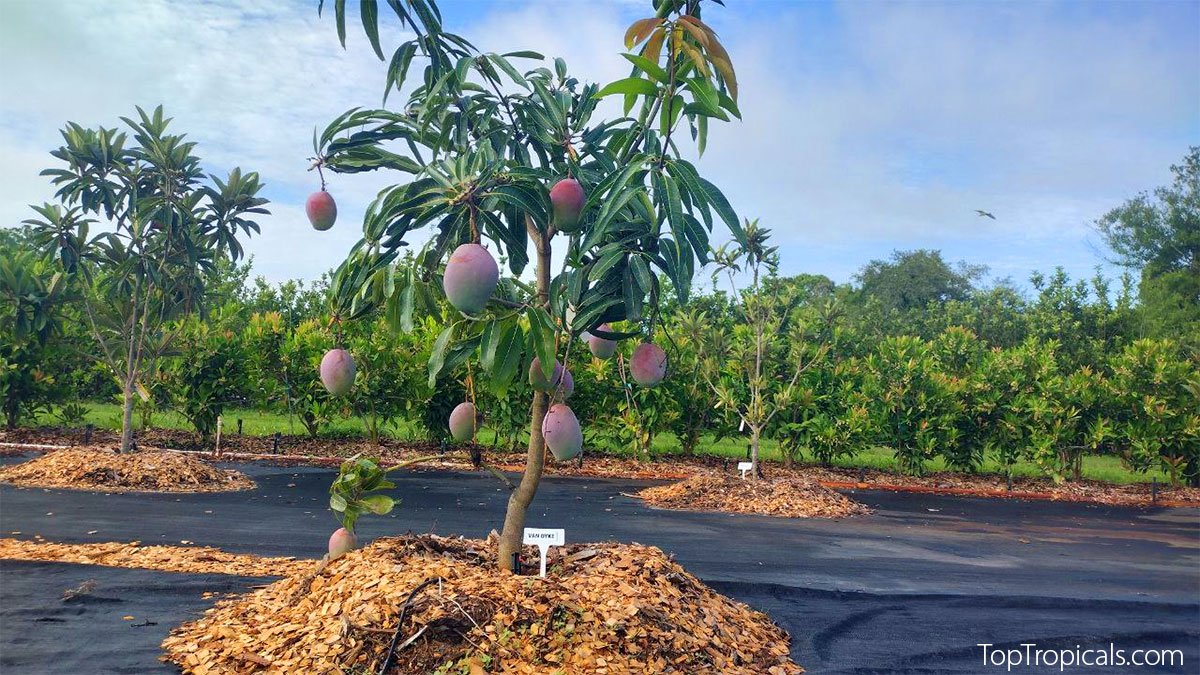
A: If you want to enjoy mangoes like ours (in the photo) next summer, protecting
your tree in winter is a must! Give it the care it needs now, and you'll reap sweet rewards
when the warm weather returns.
Keep it cozy and protected: Mango trees love warmth, so when winter
comes, they need extra care to stay happy.
Temperature: Mango trees are sensitive to cold. If temperatures drop below 35F, cover the tree with frost cloth or
burlap to protect it. For potted mango trees, move them indoors or to a greenhouse.
Watering: Reduce watering during winter. Mango trees don't like soggy roots in cold weather. Let the soil dry
slightly between waterings.
Mulching: Add a thick layer of mulch around the base of the tree to insulate the roots and retain warmth.
Keep the mulch a few inches away from the trunk.
No pruning: Avoid heavy pruning in winter, as it can stress the tree. Besides, pruning promotes young tender growth that may get cold damaged. Save major trimming for spring.
Feeding: Stop dry fertilizer in winter. The tree slows its growth, so too much dry fertilizer can do more harm than good. You can continue
using Sunshine
Boosters Mango Tango year-round because it is water-soluble and natural,
and the amount of food needed will adjust with reduced watering.
2. 🌳 Buy a grafted tree from a reputable nursery to ensure better fruit quality and faster fruiting.
3. 🏡 Planting site: choose a sunny location with well-draining soil. Ensure there is enough space for the tree to grow, as some varieties can become quite large.
4. ⛏️ Planting: dig a hole twice as wide and just as deep as the root ball. Mix in organic compost to enrich the soil. Place the tree in the hole, making sure the growth point is 1-2"above the soil line. Fill the hole with soil, pressing gently to remove air pockets. Water the tree thoroughly.
5. 💦 Watering: Water the tree regularly, especially during the first few weeks. Allow the soil to dry slightly between waterings to prevent root rot.
6. Mulch: apply mulch around the base of the tree to retain moisture and suppress weeds. Keep the mulch a few inches away from the trunk to prevent rot.
7. Fertilize: use a balanced fertilizer formulated for fruit trees. We recommend Sunshine Boosters Mango Tango formulated specially for mango trees.
8. ✂️ Prune to shape the tree to encourage good airflow and sunlight penetration, and to improve the yield.
.
9. 🕷 Pest and disease control: monitor for scale and mealybugs and treat them with systemic pesticides. Keep an eye out for fungal diseases and treat them promptly with copper spray.
10. 🥭 Harvesting: Mangoes are ready to harvest when they change color and soften slightly.
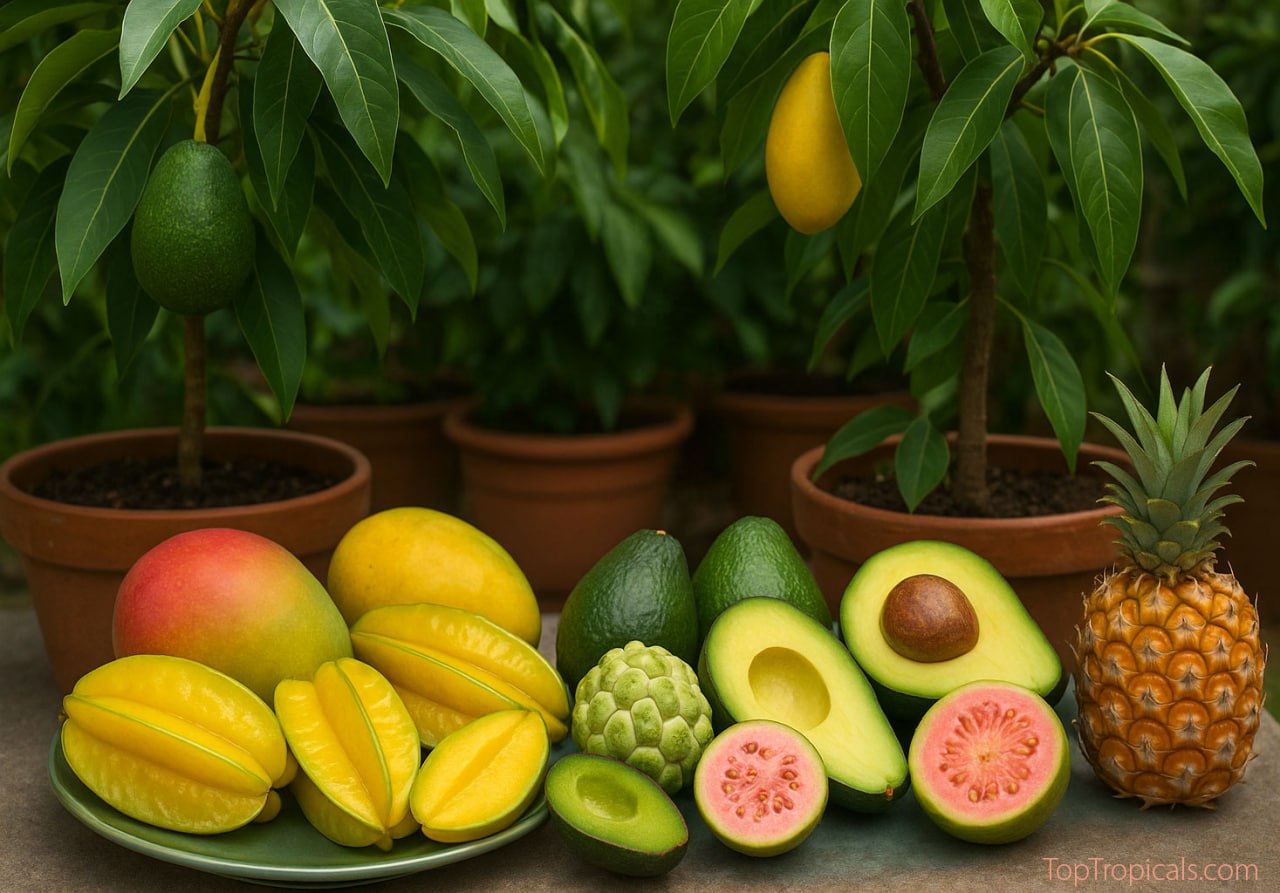
👨 Can you grow tropical fruit in colder climates? Absolutely! The key is growing them in containers so you can move them indoors during cold weather. With the right plant selection, a bit of motivation, good plant food, and a little love, you can enjoy a delicious harvest of exotic fruit - enough to treat your family and even share with friends. Here's everything you need to start your own Tropical Fruit Garden in containers.
🏆 Top tropical fruits and expert tips for growing in containers