Garden Blog - Top Tropicals

Date: 27 Oct 2025

Weird cactus looks like pasta with Dragon Fruit

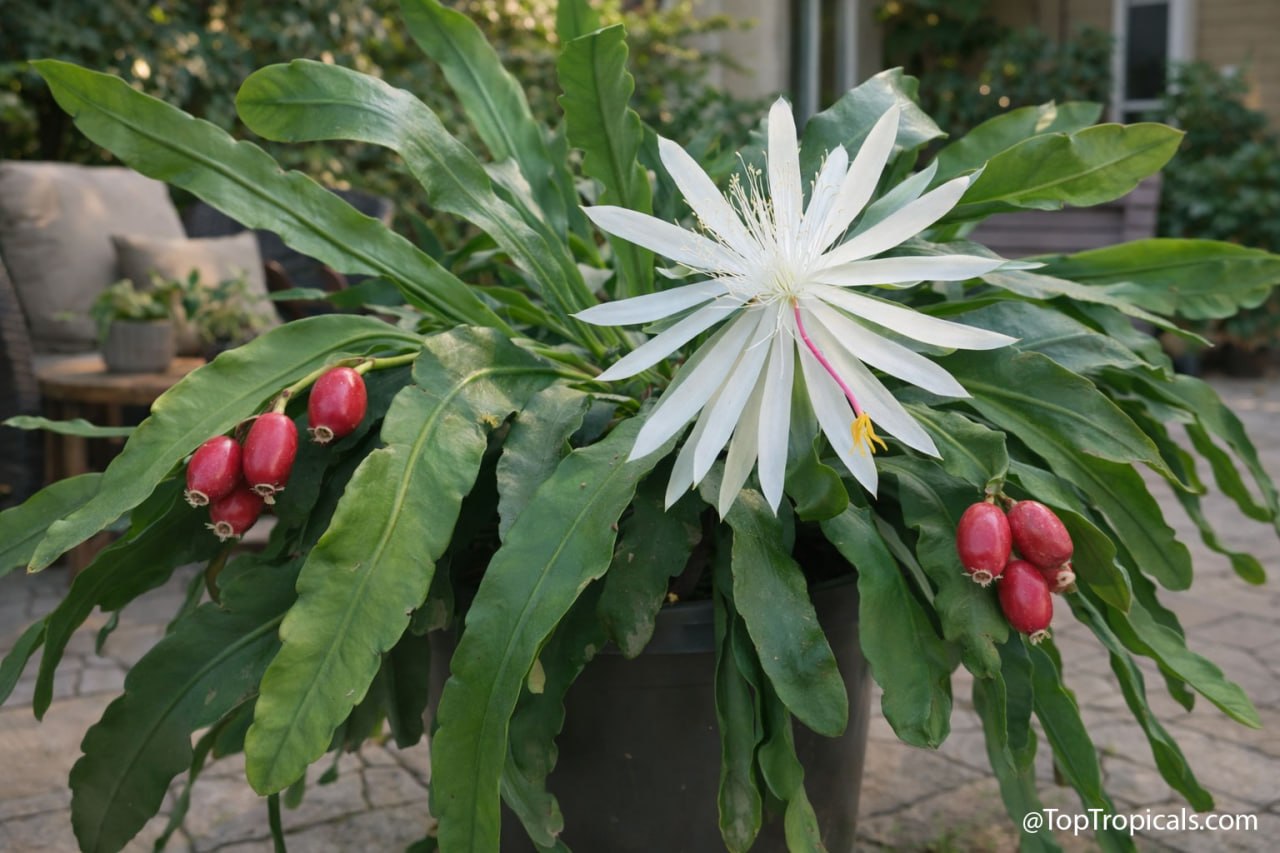
Epiphyllum guatemalense Monstrosa - Curly Locks or Orchid Cactus

👀 Weird cactus looks like pasta with Dragon Fruit

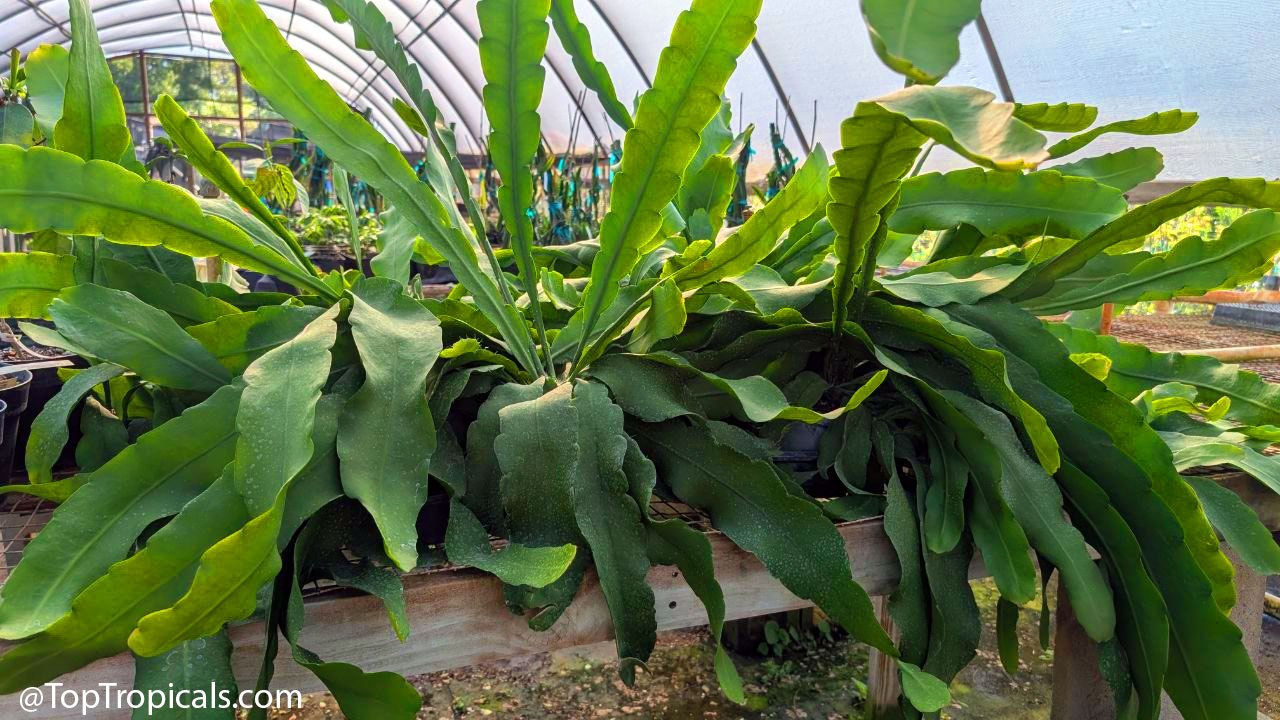
  • Epiphyllum guatemalense Monstrosa - Curly Locks or Orchid Cactus - is one of the most unusual jungle cacti you can grow. Instead of the usual flat cactus leaves, this one grows curly, looping stems that twist and spiral in every direction. It looks like a green waterfall of botanical noodles, perfect for a hanging basket or a high shelf where its wild shape can really show off.
  • ➰Curly Locks is actually a natural mutation of a Guatemalan jungle cactus that grows high up in jungle trees, using its stems to absorb moisture and light from the air. Like many epiphytic cacti, it produces large, fragrant flowers that open at night and look strikingly similar to orchids. After blooming, it forms small, oval pink fruits that are edible and juicy - like tiny dragon fruits!
  • ➰This plant is self-pollinating, so you don’t need insects or hand pollination to get fruit. It thrives in bright, indirect light and prefers to be a bit root-bound to trigger blooming. Just water moderately, let the soil dry slightly between waterings, and avoid moving it too often once it’s happy in its spot.
  • ➰Epiphyllum Curly Locks is not your typical cactus - it’s a living sculpture, a conversation piece, and a fruiting wonder all in one.


🛒 Add Curly Locks to your rare plant collection

📚 Learn more:


Botanical bedhead: curly, crazy, and full of surprises

#Fun_Facts #Container_Garden #Shade_Garden #Nature_Wonders

🟢 Join 👉 TopTropicals

Date: 18 Nov 2025

This giant red stared right back at me

Disocactus ackermanni, Red Orchid Cactus, Jungle Cactus

👹 This giant red stared right back at me

  • 🌺 Disocactus ackermanni, also called the Red Orchid Cactus, or Jungle Cactus - is one of those plants that surprises you even when you already know it well. It grows like a tropical fern, with flat, leaflike stems that hang and drape from a basket. Most of the year it looks calm and green. Then, without much warning, it opens a single huge, bright red flower that can reach up to 6 inches wide. The color is intense, almost glowing, and the bloom only lasts a short time, which makes it even more special.
  • 🌺 Despite being a cactus, it behaves nothing like a desert plant. This species is native to the tropical forests of Mexico, where it grows as an epiphyte in trees. It prefers shade or filtered light, and it enjoys regular watering. No spines, no trouble, just a very unusual growth habit and a spectacular bloom.
  • 🌺 The plant usually flowers from spring through summer, sometimes offering more than one flush. When it does, it always steals attention, and it is one of those plants visitors immediately point at and ask about. This makes it a favorite among collectors of epiphytic cacti and unusual hanging plants.
  • 🌺 If you grow it in a hanging basket and give it bright shade, humidity, and consistent moisture, it rewards you with one of the most striking red flowers you will ever see!


🛒 Add Red Orchid Cactus to your collection

📚 Learn more:


Red Orchid Cactus puts out the biggest bloom show
More epiphytic jungle cacti:
Epiphyllum oxypetalum - Queen of the Night
Pseudorhipsalis (Wittia) amazonica - Blue Flame
Epiphyllum guatemalense Monstrosa - Orchid Cactus, Curly Locks

#Container_Garden #Shade_Garden #Nature_Wonders

🟢 Join 👉 TopTropicals

Date: 4 Apr 2026

Rare Night-Blooming Cactus that Glows and Grows Large Edible Fruit

Epiphyllum hookeri - Rare Night-Blooming Cactus with fragrant flowers and large edible fruit

Epiphyllum hookeri - Rare Night-Blooming Cactus with fragrant flowers and large edible fruit

Epiphyllum hookeri - Night-Blooming Cactus with large leaves

Epiphyllum hookeri - Night-Blooming Cactus with large leaves

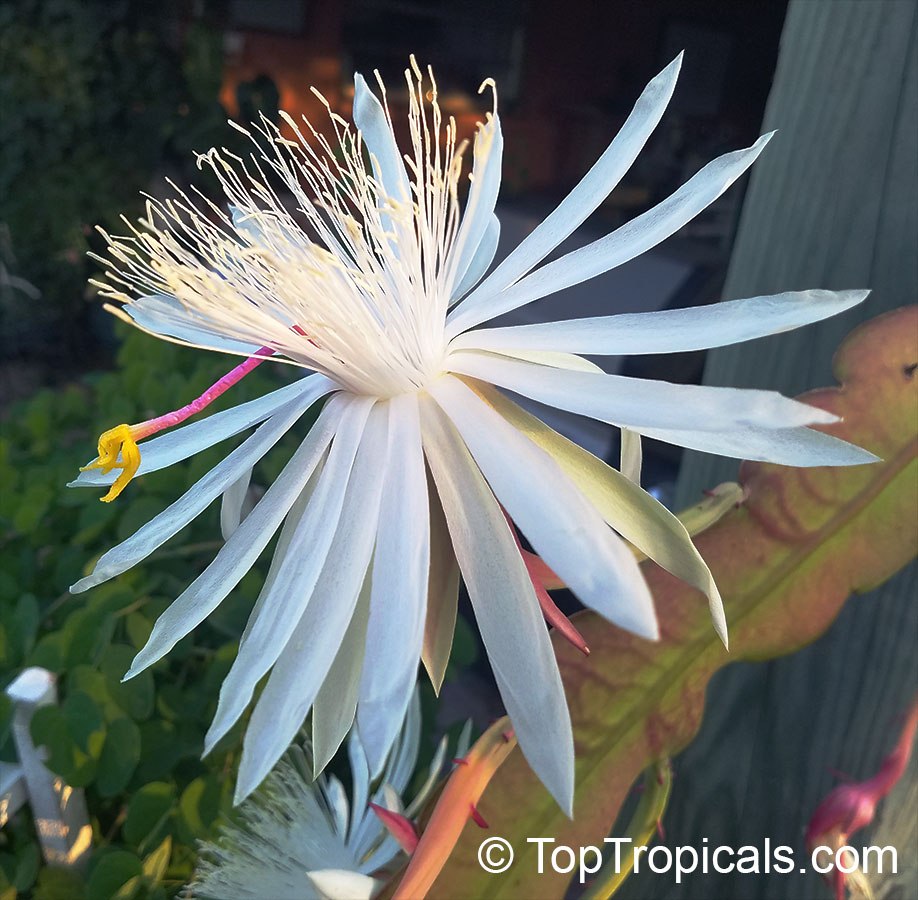
Epiphyllum hookeri - Night-Blooming Cactus large flowers

Epiphyllum hookeri - Night-Blooming Cactus large flowers

Rare Night-Blooming Cactus that Glows and Grows Large Edible Fruit 🍅

Did you know this nigh blooming beauty has large edible fruit? Why the Epiphyllum hookeri is the ultimate two-for-one plant for tropical garden lovers.
  • 🌠 The Midnight Spectacle


    Most gardeners grow the Epiphyllum hookeri for its "ghostly" white flowers. These massive, fragrant blooms wait until sunset to unfurl, reaching their peak beauty under the moonlight before fading at dawn.
  • 🌠 The Edible Bonus


    What many don’t realize is that this specific seed-grown type is a "fruiting" powerhouse. After the dramatic floral display, the plant sets smooth, elongated fruit. The flavor? Mild, sweet, and surprisingly refreshing -think of it as a garden-grown secret.
  • 🌠 How to Grow It


    Light: Filtered sun or bright shade (no harsh midday sun!).
    Hydration: Regular watering in well-drained soil.
    Display: It’s a natural climber/cascader—put it in a hanging basket and let it shine.


🛒 Claim your fruiting night-bloomer

Collect epiphytic jungle cacti:

📚 Learn more:

Plant Facts

Epiphyllum hookeri, Epiphyllum strictum, Epiphyllum stenopetalum, Epiphyllum phyllanthus
Climbing Cactus, Hooker's Orchid Cactus
USDA Zone: 9-11
Small plant 2-5 ftSemi-shadeModerate waterWhite, off-white flowers

#Container_Garden #Shade_Garden #Food_Forest

🟢 Join 👉 TopTropicals

Date: 9 Apr 2026

*️⃣ Stop Babysitting Your Trees - Grow Cold Hardy Avocados Instead

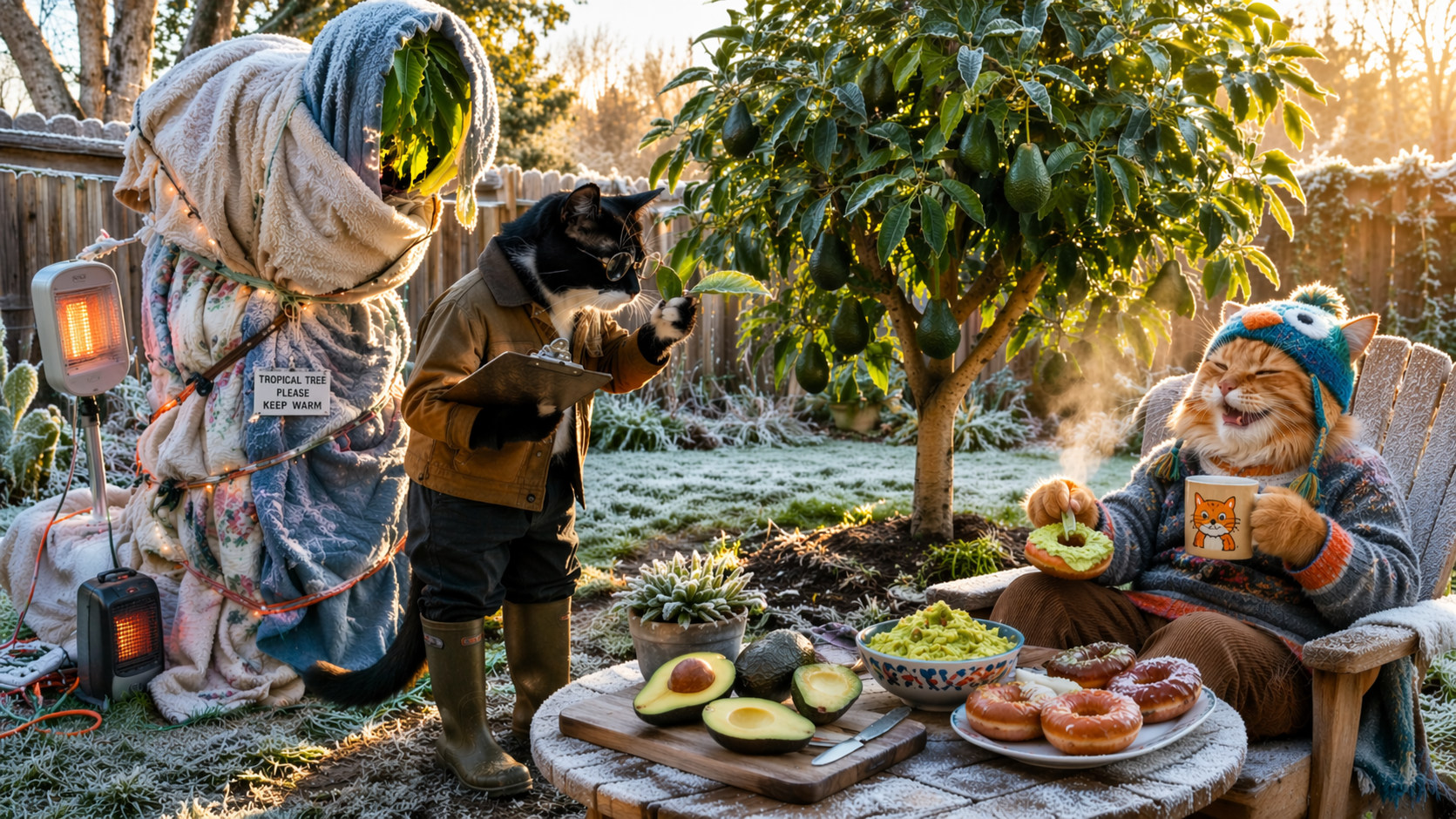
Smokey  the  black-and-white  cat  with  glasses  sits  on  a  patio  taking 
 notes  while  Sunshine,  a  fluffy  orange  cat  wearing  bunny  ears,  holds  a  small 
 potted  mango  tree  with  light  yellow  flowers.
Sunshine: I love these crazy guacamole donuts… but I’m tired babysitting trees during cold.

Smokey: Then stop planting trees that need babysitting. Plant cold hardy avocado.

Read more about Smokey & Sunshine

You always wanted an avocado tree. Not in Miami - right there in Central Florida, in your own yard. You planted one, it grew well for a few years, and it felt like you finally figured it out. Then 2026 hit. A few cold nights, temperatures dropped below what your area usually sees, and the tree was gone.

Here is the part most people miss: USDA zones are based on average minimums, not the worst freezes. One bad night can erase years of growth.

That does not mean avocado will not work. It means you planted the wrong variety. Cold hardy avocados are built for exactly this kind of surprise.
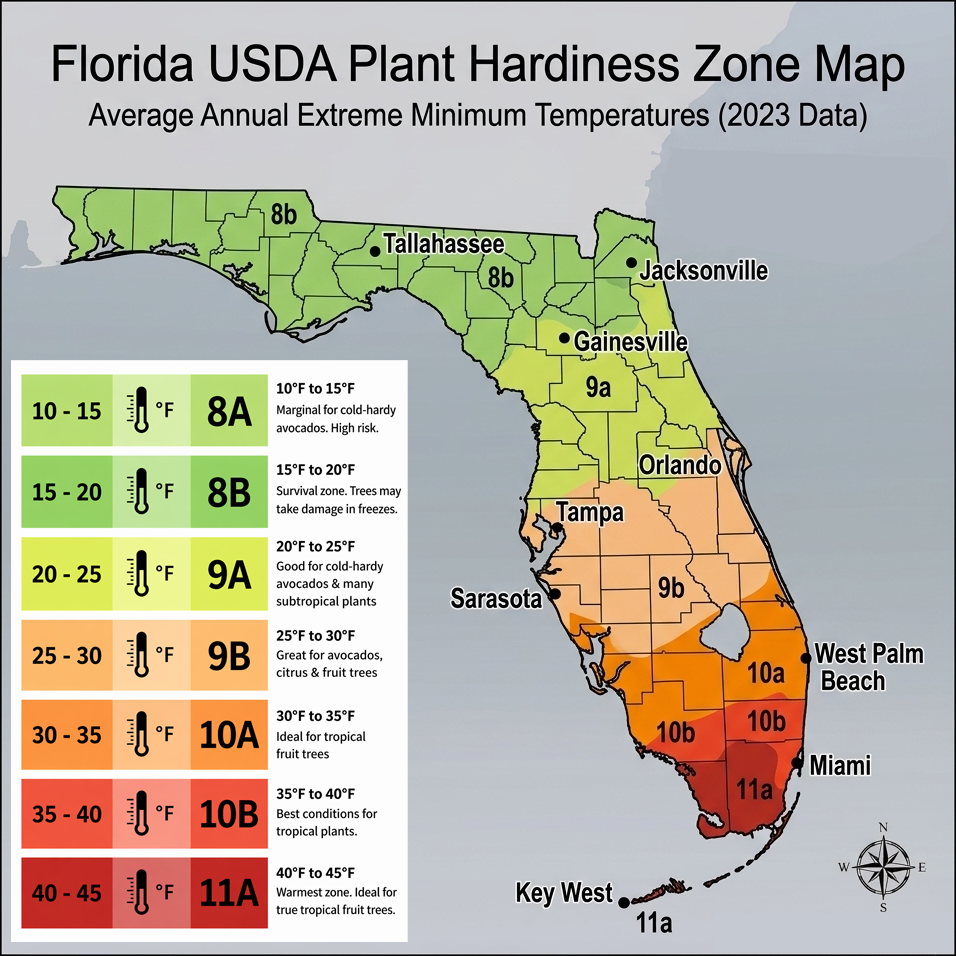
Florida  USDA  plant  hardiness  zone  map  showing  zones  8a  through  11a  with
    temperature  ranges

USDA zone map

This USDA Zone map makes one thing clear: all of Florida can grow avocado. The question is not if - it is which variety. From North Florida (8b) to South Florida (11a), there is always an option that fits your conditions.

If you are outside Florida - in Texas, Louisiana, California, or anywhere else - the same rule applies. Start with your USDA zone, then choose the right type of avocado for it. You can check your local zone here

So what does this mean for your yard? It is not about trying again and hoping for a warmer winter. It is about choosing a tree that actually matches your zone.

Cold Hardy Avocado Varieties for Reliable Harvests

Swipe left/right to see all data <->
🌡️ Threshold 🛡️ Resistance Profile Primary Varieties & Type Culinary Profile 📍 Geographic Best Fit
15°F+ High Resistance: Mexican-type selections. Short freezes near 15°F are survivable with minor leaf burn. Fantastic (A), Joey (B), Lila (A), Poncho (B) High Oil / Nutty USDA Zone 8b / 9a transition regions. Central/North Florida, Texas, Arizona
20°F+ Moderate: Brief freezes usually survivable. Full recovery may take an entire growing season. Bacon (B), Brogdon (B), Day (A), Fuerte (B), Mexicola Grande (A), Ulala "Super Hass" (A), Winter Mexican (B) Medium Oil / Creamy Coastal 9a. Inland Florida and colder microclimates.
25°F+ Light: Visible canopy damage and branch dieback are common. Survival depends on wind protection. Choquette (A), Oro Negro (B), Lula (A) Rich / "Black Gold" Zone 9b/10a. Coastal Central Florida and protected microclimates.
30°F+ Frost Tolerant Only: Even brief freezes cause rapid damage. Best for South Florida. Simmonds (A), Black Prince (A) Mild / Large Slicing USDA Zone 10a / 10b. S. Florida, Miami, Keys, Coast.
  Compact: Move inside during cold Dwarf Wurtz (A&B) and Fuerte (B) Rich / High Oil Patio Growers & Containers

See more varieties in our Master Avocado Varieties table

Microclimate matters more than your zone. The same yard can have warm and cold pockets. Plant near a south-facing wall, under light canopy, or in a spot protected from wind, and you gain a few critical degrees on cold nights.

Young avocado trees need protection during their first winters. They have not built enough wood or root strength yet, so even a short cold snap can damage them. Simple steps like frost cloth, wind protection, or temporary covers can make the difference between a setback and a loss.

You may see avocados labeled as Type A or Type B. This refers to how the flowers open, not cold hardiness. Some people mix both types to improve pollination, and while a single tree can still produce fruit, having two different types is beneficial and can increase your harvest.

Practical Planting Advice

  • Plant on a mound
    Raise the root zone 4-8 inches for fast drainage.
  • Avoid low spots
    Standing water is worse than drought for avocados.
  • Full sun
    Maximum light = stronger growth and better recovery.
  • Use microclimate
    South-facing wall, light canopy, or wind protection adds critical warmth.
  • Do not overwater
    Let the top layer dry slightly between watering.
  • Protect first winter
    Cover young trees during cold nights.

✅ Stop Guessing. Plant What Works.

Cold hardy avocados are not theory - they are proven to handle real conditions. Choose the right variety for your zone, plant it correctly, and you stop replacing trees after every cold snap.

🎥 Watch cold hardy avocado videos

✨ Grow More. Save More.

Get 10% off when you buy 2 or more 3 gal avocado trees. Mix varieties, combine Type A and Type B, and set yourself up for better pollination and bigger harvests.
Offer valid through 04/15/2026. No code needed - discount applied automatically at checkout.
Discount applies to 3 gal avocado plants only. Not valid on previous purchases and cannot be combined with other promotions or discounts. Offer subject to change without notice.
🛒 Shop cold hardy avocado
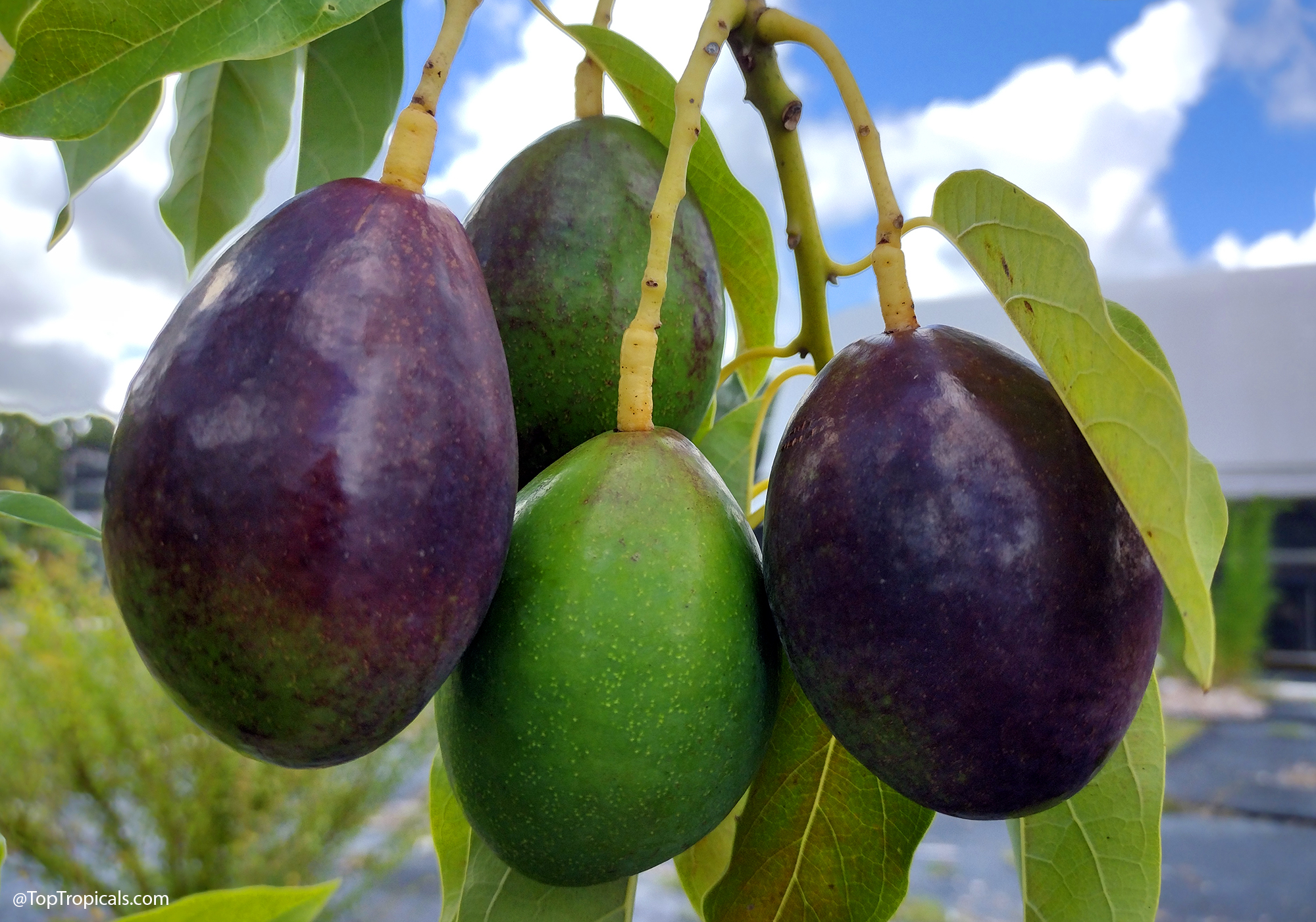
Avocado  tree  Joey,  Semi-Dwarf,  Cold  Hardy  (Persea  americana)  -  purple 
 and  green  fruit  on  a  branch

Joey is one of the most cold hardy Avocado trees with a compact habit and very pretty fruit. The flesh is nutty, smooth, and mildly sweet.

📚 Learn from our Blog:
Avocado for cold areas
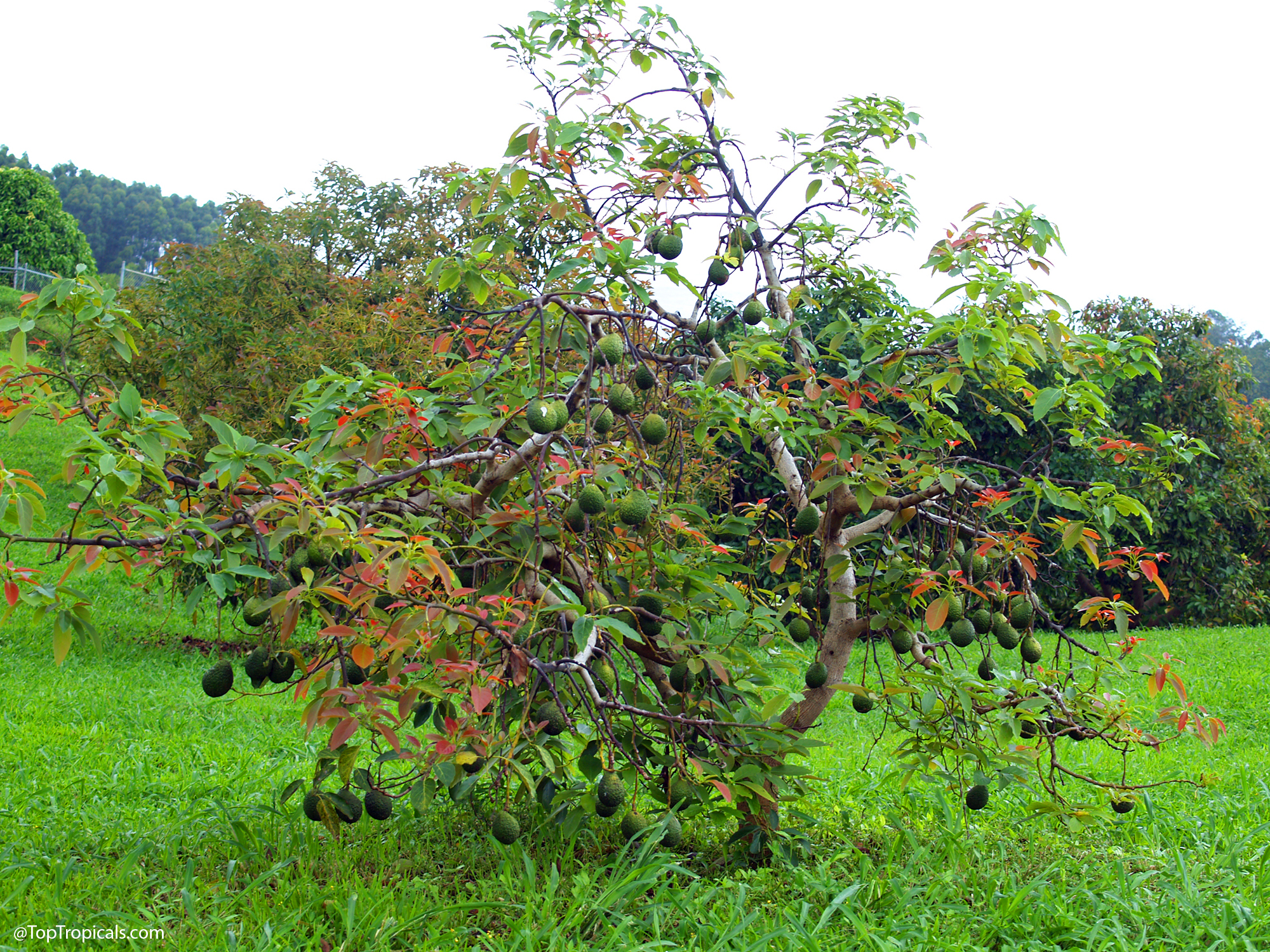
Fuerte  avocado  tree  compact  dwarf  growth  with  green  fruit  in  garden 
 setting

Fuerte is very productive, cold hardy, and is one of very few dwarf avocado varieties that stay compact in the garden and easy to grow in container.
Date: 22 Oct 2025

Detailed Cassia and Bauhinia Care Guide

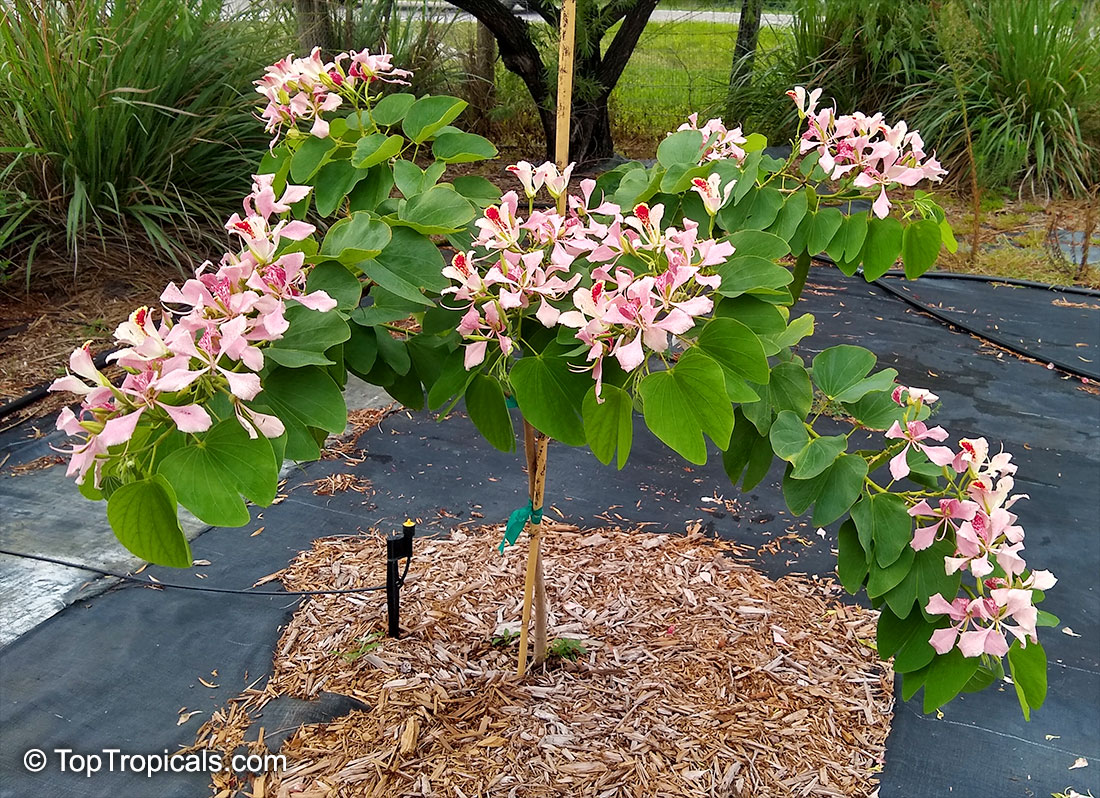
Young  Bauhinia  monandra  tree  blooming  with  clusters  of  pink  and  white 
 orchid-like  flowers,  growing  at  Top  Tropicals  nursery  with  fresh  mulch  and 
 drip  irrigation 
 setup

Outdoor Cassia and Bauhinia Care

  • Light: Both Cassia and Bauhinia need at least 6 hours of direct sunlight daily. Cassias handle intense heat; Bauhinias can take light afternoon shade.
  • Soil: Use loose, fast-draining soil. Mix equal parts garden soil, coarse sand, and compost.
  • Watering: Keep evenly moist but never soggy. Cassias tolerate dry spells once established; Bauhinias prefer steady moisture. Water when the top inch feels dry.
  • Feeding: For profuse flowering, feed with liquid Sunshine Boosters Megaflor that is safe to use with every watering, year around. You may also apply Green Magic controlled release fertilizer every 6 months. Bauhinias and Cassias respond quickly to feeding.
  • Pruning: After flowering, prune lightly to shape and remove dead tips. Cassias can be trimmed to shrub form; Bauhinias stay bushy with pinching.
  • Mulch: Add a 2-inch mulch layer around the base to conserve moisture and prevent weeds, but keep mulch off the trunk.
  • Cold protection: Most Cassias handle brief frost; some Bauhinias like B. acuminata and B. monandra must be sheltered below freezing. For cold nights, cover with frost cloth or move containers into shelter.
  • Dormancy: Outside of tropics, most Bauhinias drop leaves in winter for a short period of time, right before flowering and are called "semi-deciduous". Cassias stay evergreen.

Indoor or Porch Care (cool-climate growers)

  • Container: Choose a sturdy pot with several drainage holes, one size larger than the root ball. Unglazed clay or thick plastic pots work best for heat regulation. Use a light, well-drained mix such as professional soilless mix Abundance. Both Cassias and Bauhinias dislike soggy roots. Add a thin layer of coarse gravel at the bottom to improve drainage. Repot every 1–2 years in spring
  • Light: Brightest spot possible - south-facing window or heated sunroom. Supplement with a grow light if sunlight is weak.
  • Temperature: Keep potted trees in warm environment for best results. The optimum temperature for Cassias and Bauhinias is between 60–85 F, although many species can tolerate cooler temperatures. Avoid cold drafts and sudden drops.
  • Humidity: Average indoor humidity is fine; occasional misting keeps foliage glossy.
  • Watering: Water sparingly in winter when growth slows; allow the top inch to dry between waterings. Do not let roots sit in water.
  • Fertilizing: Feed with Sunshine Boosters Megaflor that is safe to use with every watering, year around, to maintain flowering indoors. You may also apply Green Magic controlled release fertilizer every 6 months.
  • Pest watch: Check undersides of leaves for aphids or whitefly. A light spray of neem oil or insecticidal soap clears them fast.

"Whether you crave golden summer fireworks or soft orchid blooms that last nearly all year, both Cassia and Bauhinia bring pure joy to the garden. 💖 Bring color that never quits."

Did you know: Fall is the best planting season — roots grow faster and you’ll have flowers by spring!

✔️ Fall Planting Guide

🛒 Shop Tropical Flowering trees