Garden Blog - Top Tropicals

Date: 27 Feb 2020

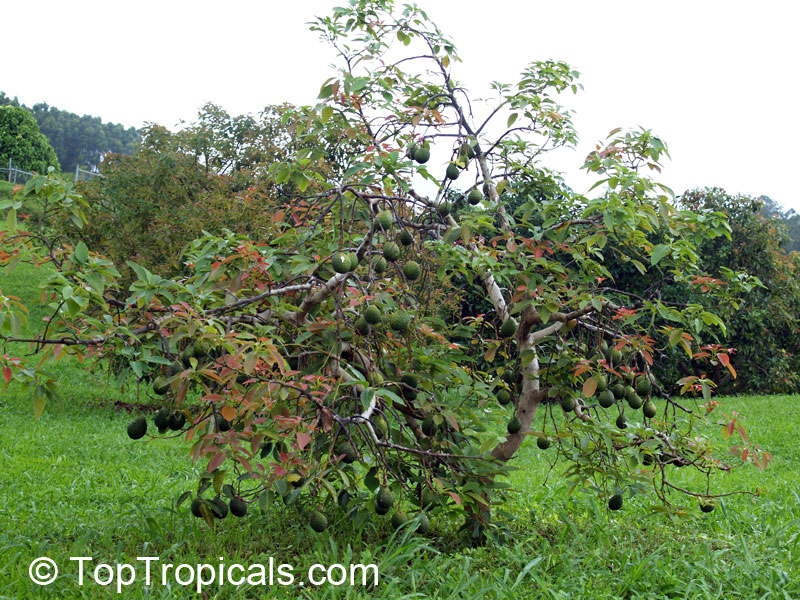
7 secrets of a Happy Avocado Tree
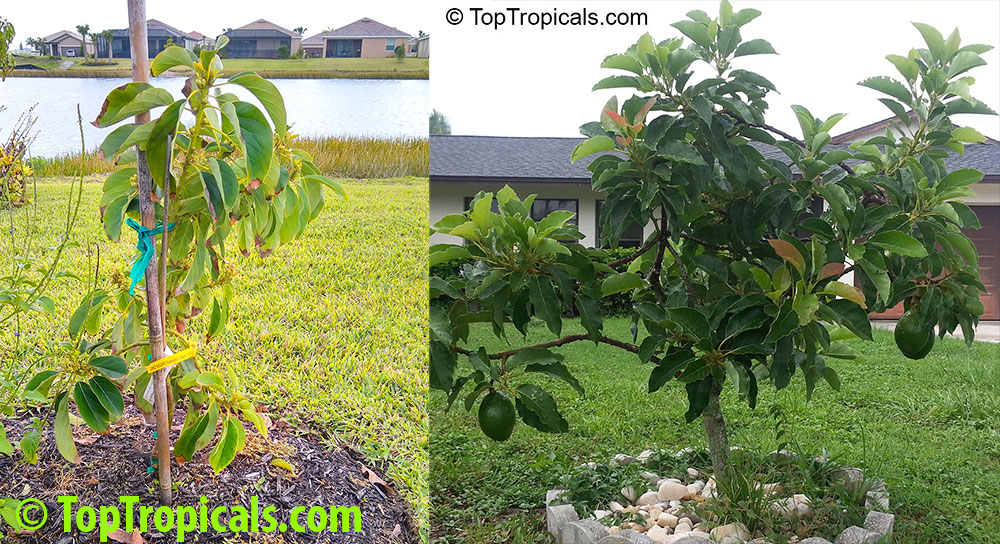
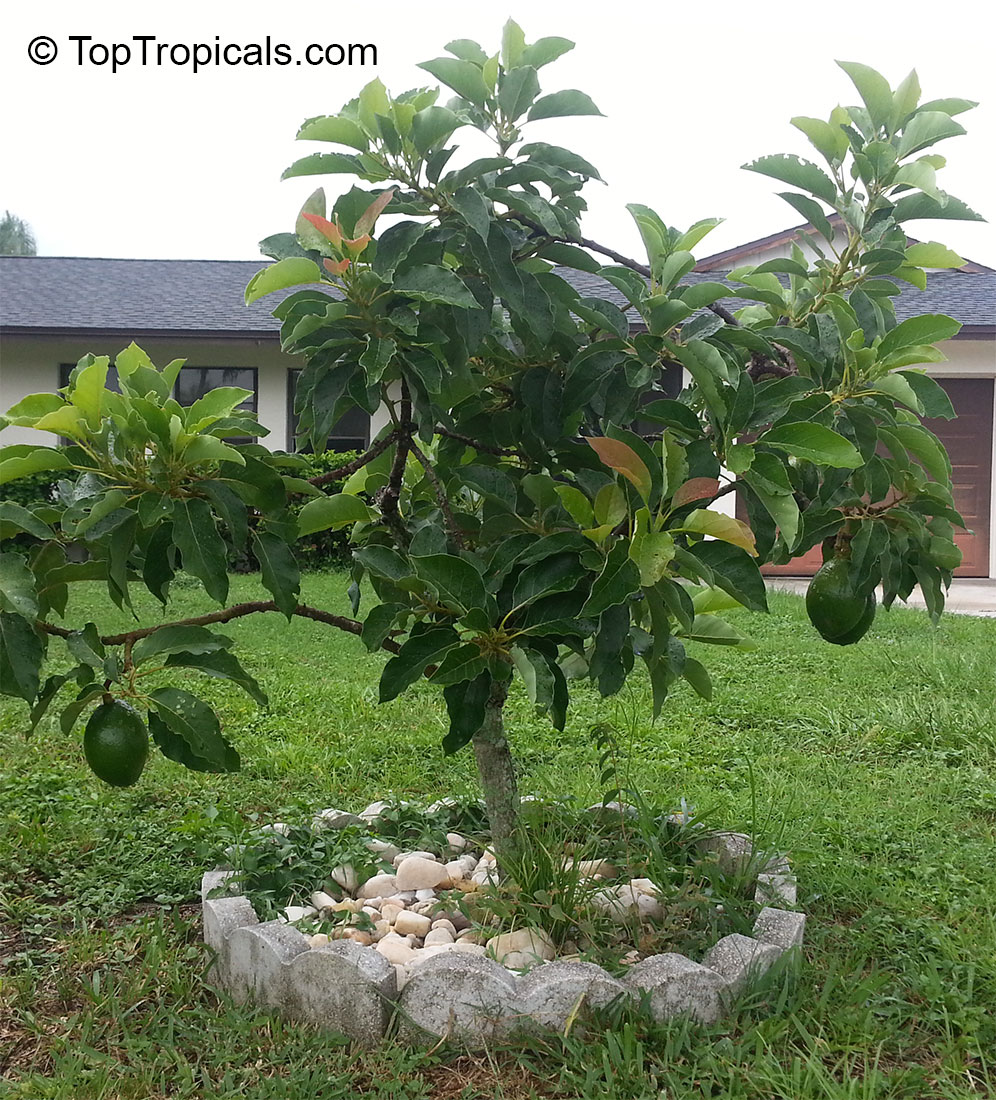
Q: I purchased an avocado tree from local garden centers three times but every time it dies on me. My neighbor has a nice tree in his yard and it grows beautifuly. I just purchased one online from you and I need to know what I was doing wrong? Are there any secrets how to make an Avocado tree happy? I have a big garden and several mango trees, but no luck with Avocado...

A: Avocado tree is famous for being such a pain to establish. But once it starts growing, it's growing! We will share a few simple tricks how to make it right.

1. Plant high and provide good drainage. Wet feet is number one reason for failing an avocado tree. It doesn't like wet soil and won't tolerate soggy conditions. Plant it in the highest spot of your yard and slightly on a "hill" (3-4"higher than the surrounding ground).
DO NOT plant Avocado tree in low spots or wet spots of your yard. Save those spots for Cannas or Black Sapote or even a Mango if you want a fruit tree there.
2. Use quality soil. Use only well-drained soil with high content of organic matter. You may add compost to existing sandy soil, or add some professional potting mix that contains pine bark and perlite. Remove rocks from the hole if you see any while digging. Dig a big hole and fill it with a good soil; compact the soil in the hole very well before setting the root ball. Reminder: plant the tree high!
3. Water regularly. After planting an Avocado tree in a nice high spot with a good drainage, start watering it... daily! Avocado likes water, although it doesn't like wet feet! Once you figure out this combination, you've got the recipe of success. Water by hand daily for the first week after planting, then twice a week for couple weeks, then once you notice new growth - you may rely on sprinklers, but keep watching the tree and don't let the soil over-dry. It must be slightly moist, but not soggy.
4. Fertilize. For such finicky tree, we suggest mild formulas of fertilizers. Dry fertilizers may burn roots, especially of a young tree. Even smart-release granulated fertilizers should be used very carefully. The best way to feed your young avocado tree - get a complete set of Sunshine Boosters Pro system. It has all necessary elements for all stages of plant development and never burns the roots. Sunshine Boosters Pro can be used with every watering - no need to guess how much and when. Besides, it is a natural fertilizer based on amino acids - exactly what you want to use on your fruit trees and other edibles!
5. Boost immune system of the tree. Apply Sunshine Epi plant hormone every 2 weeks as a foliar spray to boost immune system and metabolism of the tree and protect it from diseases. Epi makes plants (especially young plants) grow twice faster! It also enhances effect of fertilizers by increasing plant metabolism.
6. Do not prune until you see significant growth. The tree is small and can use as many leaves and branches as possible for photosynthesis and healthy metabolism. We suggest to avoid pruning for at least the first year. On the second year your tree most likely will be covered with flowers (assuming you followed fertilizer program). Let it go through the blooming stage and setting fruit; prune in Fall after fruiting is over.
7. Keep number of fruit to minimum for the first crop. Don't let the small tree exhaust itself. Keep just 2-3 fruit to develop. The next year, no need to control fruit quantity, the tree will develop as many as it can support.
P.S. If you got the tree from a mail-order, remember to establish it in a pot before planting in the ground; move gradually from shade to sun. Follow planting instructions.

Learn more about Sunshine Nutrition System - a Natural solution for your garden.

Date: 24 Jul 2019

Plants that are not for eating

Q: On the website, it says that the pua keni keni tree is toxic. Do you know how toxic? Is it mild irritation or can someone die from ingesting any part of the plant?

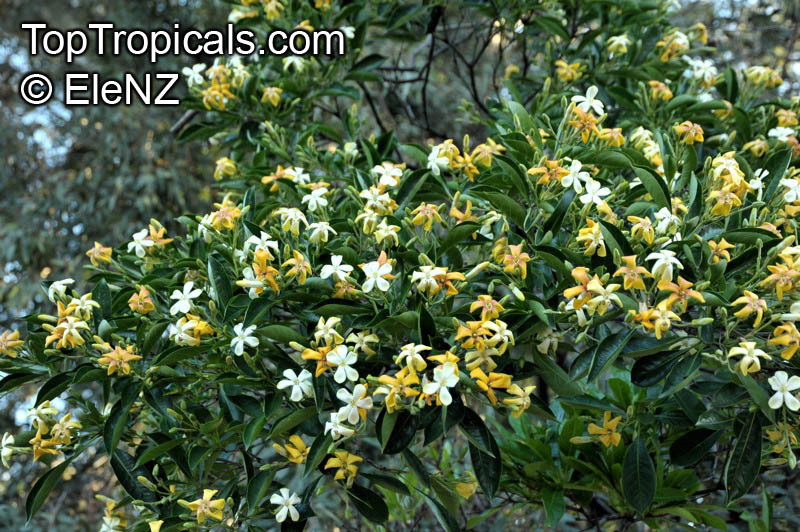
A: Pua Keni Keni, Fagraea - seeds (and especially flesh of the fruit) are toxic, so we recommend to always wash your hands after handling them. Obviously, nobody in our team ever tried to eat them to check how toxic they are and if they are deadly.

In general, one must be careful when using plants for purposes other than ornamental growing, especially for consumption. While some obvious edibles (cultivated fruit, vegetables, herbs) are generally safe, but some individuals may have severe reactions - for example, many people are allergic to mangoes; other people may be sensitive to only mango leaves.

A number of plants that have parts commonly consumed for food, have other parts toxic or poisonous. Example: Potato - Solanum tuberosum - has edible tubers feeding the whole planet population, but this plant's fruit is highly toxic and even deadly if eaten. Fruit from a Potato plant look like tiny little green tomatoes since Potato belongs to the same family as Tomato - Nightshade, but it is super poisonous, while Tomato fruit is perfectly edible. So one must watch out and especially educate little children about not tasting anything directly from the garden.

As far as animals concern, in Nature they know what is poisonous and what is edible. Have you ever seen dead birds around a tree with poisonous fruit/seeds? Animals have their own sense for it. So if your concern is for pets, it is normally safe to have pets around plants with irritating or even poisonous parts. However, if your dog has a bad habit of chewing on stuff, you may use extra caution there.

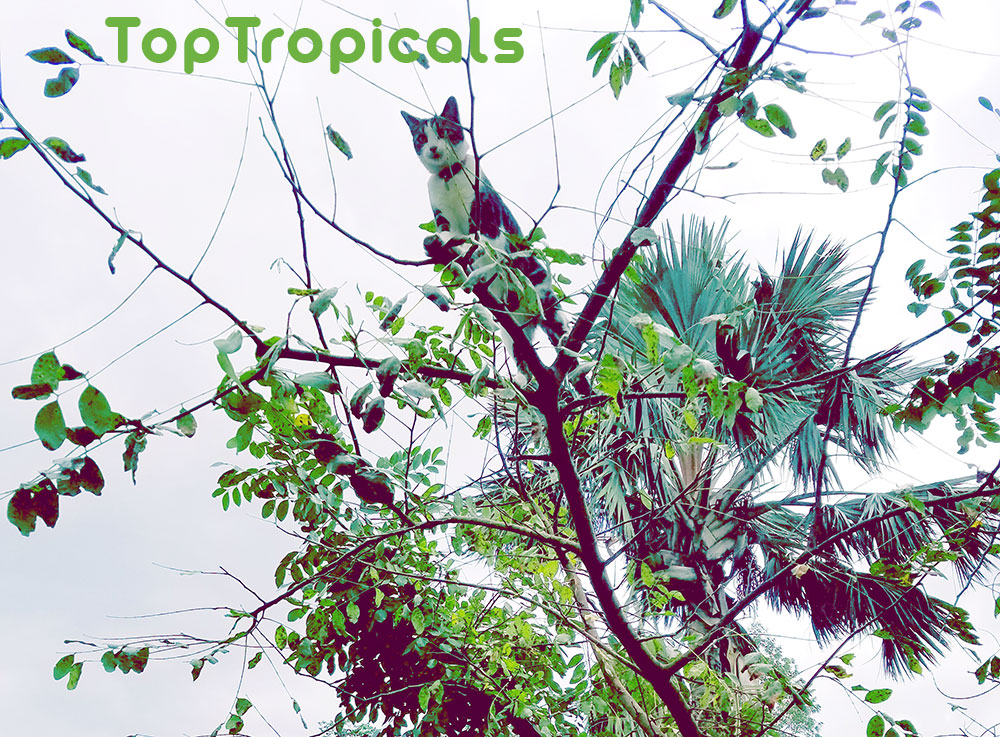
Photo below:

Riki-Tiki-Tavi exploring TopTropicals Gardens.

Date: 5 May 2019

Growing Noni tree for fruit

TopTropicals.com

Q: I would like to buy a noni tree, something that would produce much fruit as soon as possible. I live in NJ, would you ship here?

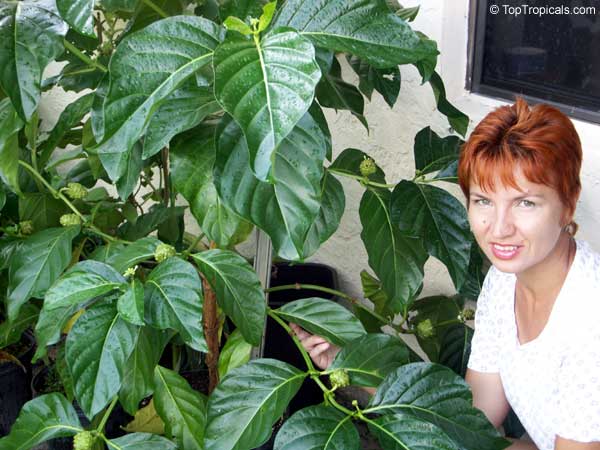
A: Noni is one of the most suitable fruit trees for potting culture. A 1-3 gallon size plant will flower and fruit for you within a year. These are Noni's special features:

- flowers and fruits at young age, nearly year around
- tolerates shade and grows large ornamental leaves in filtered light
- suitable for indoor culture
- easy in cultivation, drought and water tolerant, not susceptible to insects
- medicinal properties are endless and cannot be under-appreciated

This plant can be shipped to any state, and will produce fruit for you under minimal care. Just provide warm frost-free conditions, as this tropical tree is very cold sensitive.

Read more about Noni...

Date: 5 Feb 2019

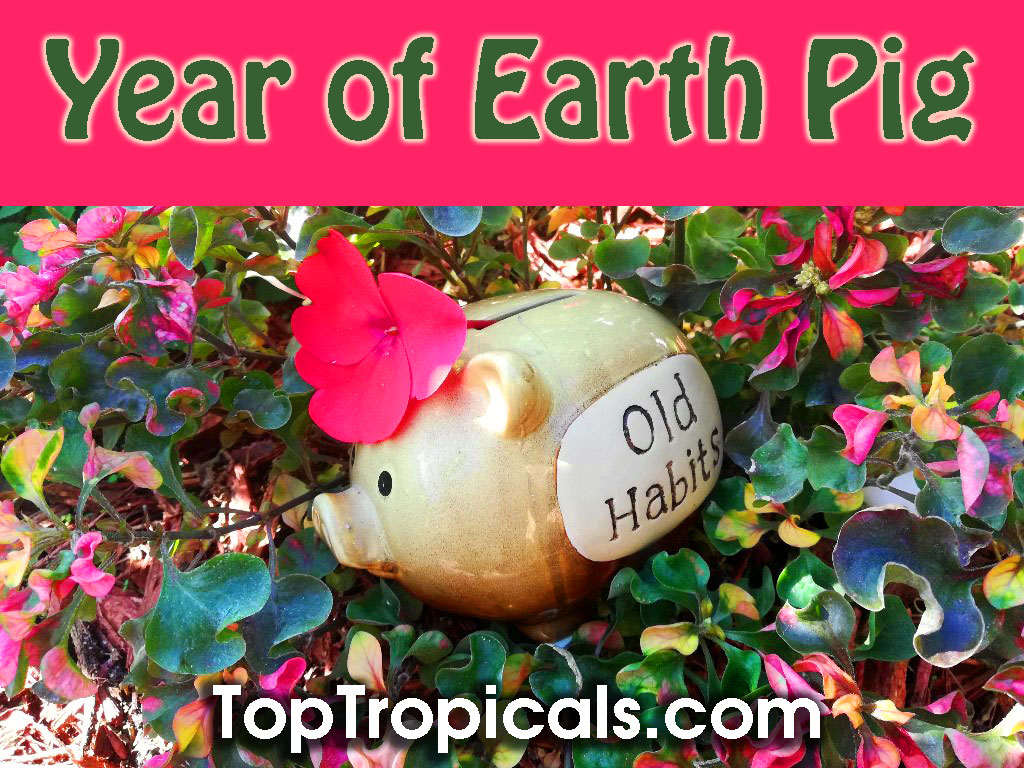
Happy 2019 - Year of Earth Pig!

TopTropicals.com

2019 is the Year of the Earth Pig, according to the Chinese Calendar, and it just started February 5!
In 2019, the corresponding element is once again Earth, as it was in 2018. So what happens when you mix the Pig with the Earth Element?

An Earth Pig year combines a realistic but happy-go-lucky sociable pig combined with the steady and sensible characteristics of Earth, it combines the relaxed attitude of the animal with a very "down-to-earth" realistic climate, don't try to push too hard, this is a time to take things in stride. For the Pig, it was definitely all about the journey and not the destination! Because of the Pig's willingness to always help others out, it tends to bring good things to everyone around him. The Pig in Chinese culture represents wealth and prosperity.

2019 is a good year for giving your garden a fresh start, and especially for establishing new fruit trees that will bring you the enjoyment of deliciousness and... always healthy good food on the table!

2019 Super Fruit

TopTropicals.com

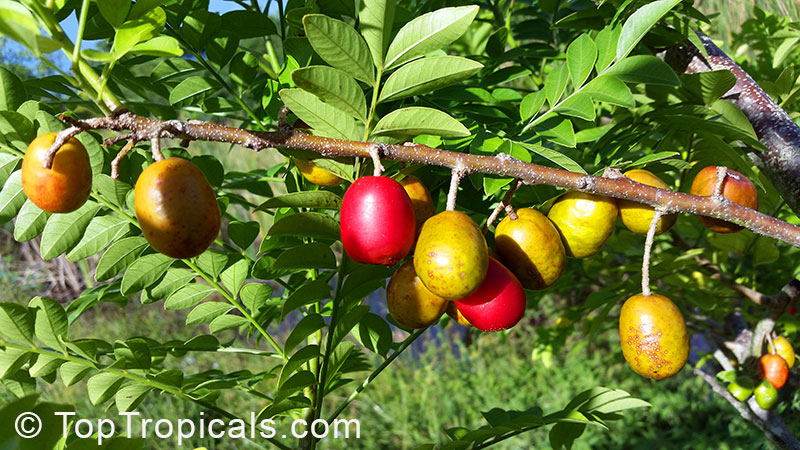
This year, to keep the Pig happy and helpful, every tropical gardener should get a Hog Plum - a fast-growing and easy to care rare fruit tree with delicious aromatic fruit. It will fruit for you this year!

For lucky Zodiac plants, see Plant Horoscope Page.

Date: 7 Jan 2019

Three interesting varieties of Avocado

TopTropicals.com

Q: I intend to gift three avocados, at least one type A and one type B, to a friend who lives in an area where the temperature never goes below 25F. The idea is to give them a ripening season as long as possible. Which combinations do you suggest, and which are the A and B?

A: When talking about "A" type and "B" type in Avocados, we are referring to the flowers. An avocado will produce both male and female flowers on the same plant. "A" type means that the flowers are female in the morning and male at afternoon. "B" type means that the flowers are male in the morning and female in the afternoon. If you plant to start a commercial growth, then it's important to create a proper mix of both types. However, in hot and humid climate a single tree produces flowers of both types, so it is NOT necessary to have both A- and B- types planted together in the backyard. Even a single tree produces enough fruit for a home gardener.

It is also important to know that while there are "more cold hardy" avocados (hardy to as low as 15F), it refers to a full grown established tree. Young trees still need protection from the cold until they are bigger and more established. One can not expect a small tree planted in June to survive the first winter with a hard freeze. It'll take a few years until the tree is strong enough.

These a few rare varieties that may be of your interest.

Poncho Avocado
Very cold hardy variety. Produces medium to large green fruit. It survived temperatures around 10F near San Antonio, Texas (Zone 8b). Mature trees can take temperatures down to 15F for short period of time without significant damage.

Anise Avocado
This avocado has strongly scented leaves that smell like Anise. Very rare variety. Fruit is of excellent quality, creamy and buttery.

Catalina Avocado
Catalina is a very nice mid-season pear-shaped fruit that is especially rich and creamy. It is an extremely popular variety in South Florida in the Cuban Community. The Story of this variety says...
...Catalina is an amazing avocado floated across from Cuba, 60 years ago just before Fidel Castro took over the Island Nation. Wise Cubans jumped into the ocean to escape the Castro regime and tossed in some favorite scions for us to enjoy here in the States. We owe a great debt to poor old Don Miguel Cruz de la Santa Maria Espinoza Sanchez Alvarez Jr. who sadly was lost at sea. His amazing scion wood, wrapped in cellophane and aluminum foil floated over, washing ashore on Miami Beach. His shiny little package was miraculously picked up on the shoreline and immediately grafted and cared for by keen-eyed avocado lovers in Miami...
So be sure to think about this story every time you eat a Catalina!

These three Avocados will provide you with fruit ripening during the whole warm season. See more information on avocado varieties and the most cold hardy cultivars.

Check out our full selection of avocado varieties. They are 15% OFF today!