Garden Blog - Top Tropicals

Date: 5 Aug 2021

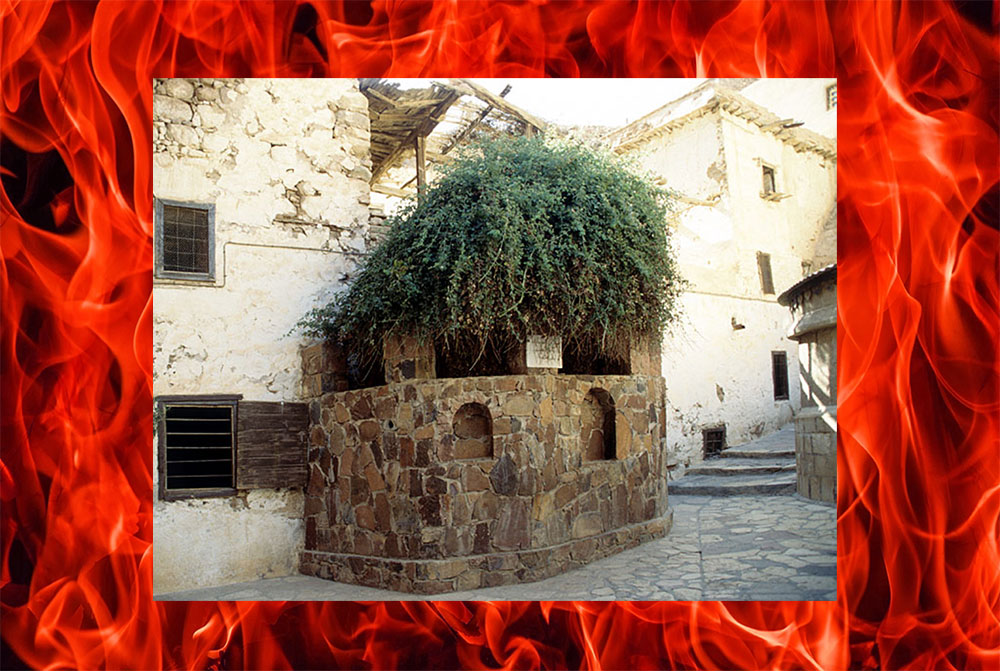
The secret of Burning Bush of the Bible...
and other Blackberries
by Alex Butova, the Witch of Herbs and Cats

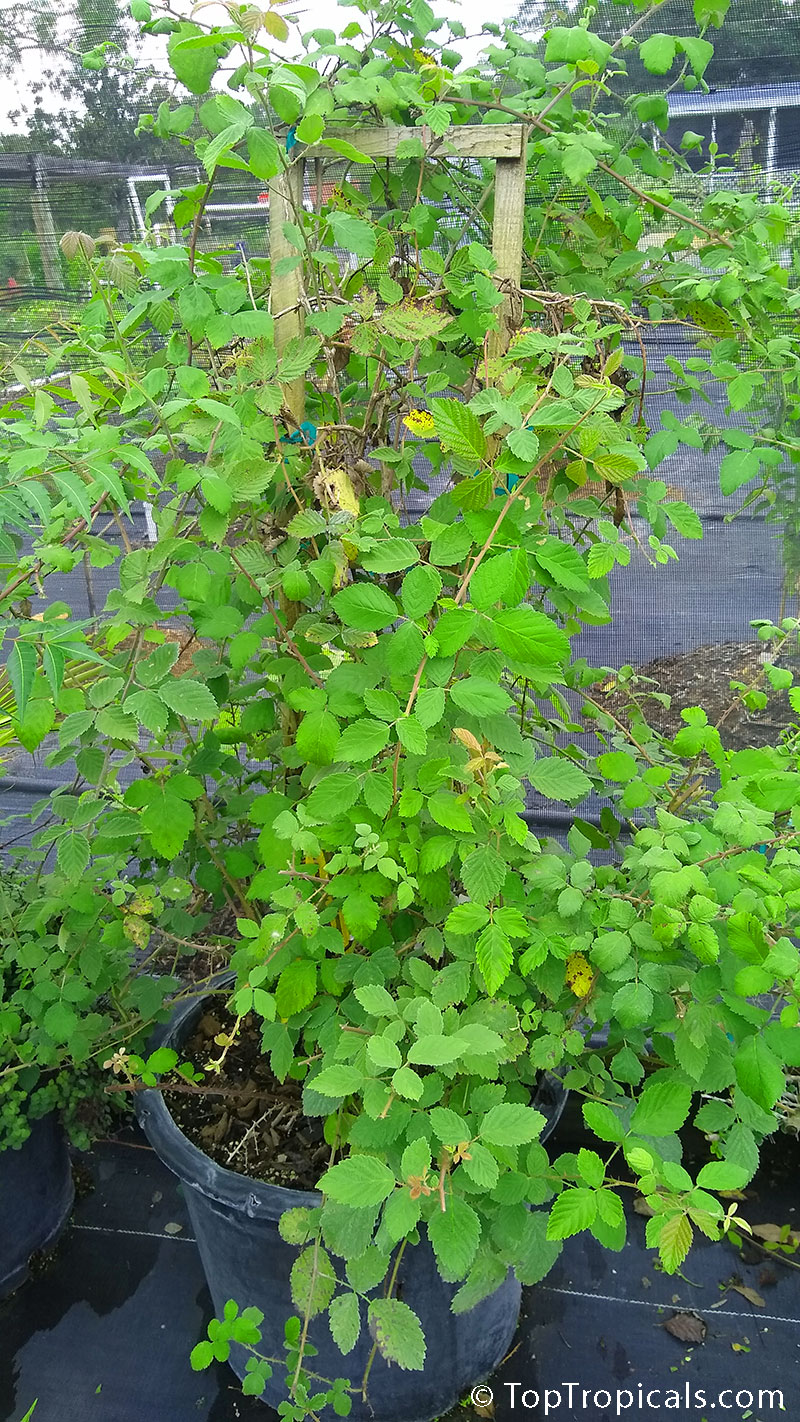
...In the entire Old Testament nowhere does God reveal more about himself to one man than in the passage of the Burning Bush... And this exact bush exists! It can be found at the Chapel of the Burning Bush on Mount Sinai, where it is revered as the original Burning Bush of the Bible survived to nowadays. The species is very long lived so chances are, this is the exact plant that has been growing and regrowing from its roots throughout centuries...

...Rubus sanctus not only successfully survived to nowadays, but is used in Blackberry and Raspberry breeding programs. It has many descendants - hybrid varieties of berries so much loved by both kids and adults...

CONTINUE READING >>

Photo above: the original mother plant specimen of Rubus sanctus growing at Top Tropicals B-Farm. This plant was obtained from Israel in 2016 and gave life to many clones of so much wanted plant, for rare plant collectors worldwide.

Date: 3 Mar 2020

Tu BiShvat - New Year for Trees

By Alex Butova

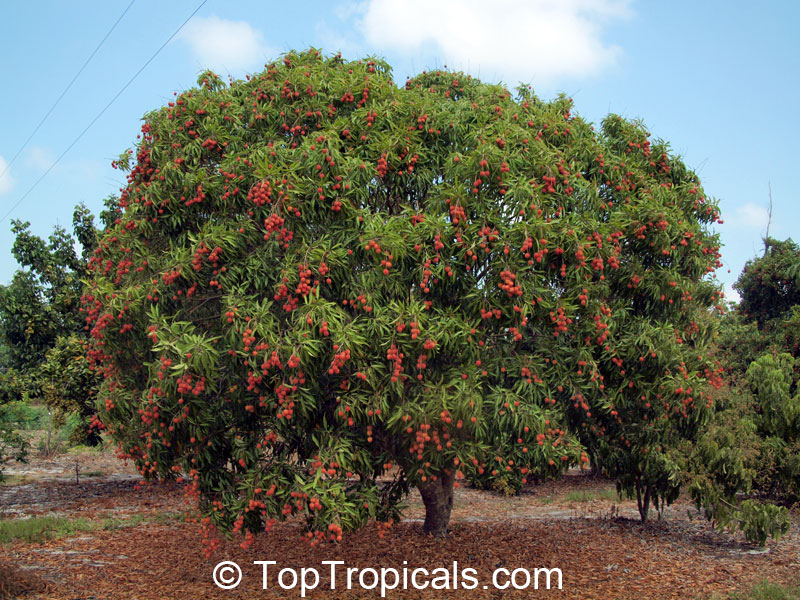
Tu BiShvat is the Israeli Arbor Day, and it is often referred to by that name in international media. Ecological organizations have adopted the holiday to further environmental-awareness programs. The modern practices and interpretations of Tu BiShvat often revolve around the earth and environment. This holiday is a celebration of nature and appreciation for creating the natural world. In Israel, Tu BiShvat is celebrated as an agricultural holiday. The 15th of Tu BiShvat was celebrated this year on February 10, 2020. This day marked the beginning of a new year for trees. This day marks the season in which the earliest-blooming trees emerge from their winter sleep and begin a new fruit-bearing cycle. Often the date of Tu BiShvat is used for determining the age of fruit baring trees and therefore establishes their birth dates. Therefore, Tu BiShvat is the "birthday" of trees!

The traditions and customs of Tu BiShvat vary, however, the most common include planting trees and gathering with family and friends for a meal. It is celebrated by eating fruit, particularly the kinds that praise the bounty of the Holy Land: grapes, figs, pomegranates, almonds, dates, olives and others. It reminds people that "a man is a tree of the field", and reflects on the lessons we can derive from the botanical analogue.

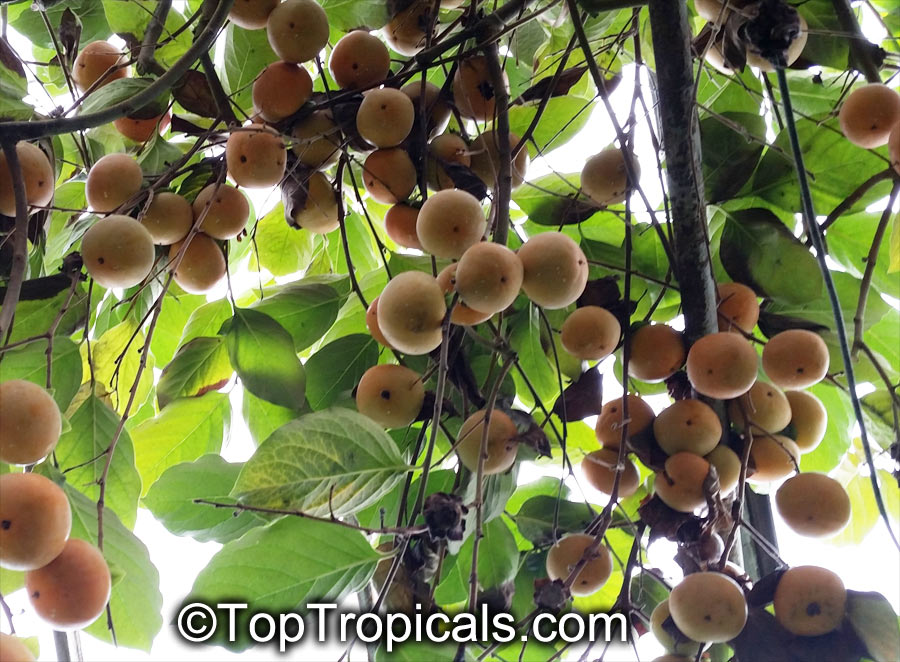
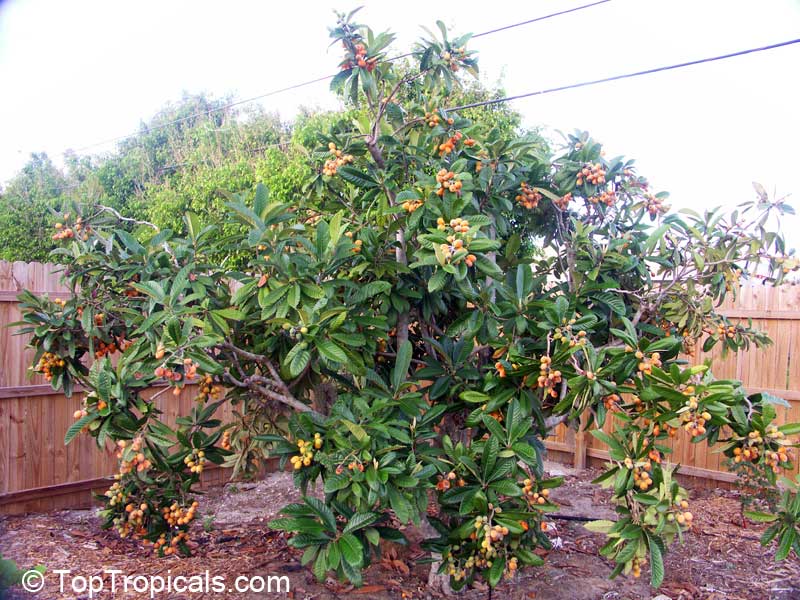
Check out fruit trees and nuts:

Persimmon tree

Loquat tree

Date: 27 Feb 2020

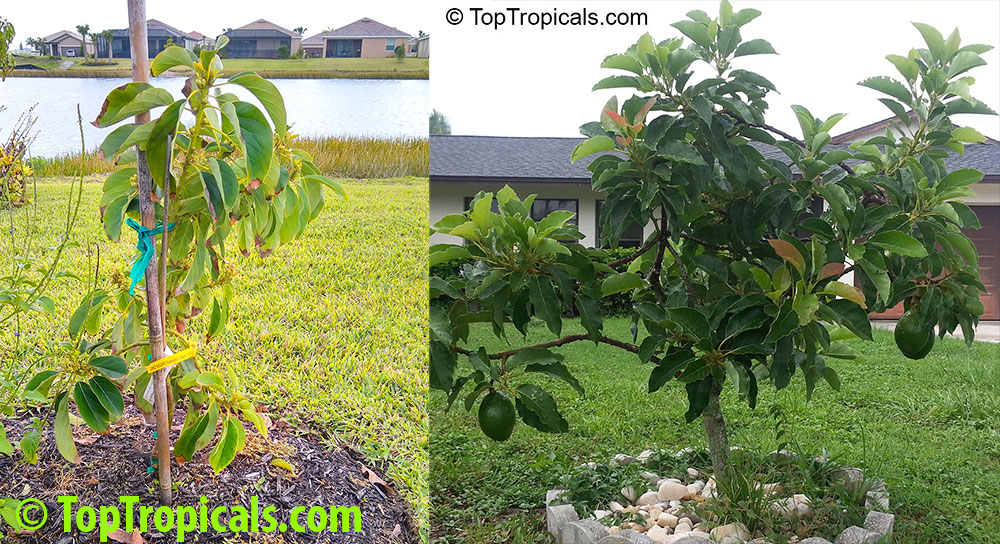
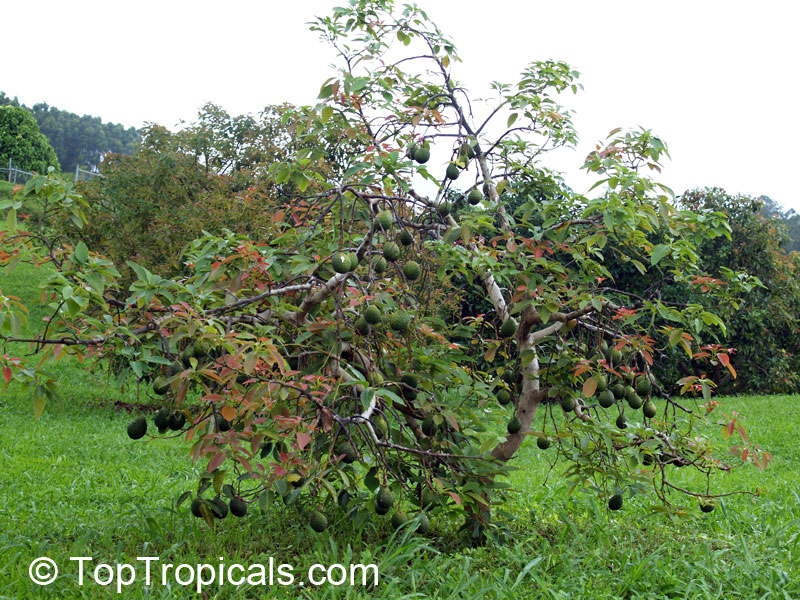
7 secrets of a Happy Avocado Tree

Q: I purchased an avocado tree from local garden centers three times but every time it dies on me. My neighbor has a nice tree in his yard and it grows beautifuly. I just purchased one online from you and I need to know what I was doing wrong? Are there any secrets how to make an Avocado tree happy? I have a big garden and several mango trees, but no luck with Avocado...

A: Avocado tree is famous for being such a pain to establish. But once it starts growing, it's growing! We will share a few simple tricks how to make it right.

1. Plant high and provide good drainage. Wet feet is number one reason for failing an avocado tree. It doesn't like wet soil and won't tolerate soggy conditions. Plant it in the highest spot of your yard and slightly on a "hill" (3-4"higher than the surrounding ground).
DO NOT plant Avocado tree in low spots or wet spots of your yard. Save those spots for Cannas or Black Sapote or even a Mango if you want a fruit tree there.
2. Use quality soil. Use only well-drained soil with high content of organic matter. You may add compost to existing sandy soil, or add some professional potting mix that contains pine bark and perlite. Remove rocks from the hole if you see any while digging. Dig a big hole and fill it with a good soil; compact the soil in the hole very well before setting the root ball. Reminder: plant the tree high!
3. Water regularly. After planting an Avocado tree in a nice high spot with a good drainage, start watering it... daily! Avocado likes water, although it doesn't like wet feet! Once you figure out this combination, you've got the recipe of success. Water by hand daily for the first week after planting, then twice a week for couple weeks, then once you notice new growth - you may rely on sprinklers, but keep watching the tree and don't let the soil over-dry. It must be slightly moist, but not soggy.
4. Fertilize. For such finicky tree, we suggest mild formulas of fertilizers. Dry fertilizers may burn roots, especially of a young tree. Even smart-release granulated fertilizers should be used very carefully. The best way to feed your young avocado tree - get a complete set of Sunshine Boosters Pro system. It has all necessary elements for all stages of plant development and never burns the roots. Sunshine Boosters Pro can be used with every watering - no need to guess how much and when. Besides, it is a natural fertilizer based on amino acids - exactly what you want to use on your fruit trees and other edibles!
5. Boost immune system of the tree. Apply Sunshine Epi plant hormone every 2 weeks as a foliar spray to boost immune system and metabolism of the tree and protect it from diseases. Epi makes plants (especially young plants) grow twice faster! It also enhances effect of fertilizers by increasing plant metabolism.
6. Do not prune until you see significant growth. The tree is small and can use as many leaves and branches as possible for photosynthesis and healthy metabolism. We suggest to avoid pruning for at least the first year. On the second year your tree most likely will be covered with flowers (assuming you followed fertilizer program). Let it go through the blooming stage and setting fruit; prune in Fall after fruiting is over.
7. Keep number of fruit to minimum for the first crop. Don't let the small tree exhaust itself. Keep just 2-3 fruit to develop. The next year, no need to control fruit quantity, the tree will develop as many as it can support.
P.S. If you got the tree from a mail-order, remember to establish it in a pot before planting in the ground; move gradually from shade to sun. Follow planting instructions.

Learn more about Sunshine Nutrition System - a Natural solution for your garden.

Date: 24 Jul 2019

Plants that are not for eating

Q: On the website, it says that the pua keni keni tree is toxic. Do you know how toxic? Is it mild irritation or can someone die from ingesting any part of the plant?

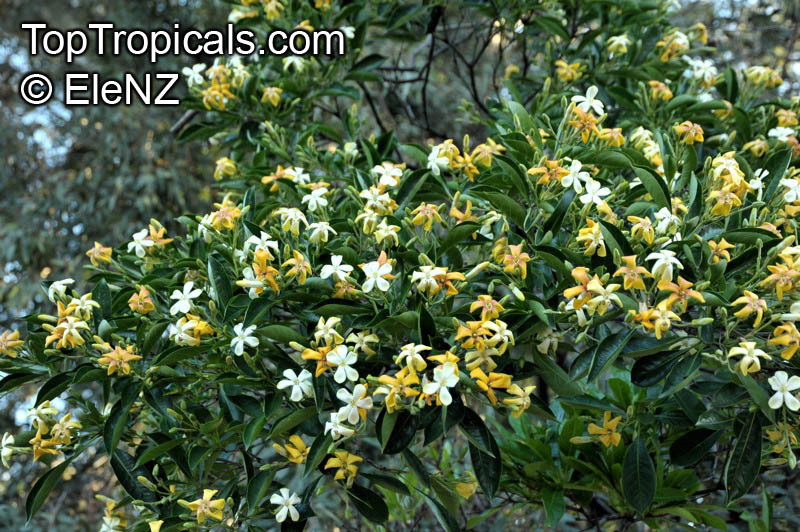
A: Pua Keni Keni, Fagraea - seeds (and especially flesh of the fruit) are toxic, so we recommend to always wash your hands after handling them. Obviously, nobody in our team ever tried to eat them to check how toxic they are and if they are deadly.

In general, one must be careful when using plants for purposes other than ornamental growing, especially for consumption. While some obvious edibles (cultivated fruit, vegetables, herbs) are generally safe, but some individuals may have severe reactions - for example, many people are allergic to mangoes; other people may be sensitive to only mango leaves.

A number of plants that have parts commonly consumed for food, have other parts toxic or poisonous. Example: Potato - Solanum tuberosum - has edible tubers feeding the whole planet population, but this plant's fruit is highly toxic and even deadly if eaten. Fruit from a Potato plant look like tiny little green tomatoes since Potato belongs to the same family as Tomato - Nightshade, but it is super poisonous, while Tomato fruit is perfectly edible. So one must watch out and especially educate little children about not tasting anything directly from the garden.

As far as animals concern, in Nature they know what is poisonous and what is edible. Have you ever seen dead birds around a tree with poisonous fruit/seeds? Animals have their own sense for it. So if your concern is for pets, it is normally safe to have pets around plants with irritating or even poisonous parts. However, if your dog has a bad habit of chewing on stuff, you may use extra caution there.

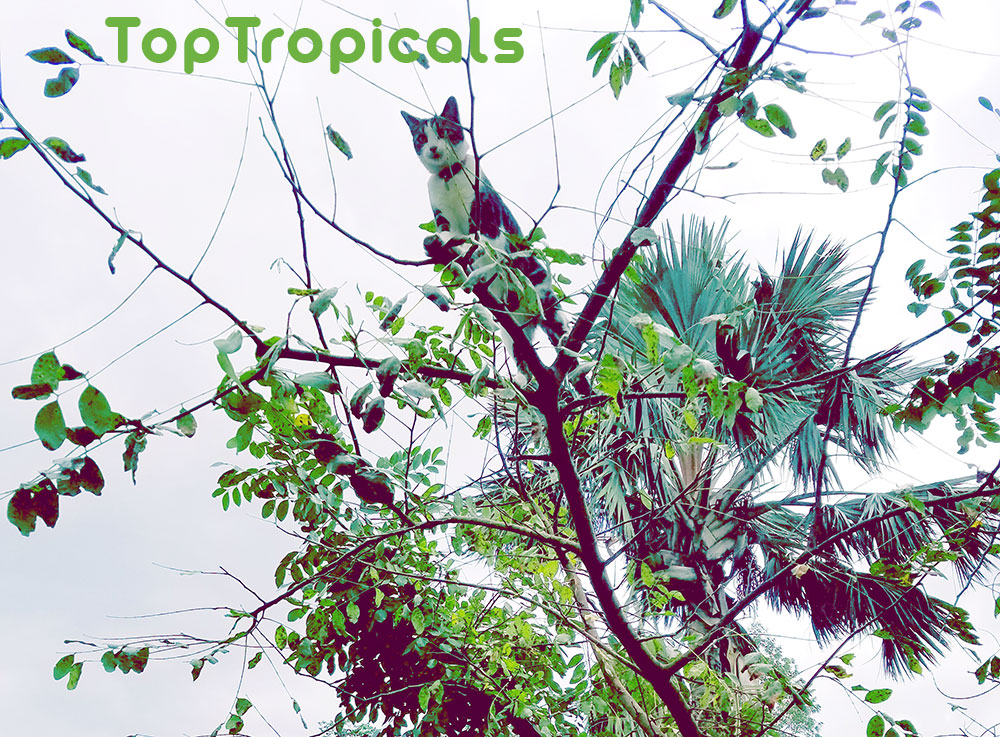
Photo below:

Riki-Tiki-Tavi exploring TopTropicals Gardens.

Date: 5 May 2019

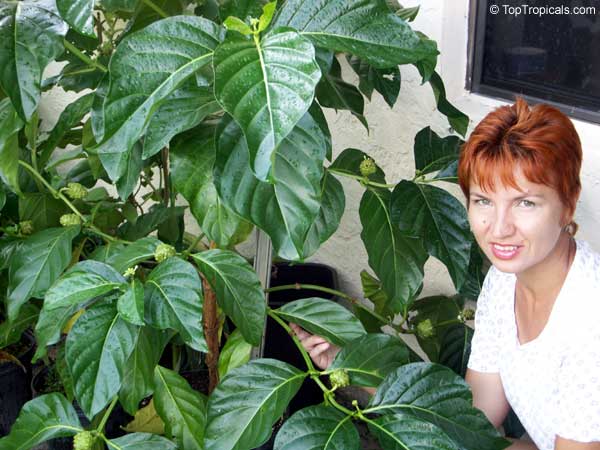
Growing Noni tree for fruit

TopTropicals.com

Q: I would like to buy a noni tree, something that would produce much fruit as soon as possible. I live in NJ, would you ship here?

A: Noni is one of the most suitable fruit trees for potting culture. A 1-3 gallon size plant will flower and fruit for you within a year. These are Noni's special features:

- flowers and fruits at young age, nearly year around
- tolerates shade and grows large ornamental leaves in filtered light
- suitable for indoor culture
- easy in cultivation, drought and water tolerant, not susceptible to insects
- medicinal properties are endless and cannot be under-appreciated

This plant can be shipped to any state, and will produce fruit for you under minimal care. Just provide warm frost-free conditions, as this tropical tree is very cold sensitive.

Read more about Noni...