Garden Blog - Top Tropicals

Date: 10 Oct 2016

Cold protection - winter action for your plant collection
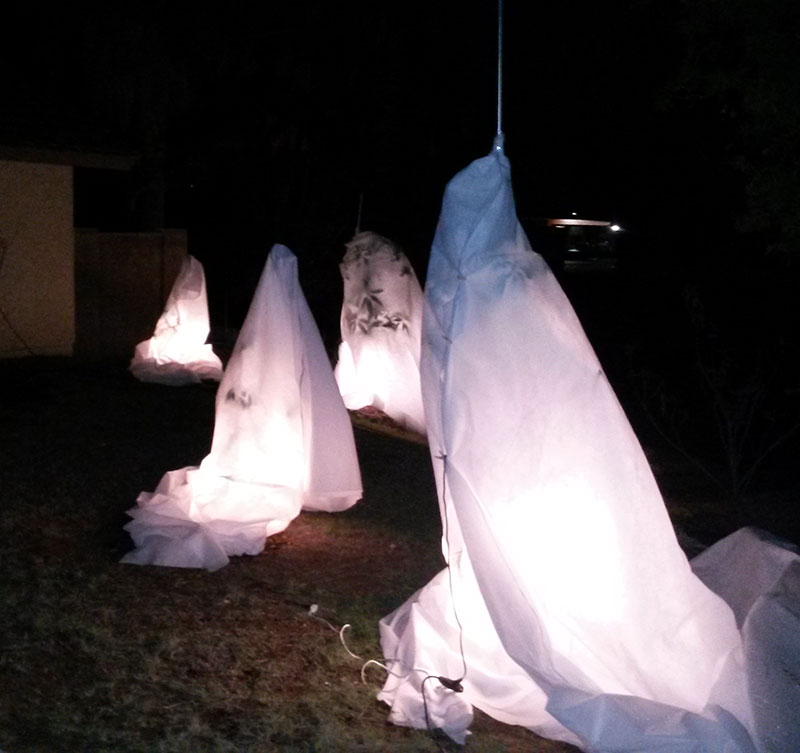
A note from our customer: Last winter was very cold here in Arizona, lower 30's. I used white synthetic sheets (called frost cloth, it is very light and yet effective) to cover my fruit trees, and kept simple light garlands on for the whole night. Sending you couple photos so you can share with others. It worked pretty well for my plants and no cold damage!

With winter approaching, it is time to take some actions to protect your rare plants from cold stress and damage.
If you live in a mild climate, you still need to get ready for the cold nights. When expecting a cold night, individual plants and trees can be wrapped with sheets, or blankets, to protect them from the wind chill. Christmas lights is a good idea for an additional warm up.

For large collections of tropical plants, temporary winter greenhouse doesn't have to be expensive. An easy-assembly mobile carport from a hardware store covered with a plastic or fabric will cost you $100-200. It can fit a hundred plants or more!

If you live in area with a hard freeze, Southern exposure windowsill will work for most of the compact tropicals providing proper care. Larger collections may also move into your garage for a few cold nights, or for longer periods if the garage has a bright light source.

Factors affecting tropical plant winter survival:

1. Duration of cold period. Tropical plants can't stand long periods of cold. A few days of even upper 30's may kill a tropical plant. A few hours of frost may cause leaf drop but the plant will recover.
2. Minimum temperature - of course, the warmer the better. But see 1) - if cold is not for too long, it may be OK.
3. Wind-chill can be more dangerous than low temperatures.
4. Exposure. Southern slopes get warm during daytime and stay warm longer.
5. Protection with a house, fence, larger trees - where a "pocket" of warm air forms and stays - is beneficial.
6. Humidity. A lake or a river nearby (especially ocean) will mild the micro-climate.
7. Individual species hardiness. Don't try to grow Orchid Tree outdoors in New York.
8. Plant maturity and health. A well-established plant with developed root system has more chances to survive cold. If a plant had a good change to develop during warm season (bright light, enough water, fertilizer), it will be more cold hardy. Healthy plant can withstand lower temperature, so proper nutrition is important, including micro-element applications. Large specimens, even ultra-tropical, may survive cooler winter than they normally do in their natural habitat. The Nature provided plants with better hardiness level than it is normally used. To boost plant immune system and improve cold tolerance even more, use SUNSHINE plant boosters. SUNSHINE-T - thermo-protection booster, is specially formulated for winter protection of tropical plants. To improve cold hardiness, spray 1-2 days prior to cold with 5 ml/1 gal solution and continue applications with 2.5 ml/1 gal solution every 10-15 days throughout winter period.
9. Gradual temperature decrease is less dangerous than a sudden drop since it gives a plant a chance to adjust. One sudden freeze in December with prior warm fall may create more damage than a gradual temperature adjustment. If it starts to get cold early in the Fall, plants slow down their metabolism, and the new tender growth won't get hurt later in winter, since the plants are "expecting" the cold.
10. Do not fertilize plants during cool months. Not only because they don't need much food beyond growing season, but also because fertilizer (especially Nitrogen) encourages rapid tender growth that will be damaged by cold and this will stress the whole plant.

Stay warm!
Date: 4 Oct 2016

Plants for happiness and joy

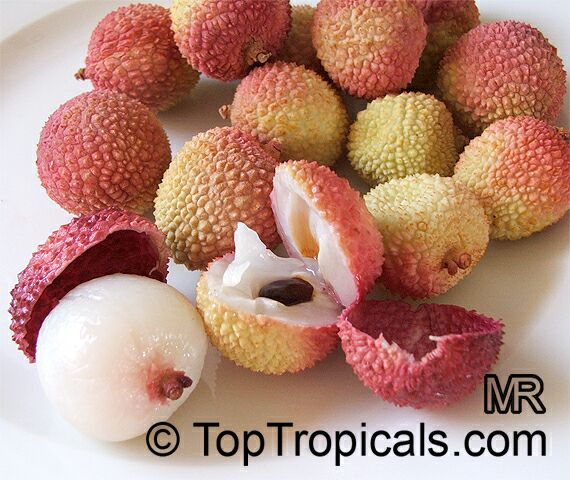
Plants as homeopathic remedies and happiness boosters. Many people know about health benefits of vitamin C which improves and boosts our immune system similar to SUNSHINE plant booster stimulating growth of plants. But not everybody realizes that this vitamin is responsible for overall happiness of our body, it brings many systems in balance. A number of tropical plants used in salads, as well as fruit with high content of vitamin C can play dual role in your life. You can use them as food, as well as enjoy their beautiful tropical appearance. Such plants will help you feel interest and joy in life when you feel apathetic and resigned to the situation you are in. Just to name a few:

Lychee
Barbados Cherry
Eugenias
Hibiscus Karkade

Try them out. Stay healthy and happy!

Date: 11 May 2016

Top Tropicals Video Presents: Doctor Noni

Top Tropicals Video Channel. We are happy to introduce to our customers our new project - Top Tropicals Video. Gardeners have been enjoying our Tropical Treasures Magazine with its unique stories on fascinating plants, their history, plant clinic and Do-It-Yourself projects. Now you can have more fun to visit actual tropical paradise by watching our short movies in your convenience - from your computer, or simply on your smart phone. In our future video tours, we will be showing both popular and rare exciting plants and how to grow them. We will be sharing little secrets of how to make these plants happy, so they will make your own life brighter and happier. Stay updated with TopTropicals Videos by subscribing to our YouTube channel at YouTube/TopTropicals and get our latest video news of what's fruiting and blooming! Our today's video story -

Doctor Noni - life sustaining plant. Many people have heard about the mysterious and miraculous Noni fruit, yet few know exactly what it is. This odd-looking fruit grows on a beautiful tropical tree from Polynesia - Morinda citrifolia, that actually belongs to a Coffee family! The Noni fruit, also called Cheese Fruit for its special odor, has unique health benefits. It is said that this plant food is to be used when we are feeling really ill or really old... Do you want to know how to have your own FREE fresh Noni juice year round? Check out this Movie: Doctor Noni - life sustaining plant...

Date: 25 Jan 2021

Healthy Plants: Q&A from Mr Booster

How to get Canistel tree to produce
without dropping flowers and fruit

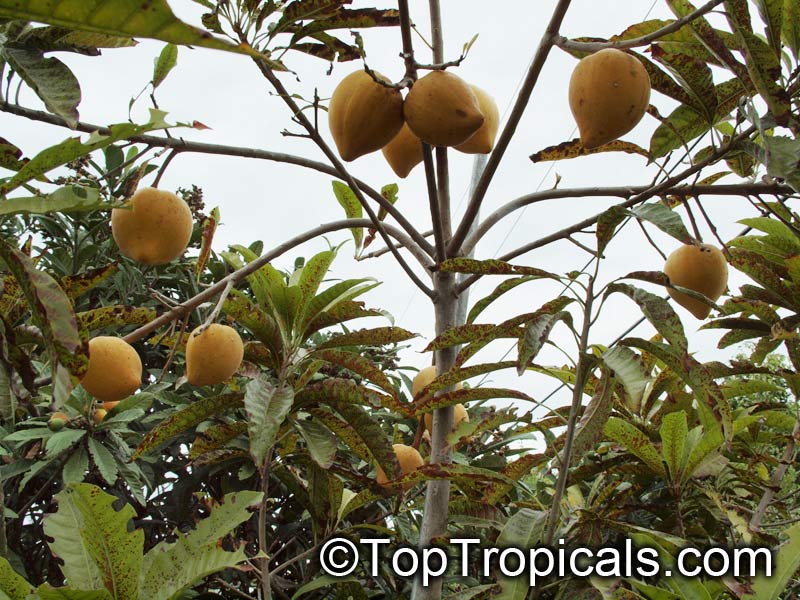
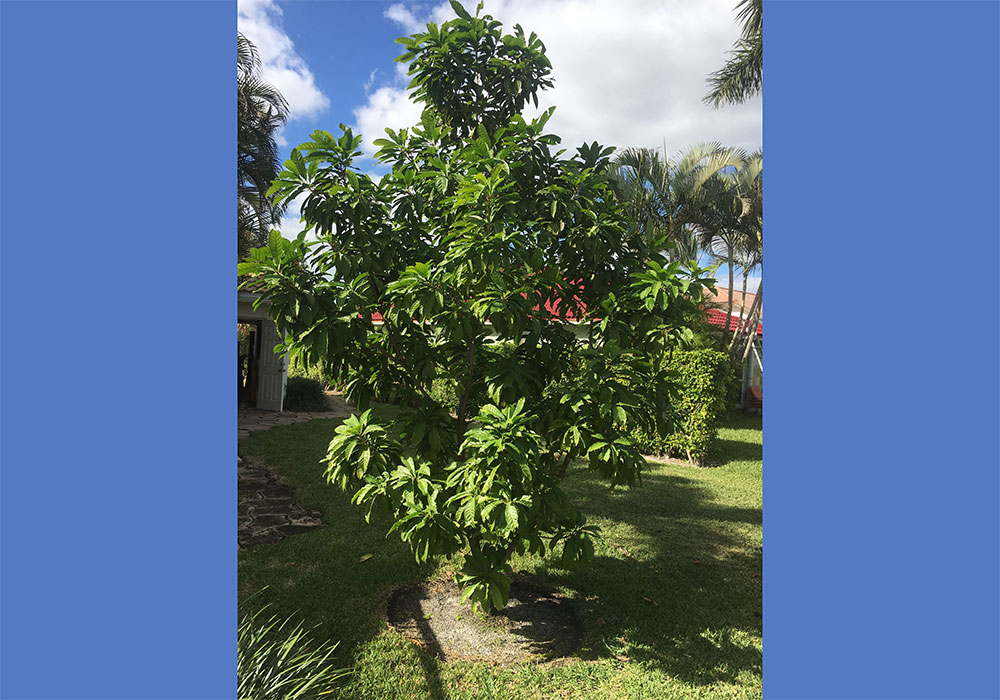
Q: My Canistel tree is 3 1/2 years old and is growing very well, see the picture below. It gets hundreds of pea sized "berries" but then they fall off. No canistel fruit. What's wrong?

A: You have such a nice looking tree, it is a shame you can't get any fruit to ripen.
In our experience, Pouteria trees dropping fruit prematurely is a very common problem. There may be one of the following reasons, or a combination of them:
- Cold winters may affect production, and while Canistel is generally pretty hardy tropical plant that can easily withstand short periods of chill, the fruit may never form properly if it had a cold winter.
- Lack of water. Canistel tree is pretty drought tolerant, but for the proper production cycle it needs regular irrigation. Especially during hot summer.
- The tree may be not strong enough; young trees drop fruit very often when they don't have enough "fruiting energy" built up in their system.
Your tree looks well established and vigorous, however, flower/fruit drop is often a sign of insufficient nutrients of particular kind, usually Boron (B) and/or Molybdenum (Mo): either when a tree is too young and not strong enough, or because of poor soils and lack of necessary elements.

Here is what can be done, considering you live in a warm, frost-free climate.

1. Provide regular fertilizing program. We recommend liquid fertilizers Sunshine Boosters that are safe to use with every watering and year around. It is beneficial to switch plants from traditional "slow-release" fertilizer to the liquid one because it makes a huge difference in plant growth and flower/fruit quality and quantity. See also:
- Why liquid fertilizers are better than dry
- Article about benefits of liquid fertilizers.

Use this plant food for your Canistel tree:
SUNSHINE C-Cibus - Crop Nutrition Booster

2. Apply micro-element remedies that are very effective for improving fruit production, especially when flower or fruit drop occurs:

SUNSHINE Honey - promotes more efficient blossoming and pollination, makes flowers bigger and reduces bud drop.
SUNSHINE SuperFood - improves plant vigor and quality and size of flowers These are all natural, eco-friendly supplements that work great for fruit trees and other edibles.

Date: 29 Jan 2020

The most luscious Hospitality Fruit: Pineapple

by Mark Hooten, the Garden Doc

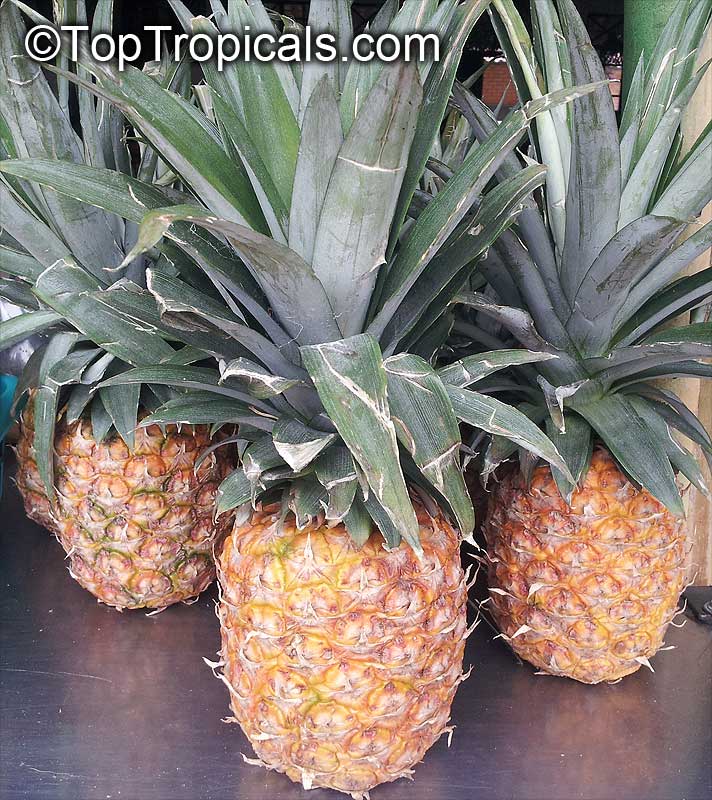
I wonder how many people know that the Pineapple (Ananas comosus) was actually the very first New World tropical fruit to have been sampled fresh by European royalty? It happened 527 years ago, when one made it to Spain, being personally delivered to King Ferdinand and Queen Isabella by Christopher Columbus... He had obtained a huge number of them, however only one actually survived intact and edible! That pineapple was instantly declared to be the most luscious wonderful fruit ever!..
...During the 1700s before the Revolutionary War, the overly monetarily intoxicated super-rich were actually paying a modern equivalent of⁠ - get this - 8000 dollars for a single fruit!..
...In conclusion, I will add the simple recipe for my personally favorite go-to comfort food...

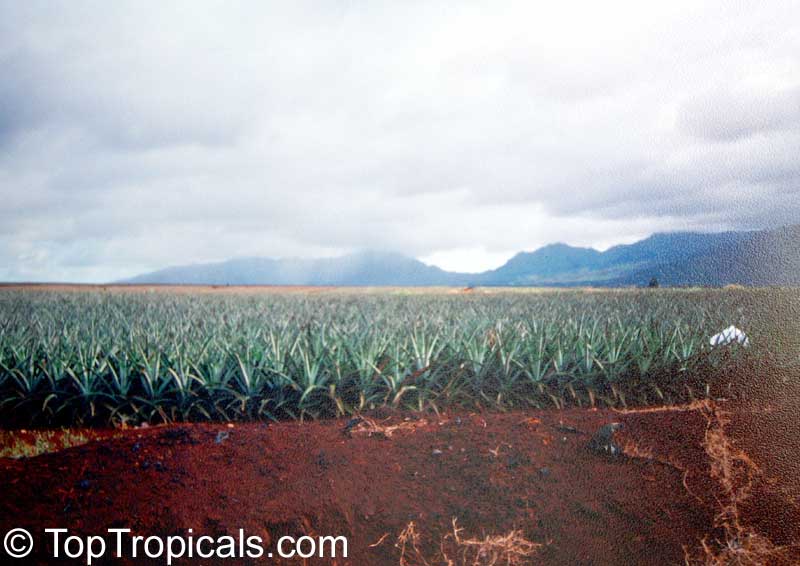
Pineapple plantation in Hawaii