Garden Blog - Top Tropicals

Date: 4 Nov 2024

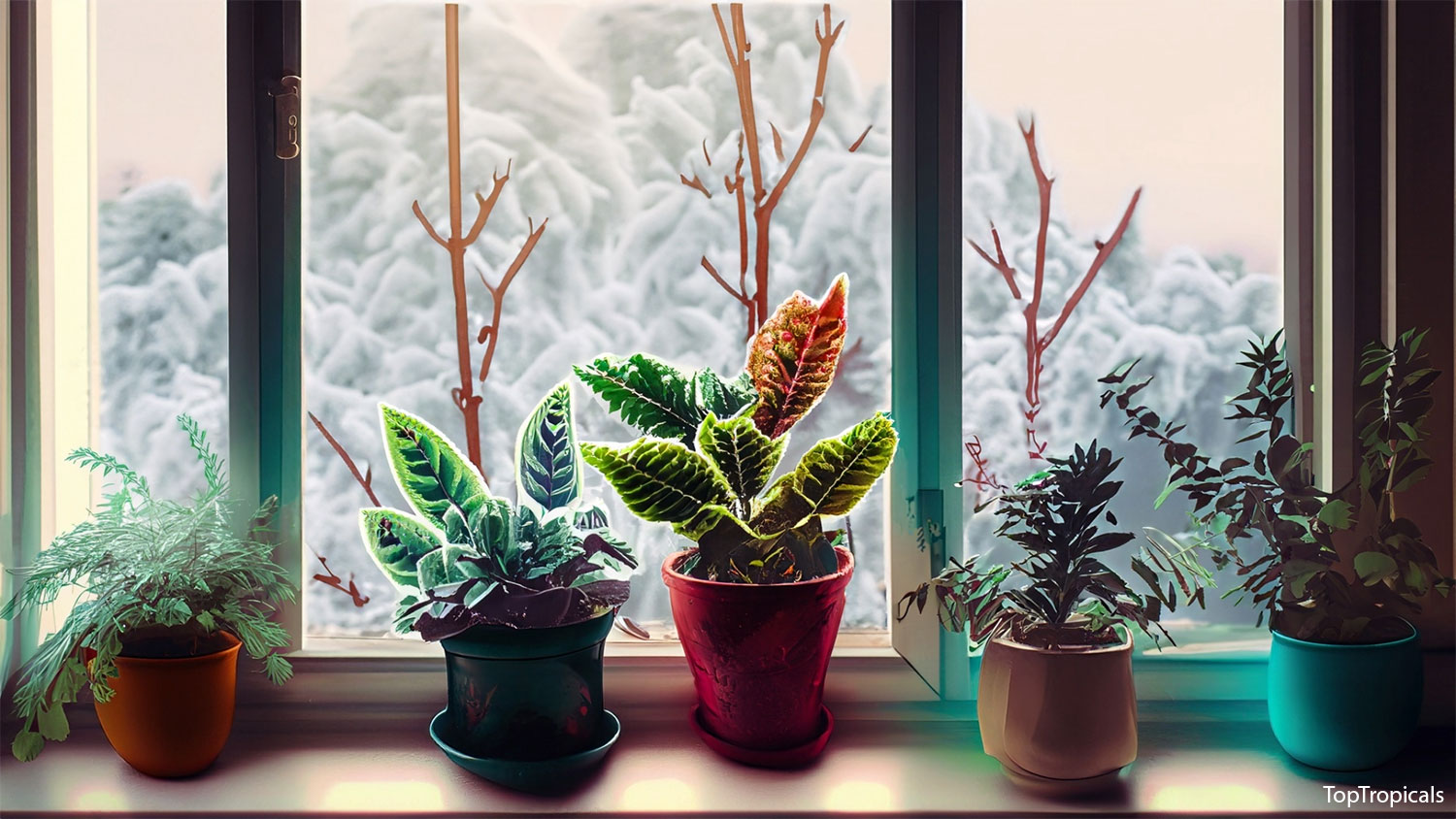
10 key tips for successful overwintering of tropical plants indoors

10 key tips for successful overwintering of tropical plants indoors

10 key tips for successful overwintering of tropical plants indoors


1. Maximize Light:
The more light, the better. There's no such thing as too much indoor light. If windows aren't enough, use LED grow lights, which stay cool and won't dry the air. Rotate plants every few days to prevent uneven leaf loss.

2. Reduce Watering: Less light and cooler temperatures mean plants need less water. Allow the soil to dry between waterings, and avoid overwatering - combination of cold + wet is especially harmful.

3. Maintain Moderate Temperatures: Most tropicals are happy with daytime temperatures around 75F and nights at 50-60F. In sunrooms or greenhouses, some can handle 45F if watering is kept to a minimum.

4. Boost Humidity: Avoid placing plants near heaters or vents that dry the air. Misting daily helps, or place pots on trays filled with water and pebbles to raise humidity around them.

5. Monitor for Pests: Check leaves weekly to catch insect problems early, as pests can cause serious damage or even kill the plant indoors.

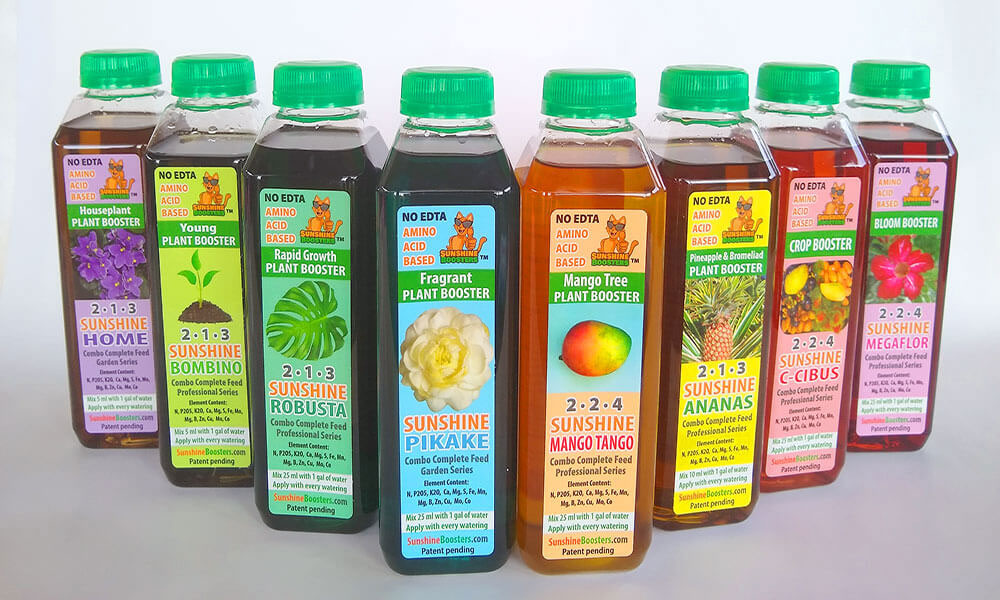
6. Fertilize Smart: Use ONLY liquid, amino-acid-based fertilizers like Sunshine Boosters throughout winter; they won't burn roots since their dosage adjusts with reduced watering. Avoid dry, granulated, and EDTA-based fertilizers during winter and dormancy.

7. Use Micro-Nutrients: Along with macro-elements (fertilizers), supplement with micro-elements like Sunshine Superfood and bio-stimulants such as Sunshine Epi to build strong plants with robust immune systems, better able to withstand unfavorable conditions and resist diseases.

8. Hold Off on Pruning: Leaf drop and leggy growth are normal responses to winter. Wait until spring to prune, when new growth starts, to encourage branching and healthy foliage.

9. Don't Repot Yet: During dormancy, roots slow their growth. Repotting too soon risks root rot. Wait until spring when new growth appears to transplant into a larger container. Typically, roots grow in proportion to the above-ground parts.

10. Let Them Rest: Winter is a natural resting period. Avoid forcing growth - your plants will reward your patience with vibrant leaves and flowers when spring returns.

🛒 Shop Indoor plants

#How_to

🔴 Join 👉 TopTropicals

Date: 23 Nov 2024

Monkey Orange or Monkey Ear?

Monkey Orange (Strychnos spinosa)

Monkey Orange (Strychnos spinosa)

Monkey Orange (Strychnos spinosa)

Monkey Orange (Strychnos spinosa)

🐵 Monkey Orange or Monkey Ear? 🙉
  • 🍊 Besides bizarre Monkey Ear Tree that we mentioned earlier, there is another interesting Monkey Tree -
  • 🍊 The Monkey Orange (Strychnos spinosa) is a captivating fruit tree from tropical Africa and Madagascar, known for its vibrant yellow fruits and wide range of uses.
  • 🍊This small to medium-sized tree, has glossy leaves and thorny branches that make it visually striking.
  • 🍊 What does the Monkey Orange taste like?


    The fruits, size of an orange, have a hard shell that protects their sweet-tart pulp with interesting pleasant taste somewhat similar to mangosteen. Some people say it tastes like a mix of citrus and pineapple with a hint of fermentation.
  • 🍊Rich in vitamin C and B vitamins, the fruit can be enjoyed fresh or transformed into jams, juices, and even wine.
  • 🍊Its durable wood is prized for carvings, and its leaves and roots are used in traditional medicine and as natural insecticides.
  • 🍊Slow-growing yet resilient, this hardy tree thrives in full sun and well-drained soil, offering beauty, nourishment, and practicality - an excellent choice for tropical or subtropical landscapes.


🐒 Why is it called Monkey Orange?


The "monkey orange" likely gets its name from its appeal to monkeys that eat the fruit and distribute the seeds in their habitat in Africa.

🛒 Plant Monkey Orange

#Food_Forest #Remedies

🔴 Join 👉 TopTropicals

Date: 24 Nov 2024

What dos Sugar Apple look like and how does it taste?

Annona squamosa - Sugar apple

🟢 What dos Sugar Apple look like and how does it taste?


😋 Annona squamosa - Sugar apple, is considered by many to be the most delicious tropical fruit. The fruit is a true treat, with pulp that resembles creamy custard, offering a flavor experience that’s hard to beat.

🕺 This very small, compact tree is perfect for containers or small yards, making it an excellent choice for home gardeners. It starts fruiting within just three years from seed and is remarkably easy to grow and undemanding.

📚 More about Anonnas in previous posts:


Guanabana - the most delicious Annona fruit
Top 10 fast-fruiting trees: #1. Annona
Why everyone wants the Sugar Apple?
The best tropical fruit tree for container growing, and the fastest to fruit: Annona
Spiny Hedgehog fruit: what does it taste like?

🛒 Order Sugar Apple

#Food_Forest #Container_Garden

🔴 Join 👉 TopTropicals

Date: 5 Dec 2024

This is why its called Heaven Lotus Tree - fragrant and edible!

Gustavia augusta - Heaven Lotus, flower

Gustavia augusta - Heaven Lotus, flower

Gustavia augusta - Heaven Lotus, tree

Gustavia augusta - Heaven Lotus, tree

Gustavia augusta - Heaven Lotus, flower

Gustavia augusta - Heaven Lotus, flower

Gustavia augusta - Heaven Lotus, flower close-up

Gustavia augusta - Heaven Lotus, flower close-up

Gustavia augusta - Heaven Lotus, fruit

Gustavia augusta - Heaven Lotus, fruit

💐 This is why it's called Heaven Lotus Tree - fragrant and edible!

  • Gustavia augusta - Heaven Lotus - is a stunning, small tropical tree from Brazil that looks like it stepped right out of a tropical paradise. The spectacular, perfumed flowers resembling Lotus are as beautiful as they are unique.
  • These large, striking blooms with white-and pink petals and a magic sweet fragrance are so eye-catching that the central crown almost looks good enough to eat!
  • Straight, often unbranched trunk, with a single cluster of leaves at the top, gives it a palm-like vibe. As it grows older, it may sprout a few large branches, each with its own leafy crown. The leaves are huge - no other tree around has leaves quite as big, except maybe a palm. They're long, narrow at the base, and broad at the top, making them a real showstopper.
  • The rounded, pear-shaped fruit grow directly on the trunk (a trait called cauliflory, see earlier post) and contains delicious yellowish-orange pulp that can be boiled and resemble meat in taste. The leaves, when boiled into a decoction, are said to cure intoxication.
  • Truly an exciting, one-of-a-kind tree, a gem for collectors! Can be grown in containers.


🛒 Enjoy your own Heaven Lotus Tree

#Container_Garden #Trees #Nature_Wonders #Perfume_Plants

🔴 Join 👉 TopTropicals

Date: 8 Dec 2024

How to harvest and eat Monstera Ice Cream

Monstera deliciosa - Swiss Cheese Plant fruit

Monstera deliciosa - Swiss Cheese Plant fruit

Monstera deliciosa - Variegated Swiss Cheese Plant leaves

Monstera deliciosa - Variegated Swiss Cheese Plant leaves

Monstera deliciosa - Swiss Cheese Plant fruit

Monstera deliciosa - Swiss Cheese Plant fruit

Monstera deliciosa - Swiss Cheese Plant fruit

Monstera deliciosa - Swiss Cheese Plant fruit

Monstera deliciosa - Swiss Cheese Plant fruit

Monstera deliciosa - Swiss Cheese Plant fruit

Monstera deliciosa - Swiss Cheese Plant fruit and flower

Monstera deliciosa - Swiss Cheese Plant fruit and flower

🍨 How to harvest and eat Monstera Ice Cream

  • 🍀 Monstera deliciosa - Swiss Cheese Plant - is a stunning jungle climber from Mexico and Guatemala celebrated for its dramatic, perforated leaves and delectable tropical fruit.
  • 🍀 Known for its large, fenestrated leaves with oblong or oval perforations, giving it the nickname "Swiss Cheese Plant."
  • 🍀 In its natural habitat, seedlings grow toward darkness until they locate a tree, then climb toward the light.
  • 🍀 Fruits begin appearing about three years after planting. The 9-inch, green, cone-like fruit ripens over a year, its scales separating to reveal sweet, creamy white pulp.
  • 🍀 Tastes like a mix of pineapple, sugar apple and ice cream with a strong tropical aroma.
  • 🍀 The fruit must be ripe to eat, as unripe pulp contains oxalic acid, which irritates the mouth and throat. To ripen, pick when the base wrinkles slightly, then wrap in a bag. When the scales loosen, it’s ready to eat. Rinse off black specks before eating.
  • 🍀 Spectacular variety Thai Constellation is a stunning variegated form with cream-and-green marbled leaves, has become a collector's dream. Specimens can sell for thousands of dollars, making it one of the most sought-after houseplants.


🛒 Shop Monstera plants

#Food_Forest #Container_Garden #Shade_Garden

🔴 Join 👉 TopTropicals