Garden Blog - Top Tropicals

Date: 5 Jan 2026

How to protect your butt

🍑 How to protect your butt


Lilimon is one of those cats everyone loves. Easy to be friends with, calm, and very sophisticated. She prefers to eat at her own little table, in peace and dignity. Butt sniffing during dinner is not on the menu!
Lilimon was enjoying her meal when James walked by, and went for a butt sniff. She was not amused!
She tried to explain this to Coconuts. He did not listen.
So Lilimon came up with a solution. She placed her food in front of her and backed her butt into the corner.
Problem solved!
Now she eats comfortably, protected from unwanted sniff inspections.
Classic Lilimon.

🐈📸 Cat Lilimon setting rules for James Coconuts at PeopleCats.Garden

#PeopleCats #Quotes

🟢 Join 👉 TopTropicals

Date: 24 Dec 2018

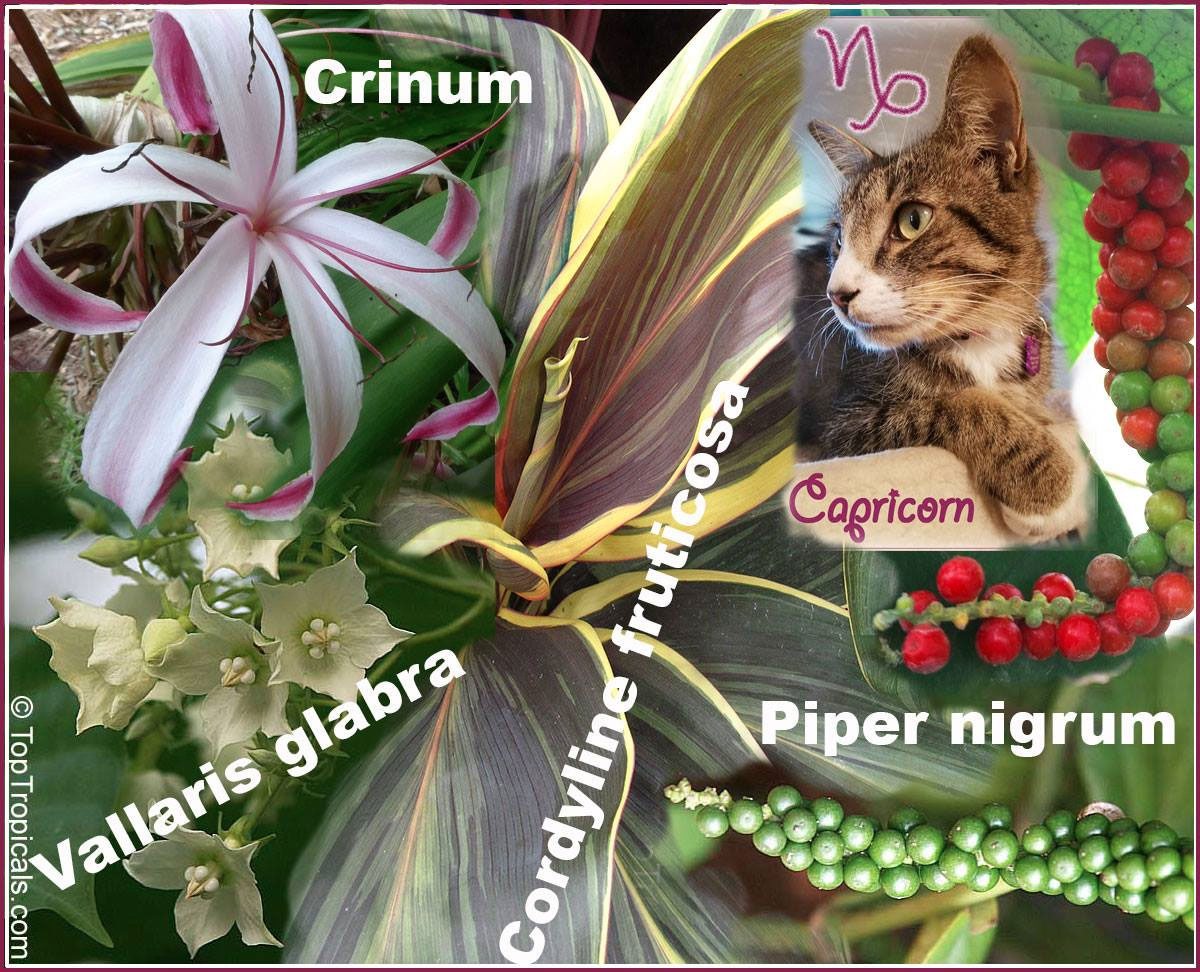
Plant Horoscope. Capricorn Zodiac lucky plants: Cordyline and Croton

TopTropicals.com

Capricorn - 12/22 - 1/19. An EARTH sign ruled by the planet Saturn. Capricorn's plants usually have few flowers, or small flowers, are knobby or woody, and may have an unpleasant smell or taste. Saturn rules plants with long lives and slow growth, so plants with annual rings are also associated with the Goat.
Physiologically, Saturn rules the systems that give the body its structure and form: the skeletal system, and the skin, teeth, joints, and knees, so plants that are high in calcium can be very beneficial. Those can be woody plants and shrubs that show annual rings, as well as some poisonous or narcotic plants. Saturn plants are useful in treating arthritis and rheumatism. Traditional Capricorn appreciates a spice that is powerful but familiar. Black pepper adds flavor and a bit of heat to both food and life, creating movement without too much change.

Capricorn Zodiac lucky plants: Baobab, Peach Palm, Patchouli, Bamboo, Cordyline, Spider Lily, Serissa, Desert Rose, Croton, Aloe, Palms, Giraffe knee plant - Gonatopus boivinii, Adenanthera, Black Pepper, Solanums, Loquat, Aglaonema, Jacaranda, Rosemary, Shisham - Dalbergia sissoo, Neem Tree, Nutmeg, Calendula, Brugmansia, Cannabis, Coca, Kava-Kava, Root Beer plant, Kratom, Banesteriopsis, Psychotria, Quince, Almonds, Ginkgo, Olive, Strophanthus, Bread Flower, Amorphophallus, Areca Palm, Anadenanthera, all Pipers, Brunfelsia, Chaya, Persimmons, Surinam Cherry, Bel Fruit, Ashoka Tree, Calla Lily.

For other signs information, see full Plant Horoscope.

Date: 13 Jan 2017

January kaleidoscope: Top Tropicals plants... and cats

Plants in Winter

Q:
My plants Mango and Sapodilla (I got from Top Tropicals) got cold frost recently up to the roots recently in a cold wave in NJ. The leaves are dry. The plant was kept in a green house. But the heater was off for a night. During that time the in the pot got frozen. Will the plants survive? Will they come back during spring?

A: Unfortunately, the chances are slim. It is hard to determine now if they will survive. Those plants can take a very short cold. They might survive when the root system was not frozen solid. To ensure your plants cold protection in the future, this is what we recommend:
1) Use temperature alarm. Nowadays they're very cheap, they can send a message to your email or cell phone.
3) Heaters like any other piece of machinery may fail. Redundancy is the keyword. Instead of one large heater use two of smaller capacity. If one fails, then second one will prevent catastrophic failure
4) Insulation. Extra layer of insulation helps greatly.
5) If you leave for vacation, then plan ahead. Have somebody to watch over your greenhouse. Move plants or at least the most sensitive ones inside of your house if possible.

Meet Top Tropicals Team. Part 1 - PeopleCats! Did you know that here at Top Tropicals we care not only about plants, but also animals? Most of our PeopleCats and PeopleDogs either came to us from nowhere in hope of survival, or have been rescued. TopTropicals is proud to support all of our People. A portion of every dollar you spend on a plant purchase goes to our Cat Community maintenance, food and other needs of these Little People. We will keep you updated with more pictures and videos on our PeopleCats (that also includes one dog Bob). They all are members of our Team, helping us to grow plants for you, pack them and send to you from our Shipping Department. Visit our Facebook, YouTube Channel and LIKE all of our People!

Stay updated with TopTropicals Videos by subscribing to our channel at YouTube.com/TopTropicals and get our latest video news of what's fruiting and blooming!

Date: 24 Dec 2016

Plant Horoscope. Capricorn Zodiac lucky plants: Bamboo and Peach

Capricorn - 12/22 - 1/19. An EARTH sign ruled by the planet Saturn. Capricorn's plants usually have few flowers, or small flowers, are knobby or woody, and may have an unpleasant smell or taste. Saturn rules plants with long lives and slow growth, so plants with annual rings are also associated with the Goat.
Physiologically, Saturn rules the systems that give the body its structure and form: the skeletal system, and the skin, teeth, joints, and knees, so plants that are high in calcium can be very beneficial. Those can be woody plants and shrubs that show annual rings, as well as some poisonous or narcotic plants. Saturn plants are useful in treating arthritis and rheumatism. Traditional Capricorn appreciates a spice that is powerful but familiar. Black pepper adds flavor and a bit of heat to both food and life, creating movement without too much change.

Capricorn Zodiac lucky plants: Baobab, Peach Palm, Patchouli, Bamboo, Cordyline, Spider Lily, Serissa, Desert Rose, Croton, Aloe, Palms, Giraffe knee plant - Gonatopus boivinii, Adenanthera, Black Pepper, Solanums, Loquat, Aglaonema, Jacaranda, Rosemary, Shisham - Dalbergia sissoo, Neem Tree, Calendula, Brugmansia, Cannabis, Coca, Kava-Kava, Root Beer plant, Kratom, Banesteriopsis, Psychotria, Quince, Almonds, Ginkgo, Olive, Strophanthus, Bread Flower, Amorphophallus, Areca Palm, Anadenanthera, all Pipers, Brunfelsia, Chaya, Persimmons, Surinam Cherry, Bel Fruit, Ashoka Tree, Calla Lily.

For other signs information, see full Plant Horoscope.

Date: 15 Nov 2016

SUNSHINE in a bottle - your help during winter
Q: I have been using your new plant hormone SUNSHINE for plants after shipping, and I must admit it does make a big difference! They recover right away. I order plants online very often, and usually it takes up to a week or more until they start showing new growth. After SUNSHINE treatments, they look fresh within a day or two. My question would be, for improving cold tolerance, what do you recommend? I live in Florida and it is still warm here, should I start spraying my garden now or should I wait until cold spells?

A: SUNSHINE is very effective plant stimulant that helps tropical plants survive different kinds of stress, including cold, heat, drought, low light, etc. At TopTropicals gardens and nursery, we have been using this hormone for many years to protect our plants from unfavorable conditions, and it saved us many rare tender species, and lots of money!
The sooner in Fall you start treatments, the better. Don't wait until cold spell. SUNSHINE works slowly and in very low doses. The mechanism is actually about boosting, building up the plant's own immune system. Low doses once a week, even every other week will work just fine, so you will need very little of the product. For less than $5 you can help expensive rare plants to go through winter painlessly. Recommended application is only 2.5 ml/1 gal of water, to spray every 1-2 weeks throughout winter period.

Start spraying your plants with SUNSHINE now, to help them survive short winter days, build up insect resistance (especially for plants indoors), and what is most important, to remain strong through lower temperatures. These are our suggestions:

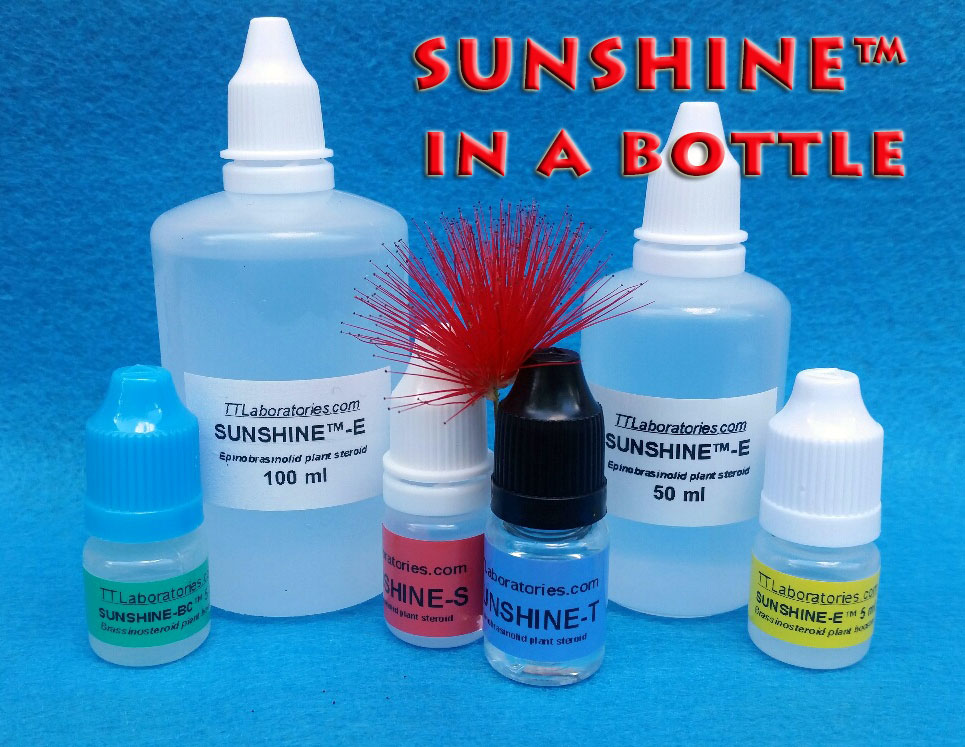
- SUNSHINE-T - thermo-protection booster. It is specially formulated for winter protection of tropical plants. To improve cold hardiness even more, spray 1-2 days prior to cold with 5 ml/1 gal solution and after that, continue applications with 2.5 ml/1 gal solution every 10-15 days throughout winter period.
- For large plant collections, and in-ground gardens in subtropical areas, take advantage of very cost effective bulk items 50 ml and 100 ml bottles of SUNSHINE.
- Don't forget that SUNSHINE is only a stimulant, and not a plant food. While regular fertilizer should be avoided during winter months, it is always beneficial to apply microelements through foliar spray. During cooler period, chances of chlorosis increase, because at low temperatures iron is difficult so absorb by roots especially in moist soil, hence iron deficiency! Our new Iron supplement SUNSHINE-Super-Iron microelement booster will help to avoid yellowing leaves and to maintain your plants strong and healthy during slow growth period. Ultra-potent, highly absorbable iron mix, with chelated Iron with DTPA (instead of usual EDTA) that is better soluble in hard water and more effective for chlorosis. This mix contains both EDTA + DTPA chelated iron in higher concentration than regular micro-elements mixes.

See all SUNSHINE booster products in our store. For advanced information on SUNSHINE plant boosters, history of use, formulation, and frequently asked questions, visit our manufacturer's website TTLaboratories.com.

Best plants suitable for containers. Check out our large selection of plants that are easily grown in containers. This week only, 20% off!