Garden Blog - Top Tropicals

Date: 31 Jul 2025

Anthurium Collector Set
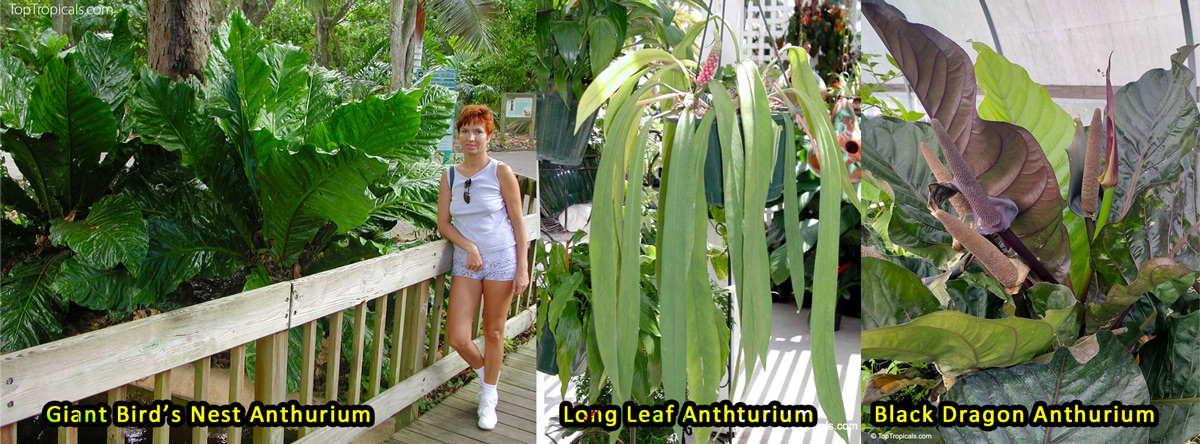
Giant  Bird's  Nest,  Long  Leaf,  and  Black  Dragon  Anthuriums  side  by 
 side,  showcasing  their  dramatic  foliage  and  size

These aren't your typical tropicals - they're collector-grade Anthuriums grown for foliage and texture. Each one brings something different, but they all thrive in the same kind of setting: shade or filtered light, warmth, and humidity. Perfect for growing in containers indoors or out.

Anthurium Black Dragon

This is the most dramatic of the trio. Upright, leathery leaves shift from dark green to nearly black depending on light. Instead of bright flowers, it produces a dark brown spadix and glowing red berries. A hybrid not found in the wild, it's grown from seed - no two are exactly alike.

  • Best for: Indoor focal plant, shaded patio, black ceramic pot
  • Height: 2–4 ft in container
  • Texture: Thick, architectural leaves
  • Highlight: Color shifts with light intensity

Grow Your Own Black Dragon

Read more about Black Dragon Anthurium

Anthurium hookeri – Giant Bird's Nest

This one's about scale. Broad, crinkled leaves with a cardboard-like texture form a bold rosette. It can get huge with time - up to 6 feet across. Perfect for gardeners who want the "instant jungle" look.

  • Best for: Shaded garden, large pots on porches
  • Height: Up to 5 ft; width even more
  • Texture: Wrinkled and leathery
  • Highlight: Bright red berries in maturity

Buy Giant Bird's Nest Anthurium

Read more about Giant Bird's Nest Anthurium

Anthurium vittariifolium – Long Leaf Anthurium

Graceful and rare, this species sends out narrow strap-like leaves that can reach 5–6 ft long. Ideal for hanging baskets or mounting. Bonus: it produces small pink fruit against deep green foliage.

  • Best for: Hanging displays, vertical planters, bright bathrooms
  • Height: Leaf length, not upright height - up to 6 ft
  • Texture: Smooth, ribbon-like
  • Highlight: Cascading growth and color contrast

Buy Long Leaf Anthurium

Read more about Long Leaf Anthurium

✅ How to Care for Anthuriums

  • Light: Bright, indirect light is best. Avoid direct sun, especially mid-day. These plants evolved in rainforest understory - think "dappled light under trees."
  • Water: Keep the soil lightly moist but not soggy. Let the top inch dry before watering. They hate wet feet.
  • Humidity: These are tropicals - they'll do fine in 50-60% humidity, but thrive at 70%+. Use pebble trays or place near other plants. Bathrooms with windows work great.
  • Soil: Use an airy mix: orchid bark + perlite + peat or coco coir. Drainage is key. Never use plain potting soil.
  • Fertilizer: Feed with SUNSHINE Robusta every 2–4 weeks during warm seasons. It's formulated for aroids and won't burn roots.
  • Potting: Use shallow, wide containers. Repot only every 2–3 years, or when roots crowd the pot. They don't like frequent disruption.
  • Temperature: Ideal: 65–85 F. Short dips to the 30s F are tolerated by mature plants, but avoid cold drafts.

Shop All Anthuriums

Date: 10 Jan 2026

How to grow Patchouli indoors

Patchouli - Pogostemon cablin

How to grow Patchouli indoors

Patchouli - Pogostemon cablin is easy to grow indoors if you give it what it likes. It is one of those plants that does double duty - it looks great and makes your home smell amazing. Those big, soft leaves release that deep, earthy scent just by being there.
  • ☘️ Light and temperature


    Patchouli loves bright shade. Think filtered light near a window, not harsh direct sun. Too much sun can burn the leaves, especially indoors. In lower light, it still grows well and keeps its fragrance. It is a tropical herb, so keep in warm - at room temperature.
  • ☘️ Water and soil


    This plant loves water. Use a well-draining soil mix and a pot with drainage holes, but do not let it dry out. Daily watering is usually fine in warm conditions. Good air circulation is important.
    Growing patchouli is similar to growing herbs in containers - just be more generous with water than you would be with basil or oregano.
  • ☘️ Containers and growth


    Patchouli grows fast. Start in a 1-gallon pot, but plan to move it up to a 3-gallon container fairly quickly. More room means bigger leaves and a stronger scent.
  • ☘️ Feeding


    Feed regularly. You can use Sunshine Boosters Robusta with every watering, or apply Green Magic controlled-release fertilizer every 6 months and at each transplant. Patchouli responds quickly to feeding with lush growth.
  • ☘️ Pruning and uses


    Prune as the plant gets bigger to keep it full and bushy. Do not throw the leaves away - dry them for sachets or use fresh/dry leaves for tea.
  • ☘️ Propagation


    Patchouli roots very easily from cuttings. Snip a healthy stem, place it in water or moist soil, and it will root fast. It is one of the easiest plants to share with friends.

    If you want a plant that grows fast, smells incredible, and actually does something useful indoors, patchouli is hard to beat.


🛒 Grow calming Patchouli Scent at home

📚 Learn more:

Plant Facts

Pogostemon cablin, Pogostemon patchouli, Pogostemon heyneanous
Patchouli, Pucha-pat
USDA Zone: 9-11
Groundcover and low-growing 2ft plantSmall plant 2-5 ftSemi-shadeFull sunModerate waterRegular waterOrnamental foliageSpice or herb plantEthnomedical plant.
Plants marked as ethnomedical and/or described as medicinal, are not offered as medicine but rather as ornamentals or plant collectibles.
Ethnomedical statements / products have not been evaluated by the FDA and are not intended to diagnose, treat, cure, or prevent any disease. We urge all customers to consult a physician before using any supplements, herbals or medicines advertised here or elsewhere.Fragrant plant

#Perfume_Plants #Remedies #Food_Forest #How_to

🟢 Join 👉 TopTropicals

Date: 16 Jan 2026

The most asked-about tree in the Sunshine State: Bauhinia

Purple Orchid tree - Bauhinia purpurea

🌸 The most asked-about tree in the Sunshine State: Bauhinia

  • 🌸 If you visit Florida in winter, chances are you will notice a tree covered in orchid-like flowers and wonder what it is. That tree is often an orchid tree, most commonly Bauhinia purpurea. It is fast growing, wide spreading, and blooms from late winter through spring, sometimes with a second round in summer. The flowers range from magenta to lavender, are lightly fragrant, and stand out even from a distance. The leaves are just as distinctive - split into two halves like butterfly wings, which is why these trees are also called butterfly trees.
  • 🌸 Orchid trees are easygoing and practical. They thrive in full sun, tolerate many soil types as long as drainage is good, and need little water once established. Growth is quick, often 2–3 feet per year, making them excellent shade trees for hot climates. The flowers attract bees, butterflies, and hummingbirds, and in some cultures the buds and blossoms are used in cooking, while the bark has a long history in folk remedies. Beautiful, useful, and low maintenance, orchid trees are a perfect fit for Southern landscapes.


🛒 Discover Bauhinias - Orchid trees

📚 Learn more:

Plant Facts

Bauhinia acuminata
Dwarf White Orchid Tree, White Bauhinia, Kaa-long, Snowy Orchid
USDA Zone: 9-11
Large shrub 5-10 ft tallSmall tree 10-20 ftFull sunModerate waterWhite, off-white flowersDeciduous plant

#Trees

🟢 Join 👉 TopTropicals

Date: 27 Jan 2026

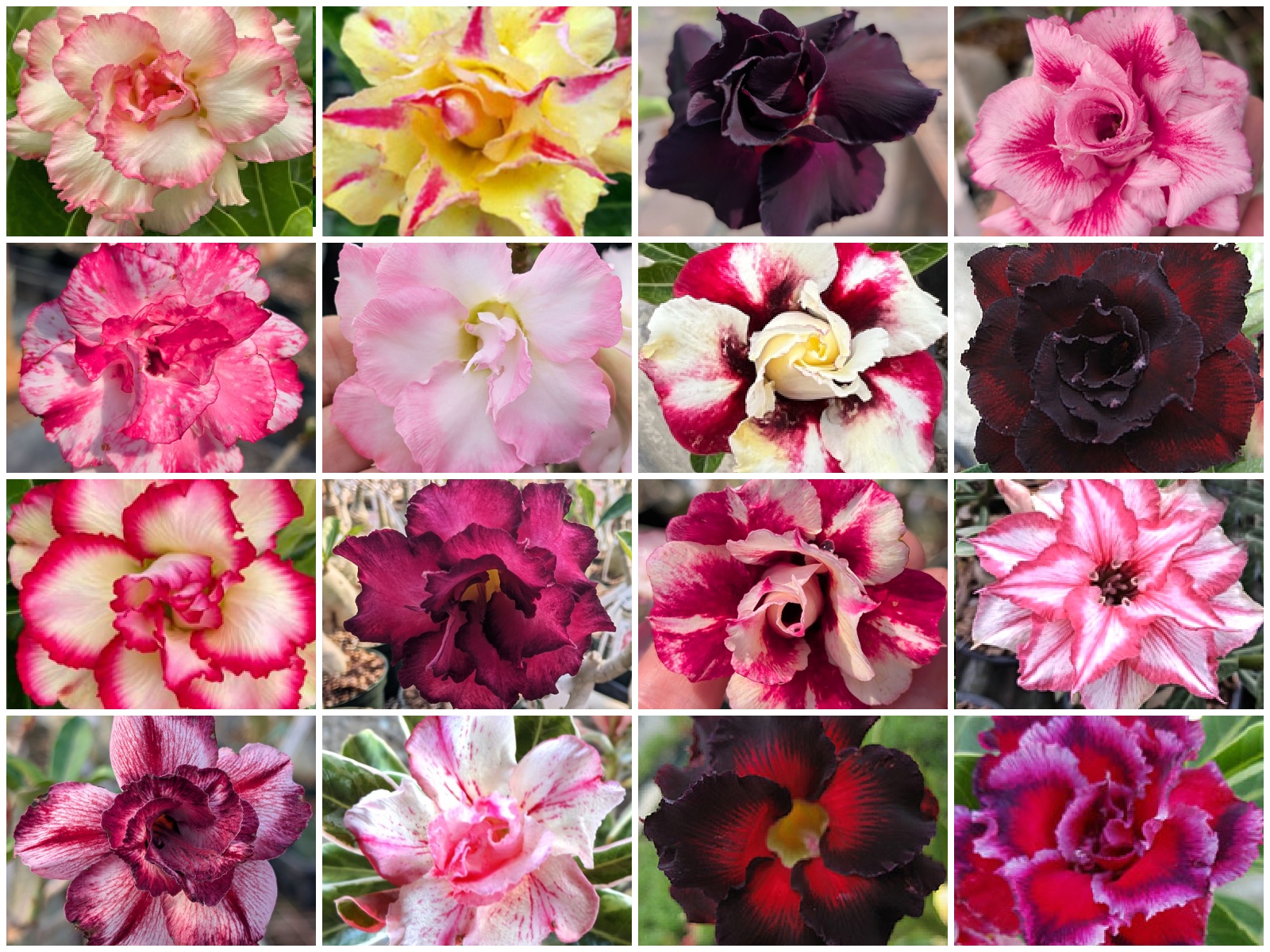
🌸 Why adenium?

  • Easy to grow in containers
  • Thrive in sun or shade, indoors or out
  • Tolerant of low humidity
  • Very low water needs
  • Forgiving plants that tolerate missed watering
  • Long-lived plants that improve with age
  • Compact size, ideal for patios, balconies, and windows
  • Form unique, sculptural caudex shapes
  • Decorative even when not in bloom
  • Produce stunning, long-lasting flowers
  • Often blooming in a few months

🌸 Adenium Care Basics

Adeniums have many spectacular hybrids, and their basic culture is closer to orchids than to typical houseplants. The key is a small pot, excellent drainage, bright light, and careful watering.

Pot and Soil

  • Use a small pot sized to the root system.
  • Excellent drainage is required.
  • Use a very well-drained mix. We recommend specially formulated for Adeniums Desert Rose Soilless Mix

Light and Blooming

  • Give lots of light for heavy flowering.
  • In warm conditions and longer days, most hybrids and species begin blooming in spring.
  • In warmer climates they can keep blooming through fall and winter.

Watering (Most Important)

  • Adeniums dislike both extremes: over-watering and drying out too often.
  • Use neutral to hard water when possible.
  • Acidic water can sour the mix quickly and may cause root rot.
  • Water in the early morning so the plant can drink through the day.
  • Watering frequency can range from daily to every few days, depending on heat, light, and how fast the mix dries.
  • Never let the pot sit in a saucer of water.
  • Do not let the plant dry out too often, or it may go into early dormancy.
  • Do not wet the leaves.

Fertilizer (Caudex + Flowers)

  • To build a large swollen base/trunk (caudex), use a good quality fertilizer.
  • A fertilizer that helps trunk swelling also supports flowering. The best choice for this is Sunshine Megaflor.
  • Avoid fertilizers that are too high in nitrogen; choose a formula where the middle number is the highest.
  • Never apply fertilizer directly on roots.
  • Do not liquid feed a thirsty plant.
  • Always water lightly first, then feed, to avoid root burn and leaf drop.

The Caudex "Secret" (Shaping the Base)

  • At each repotting, lift the plant slightly so the upper roots are a little exposed.
  • This encourages new roots to grow downward and helps create a thicker, more interesting caudex shape.

Multi-Grafted Plants (Important Note)

  • Adenium hybrids can be multi-grafted with several colors/varieties on the same plant.
  • The swollen base forms only when the rootstock plant is grown from seed.

✍️ Adenium FAQ

How much light do Adeniums need?

Adeniums need lots of light for heavy flowering. Most hybrids and species start blooming when conditions are warm and days get longer, and in warmer climates they can keep blooming through fall and winter.

What is the best pot size for Adeniums?

Use a small pot sized to the root system, with excellent drainage. A small pot with excellent drainage is a must.

What kind of soil mix should I use?

Use only a well-drained mix. Adeniums do best in very well-drained soil. A small pot plus excellent drainage is the foundation of success.

How often should I water Adeniums?

Adeniums do not like both over-watering and drying-out too often. Water preferably in the early morning and do not water again until the mix dries on the surface. Watering can range from daily to every few days depending on heat, light, and how fast the mix dries.

Can Adeniums sit in a saucer of water?

No. Never allow your Adenium to sit in a saucer of water.

Should I wet the leaves when watering?

No. Do not wet the leaves.

What kind of water do Adeniums prefer?

Adeniums prefer neutral to hard water. Acidic water tends to sour the soil too fast and may cause root rot.

How do I create a large, swollen caudex?

At each repotting, lift the plant slightly so the upper parts of the roots are a little exposed. This encourages the plant to form more roots that grow downward and helps create a thicker, more interesting caudex.

What fertilizer should I use for caudex growth and blooms?

Use a good quality fertilizer to support both trunk swelling and flowering. Avoid formulas that are too high in nitrogen; the middle number should be the highest. Never apply fertilizer directly on roots, and do not liquid feed when the plant is thirsty. Water lightly first, then feed, to avoid root burn and leaf drop.

Can an Adenium have multiple flower colors on one plant?

Yes. Adenium hybrids can be multi-grafted with several colors or varieties on the same plant. Note that the swollen base forms only when the rootstock plant is grown from seed.

✍️ Learn About Adeniums

🎥 Watch Adenium Videos

🛒 Shop Adeniums

Date: 16 Feb 2026

Yes, you can grow a mango tree on your patio - here is how to do it right

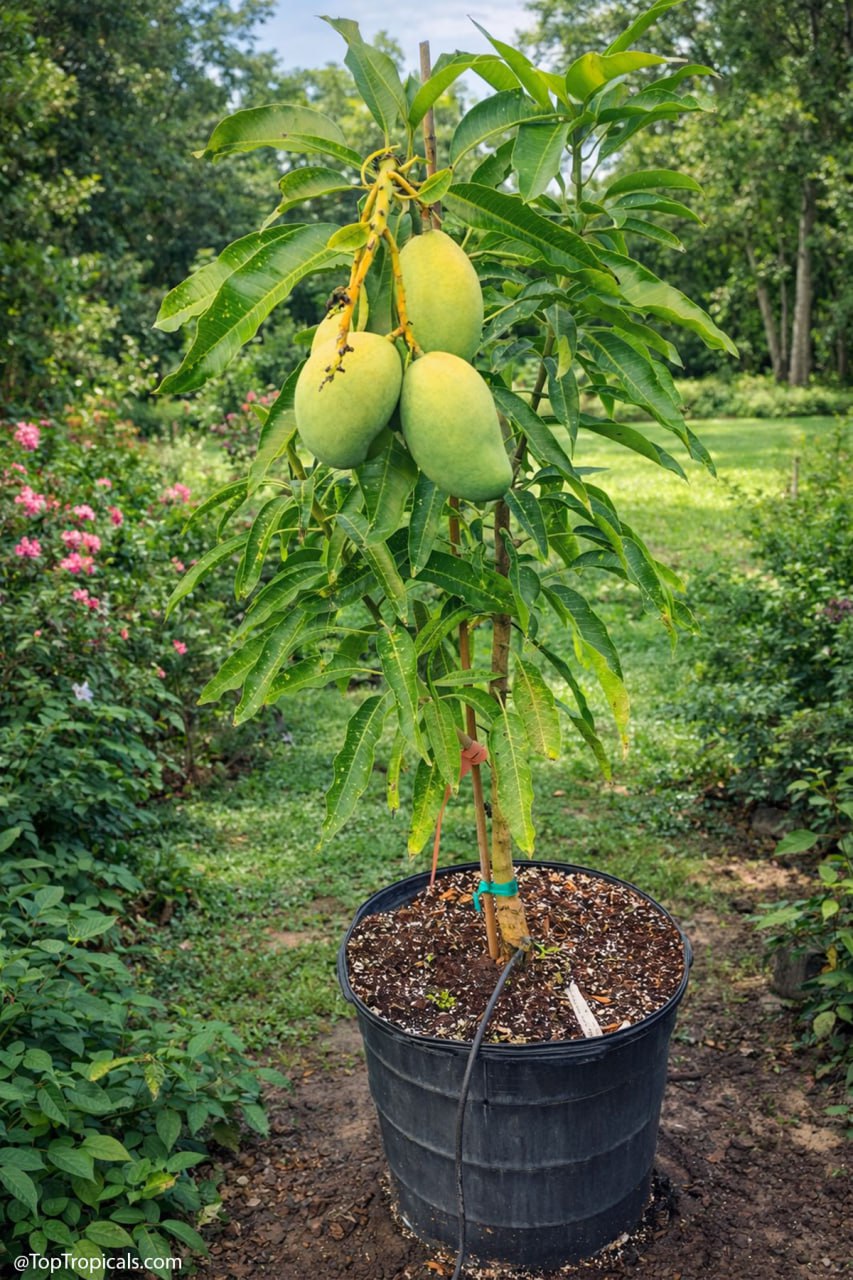
Mango fruiting in container

Mango fruiting in container

🥭 Yes, you can grow a container mango tree on your patio - here is how to do it right


Think you need a backyard orchard to grow mangoes? You don't. Mango trees grow very well in containers. Compact varieties, often called condo mangoes, stay naturally smaller and are well suited for pots, patios, and small yards. We grow and ship mango trees nationwide and have seen which varieties perform best in containers.

Growing mangoes in pots is also practical in cooler climates. The tree can be moved to protection during cold weather while still producing real fruit. Here is how to do it right.

🥭 Pick the right condo mango tree variety


Choose condo or semi-dwarf mango varieties that stay smaller and respond well to pruning. These mango trees usually stay 6 to 10 feet tall in containers with light pruning. Fruit size is full-size, just fewer than on large trees.

Good mango choices for pots include:
  • · Cogshall - compact and productive
  • · Pickering - naturally small and reliable
  • · Carrie - manageable size, great flavor
  • · Ice Cream - slow growing, narrow canopy
  • · Julie - classic Caribbean type
  • · more condo varieties...


🥭 Choose the right pot


Start small. Young mango trees do best in a 5- to 7-gallon pot. Oversized containers too early often cause overwatering and root issues.

Increase size gradually:
First pot: 5-7 gallons
Next size: 10-15 gallons
Mature container: 20-25 gallons

The pot must drain well. Mango roots dislike wet soil. Add holes if needed. Plastic, ceramic, and fabric pots all work.
  • 🥭 Use fast-draining soil


    Mango trees need air around their roots.
    Use a loose, fast-draining mix, such as Abundance Professional Soilless Mix. Improve drainage with perlite, pine bark, or coarse sand. Avoid heavy or water-holding soils. Drainage matters more than fancy ingredients.
  • 🥭 Water carefully


    Mango trees prefer a wet-dry cycle.
    Water deeply, then allow the top few inches of soil to dry before watering again. Always check with your finger first.
    In warm weather, water once or twice a week. In winter, much less. Overwatering is the most common container mistake.
  • 🥭 Give plenty of sun


    Mango trees love sun and heat.
    Place the pot in full sun with at least 8 hours daily. More sun improves growth and flowering.
    If overwintered indoors, use the brightest window possible. Grow lights help, but outdoor sun is best when weather allows.
  • 🥭 Fertilize lightly but consistently


    Potted mango trees benefit from regular feeding during active growth.
    Use a balanced mango or fruit tree fertilizer such as Sunshine Mango Tango (safe to use with every watering, year-around). Controlled-release fertilizer Green Magic (every 6 months) work well too. Avoid excess feeding, which promotes leaves over flowers.
    If leaves pale, check watering first, then nutrition.
  • 🥭 Prune to stay compact


    Pruning is essential for mangoes in pots.
    Light tipping and trimming control size, encourage branching, and increase flowering points. Keep the canopy open and balanced. Watch how simple tipping works in real life: .
    Avoid heavy pruning before flowering. Most pruning is best right after harvest.
  • 🥭 Protect from cold


    Mango trees are tropical and cold-sensitive.
    When temperatures drop below 40F, move the pot to protection or indoors. Young trees are especially vulnerable.
    During winter, reduce watering and stop fertilizing. Growth slows and the tree rests.
    When warm weather returns, reintroduce the tree to sun gradually to prevent leaf burn.
  • 🥭 Final thoughts


    Growing a mango tree in a pot is practical and rewarding. With the right variety, good drainage, full sun, and careful watering, a potted mango can thrive and fruit for years, even in small spaces. Ready to start? Choose a compact mango variety.


🛒 Discover Condo Mango

📚 Learn more:
#Food_Forest #How_to #Discover #Mango

Plant Facts

Mangifera indica
Mango
USDA Zone: 9-11
Large tree taller than 20 ftSmall tree 10-20 ftFull sunModerate waterYellow, orange flowersPink flowersEdible plantSeaside, salt tolerant plant
🟢 Join 👉 TopTropicals