Garden Blog - Top Tropicals

Date: 2 Oct 2025

Blue Ice Cream banana youll never find in stores!

Blue Java Banana, Ice Cream Banana

🍌 Blue Ice Cream banana you’ll never find in stores!

  • 🔵 The Blue Java Banana, also known as the Ice Cream Banana, is the banana everyone wants - and for good reason.
  • 🔵 First of all… it's blue. Yes, really. When the fruit is unripe, it has a frosty blue-green tint - especially striking in the sun. These short, chunky bananas are only about 4 inches long and grow in beautiful bunches under mauve-colored flowers. The whole plant is a tropical showstopper.
  • 🔵But the real magic happens when the fruit ripens. The blue fades to yellow… and inside? Oh my God - it’s heaven! The texture is soft, smooth, and creamy. And the flavor? Like vanilla ice cream.
  • 🔵That’s how it got the name Ice Cream Banana. And this isn’t just a gimmick - it’s a cold-tolerant, vigorous variety that grows fast, reaches 10-15 feet tall, and produces heavy bunches (up to 60 pounds!) of sweet fruit that you can eat raw or cook with.
  • 🔵 Your store-bought bananas can’t compete with this. Add it to your edible landscape, food forest, or patio garden - this one is a must-have! Grab it while it’s in stock. Or if it’s sold out - hit that wishlist button.


🛒 Explore Banana Varieties

📚 Learn more:


#Food_Forest #Bananas

🟢 Join 👉 TopTropicals

Date: 16 Mar 2017

Up to 25% off on all green plants!

Q: Can you recommend a plant that brings a good luck?

A: On St Patricks Day, they talk about lucky clover. But did you know that your odds of finding a 4-leaf clover are about 1 in 10,000? There is a much better solution - try beautiful Crown of thorns - Euphorbia millii

Date: 18 Jan 2017

10 plants that can make you happy.
3D garden ideas.

3D garden ideas.
Q:
Can you make my yard bigger and prevent it from freezing?

A: Yes, we can make your backyard bigger by adding a 3rd dimension - trees as a upper level, shrubs as a second level, vines in between, low growing perennials below them. Add ground covers and potted plants as separate specimens in between in-ground planted trees and shrubs. One more separate dimension is orchids and other epiphytes that happily grow on the trees. This multi-level structure will allow you not only collect so many plants, but also maintain them in a natural environment, similar to how they grow in a wild.

As far as preventing from freezing - it depends. You can use greenhouse, cover plants, create microclimate under large canopies, etc. Some tropical plants are tolerant to light frost, once established. If it gets below freezing in your area for more than a few hours, and especially if you have numerous nights with frost throughout winter, we recommend to keep plants in pots (BTW, this way you save space and can collect even more!). Pots can be moved to protected area during cold nights. The more established the tree, the more chances to survive colder temperatures. You may also use propane heaters during cold nights.
We also use plant booster SUNSHINE boosters to increase plants cold tolerance.
Cold protection is a lengthy subject. Here is some more information on cold protection. Also, we recommend to check out our magazine Tropical Treasures (about pushing the limits of tropical gardening) for a detailed article on cold protection.
These are specific articles on Zone-Pushing in different issue #s regarding dealing with cold. See downloadable issues:
(#1) Growing Tropicals in Nontropical Climate, Three Freezing Nights in Southwest Florida
(#2) Temperature drops - an alert or a rehearsal?
(#5) Dealing with cold snaps, Cold hardy beauties
(#7) When winter is around the corner, Growing exotic Cordyline in colder climate
(#8) When the weather outside is frightful
(#9) Winter champions
(#11) Ready-for-winter checklist for in-ground plants
(#13) Winter checklist
(#18) Dealing with cold damaged plants
You may also order hard copies.
If temperatures drop below freezing in your area, remember to add Heat Pack to your order!


10 plants that will make you happy.

Everyone wants to be happy. Did you know that growing plants is not only fun but can also make you happy? In our new series we will introduce to you 10 plants for your tropical collection that will make you happy.
Visit our Facebook, YouTube Channel and stay happy!

Check out this video: 10 plants that will make you happy. Plant # 1 - Rose Apple.

Stay updated with TopTropicals Videos by subscribing to our channel at YouTube.com/TopTropicals

Date: 12 Apr 2016

Hot novelty plant for hot Arizona

Q: What plants would you recommend for very hot and dry spot in front of my house that gets full sun all day long? I live in AZ, we recently had a couple good rains but this is going to be it for a long time. It gets so hot during the day that every plant I tried didn't make it. We have a few nice orange trees growing well but I would like to plant something compact, colorful and hopefully fragrant if there is such plant.

A: There is a perfect small size plant for you that is extremely fragrant and yet will be thriving in these conditions. It is the famous Jasmine sambac. It will appreciate dry air of Arizona and will bloom profusely for you in full sun or in partial shade. It doesn't mind heat at all.

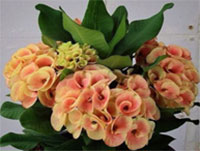
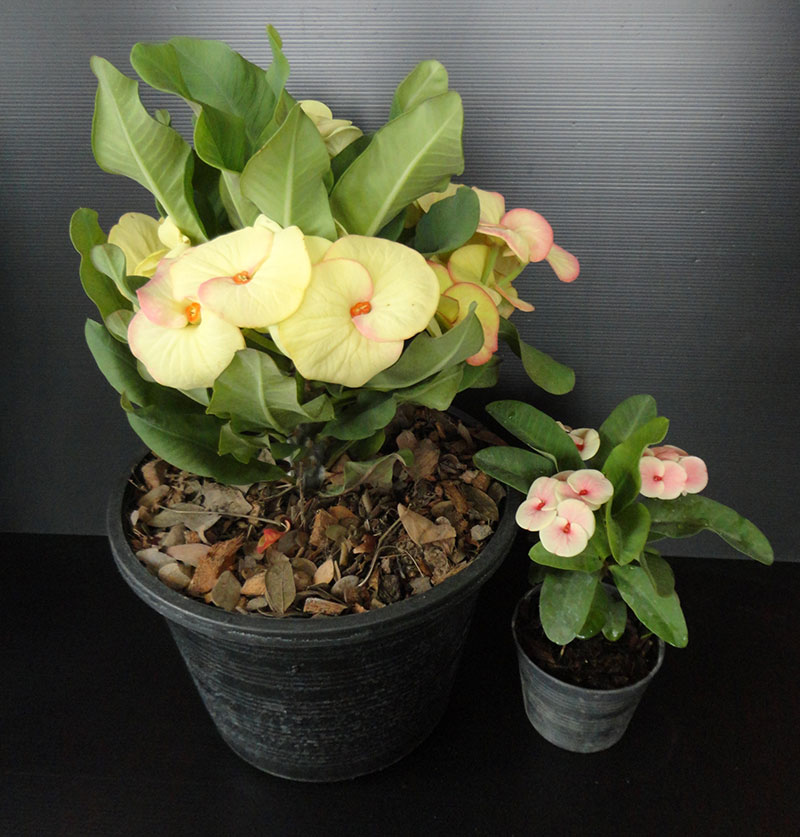
For colorful accents, a proven winner is Crown of Thorns - Euphorbia millii. New giant size flower varieties were recently selected in Thailand, and we just received a great selection, look at the colors! These plants don't mind hot sunny location at all. The more sun, the better the bloom! Small plants need regular watering until establish, then once they start developing, they will require less water.

Giant Euphorbia flowers from Thailand are 4-5 times bigger than regular flower euphorbia. Diameter of the flower is around 2". Compare giant flower to normal size - picture on the right.

See full list of plants for hot and dry spots

Date: 30 Mar 2016

Spring time fun: fertilizing and pruning

Q: When is a proper time to start fertilizing my garden in Spring? Also, when can I cut back cold damaged branches? Should I wait until end of April?

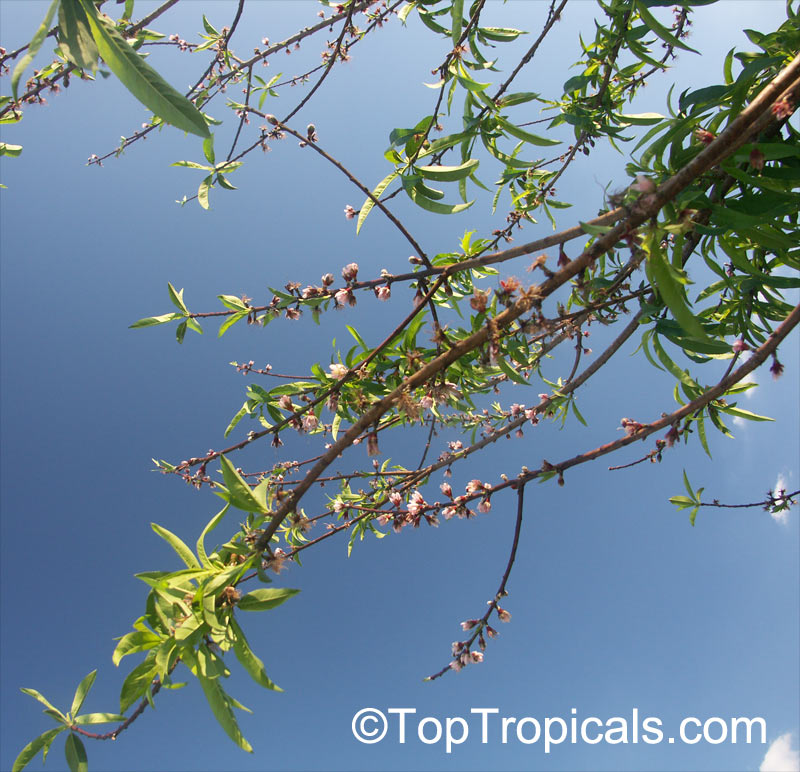
A: As a rule of thumb, fertilizer can be applied during period of active growth, when a plant needs additional nutrients. With indoor plants, you can fertilize pretty much year round as long as the plant continues growing and not dormant. For in-ground tropical plants, start fertilizing when new growth appears. In subtropical areas, with cooler winter months, most tropical plants slow down their metabolism when temperature drops below 65F. Many of them become dormant, and may even lose leaves (especially deciduous plants like Annona, or Peaches/Plums