Date: 12 Jun 2026
The Tree That Turns Streets Purple Every Spring: Why Gardeners Fall in Love with Jacaranda
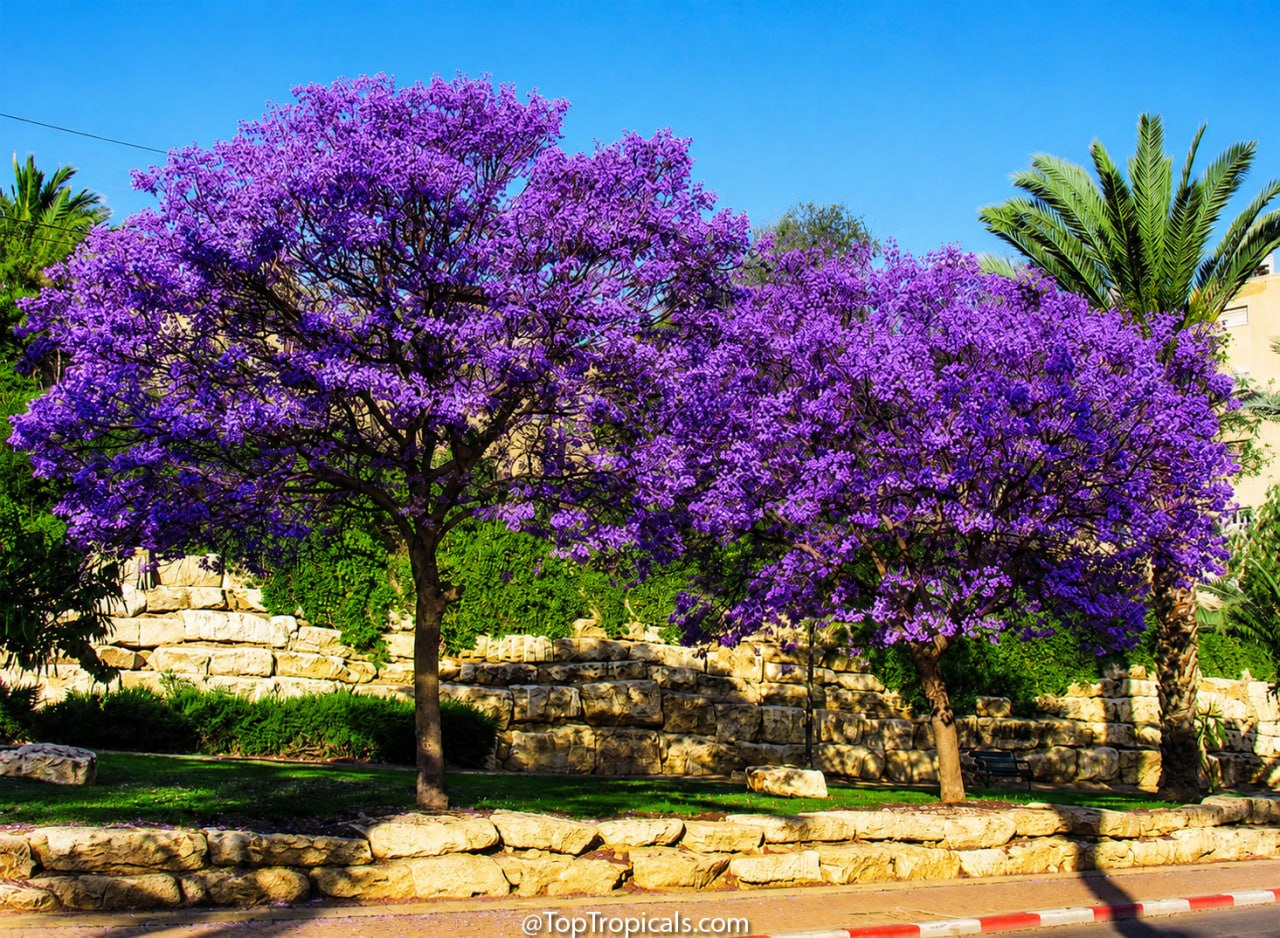
Jacaranda tree
💜 The Tree That Turns Streets Purple Every Spring: Why Gardeners Fall in Love with Jacaranda
For a few magical weeks each year, a mature Jacaranda looks almost unreal. Its canopy disappears beneath thousands of lavender-blue flowers, while the ground below becomes covered in a purple carpet of fallen blooms. Native to South America, Jacaranda mimosifolia has become one of the world's most beloved flowering trees. In bloom, it transforms ordinary streets, parks, and gardens into scenes people stop to photograph.
Few trees create such a dramatic display.
In places where Jacarandas are planted by the thousands, flowering season becomes an event. Streets, sidewalks, and lawns are blanketed with violet-blue petals, creating the impression that spring has been painted across the landscape.
The spectacle is so striking that entire cities have become famous for it. Pretoria, South Africa, is known worldwide as "The Jacaranda City" because of its thousands of flowering trees. In Australia, parts of Sydney and Brisbane attract visitors specifically during Jacaranda season, while neighborhoods in Los Angeles become social-media hotspots when the trees burst into bloom.
For a few short weeks each year, ordinary streets are transformed into unforgettable purple landscapes.
I think that's worth the extra space. It's specific, visual, and memorable, while still staying compact. In fact, this may become one of the most quoted sections of the article because readers love discovering that a tree can become famous enough to define an entire city.
Unlike many flowering trees that are forgettable after blooming, Jacaranda remains attractive year-round.
Its finely divided, fern-like foliage gives the tree a soft, tropical appearance and casts light, filtered shade. Even without flowers, its graceful branching structure makes it a standout specimen tree.
A mature Jacaranda typically reaches 25-30 feet tall with a broad, spreading canopy of similar width.
Because of its eventual size, it works best as a lawn tree, shade tree, or focal point where its canopy has room to develop.
For the best flowering display, provide:
· Full sun
· Well-drained soil
· Warm subtropical or tropical conditions
· Protection from severe freezes while young
Once established, Jacaranda is fairly drought tolerant, although occasional watering during extended dry periods helps maintain vigorous growth.
Jacaranda is best suited to USDA Zones 9-11.
Established trees can tolerate brief light freezes, but young trees are more sensitive to cold. Hard freezes may cause dieback, though mature trees often recover when warm weather returns.
Some trees provide shade. Others provide flowers.
Jacaranda provides both.
Its fern-like foliage, elegant form, and unforgettable clouds of lavender-blue blooms make it one of the most spectacular ornamental trees for warm-climate gardens. Few trees can transform an ordinary landscape into something people stop to photograph.
🛒 Plant your own Purple Jacaranda tree


· Jacaranda tree in Plant Encyclopedia
· Why the Purple Tango of Jacaranda is so hypnotizing
· Three top tropical trees - from the legends of Caribbean
· Awe-inspiring Jacaranda and its legends
#Trees #Discover
🟢 Join 👉 TopTropicals
For a few magical weeks each year, a mature Jacaranda looks almost unreal. Its canopy disappears beneath thousands of lavender-blue flowers, while the ground below becomes covered in a purple carpet of fallen blooms. Native to South America, Jacaranda mimosifolia has become one of the world's most beloved flowering trees. In bloom, it transforms ordinary streets, parks, and gardens into scenes people stop to photograph.
💜 When Entire Cities Turn Purple
Few trees create such a dramatic display.
In places where Jacarandas are planted by the thousands, flowering season becomes an event. Streets, sidewalks, and lawns are blanketed with violet-blue petals, creating the impression that spring has been painted across the landscape.
The spectacle is so striking that entire cities have become famous for it. Pretoria, South Africa, is known worldwide as "The Jacaranda City" because of its thousands of flowering trees. In Australia, parts of Sydney and Brisbane attract visitors specifically during Jacaranda season, while neighborhoods in Los Angeles become social-media hotspots when the trees burst into bloom.
For a few short weeks each year, ordinary streets are transformed into unforgettable purple landscapes.
I think that's worth the extra space. It's specific, visual, and memorable, while still staying compact. In fact, this may become one of the most quoted sections of the article because readers love discovering that a tree can become famous enough to define an entire city.
💜 Beautiful Even Without Flowers
Unlike many flowering trees that are forgettable after blooming, Jacaranda remains attractive year-round.
Its finely divided, fern-like foliage gives the tree a soft, tropical appearance and casts light, filtered shade. Even without flowers, its graceful branching structure makes it a standout specimen tree.
💜 How Large Does It Get?
A mature Jacaranda typically reaches 25-30 feet tall with a broad, spreading canopy of similar width.
Because of its eventual size, it works best as a lawn tree, shade tree, or focal point where its canopy has room to develop.
💜 Growing Jacaranda Successfully
For the best flowering display, provide:
· Full sun
· Well-drained soil
· Warm subtropical or tropical conditions
· Protection from severe freezes while young
Once established, Jacaranda is fairly drought tolerant, although occasional watering during extended dry periods helps maintain vigorous growth.
💜 Cold Hardiness
Jacaranda is best suited to USDA Zones 9-11.
Established trees can tolerate brief light freezes, but young trees are more sensitive to cold. Hard freezes may cause dieback, though mature trees often recover when warm weather returns.
💜 Why Gardeners Love It
Some trees provide shade. Others provide flowers.
Jacaranda provides both.
Its fern-like foliage, elegant form, and unforgettable clouds of lavender-blue blooms make it one of the most spectacular ornamental trees for warm-climate gardens. Few trees can transform an ordinary landscape into something people stop to photograph.
🛒 Plant your own Purple Jacaranda tree
📚 Learn more:
· Jacaranda tree in Plant Encyclopedia
· Why the Purple Tango of Jacaranda is so hypnotizing
· Three top tropical trees - from the legends of Caribbean
· Awe-inspiring Jacaranda and its legends
#Trees #Discover
🟢 Join 👉 TopTropicals