Garden Blog - Top Tropicals

Date: 18 Aug 2025

🌟Repotting FAQ

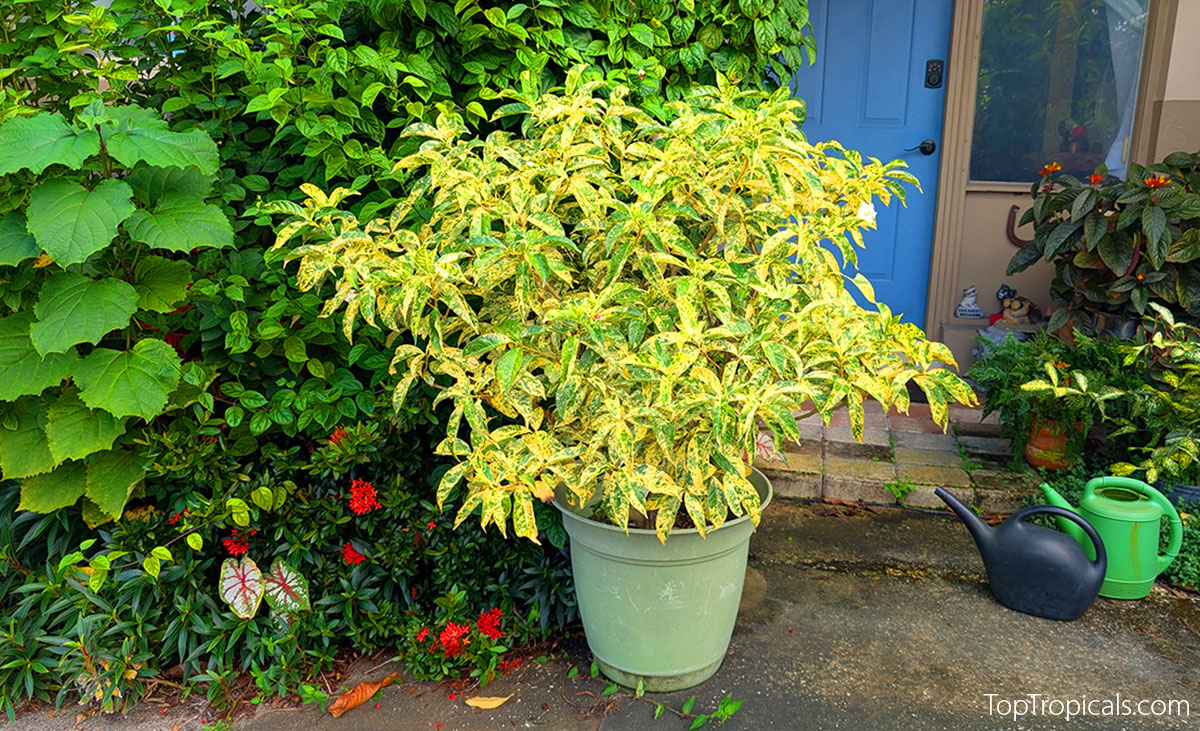
Tabernaemontana  variegated  in  container

Q: How big should the new pot be?

A: Only a few inches larger than the old one. Oversized pots hold too much moisture and may cause root rot.

Q: Why are plastic pots better than ceramic?

A: Plastic pots are lighter, easier to handle, and you can cut them if a root-bound plant is stuck. Ceramic pots are heavy, breakable, and often lack drainage.

Q: How do I safely remove a plant from its pot?

A: Turn the pot upside down and let gravity help. Never pull by the stems or leaves. If stuck, lay the pot on its side and squeeze or tap it. Cut the pot if needed.

Q: Should I remove old soil from the roots?

A: No. Roots have tiny hairs that absorb water and nutrients. Shaking off soil damages them and sets the plant back.

Q: Why must the plant sit at the same soil level?

A: Planting too deep suffocates the stem, and planting too high exposes roots. Keeping the same level protects the root crown.

Q: How soon should I water again after repotting?

A: Water thoroughly right after repotting, then wait until the top inch of soil dries before watering again.

🌱 Done! Your plant now has room to grow stronger before fall.

Shop Garden Supplies

Date: 2 Jul 2025

How to grow tropical fruit outside the Tropics

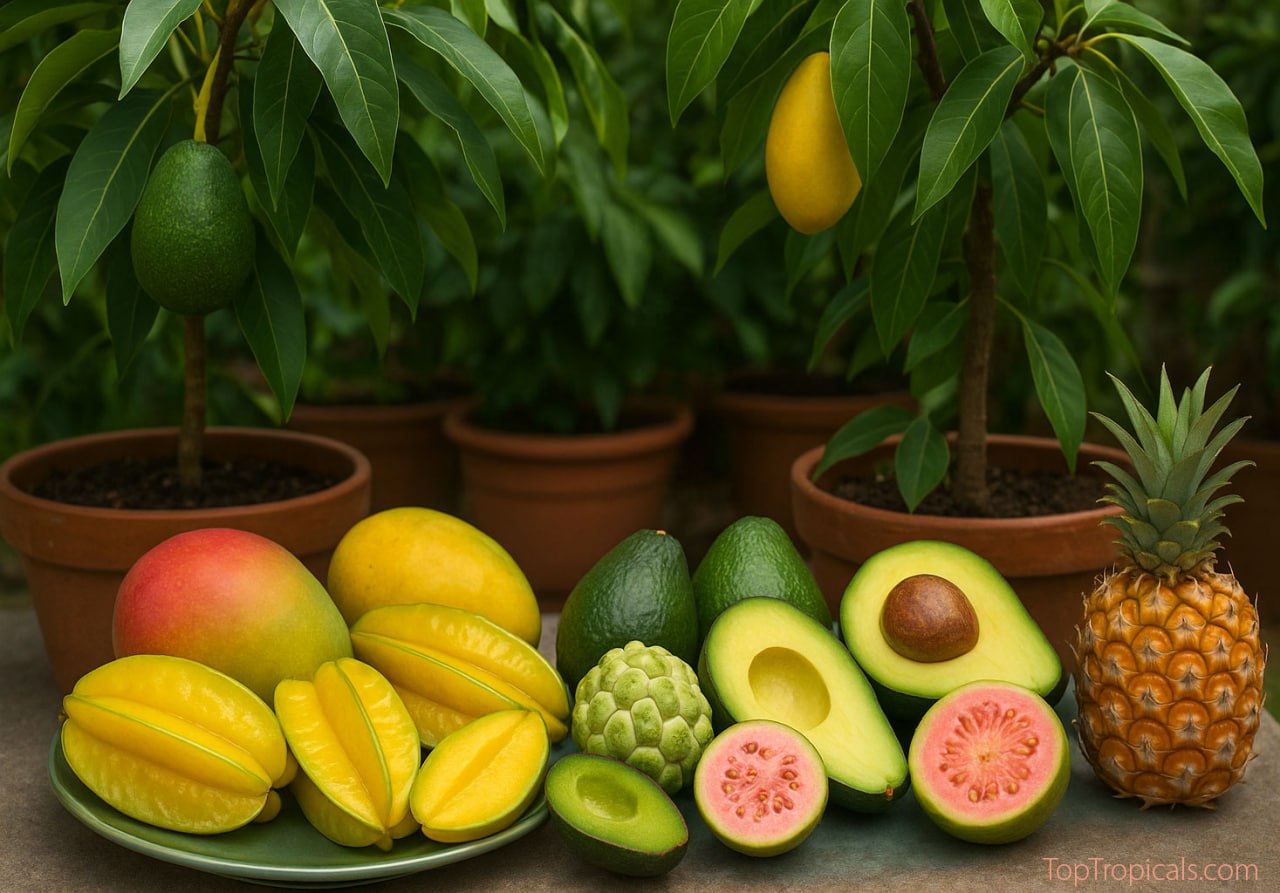
Tropical fruit trees grown in containers

Tropical fruit trees grown in containers

🥭 How to grow tropical fruit outside the Tropics


👨‍ Can you grow tropical fruit in colder climates? Absolutely! The key is growing them in containers so you can move them indoors during cold weather. With the right plant selection, a bit of motivation, good plant food, and a little love, you can enjoy a delicious harvest of exotic fruit - enough to treat your family and even share with friends. Here's everything you need to start your own Tropical Fruit Garden in containers.

🏆 Top tropical fruits and expert tips for growing in containers


🛒 Shop top picks for your container tropical garden:


🥭 Condo Mango
Cold hardy Avocado
🍒 Tropical Cherries - Eugenias
⭐️ Carambola (Start Fruit)
🍉 Guava
🍈 Annona
🍍 Pineapple
🌶 Herbs and spices - tropical edibles right away
🕙 Fast-fruiting trees
🍊 Shop all fruit trees
Supplies and Boosters

#Food_Forest #How_to #Discover

🟢 Join 👉 TopTropicals

Date: 5 Apr 2016

Jungle on Windowsill 101
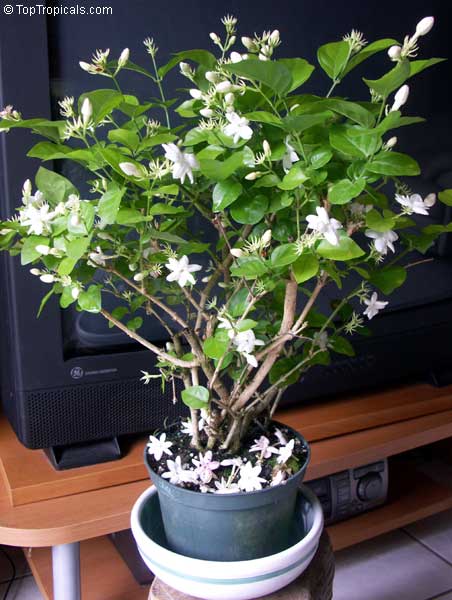
Q: I got a Jasmine Sambac and a Tahitian gardenia as presents, they are very cute plants with flowers and flower buds. I would like to be able to keep them alive and hopefully happy for a long time, but I don't know much about growing tropical plants, and I am not sure if my thumb is green enough to make everything right. What do they need? How much sun? How much water? What kind of soil? Sorry for all these (maybe silly) questions, but I want to keep them alive, please help! I live in Wisconsin and we had some snow again last week.

A: Growing tropicals is not a hard work, it is a lot of fun! These plants are actually a good starters for a beginner who wants to try growing tropical plants, no matter if you live in a mild frost-free climate, or up North where you can have these beauties as houseplants. Below are a few simple steps for you:

1. Read. Follow planting instructions included with your plants. Check plant names on the tags and learn more about them from our online catalog.

2. Soil. Plant in quality potting mix - it must be porous and well-drained, never use heavy soils (top soil or garden soil are no-no), in a pot exactly the size of the root system. You can step up your plants in the next size container once you notice vigorous new growth. Next size means: 4" pot can go into 6" pot, 6" pot into 10" pot, etc. Too big of a pot may create rotting environment, root system must fill the entire container to use all the moisture from the soil. Container must have good hole(s) for excess water to drain through. Put the pot in a saucer and get rid of excess water every time after watering.

3. Light. Most tropical plants require lots of light in order to produce flowers. If you ever visited Florida, remember the bright sun? - these are ideal light conditions for tropicals. Up North, provide as much light as possible: a bright spot on a windowsill of Southern or Western exposure would work the best. If the sun gets too hot in summer afternoon, you may shade the window a little bit with a sheet of white paper to avoid leaf burn.

4. Water. Keep soil slightly moist but not soggy. The best way is to wait until the top of the soil feels dry to touch - this is time to water again. Jasmines prefer to stay on a dry side; gardenias do not like soil to dry out - keep them slightly moist as long as soil is very porous and well-drained. The main reason of most problems with potted indoor plants is over watering. With experience, you will feel the right balance of moisture in the soil: the brighter the light, the more water is consumed by a plant; the less light, the less frequent you should water.

5. Trimming. In low light conditions, plants tend to become leggy. Trim branches as they become too long: the more you trim, the busier the plant gets. New growth promotes more profuse blooming in many species.

6. Fertilizing. Fertilize indoor plants with slow-release granulated fertilizer from march to November.

7. Insects. Check for insects at least once a month, especially underneath the leaf. If notice any problems (deformed leaves, residue, holes, or tiny insects) - clean the leaves/stems with a solution of warm water (1 cup), vegetable oil (2 table spoons), and a few drops of a dish soap.

8. Fresh air and air humidity. As soon as air temperature gets above 65F, bring your tropicals outside in the sun and fresh air: porch, balcony, outside in the yard. Air circulation is essential for your plant health. Bright light and high air humidity will promote vigorous growth, and lots of flowers for you to enjoy!

For more information on growing Tropical Plants 101, see Problem solving with potted plants - how can we help them?.
Date: 13 Aug 2019

Caring of Soursop in container

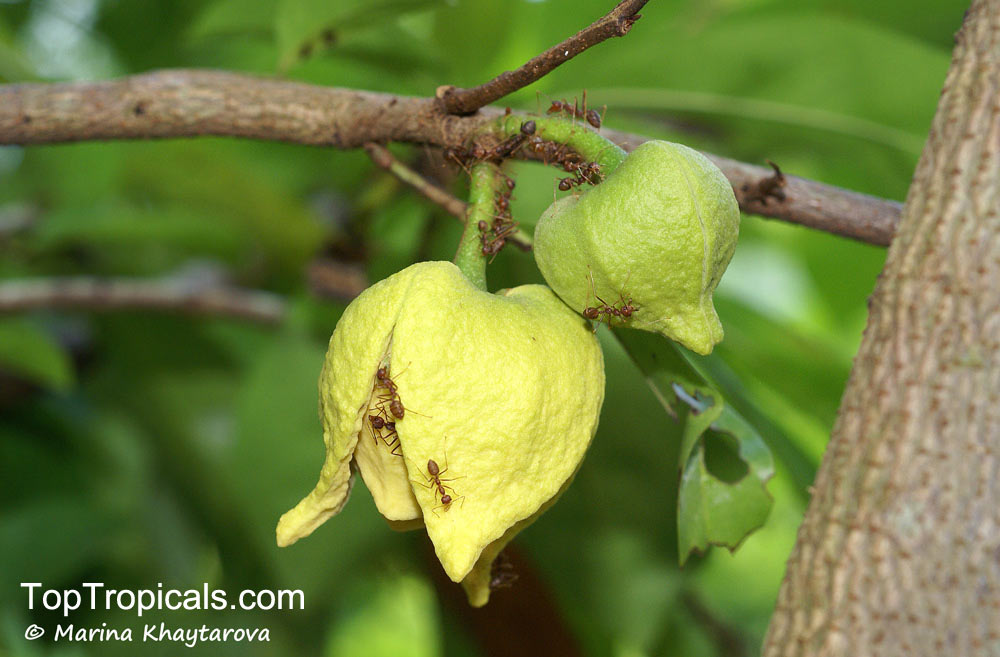
Q: I have ordered dozens of trees from you and have a question about Soursop. I have a Soursop in a container and ants and aphids are under new leaves. Do Soursop like little water? I water almost everyday living in southern Los Angeles it's been around 76-80F. I spray the aphids and ants off with a mist setting on my hose. They come back every day. They're only on new leaves...

A: First of all, you don't have to remove the ants iа they don't bother you. Ants are good insects, they do not harm plants; most likely they are attracted by a sweet sap - aphid by-product. Ants clean up a plant, and they may even take care of some bad insects.
It is not difficult to get rid of aphids. Use a safe treatment: in a small spray bottle, mix 1 cup of warm water, 1 teaspoon of dish soap and 2 tablespoons of any cooking oil (if you have Neem oil or Horticultural oil - even better, but prepare, they are pretty stinky). Spray the leaves with this solution to a dripping point. Repeat in a few days if needed. This simple remedy will take care of the aphids.
Daily water may be ok for the plant during hot weather, as long as the soil is not constantly moist. Let the surface of the soil get a little dry between waterings.

Recommended fertilizers for fruit trees:

Fruit Festival Plant Food - Super Crop Booster
Mango-Food - Smart Release Fruit Tree Booster
SUNSHINE-Honey - for sweeter fruit
SUNSHINE SuperFood - microelement supplement

Date: 21 Jun 2019

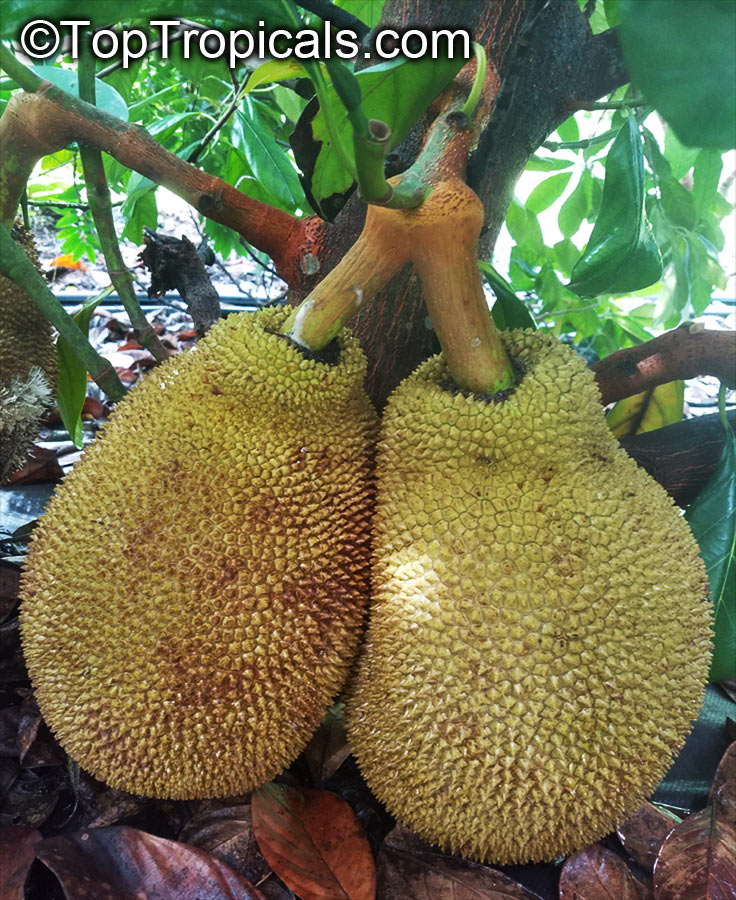
Growing Jackfruit in a pot

Q: I have a young jackfruit tree, and I wanted to know, is a 25 pot enough for an adult tree?

A: 25 to 50 gal should be eventually a good size pot for growing a Jackfruit tree. Keep in mind the following:
1. Start with a smaller container, only slightly bigger than the root system. Do not plant directly into a large container, this may create a risk for root rot.
2. Step up the tree in a bigger container every year as it grows bigger. With every repotting, trim both branches and roots to compact the plant and to encourage branching out.
3. Jackfruit trees should be kept pruned under 6-7 ft in pots and 10-12 ft in the ground. This makes healthy fruit production more efficient and keeps fruit at the base of the tree.