Date: 22 Oct 2024
How
to grow Jackfruit in a pot:
the biggest fruit in the world
Q: Can I grow Jackfruit in a pot?
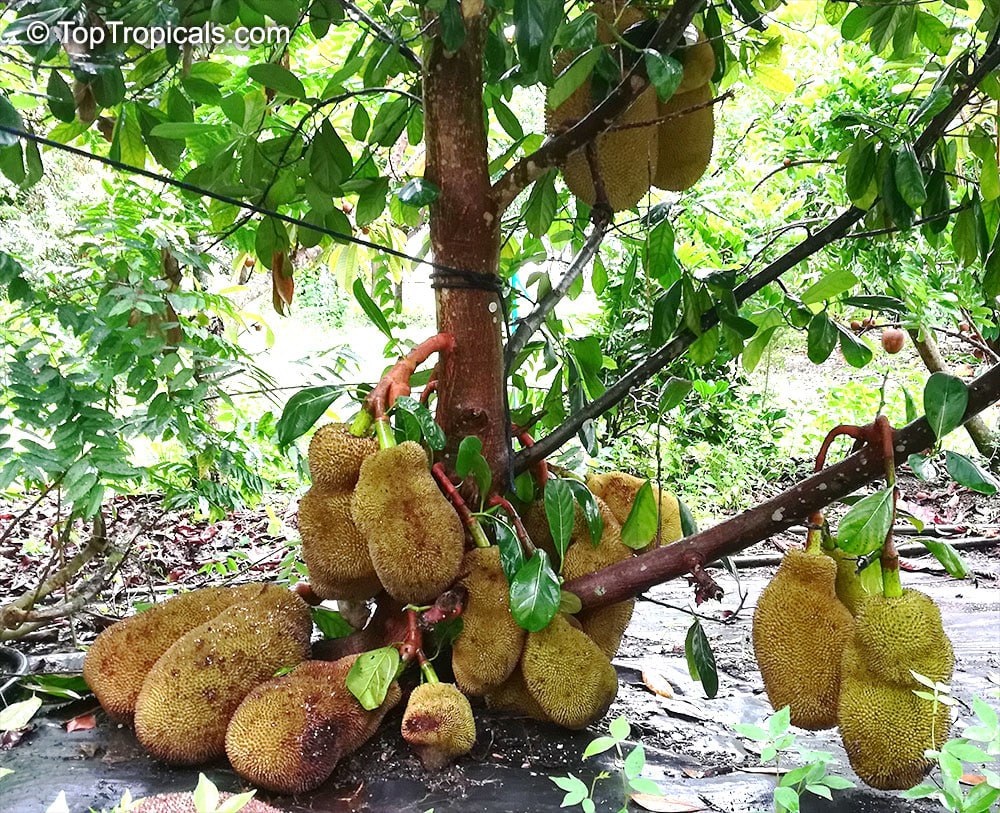
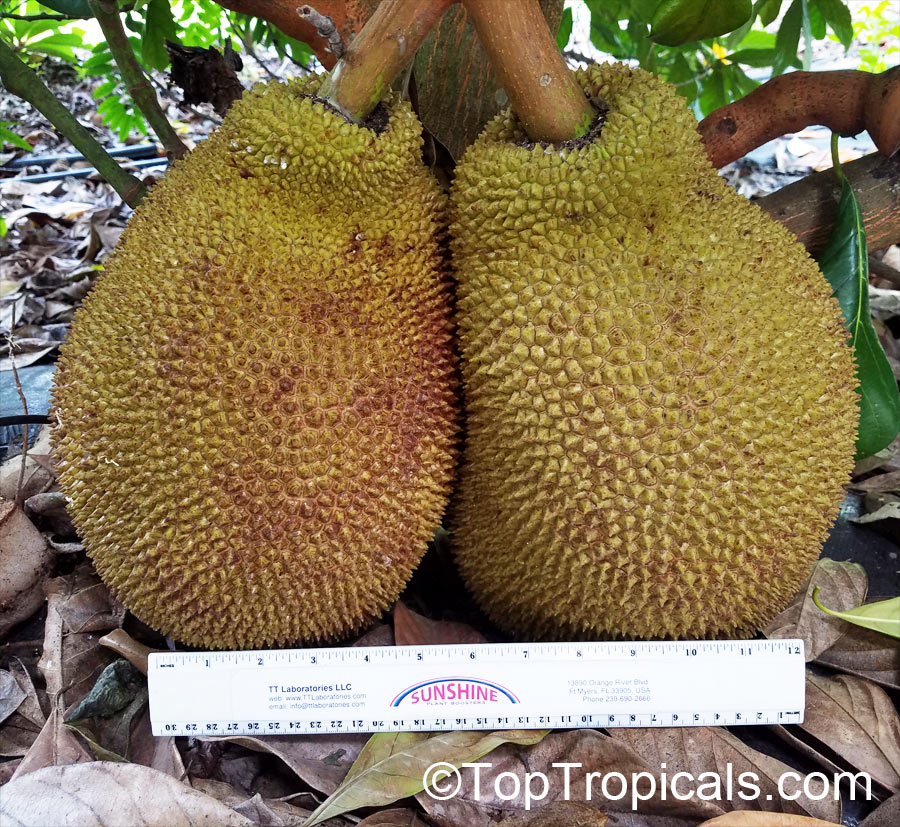
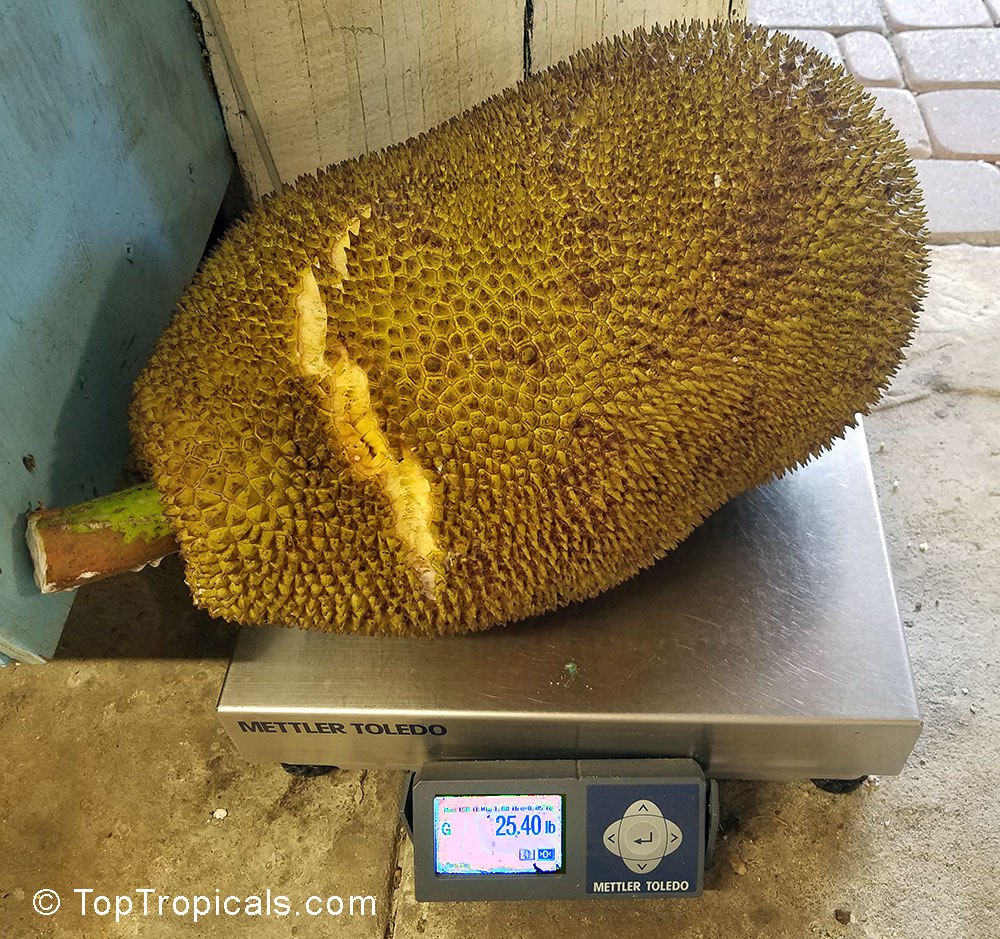
A: Yes, you can! Jackfruit trees, despite producing the largest tree-borne fruit in the world - up to 80 pounds and 36 inches long - can thrive and fruit in containers. The tree has a clever feature: it grows fruit only at the base of the trunk, allowing you to manage its height and size. With regular pruning, the tree can stay compact at just 6-7 feet tall, making it perfect for pot culture.
1. Getting started: pot sizes and growth tips
Start with: A 3-7 gallon container.
As it grows: Gradually increase to a 15-25 gallon pot by the time it
reaches fruiting size (2-4 years).
Pruning is key: Keep the tree topped at 6-7 feet to focus its energy
on fruit production.
Fertilize regularly: Use high-quality plant food like Sunshine Boosters C-Cibus to promote healthy growth and fruit
development. C-Cibus is the best natural plant food for fruit and edibles.
2. Fun facts about Jackfruit - Artocarpus heterophyllus
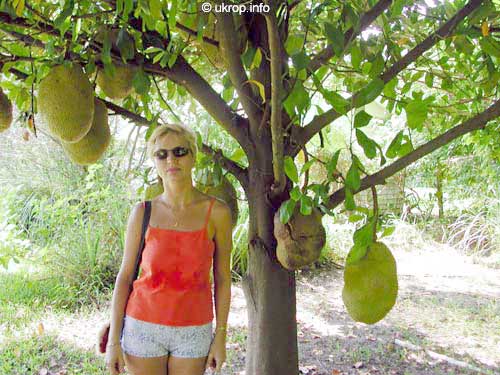
A mature Jackfruit tree can produce 200 pounds of fruit per year.
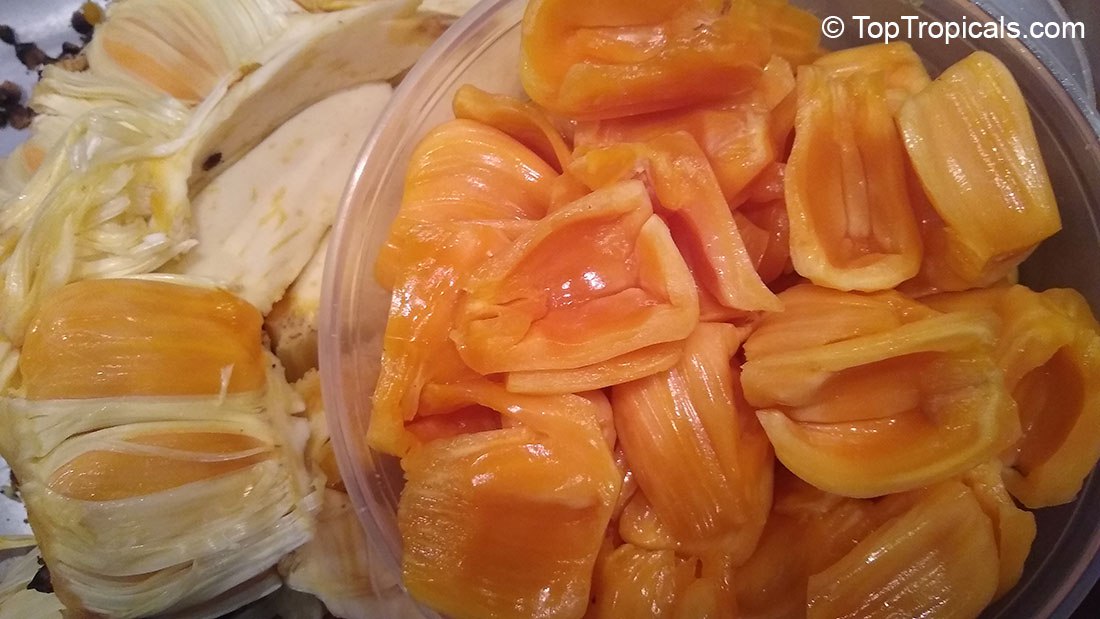
The fruit consists of large, sweet, yellow bulbs with a banana-like
aroma.
Seedlings start fruiting within 3-4 years, with fruits ripening in just 4-6
months after flowering.
3. Cold tolerance of Jackfruit trees
Though often thought of as ultra-tropical, mature trees can withstand light frost for short periods without major damage. Keeping Jackfruit in pots also offers an easy way to move them indoors during cold spells if you're in a cooler climate.
4. Secrets for successful Jackfruit production
- Frost-free temperatures are essential.
- Use rich, organic soil with compost, manure, or peat moss.
- Maintain moist soil with regular watering.
- Constant pruning to keep the tree under 7 feet promotes healthy
fruiting.
- Apply fertilizer and microelements regularly for better fruit quality.
By following these tips, you'll be able to enjoy the world's biggest fruit right from your patio!
Learn more:
About Jackfruit
How to grow the
biggest fruit on Earth
Cheena - Jackedack
Videos:
Jackfruit
Fruit
Date: 27 Jul 2025
💖 What if your next houseplant could make medicine?
Meet Noni, Morinda citrifolia, a tropical tree with deep roots in Polynesian healing. For over 2000 years, it's been used to support health from the inside out: pain relief, immune strength, digestion, skin, joints, energy, and more. And now, you can grow it yourself.
This isn't some fussy rainforest diva. Noni is one of the easiest fruit trees to grow, especially in a pot. It flowers and fruits year-round, even in a 3-gallon container. Indoors, it thrives in bright light and tolerates dry air and skipped waterings. Outdoors in Zone 10+, it's practically unstoppable - fast, forgiving, and constantly flowering and fruiting.
It's also a conversation piece. The glossy leaves can grow over a foot long. The fruit looks like something from another planet! And every part of the plant - fruit, leaves, seeds, even roots - has been used in traditional medicine.
Grow it for health. Grow it for curiosity. Grow it because your ficus never made you juice.
Date: 12 Dec 2018
Six ideas for the best Christmas gift plants

It's this time of the year again when a million dollar question arises: "What do I get them for Christmas?" It's an easy task to buy a gift for a gardener - because we always have a long wish-list! But what to get for everybody else? The answer a simple - buy a live plant... that can bring: Surprise, Love, Joy, Meaning, Convenience, and an Action into their lives! Below are a few wise suggestions.
1. Surprise for Tradition. Everybody knows Ponsettia. Everybody buys it. Every house has it... Red, yellow, white,
and even purple... unusual? No, simply dyed with a paint. Ahh. Go RARE!
Ponsettia is Euphorbia, get a rare Euphorbia. It has indestructible nature,
almosts zero maintenance, and FREE shipping!
Euphorbia leucocephala - Snows of Kilimanjaro
Euphorbia
geroldii - Thornless Crown of Thorns
Euphorbia Exotic Thai Candyland, variegated leaves
Euphorbia Pink Cadillac
2. Love. Gardenia Aimee Yoshioka First Love. With a dramatic history behind this cultivar, it is a perfect expression of Love that one can bring to another for Christmas...
3. Joy of Miracle. Miracle fruit. It speaks for itself and is one of the greatest container plants.
4. Meaning. Symbol of Long Life! Adansonia digitata - Baobab, also called the Tree of Longivity, can live for 5000 years. Pass this remarkable plant in your family from generation to generation! Regarded as the largest succulent plant in the world, the Baobab tree is steeped in a wealth of mystique, legend and superstition wherever it occurs in Africa, being a tree that can provide food, water, shelter and relief from sickness. FREE shipping and easy to maintain bonsai.
5. Convenience. A gift card will give your loved ones a chance to browse amazing wonderland of Tropical Plant World, pick something they like and have it shipped to them weather permitting. The gift card (certificate) has no expiration date!
6. Action. Coffea arabica - Coffee. Want to give your kids a project to drag them away from their smartphones? Have them grow a Real Coffee tree. It is a rewarding plant that is happy indoors and gives you a feeling of Creator - for your care, it will bloom for you with fragrant flowers and fruit for you with real coffee beans!
Check out the full list of plants that are great gifts!

If you need further advice on great looking gift plants for Christmas, contact us!
Date: 14 Nov 2018
Recovering Soursop after shipping and cold
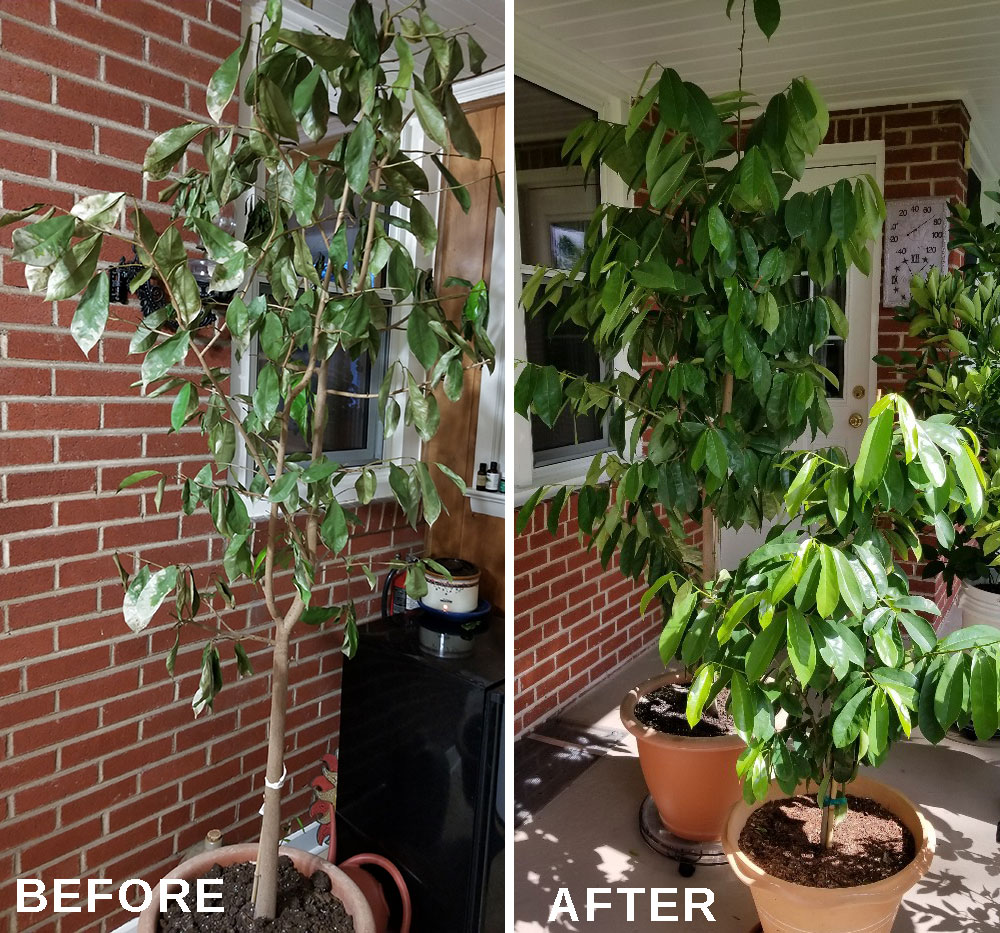
From Irene &
Marjorie, PA: We wanted to share our pics with you (after Summer). I
attached also the photo of the way the tree looked before your advice (back in
April). The big is the one we almost lost and you gave us these instructions and
it came back. These were your instructions:
"The soursop is one of my favorite fruits and I was so sad to hear
yours may be dead. Good news - the tree looks great! Yes, it does have some cold
damage but I'm surprised it still has leaves on it at all! In cooler weather,
they typically drop all of their leaves and stay that way until spring. You
can remove the damaged leaves and it will resprout new growth with the warmer
temperatures."
Taking care of
Soursop after shipping
Soursop - Annona muricata trees are very sensitive to temperature drops. This
always causes leaf loss. After shipping, do not water until the soil gets
slightly dry; keep it in bright shade. No fertilizer until the plant shows active
new growth. Be patient with your plant, and it should recover soon.
Soursop is an ultra-tropical tree and doesn't take any freeze. If you
live in a cooler climate, keep the plant in a pot (the good news is, Annonas,
in general, have a compact nature and are perfect for container culture).
Bring the tree indoors during the cold period, providing bright light.
We have a very interesting article about growing and fruiting Soursop
in an apartment. Check out 4534 Tropical Treasures Magazine # 7
Date: 19 Sep 2018
A Sacred Earthworm: benefit or damage?
by Mark Hooten

Q: We have lots of earthworms in our soil. I've heard they are beneficial for the plants, it it true? Or should I try (and how) to get rid of them at least for container plants?
A: From my earliest childhood, I remember learning that "earthworms" are wonderful, beneficial creatures for our gardens. I had heard that they improved the soil by both aerating it via the tiny tunnels they dig from burrowing activities, AND leaving their droppings which act as fertilizer. However, both my personal experiences and studies have shown otherwise. The truth is that the vast majority of earthworms we encounter in our daily horticultural practices are not even native to North America. In fact, they were introduced from Europe, beginning with the colonial period, mostly accidentally in things like the ballasts of ships, and from soil from around the roots of plants being imported. However, once they arrived here, they began to irreparably alter the natural eco-systems of our forests... Continue reading...