Garden Blog - Top Tropicals

Date: 22 Jun 2026

Carambola Starfruit FAQ: how dwarf is a seedling?
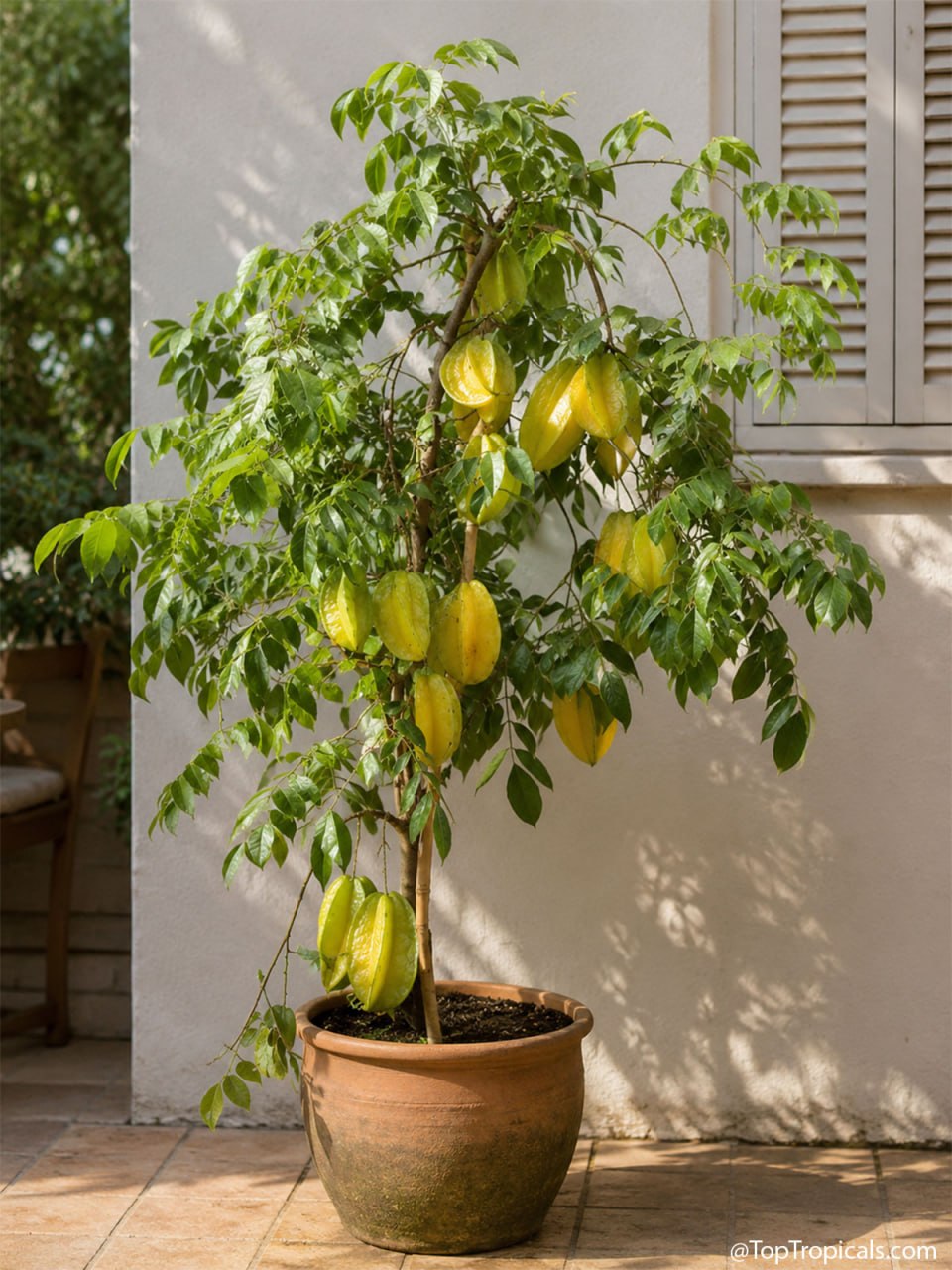
Carambola Starfruit FAQ: how dwarf is a seedling?

🌟 Carambola Starfruit FAQ: how dwarf is a seedling?


I recently ordered a dwarf Hawaiian star fruit seedling from your glorious stock of tropical trees, however upon doing further research it seems like grafted trees guarantee fruit results while seedlings may vary from what the parent plant was. I was planning on putting it in a planter since it’s a dwarf but I’m worried about the quality of fruit since it’s a seedling. Could you elaborate on that a bit?

✅ You are correct that grafted trees provide the greatest certainty because they are clones of a known variety. Seedling trees can show some variation from their parents.

In this case, however, your seedling is not from an unknown or mixed genetic background. The seeds were collected from a true Dwarf Hawaiian cultivar that was growing among other selected dwarf carambola cultivars, primarily Dwarf Hawaiian and a few Fwang Tong trees. Because both the seed parent and the surrounding pollen parents were dwarf, we expect the offspring to retain many of the desirable dwarf characteristics.

While we cannot guarantee that every seedling will be identical to the parent tree, the chances of obtaining a compact, productive tree with good fruit quality are quite favorable. In fact, seedlings sometimes combine the best qualities of both parents and may even produce fruit that is equal to or better than either parent.
The main difference between a grafted tree and a seedling is predictability. A grafted tree gives you a known result. A seedling introduces some genetic variation, but in this case the variation comes from a pool of carefully selected dwarf varieties rather than from unknown parents.

For container growing, we would still expect your tree to be well suited to pot culture, especially with periodic pruning to maintain size and shape. Many growers actually enjoy growing seedlings because there is always the possibility of discovering an exceptional individual. Carambola is a quick fruit tree: 3-4 years from seed to fruit.

We believe your Dwarf Hawaiian seedling has excellent potential and should make a rewarding container-grown fruit tree.

🛒 Plant Star Fruit Carambola Tree

📚 Learn more:

Carambola Plant Facts

Botanical name: Averrhoa carambola
Also known as: Carambola, Starfruit, Five-finger, Balimbing
USDA Zone: 9 - 11
Highligths Small tree 10-20 ftSemi-shadeFull sunWatering: Regular. Let topsoil dry slightlyEdible plantSubtropical plant. Mature plant cold hardy at least to 30s F for a short time
Get personalized tips for your region

Averrhoa carambola in Plant Encyclopedia
Star fruit chili relish: quick-n-fun exotic recipes
Grilled star fruit slices: quick-n-fun exotic recipes
How to gets lots of Star Fruit Carambola
Star Fruit from our garden
Grow your own Carambola
Top 10 fast-fruiting trees: #8. Carambola - Starfruit
Carambola Banana Whip
Carambola Jam recipe
When young Carambola trees are covered with fruit
Carambola tree is the Star of the orchard

#Food_Forest #Discover #How_to

🟢 Join 👉 TopTropicals

Date: 23 Jun 2026

Move Over Adeniums: Why This Unusual Gout Plant Is the Ultimate Natural Bonsai

Move Over Adeniums: Why This Unusual Gout Plant Is the Ultimate Natural Bonsai

🔥 Move Over Adeniums: Why This Unusual "Gout Plant" Is the Ultimate Natural Bonsai


If you love the sculpted look of Adeniums (Desert Roses), there is a rare tropical showpiece you need to add to your collection right now: Jatropha podagrica, commonly known as the Gout Plant.
With its knobby, swollen bottle-like stem and striking blooms, this plant looks less like a typical houseplant and more like a piece of living coral reef art.


The Ultimate Lazy Gardener's Bonsai


Unlike traditional bonsai trees that require years of meticulous wire training, pruning, and root shaping, Jatropha podagrica is a "natural bonsai." It does all the hard structural work for you.
Staying compact at just 2 to 3 feet tall, this unusual succulent is an absolute must-have for container gardens, succulent collectors, and bonsai lovers looking for an effortless, natural focal point.

The Caudex (Swollen Trunk): It forms a distinctive, bottle-shaped, knobby trunk completely on its own, mimicking the aged look of a masterfully trained bonsai from day one.
Massive Tropical Foliage: It features surprisingly large, umbrella-like leaves that can reach 10 to 12 inches in diameter, creating a bold contrast against the rugged trunk.
Coral-Red Flowers: It produces vibrant, eye-catching red flower clusters that resemble ocean coral. These terminal clusters pop brilliantly and stand high above the foliage canopy.

The Shade Trick for Giant Leaves


One of the coolest features of the Gout Plant is how it adapts to light. While it prefers partial sun and handles bright conditions beautifully, it thrives in the shade.
When kept in lower light or partial shade, the plant reacts by growing even larger, broader leaves to catch the light. This creates a dramatic, lush tropical canopy right above that textured, rugged trunk - giving you an even more exaggerated, stunning bonsai silhouette.

Effortless Care: Low Water, High Reward


If you are prone to forgetting to water, this is the plant for you. Because that beautiful, swollen trunk acts as a built-in water reservoir, the Gout Plant is highly drought-tolerant.

👉 Quick Care Guide


Light: Partial sun to partial shade (shade yields bigger leaves).
Soil: Must be planted in loose, well-draining soil mix.
Water: Low. Let the soil dry out significantly between waterings.
Size: Stays a manageable 2-3 feet high, making it ideal for small patios, bright windowsills, or compact garden spaces.

Easy to care for, completely unique, and an instant conversation starter - the Gout Plant brings an exotic, dramatic flair to any space without demanding constant attention.

🛒 Get Yours Before They're Gone

📚 Learn more:

Gout Plant Facts

Botanical name: Jatropha podagrica
Also known as: Gout Plant, Gout Stick, Buddha Belly, Guatemala Rhubarb, Tartogo
USDA Zone: 9 - 11
Highligths Plant with caudexPlant used for bonsaiSmall plant 2-5 ftSemi-shadeShadeFull sunWatering: Moderate. Water when top soil feels dryYellow, orange flowersRed, crimson, vinous flowersOrnamental foliageToxic or PoisonousPlant attracts butterflies, hummingbirdsSubtropical plant. Mature plant cold hardy at least to 30s F for a short timeSeaside, salt tolerant plant
Get personalized tips for your region

· Jatropha podagrica in Plant Encyclopedia
· 9 awesome accent plants and vines that love heat and dry conditions
· Coral-blooming bonsai with a bottle-shaped trunk - perfect container plant
· Attention grabber: swollen trunk, giant leaves, and flowers just like corals

🎥 Plant this bonsai with a bottle-shaped trunk - perfect container plant

#Container_Garden #Nature_Wonders #Discover

🟢 Join 👉 TopTropicals