Garden Blog - Top Tropicals

Date: 18 Dec 2025

How to have fruit year around from Everbearing Mulberry

🍇 How to have fruit year around from Everbearing Mulberry


📱

💗 Dwarf Everbearing and Dwarf Issai - Compact, container-friendly varieties perfect for small spaces. These dwarf trees (6-10 ft tall) are disease and drought resistant, with multiple crops year-round, even from the first year! Ideal for patios and small yards..

🛒 Plant hardy Mulberry year around

📚 Learn more:

Paper Mulberry Plant Facts

Botanical name: Broussonetia papyrifera, Morus papyrifera
Also known as: Paper Mulberry
USDA Zone: 6 - 9
Highligths Large shrub 5-10 ft tallSemi-shadeWatering: Moderate. Water when top soil feels dryRed, crimson, vinous flowersOrnamental foliageSubtropical plant. Mature plant cold hardy at least to 30s F for a short time
Get personalized tips for your region

· Mulberry trees in Plant Encyclopedia
· What are the best Mulberry varieties
· Top 10 fast-fruiting trees: #7. Mulberry
· How Mulberry fruit helps with diabetes

#Food_Forest

🟢 Join 👉 TopTropicals

Date: 19 Dec 2025

Eight best winter blooming trees

💐 Eight best winter blooming trees


🛒 Explore Winter bloomers

#Trees #Discover

🟢 Join 👉 TopTropicals

Date: 22 Dec 2025

Center of the world tree that stops traffic in Florida - now fits in a pot

Ceiba Dwarf Pink Princess

🗿 Center of the world tree that stops traffic in Florida - now fits in a pot


🎥 Ceiba Dwarf Pink Princess

🌸 If you’ve ever visited Florida in winter, you’ve probably seen those unbelievable pink trees in full bloom - that’s a Ceiba (Chorisia) speciosa, also known as the Kapok or Pink Silk Floss tree, famous for its hibiscus-like flowers and fluffy silk pods.

🌸 The problem? The classic Ceiba can grow 40 feet tall.
This one doesn’t! Ceiba hybrid Dwarf Pink Princess stays compact - about 8-12 feet in the ground and even smaller in a pot.
And unlike seed-grown trees, this one blooms right away because it’s grafted! No long wait.

🌸 In winter, it drops most of its leaves and explodes into thousands of soft pink flowers. Same wow factor. Just a fraction of the size.
Perfect for small yards, patios, balconies, or anyone who wants a show-stopping winter tree without committing to a giant.

🌸 #Fun_facts: the ancient Maya believed the Ceiba was the sacred tree at the center of the world, connecting earth to the sky.

🌸 So yes… You can officially say you’re growing the center of the world in your backyard.

🛒 Plant it now - it fits any garden

📚 Learn more:

Silk Floss Tree Plant Facts

Botanical name: Ceiba speciosa, Chorisia speciosa
Also known as: Silk Floss Tree, Bombax
USDA Zone: 9 - 11
Highligths Small tree 10-20 ftSemi-shadeFull sunWatering: Moderate. Water when top soil feels dryWatering: Regular. Let topsoil dry slightlyPink flowersThorny or spinyPlant attracts butterflies, hummingbirdsSubtropical plant. Mature plant cold hardy at least to 30s F for a short time
Get personalized tips for your region

Ceiba (chorisia) speciosa in Plant Encyclopedia
How this breath-taking flowering tree stays so compact

#Trees #Nature_Wonders #Container_Garden

🟢 Join 👉 TopTropicals

Date: 16 Jan 2026

What is blooming in January: Purple Orchid Tree

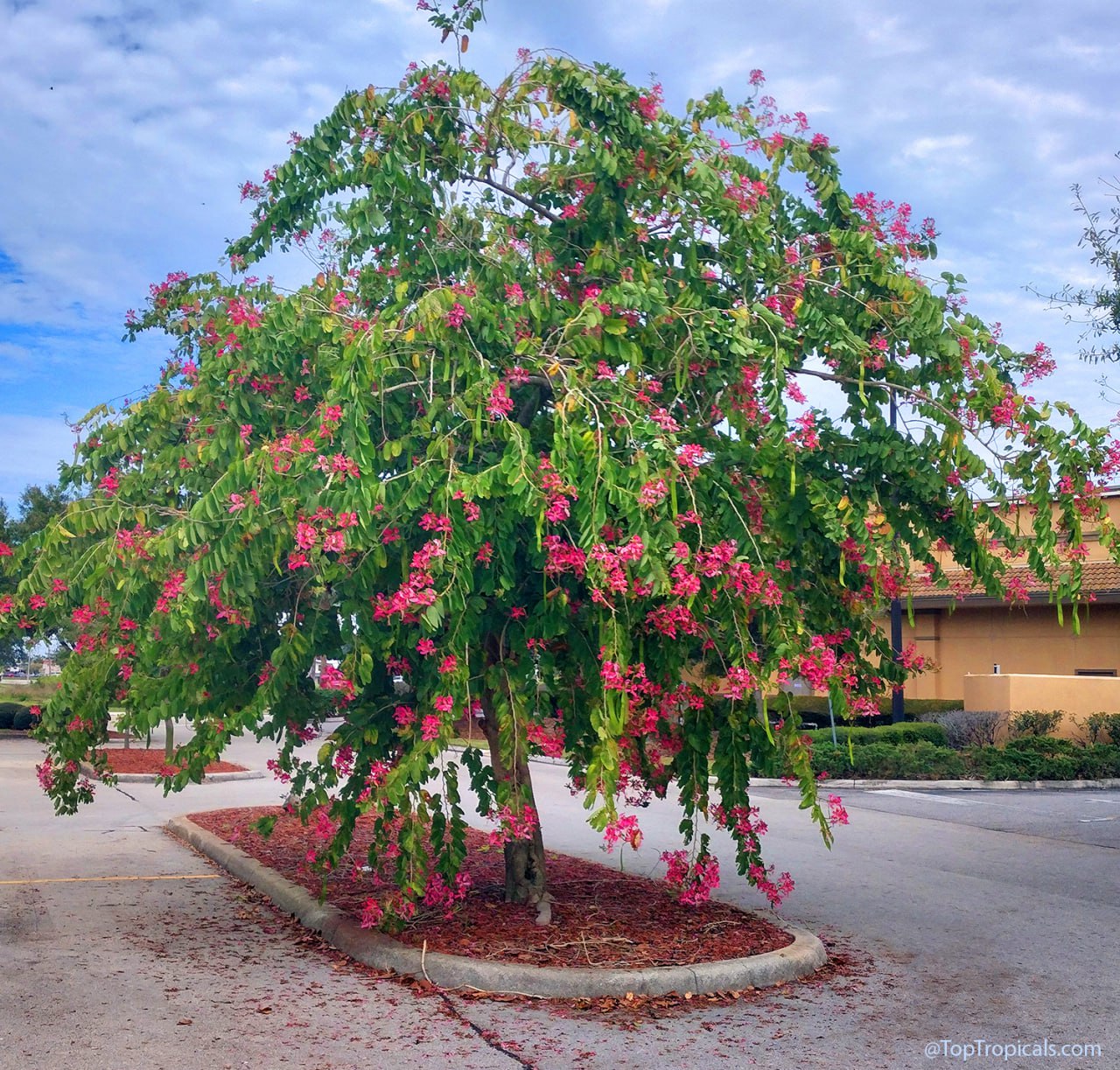
Purple Orchid tree - Bauhinia purpurea

Purple Orchid tree - Bauhinia purpurea

🌺 What is blooming in January: Purple Orchid Tree


📸 Purple Orchid tree - Bauhinia purpurea

🛒
Discover Bauhinias - Orchid trees

📚 Learn more:

Orchid Tree Plant Facts

Botanical name: Bauhinia purpurea, Phanera purpurea
Also known as: Orchid Tree, Butterfly Tree
USDA Zone: 9 - 11
Highligths Large tree taller than 20 ftFull sunWater Requirement: Low. Allow soil to dry out between wateringsRed, crimson, vinous flowersPink flowersPlant attracts butterflies, hummingbirdsDeciduous plantSubtropical plant. Mature plant cold hardy at least to 30s F for a short timeSeaside, salt tolerant plant
Get personalized tips for your region

Bauhinias - Orchid trees in Plant Encyclopedia
The most asked-about tree in the Sunshine State: Bauhinia

#Trees

🟢 Join 👉 TopTropicals

Date: 20 Feb 2026

Florida freeze damage - what to replant after a record cold winter

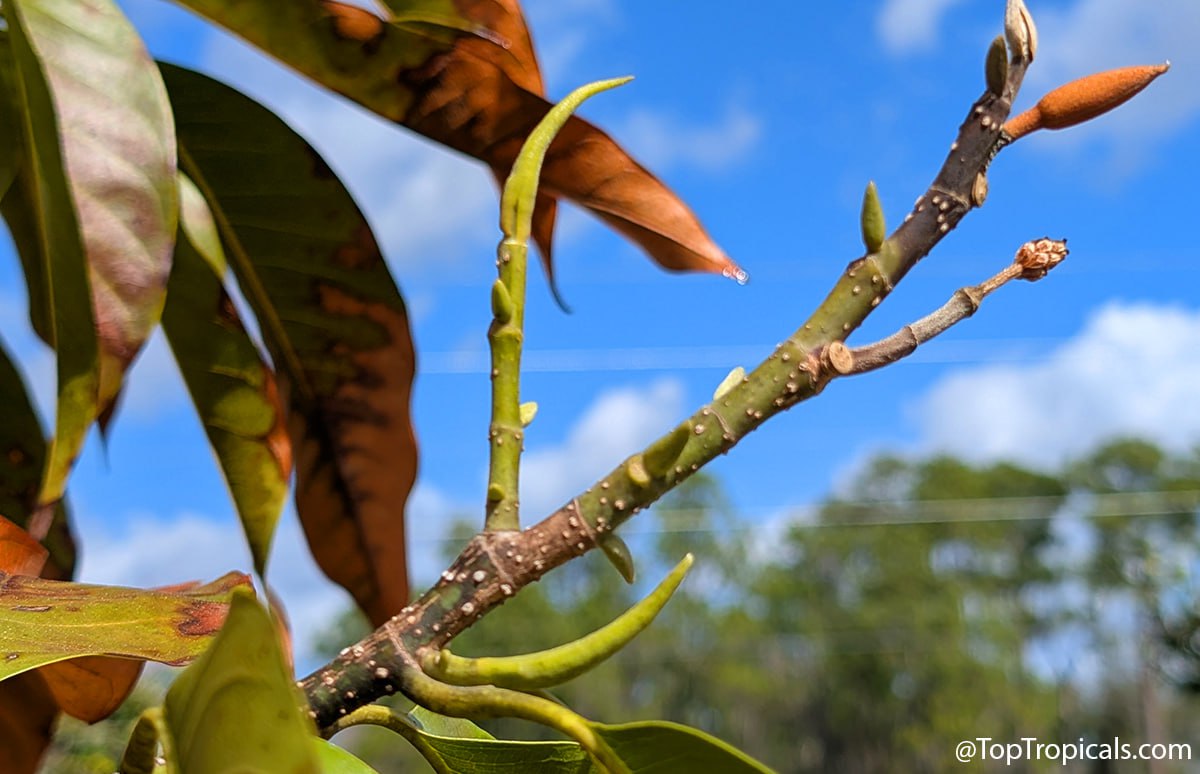
Magnolia champaka new shoots
Magnolia champaka new shoots

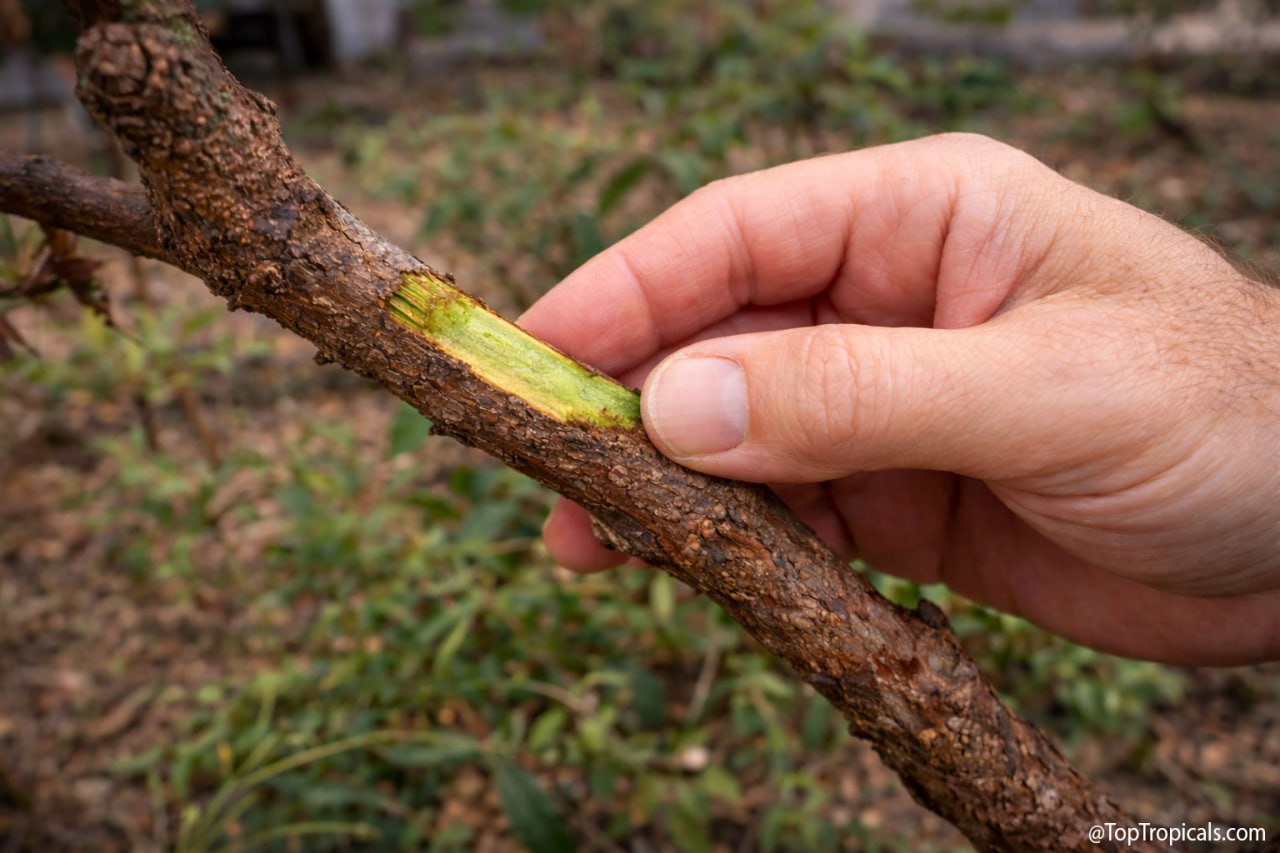
Scratch test on a bark

Scratch test on a bark

❄️ Florida freeze damage - what to replant after a record cold winter


🌱 A record freeze changed Florida gardens


After the recent record cold across Florida, many gardeners are now seeing the real damage - browned leaves, split stems, collapsed shrubs, and fruit trees that may not recover.
Some plants surprised us with new growth. Others are clearly gone.
The practical question is simple: what should you replant so it does not happen again next winter?
The good news - you can build a more frost-resilient garden without giving up beauty or fruit.

🌱 First - do not rush to rip everything out


Before replacing anything, check carefully:
Scratch the bark lightly - green underneath means the branch is alive.
Wait for consistent warm weather - some plants re-sprout weeks or even months later.
Look for growth higher on the stem, not just at the base.
After freezes, many tropicals look worse than they are. Patience often saves money.

🌱 Why some plants survived and others did not


Freeze survival depends on several factors:
Duration of cold - 2 hours vs 8 hours makes a major difference
Microclimate - south-facing walls, wind protection, canopy cover
Plant maturity - established roots handle stress better
Pre-freeze health - overfertilized, soft growth freezes faster
This explains why two identical plants in the same yard can perform very differently.

🌱 What to replant for a frost-resilient garden


Instead of replacing losses with the same tender species, consider:
Cold-hardy fruit trees
Proven freeze survivors from this winter
Shrubs that tolerate brief dips below freezing
Layered planting for wind protection

When redesigning:
Plant tender species closer to structures.
Use hardy trees as windbreaks.
Avoid low frost pockets.
Improve drainage - wet roots freeze faster.
You do not have to remove tropical character. You just have to plant smarter.

✍️ Check the list of freeze survivors:


What tropical plants survived Florida's historic freeze without protection

🌱 Rebuild with strategy, not emotion


After freeze damage, many gardeners replant quickly - only to repeat the same losses.
A better approach:
Identify what truly died.
Learn which species survived locally.
Choose varieties proven in your climate zone.
Design with cold in mind.
One freeze can become a turning point. Many Florida gardens become stronger after a hard winter because the plant list gets refined.

🌱 Spring Equinox - a natural reset


The Spring equinox marks equal day and night and the astronomical start of spring. From this point forward, daylight increases and active growth accelerates.
For Florida gardeners, it is a natural reset.
New growth begins. Roots wake up. Replacement planting becomes safer.
This is the right time to rebuild.

🛒 Explore cold tolerant tropical plants and cold hardy Avocados

🎥 What tropical plants survived Florida's historic freeze without protection
🎥 These Avocados survived 3 nights of 25F hard freeze, Florida Record Freeze

📚 Learn more:


· Top Ten Fruit Tree Winners of Florida 2026 Record Freeze
· Top Ten Flowering Tree Winners of Florida 2026 Record Freeze
· To trim or not to trim? When and how to trim damaged plants after winter
· Cold-hardy avocado varieties - what freezing they really survive
· Cold-hardy avocado survival groups - what the numbers really mean

#Discover #How_to

🟢 Join 👉 TopTropicals