Garden Blog - Top Tropicals

Date: 10 Oct 2020

Trimming and treating Adeniums in winter

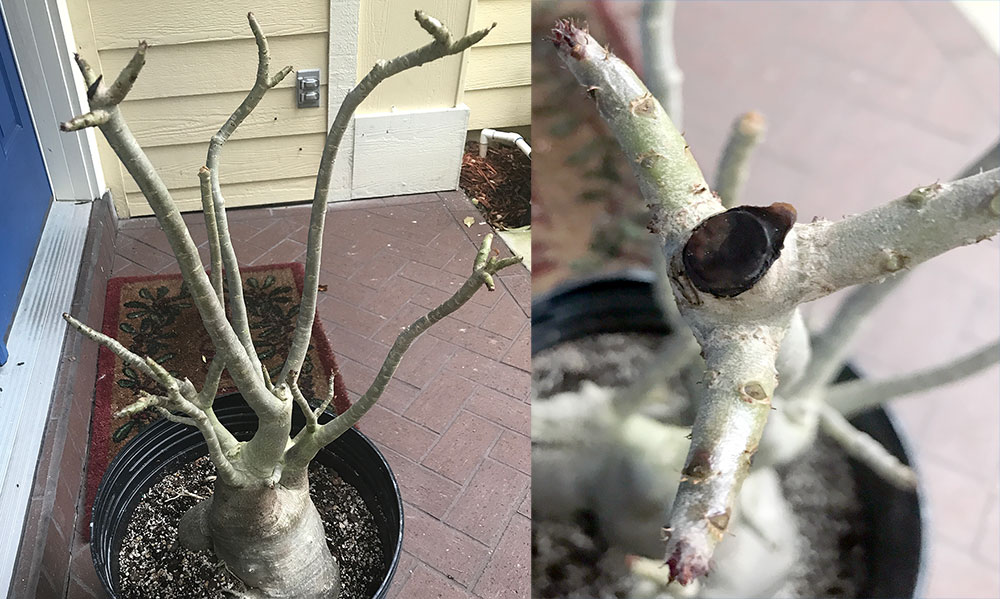
Q: My desert rose below dropped leaves after I replanted it in a bigger pot. I noticed that one of the branches that had been pruned is black at the tip. Please let me know if the section of the branch that turned black needs to be cut. I also wasn't sure how often to water it since the leaves have all dropped. None of the other dessert roses have dropped their leaves but they are all younger plants. Any advice would be much appreciated.

A: Your plant looks healthy and vigorous overall. Dropping leaves after repotting, or shipping, especially at this time of the year, is normal in Adeniums. They are deciduous and stay leafless from Fall to Spring. Some individual specimens can go into dormancy sooner than others - all depends on conditions: temperature, light, exposure, etc. and individual plant's "clock".
The black spot on the cut branch may be a sign of a fungus as a result of excess water. You may carefully clean/rub it with a paper tower dipped in Hydrogen Peroxide (pharmacy grade). Then rinse with fresh water.
Keep the plant warm and in a dry spot. Once leaves are dropped, it doesn't need much water. Once a week watering is enough.

Date: 4 Oct 2020

New video: Ground orchids.
All-summer colors for shady gardens

WATCH NEW VIDEO

Did you know orchids can be grown in the ground?
Orchids have a mystique that seems to set them apart from most other flowers... they are elegant and almost unreal in their perfection... The symmetry of the flowers has led to the orchid being a symbol of a perfect beauty.
But not every gardener has luck growing traditional orchids. Some complain about their special maintenance: "Mount them on a tree, do not overwater... and all that hassle just for once-a-year flower?" Sounds familiar?
Terrestrial orchids (a.k.a. ground orchids) grow in regular garden soil instead of in the air on tree branches. And they bloom almost year round!...

Ground orchids are available from our store.

Stay updated with TopTropicals Videos by subscribing to our channel at YouTube.com/TopTropicals and get our latest video news of what is fruiting and blooming!

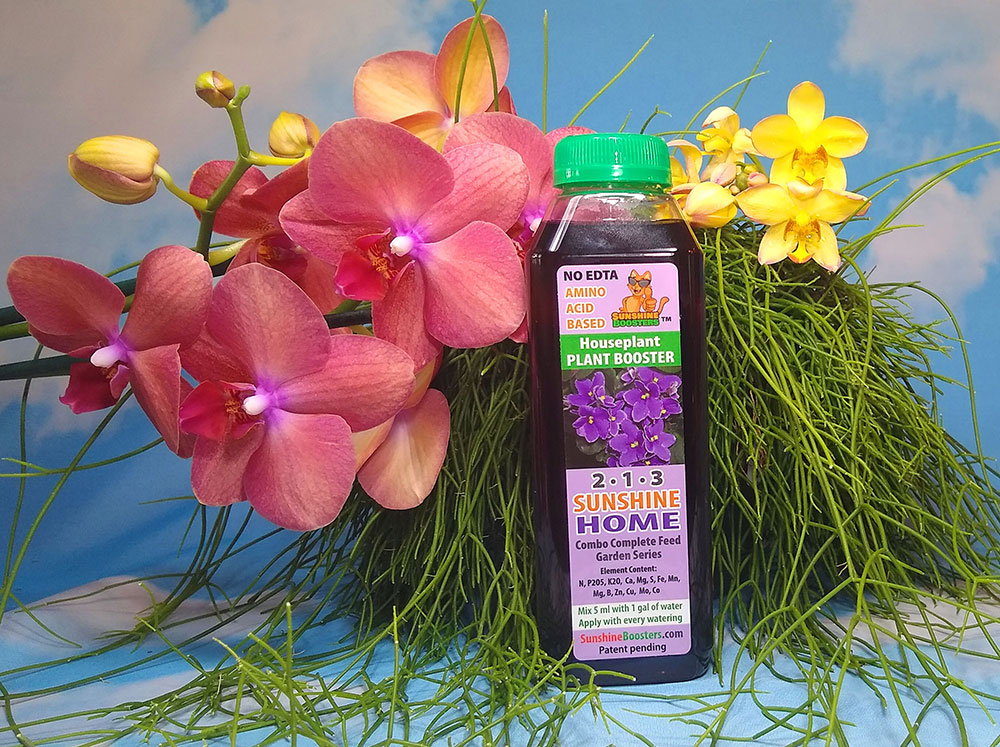
Remember to get plant food for your orchids and Ground orchids!
In the photo: Sunshine-Home, plant booster for tender house plants and orchids.

Date: 30 May 2020

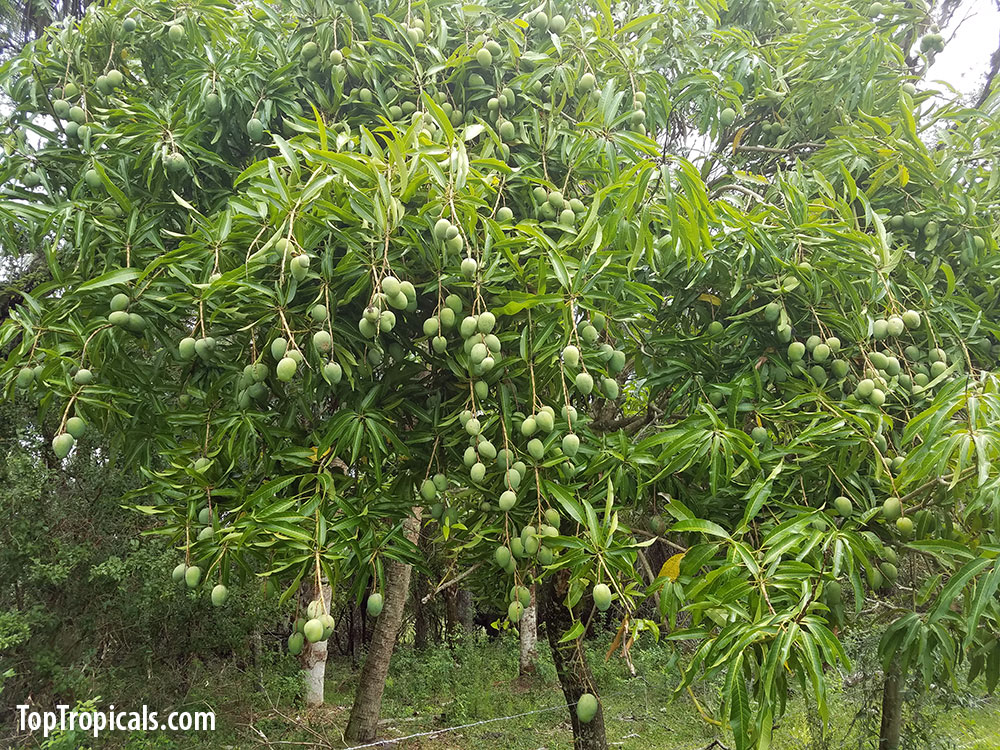
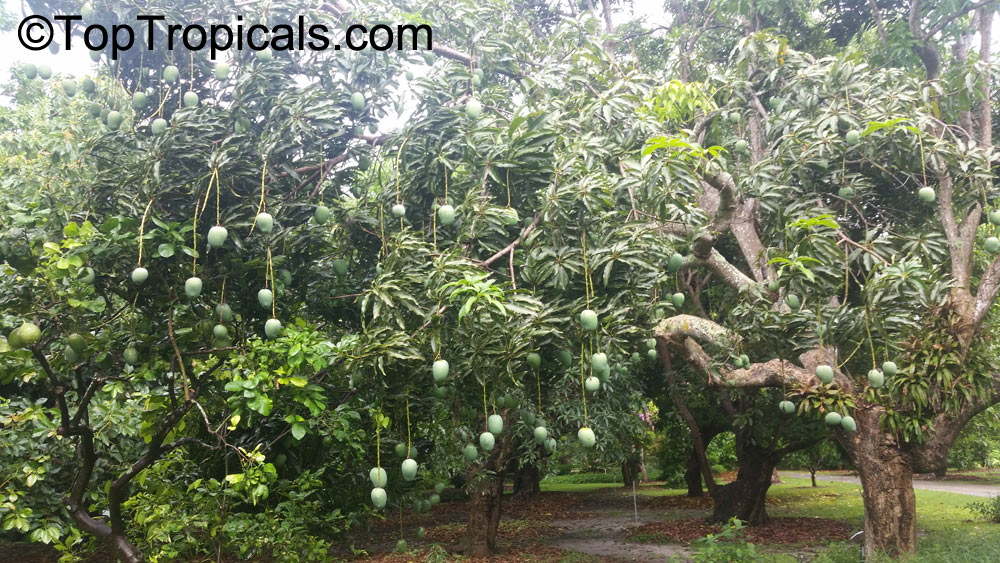
How to prevent mango fruit drop

Q: My mature mango tree is fully grown 15 yrs old and each year it fully blooms, sometimes twice. Shortly thereafter, all the baby mangos and flowers fall off providing no mangos for the season. I have tried fertilizing, spraying the tree for fungus or other insects, to no avail. I give up, any suggestions?

A: Dropping fruit in pretty common issue with mango trees. There may be several reasons, or a combination of reasons.
1. Fungal disease (anthracnose), and/or powdery mildew. To avoid fungal disease problems, spray your tree when it just begins to form the flower spikes. Treat foliage with Copper fungicide. There is also another one, very effective for anthracnose: Thiophanate methyl.
2. Inadequate nutrition. Feed your tree with a combination of granulated fertilizer Mango-Food, liquid booster SUNSHINE Mango Tango and micro-elements Sunshine Honey and Sunshine Superfood
Check out pictures of our mango tree problems that were fixed within a month by using Sunshine Boosters.
3. Too much rain or heavy dew during blooming and fruit set (see 1 - use preventive treatment for fungus)
4. Cold. Sometimes the cause of premature fruit drop is from the cold weather during bloom and fruit set. Usually the most affected varieties are the early bloomers including Glenn, Haden. The cold damages the developing embryo in the seed. The fruit starts to develop but because of ethylene gas given off by the damaged embryo, the fruit is triggered to drop before maturity. To see if cold temperature was the cause for your fruit dropping, cut open the fallen fruit. Even if there is a small speck of brown in the seed, that's enough damage to stop fruit development.
To learn more how to care for your mango, please read this publication.

Date: 23 Mar 2020

Garden Sustainability Tips: Live your Life. Dig your Garden.
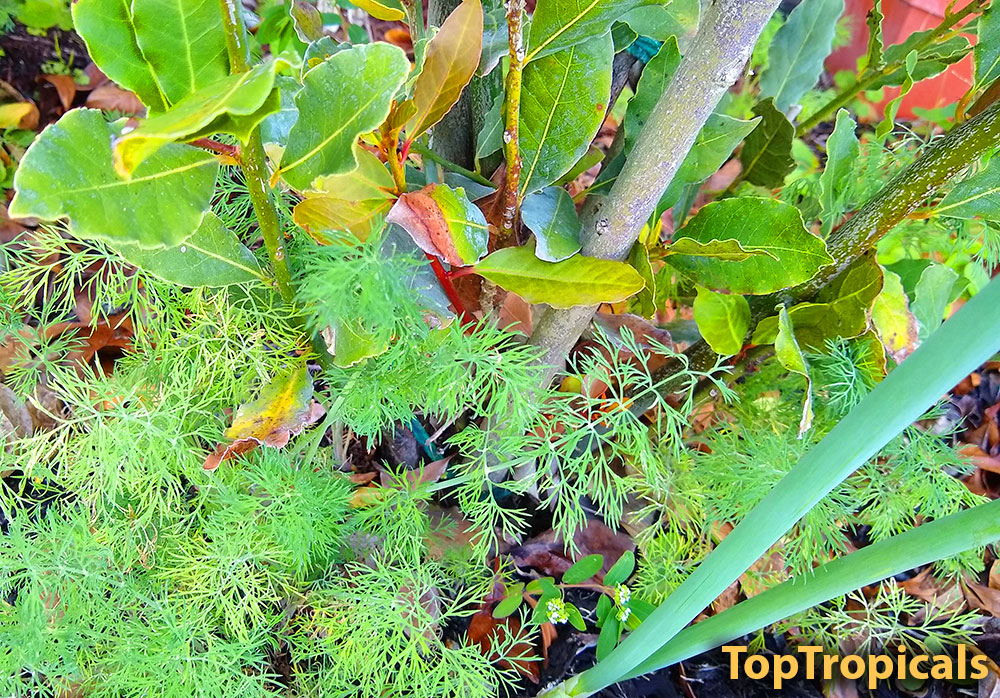
You can grow herbs and vegetables that can be easy incorporated into your home landscape. You don't need a raised bed for a few little things that will come really handy for your kitchen.

1. Parsley. Get a small 4"pot parsley plant from a local garden center. It grows super fast and just one plant can provide great healthy addition for your cooking for a few months. Plant in in full sun, under a tree or shrub, where it gets hit by a sprinkler.
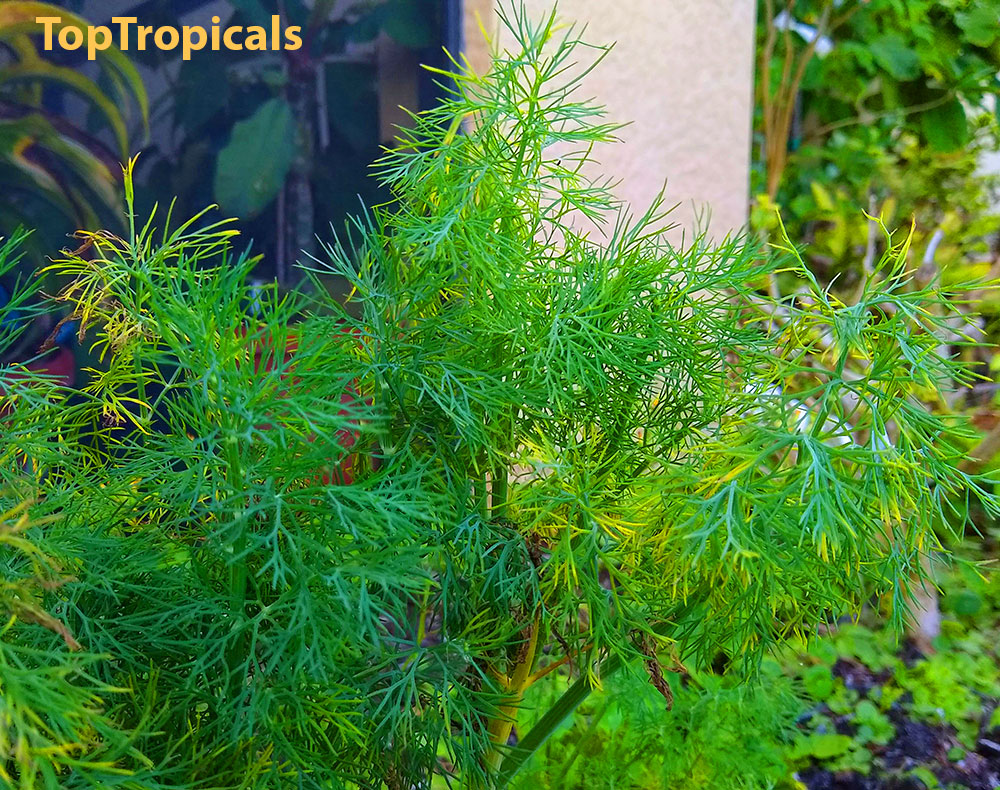
2. Dill. This one grows from seeds quickly and easily. It also needs full sun and regular water.
3. Chives, or Green Onion. Don't through away"bulbs"from chives you got from the store. Stick them in the ground, pretty much anywhere in your garden. You will have supply of fresh chives loaded with vitamins right away (withing a few days!) and for many months. You can also plant an onion bulb (root-end down... duh) - this one will produce greens even faster!
4. Bay Leaf. If you live in a mild climate, plant a Bay Leaf in your yard (closer to the door - closer to the kitchen!). It is a wonderful healthy spice for soups and stews that makes them super flavorful. If your winters are cold, keep the plant in a pot. Bay Leaf makes a great undemanding houseplant that needs bright light, but very little water.
5. Cherry tomatoes are easy to grow, heat tolerant and even grow in lower light, so they are easy to incorporate into any existing landscape. Get Sunshine Boosters to double your crop: see how it works.
6. More herbs and spices. Check out our large selection of herbs and spices - they are on sale today!
7. Garden work is a great exercise. While the gym is closed - get to gardening. Read about Fun workout and Calories Burning Gardening.
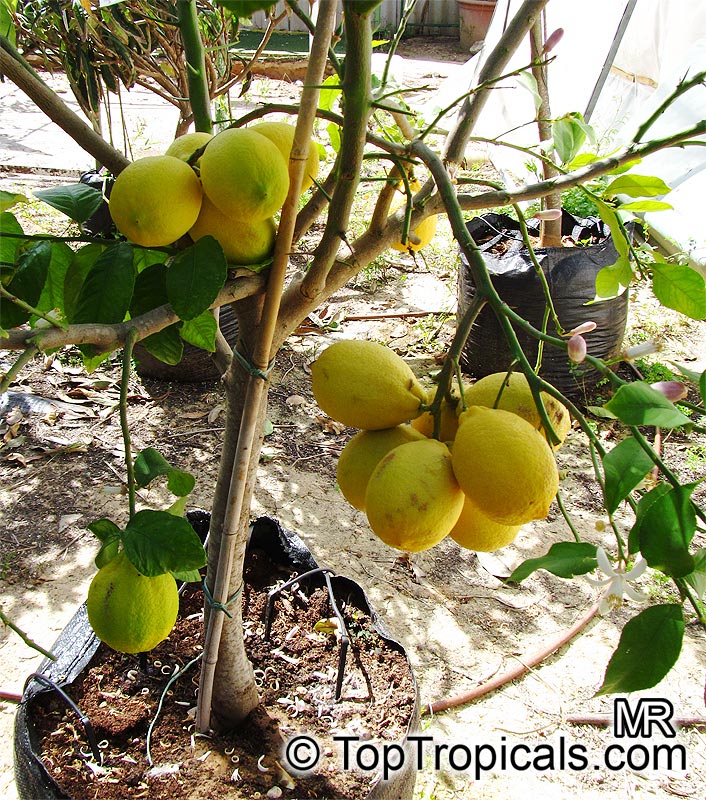
8. Lemons. Vitamin C is your best friend for boosting immune system, and Lemons have tons of it! In areas where citrus can grow outside, Lemon tree is a must-have for your garden, or at least find a friend who has one! Citrus also makes a great house plant, so you can keep it in a pot, too. Just make sure to have a grafted tree that will produce right away.

Lemon Juice Health Booster Recipe

1. Squeeze juice from 1 lemon and mix it with 1 cup of water.
2. Add ice cubes and 1-2 tbsp of any flavored syrup (optional). You may add some fresh mint for Mojito flavor.
3. Enjoy this drink at least once a day.
4. Get a bunch of lemons, squeeze fresh juice into ice cube trays and freeze. 1 lemon = makes 1 ice cube. Store in freezer and use 1-2 cubes to make the above drink, daily.

Besides being rich in vitamin C that will boost your immune system, Lemon juice is a Natural medicine that helps to treat:
- cold and flu
- headaches and high blood pressure
- stomach problems
- insomnia
- and much more
Drinking lemon juice on regular basis will make your body stronger and more resistant to infections and many illnesses.

Please take good care of yourself and your loved ones. Stay healthy.
Date: 5 Oct 2019

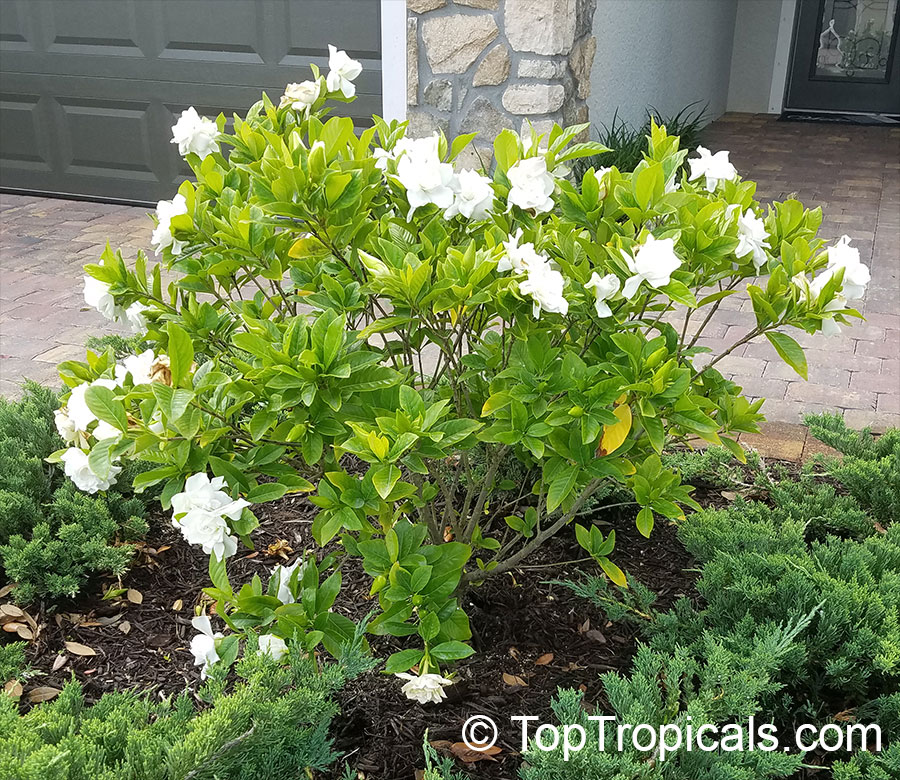
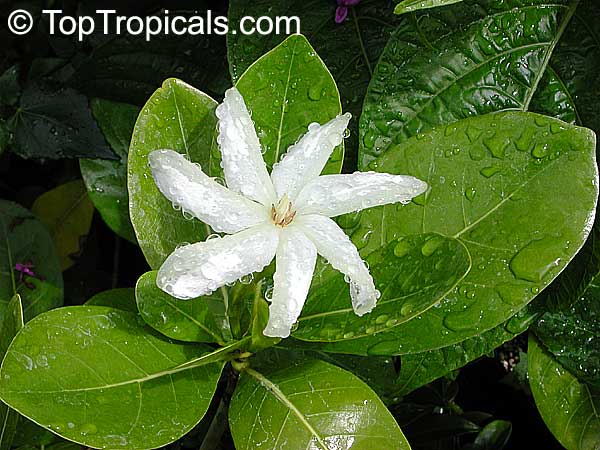
Gardenia flowers: how to prevent bud-drop

Q: My gardenia looks beautiful, but the flowers fall off of it before they even open up, the majority of them get this brown color at their base. Can you point me in the right direction.

A: There are 3 possible problems, either one, or a combination:
1) Lack of light
2) Too much water
3) Lack of micro-nutrients in soil
Try the following treatments:
- micro-elements SUNSHINE-SuperFood as foliar spray + drench rootball, once a month, it will improve quality of the flowers.
- Silicon protection: SUNSHINE-Power-Si. This supplement has Silicon as an active element (Si). Adding it to soil or/and over foliar spray can immensely enhance plants' resistance to external factors and boost their growth and health.
Make sure the soil is not soggy, reduce watering especially during fall/winter.