Date: 22 Feb 2022
How to survive Winter in South Central Florida
A touching story
by Ed Jones, the Booster Guy
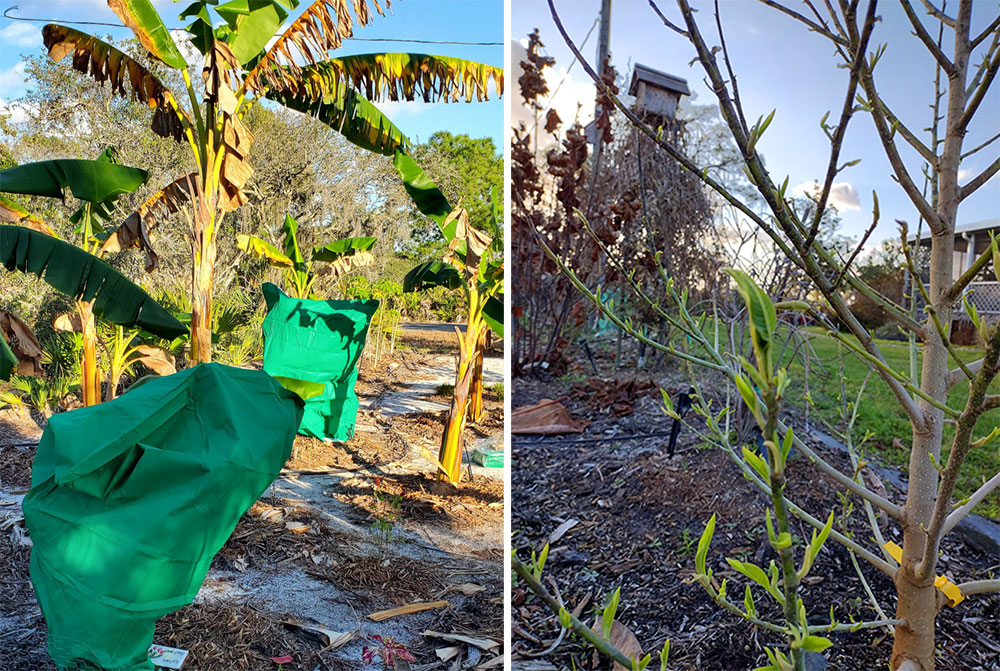
...As much of the country is still in the midst of winter, I believe the
worst has passed for us here in the South Central part of Florida...
...This Winter, almost all of zone 9b and some of zone 10a had frost and
many had a hard freeze...
...Now, many of us here in this part of the state enjoy growing subtropical
plants and trees. There are many that grow well here and most can handle a
frost or even a dip to the high 20s for a short time. Smaller and more
recently planted trees and bushes are most at risk...
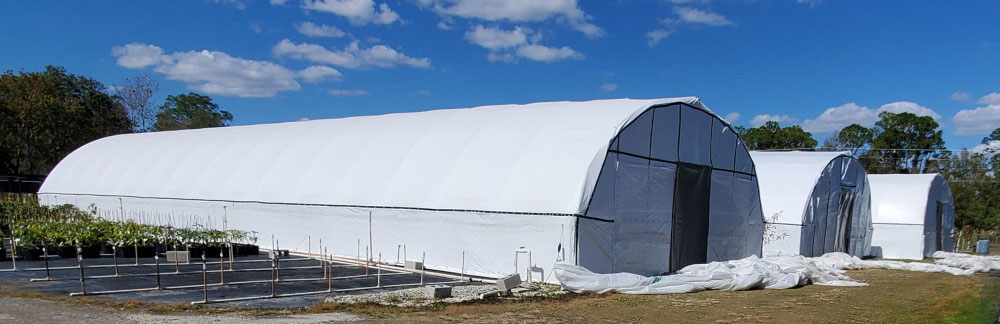
...At the Top Tropicals nursery here in Sebring, home to over 20,000
plants, we scrambled for several days to try to protect as many of our plants as
possible. We moved smaller plants into some of our hoop houses that had propane
heaters...
...After 2 weeks of moving plants in and out of protection, we were all
pretty worn out; happy that everything survived and hoping that we would not
have to do that again anytime soon. Slowly, things at the nursery are beginning
to resemble our old normal. Seeds are being planted, cuttings are continuing
to grow and grafting season will be upon us soon. We are all very happy for
that...
...What to do and not to do when the freeze is coming and you have mango,
avocado, and other tropical fruit trees and tender tropicals? Here is some
news from the Orchard and many more coming... check it out and stay with our
updates to learn more!

Date: 5 Jan 2021
Growing Loquat in container
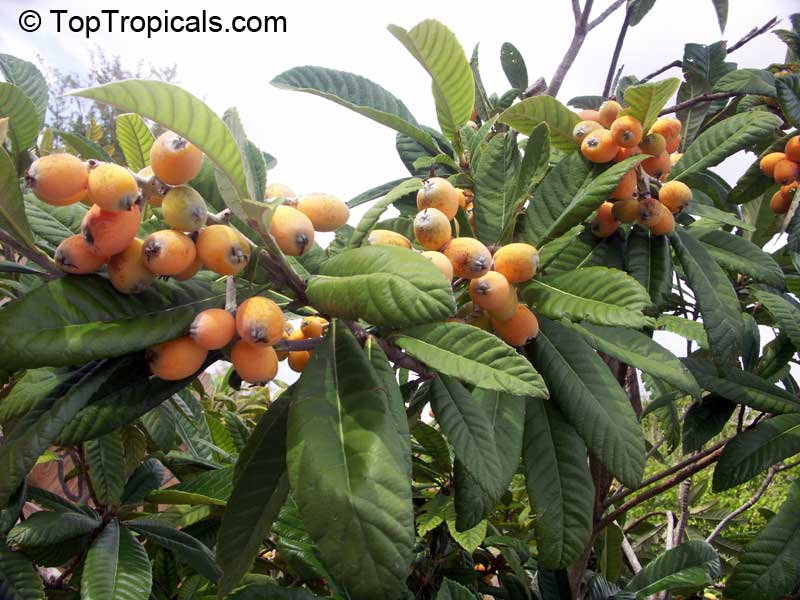
Q: I purchased a Sherry Loquat tree from you in April of 2020. It got off to a slow start initially, but now is five feet tall with healthy leaf growth! It is in a 15-gallon pot and was brought into the house by October 15th. I live in Zone 6 and kept the plant outside from end of May to October 15th. I have given the tree artificial lights in addition to slow release fertilizer. Can you please advise me on what steps I need to take to get the Sherry Loquat tree to fruit? E.g., lighting requirements, soil pH, soil type, etc.
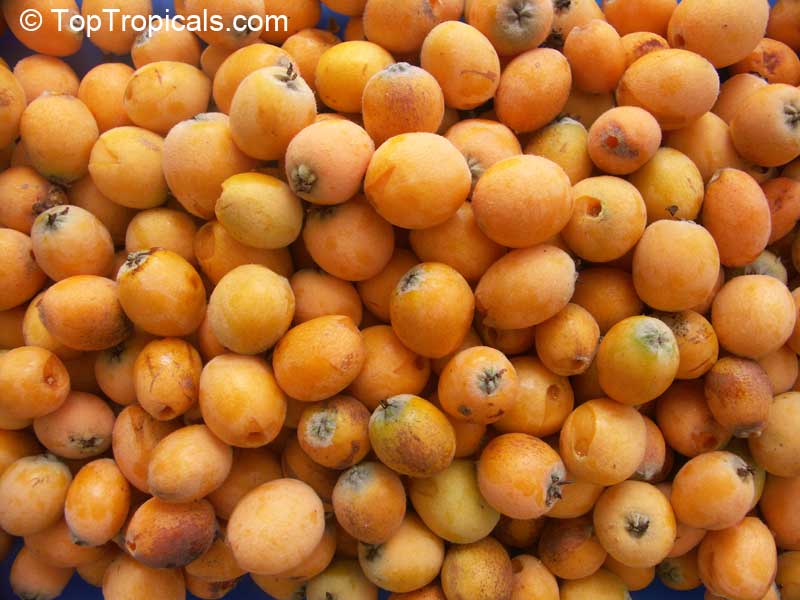
A: Loquat is normally winter flowering and spring fruiting tree, here in Florida it is usually heavily covered with fruit by April. With a proper care, you may see flowers throughout the winter and they may set some fruit for you. Considering that during this time you have to keep the plant indoors, here are some recommendations:
1. Soil. Well-drained, porous potting mix. Do not use any heavy garden soils. For our plants we use the following mix which is excellent for containers: Abundance
2. Light. The brighter the better. Sunroom would be great, or at least put the tree next to a large window. Extra lighting with grow lights is beneficial. Any type of light will work, you can even use a simple clip-on light, the brighter the better. 8-10 hours a day.
3. Water. Loquat is drought tolerant but for fruiting it will need regular watering; just don't keep soil soggy, let is slightly dry before waterings.
4. Fertilizer program. Use liquid fertilizer. We recommend Sunshine
Boosters that are safe to use with every watering and year around - SUNSHINE C-Cibus - Crop Nutrition Booster.
We recommend to switch plants from traditional"slow-release"fertilizer to the liquid one because it makes a huge difference in plant growth and flower/fruit quality and quantity.
Sunshine Boosters are scientifically balanced fertilizers that supply all necessary elements for daily plant
needs. They are natural and eco-safe, great for any edibles.
5. Micro-elements. These are essential for potted plants, because in containers roots can't reach out to elements that are usually present in soil when trees grown in the ground.
Apply micro-element remedies that are very effective for improving fruit production,
especially when flower or fruit drop occurs:
SUNSHINE Honey - promotes more efficient blossoming and pollination, makes flowers bigger and reduces bud
drop.
SUNSHINE SuperFood - improves plant vigor and quality and size of flowers
These are all natural, eco-friendly supplements that work great for fruit trees and other edibles.
Read more about Loquat trees: The best grafted Loquat varieties.

Date: 19 Nov 2020
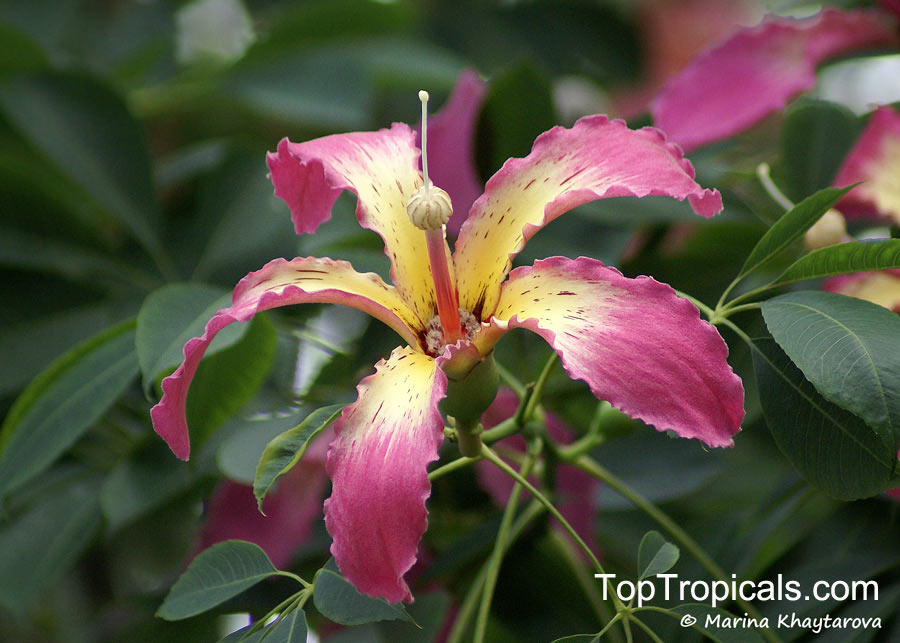
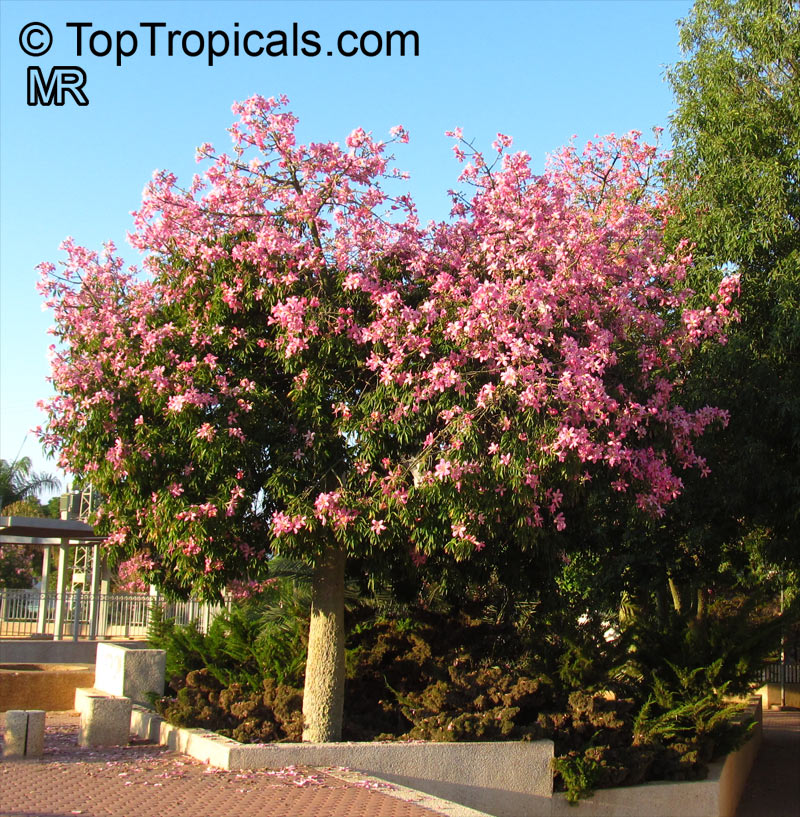
Chorisia speciosa - Exotic Pink Silk Floss Tree
by Onika Amell, tropical plant expert
When I stumbled upon my first Pink Silk Floss tree at the Naples Botanical Garden in Florida, it stopped me in my tracks. It was in full bloom and one of the most beautiful flowering trees I had ever laid my eyes upon. This tree has so much wow factor. Not only are the flowers of this native from the Amazon Rain Forest in South America spectacular, but the trunk, seeds and attractive, umbrella-like crown makes it exceptionally unique and interesting. This tree will stand out in any garden....
CONTINUE READING >>
Date: 8 Jul 2020
Grafted fruit trees for Hawaiian gardens
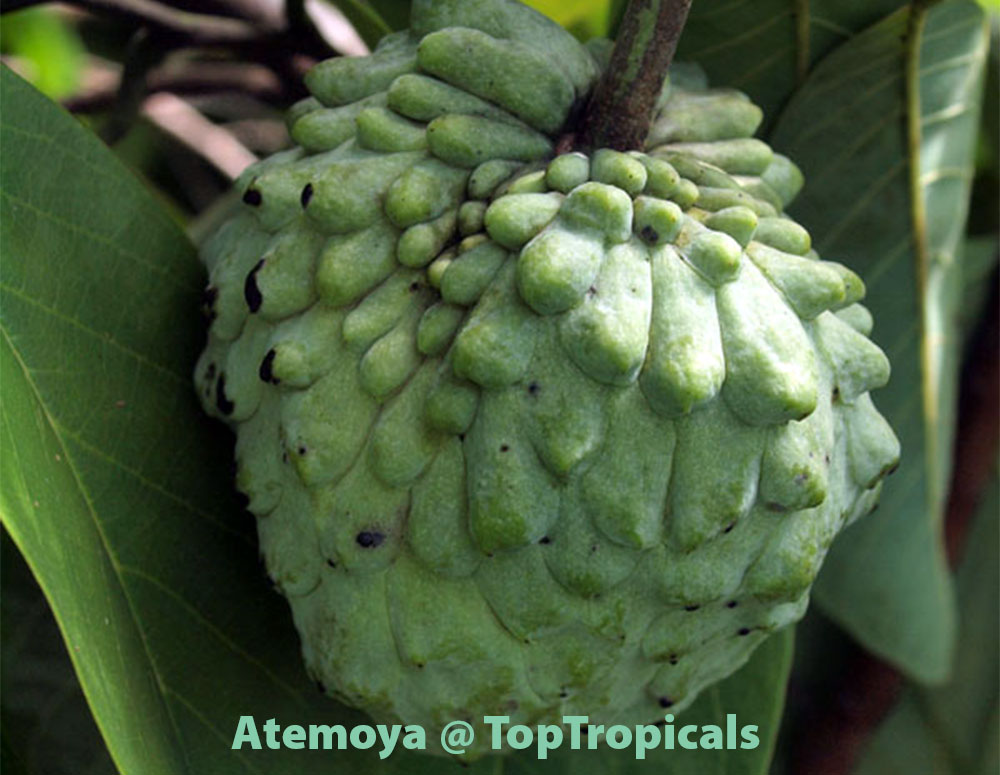
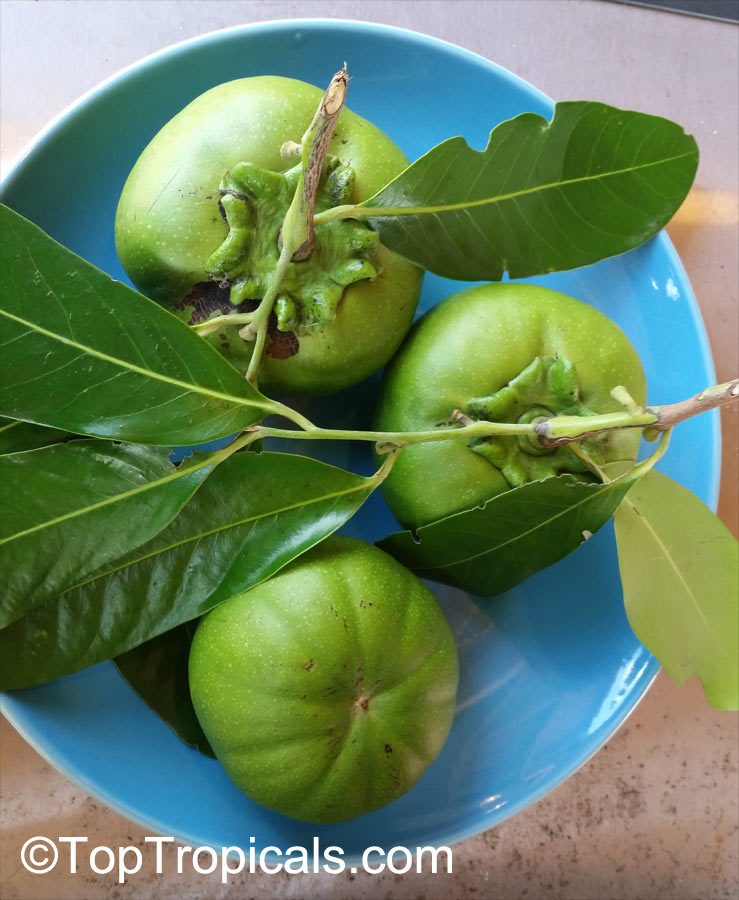
Q: Aloha guys, I purchased a Diospyros digyna - Black Sapote grafted var. Black Beauty from you and am checking to make sure it will fruit by itself and not need both sexes. Also checking to see if the grafted atemoya I bought from you will fruit at sea level (where I'm at) or if I should give it to a friend who is above 1,000 so it will fruit? My grafted Maimi soursop is thriving! Looking at getting a grafted jackfruit from you all next.
A: Black sapote Black Beauty does not need a second plant to produce
fruit. Grafted trees should be flowering and setting fruit right away, or
sometimes on the second year.
Atemoya does not require high elevation for fruiting. It is a hybrid
Annona squamosa x Annona cherimola (A. cherimola species prefers higher
elevation) so Atemoya is usually is happy at sea level.
Congratulations with your Soursop! It should be really happy in your location.
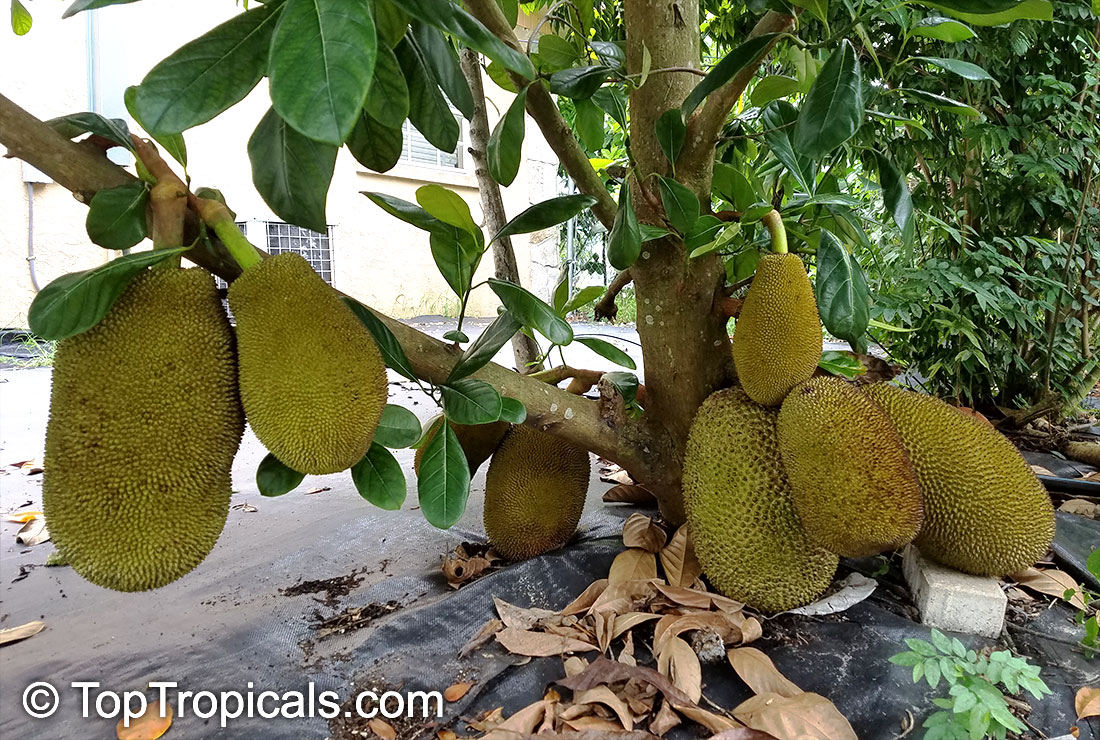
As for grafted Jackfruits, this is the list of varieties we usually carry. Since many of them are very rare, they sell out quickly once we get new arrivals. If you are looking for a specific variety, I strongly recommend to add it to your wishlist (click on "Notify me when available") and you will receive email from us as soon as we have it in stock, so you will be the first one to know about it!
Our favorite Jackfruit varieties (and also hot sellers)
Black Gold
Borneo
Red
Crispy
Dang
Rasimi
We also suggest to get a Kwai Muk (while we still have it!) - the most delicious fruit, and it should do well in Hawaii.
Date: 23 May 2020
Perfumed Milky Way Tree
by Onika Amell, tropical plant expert
What is a garden without fragrance? Unknown to so many gardeners because
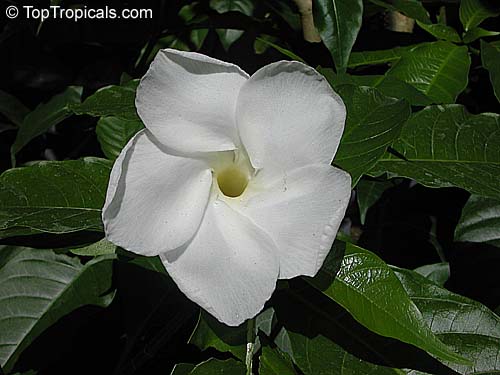
of its rarity, the Milky Way tree or Stemmadenia litoralis is one of those trees that are simply
unforgettable. This is without a doubt one of the most fragrant flowering trees you can
plant in the tropics or warm greenhouse conditions...
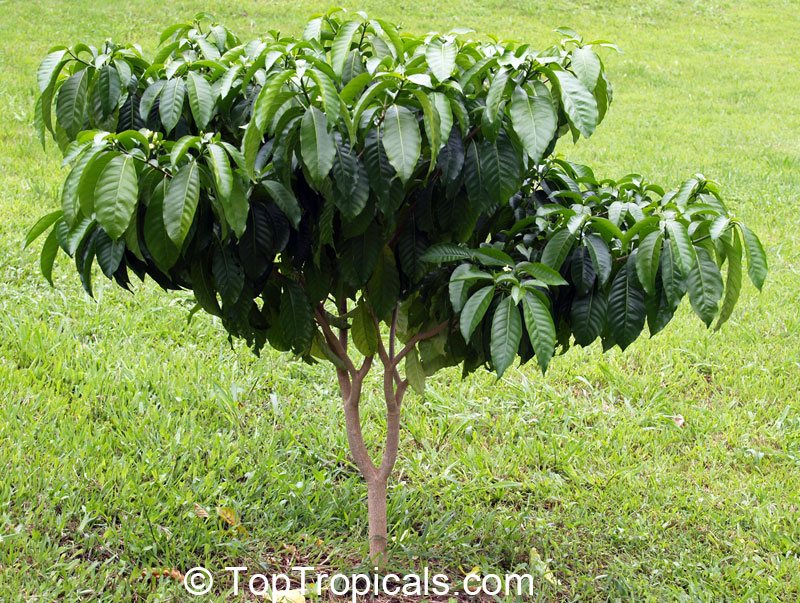
When this tree is in full bloom, masses of large, white, tornado-shaped
flowers cover the branches. The fragrance is something to behold… soft,
vanilla sweet and musky. Leaves are dark green and sparkly and a striking contrast
against the large, white flowers. Even the seed pods are pretty,
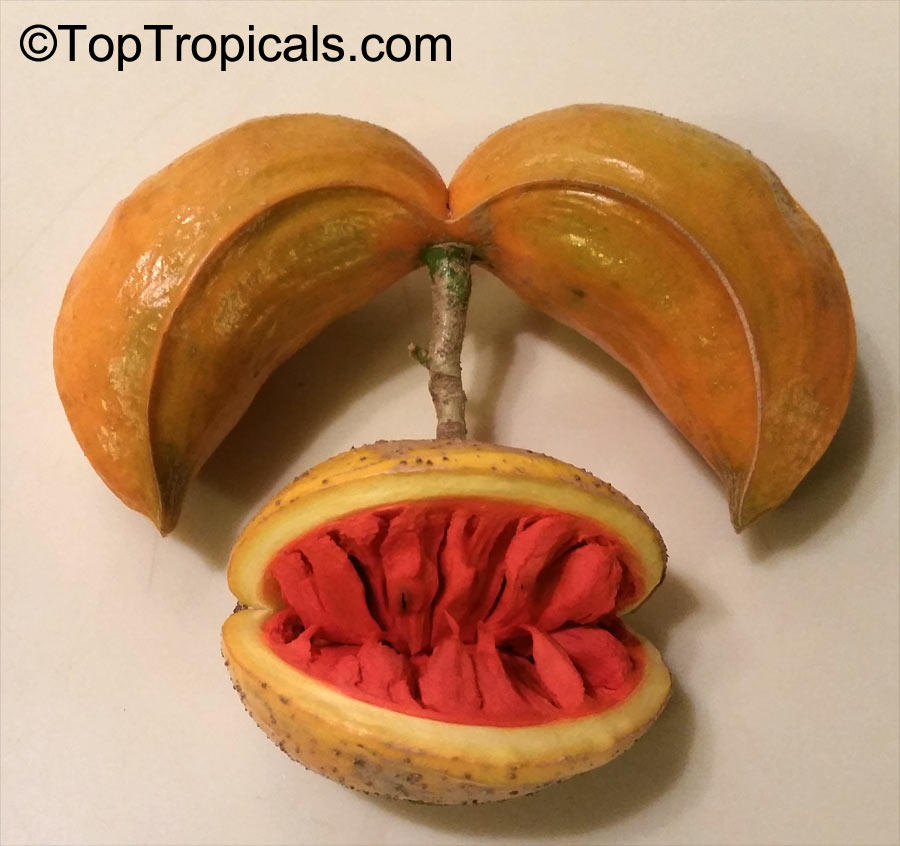
double-horned and orange-gold, born in pairs and hanging from the tree. This tree is so
ornamental!..