Garden Blog - Top Tropicals

Date: 19 Jan 2022

Avocado Q & A

Sensation: Avocado 2.5 y.o seedling just bloomed!

Ed's Avocado seedling blooming at age 2.5 years old... Go figure!

Q: Can I plant a seed from a store bought avocado and expect it to bear fruit?

A: Avocados grown from seed do not always come true, meaning being the same as the avocado that produced the seed being planted. Also, avocados grown from seed will take upwards of 8 years to flower and bear fruit unless grown by Ed Jones and his witchcraft. Ed Jones, the Avocado Guy... Yes, he is also the Mango Guy, and the Booster Guy... We don't know how he does it. He grows the most beautiful fruit trees, many of them from seed and they all seem to flower within two years! (See his blogs about his Star Fruit, Olive trees, and video about Shaping Mango Trees). All we know for sure, he uses Sunshine Boosters for all his plant experiments.
As far as Avocado , we recommend a grafted variety, where a scion, or branch tip, of a known cultivar is grafted to good rootstock. These trees will usually flower right away and bear good amount of fruit within a couple of years of being planted in the ground.
It's a good chance now to get a good grafted Avocado on our special Happy Value Sale while supply lasts, for only $59.95.

Date: 27 Oct 2025

🌳 Why Large Grafted Trees Are Better

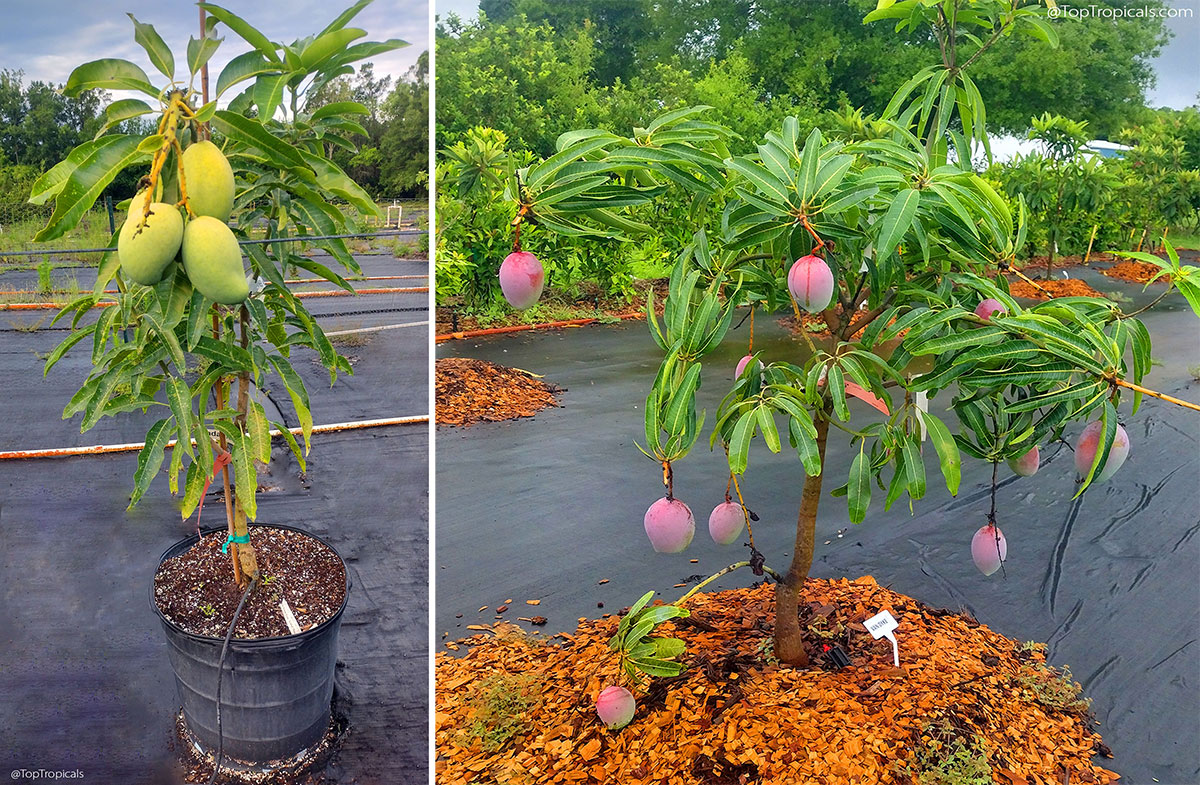
Comparison  of  Mango  trees  growing  in  container  and  in  ground  at  Top 


Tropicals  nursery  -  potted  tree  with  large  green  fruit  and  in-ground  tree 


with  ripe  purple  fruit  ready  for 


harvest

These are not seedlings — they’re grafted trees, which means you get the true variety with known flavor, quality, and performance. Large grafted trees give you a real head start:

  • Already mature with a strong root system.
  • Handle transplanting and weather shifts with ease.
  • Can bloom and fruit in the first or second season.

No guessing, no waiting years — you’ll get the exact fruit you want, sooner.

  • 👉 Learn more: How long does it take for a mango tree to bear fruit?

    For Indoor and Patio Growers

    No space for a full orchard? You can still grow your own tropical paradise! Our large grafted Condo Mango trees adapt beautifully to big containers on patios, balconies, and sunrooms. They stay compact, flower sooner, and can fruit even in pots when given good light and warmth.

  • 👉 Learn more: What are the Condo Mangos?

    Bring the tropics indoors — move your tree outside for summer sun, then back inside before frost. It’s the perfect way to enjoy homegrown fruit wherever you live.

    Give your garden a smart start this season. Large grafted Mango trees are ready — but only for a short time before winter.

    👉 Plant now, harvest sooner, and enjoy the true variety!

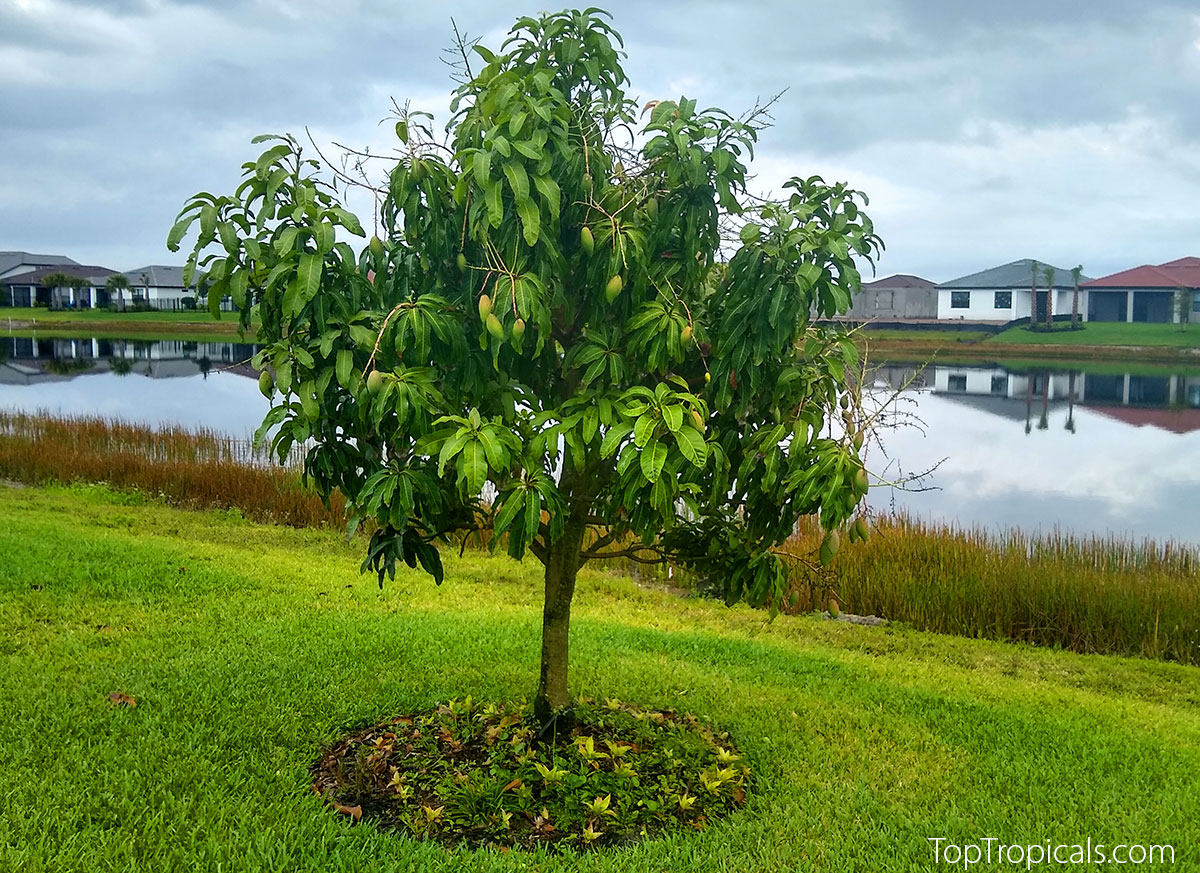
    Mango  tree  growing  by  a  lake  in  a  Florida  backyard,  healthy  green 


foliage  and  young  fruit  developing  on 


branches

    Plant Care Tips by Top Tropicals Plant Expert Tatiana Anderson

    Large grafted Mango trees are easy to establish.

    • Soil: Well-drained, rich mix — avoid heavy clay.
    • Water: Deeply once or twice a week after the tree is established; keep soil evenly moist during the first few weeks after planting.
    • Light: Full sun or bright patio spot.
    • Feeding: Use balanced fertilizer Sunshine Boosters Mango Tango with every watering and Green Magic controlled release fertilizer every 6 months for steady growth.
    • Protection: Cover on cold nights for the first winter.
    • 👉 Learn more: How to take care of a mango tree in winter.

    Plant once, care lightly, and your tree will reward you with fast growth and early fruit.

    🌳 Big Trees, Local Pickup Only

    For our local gardeners, we have something special. Extra-large 15- and 25-gallon Mango trees. These are full, mature specimens that simply can’t be shipped, but they’re perfect for local pickup or delivery.

    Instant Impact and Faster Fruit

    These trees already have strong trunks, big root systems, and start blooming next Spring. Plant one in your yard and it instantly looks like it’s been there for years.

    Delivery and Installation

    We offer local delivery and professional installation for large trees in the nearby area. Our team can bring the tree to your garden, position it correctly, and help with planting and setup.

    👉 Contact us to arrange delivery and installation for your 15- or 25-gallon tree.

    Limited Availability: Quantities are small, and these big trees go fast — once sold, they won’t be available again until next growing season.

    "Large grafted trees give you a head start — they’re stronger, settle in faster, and can reward you with fruit the very next season," says Tatiana Anderson

    🎥 Watch Short Videos:

    🛒 Shop Mango trees

Date: 6 Sep 2025

Avocado coconut popsicles: Quick-n-Fun exotic recipes

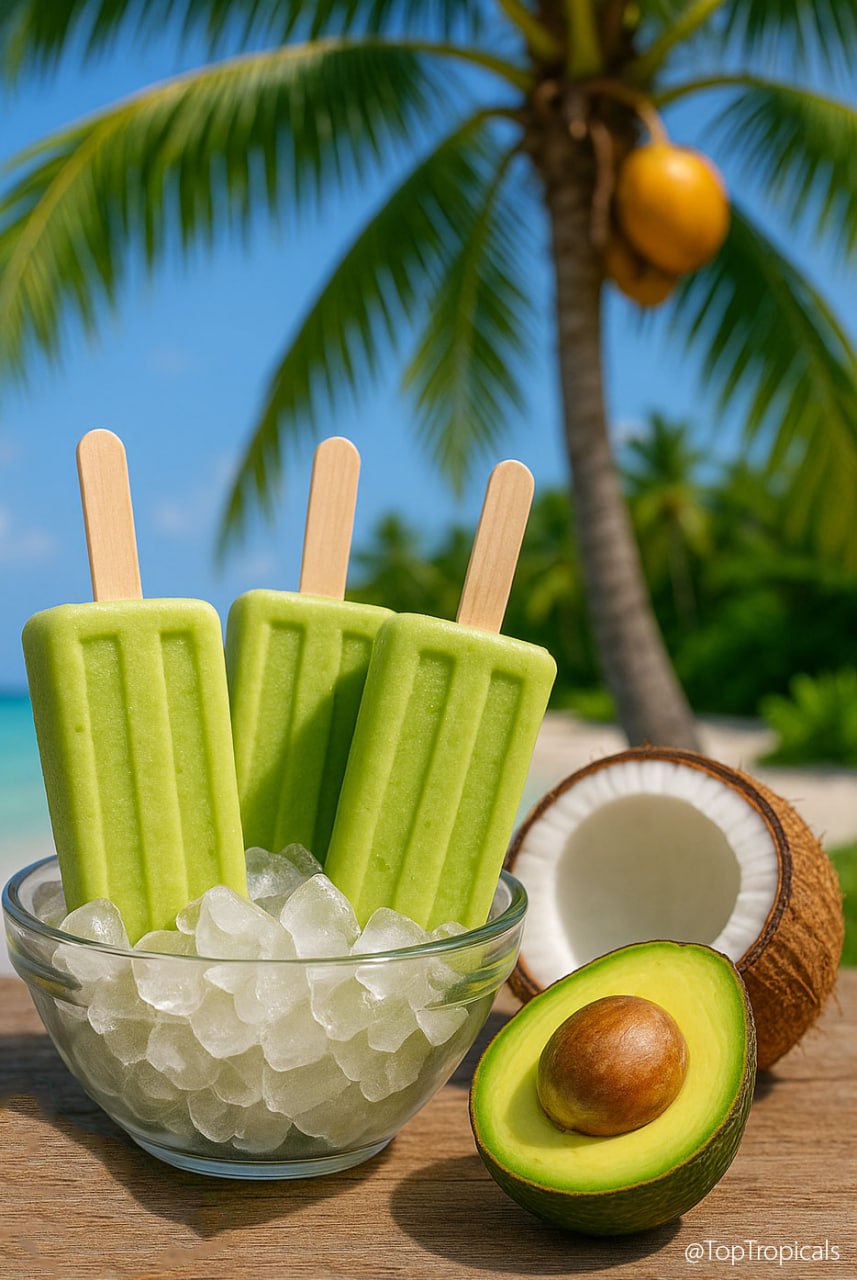
Avocado coconut popsicles

Avocado coconut popsicles

🍴 Avocado coconut popsicles: Quick-n-Fun exotic recipes

  • 🔵Puree avocado with coconut milk and sugar.
  • 🔵Pour into molds and freeze.
  • 🔵Enjoy the creamiest tropical ice pops ever!


🛒 For home-grown ingredients you will need:


Home grown Avocado
Home grown Coconut

Avocado Coconut Popsicles

Ingredients

  • 2 ripe avocados
  • 1 cup coconut milk
  • 2 tbsp sugar (or to taste)

Instructions

  1. Puree avocado with coconut milk and sugar.
  2. Pour into molds and freeze.
  3. Enjoy the creamiest tropical ice pops ever!

#Food_Forest #Recipes #Avocado

🟢 Join 👉 TopTropicals

Date: 6 Dec 2025

🌿 Bring the Jungle Inside: Winter Survival Guide Part 1: Lighting ❄️

Smokey  the  taxedo  cat  adjusts  an  indoor  grow  light  while  Sunshine  the 
 

ginger  tabby  sits  holding  a  hygrometer  he  does  not 
 

understand.

Smokey: "Winter lighting must be precise. I need this light exactly at 14 inches."
Sunshine: "Sure. I am holding this… little number thing."
Smokey: "It reads humidity. Your main job is to look cute."

🌞 LIGHT, TEMPERATURE, PLACEMENT

Winter indoors is a different kind of battlefield. Dark rooms. Dry air. Cold windows. Random drafts. Weak light. Sad plants. We've been talking about keeping your tropicals alive outdoors previously. But some of you have no choice this time of year. You have to bring the jungle inside.

If that is you, then this is your plant survival guide.
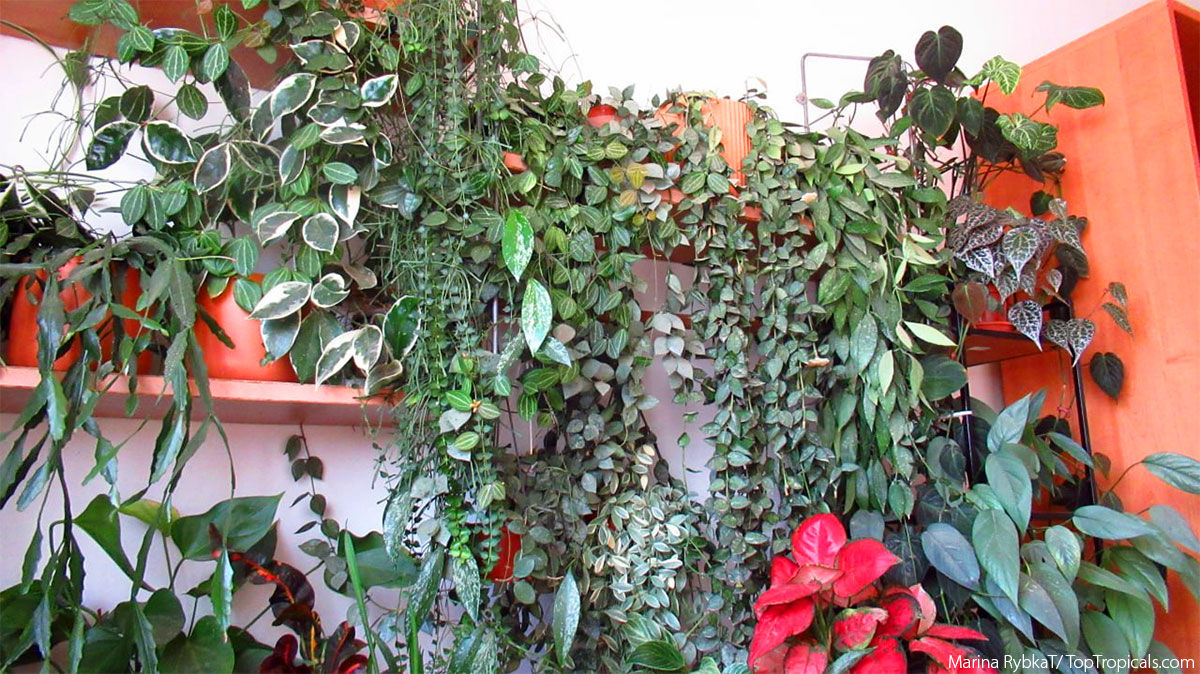
Indoor  wall  of  tropical  houseplants,  including  cascading  vines,  variegated  foliage,  and  mixed  aroids  arranged  on  shelves.

☀️ LIGHT: THE WINTER LIFELINE

Light advice here comes straight from our in-house expert, Michael Dubinovsky, a high-tech lighting engineer with over 30 years of hands-on experience. If he says brightness beats hours, trust him.

Here is the truth: Indoor light in winter is 10 to 50 times weaker than outdoors. Short days. Low-angle sun. Windows filtering half the useful light. It all adds up.

Tropicals need 10 to 12 hours of real brightness. Winter sun cannot do that on its own. Not even in a big window. So we help them.

Use bright LED shop lights or utility lights. 5000K to 6500K CCT. High lumen output. Skip decorative bulbs. Skip purple grow fancy toy lights. If you want a single plant light, even a clamp lamp is fine if you screw in a bright daylight LED bulb.

Panels work best for plant clusters. Bars for shelves. Bulbs for single plants. And grouping plants under one bright panel always beats spreading them out.

Distance matters: keep LEDs about 12 to 18 inches above the leaves. Too close: leaf burn. Too far: stretching, weak stems.

Leaves reaching up? Light is too high or too weak. Leaves curling down? Light is too close.

If you want a reality check, download any smartphone lux meter app. Most indoor corners are 50 to 200 lux without supplemental light. Tropicals want much more

And a quick tip about windows: winter sun comes in sideways. A spot that looks bright at noon can go dull by 2 PM. Don't count of window light
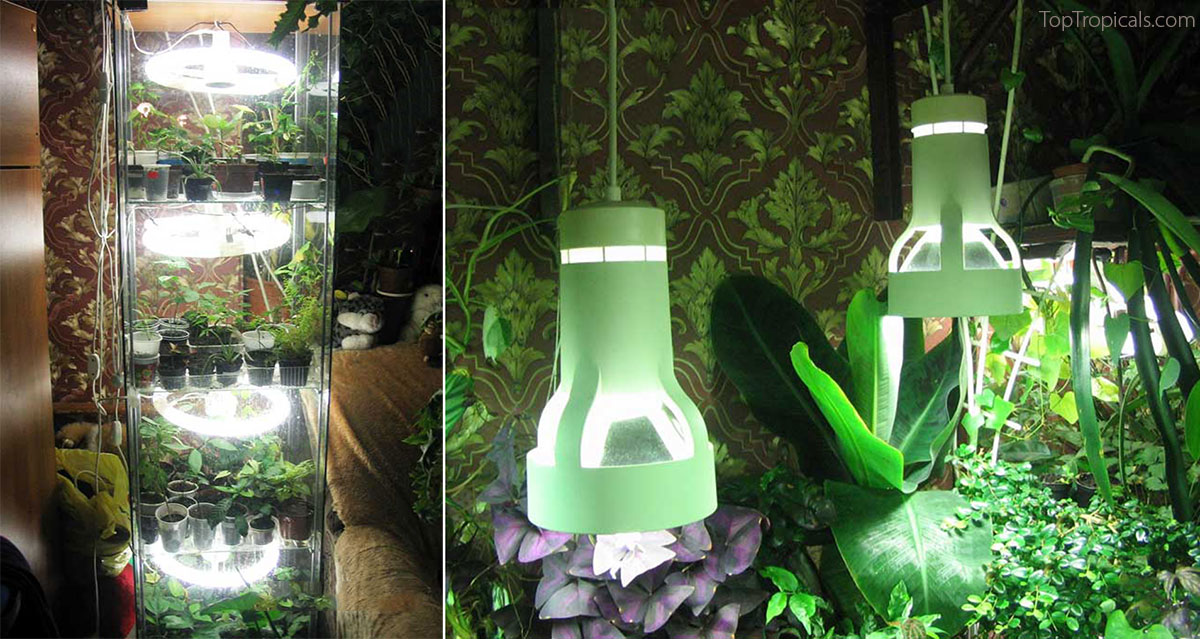
Indoor  grow  setup  with  bright  LED  lights  illuminating  shelves  of  tropical  plants.

Bright light or long hours

People try to fix weak light by running it for 16 or 18 hours. That does not work. Plants care more about light intensity. A few hours of strong light beats all-day dim light. If the light is weak, adding more hours will not change anything except your electric bill.

Simple rule: Short duration but bright is always better than long duration but weak. - by Michael, Top Tropicals lighting expert

No need for fancy horticultural panels

You do not need purple grow lights. You do not need special horticultural fixtures. You do not need expensive panels unless you want real winter growth.

For winter plant holding till spring, the inexpensive solution works great:

  • Bright LED daylight bulbs (5000K to 6500K) from hardware store
  • High lumen output
  • Inexpensive clamp lamps
  • Aim directly at the plant from 12 to 18 inches

This setup keeps tropicals happy until spring without buying anything fancy. Save the money for soil, pots, or your next plant.

Indoor plant lighting safety note:

  • Use timers. Keep cords dry. Do not overload outlets.
  • Do not hang lights over humidifiers.
  • And do not put fixtures on piles of books to raise them. People do this.
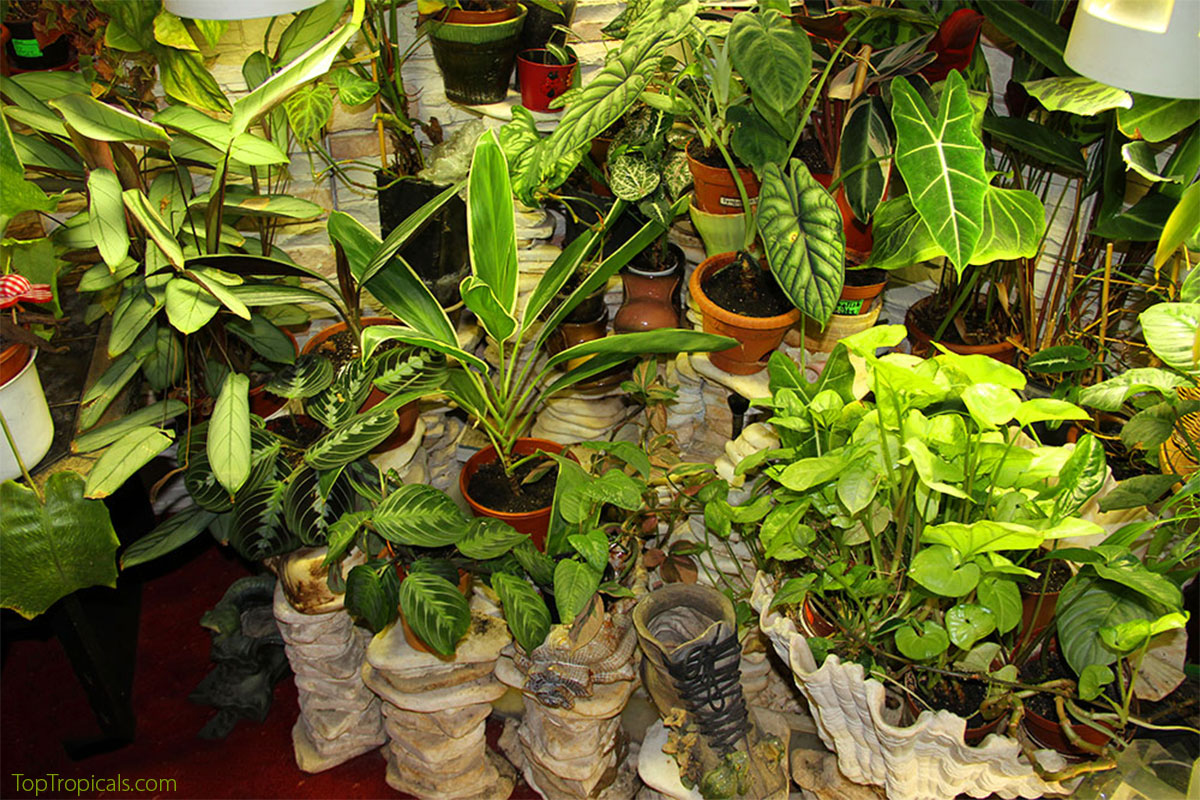
Indoor  plants


✔️ WINTER INDOOR FAQ: TEMPERATURE AND PLACEMENT

Q: I am in Home Depot. Which light do I buy?
A: LED shop light, daylight color (5000K to 6500K), high lumens. Skip fancy plant bulbs.

Q: Can I use clamp lamps or floor lamps for plants?
A: Yes. Clamp lamps with a bright daylight LED bulb work great for winter holding.

Q: Do I need special horticultural grow lights?
A: No. A bright LED daylight bulb works fine for winter. Save the fancy lights for real growth projects.

Q: How far should the light be from the plant?
A: About 12 to 18 inches above the leaves. Too close burns. Too far stretches.

Q: Can I run weak lights for 18 hours to compensate?
A: No. Weak light plus long hours still equals a weak plant. Brightness matters more than hours.

Q: How do I know if a spot is bright enough?
A: Use a free phone lux app. Most indoor corners are much too dim for tropicals.

Q: I have a huge window. Why do I still need LEDs?
A: Indoor winter light is weak, short, and filtered by glass. Plants want intensity, not just a big window.

Q: My window faces north. Now what?
A: North windows are decorative only. Use supplemental lighting or move the plant.

📚 Learn more:


Date: 6 Dec 2025

🌿 Bring the Jungle Inside: Winter Survival Guide Part 2.Temperature. ❄️

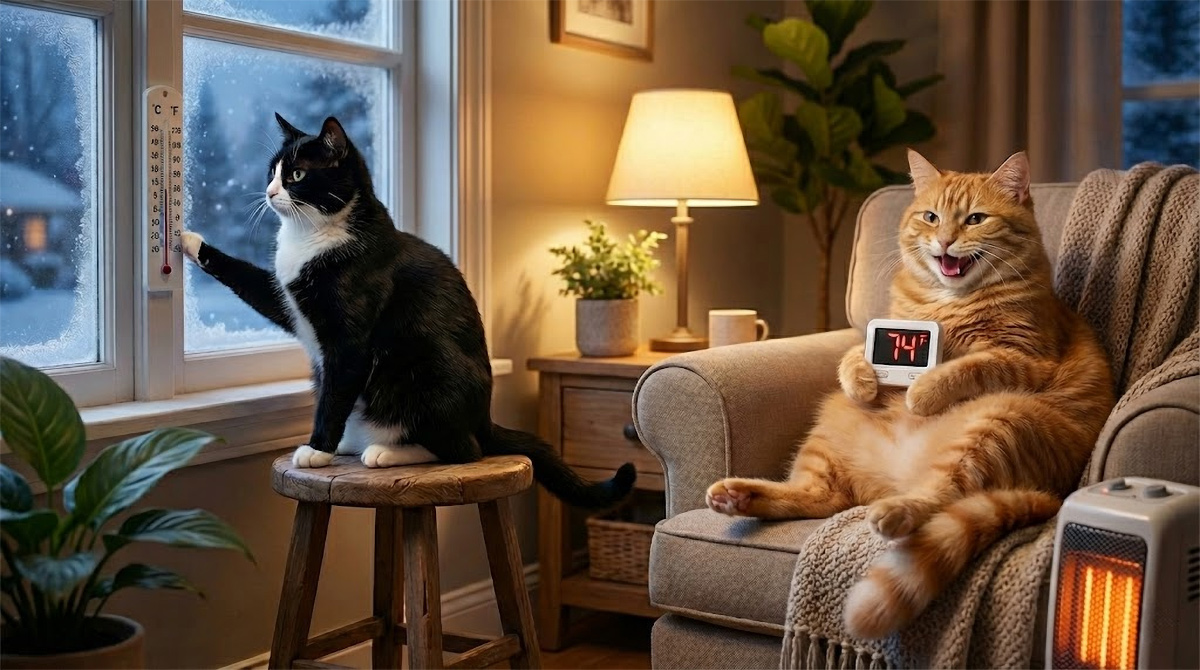
Smokey  the  tuxedo  cat  checks  thermometers  by  a  cold  window  while  Sunshine  the  ginger  tabby  relaxes  near  a  heater  holding  a  room  thermometer  showing  74  F.

Smokey: Too cold. We need more heaters so the plants feel comfortable.
Sunshine: I feel comfortable.
Smokey: You are not part of my plant collection, but I am glad you are comfortable.

🌡️ TEMPERATURE: THE TROPICAL DORMANCY LINE

In Part 1 (Winter Survival Guide: Temperature) we covered the foundation: light, placement, and acclimation. That is the survival layer.

Most tropicals stop growing below 70 to 75 F. They stay green, but their engine shuts down.

Below 70F:

  • Water intake drops.
  • Roots slow down.
  • Fertilizing becomes risky.
  • Root root becomes easy.

If you WANT your plants to grow in winter, you must take care of everything: Warmth, light, humidity, water. It all works together.

  • Aim for 75 F with bright light. Water lightly. No fertilizer.
  • Watch out for drafts. Cold windows. Door blasts. Garage entryways. Even one gust can trigger leaf drop.
  • Vents are the opposite problem: hot, dry, dusty air. That gives you crispy edges and mites.
  • Root zone temperature matters just as much as room air. Your thermostat may say 72 F, but your pot on a tile floor may be sitting at 55 F. Fix this by elevating pots on boards or stands. Use Styrofoam. Never keep pots directly on cold tile o windowsill
  • Extra winter heat: Space heaters are fine if used smartly. Do not blow hot air directly on plants. Keep heaters away from cords, trays, and water. Oil filled radiators are the safest option for plant rooms.
  • Use a humidifier if you want growth or want to prevent spider mites. But do not blow mist directly onto leaves. Always place the unit lower than the plant canopy.
  • Grouping helps. Put tropical plants close together to share humidity. Do not mix succulents with humidity lovers.
  • Cats and dogs love to knock over lights and stands. Secure your fixtures. Trust us.
  • Airflow: Light airflow is healthy. Direct fan blast is not. Still, dry corners invite mites.
  • A mild night drop is OK. A big one below 55 F will stop growth completely.

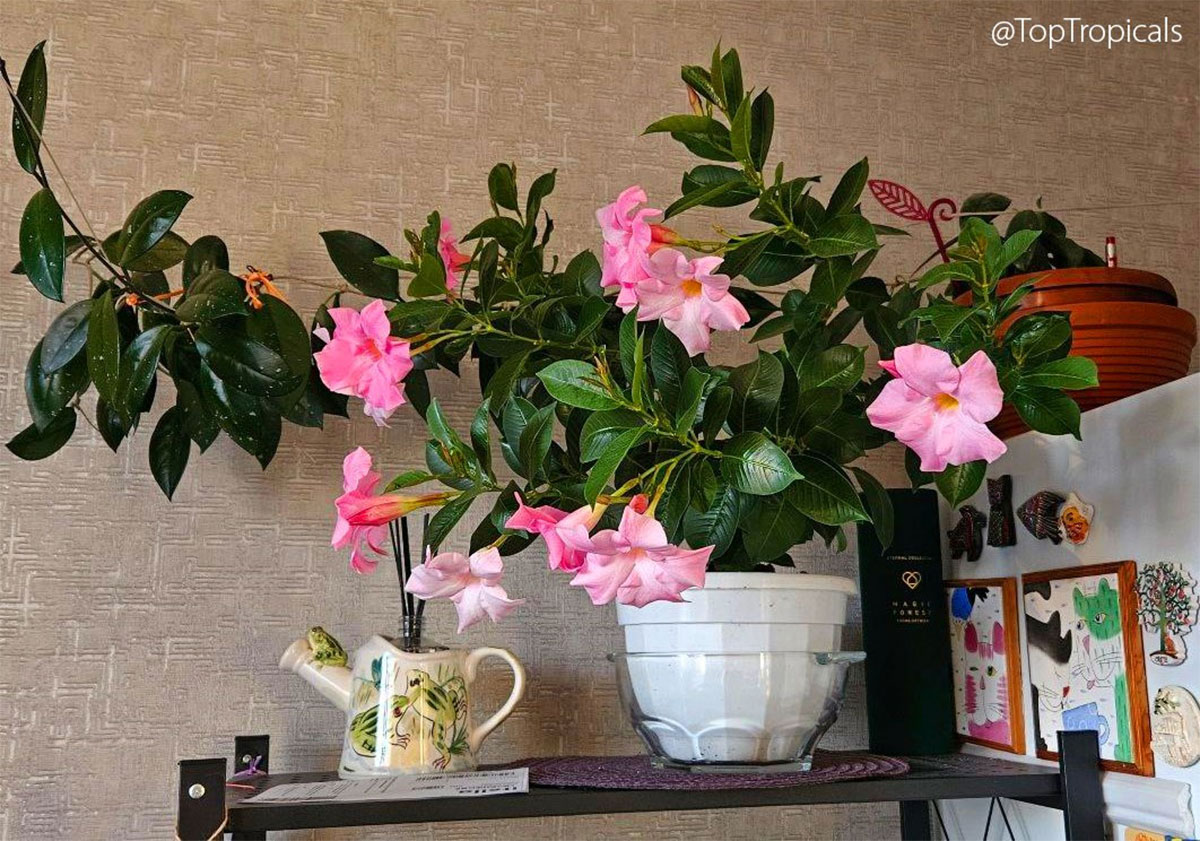
Pink  mandevilla  vine  blooming  indoors  in  a  white  pot  on  a  shelf.

A mandevilla thriving indoors with bright pink blooms and glossy green leaves.

☂️ PLACEMENT: MICROCLIMATES RULE EVERYTHING

Indoors is one big tradeoff: light but cold near windows, warm but dim away from them. The winning combo is a warm room with supplemental light.

Best zones to keep plants in winter:

  • South or east windows with additional light
  • Warm living spaces
  • Bright bathrooms for natural humidity

Worst zones to keep plants in winter:

  • Behind curtains
  • Directly on windowsills
  • Near heaters or vents
  • Against cold exterior walls
  • Dark corners without supplemental lighting

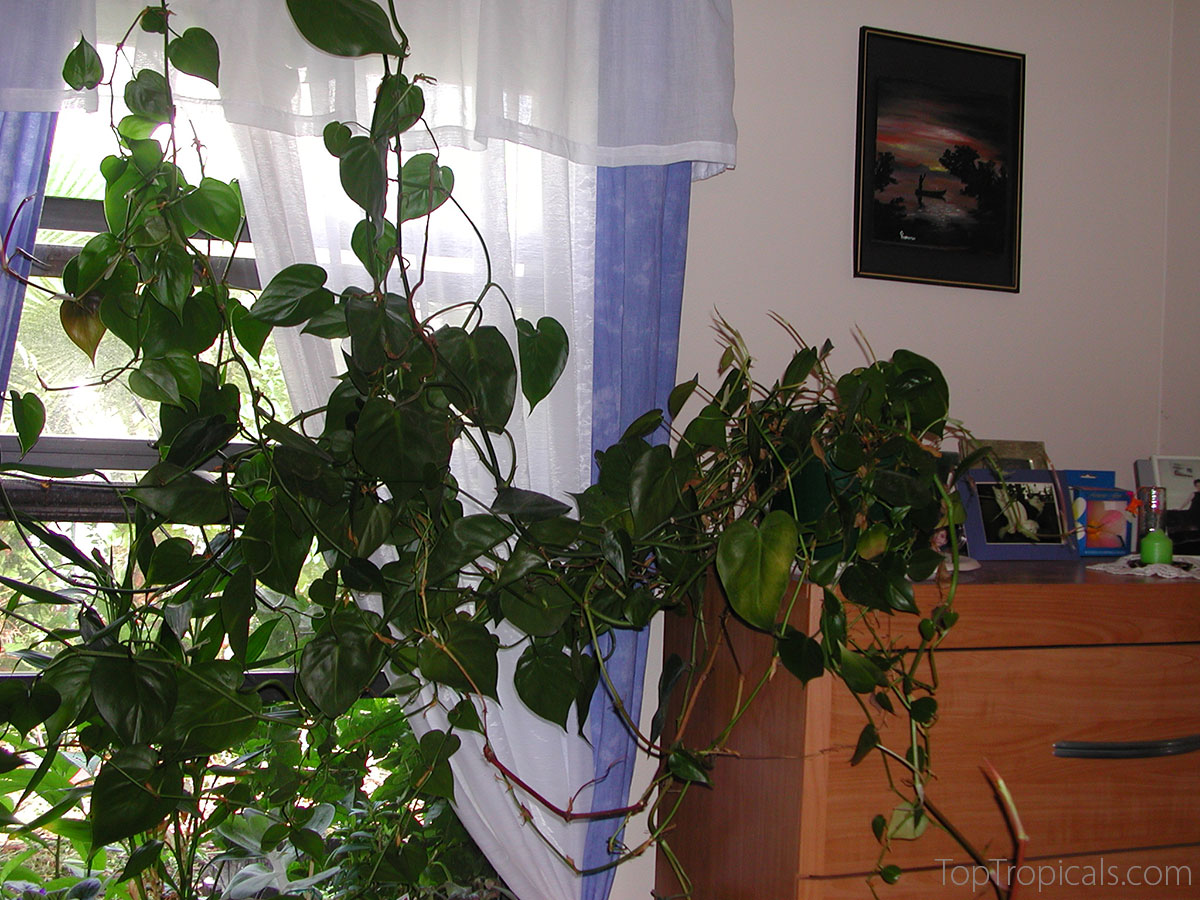
Large  philodendron  vine  growing  indoors  across  a  window  and  dresser.

A vigorous indoor philodendron stretching across the window.

💨 ACCLIMATION

Moving a plant from outdoors to indoors is a shock. Light drops. Humidity drops. Airflow stops. Soil cools. Even healthy plants may drop some leaves for a few weeks. That is normal.

Before you bring them inside:

  • Rinse foliage to remove dust and pests. We recommend Sunshine NoBug - and organic, safe solution.
  • Check for ants.
  • Trim weak branches.
  • Treat soil if fungus gnats are present.

Try to bring plants inside before the first cold front, not after. If you are reading this too late, do the prep now and expect a little leaf drop.

If you nail light and temperature, winter becomes simple. In the next mail-list we will cover watering, fertilizer timing, humidity, and other indoor tricks that keep tropicals happy till spring. Stay tuned.

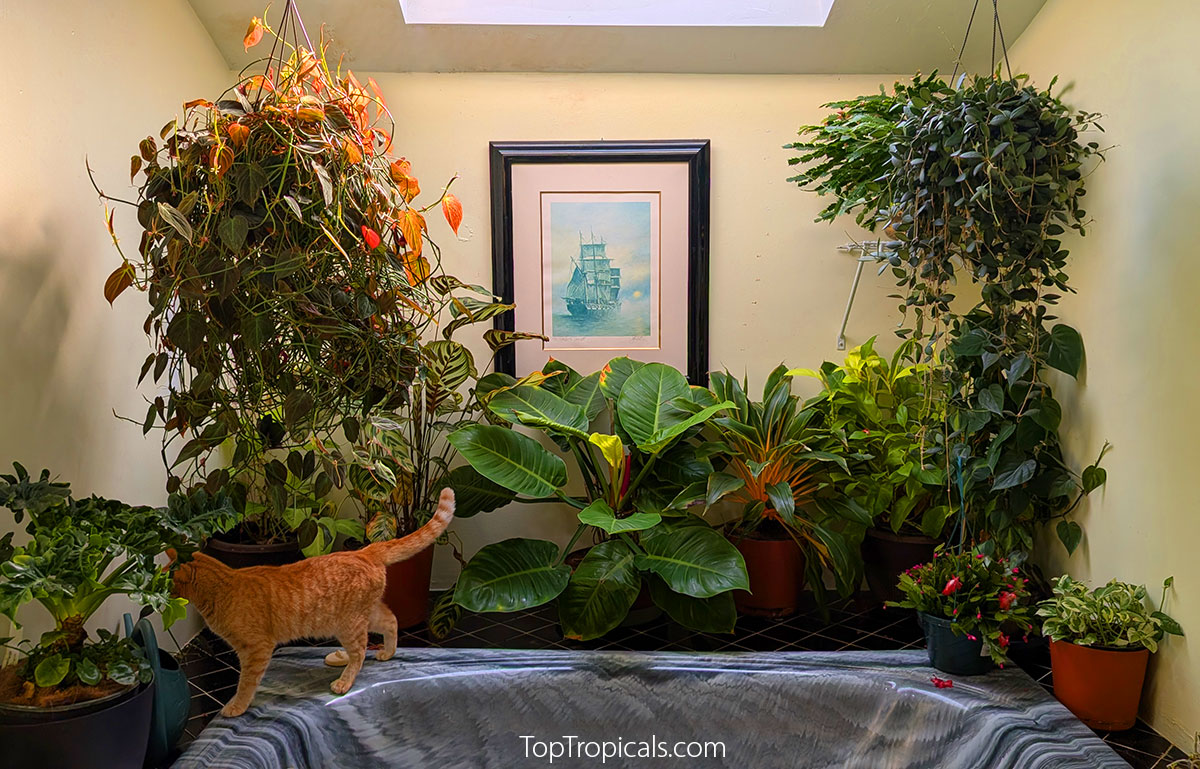
Indoor  bathroom  garden  with  tropical  plants  under  a  skylight  and  an  orange  cat  walking  in  front.

Cat Bob is inspecting his indoor garden around the tub with a bright skylight


✔️ WINTER INDOOR FAQ: TEMPERATURE AND PLACEMENT

Q: Why are leaves dropping only on the window side?
A: Cold glass. The room may be warm, but the glass surface can be much colder.

Q: Is a cold room OK for tropicals?
A: They may survive, but they will not grow below about 65F to 75F. When nights stay below 65F for a week, many plants enter dormancy.

Q: My room feels warm. Why is my plant still not growing?
A: Check the soil temperature. Pots on cold tile can be 10 to 20F colder than the air.

Q: Can plants sit directly on the floor?
A: Not on cold tile. Always elevate them on boards, stands, or trays.

Q: Is it OK to keep plants near a heater or vent?
A: No. Vents and heaters blast hot, dry air and cause crispy leaves and mites.

Q: My plant is dropping leaves after coming indoors. Why?
A: Normal acclimation to reduced light and humidity right after the move.

Q: Can I keep plants in a bright bathroom?
A: Yes. Bathrooms can have good humidity. Just keep pots off cold tile.

Q: Do I need a humidifier?
A: Not for survival. Yes if you want better growth and fewer pests like spider mites.

Q: Do I need a grow tent?
A: No. A bright LED plus a warm room is enough for winter holding.

Q: Should I fertilize in winter?
A: Not now. Winter fertilizer rules will be covered in the next mail-list.

Q: Should I water the same as in summer?
A: No. Indoor plants need much less water in winter. Watering rules also coming soon.

🛒 Shop Indoor Garden


Indoor  plants


📚 Learn more: