Garden Blog - Top Tropicals

Date: 25 Jan 2021

Healthy Plants: Q&A from Mr Booster

How to get Canistel tree to produce
without dropping flowers and fruit
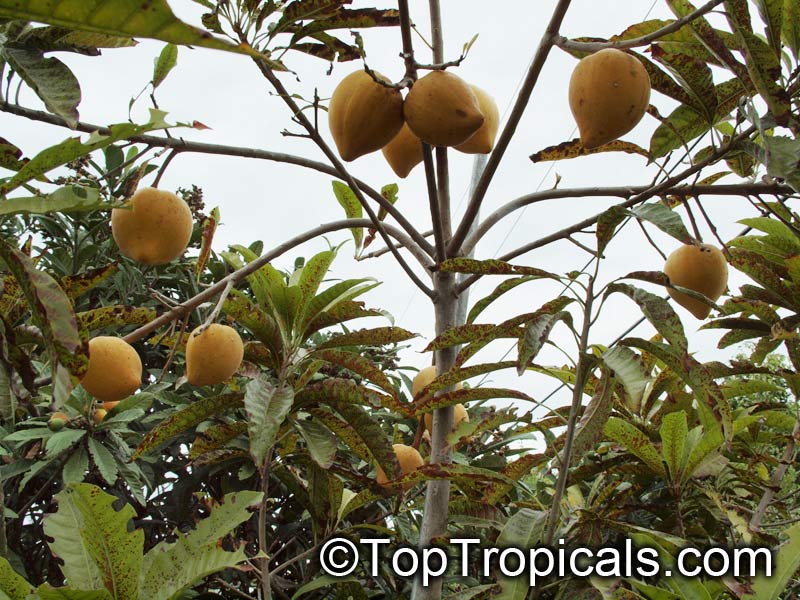
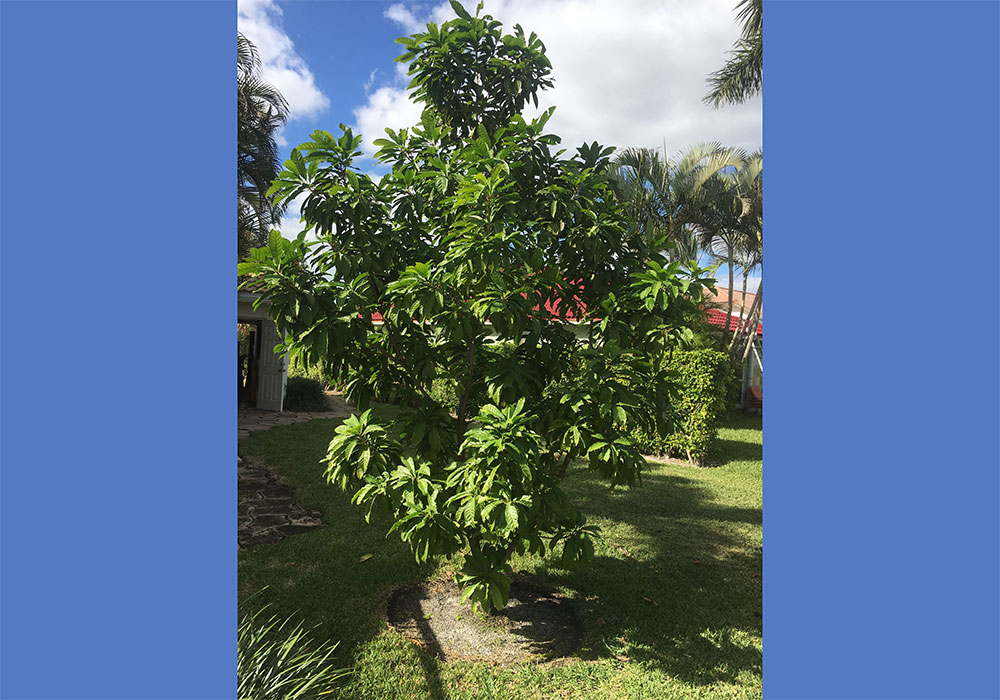
Q: My Canistel tree is 3 1/2 years old and is growing very well, see the picture below. It gets hundreds of pea sized "berries" but then they fall off. No canistel fruit. What's wrong?

A: You have such a nice looking tree, it is a shame you can't get any fruit to ripen.
In our experience, Pouteria trees dropping fruit prematurely is a very common problem. There may be one of the following reasons, or a combination of them:
- Cold winters may affect production, and while Canistel is generally pretty hardy tropical plant that can easily withstand short periods of chill, the fruit may never form properly if it had a cold winter.
- Lack of water. Canistel tree is pretty drought tolerant, but for the proper production cycle it needs regular irrigation. Especially during hot summer.
- The tree may be not strong enough; young trees drop fruit very often when they don't have enough "fruiting energy" built up in their system.
Your tree looks well established and vigorous, however, flower/fruit drop is often a sign of insufficient nutrients of particular kind, usually Boron (B) and/or Molybdenum (Mo): either when a tree is too young and not strong enough, or because of poor soils and lack of necessary elements.

Here is what can be done, considering you live in a warm, frost-free climate.

1. Provide regular fertilizing program. We recommend liquid fertilizers Sunshine Boosters that are safe to use with every watering and year around. It is beneficial to switch plants from traditional "slow-release" fertilizer to the liquid one because it makes a huge difference in plant growth and flower/fruit quality and quantity. See also:
- Why liquid fertilizers are better than dry
- Article about benefits of liquid fertilizers.

Use this plant food for your Canistel tree:
SUNSHINE C-Cibus - Crop Nutrition Booster

2. Apply micro-element remedies that are very effective for improving fruit production, especially when flower or fruit drop occurs:

SUNSHINE Honey - promotes more efficient blossoming and pollination, makes flowers bigger and reduces bud drop.
SUNSHINE SuperFood - improves plant vigor and quality and size of flowers These are all natural, eco-friendly supplements that work great for fruit trees and other edibles.

Date: 22 Apr 2026

Secrets of Real Mango Flavor

Top-down  view  of  a  white  tray  filled  with  assorted  mango  varieties  in 
 different  shapes  and  colors,  including  green,  yellow,  red,  and  orange, 
 arranged  outdoors  on  a  textured  surface.

A colorful mix of mango varieties - different shapes, colors, and flavors all in one harvest.

Mango Practical Growing Tips (Keep It Simple)

  • Sun: Full sun is key. 6–8+ hours daily for best growth and fruiting.
  • Soil: Excellent drainage is critical. In pots, use well-draining mix with added perlite or sand. Mango does not like wet roots.
  • Watering: Water deeply, then let soil dry slightly before watering again. Avoid constantly wet soil.
  • Containers: Excellent for pots. Condo mango varieties stay compact and are easy to manage on patios.
  • Feeding: Light but consistent feeding during active growth makes a big difference. Use controlled-release Green Magic for steady nutrition, and supplement with liquid Sunshine Boosters Mango Tango during warm months to push growth and fruiting.
  • USDA Zones: Best suited for Zones 9b–11. In Zone 9b, choose a warm, protected microclimate (south-facing wall, patio, or near structures) and be prepared to protect during cold snaps. In Zones 10–11, mango grows reliably in-ground. If you live in colder zones, grow in a pot so you can move the tree indoors or protect it during cold weather.
  • Cold Protection: Protect young trees during cold nights. Use cover or place near a wall or warm microclimate. Mature trees are more tolerant.
  • Airflow: Good airflow helps prevent disease and keeps growth clean.
  • Spacing: Give the tree room for light and airflow. Even compact trees benefit from space.

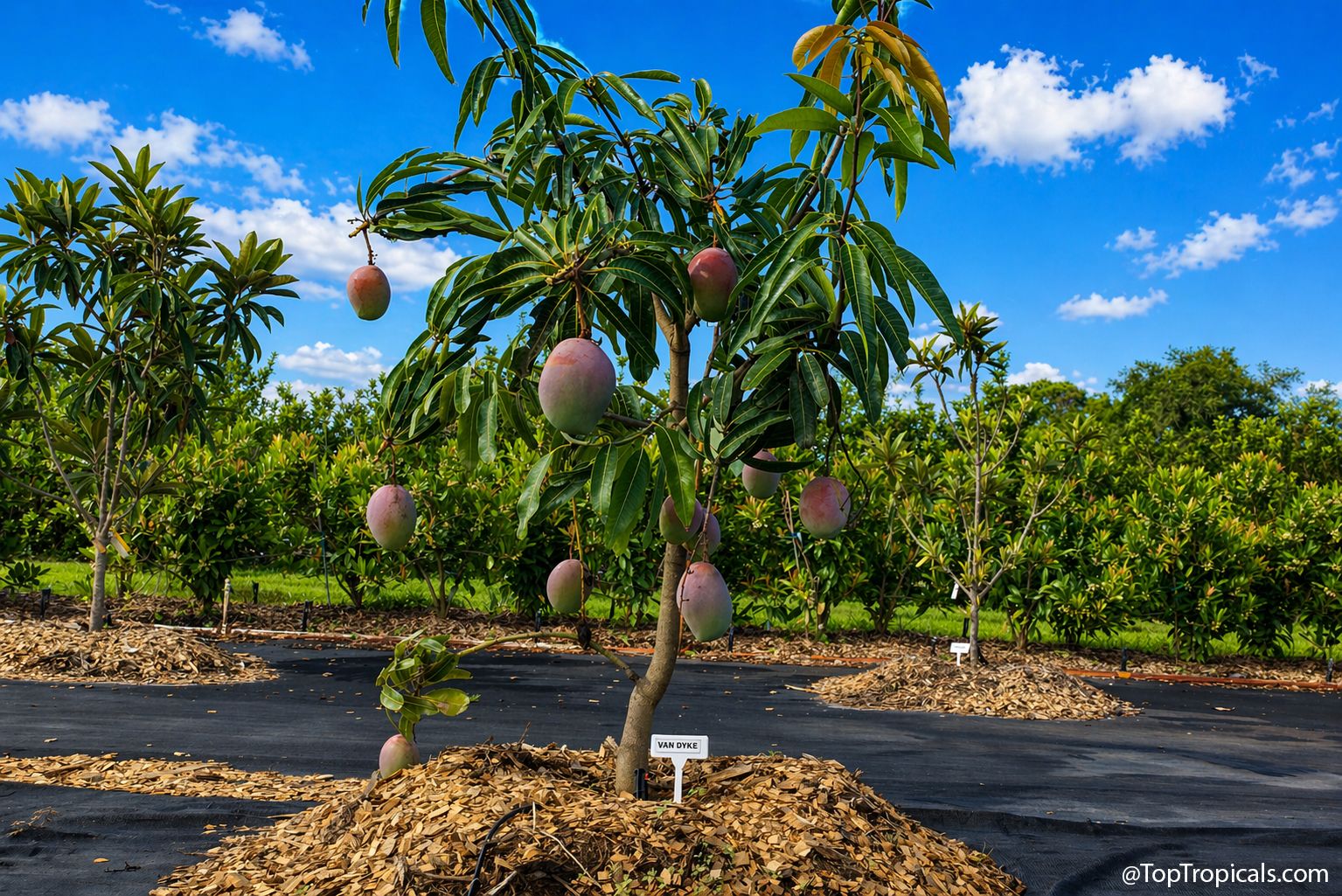
Mango  tree  Van  Dyke  growing  in  an  orchard,  loaded  with  ripening  mango 
 fruits,  surrounded  by  mulch  and  irrigation,  under  a  bright  blue  sky  with 
 scattered  clouds.

A fruiting mango tree Van Dyke in the grove, heavy with developing mangoes and enjoying full sun.

Mango Winter Care (Very Important)

Mango is not a truly cold-hardy plant. It performs best in USDA Zone 9b and warmer, where freezes are rare and short. In borderline areas, winter protection becomes part of the routine. Mango trees should be covered during cold nights, and planting near a south-facing wall helps protect from cold winds. That small microclimate can make a real difference. If your winters are less predictable, growing mango in a container becomes the simplest solution. It gives you full control — you can move the tree to a protected space when temperatures drop, and bring it back into the sun when conditions improve.

That is where condo mango varieties make the most sense. They are naturally compact, easier to manage in pots, and still produce full-size, high-quality fruit. You get all the benefits of a mango tree without needing a large yard or perfect climate — just sun, a container, and a bit of seasonal movement when needed.

📚 Mango tips from our Blog

Growing Mango in a Pot (Condo Mango Made Easy)

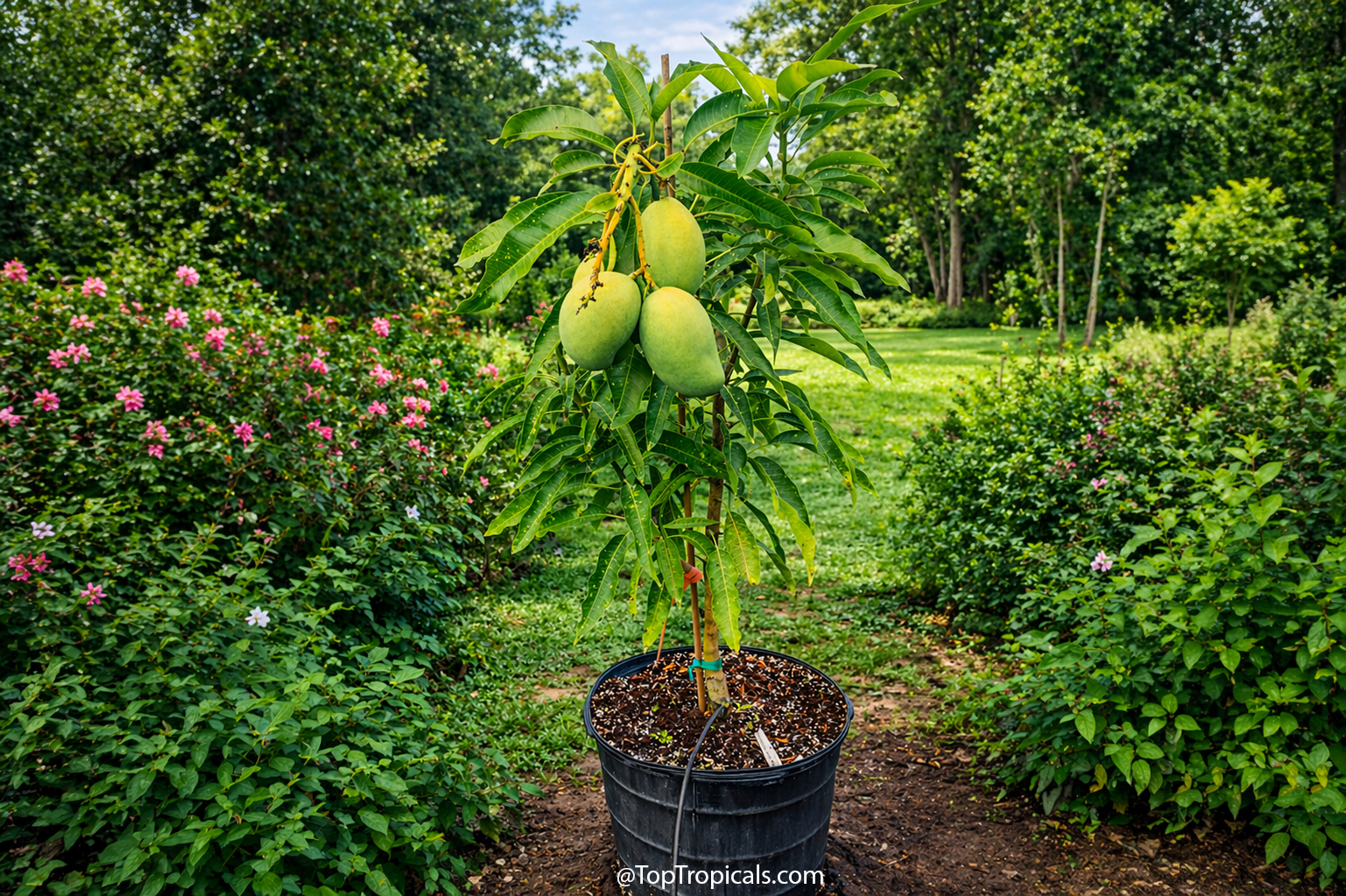
Young  mango  tree  growing  in  a  large  black  nursery  pot,  supported  with 
 stakes  and  drip  irrigation,  bearing  several  green  mango  fruits,  set  in  a 
 lush  garden  with  flowering  shrubs  and  a  sunny  lawn  in  the  background.

Young mango tree in a container, already holding fruit and thriving in a sunny garden setting.

Growing mango in a container is one of the easiest ways to control size, soil, and winter protection. Condo mango varieties stay naturally compact and adapt well to pots, making them ideal for patios, small spaces, or colder climates. You get full flexibility — move the tree when needed, manage its growth, and still enjoy real tree-ripened fruit.

  • Pot size: Start with 3–7 gallon, move up to 15–25 gallon as the tree grows.
  • Soil: Use fast-draining mix such as Abundance soilles mix.
  • Sun: Place in full sun. More light = better growth and fruiting.
  • Watering: Water deeply, then let soil dry slightly before next watering.
  • Feeding: Use controlled-release Green Magic for steady nutrition, plus liquid Sunshine Boosters Mango Tango during active growth.
  • Climate Flexibility: Can be grown in any USDA zone when kept in a container. Simply move indoors or to a protected area during cold weather to keep the tree safe.
  • Pruning: Light pruning keeps the tree compact and productive.

Once you taste a real mango from your own tree, everything changes. It is no longer something you buy — it is something you grow, wait for, and look forward to every season. What felt like hype suddenly makes sense. The passion people have for mango is not exaggerated — it just comes from a completely different experience.

And for people who have never tasted a fresh, juicy mango warmed by the sun, that moment comes as a surprise — the first time they realize what mango is actually supposed to taste like.

As Smokey quietly puts it: Now you know.

📚 More about Condo Mango

🛒 Shop Condo Mango

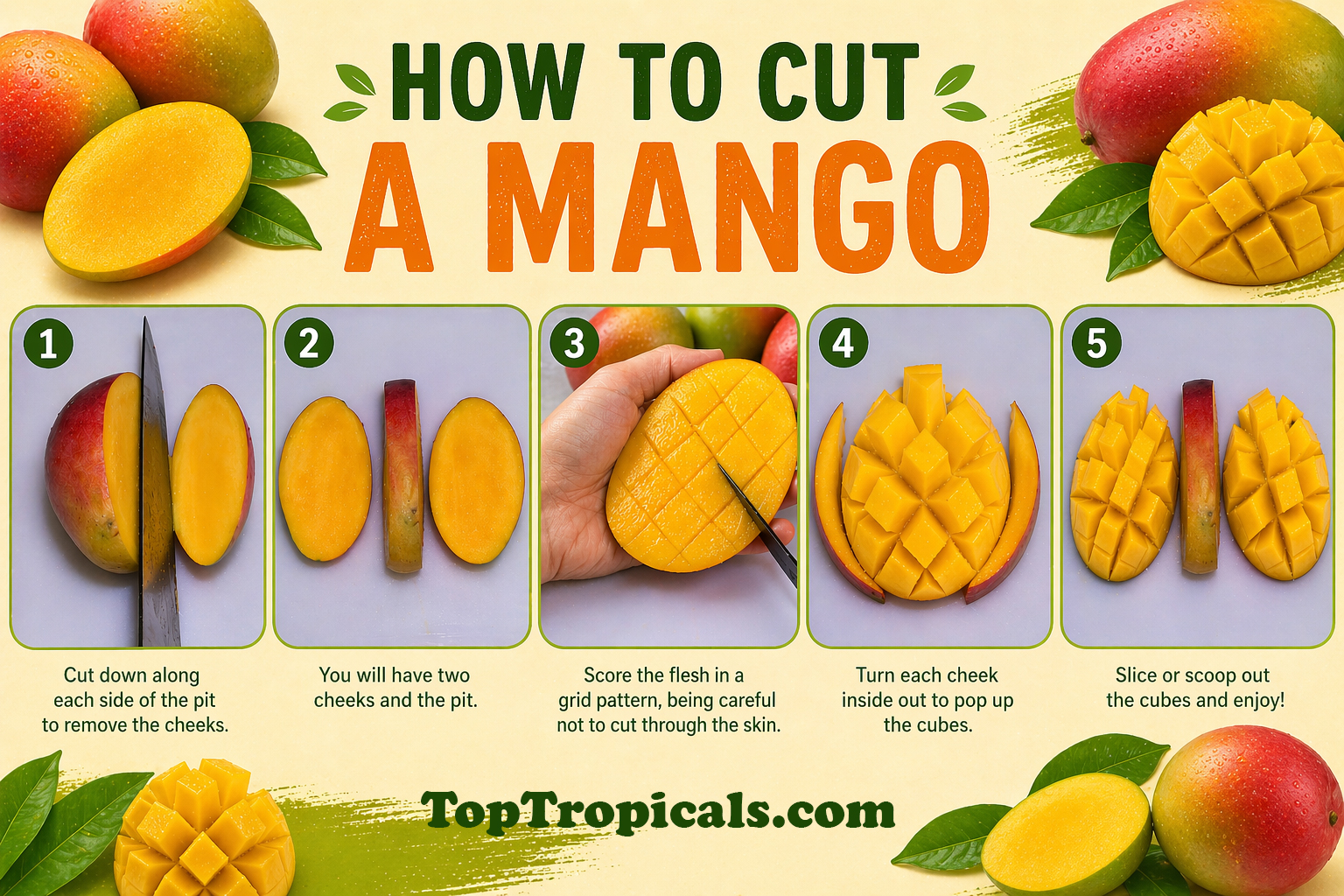
Landscape  infographic  showing  how  to  cut  a  mango  in  five  steps.  Step  1 
 -  slicing  along  each  side  of  the  pit.  Step  2  -  separating  the  two  cheeks  and
    the  pit.  Step  3  -  scoring  the  mango  flesh  in  a  grid  pattern.  Step  4  - 
 turning  the  cheek  inside  out  to  create  cubes.  Step  5  -  scooping  or  slicing 
 the  cubes  to  eat.  Bright  yellow  background  with  whole  and  cut  mangoes  and 
 green  leaves  decorating  the  layout.

Simple step-by-step guide to cutting a mango into clean, easy cubes - from slicing off the cheeks to popping and scooping the fruit.

🎥 Watch Mango videos

🛒 Shop Mango Trees

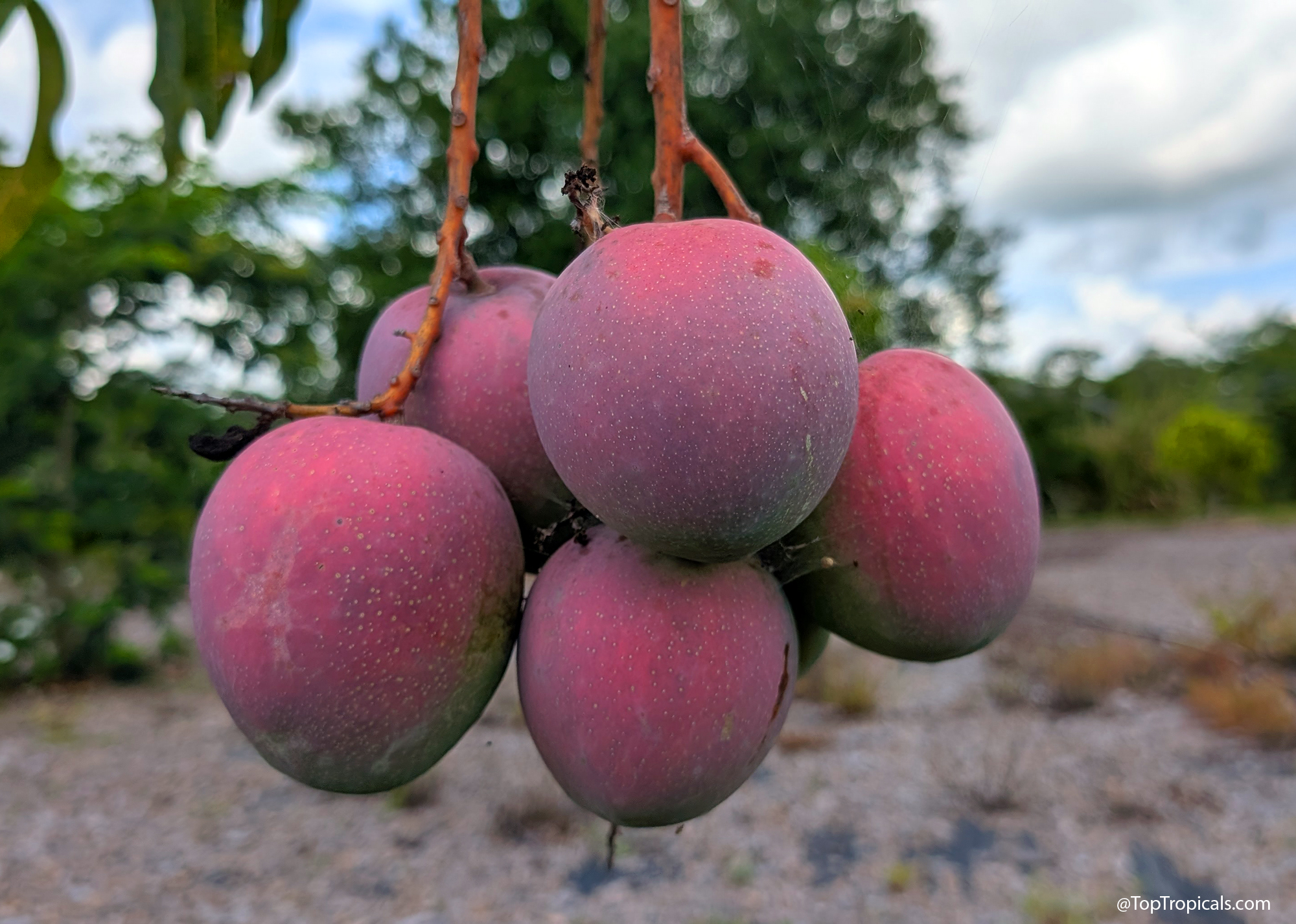
Close-up  of  a  cluster  of  ripening  mangoes  hanging  from  a  branch, 
 showing  red  and  purple  blush  tones  against  a  blurred  outdoor  background.

Cluster of ripening mangoes developing rich color on the tree just before harvest.

Taste the Mango Difference - Save 10%

Once you taste a real mango from your own tree, everything changes. Now you know. Get 10% off with coupon code MANGO2026 on 3 gal mango trees.
Offer valid through 04/28/2026.
Discount applies to 3 gal plants only. Not valid on previous purchases and cannot be combined with other promotions or discounts. Offer subject to change without notice.