Date: 15 Oct 2023
Growing Barbados Cherry in container
Q: I am interested in buying some Barbados cherry plants. Could you please advise if these can be grown in containers indefinitely or it's still better for them to be planted in ground for nutrients etc?
A: The Barbados cherry, like other tropical cherry varieties, is exceptionally well-suited for cultivation in containers.
Barbados cherry grows into a dense bush, demands minimal pruning, and begins bearing fruit at a young age. Our plants, which are propagated from cuttings, initiate the flowering and fruiting process in the very same year. They produce fruit almost year around. This year we've had three big crops: April, July and October (still fruiting now!) besides sporadic fruiting throughout the warm season.
You can cultivate Barbados cherry in a pot, commencing with a 1-3 gallon container and gradually increasing the size each year. Below is a photo of a fully developed tree in the ground, for reference. This tree is approaching its third year of growth. When grown in a container, it maintains a more compact size, with the largest container needed likely being between 7 to 15 gallons. Regular pruning can be employed to keep it smaller.
Photo above: Barbados Cherry bush in the ground
Barbados cherry (Malpighia) possesses a distinct growth pattern that sets it apart from other tropical cherry varieties - Eugenias. Malpighia's branches can assume peculiar shapes, even at angles of up to 90 degrees. Therefore, pruning to achieve the desired shape is advantageous.
Additionally, you may want to explore the Dwarf Barbados cherry, a miniature cherry variety ideal for container cultivation, with cascading growth habit. Although its fruits are slightly smaller than those of the regular variety, they are notably sweeter.
Photo above: Dwarf Barbados Cherry fruit
When it comes to ensuring the health and vitality of your potted Barbados cherry plants, maintaining a consistent nutrient supply is crucial. Implementing a regular fertilization regimen is essential to promote robust growth, consistent flowering, and bountiful fruit production. For optimal results, we recommend using Sunshine Boosters, which are specially formulated to enhance the development of fruits and edibles. These boosters are derived from organic amino acids, making them environmentally friendly and safe for year-round use. By incorporating Sunshine Boosters C-Cibus into your plant care routine, you can ensure that your container-grown Barbados cherry plants receive the essential nutrients they need to thrive and flourish.
Photo above: Dwarf Barbados Cherry in the ground
Date: 18 Jul 2023
Australian Tree Fern - a botanical marvel
Q: I need an exotic looking, easy to grow tropical tree that can grow in semi-shade, create a character in my small Florida garden and a shelter for small wildlife. Any suggestions?
A: The Cyathea cooperi, known as the Australian Tree Fern... Deep within the enchanting rainforests of Australia, this botanical marvel flourishes, captivating all who lay eyes upon it. Its true magnificence lies in its intricate fronds, delicate yet resilient. Unfurling like the wings of a mythical creature, they gracefully arch outward, showcasing a mesmerizing symphony of emerald green.
As sunlight filters through the dense canopy above, its fronds become a living canvas for nature's creativity. But this tree fern is more than just a visual marvel. Its significance stretches far beyond its aesthetic appeal. The Australian Tree Fern is a vital component of its ecosystem, providing shelter and sustenance for a myriad of creatures. Its high-reaching canopy offers refuge to an array of birds, insects, and small mammals, creating a microcosm of life within its majestic embrace.
For centuries, the indigenous peoples of Australia have revered the Cyathea cooperi for its medicinal properties and cultural significance.
As the seasons unfold, the tree stands as a testament to resilience. It withstands the downpour of tropical rain, enduring the wrath of winds, and gracefully survives the scorching heat of summer. Through it all, it remains a symbol of endurance, an emblem of nature's ability to adapt and flourish.
Young leaves of Australian Tree Fern are very exotic looking...
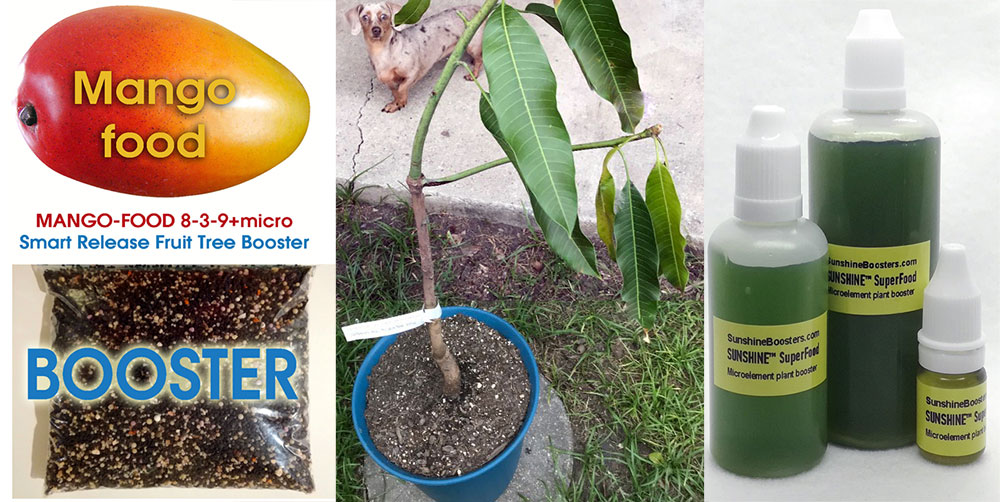
Australian Tree Fern recently planted in front of the office of our Bfarm is getting the best Sunshine Boosters plant food - Robusta - from the Robuster injector
Date: 13 Nov 2022
Vietnamese Mickey Mouse Plant...
Hoa Mai - for good luck!
Ochna integerrima (thomasiana)
What is the yellow flower that brings good luck on Vietnamese New Year (Tet) Celebration? Why is it called Mickey Mouse Plant?
The most celebrated flower in Vietnam, Ochna integerrima, called in Vietnam Hoa Mai
or Mai Vang, blooms profusely on the occasion of Tet, the Vietnamese New Year. Commonly known as Yellow Mai Flower (Hoa Mai literally means
"yellow blossoms"), this plant is considered the quintessential symbol of Spring. In
Southern Vietnam, Hoa Mai are some of the first plants to flower.
This plant is a must for exotic plant collection. It is a rather slow
growing, medium size shrub that can be trained into miniature tree. In winter the plant is covered with pretty bright yellow
flowers, believed to bring good luck and prosperity. They are followed by cute shiny black berries on bright red sepals that resemble the face of
Mickey Mouse.
The plant is easy to grow and relatively cold hardy to light freeze. Start fertilizing your Hoa Moa plant right now through the Winter to encourage early blooms. Luckily, we have a perfect bloom booster liquid fertilizer that is safe to use year around, including Winter months: Sunshine Boosters MegaFlor!
Lunar year 2023 will be a year of the Cat on the Vietnamese zodiac, from January 22nd, 2023 to February 9th, 2024. Cat is the fourth sign in Vietnamese Zodiac, taking place of the Rabbit in Chinese Zodiac.
Date: 17 Sep 2021
Hibiscus: TopTropicals' first plant
- September 2001 @ TopTropicals -
Q: I wonder how you started your plant business and what was your first plant?
A: It was 20 years ago this month that we started Top Tropicals Project. No idea where it was going or how to even get "there", just started with the idea of sharing these wonderful creatures we call plants with anyone and everyone who felt the same way.
Believe it or not, the first plant at TopTropicals was a hibiscus. Right
before we opened our plant nursery in Florida, we ran into a place called Winn Soldani's FANCY
HIBISCUS. The variety of colors inspired us to start our own tropical plant
business. We asked the owner Winn Soldani: what plants do you suggest us to
grow in Florida? His answer was, "Your plant will find you". Very soon we
discovered
jasmines, then perfume trees and fruit trees - all those became our specialty. Then very quickly
TopTropicals.com turned into a large Plant Mall where you can find every tropical plant you can think of!
But at TopTropicals we still grow hibiscus!
- September 2004 @ TopTropicals -
Hibiscus Plus
Hibiscus is a wonderful plant, considering there are thousands of
hybrids with color palettes you can only imagine. Especially interesting are those
rare and useful species, yet very easy to grow, such as:
- Salad Hibiscus - Hibiscus furcellatus - yes, used in salads
- Coral Hibiscus with crazy pendant flowers - Hibiscus schizopetalus
- African Cranberry hibiscus that is used for making teas and salads - Hibiscus
acetocella
- Cotton Candy Hibiscus mutabilis - the flower changes color, opens as white and turns
into bright pink within 3 days, like Yesterday-Today-Tomorrow
Photo above: Hibiscus mutabilis Cotton Candy
Care of Hibiscus and other flowering tropicals
"If your plant isn't flowering, feed it."
- Winn Soldani, Fancy Hibiscus -
Among gardeners, Hibiscus plants have a reputation to have couple
maintenance issues:
1) they can get bugsy (because they must be so tasty!)
2) they can get leggy, especially fancy grafted cultivars, and after a
while they don't look as perfect as when they came from a nursery.
4 tips for healthy and pretty hibiscus plant
1. Full sun. Essential for profuse flowering and keeps away
diseases.
2. Pruning. Keep it pruned and it will get bushy and produce more
blooms.
3. Well-drained soil. Hibiscus likes regular watering but hates wet
feet.
4. Nutrition program. Hibiscus plants are heavy feeders. But keep in
mind that if you just keep pushing granulated plant food, you can
over-fertilize the plant. Excessive salts will accumulate in soil and you will end up
with a sickly looking plant.
Keys to balanced plant food and bloom booster
1) Use liquid fertilizer, preferably amino acid based, it won't create
nutrients lock up
2) Fertilize on regular basis, it's better dilute concentration and add
food with every watering
3) Always add micro-elements - they are essential for plant health
If you do this part right, the result will be:
- healthy, green plants, like they just came from a nursery
- reliable blooming circle
- better cold tolerance and disease resistance. Remember that a strong
plant will be less stressed and less "bugged" by bugs!
We always suggest Sunshine Boosters - scientifically balanced liquid fertilizers that are amino acid based = they are natural and organic, can be used for both flowers and edibles, and what's most important - year around. They are safe to use virtually with every watering.
This is all you need for healthy plants and lots of flowers!
Date: 10 Mar 2021
Healthy Plants: Q&A from Mr Booster
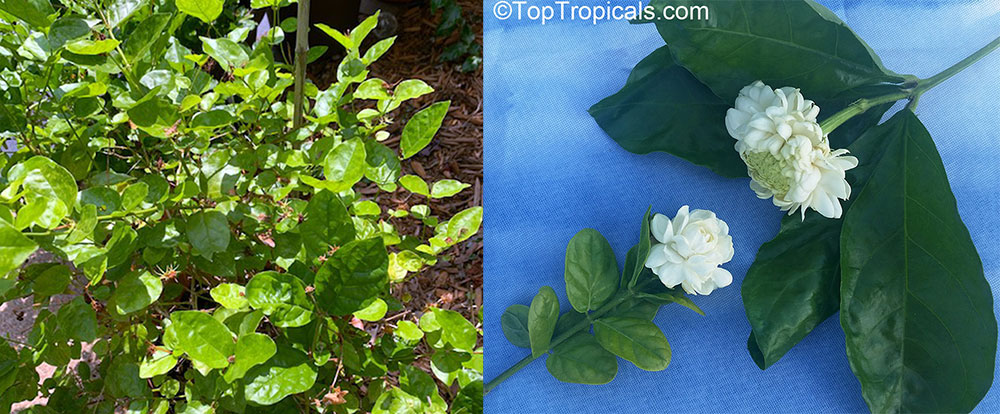
Jasmine Grand Duke flowering
Q: Hey can you help me figure out why my jasmine grand duke supreme is not flowering? Ive had it for almost a year (in NY) and only had 1 flower bloom and that immediately turned brown and died. Since then no flowers have come. The leaves are green and healthy and its growing like crazy but not flowers. Please help me figure this out.
A: For profuse flowering, Jasmine sambac needs 2 things: bright light and special plant food.
We have plenty of both here in Florida. If your grow this plant indoors in
colder climate, get it to flowering can be a bit tricky.
Your plant grows well overall with lots of vegetative growth, this is a
good sign, it means it's healthy, and not being overwatered which is one of the
most common problems with Sambacs. You're doing a great job! This jasmine
just needs more sun and fertilizer.
Make sure to keep it in the brightest spot of your home. The more hours of
light, the better. When night temperatures stay above 65F, it is beneficial
to bring the plant outside on a balcony, patio, or in a garden in full sun as
a potted specimen (move to bright light gradually).
You should give this Jasmine plenty of food with every watering. We
recommend SUNSHINE Pikake - Fragrant Flower Booster. This is a natural fertilizer
that can be applied to plants year round without risk of burning the roots
or nutrient lock up in the soil. It provides all necessary elements for the
flowering cycle - just add a bit into watering can, every time you water.