Garden Blog - Top Tropicals

Date: 24 Jun 2018

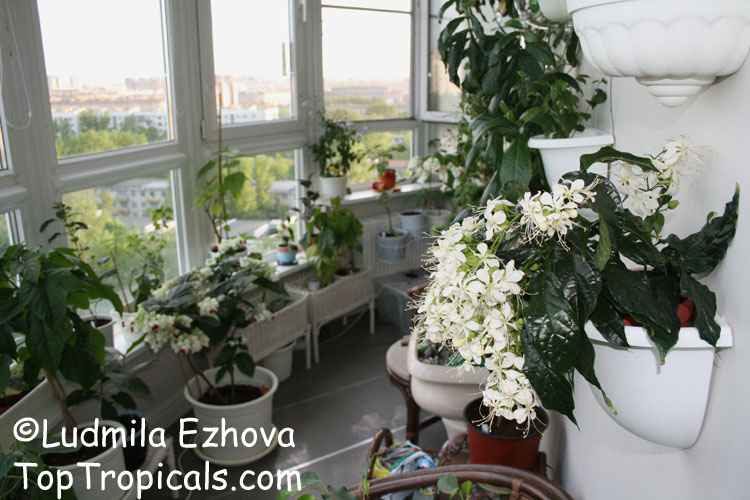
Overwintering tropicals indoors and air humidity

Q: My rainforest plant collection thrived outdoors in our humid summer (I live in Maryland) but of course I had to bring them indoors for winter and now with snow outside they are suffering. Some leaves dried and fell of. Please advise how not to lose my babies over winter!

A: When overwintering tropical plants indoors, think about 3 factors: light, temperature, and humidity.
Light. Providing bright light is obvious, and all indoor gardeners are doing their best to have as much well-lit spots for their plants as possible.
TemperatureTropical plants, especially those from rainforest, do not enjoy significant fluctuations in temperature, so avoid following places: - neat hear register (or air conditioning vent) - in drafts - on a windowsill behind curtains at night
Humidity. Most tropical plants need more humidity than is available in the average, centrally heated home, but some rooms, such as bathrooms and kitchens, are more humid than others. To created humidity, fill a tray that is the same width as a plant, with pebbles or gravel. Pour in water, keeping the level at just below the top of the pebbles, then place your plant on top. The water will produce humidity as it evaporates. Alternatively, mist the leaves using a hand mister in the morning, so leaves dry before night. If you have hard water, use distilled or rain water. Grouping plants together will also increase humidity.
Date: 24 Jun 2018

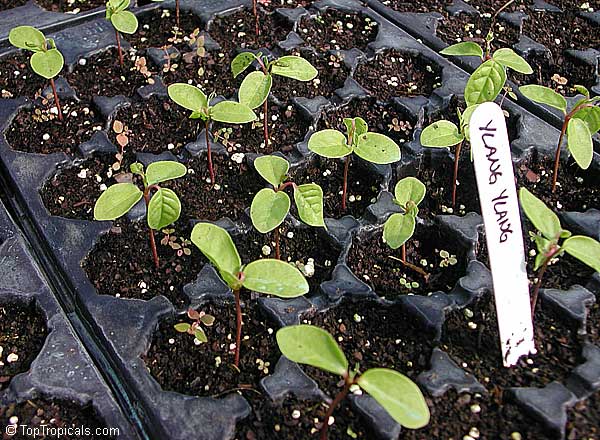
When should you start growing plants from seed indoors?

TopTropicals

"Happiness held is the seed; Happiness shared is the flower." (John Harrigan.)

Q: Our growing season is very short so I decided to start some of tropicals from seed indoors. When should I start?

A: It is always a good time to start from seed. If you want to feel happier, get into gardening. If you want to feel God, start plants from seeds and watch New Life grow from a tiny grain.
Traditionally, people prefer sowing seeds in Spring, especially temperate species for vegetable garden: tomatoes, peppers, cucumbers... My grandmother up North started them in early Spring in small pots on a windowsill, then once the temperatures raised just above freezing, she planted them out in garden beds, and that early start always helped her to have the best early harvest in the neighborhood.
When we deal with tropical plants, "just above freezing" is not warm enough. Which means, you have to grow small babies indoors for quite a while, providing additional heating when needed. Heating pads always work best... When we had large size monitors and TV's, I always put couple trays on top of hot monitors, and even on warm top of a refrigerator, if space by the radiator was all taken. But that was in very cold apartment...
If you keep your living space around 75F (ideal for many species), this is a perfect temperature to get your seeds started. Tropical plants are not like annual tomatoes that try to grow through the season as fast as possible. They may take time. So the sooner you start, the more chances to get small seedlings just in time when Spring air outside is warm enough - at least in 70's.
A great advantage of starting tropical seeds indoors is controlled temperature and moisture. In the plant world, environment extremes are not good for germination process. Mild conditions of your home or a greenhouse create better chances for successful growth. Seeds won't get overheated in hot Summer sun, and won't get rotten because of a sudden heavy rain. Just keep in mind that some species require light for good germination.

Conditions for the best seed germination:
- Soak seeds for a few hours. Adding a few drops of Sunshine Seed Germination booster is very beneficial and improves germination rate by 30-50%
- Well-drained mix, you may use our Professional Seed Germination Mix. Put seeds not too deep (1/2 inch deep or less) to allow air circulation
- Keep warm (75-85F) and in bright light
- Keep soil slightly moist but not soggy.

See more info on seed germination

Check out our seeds selection.

Date: 24 Jun 2018

TopTropicals

Cleanest fruit?

"Dirty" fruit: According to the Environmental Working Group research, Strawberries are top the list of the 12 "dirtiest" fruits and vegetables grown commercially. Spinach is the second, followed by (in order of contamination) nectarines, apples, grapes, peaches, cherries, pears, tomatoes, celery, potatoes and sweet bell peppers. Each of these foods tested positive for pesticide residues and contained higher concentrations of pesticides than other produce. This causes of course chronic health implications. Children are of special concern as younger bodies have greater susceptibility to pesticides than adult bodies, the report emphasizes. Pesticides may induce chronic health complications in children, including neuro- and behavioral problems, birth defects, allergies, asthma, and even cancer...

"Clean 15": Avocados lead 2018's clean fruits and veggies list, that also includes: mangoes, papayas, pineapples, kiwi, sweet corn, cabbage, onions, frozen sweet peas, asparagus, eggplant, honeydew melon, cantaloupe, cauliflower and broccoli.
Obviously, home grown fruit and vegetables are even better. Such fruit as Custard Apples, Sapodilla, Sapote, Jackfruit, Dragon Fruit, Passion Fruit and other rare varieties of tropical fruit, are even better for you because they are not grown commercially, and the choice from your own organic garden is the healthiest for yourself and your family!
Plant them today and get your cleanest fruit tomorrow!

Check out all tropical fruit trees and all tropical spice plants.

Date: 24 Jun 2018

TopTropicals

URBAN TROPICAL GARDENING:
10 secrets of successful Container Mango growing on a balcony.

Q: I live in Miami in apartment on a second floor, and I have a balcony with SE exposure. I wonder if I can grow a mango tree in a pot? Will it fruit for me? I recently moved to South Florida and I don't know much about tropical plants; but I tasted real fiberless mangos from someone's garden - it was so delicious and different from those in the grocery store. I wonder if I can have a fruiting tree on my balcony? And if yes, how do I plant and take care of it?

A: Yes, you can! Here is what you need to do:
1) Temperature. You are lucky to live in Tropics, keep it on a balcony year round.
2) Light. Position the pot in a spot with the most sun exposure. Mango trees can take filtered light too, but the less sun, the less fruit you will get.
3) Soil and Container. Use only well drained potting mix. Step up the purchased plant into next size container (3 gal into 7 gal, 7 gal into 15 gal). When transplanting, make sure to keep growth point (where roots meet the trunk) just at the top of the soil. Covering base of the trunk with soil may kill the plant.
4) Water. Water daily during hot season, but only if top of soil gets dry. If it still moist, skip that day. Mangoes (unlike Avocados!) prefer to stay on a dry side.
5) Fertilizer. Use balanced fertilizer once a month, 1 tsp per 1 gal of soil. Do not fertilize during fruiting - this may cause fruit cracks.
6) Microelements. Apply SUNSHINE-Superfood once a month. This will help your mango healthy, vigorous, and resistant to diseases. Use SUNSHINE-Honey to make your fruit sweeter.
7) Insect control. Watch for scales and mealybugs, clean with solution of soapy water + vegetable oil (may need to repeat 2-3 times with 10 days interval), or with systemic insecticide like imidacloprid only as needed (if non-harsh treatment didn't help). Most Flea shampoo for dogs contain that chemical, you may try that shampoo solution.
8) Trimming. Once potted, do not remove leaves that are discolored or have spots until new growth appears. Dark dots on mango leaves, especially in humid climate like Florida, may be signs of fungus. Treat with fungicide according to label, and remove only badly damaged leaves. Trim crown as needed after flowering and fruiting (by Fall). Train into a small tree, and you may remove some lower branches eventually.
9) Flower and fruit. Mangoes are winter bloomers with bunches of tiny flowers coming in thousands. Many of them set fruit (if pollinating insects present). Keep in mind that young trees can only bare a few fruit. Normally a tree will drop excessive fruit and keep only a few that it can manage. To save the young tree some energy, remove fruit if too many and leave only 2-3 for the first year. It will pay you next year with more abundant crop.
10) Variety. Last but not least: Choose the right variety for container culture! Pick from "condo" dwarf varieties such as Icecream, Nam Doc Mai, Carrie, Cogshall, Julie, Fairchild, Pickering, Graham, Mallika, and a few others - check out Mango Chart pdf and full list of our Mango varieties.

Date: 2 Dec 2021

New Video:
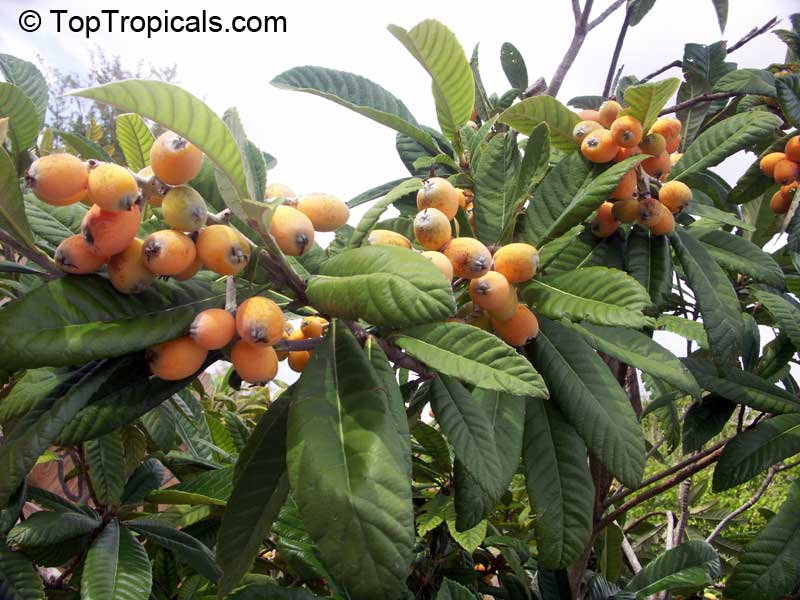
What is a Loquat?

Loquat is one of the easiest tropical/subtropical fruit trees to grow, with delicious fruit resembling Apricots (in fact, from the same family!). This video presented by our video host David Mortimer.

More information on Loquat trees:

Golden Loquat - the symbol of Prosperity
Kristi's Loquat Tropical BBQ sauce
Overlooked fruit: tasty Loquat recipes (PDF from Tropical Treasures Magazine)

WATCH NEW VIDEO >>

Stay updated with TopTropicals Videos by subscribing to our channel at YouTube.com/TopTropicals and get our latest video news of what is fruiting and blooming!