Garden Blog - Top Tropicals

Date: 24 Jun 2025

🍒 New video: Grumichama

The sweetest tropical cherry for your yard

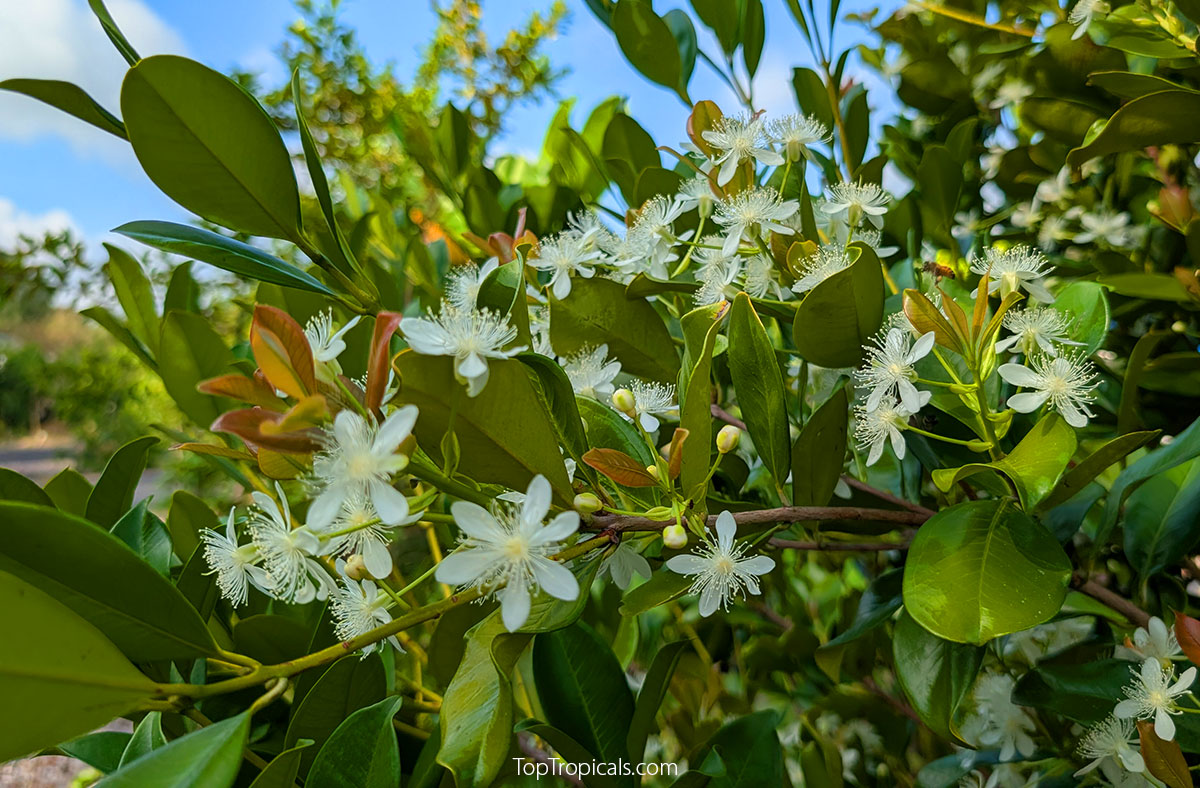
If you're looking for a fruit tree that does it all - gorgeous looks, amazing flavor, and nonstop production - meet Grumichama - Eugenia brasiliensis, the tropical cherry you'll fall in love with! The cherries are glossy, deep purple-black, and unbelievably juicy. One bite and you're hooked - sweet, smooth, with hints of cherry, grape, and plum.

Grumichama is our favorite tropical cherry at Top Tropicals. So good, you'll eat one… then a handful… then half the tree! Grumichama is perfect for beginners - tough, forgiving, and super productive. Cold hardy to the upper 20s. It takes heat, partial shade, even salt spray. It thrives in a pot or in the ground and can produce up to 500 fruits per tree!

Start your food forest with Grumichama. It's easy. It's beautiful. The most addictive fruit!

Grumichama  -  Eugenia  brasiliensis

Subscribe to our Channel:

Stay updated with TopTropicals Videos by subscribing to our channel at YouTube.com/TopTropicals and get our latest video news of what is fruiting and blooming!

Date: 6 Dec 2018

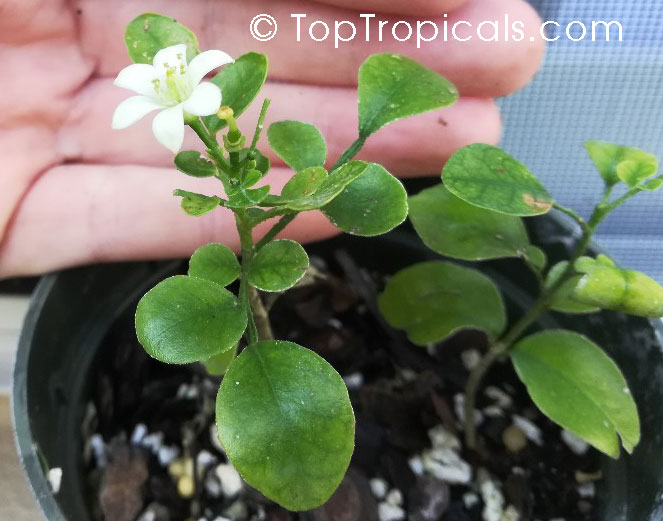
Why starting tropicals from seed indoors is better than outside?

TopTropicals.com

Q: I am in Texas, it is getting cold, but I bought these seeds the last two packs, as I didn't want to miss them, was looking for a long time and found you had them. Should I wait until spring to plant them?

A: You can grow tropical plants from seed year round and don't have to wait until warm weather outside. It is, in fact, beneficial to start tropicals indoors in a controlled temperature, moisture and humidity. Seeds of some species are very sensitive to excess water and/or require a certain range of temperature for germination... Besides, it's so much fun!
First, read the basics: Happy Hobby: growing tropicals from seeds

Advantages of indoor growing from seed

It is easier to keep under control indoors:

1) Temperature and Light. Although many tropical seeds require higher temperature and bright light for germination (hot sun may help), it may be hard to avoid overheating and drying out when you put trays in full sun. Using heat pads and additional lighting indoors makes germination smooth, even may take a little longer than in hot sun.
2) Soil moisture. If you ever lost your seeds or tiny seedlings to a heavy summer rain, you sure will appreciate your own moisture-controlled environment! Just make sure to use the right soil mix.
3) Air humidity. Indoor air is drier than outside. It may not be best for some tropical plants, but definitely perfect for seed health - they will never get moldy considering you keep your eye on the plantings.
4) Pre-treatment. Some seeds require scarification (sanding down hard shell), others stratification (cold treatment), but all seeds will benefit from SUNSHINE-S soak before planting. It is easier to do in your home lab. Based on our experience, using Sunshine pre-treatment reduces the risk of fungal damage and improves germination from 30 to 65%.
5) After germination culture. Watching seedlings closely in your home environment and giving them all that is needed for healthy, fast growth - miscroelements and first fertilizer - will help to establish young plants just in time before planting them out in Spring-Summer.

Read more: From Kristi - how to grow tropicals from seed.

Check out our seeds selection...

Date: 31 Oct 2018

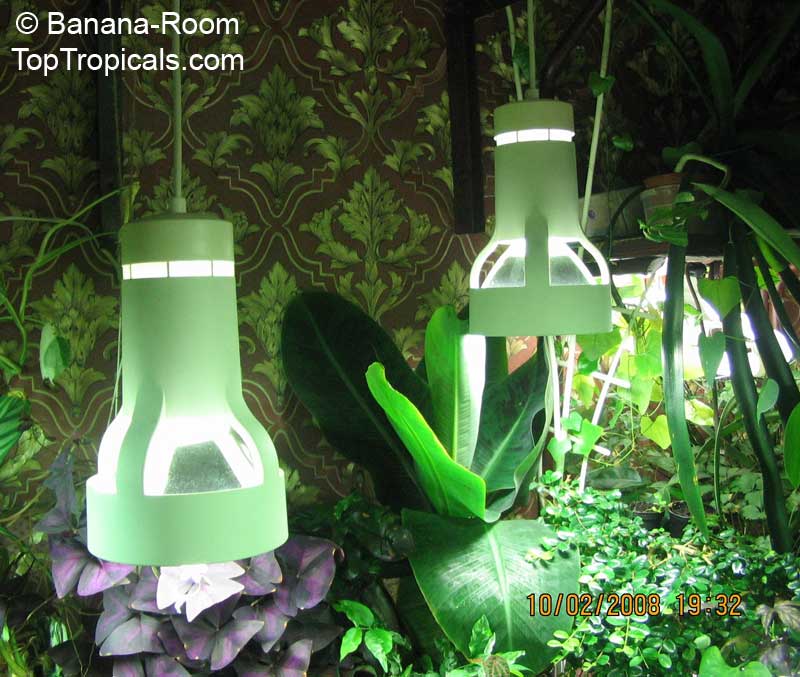
Lighting for overwintering tropical plants indoors

TopTropicals.com

Q: Days are getting shorter and darker... I brought my tropical plants indoors for overwintering (I live in Atlanta, GA). Could you give me some advice on what lamps should I use for additional lighting of my plants?

A: Indoor plants are very unlucky: they have to grow in"caves,"and everybody knows that plants don't grow in the caves. The luckiest plants win sunny windowsills, but even there they dwell rather like in underbrush under tall trees, where the sun illuminate them only early in the morning or in the evening, and its light is diffused by foliage.
Usually domestic plants are in desperate lack of illumination not only in winter, but also in summer. No light - no growth, no flowering. So, plants need extra light to compensate the lack of illumination in the"room-cave" conditions.
Before you will start any practical actions to help your plants, you need first to decide whether you are going to set an additional illumination, or provide full lamplight. In the case of just additional illumination, rather inexpensive luminescent lamps will do, and you don't have to think about their spectrum. Continue reading...

Date: 26 Oct 2018

Improving cold hardiness before winter: fertilizer and micro-elements

TopTropicals.com

Q: I live in New Jersey and it is getting cool here, with temperatures in the upper 40s, but my tropical plant collection is in a heated sunroom (still around 70s). Should I continue fertilizing my plants? And if yes, my second question about deciduous Sugar Apple tree. Should I continue fertilizing it until it drops leaves?

A: First of all, even though you live outside tropical climate, your plants enjoy warm temperatures year round, and can be treated like if they were in a Southern garden.
Plant nutrients, both macro-elements (regular fertilizer) and micro-elements (such as iron, manganese, magnesium, copper, and other elements) play an important role not only in overall plant health but also in plant hardiness.
The rule of thumb is, even in warm climates we cut off any fertilizer by the end of October. You still have time for the last treatment this year (next will be in March, or when your plants start showing new growth). You may apply just a bit of slow-release granulated fertilizer, or water-soluble by foliar spray, diluted 1/2 of label strength, to all evergreen species in your collection.
The most important application before winter is micro-elements and other plant boosters that will help you plant collection survive winter months with a shorter daylight and cooler temperatures. Now it is a perfect time to make these simple steps:

1) Miscro-element applications, any one of: Superfood, Iron Supplement, Greenleaf.
2) Sunshine-T application: for improving cold hardiness, plus immune system resistance to insects and deceases.
3) Sunshine-Honey application for all fruit trees to encourage bigger and sweeter fruit next year.

Regarding your second question. Deciduous tropical plants like Annonas, Adeniums, Plumerias, etc - do not need regular fertilizer at this time, however, go ahead and apply microelements Superfood complex, as well as Sunshine-Honey, while leaves are still green. These two will give a kick-start to provide better flowering in spring, and production of sweeter fruit later.

Check out SUNSHINE boosters - all with free shipping!

Date: 7 Sep 2018

6 reasons to buy tropical plants in Fall

TopTropicals

1) Easy planting. No sweat. Enjoy your gardening fun during cooler weather!

2) Easy shipping. With cooler weather, there are less chances for the mail order plants to get overheated in transit or at your doorstep in case you miss the delivery. But don't wait too long, another few weeks and too much cold will put another restriction for deliveries up North.

3) Easy establishing. Stress-free roots = stress-free plants = happy gardeners. Cooler weather is always better for planting and quick establishing.

4) Easy maintenance. Plant growth rate slows down during cool period, so your garden maintenance will be minimal.

5) Winter bloomers will brighten your days! Look at these winter-flowering plants that create a spectacular show during Fall-Winter in subtropical climates. If you grow them as houseplants, this is your chance to have flowers in Winter!

6) House plants Many tropical species suitable for indoor cultivation are available year round, but when you buy them in Fall - they are in their fullest and best shape after Summer vigorous growth.

One the photo: Barleria cristata Striped Lavender Lace.