Date: 31 Oct 2018
Lighting for overwintering tropical plants indoors
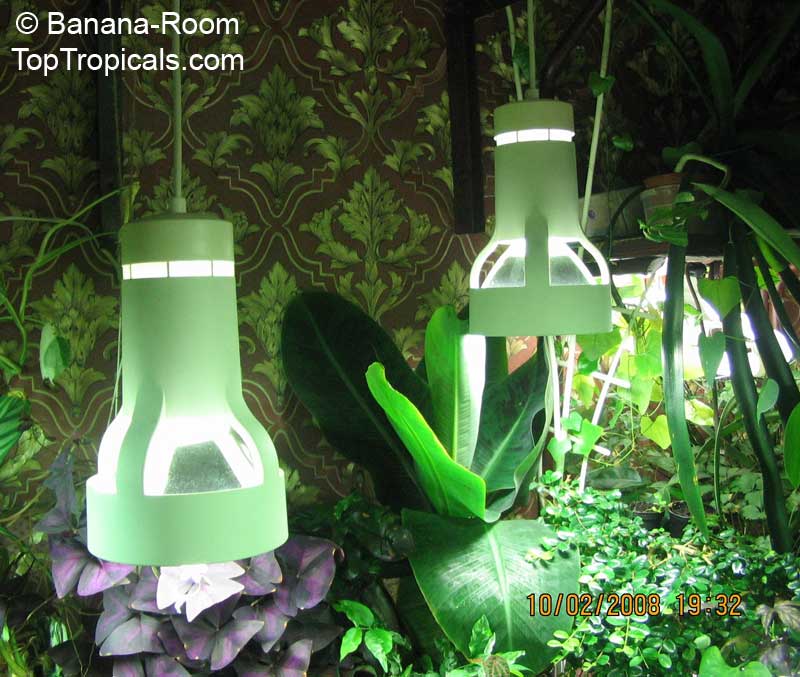
Q: Days are getting shorter and darker... I brought my tropical plants indoors for overwintering (I live in Atlanta, GA). Could you give me some advice on what lamps should I use for additional lighting of my plants?
A: Indoor
plants are very unlucky: they have to grow in"caves,"and everybody knows
that plants don't grow in the caves. The luckiest plants win sunny windowsills,
but even there they dwell rather like in underbrush under tall trees, where
the sun illuminate them only early in the morning or in the evening, and its
light is diffused by foliage.
Usually domestic plants are in desperate lack of illumination not only
in winter, but also in summer. No light - no growth, no flowering. So, plants
need extra light to compensate the lack of illumination in the"room-cave"
conditions.
Before you will start any practical actions to help your plants, you
need first to decide whether you are going to set an additional illumination,
or provide full lamplight. In the case of just additional illumination, rather
inexpensive luminescent lamps will do, and you don't have to think about
their spectrum. Continue reading...
Date: 26 Oct 2018
Improving cold hardiness before winter: fertilizer and micro-elements

Q: I live in New Jersey and it is getting cool here, with temperatures in the upper 40s, but my tropical plant collection is in a heated sunroom (still around 70s). Should I continue fertilizing my plants? And if yes, my second question about deciduous Sugar Apple tree. Should I continue fertilizing it until it drops leaves?
A:
First of all, even though you live outside tropical
climate, your plants enjoy warm temperatures year round,
and can be treated like if they were in a Southern
garden.
Plant nutrients, both macro-elements (regular
fertilizer) and micro-elements (such as iron, manganese,
magnesium, copper, and other elements) play an important
role not only in overall plant health but also in plant
hardiness.
The rule of thumb is, even in warm climates we cut off
any fertilizer by the end of October. You still have
time for the last treatment this year (next will be in
March, or when your plants start showing new growth).
You may apply just a bit of slow-release granulated
fertilizer, or water-soluble by foliar spray, diluted
1/2 of label strength, to all evergreen species in your
collection.
The most important application before winter is
micro-elements and other plant boosters that will help
you plant collection survive winter months with a
shorter daylight and cooler temperatures. Now it is a
perfect time to make these simple steps:
1) Miscro-element applications, any one of: Superfood, Iron Supplement, Greenleaf.
2) Sunshine-T application: for
improving cold hardiness, plus immune system resistance
to insects and deceases.
3)
Sunshine-Honey application for all fruit trees to
encourage bigger and sweeter fruit next year.
Regarding your second question. Deciduous tropical plants like Annonas, Adeniums, Plumerias, etc - do not need regular fertilizer at this time, however, go ahead and apply microelements Superfood complex, as well as Sunshine-Honey, while leaves are still green. These two will give a kick-start to provide better flowering in spring, and production of sweeter fruit later.
Check out SUNSHINE boosters - all with free shipping!

Date: 7 Sep 2018
6 reasons to buy tropical plants in Fall

1) Easy planting. No sweat. Enjoy your gardening fun during cooler weather!
2) Easy shipping. With cooler weather, there are less chances for the mail order plants to get overheated in transit or at your doorstep in case you miss the delivery. But don't wait too long, another few weeks and too much cold will put another restriction for deliveries up North.
3) Easy establishing. Stress-free roots = stress-free plants = happy gardeners. Cooler weather is always better for planting and quick establishing.
4) Easy maintenance. Plant growth rate slows down during cool period, so your garden maintenance will be minimal.
5) Winter bloomers will brighten your days! Look at these winter-flowering plants that create a spectacular show during Fall-Winter in subtropical climates. If you grow them as houseplants, this is your chance to have flowers in Winter!
6) House plants Many tropical species suitable for indoor cultivation are available year round, but when you buy them in Fall - they are in their fullest and best shape after Summer vigorous growth.
One the photo: Barleria cristata Striped Lavender Lace
Date: 27 Jun 2018
TROPICAL GARDENING: How to grow Brugmansia (Angel Trumpet) in the ground outside.
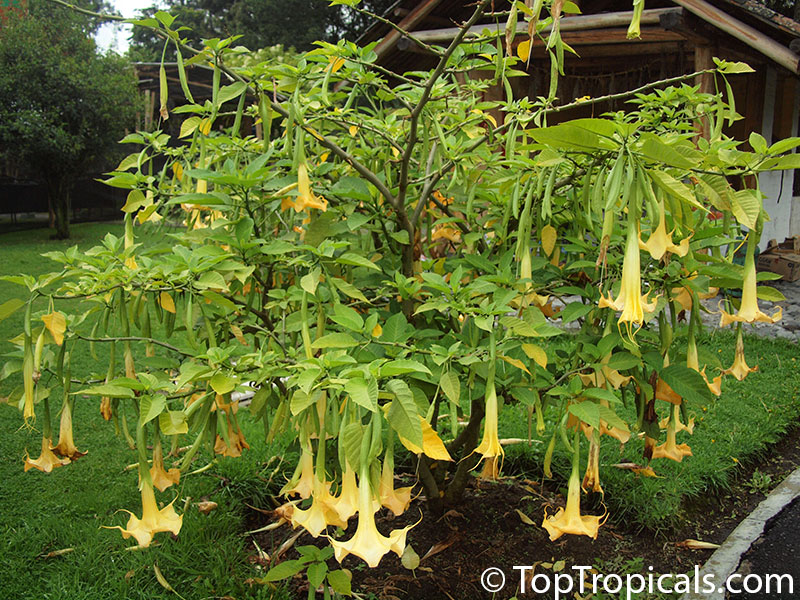
Q: I recently moved from New Jersey to Florida and I brought with me my Brugmansia that I used to have as a house plant. Can I plant it in the ground now?
A: Angel Trumpet - Brugmansia - is a very popular container plant
valued for its large, stunning fragrant flowers. Originated from South
America, it will be happy to grow in tropical to subtropical climate outdoors.
These are a few useful tips to get the most out of this beautiful plant:
1) Light. Plant it in full sun - the more sun, the more flowers
you get, although Brugmansias tolerate shade. If the plant was previously
grown in container indoors, to avoid leaf burn, keep it protected with a shade
cloth or simply white sheet for a while and gradually open to adjust to full
sun.
2) Soil and fertilizer. Use fertile soil with lots of organic
matter (add compost to existing soil). It must be very well drained, Angel
Trumpet won't tolerate waterlogged conditions. Plant it on a little "hill"
elevated 3-4"above the surrounding area. Brugmansias are very heavy feeders. Once
the plant is established, fertilize on regular basis with Slow Release Fertilizer - a handful once a
month.
3) Water. Water daily until established. Once the root system is
well developed, the plant is drought tolerant and won't require too much
care. But at the beginning, watch the leaves - the lush foliage droops quickly
if the plant is thirsty.
4) Plan space. Brugmansia is a short tree, but it needs a lot of
room to spread branches with its heavy hanging flowers. Think 12" wide and
maybe almost as much tall.
5) Support. Being widespread plant, Brugmansia can be blown with
strong winds. Stake with strong support until established.
6) Propagation. Brugmansia is one of the few plants that
propagates with semi-woody cuttings; soft green cuttings usually have little
success. Other than that, it is pretty easy!
Check out our Brugmansia collection
Date: 24 Jun 2018
Tropical Planting Breaks the Rules. Should I plant in the ground before Winter?
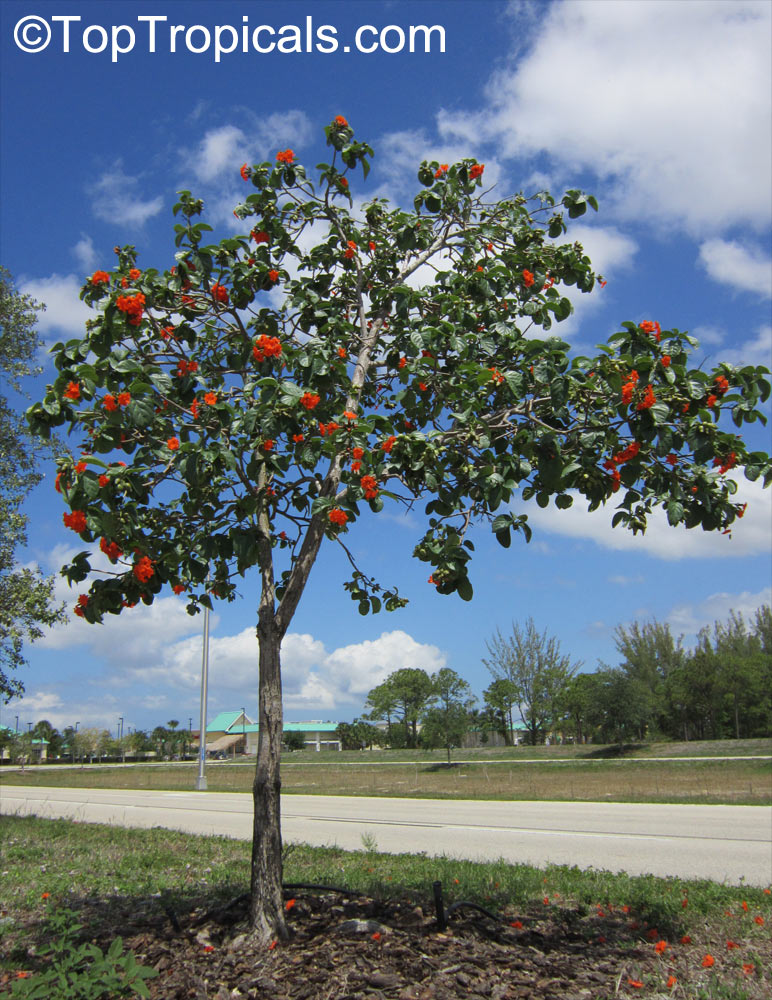
Q: Winter is coming and I still have a few plants I want to plant in the ground. Should I keep them in pots and wait till spring?
A: In subtropical areas, if temperatures don't drop below freezing, you can continue planting in the ground. In fact winter planting has some unique advantages - less heat stress on a plant and root system, mild environment - help the plant to establish better. Besides, no-sweat garden work is much more enjoyable, and you can get done a lot!
To learn more about winter planting, see article Tropical Planting Breaks the Rules by Murray Corman (Garden Of Delights