Garden Blog - Top Tropicals

Date: 6 Oct 2021

Top Tropicals Top House Plants

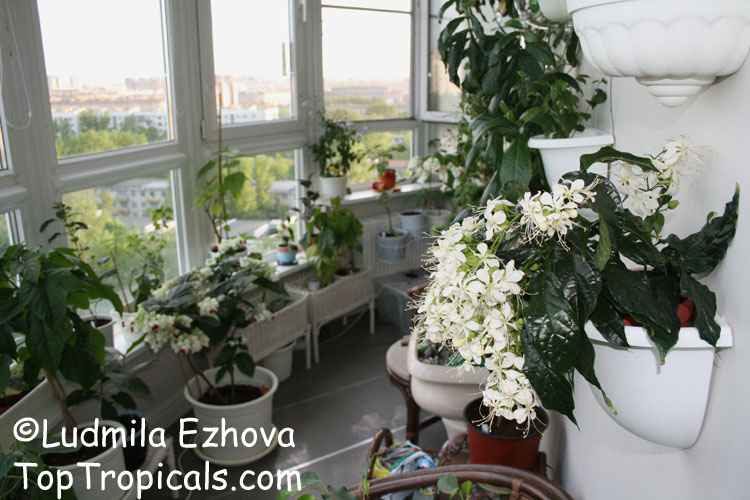
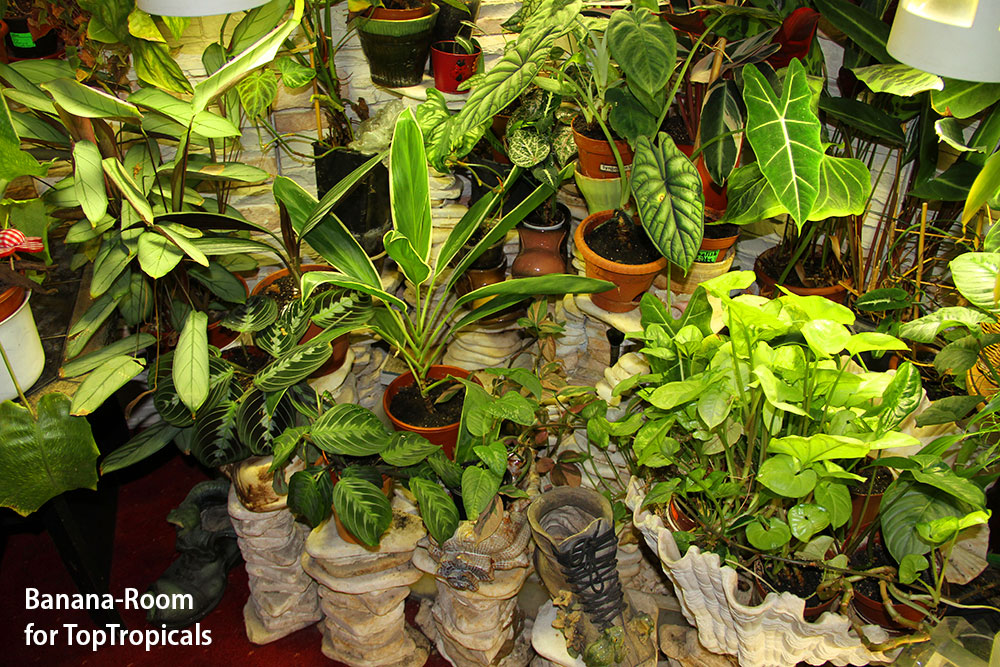
Photo above: Clerodendrum indoor garden of Ludmila Ezhova, St Petersburg, Russia.

Enjoy the Tropics Year round!
Bring them inside...

Q: I just discovered your amazing website and spent hours browsing your beautiful tropical plants! I wish I could have them all! But it's getting cold here (I live in Chicago area), too late? Can you recommend something of a small size, colorful, that I can easily overwinter indoors? Thanks for bringing this beauty into our lives!

A: Don't get discouraged even in colder climates. Yes, you can grow tropical plants indoors! Remember that all traditional houseplants are in fact tropical plants that grow in tropics in a wild habitat. Humans didn't invent them as indoor plants, they originally collected them from the rain forests and jungles! Most of tropical plants, including trees and fruit trees, can be grown in containers and even indoors. It's just a matter of space limitations and amount of time you are willing to spend caring of your exotic babies. Many gardeners up North are very successful with their tropical plant collections.
Below are a few suggestions of compact growing, easy species for your indoor collection. Enjoy the Tropics Year round!

See more plants well-suitable for indoor culture and our specials at the end of this newsletter.

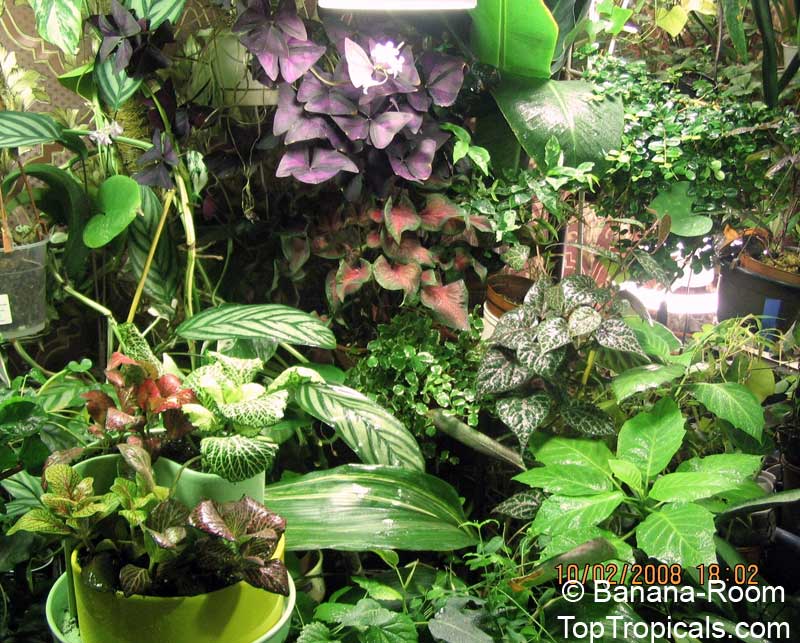
Photo above: small tropical indoor garden of Julia Nikolayeva, St Petersburg, Russia.

Date: 30 Jun 2021

Healthy Plants: Q&A from Mr Booster

Meet our new Booster Guy

Plants need food too! Our line of Complete Plant Nutrition system - Sunshine Boosters - will give your plants exactly what they need, and nothing they don't! The boosters are easy to use, and -

ON SALE NOW with FREE shipping

- as a part of our 4th of July specials!

We have a new team member to help you learn more about Sunshine Boosters and how they can make your plants grow healthy and fast.
Meet Ed Jones - our new Booster Guy! Ed will be your contact for all Sunshine Boosters questions, he will help you with fertilizer product selection and ordering.

Soon we will introduce some new fun stuff... including: new advanced formulas, and cool electronics for ultimate control of your plant collections, gardens, greenhouses, and groves... Stay connected!

MORE ABOUT ED >>

Meet Ed's serious Booster People: Roxy and Delilah

Date: 4 Jun 2021

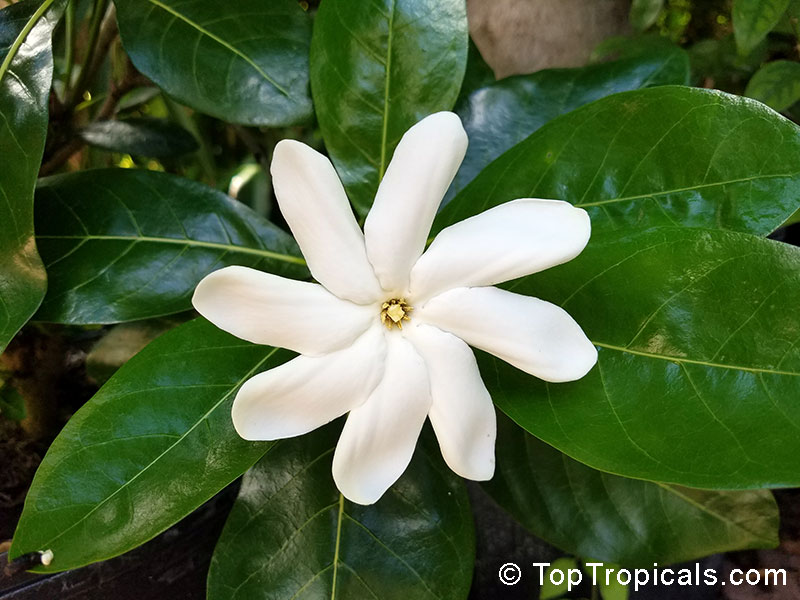
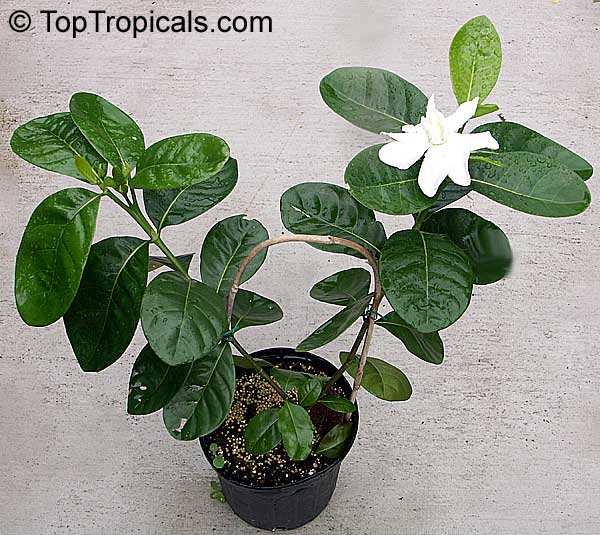
Tahitian Gardenia

Q: I am interested in your Tahitian Gardenia and I would love to try and grow this plant in a large container/fabric pot. The soil here where I live is terrible as it's hard rock, clay, and sand! So I'm not sure if amending the soil would help to plant in the ground? Can you tell me if this will do okay in a container or best in ground? I live here in Las Vegas, NV (zone 9a). Any information would be great to help me make a this decision, I love the selection of cool tropical plants you offer! Also my daughter does Tahitian/Polynesian dance and this would be a cool "topping on the cake" if she could have a live Tiare flower in her performances.

A: Tahitian Gardenia will be doing best if grown in container in your area. In its natural habitat, it grows full sun but also it enjoys mild weather conditions and high air humidity. All gardenias prefer acidic soils. In your area, if planted in the ground, it may be exposed to some harsh conditions: too high temperatures, too hot sun, dry air, and as you mentioned - heavy clay and sandy soil. You can enjoy this plant grown in container, which can be moved as needed away from too much sun during summer months. Use well-drained potting mix. Use plastic pot, do not use fabric or clay pots - soil will dry out too quickly.
Also remember to fertilize this plant on regular basis with a liquid fertilizer SUNSHINE Pikake - Fragrant Flower Booster.
Grow gardenia in full sun or semi-shade during the hottest months. You may spray it with pure water if the air too dry and hot. Enjoy your Tropical Beauty and good luck!

Date: 15 Jan 2021

Healthy Plants: Q&A from Mr Booster

New Boosters for the New Year!
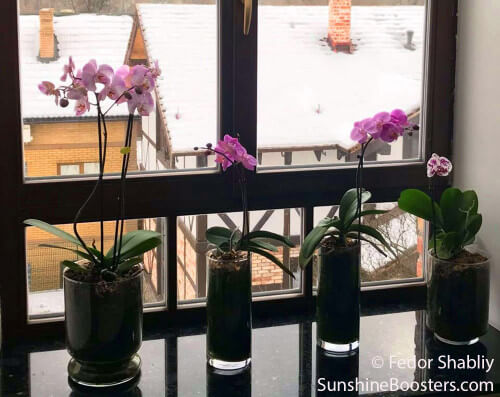
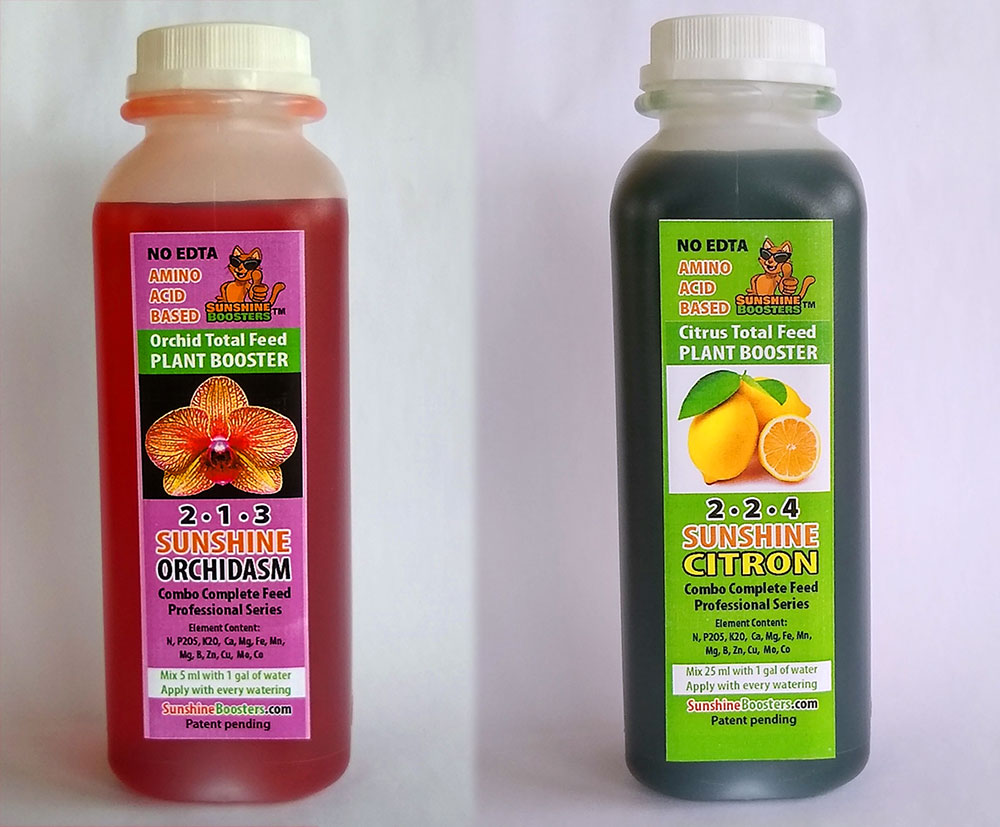
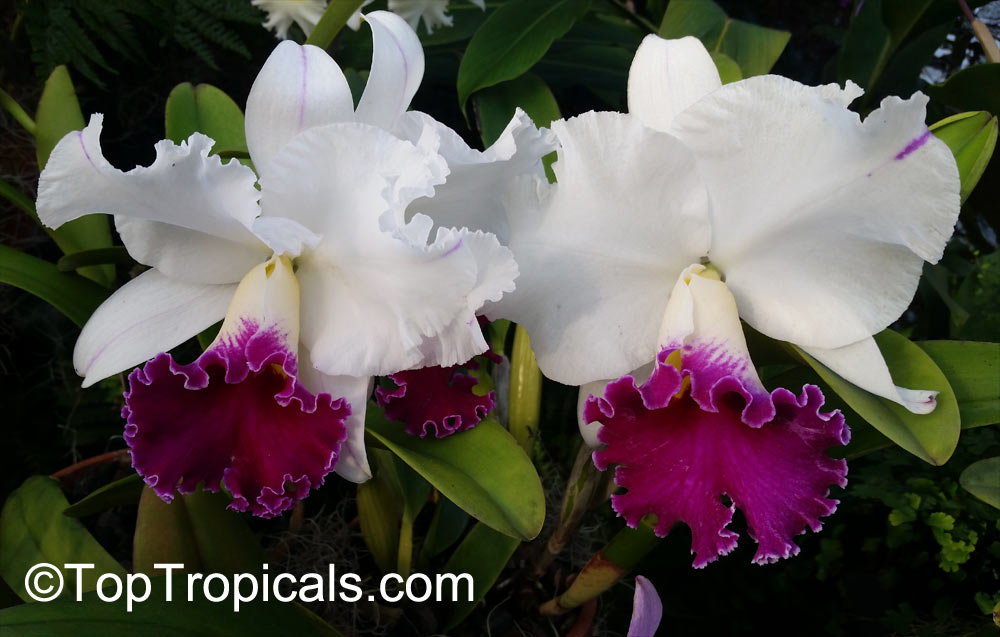
Sunshine Total Feed: Orchidasm and Citron
How to grow everblooming orchids?

Q: I ended up with a large collection of orchids that I was given as presents... They grow well but unfortunately after the showy blooms were gone, I don't see any more flowers, just green leaves. What do I need to do to make them bloom again? Should I fertilize them with Azalea bloom booster?

A: Orchids culture is different from garden ornamental plants. First big difference, they are epiphytes, growing in a loose bark medium rather than soil, and benefit from daily mist. Second difference is a type of fertilizer. You can not use a regular garden fertilizer on orchids, because they are very sensitive to salts. Orchids need special, acidic type of fertilizer, very mild in action.
Luckily, Sunshine Boosters formulas are exactly what orchids need! They are amino-acid based, have very mild formulas, and do not create nutrient lock up (building up salts is one of the biggest enemies of tender orchids).
A new Sunshine Boosters Orchidasm TotalFeed is scientifically balanced orchid food that contains all necessary nutrients, including micro-elements, for healthy, happy, vigorous orchids. It can be used as often as daily with every foliage spray. From our testing experience, after using Orchidasm Booster, orchids not only got happy and thriving - they also bloom more often - up to several times a year, shooting new flower spikes one after another! (while normal blooming cycle for most orchids is once a year). It gets even better - the flower display lasts twice longer!
To enjoy these beautiful flowers year around - treat them with Love, give them some Orchidasm!

See more information with pictures in Sunshine Boosters Orchid Blog
Secrets of a healthy Citrus tree

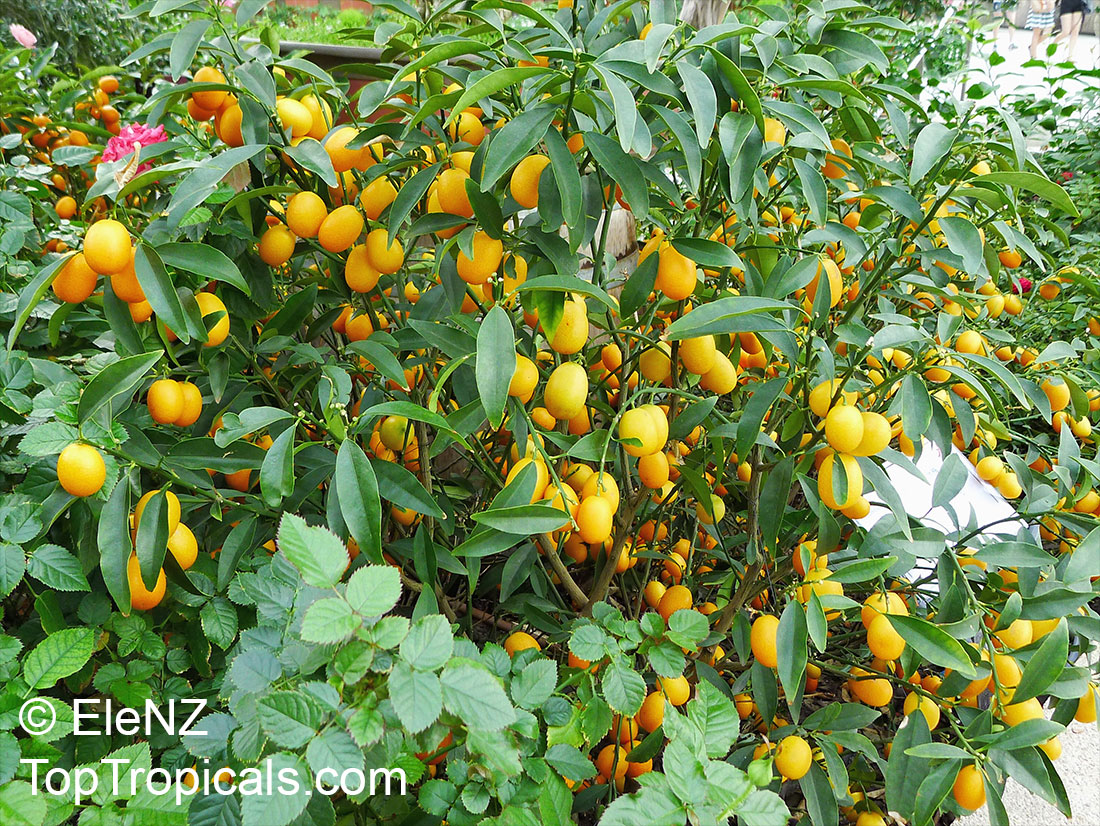
Q: We planted several citrus trees in our yard - Meyer Lemon, Grapefruit and Blood Orange. The trees came from the store full of flowers and even had a few fruit, but a year after planting - no more flowers! The old leaves are green, but new growth doesn't look healthy, leaves are yellowish and have spots, maybe eaten by bugs (?), and how do we get them to fruit?

A: Citrus plants are not the easiest trees to grow; they are susceptible to various diseases, pests, and deficiencies, especially in areas with high humidity/rainfall like Florida. Fungi, viruses, leaf minors, chlorosis - this is not a complete list of citrus common problems. In commercial groves, these conditions are kept under control by using harsh chemicals on solid schedule.
For home gardeners, growing citrus trees may become a challenge. Many people don't want to use harsh chemicals on their edibles; and those who do, may not always have time to apply treatments on a professional schedule. So as much as we all love a fresh juicy orange, growing your own may become quite a pain!
Sunshine Citron TotalFeed is your simple, eco-safe solution to a healthy looking, productive citrus tree with organic fruit! Amino-acid based formula provides all necessary elements to strengthen the tree and make it resistant to possible problems.
Did you know that treatment of leaf chlorosis (yellow leaves with dark green veins), commonly treated with iron supplements, in fact requires a complex combination of nutrients - both balanced NPK and micro-elements?
Use Sunshine Citron in combination with Sunshine GreenLeaf and Sunshine SuperFood and never see yellow chlorotic leaves again!
Apply Sunshine Epi on regular basis (every 2 weeks) and help your tree boost its immune system and stay virus-free.
Add Sunshine Honey, and you will have large, juicy fruit that are much sweeter and more flavorful than those from the store! All these boosters are compatible with each other, and perfectly natural. Eat your fruit safely and enjoy...

Read more about treating citrus tree defficiencies in Sunshine Boosters Citrus Blog.
Date: 19 Nov 2020

Healthy Plants: Q&A from Mr Booster

Feeding Indoor Plants

Q: I am moving all my potted plants indoors as weather is cooling down. I still have Sunshine Boosters that I got from you in Summer. Do I need to continue fertilizing and how often, or should I wait until Spring?

A: Indoor plants add a vibrant warmth to your home, and can even improve the air quality. But most importantly, indoor plants give you access to year-round gardening. While majority of house plants are easy to maintain, they still require proper care to thrive.
Too many gardeners overlook the importance of fertilizing plants indoors. However, proper feeding is essential to grow healthy, vibrant plants. With outdoor plants nature sends rain and a plant will send new roots to find food, an indoor plant is limited to only what you will give it. That is why it is essential to feed your plants a healthy nutritious meal even indoors.
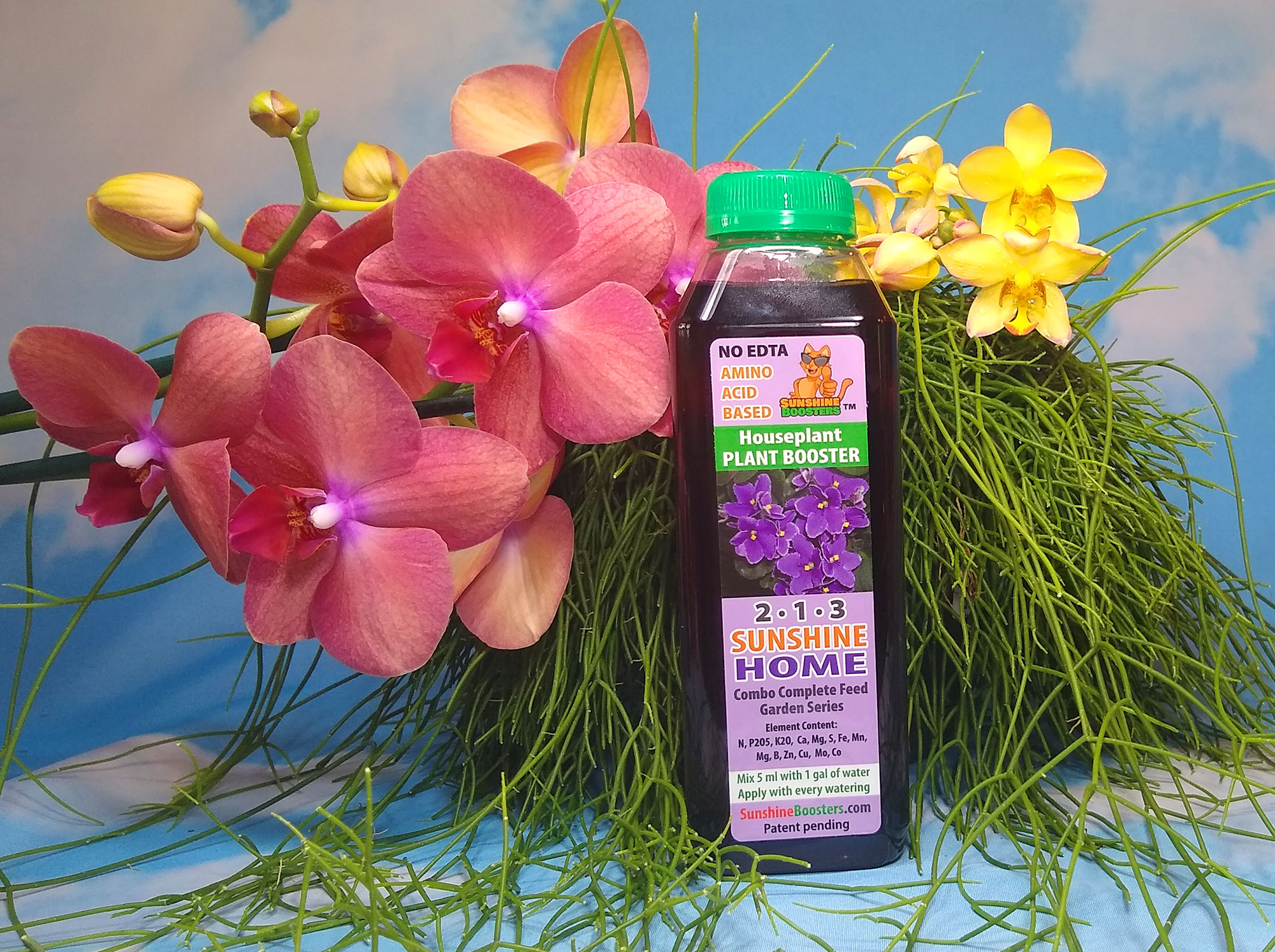
Many granular and slow-releasing fertilizers will recommend that you only feed your plants occasionally, but this is not the healthiest for plants, since they need to "snack" every day to satisfy their daily nutrient needs. When you feed a plant a large meal rarely, it cannot absorb the nutrients effectively, leftovers creating build up in soil (it's called "locked up nutrients") and that is why we specifically designed our fertilizers to be a light, daily nutritious meal for your plants - Sunshine Home for houseplants...