Date: 31 Jul 2025
Anthurium Collector Set
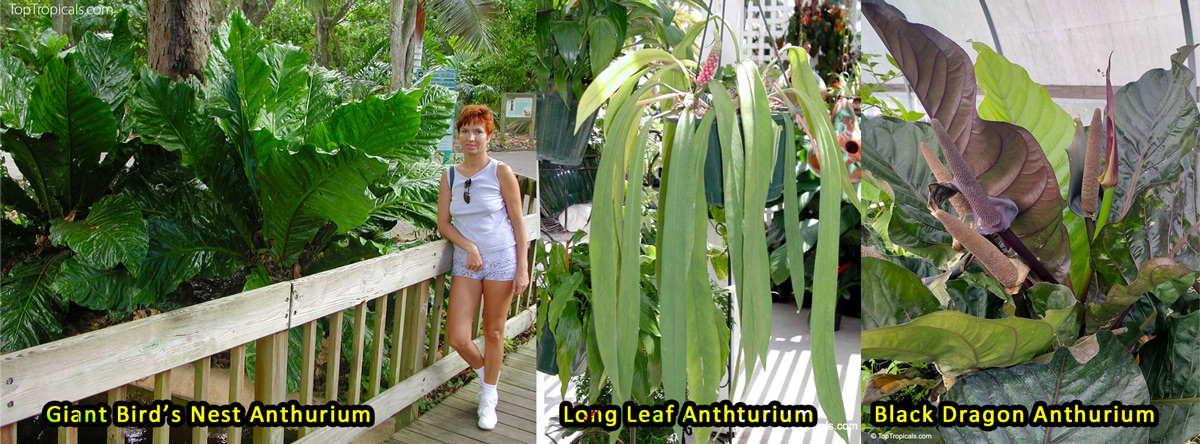
These aren't your typical tropicals - they're collector-grade Anthuriums grown for foliage and texture. Each one brings something different, but they all thrive in the same kind of setting: shade or filtered light, warmth, and humidity. Perfect for growing in containers indoors or out.
 Anthurium Black Dragon
This is the most dramatic of the trio. Upright, leathery leaves shift from dark green to nearly black depending on light. Instead of bright flowers, it produces a dark brown spadix and glowing red berries. A hybrid not found in the wild, it's grown from seed - no two are exactly alike.
- Best for: Indoor focal plant, shaded patio, black ceramic pot
- Height: 2–4 ft in container
- Texture: Thick, architectural leaves
- Highlight: Color shifts with light intensity
Read more about Black Dragon Anthurium
 Anthurium hookeri – Giant Bird's
Nest
Anthurium hookeri – Giant Bird's
Nest
This one's about scale. Broad, crinkled leaves with a cardboard-like texture form a bold rosette. It can get huge with time - up to 6 feet across. Perfect for gardeners who want the "instant jungle" look.
- Best for: Shaded garden, large pots on porches
- Height: Up to 5 ft; width even more
- Texture: Wrinkled and leathery
- Highlight: Bright red berries in maturity
Buy Giant Bird's Nest Anthurium
Read more about Giant Bird's Nest Anthurium
 Anthurium vittariifolium – Long
Leaf Anthurium
Anthurium vittariifolium – Long
Leaf Anthurium
Graceful and rare, this species sends out narrow strap-like leaves that can reach 5–6 ft long. Ideal for hanging baskets or mounting. Bonus: it produces small pink fruit against deep green foliage.
- Best for: Hanging displays, vertical planters, bright bathrooms
- Height: Leaf length, not upright height - up to 6 ft
- Texture: Smooth, ribbon-like
- Highlight: Cascading growth and color contrast
Read more about Long Leaf Anthurium
✅ How to Care for Anthuriums
- Light: Bright, indirect light is best. Avoid direct sun, especially mid-day. These plants evolved in rainforest understory - think "dappled light under trees."
- Water: Keep the soil lightly moist but not soggy. Let the top inch dry before watering. They hate wet feet.
- Humidity: These are tropicals - they'll do fine in 50-60% humidity, but thrive at 70%+. Use pebble trays or place near other plants. Bathrooms with windows work great.
- Soil: Use an airy mix: orchid bark + perlite + peat or coco coir. Drainage is key. Never use plain potting soil.
- Fertilizer: Feed with SUNSHINE Robusta every 2–4 weeks during warm seasons. It's formulated for aroids and won't burn roots.
- Potting: Use shallow, wide containers. Repot only every 2–3 years, or when roots crowd the pot. They don't like frequent disruption.
- Temperature: Ideal: 65–85 F. Short dips to the 30s F are tolerated by mature plants, but avoid cold drafts.
Date: 19 Jan 2026
You dont need to buy Gin any more!
Gin Berry, Glycosmis pentaphylla, Orangeberry, Limonia
🍸 Why the berries smell like gin?
The leaves and berries are packed with aromatic oils rich in citrus terpenes, similar to compounds found in juniper and citrus peel. That shared chemistry is what creates the gin-like fragrance. It smells clean, sharp, and refreshing - more aroma than sweetness.
🍸 A lesser-known citrus cousin
Gin Berry belongs to the Rutaceae family, the same plant family as oranges, lemons, limes, and Curry leaf. You can see it in the glossy leaves and smell it in the oils, but the growth habit is different. Instead of becoming a tree, Gin Berry stays a compact, evergreen shrub.
🍸 Edible, but fragrance-forward
The small berries are edible and lightly sweet-tart, though most people notice the aroma before the flavor. In parts of South and Southeast Asia, the fruit is eaten fresh, added to chutneys, or used to scent drinks and infusions. It is subtle and aromatic rather than juicy.
🍸 Traditional uses and health benefits
🔸Gin Berry has a long history in folk medicine, especially in in Hindu medicine.
- 🔸Leaves used in teas for digestion and fevers
- 🔸Roots traditionally used for inflammation and pain
- 🔸Modern studies note antimicrobial and antioxidant activity
🍸 Easy garden and container plant
- 🔸Evergreen shrub with shiny leaves
- 🔸Naturally compact and easy to prune
- 🔸Small white flowers with a light fragrance
- 🔸Clusters of decorative berries
- 🔸Excellent for pots, patios, and warm climates
- 🔸Attracts pollinators, and birds enjoy the berries.
🍸 Why Gin Berry stands out
Gin Berry sits right between ornamental and edible. It has the citrus-family fragrance people love, stays manageable in size, and offers a unique sensory experience that most gardeners have never seen - or smelled - before.
🛒 Add Gin Berry to your rare fruit collection
#Food_Forest #Fun_facts #Remedies
🟢 Join 👉 TopTropicals
Date: 25 Jan 2026
How to grow Winter blooms without sun, indoors or out
Clerodendrum wallichiii - Bridal Veil
✨ How to grow Winter blooms without sun, indoors or out
- ⭐️ Clerodendrum wallichii - Bridal Veil, is one of those plants that quietly steals the show. It is a graceful shrub that drapes itself in long, hanging sprays of white, lightly fragrant flowers just when many gardens are slowing down. Around fall and into winter, it suddenly comes alive with cascading blooms that really do look like a veil.
- ⭐️ One of the things that makes Bridal Veil really special is that it blooms beautifully in bright shade, which is rare - not many flowering shrubs are happy without direct sun. Because it tolerates lower light so well and stays elegant in a container, it also makes a surprisingly great indoor plant in a bright room or sunroom.
- ⭐️ What you will love most is how elegant but easygoing it is. The plant grows upright with soft, arching branches, usually topping out around 6–7 feet, with narrow, pointed leaves that stay neat and refined. The green stems set it apart from some other clerodendrums, giving it a lighter, airier look even when it’s not in flower.
- ⭐️ Bridal Veil does best when you treat it gently. It likes bright light but not harsh afternoon sun, and it really appreciates protection from wind. Give it a spot with morning sun or bright shade, keep the soil evenly moist but well drained, and it rewards you without much fuss. It’s a great choice for containers, patios, or sheltered garden beds where you can enjoy the flowers up close.
- ⭐️ Another bonus - it blooms when you want it most. While many plants rest, Bridal Veil puts on its show from fall through spring, making it a favorite for winter-interest gardens in warm climates. Pollinators notice it too, especially when little else is blooming.
- ⭐️ If you like plants that feel a bit romantic, bloom off-season, and don’t need constant attention, this one earns its place fast. Bridal Veil is quiet, graceful, and unforgettable once you’ve grown it.
🛒 Start your Clerodendrum collection
📚 Learn more:
- 💋Clerodendrum wallichiii in Plant Encyclopedia
- 💋Collecting clerodendrums: big color, little effort
- 💋Clerodendrum schmitii and Clerodendrum wallichii
- 💋What is the difference between Clerodendrum schmitii and Clerodendrum wallichii?
#Shade_Garden #How_to #Hedges_with_benefits #Container_Garden
🟢 Join 👉 TopTropicals
Date: 7 Feb 2026
How to grow an Avocado tree on your patio
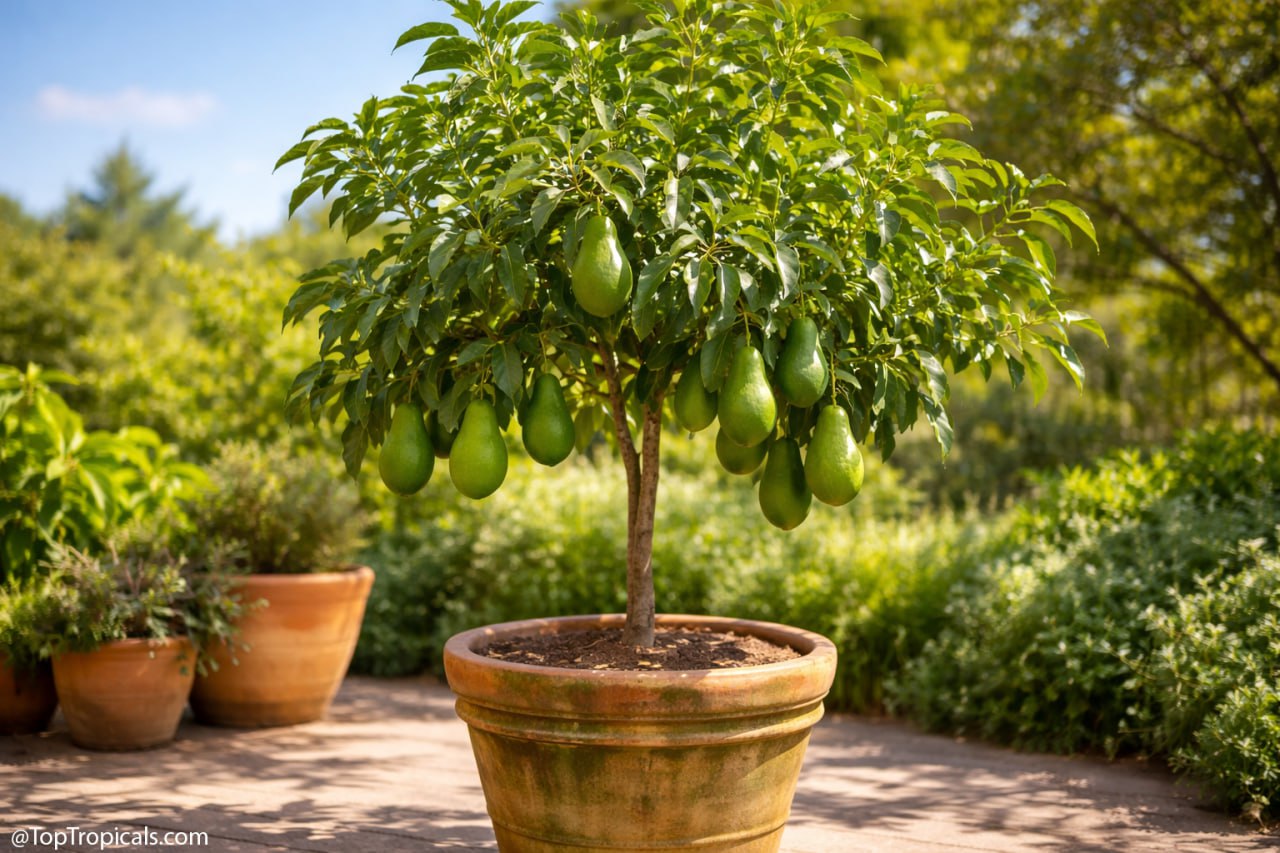
Avocado tree fruiting
Yes, you can grow an Avocado tree on your patio - here is how to do it right
- If you would love to grow your own avocado but don’t have a big yard, good news - avocado trees can grow very well in containers. Compact or dwarf varieties, often called condo avocados, are especially suited for pots, patios, balconies, and even indoor growing near a sunny window.
Pick a compact avocado variety
Choosing the right variety is the most important step. Standard avocado trees grow very large, but condo or compact varieties stay much smaller and adapt well to containers.
Good choices for pots include:
· Wurtz (Little Cado) - a true dwarf, perfect for containers
- · Fuerte - a semi-dwarf that stays manageable with pruning
- · Joey - naturally compact and easy to keep smaller
Choose the right pot
Start with a pot about 12 inches wide (around 5 gallons). This size is easier to water correctly and helps prevent root rot. Avoid planting a small tree into a very large pot too soon.
As the tree grows, move up gradually. A mature potted avocado will need an 18- to 24-inch container. Repot every couple of years when roots show through drainage holes.
Always use a pot with excellent drainage.
Use well-draining soil
Avocados love water but hate wet feet. Use a loose, fast-draining mix, such as Abundance Professional Soilless Mix. You can improve drainage by adding perlite or coarse sand. Avoid heavy garden soil.
Water deeply, but not too often.
Water thoroughly, then let the soil dry before watering again. Always check moisture first. In summer, watering may be needed once or twice a week; in cooler weather, much less.
Overwatering is the fastest way to kill a potted avocado.
Give plenty of sun
Avocado trees need at least 6 to 8 hours of full sun daily. Outdoors is best, but indoors place the tree near a bright south- or west-facing window. Grow lights can help if light is limited.
Fertilize and prune
Feed during the growing season with a balanced fertilizer such as Green Magic (every 6 months) or liquid Sunshine Boosters (safe to use with every watering, year-around). Prune lightly to keep the tree compact and well-shaped.
Protect from cold
Most Avocados are sensitive to hard freeze. When temperatures drop below 35F, move the pot indoors or into a protected space. Reduce watering in winter as growth slows.
Cold hardy varieties can take cooler temperatures down to 18F once established. For example, Joey is both cold hardy and dwarf - perfect choice.
Final thoughts
Growing an avocado tree in a pot is practical and rewarding. With good drainage, sun, careful watering, and the right variety, you can enjoy homegrown avocados even without a yard.
Small space? No problem. Just think condo avocado. According to Southern Living, Lemons can be grown in pots - and so can Avocados!
✔️ Check outAvocado Variety Guide interactive chart. Sort them by flower type A or B, tree habit, fruit shape and quality, cold hardiness, origin, season and more!
🛒 Explore Avocado varieties and Dwarf Avocado
📖 Our Book: Avocado Variety Guide, Snack or Guacamole?
- ·
📚 Learn more:
- · Avocado Variety Guide
- · Posts about #Avocado
- · Avocado tree (Persea americana) in Plant Encyclopedia
- · How to grow tropical fruit outside the Tropics
- · What is so unique about Wurtz avocado?
- · How to protect Avocado from cold and how hardy is it?
- · Avocado that laughs at frost: Mexicola Grande for cooler climates
- · Cold hardy Avocado Joey - you eat it with the skin
- · Cold-hardy avocados: how cold-hardy are they?
🎥 What is a Dwarf Condo Avocado that fruits at 3 ft tall? 📱
#Food_Forest #Avocado
🟢 Join 👉 TopTropicals
Date: 9 Mar 2026
Golden canistel cream: quick-n-fun exotic recipes
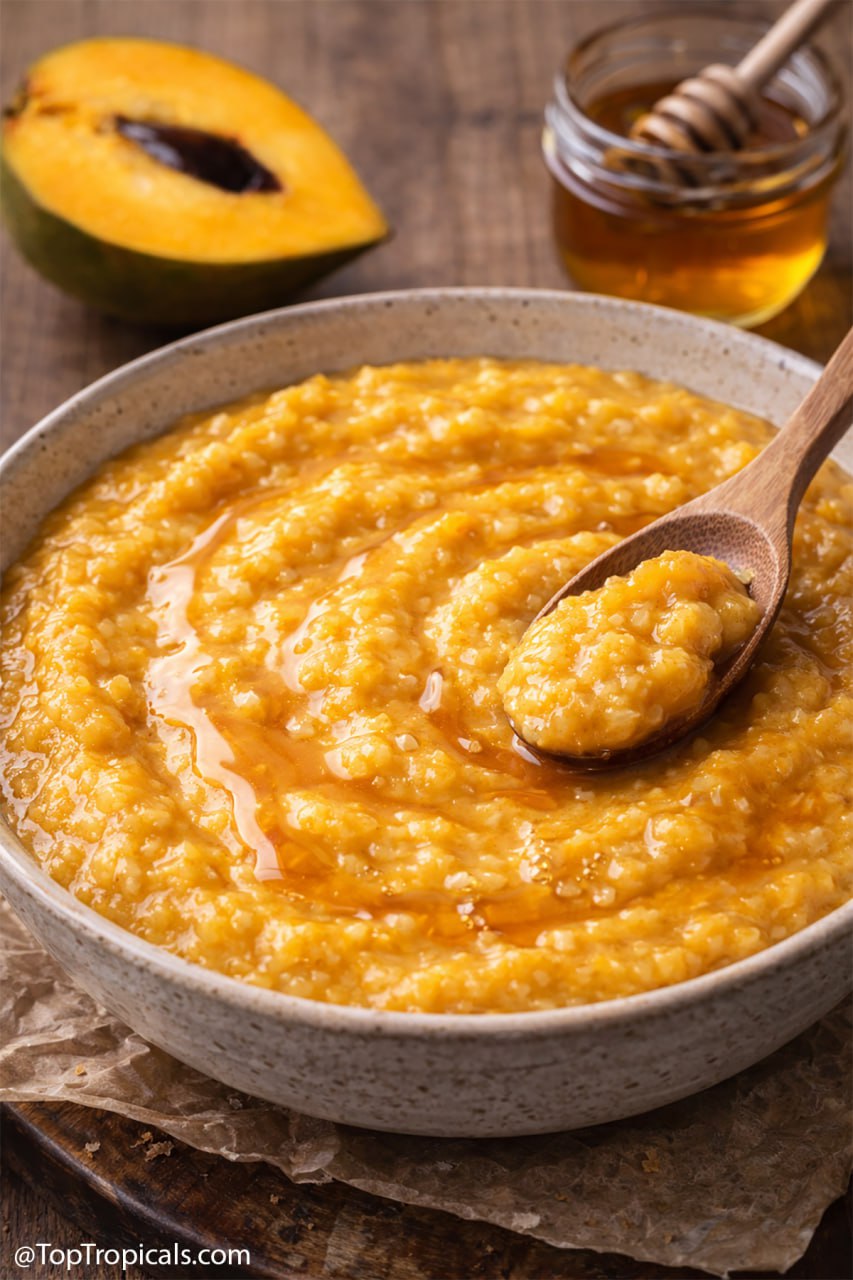
Golden canistel cream
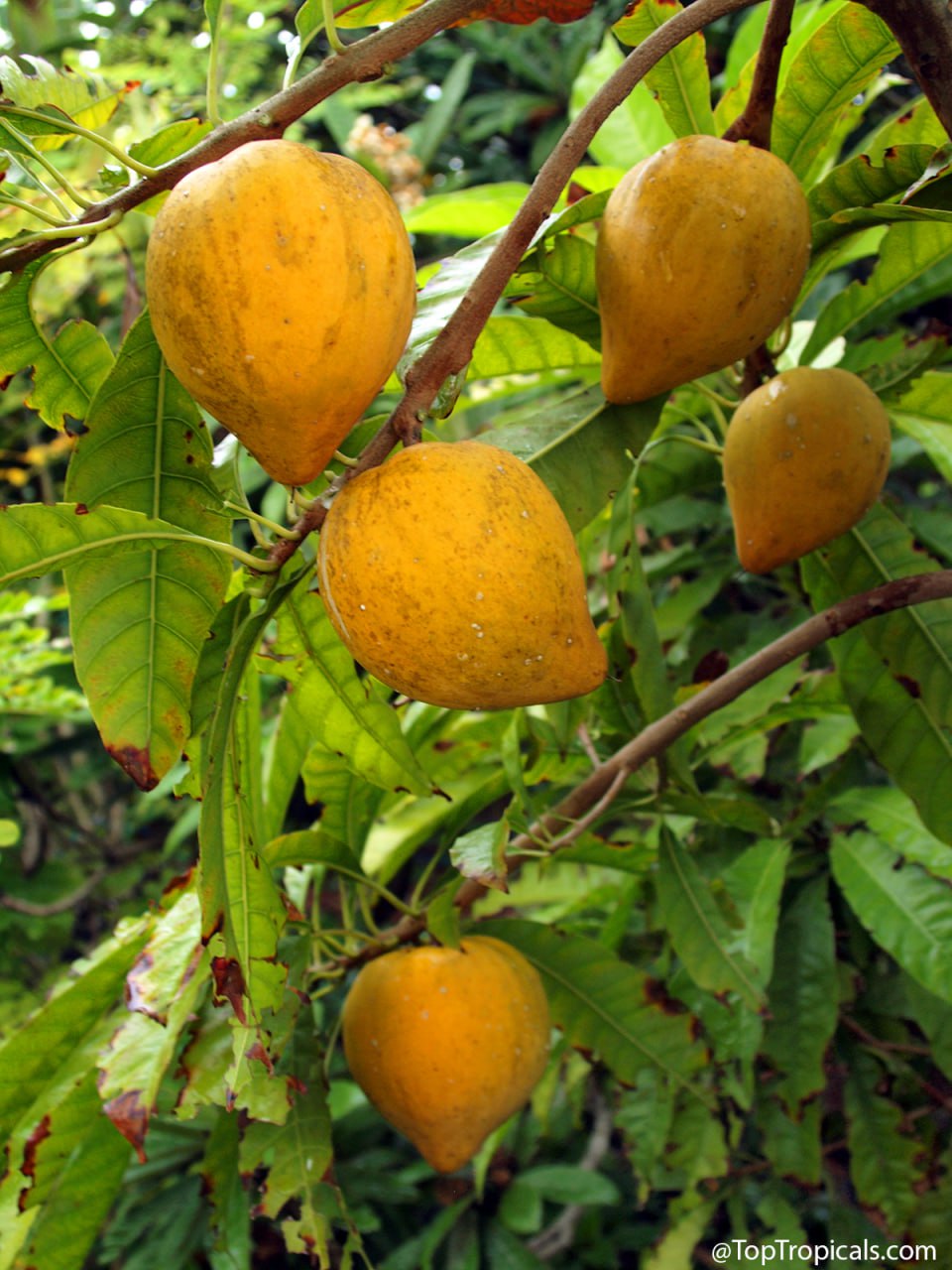
Pouteria campechiana - Canistel, Eggfruit
🍴 Golden canistel cream: quick-n-fun exotic recipes
Golden Canistel Cream
Ingredients
- 1 ripe canistel (eggfruit)
- 2 to 3 tbsp milk
- 1 to 2 tsp honey
Instructions
- Scoop the ripe canistel flesh into a bowl.
- Add milk and honey.
- Mash until smooth and creamy.
- Warm gently in a small pan if desired.
- Serve warm like a thick tropical porridge.
🌿 About the plant:
Also called Eggfruit, canistel has bright yellow flesh that is dense and slightly dry when ripe.
🏡 In the garden:
Grows well in warm climates with good drainage. Compact growth makes it suitable for small yards.
🛒 Plant Canistel Egg Fruit tree - grows well in container too
📚 Learn more:
- Pouteria campechiana - Canistel, Eggfruit - in Plant Encyclopedia
- This old-school tropical fruit is making a quiet comeback: Eggfruit - Canistel
- Canistel breakfast mash: quick-n-fun exotic recipes
- Health Benefits of Canistel Fruit
- Pouteria campechiana - Canistel, the curious heart-shaped Egg Super-Fruit
#Food_Forest #Recipes
🟢 Join 👉 TopTropicals