Garden Blog - Top Tropicals

Date: 22 Oct 2025

💞 Cassia or Bauhinia?
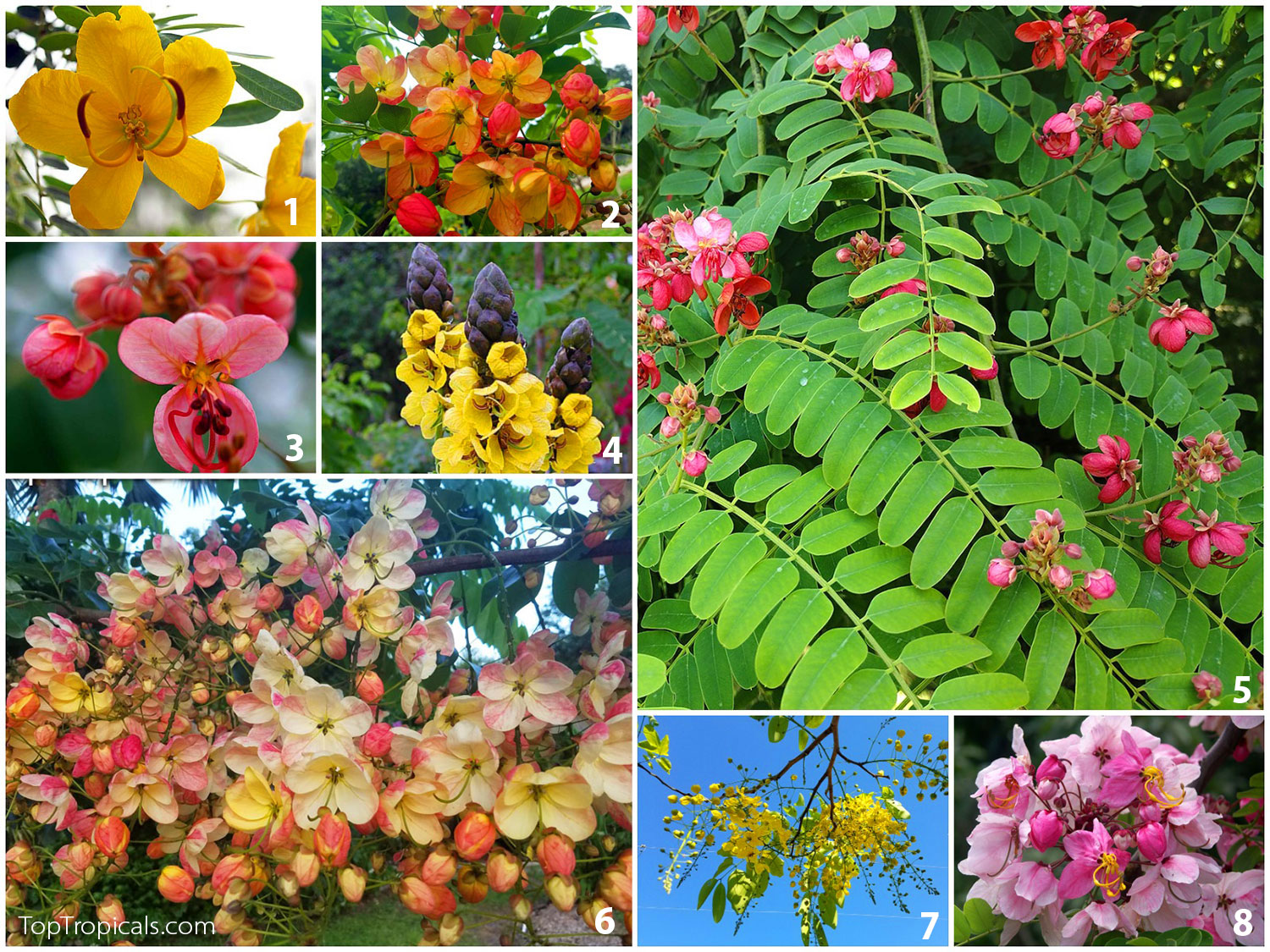
Collage  of  Cassia  and  Senna  flowering  trees:
1  –  Cassia  bicapsularis  (Butterfly  Bush),
2  –  Cassia  x  natalensis  (Rainbow  Cassia),
3  –  Cassia  grandis  (Red  Cassia),
4  –  Cassia  didymobotrya  (Popcorn  Cassia),  similar  to  Senna  alata 
 (Empress  Candles),
5  –  Cassia  javanica  (Apple  Blossom  Tree),
6  –  Cassia  roxburghii  (Ceylon  Senna),
7  –  Cassia  fistula  (Golden  Shower  Tree),
8  –  Cassia  x  nodosa  (Pink  Shower).

Looking for a small tree that blooms like fireworks but still fits on your patio? We hear this question all the time at Top Tropicals: Cassia or Bauhinia? Both are tropical showstoppers, but they shine in very different ways.

🌞 Cassias: Sunshine Fireworks

Cassia trees are some of the most rewarding tropical bloomers you can grow. Fast-growing, free-flowering, and surprisingly cold-tolerant, they thrive in full sun and summer heat. Their bright clusters come in shades of yellow, orange, pink, red, and even multicolor blends. The famous Rainbow Cassias show swirls of coral, gold, and rose on the same tree, creating a living fireworks display.

For gardeners in warm regions, these trees become spectacular focal points in the landscape. In containers, compact yellow forms like Cassia didymobotrya (Popcorn Cassia) and Senna alata (Empress Candles) stay manageable and bloom freely through summer.

Cassias can also be grown in pots with pruning and patience. Once mature, they reward you with breathtaking color that turns any patio or pool deck into a tropical show. Most showy cassias (numbers correspond to the photos in the collage above):

  1. Cassia bicapsularis (Butterfly Bush) - is a fast-growing, low-maintenance shrub covered in bright yellow, butterfly-like blooms from fall through winter.
  2. Cassia x natalensis (Rainbow Cassia)
  3. Cassia grandis (Red cassia) - a medium size tree having profuse blooms of dark pink to crimson flowers throughout the Spring.
  4. Cassia didymobotrya (Popcorn Cassia), small tree producing golden-yellow flowers with a distinct scent of peanut butter that open from brown buds in late summer and autumn. Similar to Senna alata (Empress Candles)
  5. Cassia roxburghii (Ceylon Senna) - graceful tree with spreading, drooping branches appearing to be overweighed by its wealth of clustering red blossoms.
  6. Cassia x nodosa (Pink Shower) - is a spectacular medium-sized, fast-growing tree with cascading clusters of fragrant pink-and-white appleblossom blooms in spring and summer.
  7. Cassia fistula (Golden Shower) - to many tropical gardeners, the most beautiful of cassias with masses of bright gold flower clusters appear on almost every branch.
  8. Cassia javanica (Apple Blossom) - dazzles with dense clusters of pink-to-white blossoms that change shades as they bloom, creating a spectacular display that lasts for months.
"Cassias love the heat and sunshine," says Tatiana Anderson, Top Tropicals Plant Expert. "They are perfect for anyone who wants big bursts of color and doesn’t mind giving them space and light to grow."

👉 Explore Cassia Trees

Bauhinia Magic: Orchid-Like Blooms in a Compact Size
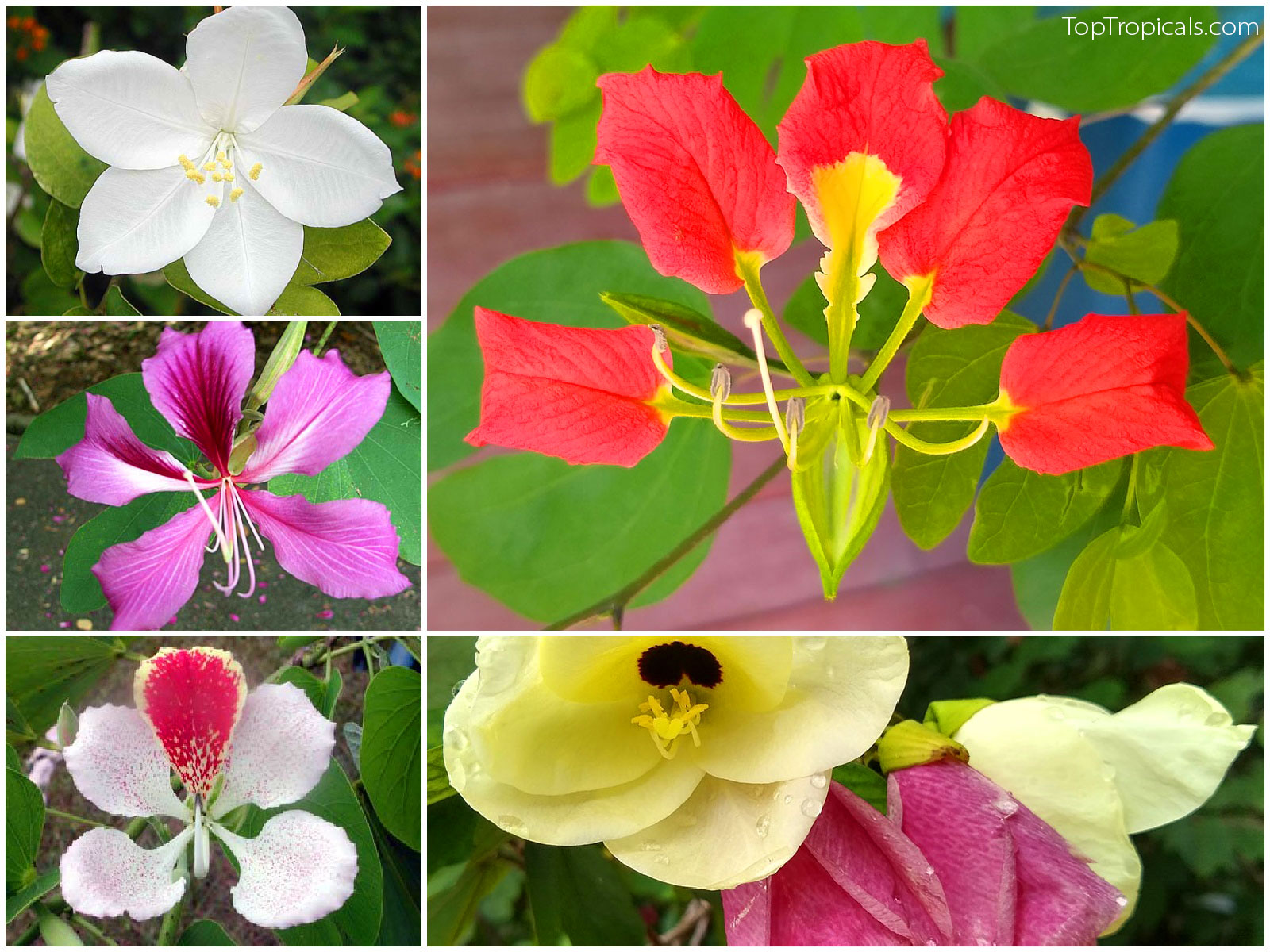
Collage  of  Bauhinia  orchid  trees:  top  left  –  Bauhinia  acuminata 
 (Dwarf  White  Orchid  Tree),  middle  left  –  Bauhinia  blakeana  (Hong  Kong 
 Orchid  Tree),  bottom  left  –  Bauhinia  monandra  (Napoleon’s  Plume 
 Orchid  Tree),  top  right  –  Bauhinia  madagascariensis  (Red  Dwarf  Orchid 
 Tree),  and  bottom  right  –  Bauhinia  tomentosa  (Yellow  Orchid 
 Tree)

Bauhinia orchid trees: top left – Bauhinia acuminata (Dwarf White Orchid Tree), middle left – Bauhinia blakeana (Hong Kong Orchid Tree), bottom left – Bauhinia monandra (Napoleon’s Plume Orchid Tree), top right – Bauhinia madagascariensis (Red Dwarf Orchid Tree), and bottom right – Bauhinia tomentosa (Yellow Orchid Tree)

Bauhinia trees known as Orchid Trees, bring a touch of tropical luxury to any space. Their butterfly-shaped leaves and orchid-like blossoms appear in shades of red, pink, purple, white, and yellow, often lasting up to ten months a year. Bauhinias are ideal for gardeners who want nonstop color in a manageable size. Most species grow well in large pots and bloom young, often within the first season.

The following compact varieties stay neat and flower almost continuously in warm weather:

The Hong Kong Orchid Tree is especially prized because it is sterile and produces no messy seed pods, keeping patios clean. Grafted Buhinia blakeana trees begin blooming while still small, making them perfect for containers or tight spaces.

"Bauhinias are generous bloomers," Tatiana explains. "They respond beautifully to regular feeding and full sun. If nights turn too cold, just move the pot to a sunny porch - they’ll keep their tropical charm most of the year."

Give them full sun, regular fertilizer, and a well-drained mix such as Sunshine Abundance, and they will reward you with months of vivid blooms. When nights turn too cold, simply move the pot to a sunny porch or bright window. Bauhinias adjust beautifully and keep their tropical grace year after year.

🎥 Watch Short Videos:

💲 Special Offer – 20% off Cassias and Bauhinias!

Get 20% OFF Cassias and Bauhinias with code

RAINBOW2025

Min order $100. Excluding S/H, valid online only, cannot be combined with other offers.

Hurry, offer expires October 30, 2025!

👉 Explore Bauhinias - Orchid Trees

Date: 22 Apr 2026

April 22 - Earth Day!

Cats Smokey and Sunshine at April 22 - Earth Day

Cats Smokey and Sunshine at April 22 - Earth Day

April 22 - Earth Day! 🌎

This is a simple reminder that every step counts!
You can go all in and plant a real tree, work the soil, and grow something that will last for years.
Or you can start small, with a single plant and a simple moment that gets you outside and thinking differently about your space.
Both matter.
The difference is not in the intention, but in what happens next.
A small start is fine - as long as it turns into something real.

Sunshine: It’s Earth Day - this counts as planting, right?
Smokey: I’m sure the Earth appreciates the thought.

📚 Learn more:


About Smokey and Sunshine

🛒 Shop tropical flowers and plants

#PeopleCats

🟢 Join 👉 TopTropicals

Date: 19 Apr 2026

Complete Adenium Care Guide: 9 tips how to keep it simple and thriving

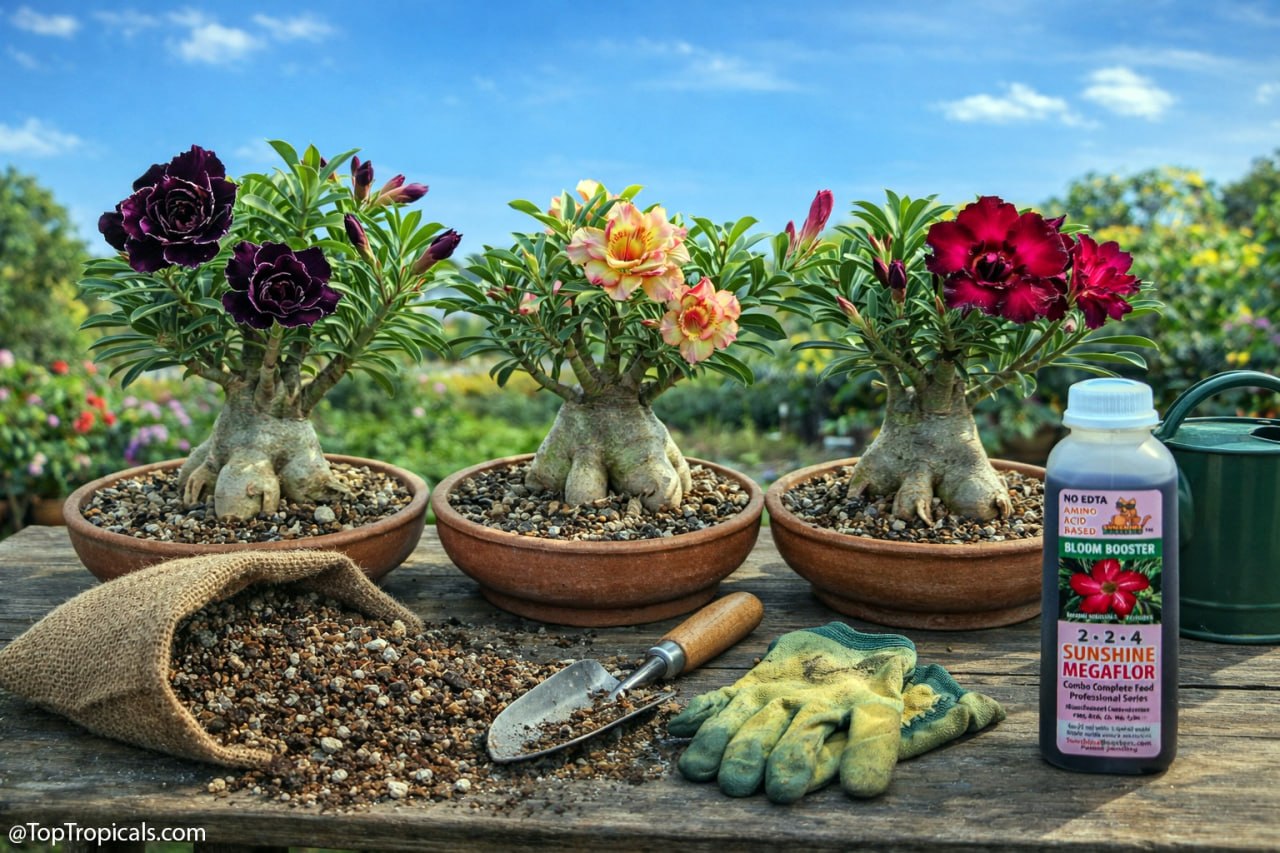
Asdenium plants on the table with adenium soil mix and fertilizer

Asdenium plants on the table with adenium soil mix and fertilizer

🌸 Complete Adenium Care Guide: 9 tips how to keep it simple and thriving


Adeniums don’t need intense care - just the right balance.
Most problems come from too much water, not enough light, or the wrong soil.
  • 🌸 1. Soil is everything


    Why it matters
    Adeniums are succulents with thick roots and a caudex that stores water. They must never sit in wet, heavy soil.
    Most problems come from soil that stays wet too long - leading to root rot, soft caudex, weak growth, and poor flowering.
    Good soil builds strong roots, dries faster, supports a healthy caudex, and improves blooming.

    Ideal soil formula
    Use a very fast-draining, airy mix with perlite, bark, sand, coconut fiber. Avoid heavy peat-based mixes.
    A simple formula: TopTropicals Abundance potting mix + coarse sand (50/50). Use coarse sand (for construction), not fine beach sand. Sand improves drainage, structure, and aeration.
    You can also add lava rock and charcoal.

    Soil pH
    Adeniums prefer slightly alkaline soil. Too much peat (acidic) holds moisture and increases rot risk.
    Tip: add a few sea shells on top - watering slowly raises pH.

    Golden rule
    Better too fast-draining than too heavy.
    You can water more. You can’t fix rot.
  • 🌸 2. Containers


    Use shallow, unglazed clay pots. They dry faster, improve airflow, and stabilize the plant as the caudex gets heavy.
    Do not oversize - keep close to root ball.
    When repotting, raise the caudex slightly each time to develop that thick base.
  • 🌸 3. Light


    Give as much light as possible.
    Full sun is best, but in very hot climates, bright filtered light prevents leaf burn and helps flowers last longer.
    Too little light = weak growth and poor blooming.
  • 🌸 4. Watering


    Water deeply, then let soil dry out completely before watering again.
    Do not keep soil constantly wet. Adeniums prefer the dry side and hate sitting in moisture.
    In rainy climates, protect from excess water. Keep under cover - bright light, no constant soaking.
  • 🌸 5. Fertilizer


    Feed lightly and regularly during active growth.
    Use liquid fertilizer Sunshine Megafloк Bloom Booster on soil and lightly on leaves - avoid the caudex.
    Bloom boosters (high phosphorus) support flowers and caudex growth.
    Add controlled-release fertilizer (Green Magic) twice a year - spring and late summer. Do not fertilize during winter dormancy.
    Add microelements (iron, boron, molybdenum) - Sunshine Superfood supplement - for healthier leaves and longer blooms.
  • 🌸 6. Trimming (pruning)


    Trim after flowering, especially leggy branches.
    Pruning encourages branching - more branches = more flowers.
    Don’t be afraid to cut - it improves structure and blooming.
  • 🌸 7. Caudex development (secret trick)


    When repotting, raise the caudex slightly above soil level.
    Combined with regular feeding (bloom booster), this helps develop a thicker, more pronounced base.
  • 🌸 8. Seedlings vs grafted plants


    Seed-grown plants form a natural caudex but take 2-3 years to bloom and do not come true to type (often simple pink).
    Grafted plants combine a developed caudex with a known variety.
    Best choice for predictable, high-quality blooms.
  • 🌸 9. Troubleshooting


    If something goes wrong, check these first:

· Too much water
  • · Not enough light
  • · Soil too heavy
Fix these, and your plant will recover.

🛒 Explore Exotic Thai Adeniums

📚 Learn more:

Plant Facts

Adenium sp.
Adenium, Desert Rose, Impala Lily
USDA Zone: 9-11
Plant with caudexLarge shrub 5-10 ft tallSmall tree 10-20 ftFull sunDry conditionsModerate waterYellow, orange flowersRed, crimson, vinous flowersUnusual colorBlue, lavender, purple flowersWhite, off-white flowersPink flowersToxic or Poisonous

#Container_Garden #Adeniums #How_to #Discover

🟢 Join 👉 TopTropicals

Date: 4 May 2026

🍲 Where the Garden Becomes the Kitchen

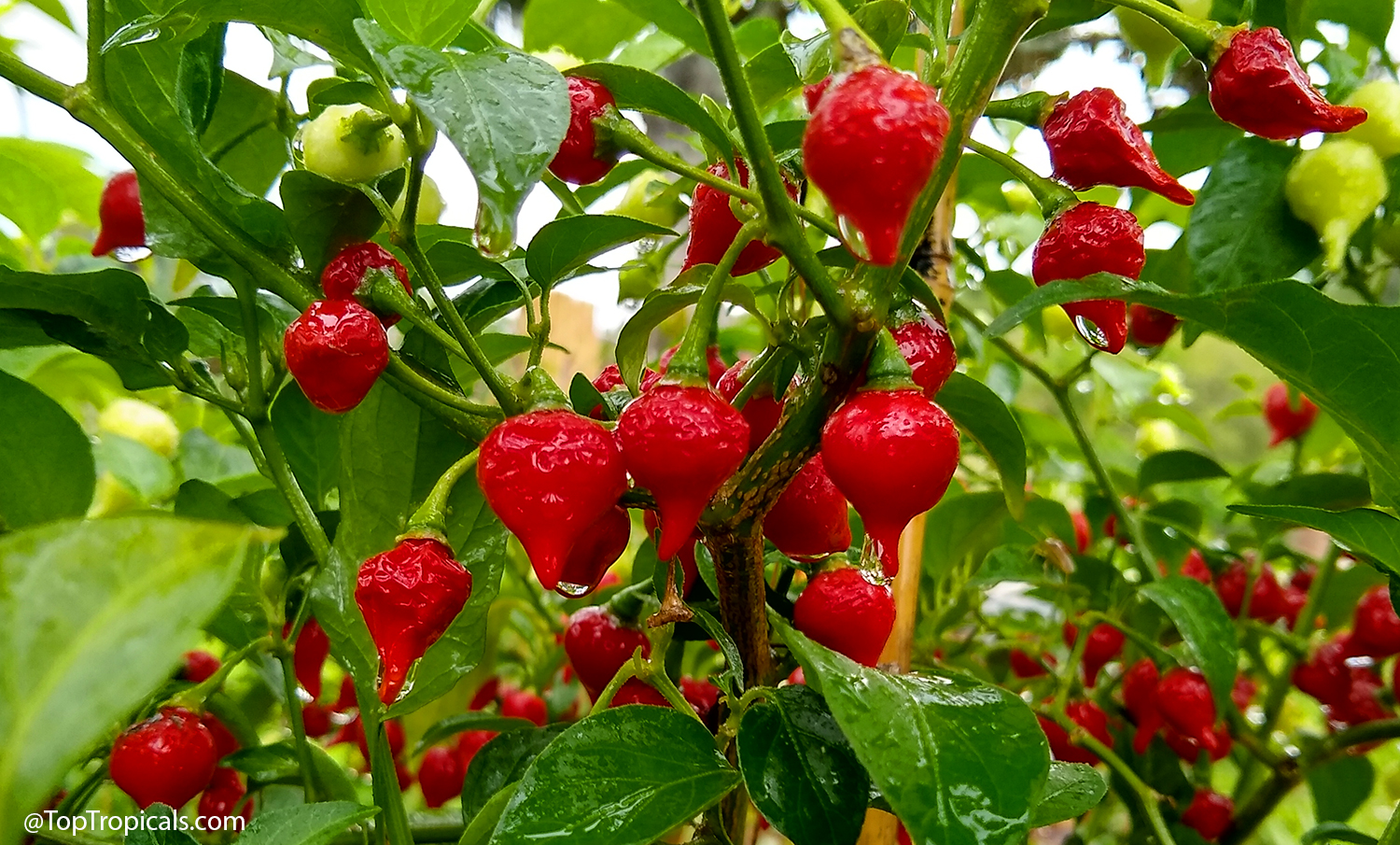
Close-up  of  Capsicum  annuum  x  chinense  Biquinho  pepper  plant  with 
 clusters  of  small,  bright  red,  teardrop-shaped  fruits  hanging  among  glossy 
 green  leaves,  some  still  green,  with  water  droplets  visible  after  rain.

Biquinho pepper loaded with fruit - small, beak-shaped peppers ripen from green to bright red, offering intense fruity habanero flavor with little to no heat on a compact, heavy-producing plant.

A lot of plants that thrive in Florida heat have deep roots in Mexico, and not just as ornamentals. Think coral vine or flame vine climbing a fence in summer, or bird of paradise sitting at the edge of a patio like it owns the place. These are not plants that need coaxing. They grow fast, full, and unapologetically. Then there are the plants you actually eat: peppers, prickly pear , sweetleaf, and fruit trees like avocado, guava, and sapodilla. They do not just decorate the yard. They change how the yard works, and how the kitchen feels all year.

That is the part that sneaks up on you. Gardening stops being about having a pretty yard and starts becoming a way of living. Mango tacos taste different when you picked the mango yourself. Everything does.

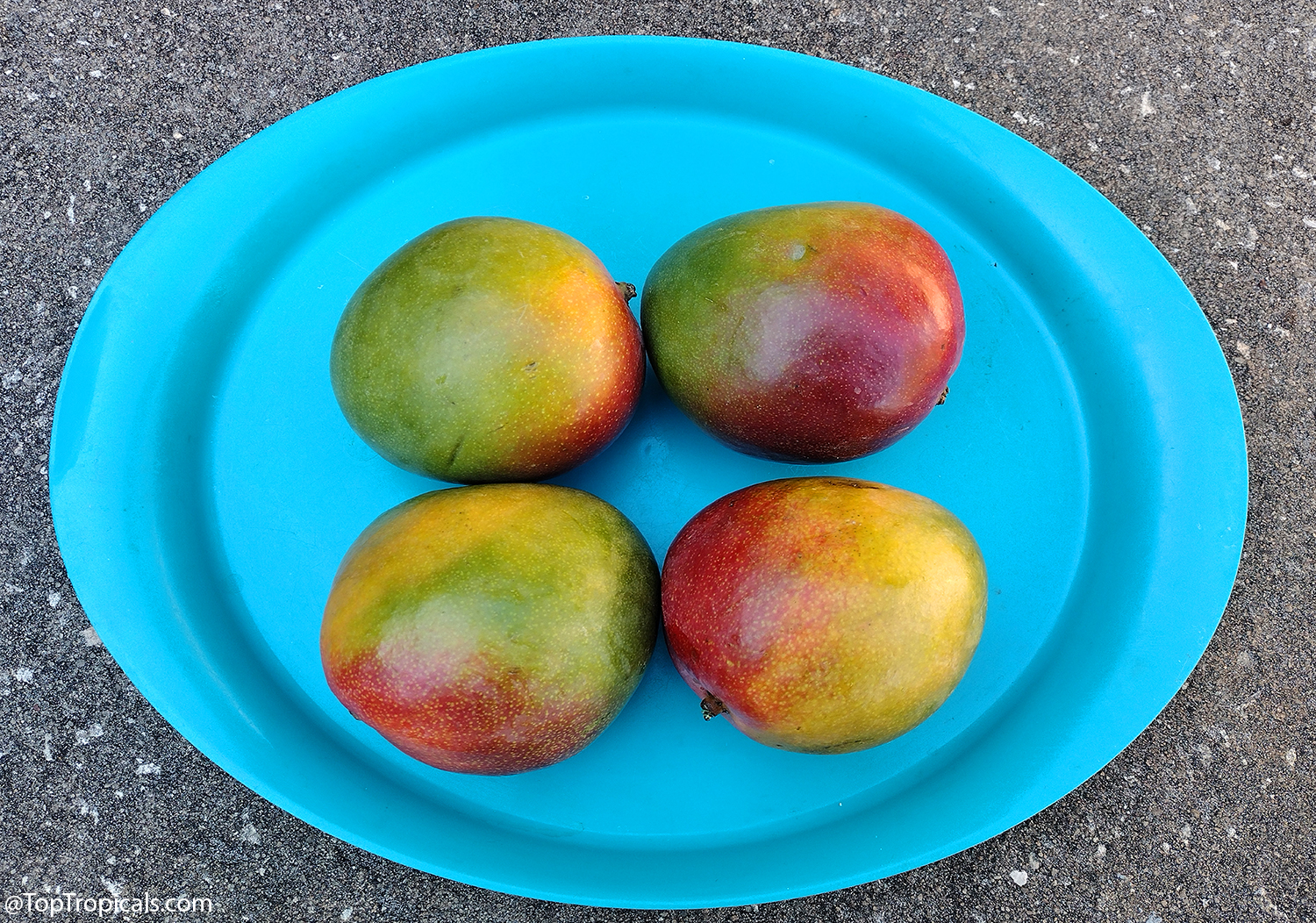
Four  Kent  mangoes  with  red,  green,  and  yellow  blush  arranged  on  a 
 plate.

Kent mango - classic late-season variety with smooth, fiberless flesh and rich, sweet flavor.

🍀Mexican Plants That Thrive With Minimal Effort

by Tatiana Anderson, Top Tropicals Garden Expert

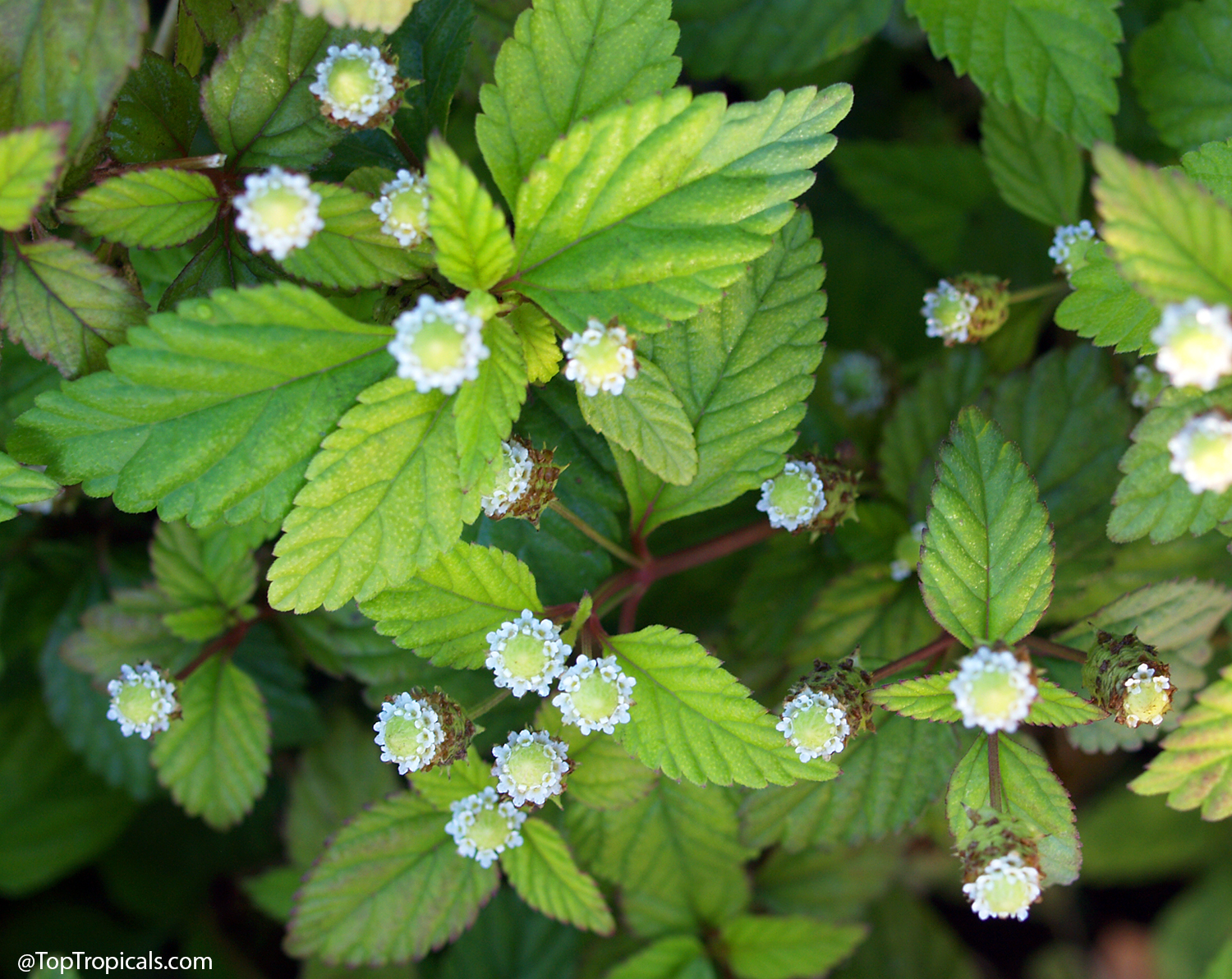
Close-up  of  Lippia  dulcis  (Aztec  Sweet  Herb)  showing  small  white 
 button-like  flowers  with  pale  green  centers  surrounded  by  serrated  bright 
 green  leaves  on  a  low-growing  plant.

Lippia dulcis - Aztec Sweet Herb in bloom - a low-growing Mexican herb with tiny white flowers and remarkably sweet leaves that can be eaten fresh or added to fruit dishes, traditionally used since Aztec times for coughs and colds.

These Mexican plants are surprisingly easy to grow if you give them what they expect: sun, heat, and good drainage. Most of them are built for tough conditions and will grow fast with minimal care once established.

The one rule that matters: fill the planting hole with water. If it does not drain in 5-10 seconds, plant on a mound or use a container.

Flowering vines will take off quickly, edibles like peppers and sweetleaf lippia are very forgiving, and cactus types prefer to be left alone rather than overwatered.

For full, step-by-step growing tips and plant-specific advice, read our blog - we break everything down in practical, real-world terms.

📚 Top Tropicals Garden Blog

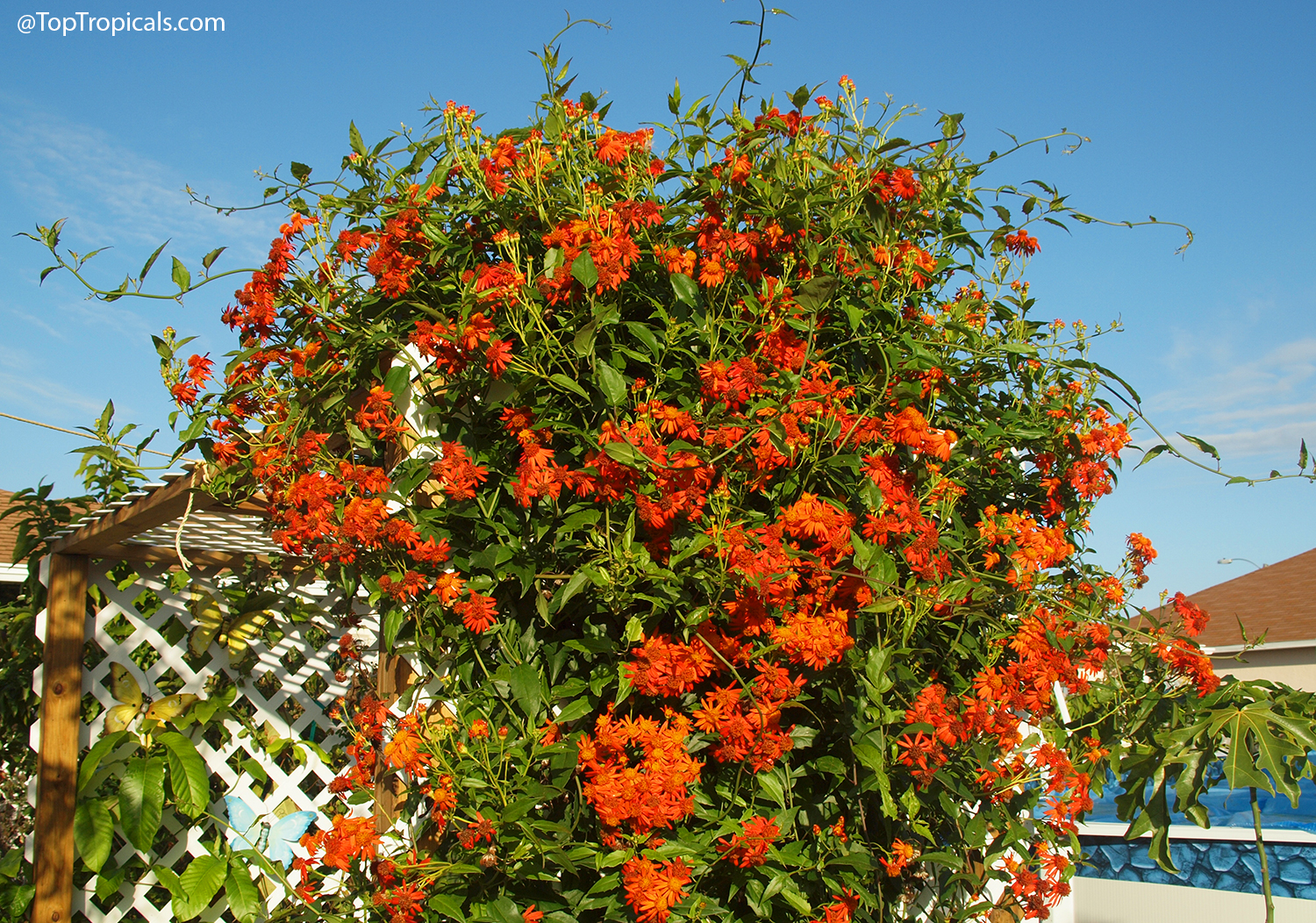
Large,  dense  Senecio  confusus  (Mexican  Flame  Vine)  covered  in  clusters 
 of  bright  red-orange  daisy-like  flowers  climbing  over  a  trellis  against  a 
 blue  sky.

Mexican Flame Vine in full bloom - a fast-growing, drought-tolerant climber that quickly covers fences with vivid red flowers, attracting pollinators and adding bold color with minimal care.

🛒 Shop heat tolerant plants

🌮 Sunshine’s Mango Taco 😺

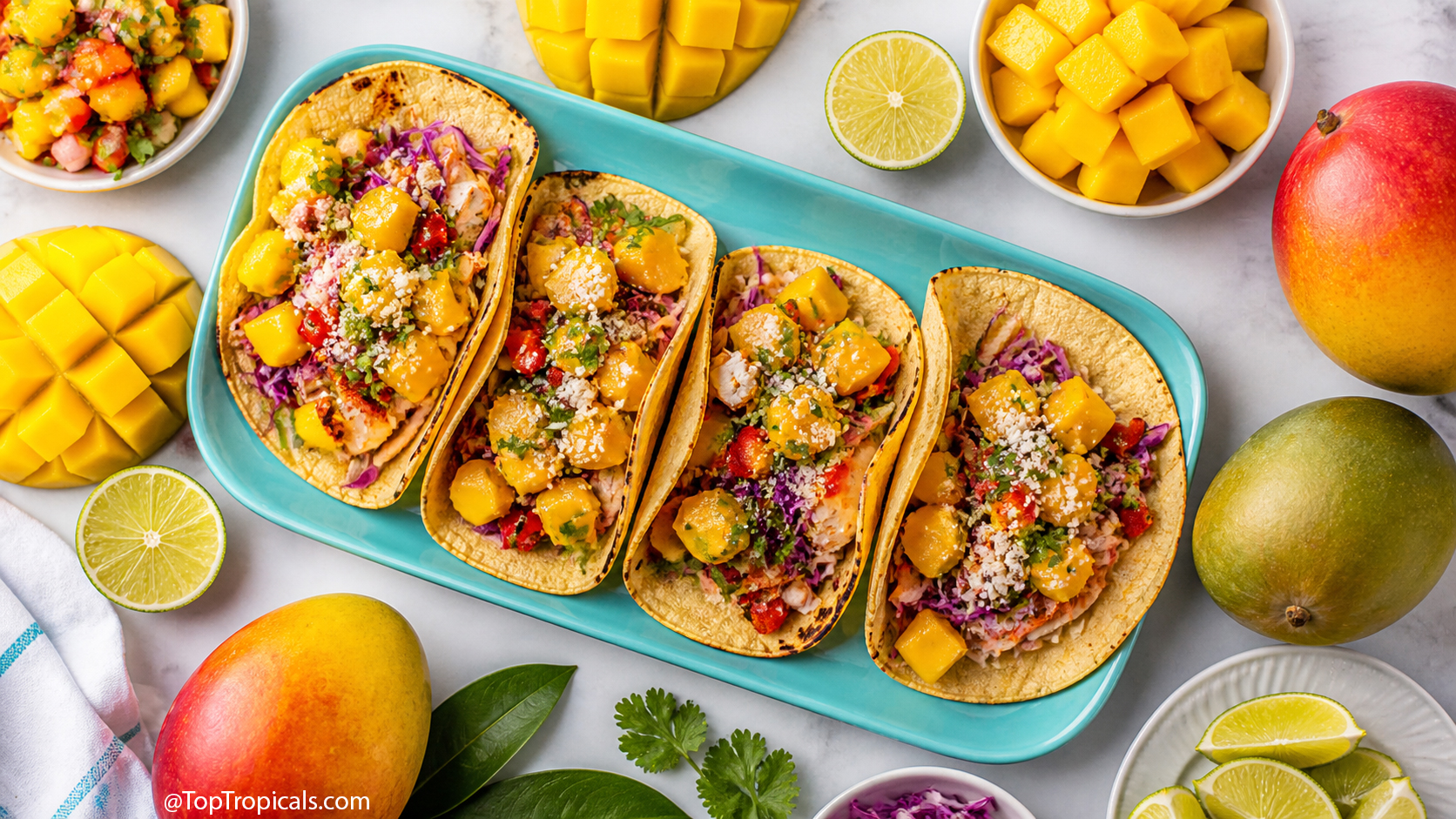
Fresh  mango  tacos  loaded  with  juicy  chunks  and  bright  toppings, 
 surrounded  by  whole  and  sliced  mangoes  for  that  tropical  feel.

Mango Tacos

This is not cooking. This is assembly.

What you need

  • Tortillas
  • 1 ripe mango (diced)
  • Something warm (sweet potato, chicken, or leftovers)
  • A little onion (optional)
  • Lime (or bottled lime juice)
  • Sour cream or yogurt
  • Salt and pepper

How Sunshine does it

  1. Heat whatever you have in a pan
  2. Put mango in a bowl, add lime and a pinch of salt
  3. Mix sour cream with lime (this is your sauce)
  4. Put everything into a tortilla
  5. Enjoy with a margarita

Sunshine's rules

  • No measuring
  • No recipes
  • If it tastes good, it is correct

Want this to be normal?
Start with a mango tree. That is usually how it begins.

🛒 Plant your own mango tree

💌 Mother's Day is one week away

Still deciding? A gift card is the easiest option. With our bonus, it is also the best value.

Mother’s  Day  themed  Top  Tropicals  gift  certificate  with  a  pink 
 decorative  frame  filled  with  jasmine,  plumeria,  magnolia,  and  champaka 
 flowers,  tropical  fruits  across  the  center,  and  a  Happy  Mothers  Day  banner 
 at  the  top,  with  space  for  certificate  details  and  message.

Mother’s Day Top Tropicals gift certificate

🎁 Get a Gift Card

Date: 23 Jan 2025

Discover 10 best fruit trees to grow
in Florida and Southern landscapes

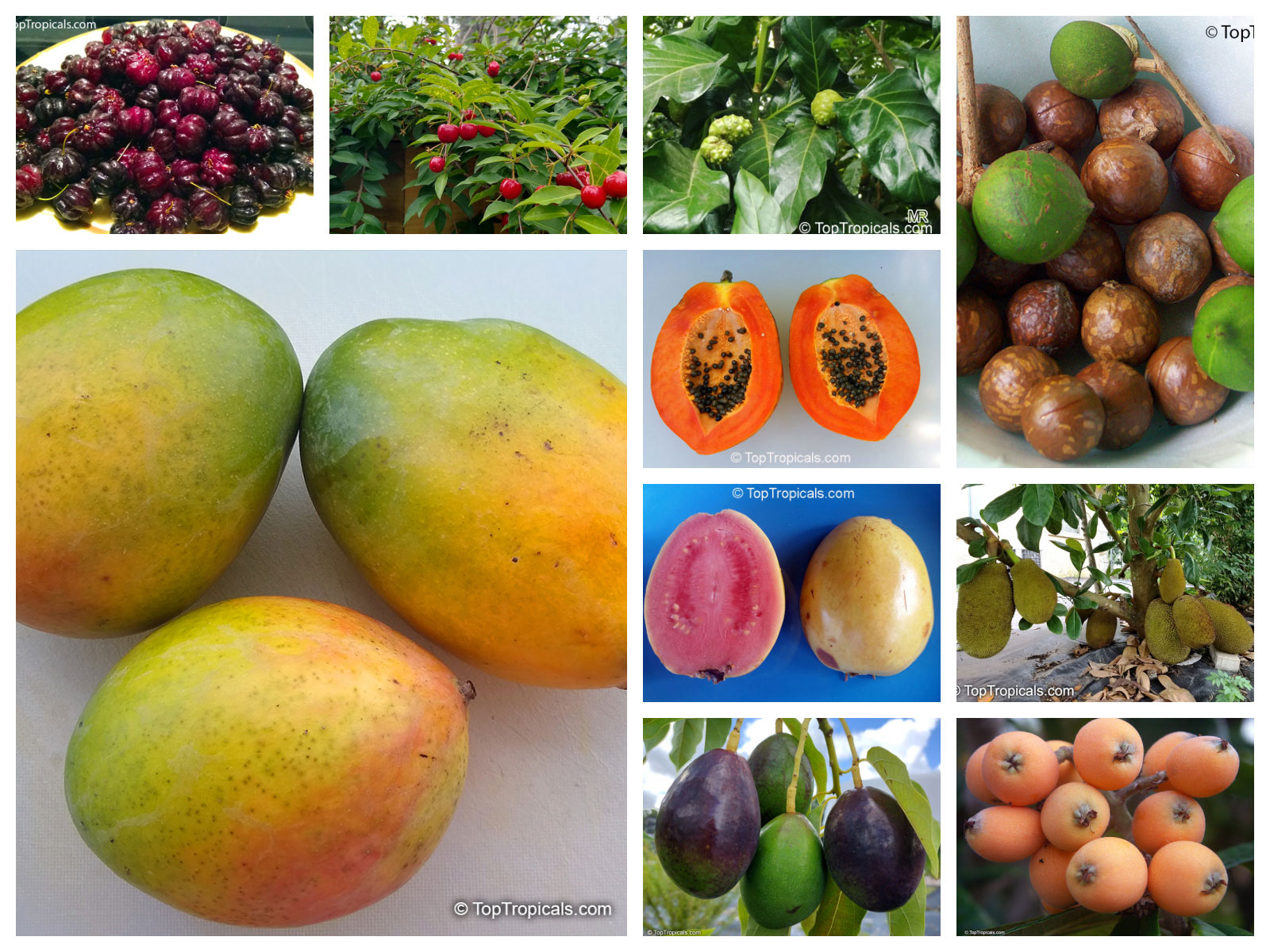
10  best  fruit  trees  to  grow  in  Florida,  collage

Q: We recently moved into our new home in Florida, and the property is a great size - 5 acres - but it currently has no trees, just a few palms. I'm looking to plant some productive fruit trees to start building our own Food Forest. What fruit trees would you recommend as a good starting point?

A: With five acres of space, you have a fantastic opportunity to create a fruitful garden that can provide for your family for many years to come. Below are our top recommendations for must-have, easy-to-grow fruit trees that thrive in Florida's climate, grow quickly, and start producing right away.

1. Mango Tree

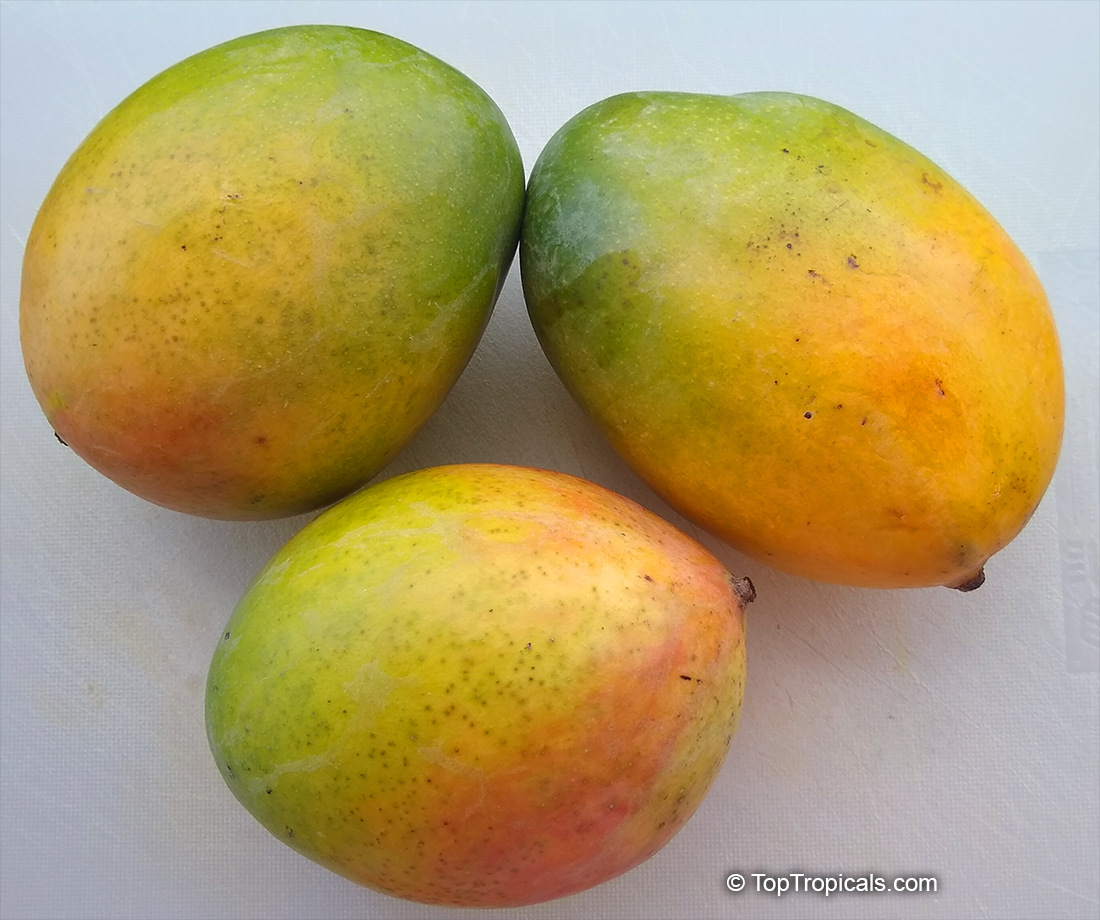
Mango  fruit

Mango trees (Mangifera indica) are a must-have for any Florida garden, embodying the essence of the Sunshine State with their delicious and nutritious fruit packed with vitamins and fiber. These fast-growing, low-maintenance trees thrive with minimal water and are heat-tolerant. Grafted varieties produce high-quality, fiberless fruit in just 2-3 years, while dwarf "condo" mangoes are perfect for smaller spaces or containers. While young trees need frost protection, mature trees handle cold better. Grafted mangoes offer rich taste that you won't find in commercially grown, fibrous varieties, ensuring a sweet and vibrant harvest from your own garden.

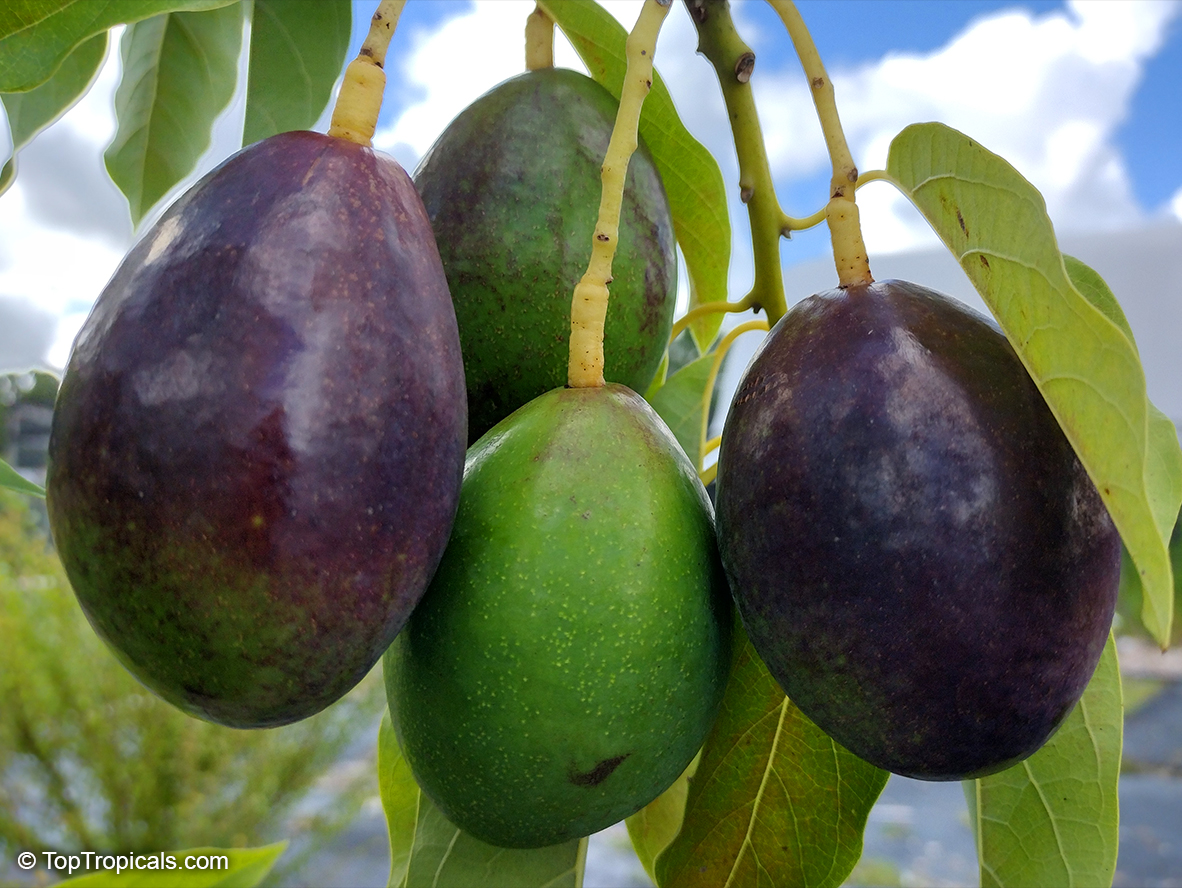
2. Avocado Tree

Avocado  fruit

The Avocado tree (Persea americana) is an essential addition to any tropical or subtropical garden. Known for its health benefits and superfood status, it's a favorite fruit that's not only productive but also a beautiful ornamental tree. Some avocado varieties are more cold-tolerant than mango trees, with the ability to survive temperatures below 25F. While many enjoy growing avocado from seed, only grafted trees guarantee quality fruit and immediate production, as seedlings can take 7-8 years to bear fruit. To successfully grow avocado, ensure good drainage by planting on a raised mound (4-6 inches) and keep the soil consistently moist. There are also compact varieties like Wurtz and Fuerte that thrive in containers or small spaces, making them ideal for patios and small gardens.

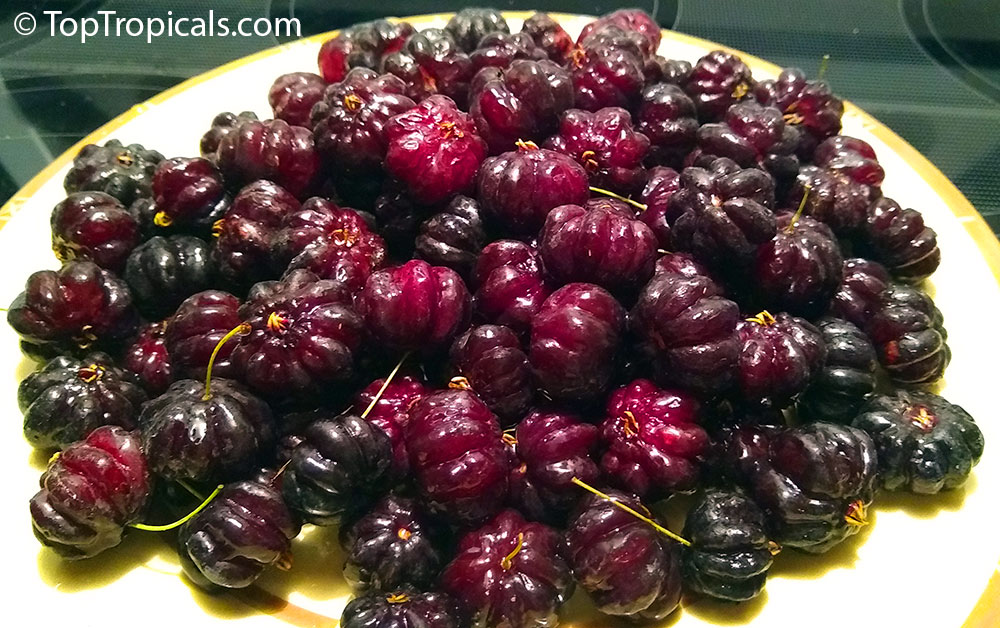
3. Tropical Cherries

Eugenia  Lolita  cherry  fruit

Tropical cherries, such as Cherry of the Rio Grande (Eugenia aggregata), Grumichama (Eugenia brazilensis), Pitomba (Eugenia luschnathiana), and Black Surinam Cherry (Eugenia uniflora var. Lolita), are popular and easy-to-grow fruit trees that offer fast growth and excellent fruit production. These compact, versatile trees thrive in both the ground and containers, starting to produce fruit almost immediately. Eugenias are low-maintenance, requiring minimal water, thriving in various soil types, and being pest-free. They are heat-tolerant and can endure cool winters, surviving light frosts. Birds love the fruit, but don't worry - there will always be plenty for everyone.

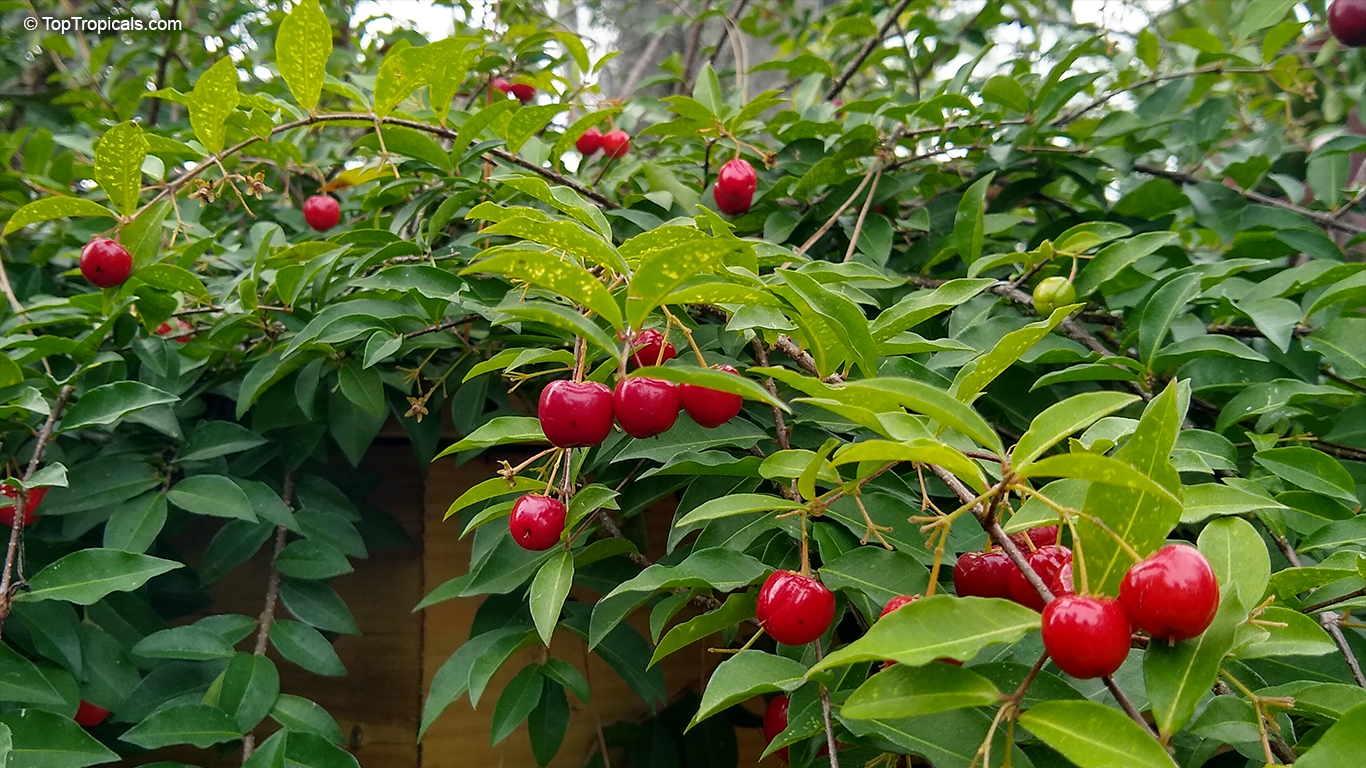
4. Barbados Cherry Tree

Malpighia  Barbados  cherry  fruit  on  a  branch

Barbados Cherry (Malpighia glabra), also known as Acerola, is a tropical cherry renowned for having the highest vitamin C content of any fruit. This nutrient-packed fruit is perfect for jellies, jams, and freezing without losing its vitamin C. The Barbados Cherry is a fast-growing, dense shrub that fruits multiple times a year, providing abundant harvests for gardeners seeking quick results. It thrives in alkaline soil, tolerates drought, and is relatively cold-hardy, withstanding light freezes. Birds love the fruit, making it a great addition to wildlife-friendly gardens. The dwarf variety, Nana, with its small leaves and fruit, is perfect for containers, borders, or even bonsai, adding ornamental value to any space.

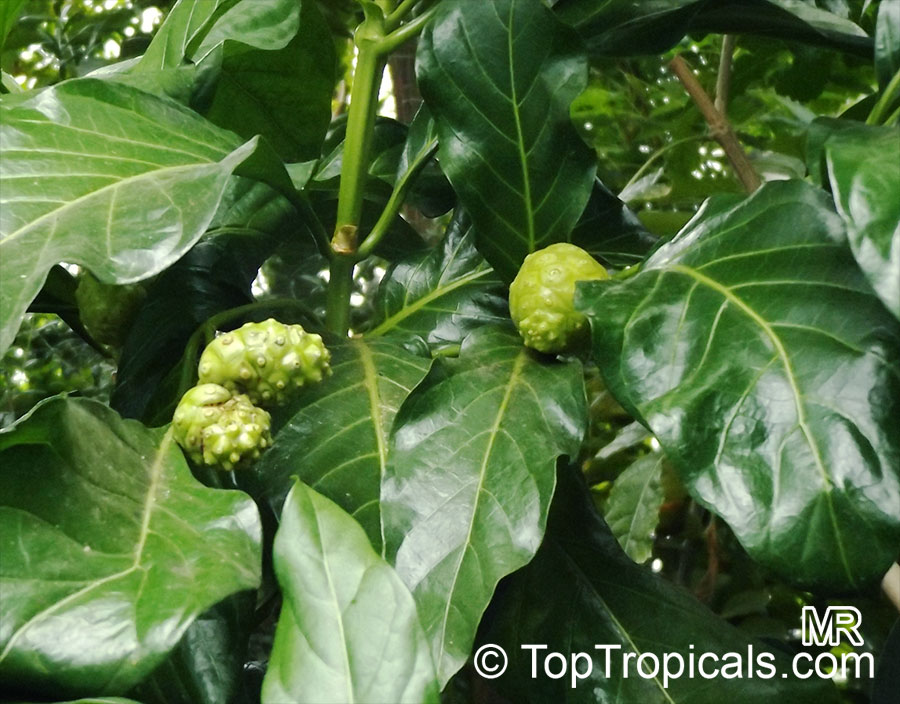
5. Noni Tree

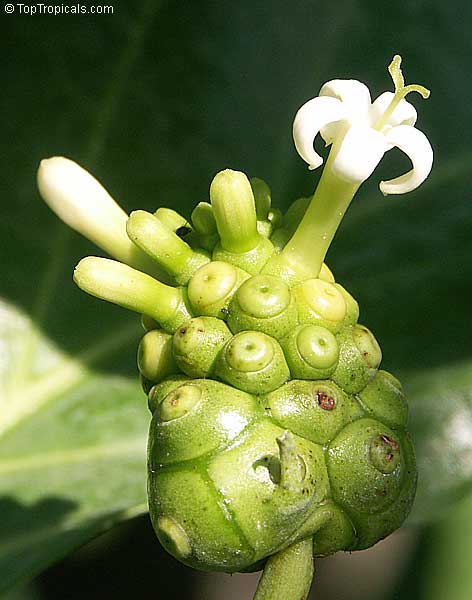
Morinda  Noni  fruit  on  a 
 branch

The Noni Tree (Morinda citrifolia) is a top superfood plant that makes a fantastic addition to any Southern garden. Known for its numerous medicinal benefits, Noni fruit offers anti-inflammatory properties, relief from arthritis, and support for conditions like diabetes, metabolism, and weight loss. It's even believed to help fight cancer. Noni trees grow quickly and begin producing fruit within 2 years from seed. This tough, resilient plant thrives in poor soil, endures summer heat, and withstands drought conditions. Despite its tropical appearance, Noni is surprisingly cold-hardy, recovering well after leaf damage in cooler weather. In addition to its health benefits, the Noni tree has ornamental value, with large, waxy leaves and unique fruit, where the flower appears to grow directly on the fruit!

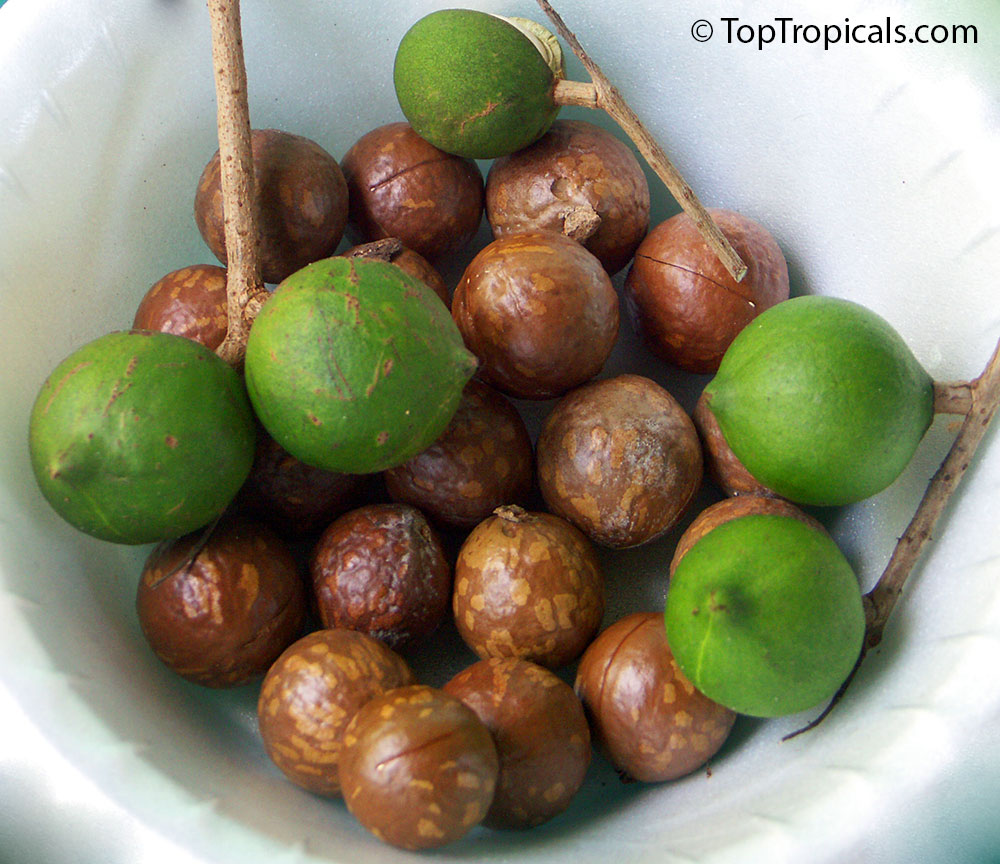
6. Macadamia Nut Tree

Macadamia  nuts  on  a  plate

The Macadamia Nut Tree (Macadamia integrifolia) is a fantastic addition to any garden, allowing you to grow these delicious, high price tag, nutrient-rich nuts right at home. These trees are cold-hardy, grow quickly, and thrive in all Florida soil types. Once established, they are productive and can tolerate both flooding and drought. Older trees can survive colder winters, while young trees need protection from temperatures below 25-26F. Macadamia trees like plenty of water and a special fertilizer program, including liquid fertilizers and microelements, to ensure healthy root development and optimal production. Aside from being rich in healthy fats, vitamins, and minerals, macadamia nuts offer numerous health benefits, such as improved digestion, heart health, weight management, and blood sugar control. They are also packed with tocotrienols - antioxidants which may protect against cancer and brain diseases.

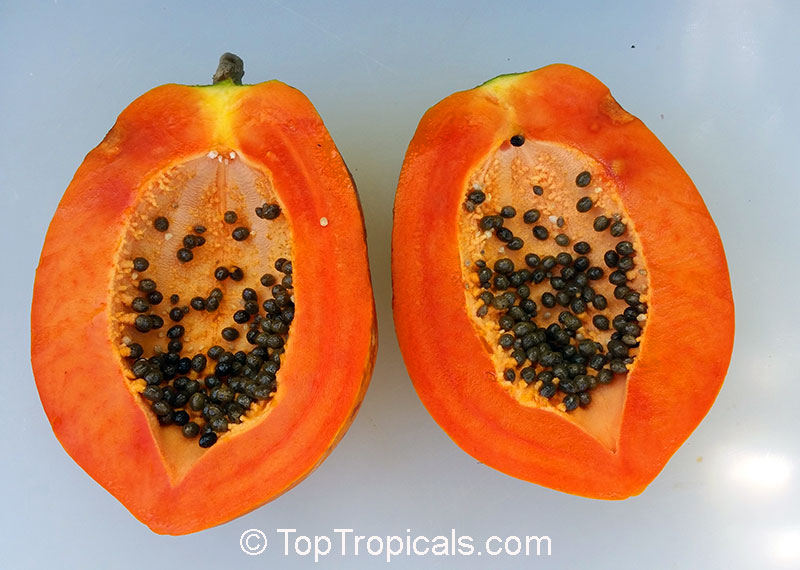
7. Papaya Tree

Papaya  fruit  with  seeds

Papaya trees (Carica papaya) are resilient, easy to grow, and produce fruit year-round. Rich in papain, a digestive enzyme, papayas are a superfood that promotes gut health. These fast-growing trees often begin producing fruit within the same year they're planted, providing quick rewards for gardeners. Many varieties, especially dwarf papayas, are space-efficient, reaching only 6-8 feet tall while still yielding large crops, making them perfect for small gardens. Surprisingly hardy for a tropical plant, papayas can withstand light freezes and strong winds (tested in hurricanes!). While they are self-fertile, planting 2-3 different cultivars improves pollination and increases yields. "Solo" cultivars, with their smaller, round or oval fruits, are sweet and less susceptible to fruit flies.

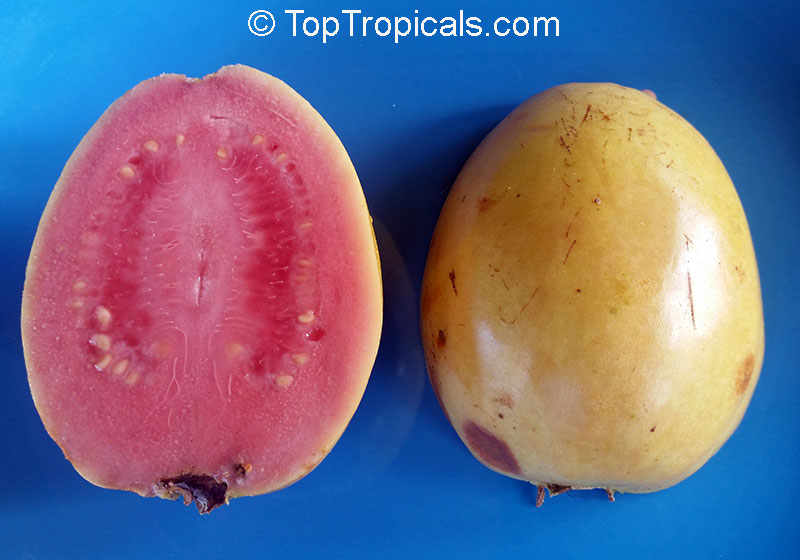
8. Guava Tree

Pink  Guava  fruit

Guava trees are beloved for their flavorful fruit, commonly used in juices, drinks, and desserts. Popular varieties include Tropical Guava (Psidium guajava), Cattley Guava (Psidium littorale), Cas Guava (Psidium friedrichsthalianum), and Pineapple Guava (Feijoa sellowiana). Despite their tropical nature, guavas are surprisingly cold-hardy, suitable for cooler climates and occasional frost. These trees thrive in moist conditions and can tolerate some flooding, while their compact growth makes them easy to maintain at any height or shape. Guavas are fast-fruiting, often producing fruit within a year of planting, and even some varieties in 1 gal containers. The dwarf Nana variety is perfect for container culture, producing full-sized fruit in a compact form. Guava trees are mostly pest-resistant, though mealybugs may require occasional treatment with neem oil in humid, rainy areas. Planting multiple guava trees ensures a continuous supply of fresh, juicy fruit and delicious guava juice for everyone to enjoy.

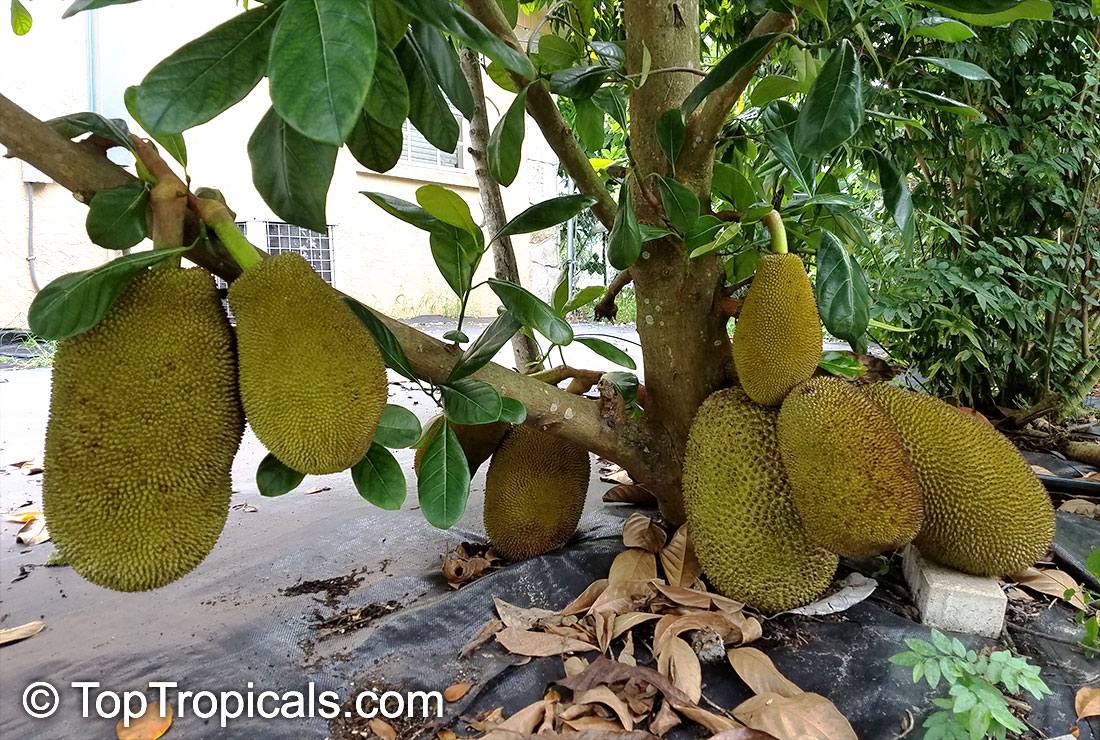
9. Jackfruit Tree

Jackfruit  fruit  at  the  base  of  the  tree

The Jackfruit tree (Artocarpus heterophyllus) is a striking, fast-growing tree known for producing the largest fruit grown on a tree, making it a showstopper in any garden. Nutrient-packed and often used as a meat substitute in South Asian cuisine, Jackfruit is also delicious in curries, chutneys, and as dehydrated chips. These trees grow quickly, have large waxy leaves, and can be maintained at a compact height of 7-8 feet, making them ideal for smaller spaces and easier cold protection. Despite being a tropical species, Jackfruit trees are relatively cold-tolerant and can survive light frost (although on the account of production volume), with established trees being more hardy than seedlings. Jackfruit trees begin producing fruit within 3-4 years from seed, and varieties come true to seed, eliminating the need for grafting, though it can be done for specific varieties.

10. Loquat Tree

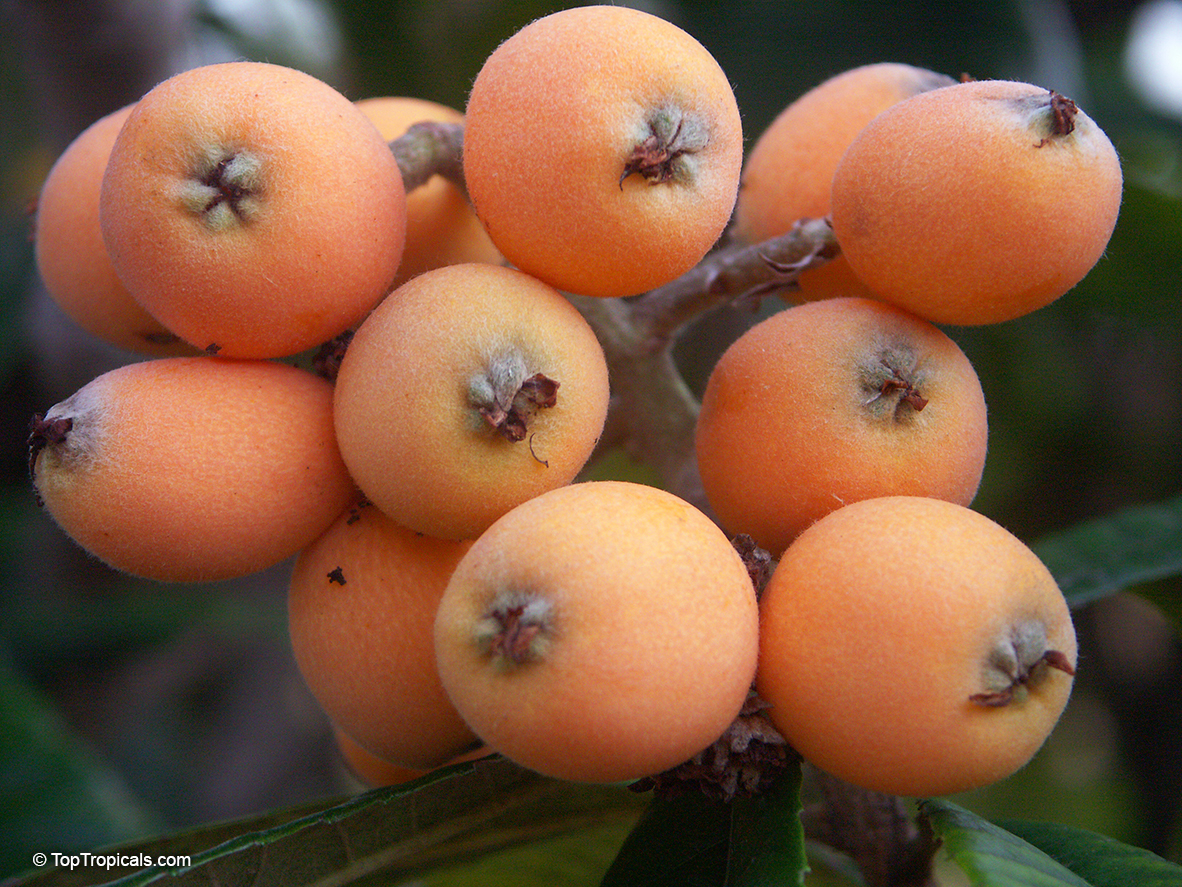
Loquat  fruit  on  a  branch

The Loquat tree (Eriobotrya japonica) is a fast-growing, drought-tolerant, and highly cold-hardy tropical fruit tree that thrives in Florida gardens. Loquats are heavy producers, with juicy, aromatic fruit that ripens from early spring to early summer, offering a delicious apricot-like flavor. This compact tree is perfect for small gardens, beginners, and those with limited space. Loquats are undemanding, thriving in any soil and withstanding summer heat, winter cold, heavy rains, and occasional flooding. Nutrient-rich, they are high in sugar, acids, vitamins B and C, minerals, and pectin. Loquats are versatile, enjoyed fresh or used in fruit salads, jams, jellies, chutneys, pies, sauces, and even wine-making, and they are often used as a natural sweetener.