Garden Blog - Top Tropicals

Date: 10 Sep 2016

Organic remedy for indoor plants insect protection
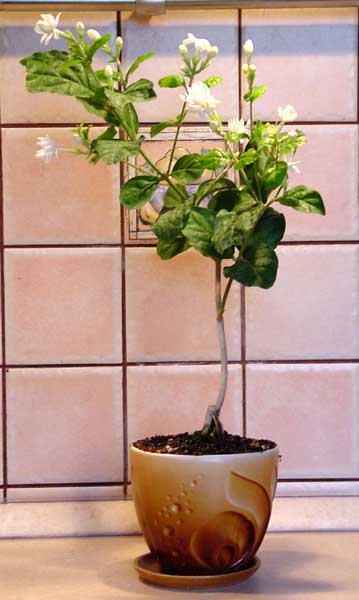
Q: Winter is coming and I moved my collection of fragrant plants inside the house about a week ago. Today I noticed some aphids on my jasmine. I guess they sneaked in with the plant from the garden where it was a week ago. I don't want them to spread around and get to the nearby gardenia. What should I do to protect my plants from insects indoors?

A: Sometimes bugs attack indoor plants more than those outside in the garden. The main reason is lack of air circulation, lack of sunlight, lack of bug natural predators, and lack of plant's immune resistance due to winter dormancy. So, you need to pay extra attention at your plants health during colder months they spend indoors. Inspect leaves, especially underneath, at least on weekly basis.

If noticed first signs of insect attacks (insects and/or leaf damage such as holes, chewed edges, discoloration, dark or sticky coating), use a simple organic remedy that is handy in every house. Mix in a cup of hot water two tablespoons of any cooking oil: Canola, Vegetable, Sunflower, Olive; Neem oil is the best for this purpose, but it does have a pungent odor (bugs don't like it as well as some people). Add a few drops of dish-soap for better mixing oil in the water. You may add a clove of pressed fresh garlic - bugs hate it! Clean leaves with this solution using cloth, paper towel, and/or spray bottle.

If insects are persistent or your treatment arrived too late when a plant is excessively infested, after cleaning with the oil solution, you may use additionally systemic insecticide sprays sold in garden centers, with active ingredients of pyrethrin, imidacloprid or similar. Make sure to read product label and follow instructions.

However try the organic recipe first, it really works! You may repeat it as needed, as often as you want! See target=_blank>TopTropicals Video on Safe and Easy Pest Control.
Date: 12 Apr 2025

How to Plant a Tree - A Fun Guide

How to Plant a Tree - A Fun Guide

🌳 How to Plant a Tree - A Fun Guide


1

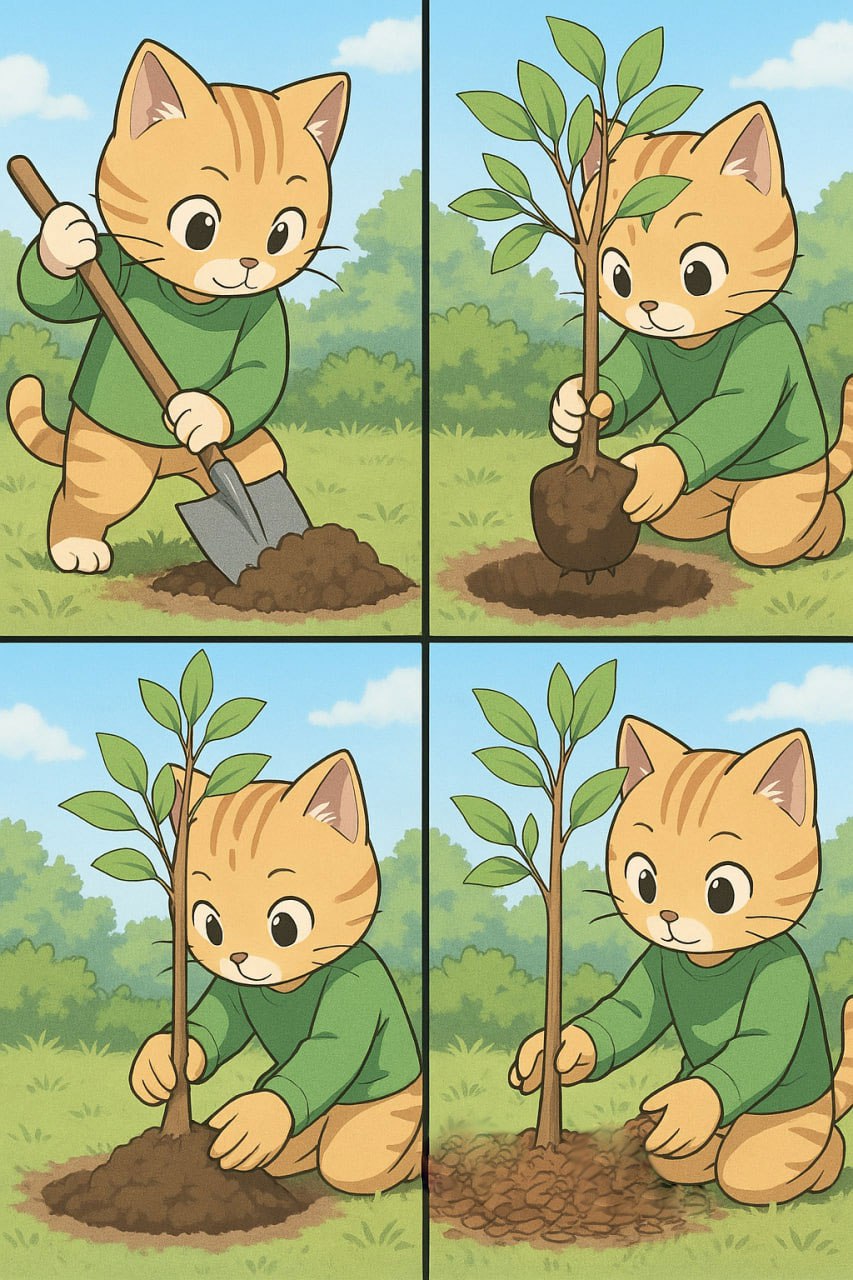
️⃣ Dig a Big Hole


Start by digging a hole 2-3 times the size of the pot. Make sure it's deep enough to give your tree's roots room to grow. Remove any sandy dirt or rocks—replace them with rich, nutrient-packed soil to help your tree establish.

2

️⃣ Place the Tree Just Right


Gently remove your tree from the pot and place it in the hole. The base of the tree (where the roots meet the trunk) should sit slightly above ground level (2-3"). Avoid covering the trunk with soil to allow for proper air circulation and to promote a healthy tree.

3

️⃣ Mound the Soil


Add nutrient-rich soil around the roots, then toss in a handful of granulated fertilizer. With the leftover soil, build a little mound around the tree to form a"bagel"shape. This will help water stay around the roots and give your tree a strong start.

4

️⃣ Add Mulch and Water


Spread mulch around the tree, but leave a small gap around the trunk. Water generously to settle the soil and give your tree a refreshing drink. Water by hand daily for the first couple of weeks or until you see new growth. After that, you can rely on sprinklers.

⭐️ With these simple steps, your tree will be off to a great start!

🛒 Go plant shopping to excersize your green thumb and make our planet better

📚 Learn more:


How to plant a tree: care of mail-order plants and detailed planting instructions (PDF)

#How_to #Trees #Discover

🔴 Join 👉 TopTropicals

Date: 18 Apr 2024

Cat Philemon is eating Avocado!

Cat Philemon is eating Avocado!


Avocado is good for you. It's one of the Superfoods. Even cats know this fact.

Did you know that Avocado comes in hundreds of varieties, not just green and black?

📚 Check out Avocado Varieties Guide

🛒 Shop Avocado Trees

📸 😺 👇 Share your cats in comments!

#PeopleCats #Food_Forest

@TopTropicals

Date: 14 Jul 2024

What is the best Avocado variety? Five more most popular Avocado cultivars - total of 10

Avocado Joey

Avocado Joey

Avocado Day

Avocado Day

Avocado Ulala (Super Hass)

Avocado Ulala (Super Hass)

Avocado Fantastic

Avocado Fantastic

Avocado Monroe

Avocado Monroe

What is the best Avocado variety? Five more most popular Avocado cultivars - total of 10!

🏆 We introduced 5 most popular varieties in our previous post. Here is 5 more, making it 10 total.

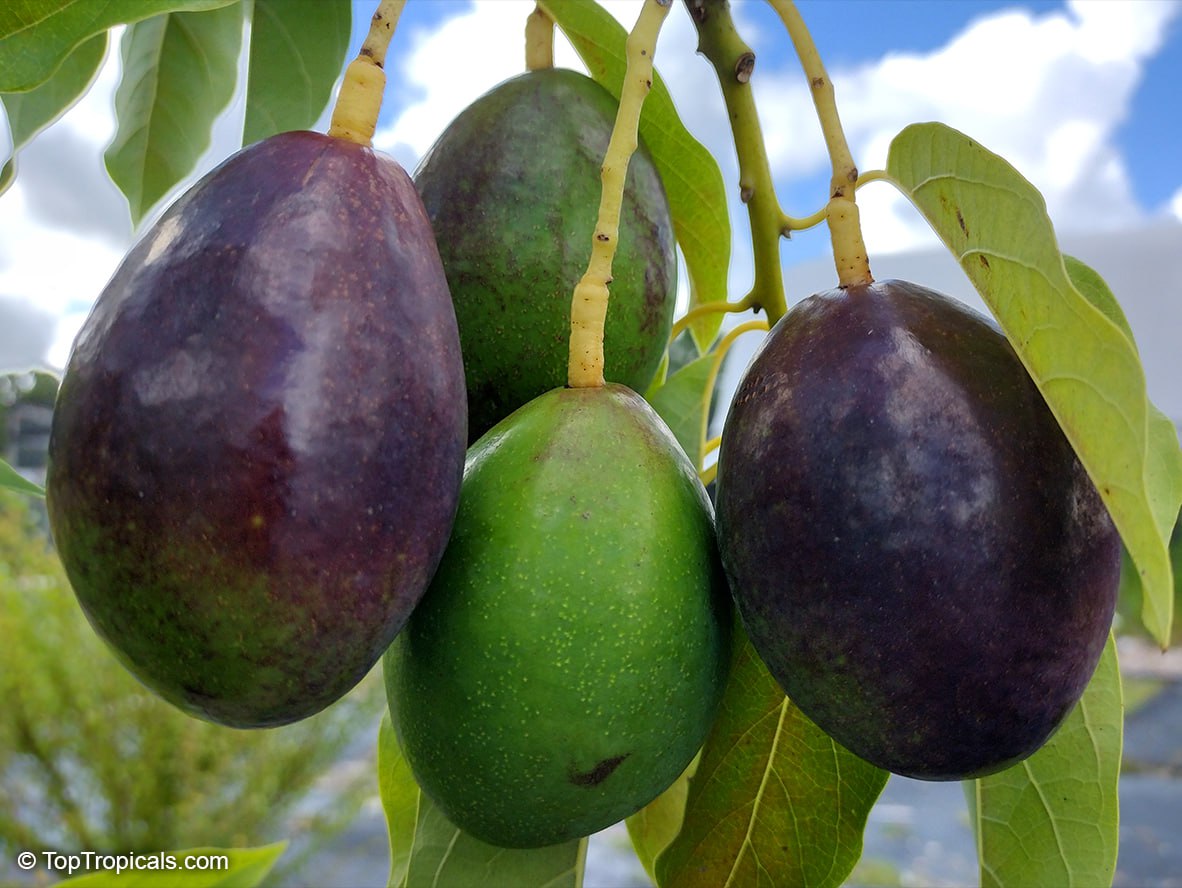
6. Joey - very cold hardy variety. Produces medium size, egg shaped purple-black fruit. It has excellent flavor. Heavy bearer. Season: September-October. It survived temperatures around 10F near San Antonio, Texas (Zone 8b). Can take temperatures down to 15F for a short period of time without significant damage.

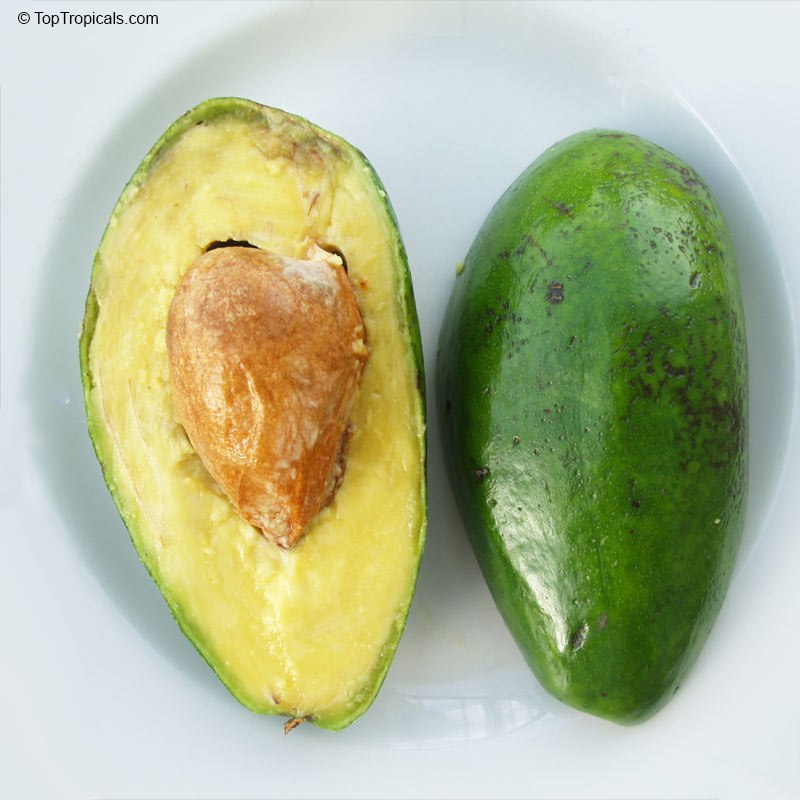
7. Day - green, smooth skin and is shaped like a club. The fruit is of very good quality and has a nice buttery consistency. The slender tree is very cold tolerant and produces July through September.

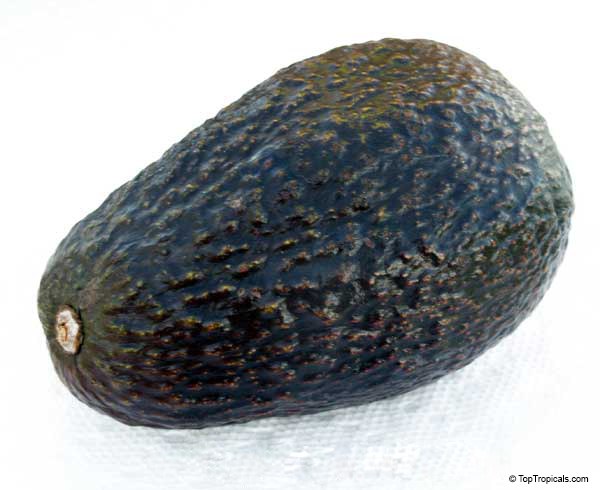
8. Ulala (Super Hass) - sometimes called Uhlala or Uh-La-La. Cold hardy variety that can take temperatures down to 18F for short period of time without significant damage. The fruit is black skinned, with smooth texture. Seed is very small.

9. Fantastic - very cold hardy variety, supposedly the most most cold hardy of all avocados. Produces green, paper thin skin. The fruit has a creamy texture. It survived temperatures around 10F near San Antonio, Texas (Zone 8b) and can take temperatures down to 15F for short period of time without significant damage.

10. Monroe - inherited from its Guatemalan-type parent some degree of cold hardiness. In addition, the trees produced a very large, elliptical-shaped fruit with good eating qualities. Good producer, commercial cultivar in Florida. Legend has it that "it was found in Homestead, Florida on a cool dark rainy night after a meteor crashed into an abandoned papaya plantation."

📚 Learn more: Avocado Variety Guide - check this out for interactive chart of Avocado varieties and sort them by flower type A or B, tree habit, fruit shape and quality, cold hardiness, origin, season and more!

What is your favorite Avocado variety?
Share in comments
👇

🛒 Shop Avocado Trees

#Food_Forest

🏵 TopTropicals

Date: 20 Jan 2025

How to Grow Jackfruit: Practical Guide

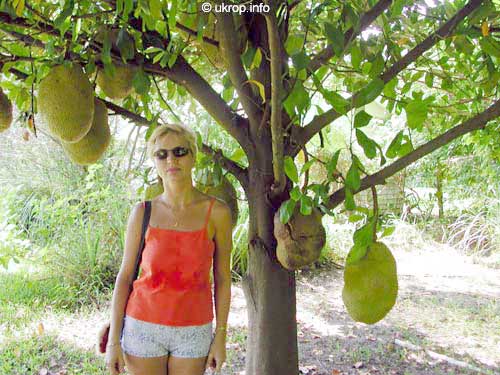
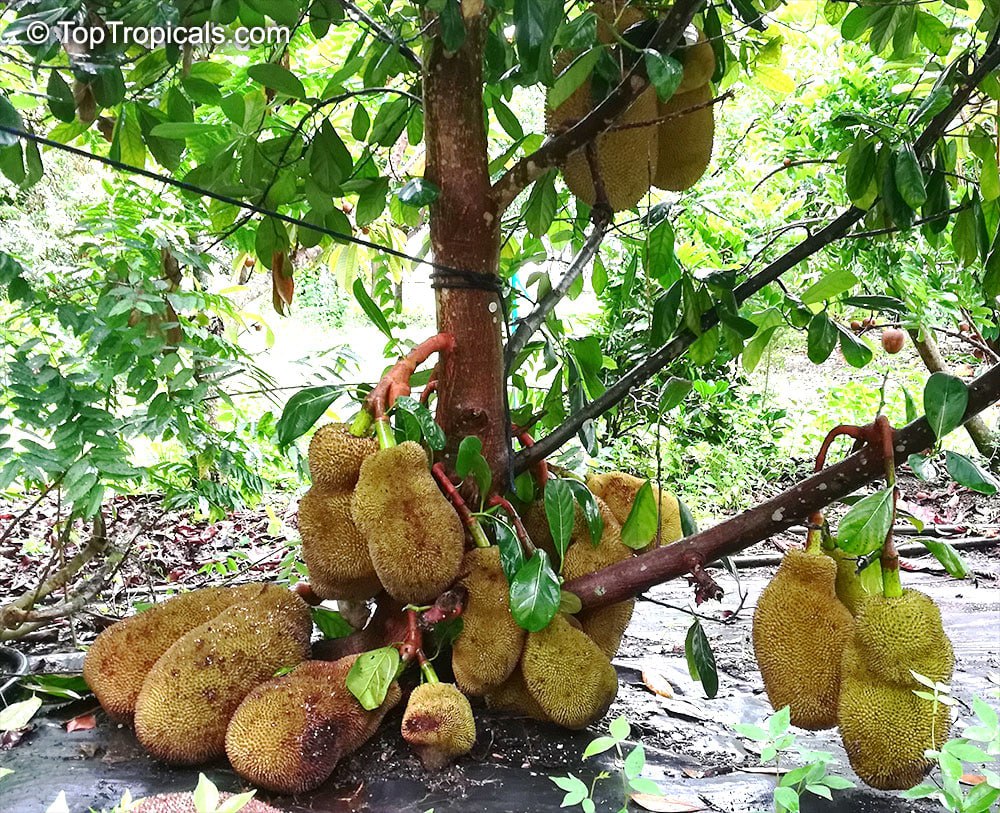
Jackfruit (Artocarpus heterophyllus) tree

Jackfruit (Artocarpus heterophyllus) tree

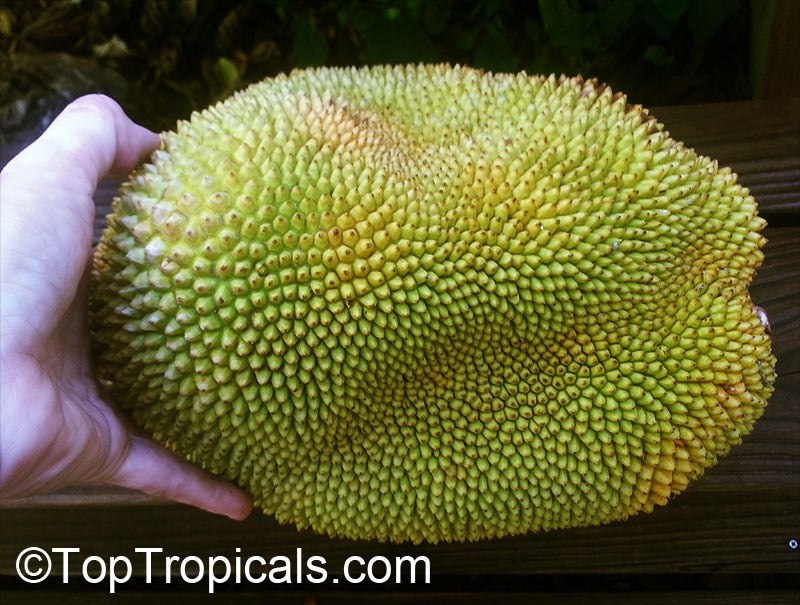
Jackfruit (Artocarpus heterophyllus) fruit

Jackfruit (Artocarpus heterophyllus) fruit

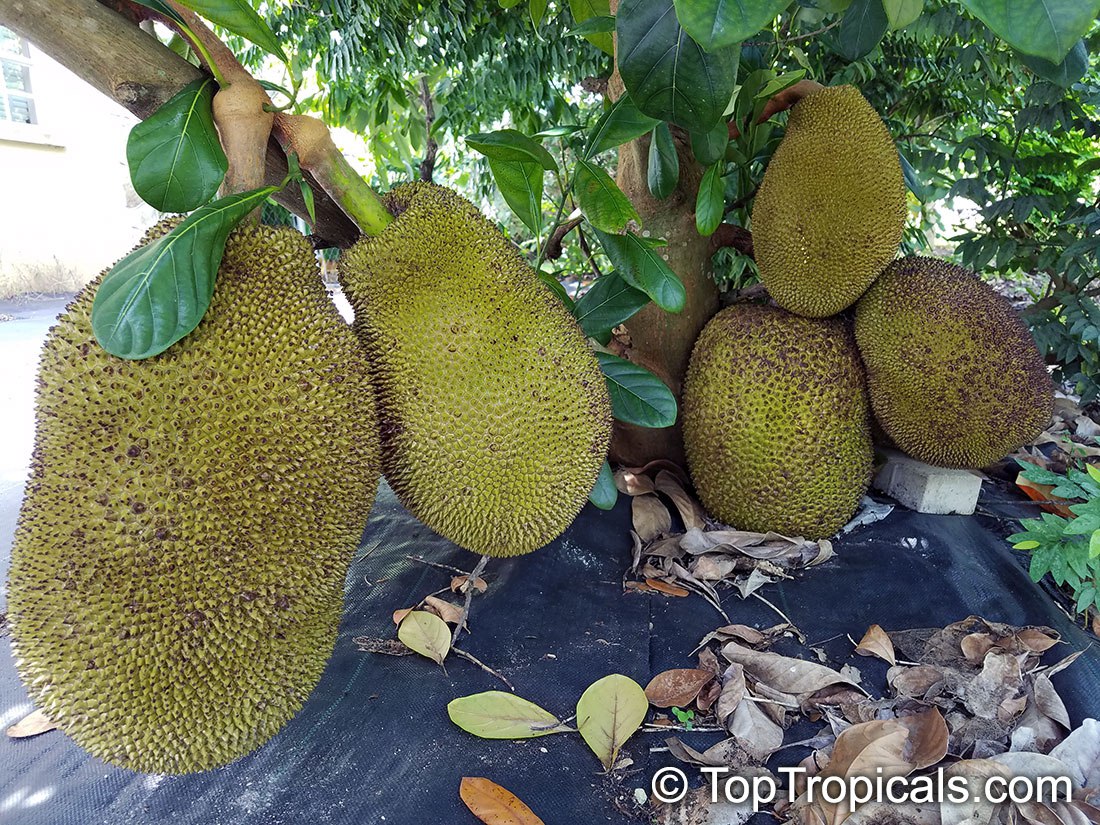
Jackfruit (Artocarpus heterophyllus) fruit at the base of the tree

Jackfruit (Artocarpus heterophyllus) fruit at the base of the tree

Jackfruit (Artocarpus heterophyllus) fruit at the base of the tree

Jackfruit (Artocarpus heterophyllus) fruit at the base of the tree

How to Grow Jackfruit: Practical Guide

  • 🍈 Jackfruit (Artocarpus heterophyllus) is a tropical tree that produces the largest fruit in the world, weighing up to 80 pounds and reaching 36 inches in length. The trees thrive in frost-free, humid climates with plenty of sunlight. They require well-draining soil rich in organic matter and regular watering to flourish. Despite their reputation as ultra-tropical, mature Jackfruit trees can tolerate light frost for a few hours without significant damage. Additionally, they can be grown in containers in colder areas with proper care and pruning.
  • 🍈 What Climate is Essential for Growing Jackfruit Trees?


    Jackfruit trees require a tropical or subtropical climate, with temperatures ideally between 60-95°F. While young trees are frost-sensitive, mature trees can withstand light frost for short periods. However, cold winters can reduce fruit production. Frost-free temperatures are crucial for optimal growth and fruiting.
  • 🍈 How Often Do Trees Need Fertilizing, and What is the Best Type of Feed?


    Jackfruit trees are heavy feeders. Fertilizing them regularly is key to their health and productivity. During the active growing season (spring to fall), apply a balanced dry fertilizer once a month. Liquid amino-acid-based fertilizers, such as Sunshine Boosters, can be used year-round with every watering. These fertilizers help maintain healthy growth and encourage abundant fruiting. Supplement with organic matter like compost, manure, or peat moss to enrich the soil.
  • 🍈 How Important is Pruning, and When is the Right Time to Prune?


    Pruning is essential for maintaining a manageable tree size and promoting healthy fruit production. Jackfruit trees produce fruit at the base of the trunk, allowing them to be pruned annually to a height of 7-12 feet. This practice not only makes harvesting easier but also encourages more fruiting. Prune after the fruiting season or in late fall to remove excess growth and shape the tree. Regular pruning also improves air circulation and reduces the risk of disease.
  • 🍈 Key Tips for Successful Jackfruit Production


  • · Climate: Ensure frost-free temperatures and adequate humidity.
  • · Soil: Use well-draining soil enriched with organic matter.
  • · Watering: Maintain consistent soil moisture without waterlogging.
  • · Pruning: Keep the tree under 7-10 feet for easier management and better yield.
  • · Fertilizing: Apply balanced fertilizers and supplements regularly.


🍈 Jackfruit facts

  • · The fruit consists of large, edible bulbs of yellow, sweet, banana-pineapple-flavored aromatic flesh.
  • · Seedlings start fruiting within 3-4 years, with fruit ripening 4-6 months after flowering.
  • · A mature tree can produce up to 200 pounds of fruit annually.
  • · For colder regions, growing Jackfruit in containers is an option, provided the tree is regularly pruned and topped.


👍 Jackfruit trees grow fast and fruit abundantly with proper care, making them an exotic addition to tropical fruit collections.

📚 From previous posts:


The largest tree-borne fruit in the world
How to grow the biggest fruit on Earth

🛒 Plant your own Jackfruit

#Food_Forest #How_to

🔴 Join 👉 TopTropicals