Date: 4 Jun 2021
Tahitian Gardenia
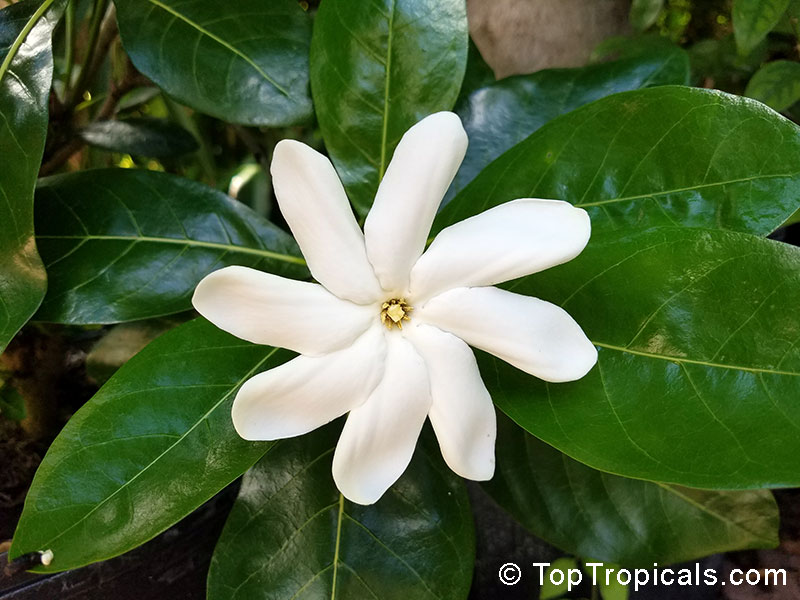
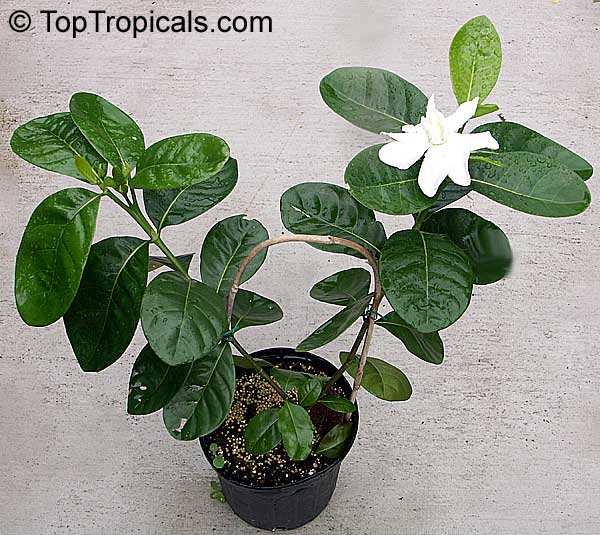
Q: I am interested in your Tahitian Gardenia and I would love to try and grow this plant in a large container/fabric pot. The soil here where I live is terrible as it's hard rock, clay, and sand! So I'm not sure if amending the soil would help to plant in the ground? Can you tell me if this will do okay in a container or best in ground? I live here in Las Vegas, NV (zone 9a). Any information would be great to help me make a this decision, I love the selection of cool tropical plants you offer! Also my daughter does Tahitian/Polynesian dance and this would be a cool "topping on the cake" if she could have a live Tiare flower in her performances.
A: Tahitian Gardenia will be doing best if grown in container in your
area. In its natural habitat, it grows full sun but also it enjoys mild weather
conditions and high air humidity. All gardenias prefer acidic soils. In your
area, if planted in the ground, it may be exposed to some harsh conditions:
too high temperatures, too hot sun, dry air, and as you mentioned - heavy clay
and sandy soil. You can enjoy this plant grown in container, which can be
moved as needed away from too much sun during summer months. Use well-drained potting mix. Use plastic pot, do not use fabric or clay
pots - soil will dry out too quickly.
Also remember to fertilize this plant on regular basis with a liquid
fertilizer SUNSHINE Pikake - Fragrant Flower Booster.
Grow gardenia in full sun or semi-shade during the hottest months. You may
spray it with pure water if the air too dry and hot. Enjoy your Tropical
Beauty and good luck!

Date: 8 Jun 2019
Chosing a good avocado tree
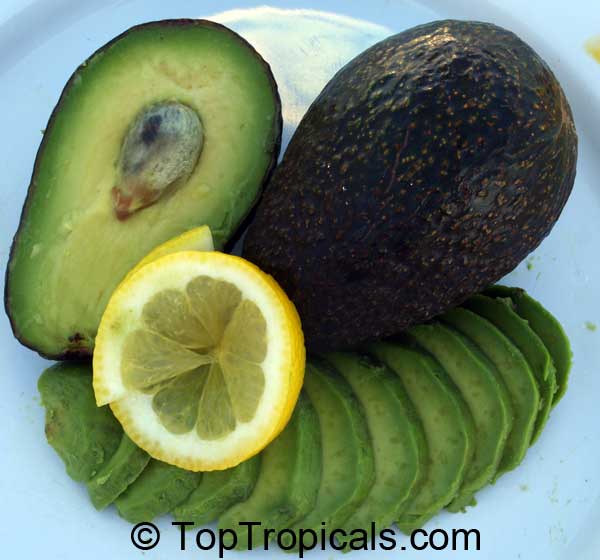
Q: I'm in coastal Broward County. I'm putting together an order on your web site, and one thing that I would like is an avocado tree. I'd like to have something as close to true "Hass" as possible. Which cultivar does well here in SE Florida, and is most like Hass in texture, creaminess, and flavor? I'm not a big fan of the yellow watery Florida avocados.
A: Mexican type of Avocado have dark skin and buttery texture,
while Florida green fruit types (West Indian type, with smooth skin), have lots
of delicious melting pulp, so it is a matter of preference.
In coastal Broward county you can grow a wide range of varieties since
your climate is very mild, so you don't have select cold-hardy varieties like
Winter Mexican, Brazos Belle or Joey, etc. Yet there are many interesting varieties that rare and much
more exclusive than Hass, with the same, or even better, quality buttery
fruit.
One of the most popular varieties - Brogdon, with red-purple colored pear-shaped fruit, very thin skin, and yellow buttery flesh. It is also very cold hardy.
Very interesting exotic avocado is Kampong - Sushi Avocado - see photo above. The flavor of this fruit very nice, oily, creamy, nutty, reminds of almonds. At the same time, it has solid consistency and if you cut a square it remains a shape of the square. It is the best Sushi Avocado! It tastes great as an appetizer when cut in squares with some shrimp cocktail sauce.
Three collectible varieties:
Anise - leaves that smell like Anise, very rare, the fruit is of excellent
quality, creamy and buttery.
Bacon - a large Mexican variety with dark-skinned medium-sized fruits, and
a rich creamy flavor. It has exceptional fruit that ripen in late fall and
into spring, they are easy to peel and have a light, subtle flavor. Another
outstanding feature of the Bacon avocado tree is its angelic sweeping branches
which helps keep the tree shorter and easier to pick its fruit.
Nishikawa is a very hot seller! Oval fruit somewhat resembles Hass, but
larger, and has very high oil content.
See all Avocado trees from our store
Recommended fertilizers:
Fruit Festival Plant Food - Super Crop Booster
Mango-Food - Smart Release Fruit Tree Booster

Date: 25 Dec 2021
Easy Sunday Morning Deals: Tropical Asparagus
Saving on your favorite plants is Easy.
Easy like Sunday Morning...
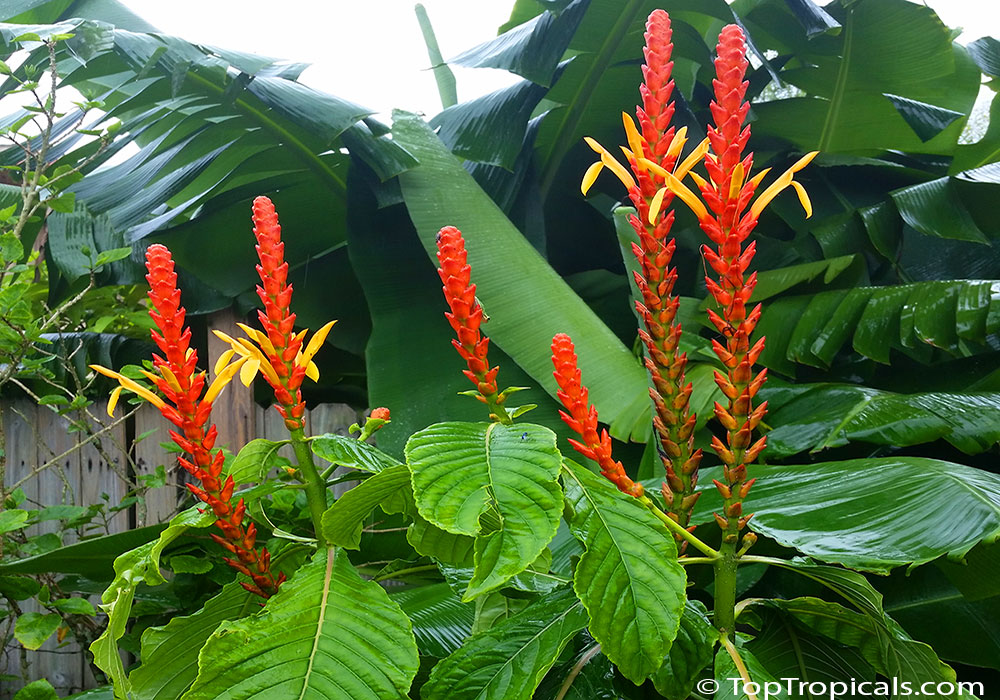
Photo above: Aphelandra hartwegiana - is at peak of its flowering season now. Spectacular flower for a shade garden.
It's time for our favorite day and another Easy stroll through Top Tropicals' Garden with savings of 50% and MORE! Christmas Day has come and gone, and now it's time to treat yourself with our Easy Sunday Deal!
This week we bring you one of the most popular leaf vegetables in South Asia and Southeast Asia, the Tropical Asparagus - Sauropus androgynus. Notable for its high yields and palatability, Tropical Asparagus is a favorite with crab meat, minced pork, dried shrimp, or to make soup... and has delicious young shoots!
Tropical Asparagus
50% OFF and MORE!
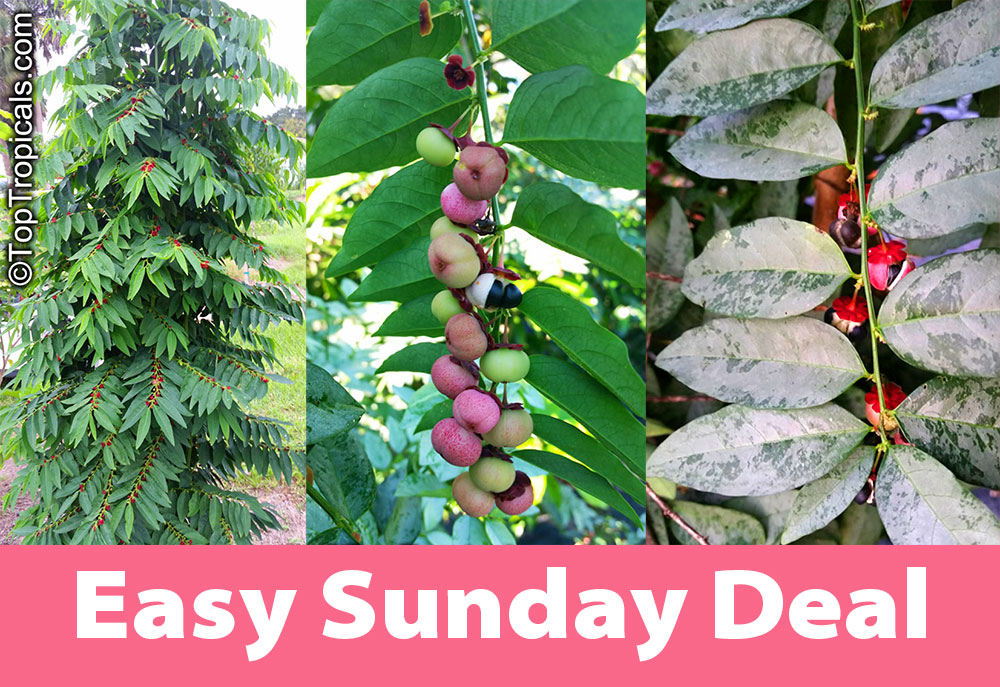
For this Easy Sunday we have priced these at incredible savings:
Sauropus androgynus, regularly $39, is on Easy Sunday sale for only
$19
Sauropus Variegata, regularly $39, is on Easy Sunday Sale for only
$19.
Combine the two for your own Tropical Asparagus Kit and save even more, only $29 for the kit!
While supply lasts.
About Sauropus androgynus - Katuk, Tropical Asparagus
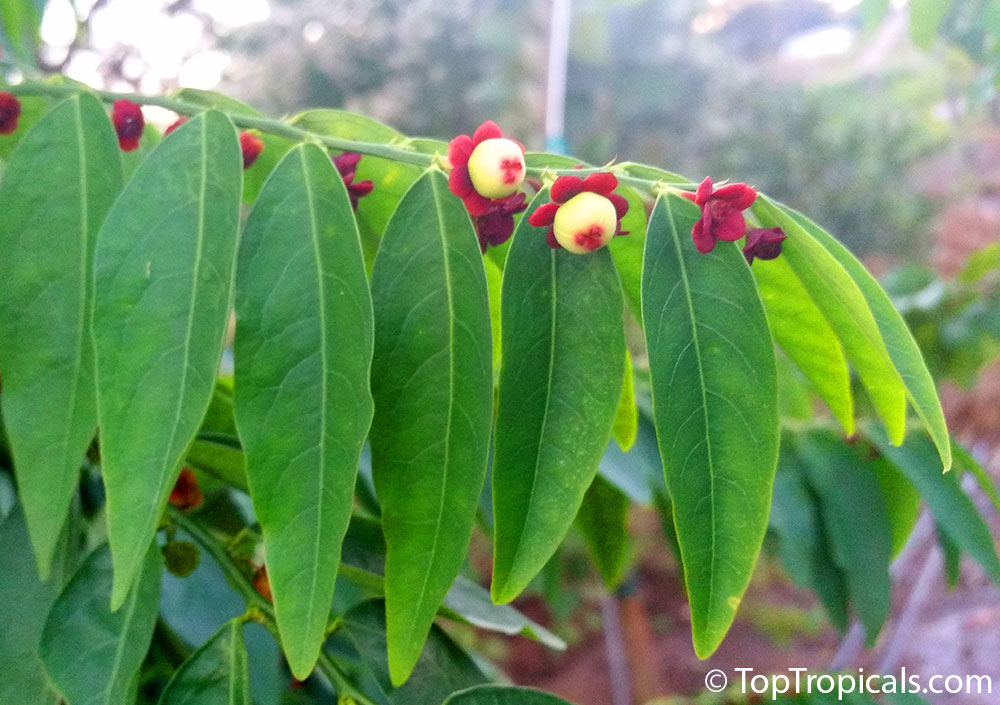
Sauropus, or Katuk, is a perennial shrub grown in some tropical regions as a leaf vegetable. It is one of the most popular leaf vegetables in Southeast Asia. It is among only a few flora containing vitamin K. Leaves and stemmed can be cooked as vegetable; young shoots are delicious eaten out of hand and taste just like sweet peas, they can be added to salads. The plant has many medicinal properties.
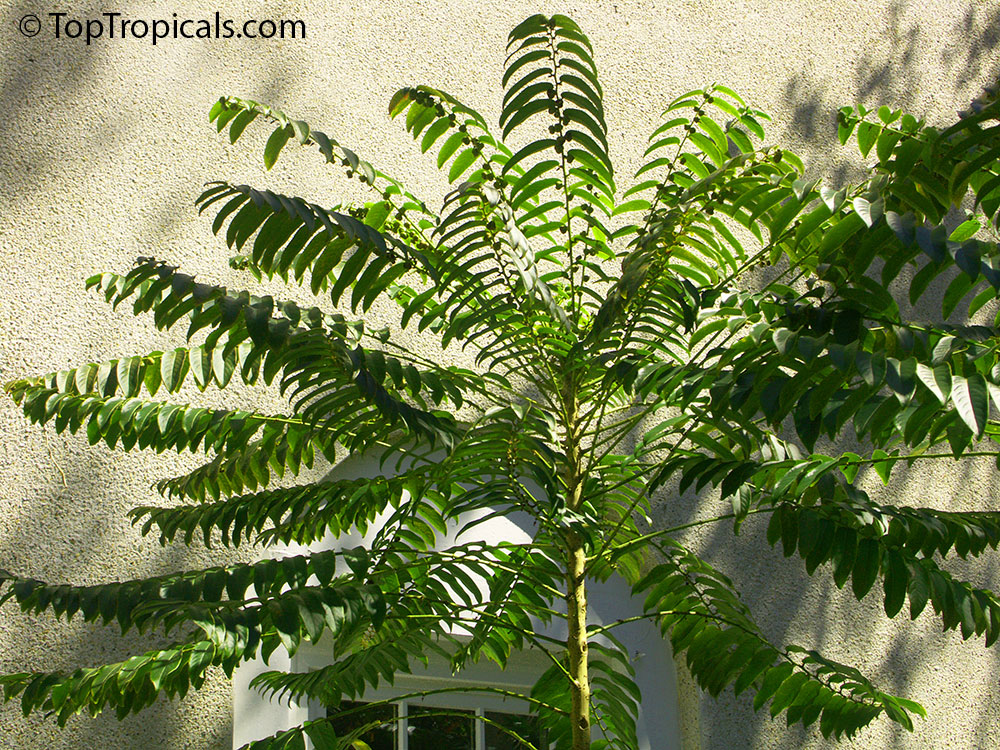
Katuk is fast growing and keeps growing as you trim it for your kitchen needs. Multiple upright stems can reach 6-7 ft high. It has great ornamental value, has pretty red flowers and ornamental fruit showing shiny black seeds when they crack open. Varieties with green leaves and variegated leaves have slightly different flavor but are equally good for your healthy, fiber-rich diet.
Remember, the Easy Sunday Deal expires on Wednesday December 29th.
Enjoy your Hot Deals!
December 26th - Boxing Day

Date: 17 Sep 2021
Hibiscus: TopTropicals' first plant

- September 2001 @ TopTropicals -
Q: I wonder how you started your plant business and what was your first plant?
A: It was 20 years ago this month that we started Top Tropicals Project. No idea where it was going or how to even get "there", just started with the idea of sharing these wonderful creatures we call plants with anyone and everyone who felt the same way.
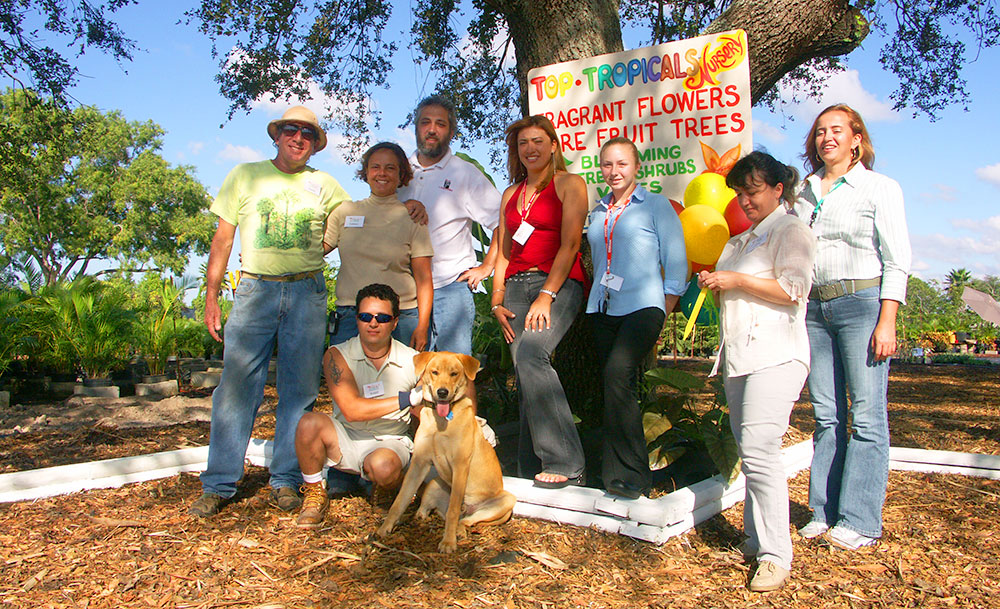
Believe it or not, the first plant at TopTropicals was a hibiscus. Right
before we opened our plant nursery in Florida, we ran into a place called Winn Soldani's FANCY
HIBISCUS. The variety of colors inspired us to start our own tropical plant
business. We asked the owner Winn Soldani: what plants do you suggest us to
grow in Florida? His answer was, "Your plant will find you". Very soon we
discovered
jasmines, then perfume trees and fruit trees - all those became our specialty. Then very quickly
TopTropicals.com turned into a large Plant Mall where you can find every tropical plant you can think of!
But at TopTropicals we still grow hibiscus!
- September 2004 @ TopTropicals -
Hibiscus Plus
Hibiscus is a wonderful plant, considering there are thousands of
hybrids with color palettes you can only imagine. Especially interesting are those
rare and useful species, yet very easy to grow, such as:
- Salad Hibiscus - Hibiscus furcellatus - yes, used in salads
- Coral Hibiscus with crazy pendant flowers - Hibiscus schizopetalus
- African Cranberry hibiscus that is used for making teas and salads - Hibiscus
acetocella
- Cotton Candy Hibiscus mutabilis - the flower changes color, opens as white and turns
into bright pink within 3 days, like Yesterday-Today-Tomorrow
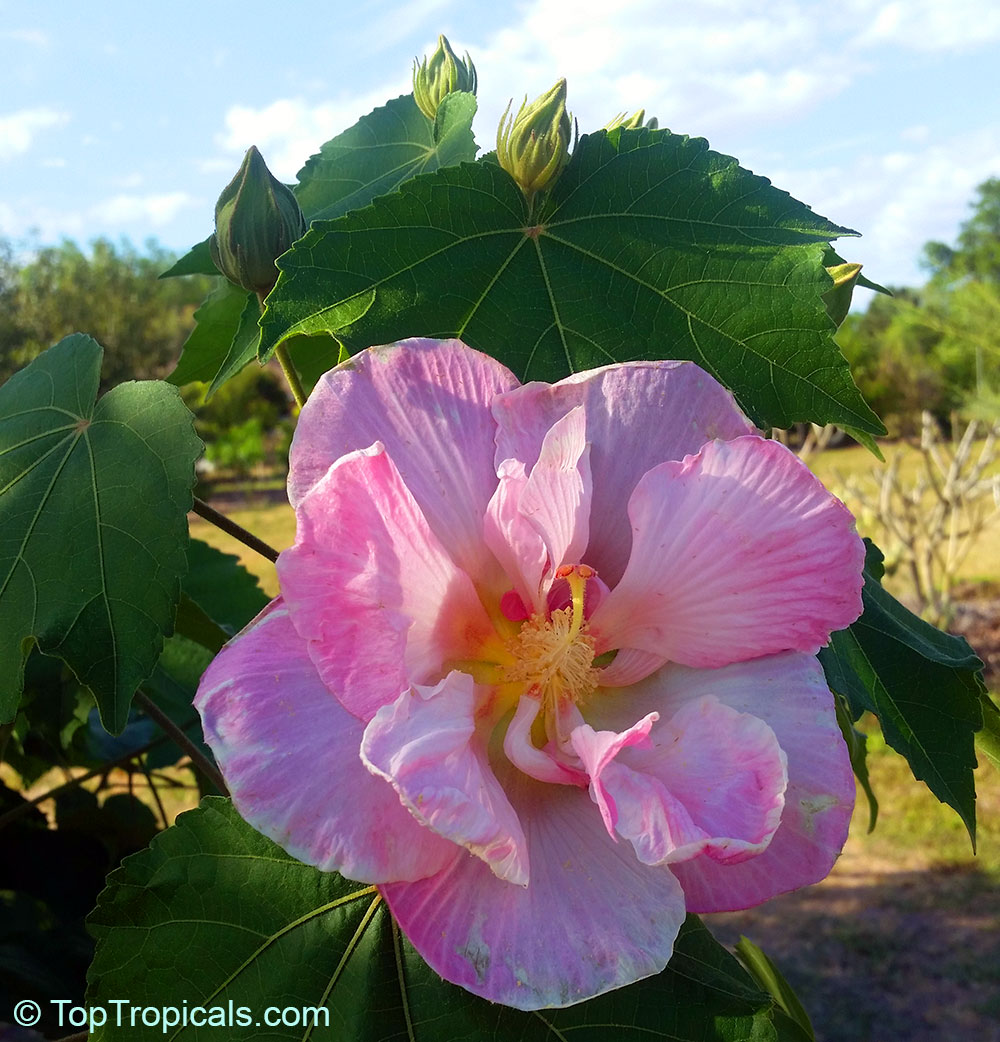
Photo above: Hibiscus mutabilis Cotton Candy
Care of Hibiscus and other flowering tropicals
"If your plant isn't flowering, feed it."
- Winn Soldani, Fancy Hibiscus -
Among gardeners, Hibiscus plants have a reputation to have couple
maintenance issues:
1) they can get bugsy (because they must be so tasty!)
2) they can get leggy, especially fancy grafted cultivars, and after a
while they don't look as perfect as when they came from a nursery.
4 tips for healthy and pretty hibiscus plant
1. Full sun. Essential for profuse flowering and keeps away
diseases.
2. Pruning. Keep it pruned and it will get bushy and produce more
blooms.
3. Well-drained soil. Hibiscus likes regular watering but hates wet
feet.
4. Nutrition program. Hibiscus plants are heavy feeders. But keep in
mind that if you just keep pushing granulated plant food, you can
over-fertilize the plant. Excessive salts will accumulate in soil and you will end up
with a sickly looking plant.
Keys to balanced plant food and bloom booster
1) Use liquid fertilizer, preferably amino acid based, it won't create
nutrients lock up
2) Fertilize on regular basis, it's better dilute concentration and add
food with every watering
3) Always add micro-elements - they are essential for plant health
If you do this part right, the result will be:
- healthy, green plants, like they just came from a nursery
- reliable blooming circle
- better cold tolerance and disease resistance. Remember that a strong
plant will be less stressed and less "bugged" by bugs!
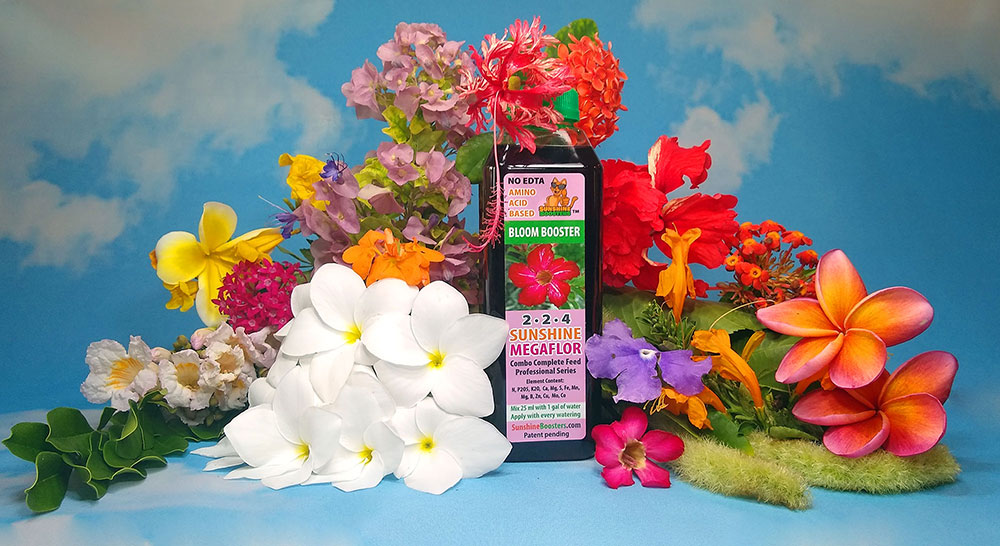
We always suggest Sunshine Boosters - scientifically balanced liquid fertilizers that are amino acid based = they are natural and organic, can be used for both flowers and edibles, and what's most important - year around. They are safe to use virtually with every watering.
This is all you need for healthy plants and lots of flowers!
Date: 19 Jul 2020
Sugar grains on leaves?
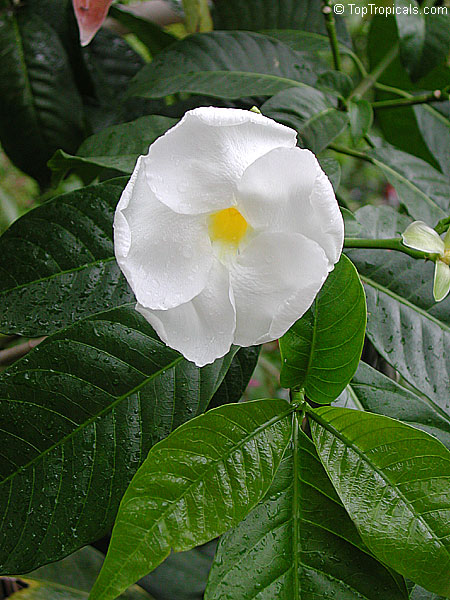
by Mark Hooten, the Garden Doc
Q: On my Stemmadenia tree I noticed tiny drops (like white sand grain or sugar crystals) and wonder if this is a disease or some kind of insect and what can I do about it?
A: Sometimes certain vigorously growing (mostly tropical) plants
develop suspiciously-looking tiny "growths" mostly on the undersides of their
leaves. Without strong magnification, they can be easily mistaken for mealy
bugs, scale insects, or any number of parasitic disease vectors.
However, according to plant pathologists, these are actually harmless
excretions actually exuded by the plants themselves. A chemical analysis of these
tiny granules shows that they are nothing more than polysaccharides.
Polysaccharides are basically complex chains of sugar/glucose molecules which are
simply a production of all plants undergoing photosynthesis. Polysaccharides are
at the beginning of the entire food-chain. These odd tiny sugar-grained
nodules are actually only semi-crystalline complex sugars which certain plants
have over manufactured and have had no choice but to excrete through their
stomata (breathing pores).
I have personally observed Cecropia, Psychotria, Spondias (Hog Plum), and Guavas doing this... there are many others. Nothing to worry about,
they are harmless, but if they bother you - wash them off with a hose water.