Garden Blog - Top Tropicals

Date: 16 Feb 2026

Yes, you can grow a mango tree on your patio - here is how to do it right
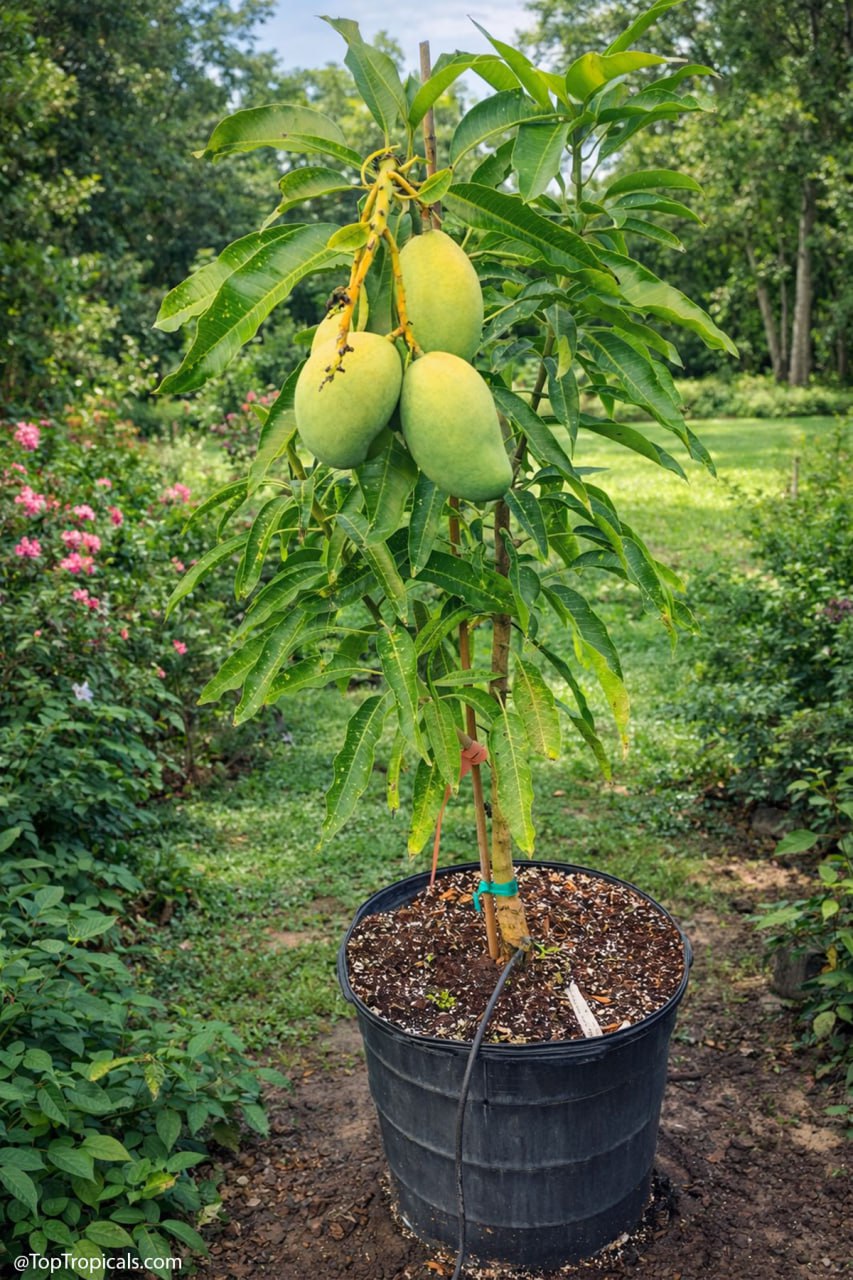
Mango fruiting in container

Mango fruiting in container

🥭 Yes, you can grow a container mango tree on your patio - here is how to do it right


Think you need a backyard orchard to grow mangoes? You don't. Mango trees grow very well in containers. Compact varieties, often called condo mangoes, stay naturally smaller and are well suited for pots, patios, and small yards. We grow and ship mango trees nationwide and have seen which varieties perform best in containers.

Growing mangoes in pots is also practical in cooler climates. The tree can be moved to protection during cold weather while still producing real fruit. Here is how to do it right.

🥭 Pick the right condo mango tree variety


Choose condo or semi-dwarf mango varieties that stay smaller and respond well to pruning. These mango trees usually stay 6 to 10 feet tall in containers with light pruning. Fruit size is full-size, just fewer than on large trees.

Good mango choices for pots include:
  • · Cogshall - compact and productive
  • · Pickering - naturally small and reliable
  • · Carrie - manageable size, great flavor
  • · Ice Cream - slow growing, narrow canopy
  • · Julie - classic Caribbean type
  • · more condo varieties...


🥭 Choose the right pot


Start small. Young mango trees do best in a 5- to 7-gallon pot. Oversized containers too early often cause overwatering and root issues.

Increase size gradually:
First pot: 5-7 gallons
Next size: 10-15 gallons
Mature container: 20-25 gallons

The pot must drain well. Mango roots dislike wet soil. Add holes if needed. Plastic, ceramic, and fabric pots all work.
  • 🥭 Use fast-draining soil


    Mango trees need air around their roots.
    Use a loose, fast-draining mix, such as Abundance Professional Soilless Mix. Improve drainage with perlite, pine bark, or coarse sand. Avoid heavy or water-holding soils. Drainage matters more than fancy ingredients.
  • 🥭 Water carefully


    Mango trees prefer a wet-dry cycle.
    Water deeply, then allow the top few inches of soil to dry before watering again. Always check with your finger first.
    In warm weather, water once or twice a week. In winter, much less. Overwatering is the most common container mistake.
  • 🥭 Give plenty of sun


    Mango trees love sun and heat.
    Place the pot in full sun with at least 8 hours daily. More sun improves growth and flowering.
    If overwintered indoors, use the brightest window possible. Grow lights help, but outdoor sun is best when weather allows.
  • 🥭 Fertilize lightly but consistently


    Potted mango trees benefit from regular feeding during active growth.
    Use a balanced mango or fruit tree fertilizer such as Sunshine Mango Tango (safe to use with every watering, year-around). Controlled-release fertilizer Green Magic (every 6 months) work well too. Avoid excess feeding, which promotes leaves over flowers.
    If leaves pale, check watering first, then nutrition.
  • 🥭 Prune to stay compact


    Pruning is essential for mangoes in pots.
    Light tipping and trimming control size, encourage branching, and increase flowering points. Keep the canopy open and balanced. Watch how simple tipping works in real life: .
    Avoid heavy pruning before flowering. Most pruning is best right after harvest.
  • 🥭 Protect from cold


    Mango trees are tropical and cold-sensitive.
    When temperatures drop below 40F, move the pot to protection or indoors. Young trees are especially vulnerable.
    During winter, reduce watering and stop fertilizing. Growth slows and the tree rests.
    When warm weather returns, reintroduce the tree to sun gradually to prevent leaf burn.
  • 🥭 Final thoughts


    Growing a mango tree in a pot is practical and rewarding. With the right variety, good drainage, full sun, and careful watering, a potted mango can thrive and fruit for years, even in small spaces. Ready to start? Choose a compact mango variety.


🛒 Discover Condo Mango

📚 Learn more:
#Food_Forest #How_to #Discover #Mango

🟢 Join 👉 TopTropicals
Date: 22 Apr 2022

Spend time among trees...

"...Time spent among trees is never time wasted..."
- Katrina Mayer -

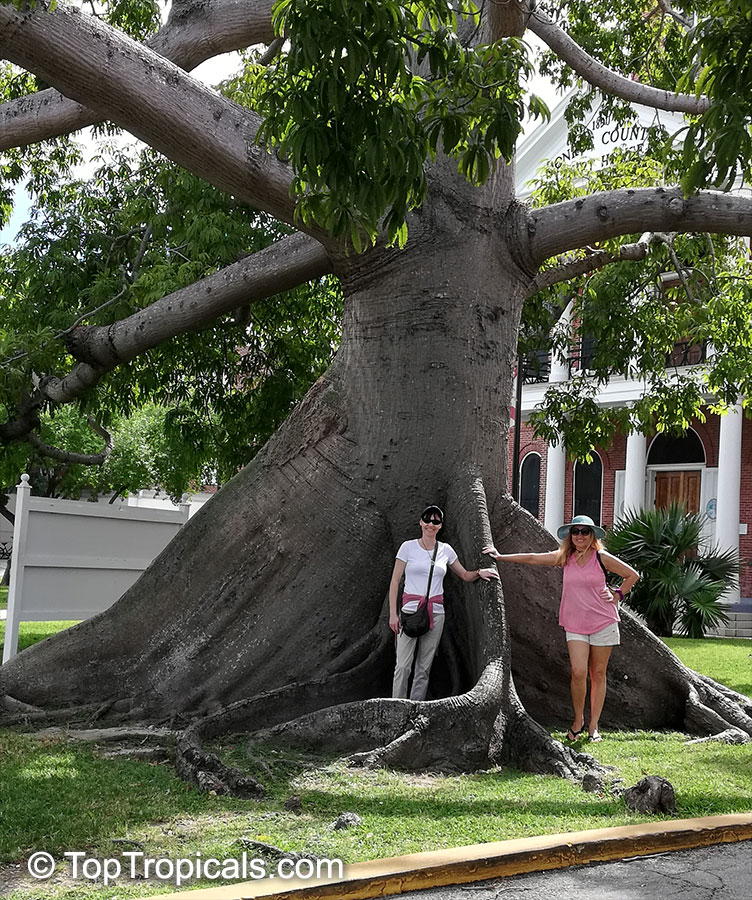
Ceiba  pentandra

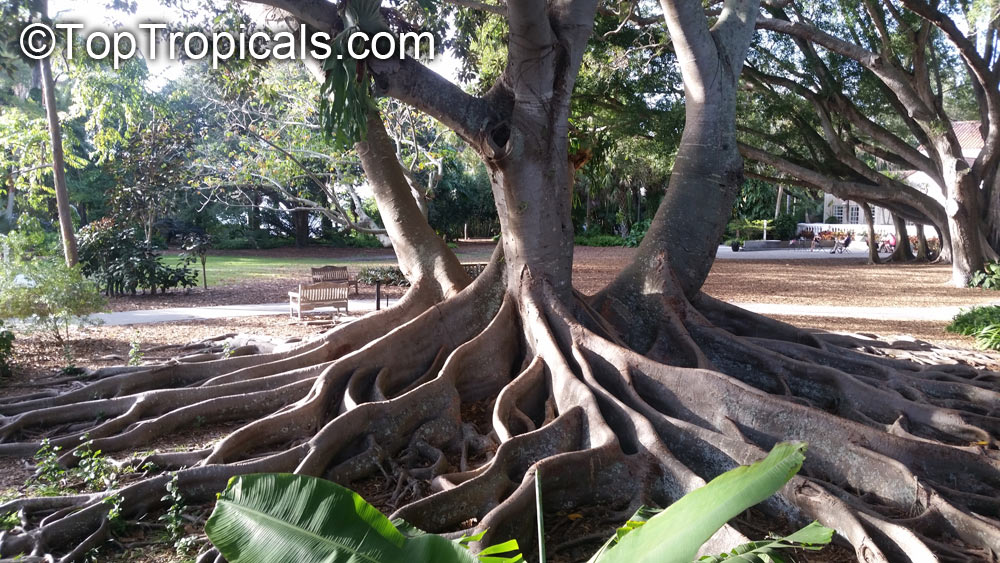
One of the most impressive and massive trees in the world - Ceiba pentandra - Kapok Tree. A majestic tropical tree! The ancient Maya of Central America believed that a great Ceiba tree stood at the center of the earth... Would you like to try growing it in the center of your backyard? Considering it will take decades to grow this big...

Ficus

Ficus macrophylla (Banyan). Did you know that exotic Banyan Trees are close related to Fig trees

Date: 29 Aug 2021

Those mouthwatering Blackberries...

Blackberry Patch Bundle Exclusive Collection

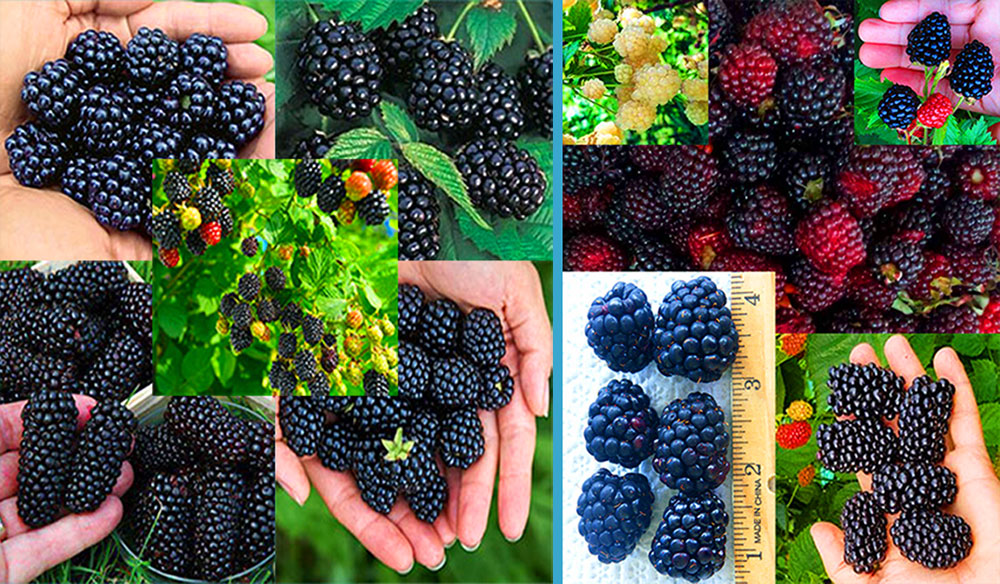
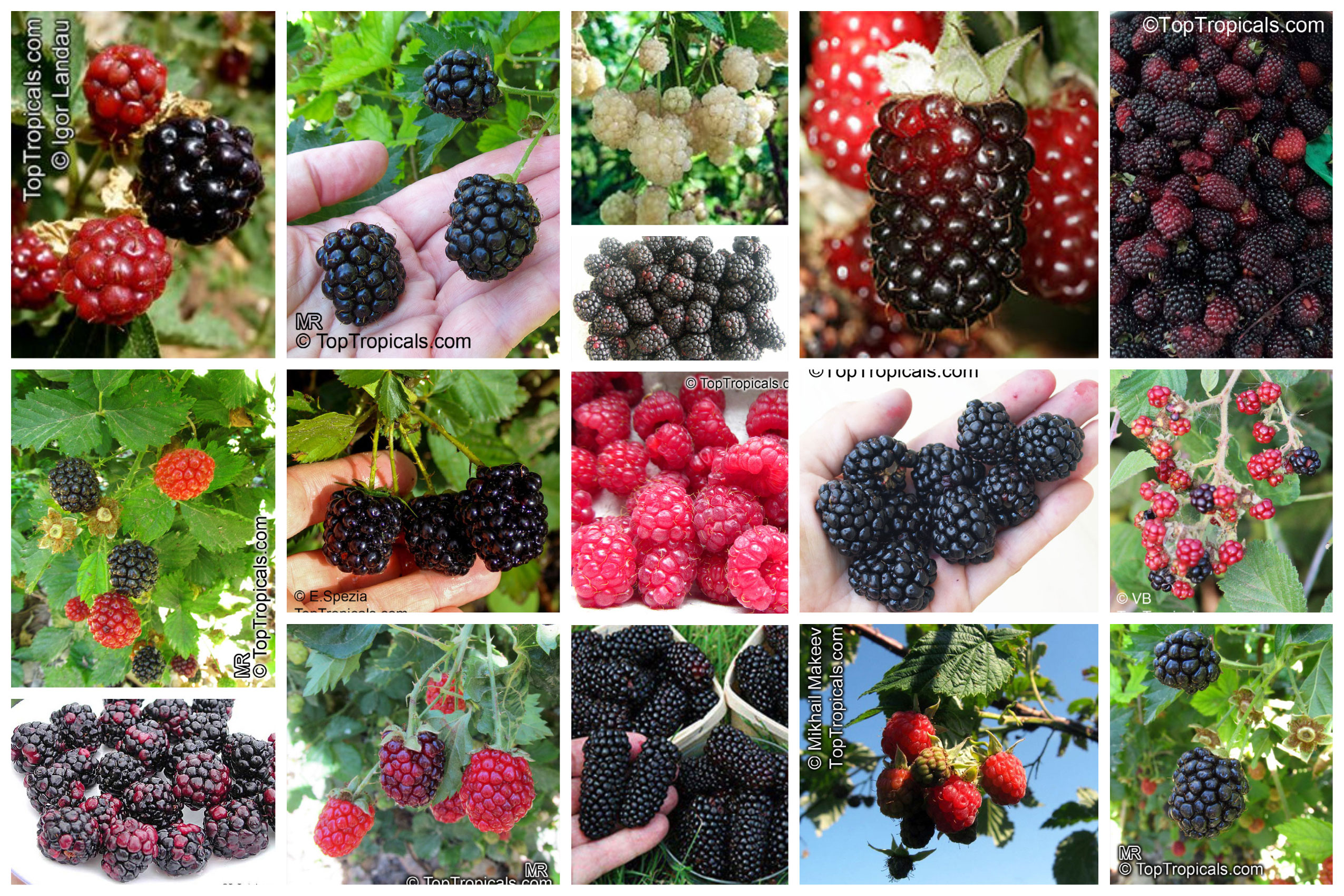
Two Collections of Superior Blackberry Varieties, well adopted to tropical and subtropical climates. Mouth watering, all time favorite fruit will be always with you - these plants are so easy to grow!

Blackberry Patch Bundle Exclusive Collection - buy 3 get 2 free.
The Collection includes 5 blackberry varieties: Navaho, Osage, Ouachita, Triple Crown Thornless, Iceberg White Blackberry.

Blackberry Patch Bundle Premier Collection - buy 3 get 2 free.
The Collection includes 5 blackberry varieties: Arapaho, Caddo, Kiowa, Natchez, and Prime-Ark Freedom.

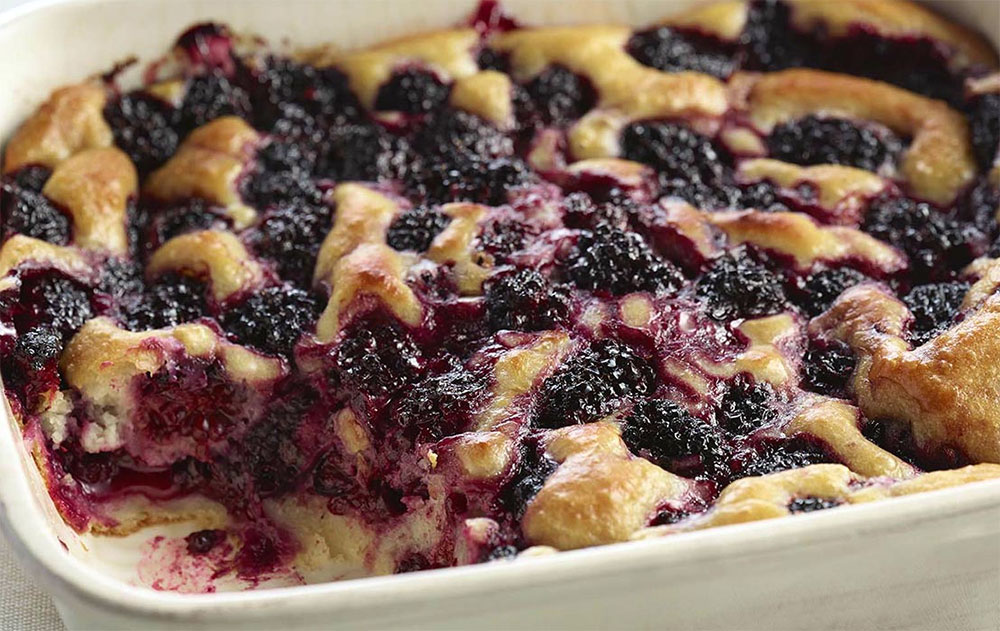
Mouth Watering High Protein Blackberry Cobbler

Ingredients

25g light butter
45g self-rising flour
33g vanilla whey
20g egg whites
50g almond or cashew milk
75g blackberries
Stevia/Splenda to taste

Instructions

Preheat oven to 350 degrees F. Melt butter half-way so it's just warm, not hot. In a mixing bowl, combine all ingredients except for blackberries. Pour into a 4-5"ramekin sprayed with Pam. Sprinkle blackberries on top of batter and bake for 15-20 minutes. It's best slightly gooey on the inside (not completely cooked). Enjoy!

Date: 22 Aug 2021

How to fertilize herbs and vegetables

Q: We moved to Florida from New York earlier this year. My wife and I used to grow many fresh veggies and herbs in our garden up North during Summer, but it seems like in hot Florida the season for them is not until Fall. So we are preparing the beds and also looking for some organic fertilizer solutions. We've heard a lot about your natural Boosters and wonder if they can be used in our vegetable garden?

A: You came to the right place for organic fertilizer solution. Sunshine Boosters are based on organic amino-acids and are completely natural, non-toxic, eco-friendly, and do not build up nutrients in the soil. Their mild formulas designed specifically for edibles.
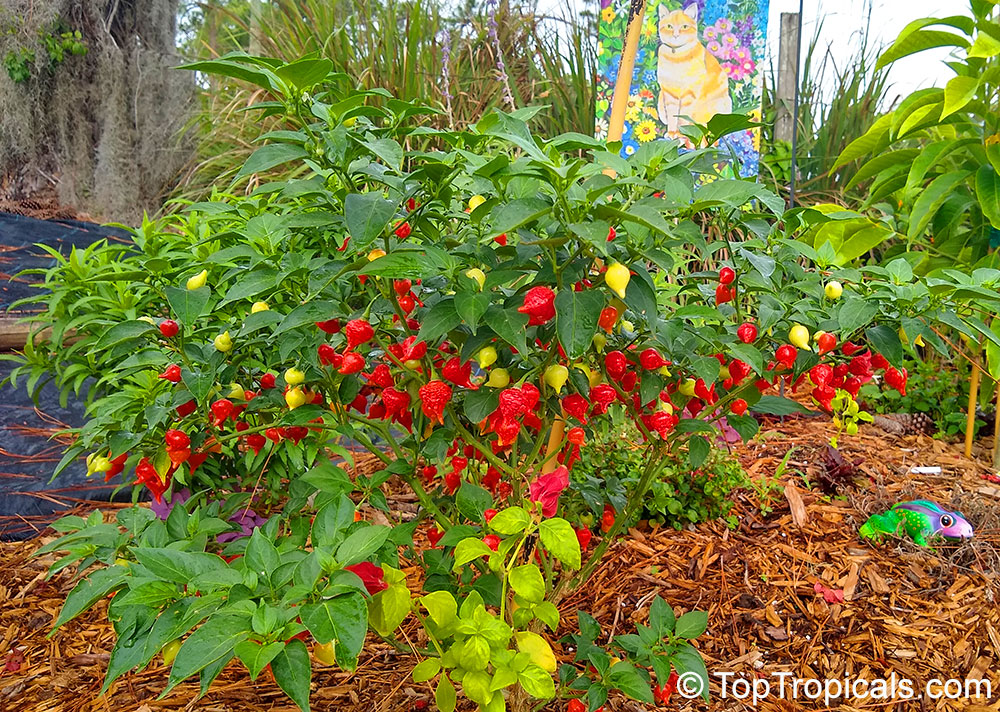
We just have started our own vegetable garden with some Biquinho and Wiri Wiri peppers, cherry tomatoes, and basil, and will be adding more as the the weather cools down.
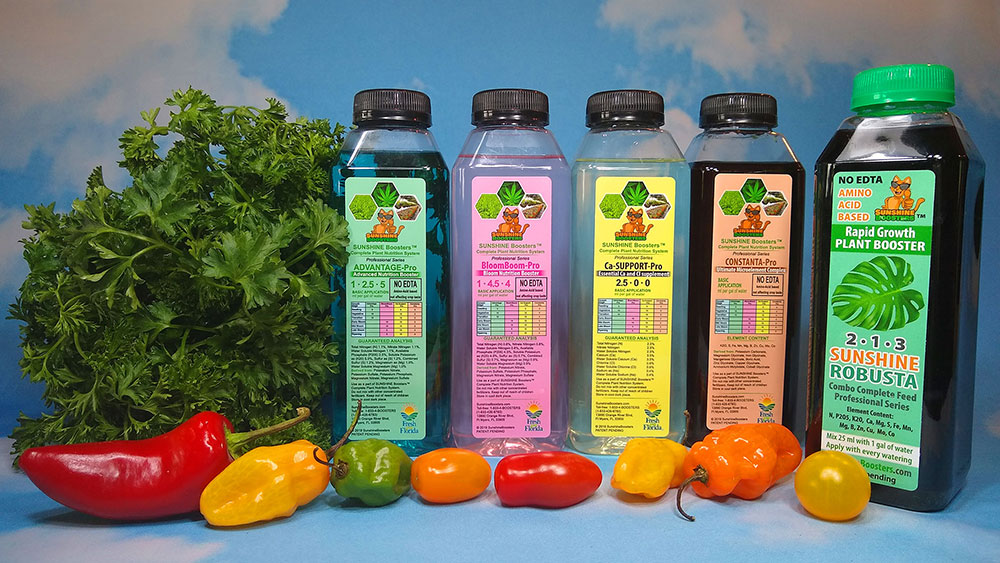
For small scale gardens (both vegetables and herbs), you can start with Sunshine Robusta - a total feed "all on one". All necessary elements are provided in just one bottle, both macro- and micro-elements, it is a scientifically balanced formula. For larger gardens, especially if you have fertilizer injector system, we recommend Sunshine Boosters Pro Series - this product is much more economical, and you will need to mix only 3 solutions into your watering tank at the time of watering.
For more information, please contact our Booster guy Ed Jones, he can help you with selection and dosage information. Sample Discount program is available for samples of Sunshine Pro.

Date: 25 Jun 2021

Kristi's Loquat Tropical BBQ sauce

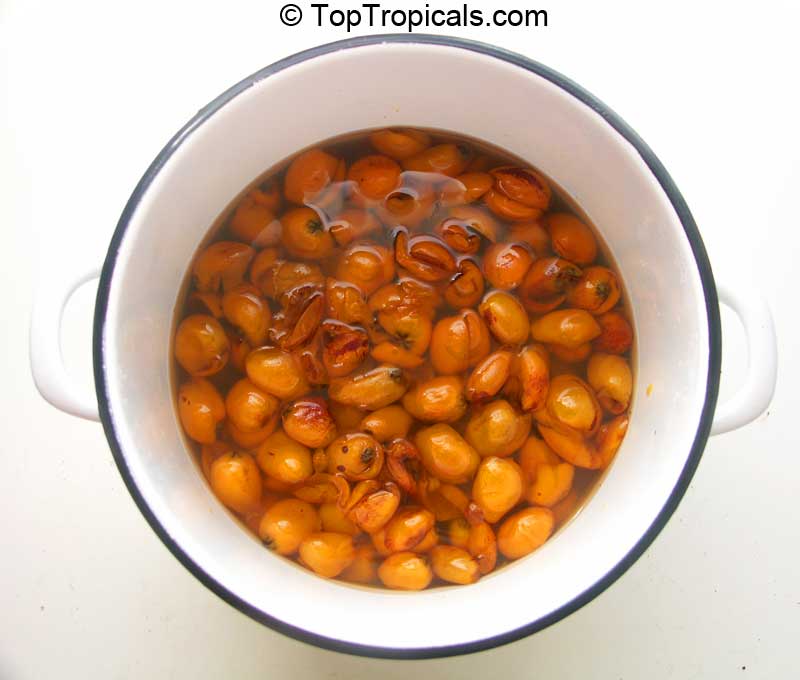
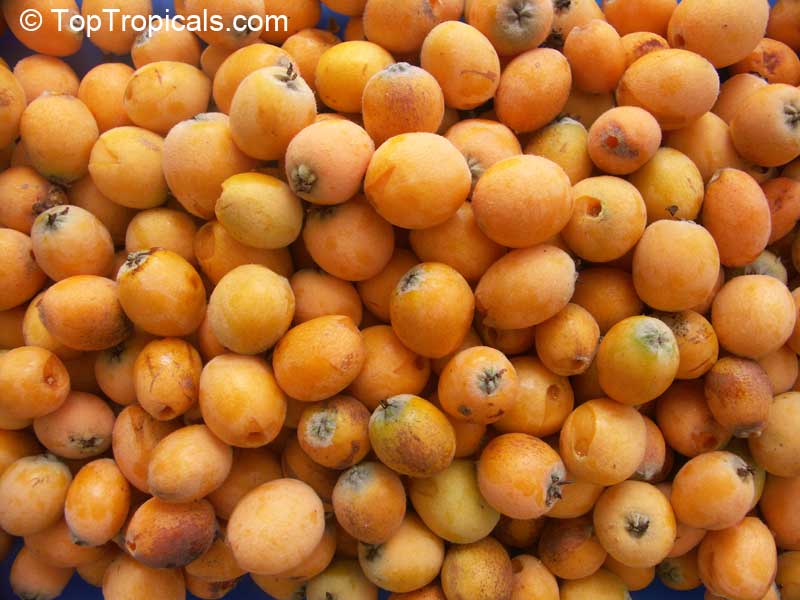
Loquat trees are famous for their abundant fruit production. Many customers who purchased this tree from us, soon end up with some serious crops and start asking if we have any special recipes for loquat fruit - because you can only eat so much out of hand! Here is our manager Kristi's favorite Loquat recipe - not only delicious and tropically-aromatic, but also good for you. Happy Tropical Meal!

Ingredients

2 lbs loquat fruit

  1. cup soft brown sugar
  2. cups malt vinegar
    1 onion chopped
  3. cloves garlic


1/2 tsp salt
1/2 tsp black pepper
1/4 tsp cayenne pepper
6 cloves whole or 1/2 tsp ground cloves

Instructions

Wash the fruit, cut them in half and remove stones. The loquats will lose about a third of their weight once stoned (3 lbs of whole fruit = 2 lbs of fruit, stones removed). Add loquats and all remaining ingredients to a large saucepan. Bring to a low boil, then simmer for about an hour, stirring occasionally. The liquid will have reduced quite a bit and the fruit will be collapsed and very soft. Allow to cool slightly, then liquidize the sauce in a blender or a food processor. Be careful, hot sauce really burns!
This delicious tropical sauce is great for any BBQ - with meats or fish. Enjoy!