Its a miracle: Miracle Fruit messes with your tongue, makes lemon sweet!
Synsepalum dulcificum - Miracle Fruit
🍭 It's a miracle: Miracle Fruit messes with your tongue, makes lemon sweet!
🍋🍬Miracle Fruit (Synsepalum dulcificum) Miracle Fruit - is a tidy, productive pot plant with a magical surprise.
🍋🍬 Ever wish lemons tasted like candy? This little berry makes sour foods taste sweet - lemon turns into a lemon candy, vinegar into syrup, and the effect can last for hours. The secret is a natural compound that masks the sour taste buds on your tongue.
🍋🍬 Miracle fruit isn’t just a fun trick - it’s also a perfect plant for your garden. A compact, slow-growing shrub, it actually prefers pots since it likes acidic soil. Indoors or out, it can fruit almost year-round, staying a neat 3-5 ft tall in a container.
🍋🍬 Best part? You can surprise your friends with a slice of lemon before and after trying it - and just wait for their reaction!
🍋🍬 What foods did you try with Miracle fruit? How did it change the taste?
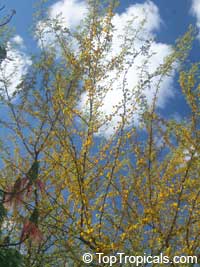
⭐️ Ylang-Ylang (Cananga odorata, Chanel No 5 Tree) is the tree behind the worlds most famous fragrance - Chanel No. 5. Its golden, star-like flowers drip from the branches with a scent so powerful you can smell it from yards away.
⭐️ Native to Indonesia and Southeast Asia, this tropical evergreen can reach impressive heights, yet it blooms almost year-round, covering itself in clusters of perfumed flowers. This is one of the most beautiful, fast growing and beneficial flowering trees for Southern landscapes.
⭐️The fragrance shifts as the blooms age, from green to lemon yellow to deep golden, each stage producing an intoxicating scent prized in perfumery and aromatherapy. Even without flowers, its tiered branches and glossy leaves create a striking, almost Christmas-tree effect.
⭐️For smaller spaces, a dwarf form, Cananga fruticosa, brings the same beauty and scent in patio-friendly size. Whether towering or compact, Ylang-Ylang is more than a plant - it's living perfume in your garden.
Q:
I have been using your new plant hormone SUNSHINE
for plants after shipping, and I must admit it does make
a big difference! They recover right away. I order
plants online very often, and usually it takes up to a
week or more until they start showing new growth. After
SUNSHINE treatments, they look fresh within a day or
two. My question would be, for improving cold tolerance,
what do you recommend? I live in Florida and it is still
warm here, should I start spraying my garden now or
should I wait until cold spells?
A:SUNSHINE
is very effective plant stimulant that helps tropical
plants survive different kinds of stress, including
cold, heat, drought, low light, etc. At TopTropicals
gardens and nursery, we have been using this hormone for
many years to protect our plants from unfavorable
conditions, and it saved us many rare tender species,
and lots of money!
The sooner in Fall you start treatments, the better.
Don't wait until cold spell. SUNSHINE works slowly and
in very low doses. The mechanism is actually about
boosting, building up the plant's own immune system. Low
doses once a week, even every other week will work just
fine, so you will need very little of the product. For
less than $5 you can help expensive rare plants to go
through winter painlessly. Recommended application is
only 2.5 ml/1 gal of water, to spray every 1-2 weeks
throughout winter period.
Start spraying your plants with SUNSHINE now, to help
them survive short winter days, build up insect
resistance (especially for plants indoors), and what is
most important, to remain strong through lower
temperatures. These are our suggestions:
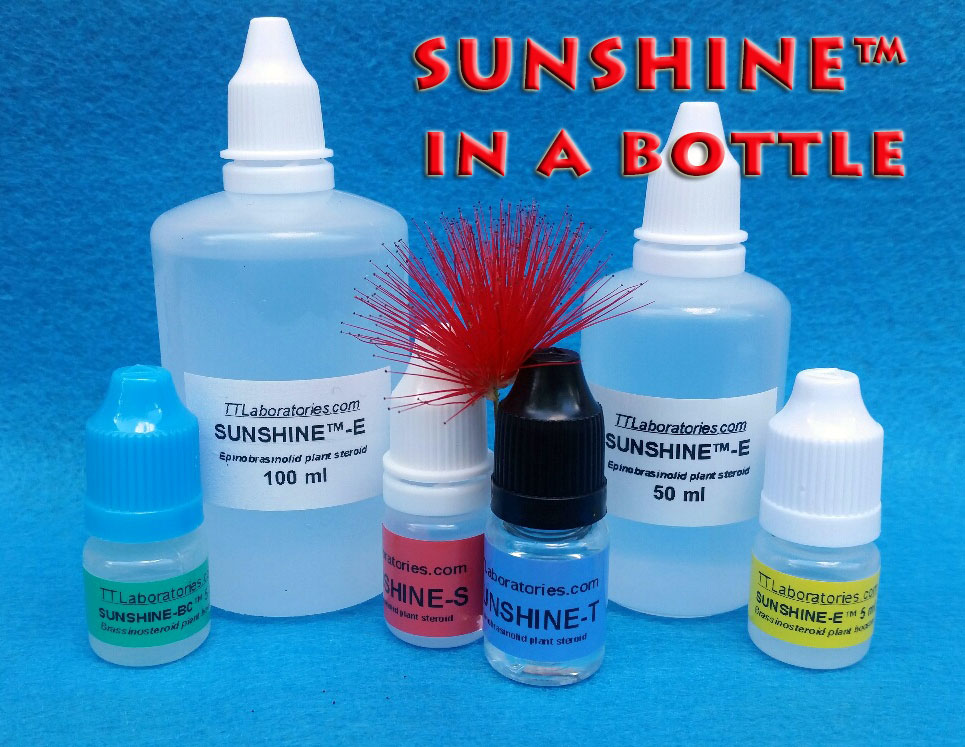
- SUNSHINE-T
- thermo-protection booster. It is specially
formulated for winter protection of tropical plants. To
improve cold hardiness even more, spray 1-2 days prior
to cold with 5 ml/1 gal solution and after that,
continue applications with 2.5 ml/1 gal solution every
10-15 days throughout winter period.
- For large plant collections, and in-ground gardens in
subtropical areas, take advantage of very cost effective
bulk items 50
ml and 100
ml bottles of SUNSHINE.
- Don't forget that SUNSHINE is only a stimulant, and
not a plant food. While regular fertilizer should be
avoided during winter months, it is always beneficial to
apply microelements through foliar spray. During cooler
period, chances of chlorosis increase, because at low
temperatures iron is difficult so absorb by roots
especially in moist soil, hence iron deficiency! Our new
Iron supplement SUNSHINE-Super-Iron
microelement booster will help to avoid yellowing leaves
and to maintain your plants strong and healthy during
slow growth period. Ultra-potent, highly absorbable iron
mix, with chelated Iron with DTPA (instead of usual
EDTA) that is better soluble in hard water and more
effective for chlorosis. This mix contains both EDTA +
DTPA chelated iron in higher concentration than regular
micro-elements mixes.
See all SUNSHINE
booster products in our store. For advanced
information on SUNSHINE plant boosters, history of use,
formulation, and frequently asked questions, visit our
manufacturer's website TTLaboratories.com.
Q:
I live in California and about a month ago ordered several plants from you, including fruit trees (Carambola, Mango, Avocado) and flowering trees (Xanthostemon, Adeniums, Champaca, Ylang Ylang). They were all doing well until I tried to move them into full sun, when they got leaf burn immediately. Ylang Ylang was doing great in a shade, but I repotted it from 1 gal into 3 gal and it is drooping leaves now. It has been very hot (over 100F) and dry (humidity is less than 25%). Any suggestions?
A: Hot summer can be pretty challenging time for establishing new plants. These are some guidelines to make your summer gardening more successful and rewarding.
1. You can order plants at any time, but keep your eye on your local weather forecast and try to chose cooler periods to schedule your plant shipments. Here at TopTropcals we monitor weather at destinations, and we can also delay shipment per your request until more favorable conditions.
3. Use shade cloth or simply white sheets to protect young plants and new plantings from hot sun.
4. When establishing mail ordered plants during hot weather, keep them in shade for longer period of time than average recommended 1-2 weeks. Give them a chance to establish really well. In areas with low air humidity, try to create a simple mist system
Date: 29 Oct 2024
How
to overwinter tropical plants indoors
10 key tips for successful overwintering
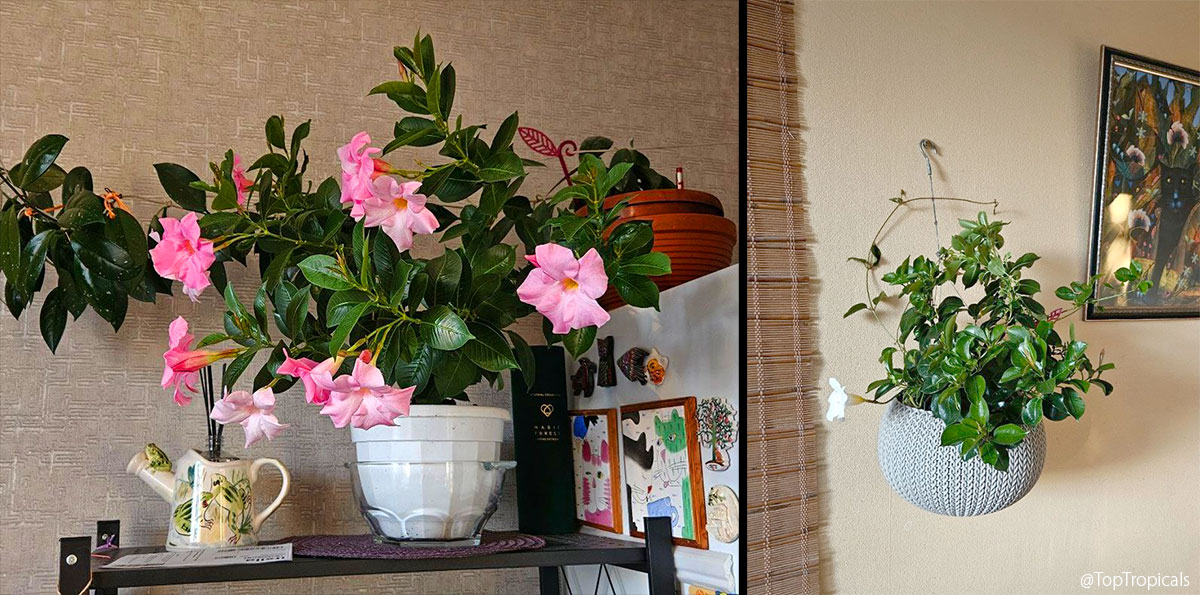
Q: I have two Mandevillas that thrived on my
balcony all summer. Now that cold weather is approaching, I've moved them
indoors to bright spots, but they're dropping and wilting leaves. How can I keep
them healthy until spring? Should I fertilize them? Can Mandevillas grow
indoors year-round?
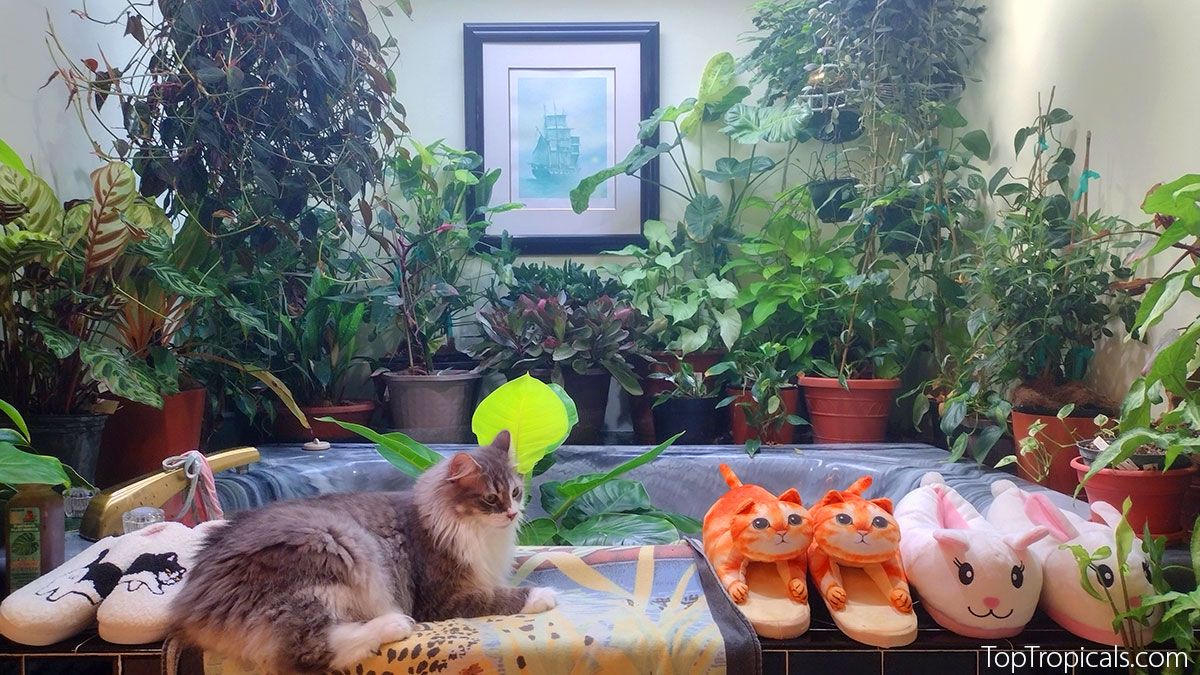
A: First, keep in mind that the plants we call
"indoor plants" or "house plants" are all tropical. However, not all tropical
plants are suitable for indoor living. Some, especially shade-loving ones,
thrive in indoor conditions, which is why we refer to them as "house plants"
(philodendrons, monsteras, calatheas, peperomias, and many others, including
some succulents). Others are less adaptable to the lower light and humidity
typical of indoor spaces, but with a little extra care, you can overwinter them
inside and move them back outdoors in spring. Mandevillas are no exception!
Even tropical trees, including fruit trees, can tolerate a few months indoors
if given the right conditions for semi-dormancy. Below are the 10 key tips for
successfully overwintering tropical plants indoors.
1. Maximize Light: The more light, the better. There's no such
thing as too much indoor light. If windows aren't enough, use LED grow lights,
which stay cool and won't dry the air. Rotate plants every few days to
prevent uneven leaf loss.
2. Reduce Watering: Less light and cooler temperatures mean
plants need less water. Allow the soil to dry between waterings, and avoid
overwatering - combination of cold + wet is especially harmful.
3. Maintain Moderate Temperatures: Most tropicals are happy with
daytime temperatures around 75F and nights at 50-60F. In sunrooms or
greenhouses, some can handle 45F if watering is kept to a minimum.
4. Boost Humidity: Avoid placing plants near heaters or vents
that dry the air. Misting daily helps, or place pots on trays filled with water
and pebbles to raise humidity around them.
5. Monitor for Pests: Check leaves weekly to catch insect
problems early, as pests can cause serious damage or even kill the plant indoors.
6. Fertilize Smart: Use ONLY liquid, amino-acid-based fertilizers
like Sunshine Boosters throughout winter; they won't burn roots since their
dosage adjusts with reduced watering. Avoid dry, granulated, and EDTA-based
fertilizers during winter and dormancy.
7. Use Micro-Nutrients: Along with macro-elements (fertilizers),
supplement with micro-elements like Sunshine Superfood and bio-stimulants
such as Sunshine Epi to build strong plants with robust immune systems, better
able to withstand unfavorable conditions and resist diseases.
8. Hold Off on Pruning: Leaf drop and leggy growth are normal
responses to winter. Wait until spring to prune, when new growth starts, to
encourage branching and healthy foliage.
9. Don't Repot Yet: During dormancy, roots slow their growth.
Repotting too soon risks root rot. Wait until spring when new growth appears to
transplant into a larger container. Typically, roots grow in proportion to
the above-ground parts.
10. Let Them Rest: Winter is a natural resting period. Avoid
forcing growth - your plants will reward your patience with vibrant leaves and
flowers when spring returns.