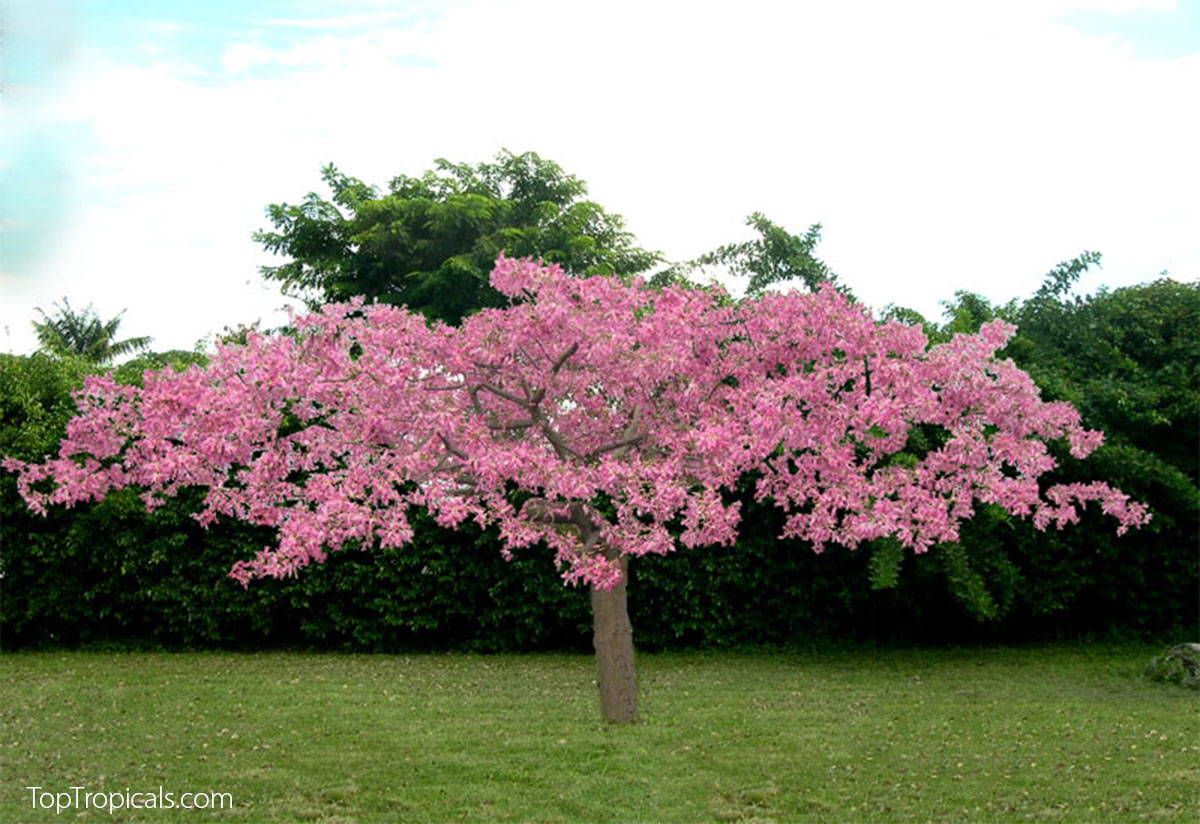
Q: Please recommend me a cold hardy flowering tree that doesn't need much care.
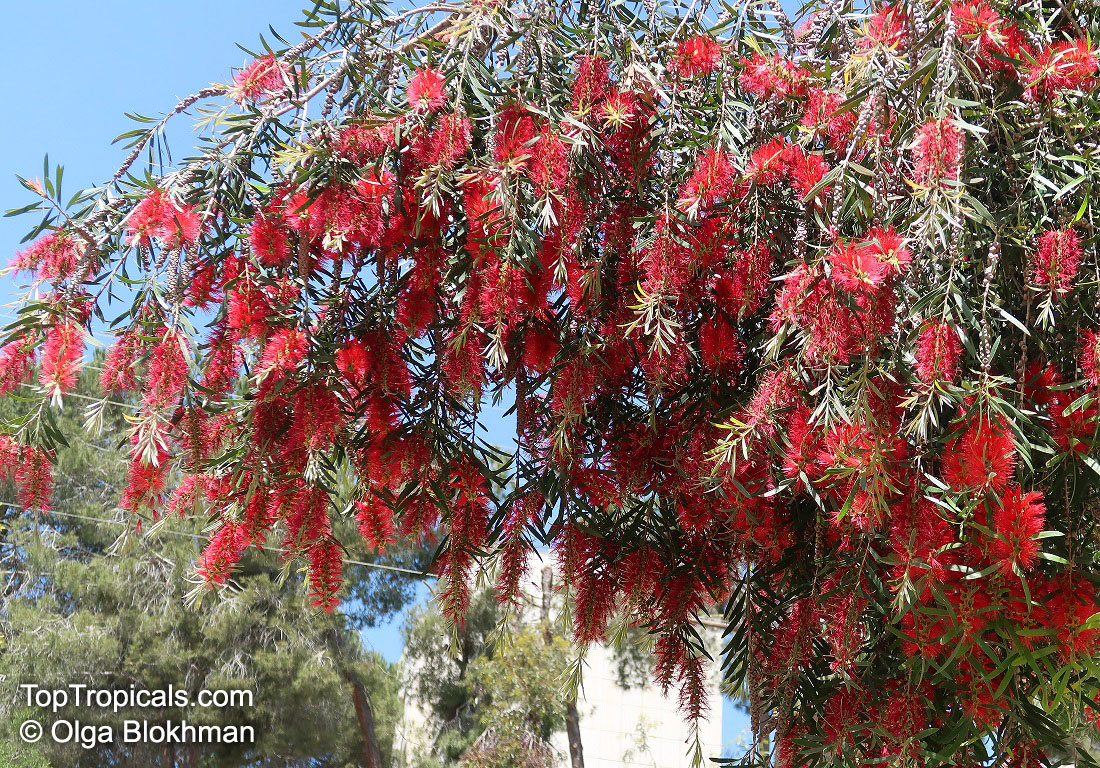
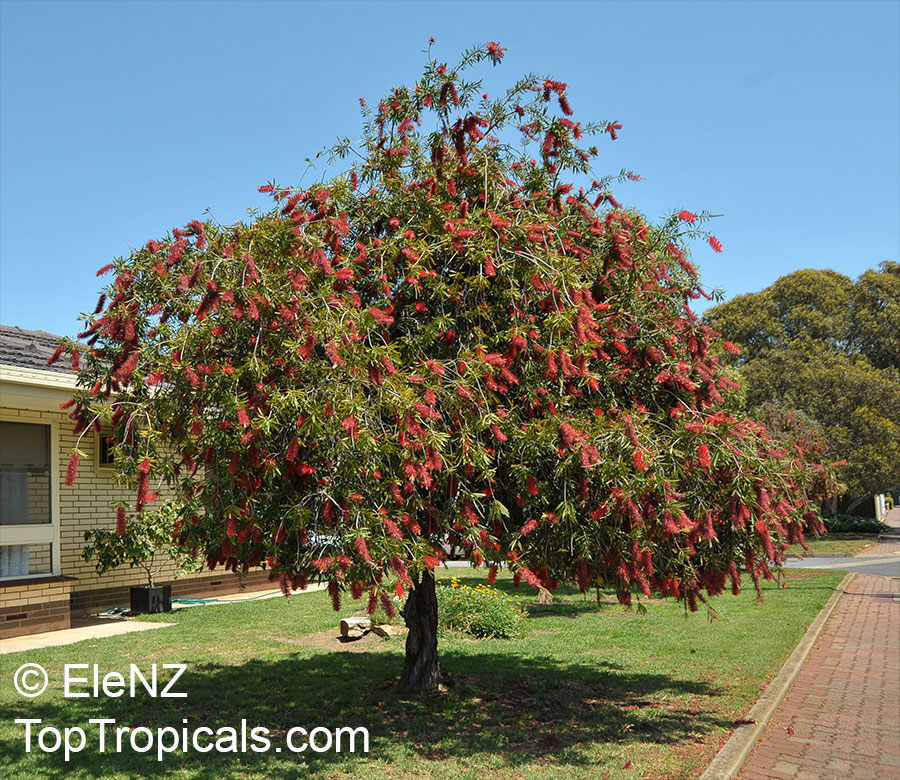
A: Growing bottle brush trees (Callistemon spp.) can be a rewarding experience, as they are known for their striking, brush-like flowers and ability to attract pollinators. Here are some detailed tips to help you successfully grow and maintain these trees.
Hardiness
Bottle brush trees are best suited for USDA hardiness zones 8-11. They thrive in warm climates and can tolerate some light frost, but severe cold can damage or kill the plant.
Planting Location
Sunlight: Bottle brush trees require full sun to thrive. Ensure they get at least 6-8 hours of direct sunlight per day. Soil: They prefer well-draining soil. While they are relatively tolerant of poor soil conditions, a sandy or loamy Space: Consider the mature size of the tree when planting. Some species can grow quite large, so provide enough space for them to spread without being crowded by other plants or structures.
Attracting Pollinators
Bottle brush trees are popular with pollinators. Their bright, nectar-rich flowers attract bees, butterflies, and birds, particularly hummingbirds. This makes them an excellent choice for a garden designed to support local wildlife.
Blooming and Fertilization
Bottle brush trees typically bloom in late spring to early summer. However, in mild climates, they may have sporadic blooms throughout the year. Fertilization: While bottle brush trees do not require heavy fertilization, applying a balanced, slow-release fertilizer in spring can promote healthier growth and more abundant blooms. Be cautious not to over-fertilize, as this can lead to excessive foliage growth at the expense of flowers. During the year, use |find_name=Sunshine Boosters Megaflor(Sunshine Megaflor)| - it is safe to use with every watering, year around.
Watering
During the establishment period, keep the soil moist. Once established, they are quite drought-tolerant but will benefit from regular watering during dry spells.
Pruning
Prune after flowering to maintain shape and remove any dead or diseased branches. This also encourages bushier growth.
By following these guidelines, you can enjoy the beauty and benefits of bottle brush trees in your garden. Their vibrant flowers and attraction to pollinators make them a delightful addition to many landscapes.
How to choose the right flowering trees for your landscape
Phymosia umbellata - Cranberry Malva Aparasolada
🔍 How to choose the right flowering trees for your landscape
🌷 There are so many flowering and blooming trees to choose from, where should you start? Well there are plenty of questions to ask and several answers for each.
🌷 Are you looking for trees that bloom in winter or are you looking for summer flowering trees? Maybe you are looking for the fastest growing shade tree. The choices are endless. Depending on your answer, there may be several trees that meet your needs.
🌷 One good place for beginners and even seasoned growers is to use the search features in our Top Tropicals Plant Encyclopedia. Here you can search by name, size, growth habit, light requirements, watering needs, color of bloom and cold hardiness.
March 21: World Planting Day
Big Tree Sale and Specials
Spring is Officially Here! March 20, 2025, marked the Spring Equinox
- the first day of Spring - a season of growth, renewal, and fresh beginnings! And on March 21, we celebrate International Day of Forests - the perfect time to plant a tree!
Happen to live in Florida? You're in luck: Top Tropicals is right around the corner! Not only do we offer a massive online selection
of flowering and fruiting tropical trees, but we also have large, ready-to-go
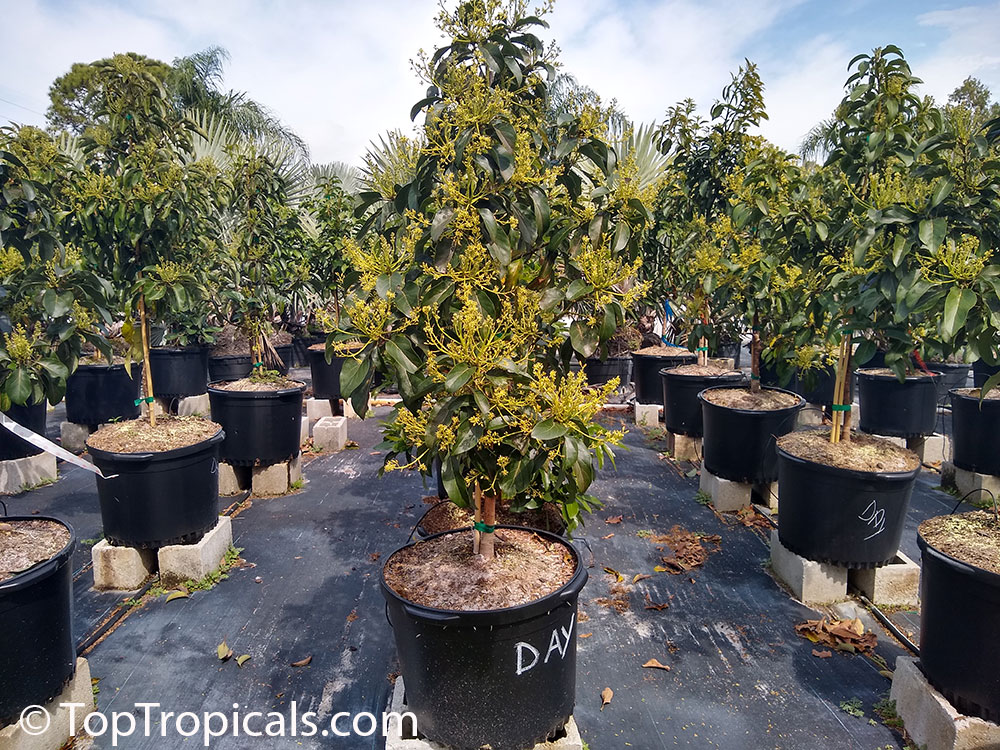
trees in 7-gal, 15-gal, and 25-gal sizes - already mature and ready to bloom and
fruit! No waiting years for results! Mango, Avocado, Champaka and other hot
selling trees are available in large size.
And here's the best part - FREE DELIVERY! (see offer details below
). Visit our Garden Center in Ft. Myers or our B-Farm in Sebring, Florida to check out our large tree selection. Our
friendly team is ready to help you find the perfect trees, discuss delivery
options, and even install them for you!
Yes, we install! We bring the trees, soil, mulch, fertilizer, and all necessary supplies for a hassle-free garden upgrade!
Discounts and special deals are available based on order size and plant type.
Enjoy our free delivery deal this week only! See offer details below.
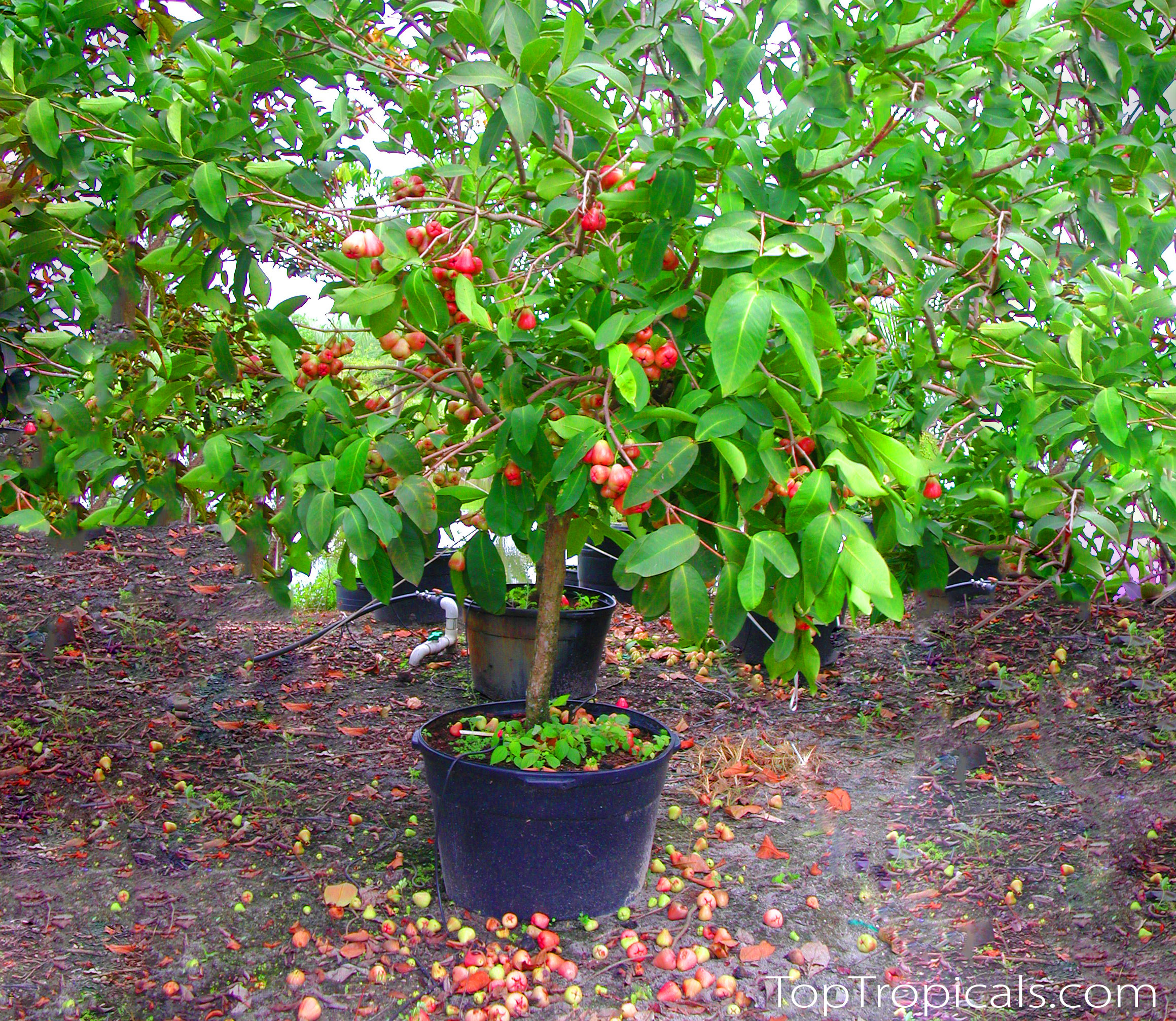
Fruiting Wax Jamboo in 25 gal pot
FREE DELIVERY+ 7 gal - $25 off regular price
15 gal - $75 off regular price
25 gal - $125 off regular price
Purchase over $300 in big trees, install only $30 for 15g, $60 for 25g
Purchase over $600 in big trees, install only $20 each
For walk ins only. Min order $200 for free delivery to Lee,
Collier, Highlands counties and more (check with our office). Exp. 3-28-25
Cassia vs Bauhinia: which is better as an everblooming container tree?
Cassia vs Bauhinia: which is better as an everblooming container tree?
🌈 Cassia vs Bauhinia: which is better as an everblooming container tree?
🌸 Cassia (Senna) trees are very popular flowering trees - fast growing, free-flowering, relatively cold hardy, and they love the summer heat. Cassias come in several colors: yellow, orange, pink, red, and rainbow. Rainbow varieties (which are hybrids between yellow and pink cassias) are the most popular thanks to their multicolor blooms with swirls of yellow, pink, red, and orange. But while Rainbow Cassia is a spectacular flowering tree for southern gardens, is it a good choice for a container when you want color on your patio or pool deck?
🌸 Some yellow-flowering cassias make attractive bushes that bloom most of the year and stay compact, so they can be grown as container specimens:
🌸 When it comes to Rainbow or pink cassias such as Cassia javanica - Apple Blossom Tree or Cassia grandis- Red Cassia and other species and hybrids (Cassia marginata - Rainbow Shower Tree, Cassia roxburghii - Ceylon Senna, Cassia x nodosa - Pink Shower), these are usually more vigorous trees that may take several years to bloom. Their flowering season lasts from a few weeks to a couple of months. These trees grow moderately fast but typically need to reach about 10 feet before they start flowering.
🌸 So, the answer is: if you want rich, deep color year-round from a container tree, go with Bauhinias - Orchid Trees. Most varieties grow well in pots, stay compact, and reach blooming maturity within just one season. The following varieties are everblooming and can produce flowers for up to 10 months of the year:
Bauhinia madagascariensis - Red Dwarf Orchid Tree. Blooms from winter through fall, up to 10 months a year. The most cold-hardy of all.
Bauhinia blakeana - Hong Kong Orchid Tree. A large tree in the ground, but compact in pots if trimmed. Grafted trees flower right away. Winter bloomer, cold hardy to light frost.
Bauhinia tomentosa - Yellow Orchid Tree. Flowers from Winter through Summer, cold hardy to light frost.
Bauhiniamonandra - Napoleon's Plume Orchid Tree. Almost everblooming with the longest flowering period (less cold hardy than the first three).
Bauhinia acuminata - Dwarf White Orchid Tree. Blooms from summer through winter (also less cold hardy than the first three).
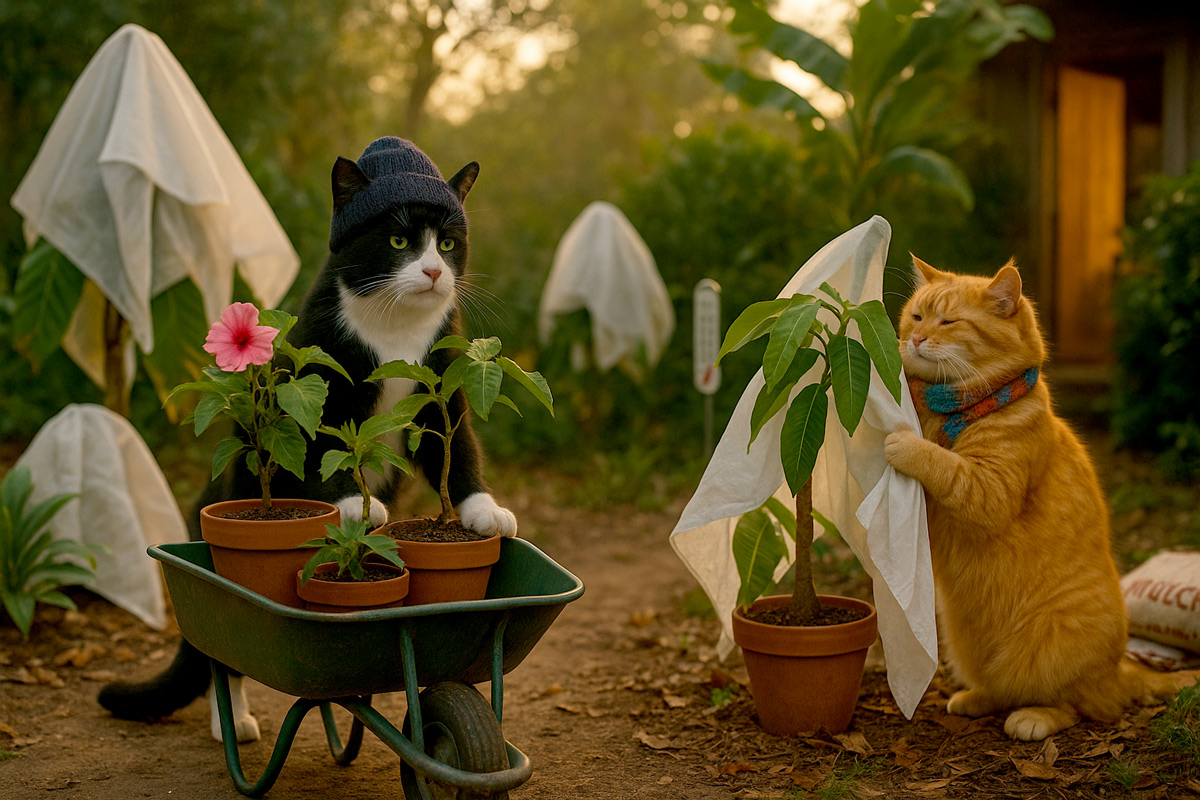
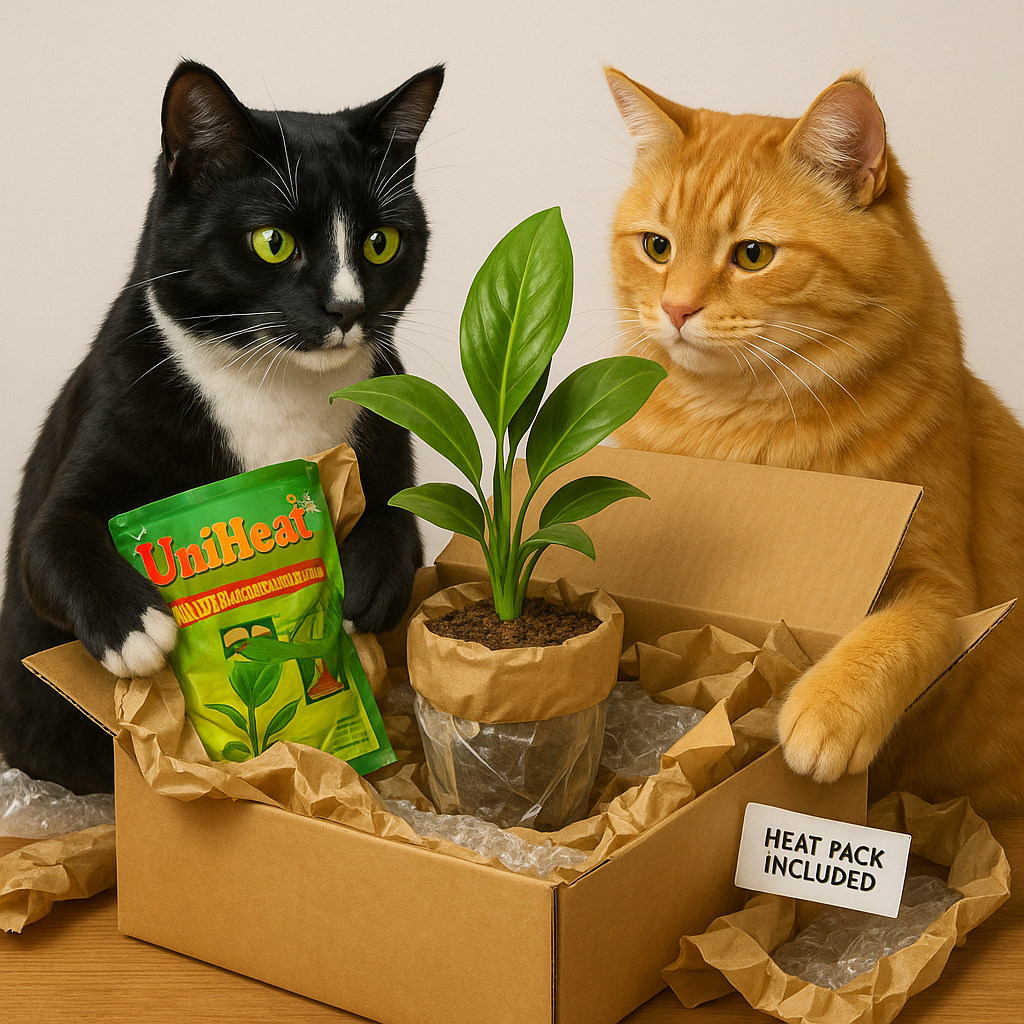
Smokey and Sunshine Prepare Plants for the Cold Night.
Smokey: Come on, Sunshine, help me move these plants inside before it gets
dark!
Sunshine: I am helping... see? I’m supervising the mango
tree.
Smokey: You call that supervising? The frost cloth’s upside down!
When the forecast drops into the 30s, panic is not a plan. This is your
simple, clear checklist to protect every tropical in your garden. Think of
it as the quick emergency manual that goes hand in hand with the previous
cold-weather newsletter.
"We
all love our tropical flowers, mangoes, bananas, and rare fruit trees. A
single cold night does
not have to be a disaster. The key is knowing what to do, when to do it, and
what mistakes to avoid." - Tatiana Anderson, Top Tropicals Plant
Expert
🌡️ FROST AND FREEZE
A frost and a freeze are not the same. A frost is when you see ice crystals
on leaves or grass, while a freeze is when the air temperature drops below
32 F. The tricky part is that you can get
frost even when the air is above freezing, and you can have a freeze with no
frost at all. It all depends on humidity and the dew point. If the dew
point
is below freezing, the ground can cool faster than the air, letting frost
form even when your thermometer reads 35 or 36 F. And once the air itself
drops below 32 F, even for an hour, tender tropicals can be damaged. For
plants, a freeze is far more dangerous, because freezing air pulls heat out
of stems, branches, and roots. Frost usually burns leaves, but a true freeze
can injure wood, kill buds, and damage the entire plant.
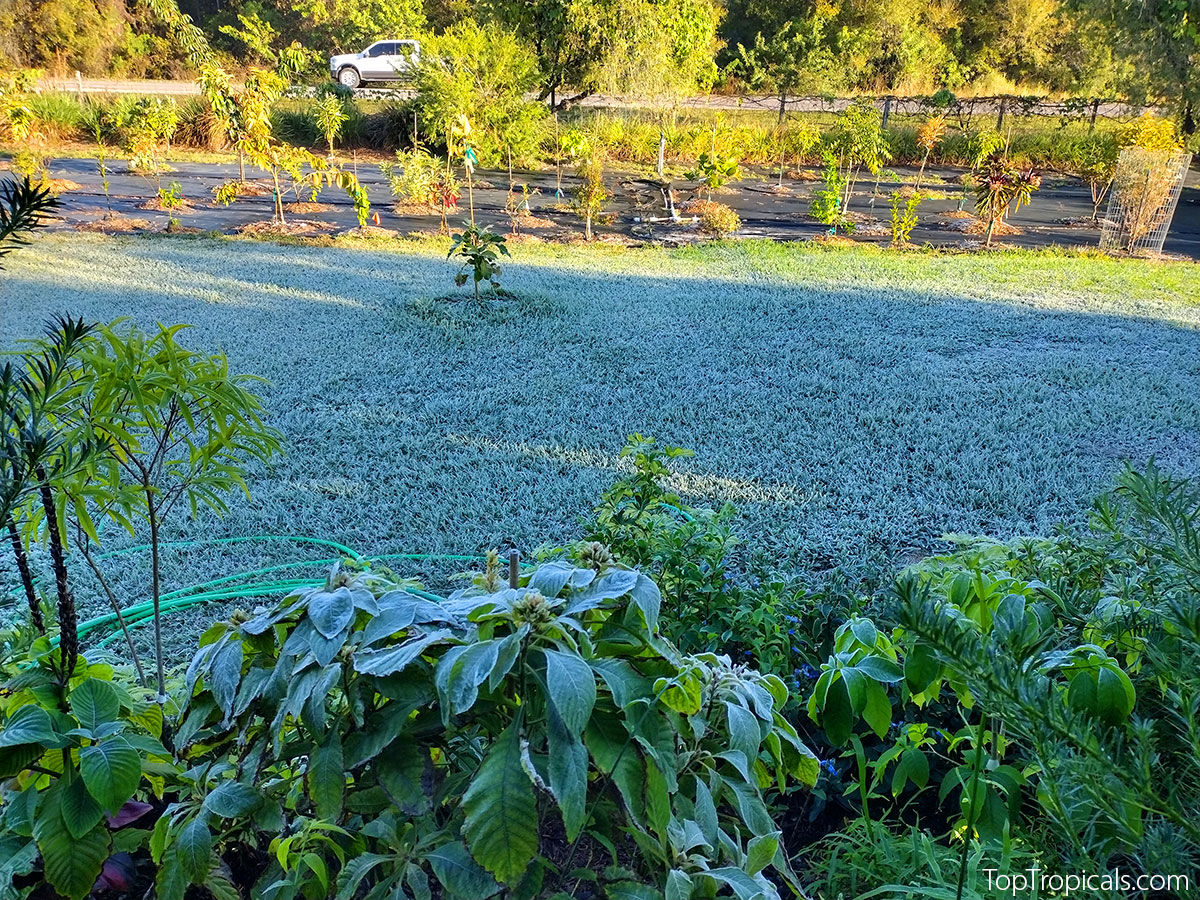
Frost on the grass and leaves on Winter morning in Central
Florida
WHAT TO DO
AND NOT TO DO BEFORE A COLD SNAP
✔️ 5 THINGS TO DO:
Water well. Hydrated plants tolerate cold better than dry, stressed
ones.
Add mulch. A thick layer around the base keeps roots warm.
Block the wind. Move pots to a sheltered corner or patio.
Cover at night, uncover in the morning. Let plants breathe and get
light.
Add gentle heat if needed. Non-LED Christmas lights or a small old style
15-20W light can raise temps a few degrees.
❌ 5 THINGS NOT TO DO:
Do not prune or trim. Fresh cuts freeze first.
Do not overwater. Wet, cold soil invites root rot.
Do not let plants dry out either. Wilted plants freeze more easily.
Do not use dry fertilizer. Gentle liquid feeds like Sunshine
Boosters are safe to use with every watering: its intake naturally slows
down as watering decreases.
Do not look only at the thermometer. A long, windy night can be worse
than a short freeze.
TEMPERATURE
ACTION GUIDE (40 to 25 F)
40 to 38 F: Move potted plants to shelter, water soil, and cover
tender tropicals.
37 to 33 F: Use frost cloth and anchor it down so the wind does
not lift it.
32 to 30 F: Add a heat source like non-LED lights.
29 to 25 F: Double-cover sensitive plants, wrap trunks, and
protect roots heavily.
COLD
TOLERANCE BY PLANT TYPE
Before a cold night, it really helps to know your plant’s exact
cold limits. Every species is different, and young plants are always more
sensitive than mature ones. Take a few minutes to look up your varieties in
our Tropical
Plants Encyclopedia
— it will tell you the safe temperature range, how much protection
each plant needs, and which ones must be covered or moved before the next
cold snap hits.
Bananas: leaf burn below 37 F
Mango, Annona: hurt around 32 F
Cold hardy avocados: Mature tree can take about 25 F. Young trees must
be protected
Olives, Citrus, Guava, Jaboticaba: usually OK outside with mulch
QUICK-ACTION
TABLE
Before the cold arrives, make yourself a quick list of every plant and
what action each one needs. It saves time when temperatures start dropping
and keeps you from scrambling in the dark. Check that you have enough frost
cloth, blankets, and supplies on hand so you can cover everything without
rushing. Planning ahead makes cold nights much less stressful.
Bring Indoors: Cacao, Bilimbi, Coffee. They need warm, bright
light.
Cover Outdoors: Mango, Jackfruit, Banana, Annona. Use frost cloth, not
plastic on leaves.
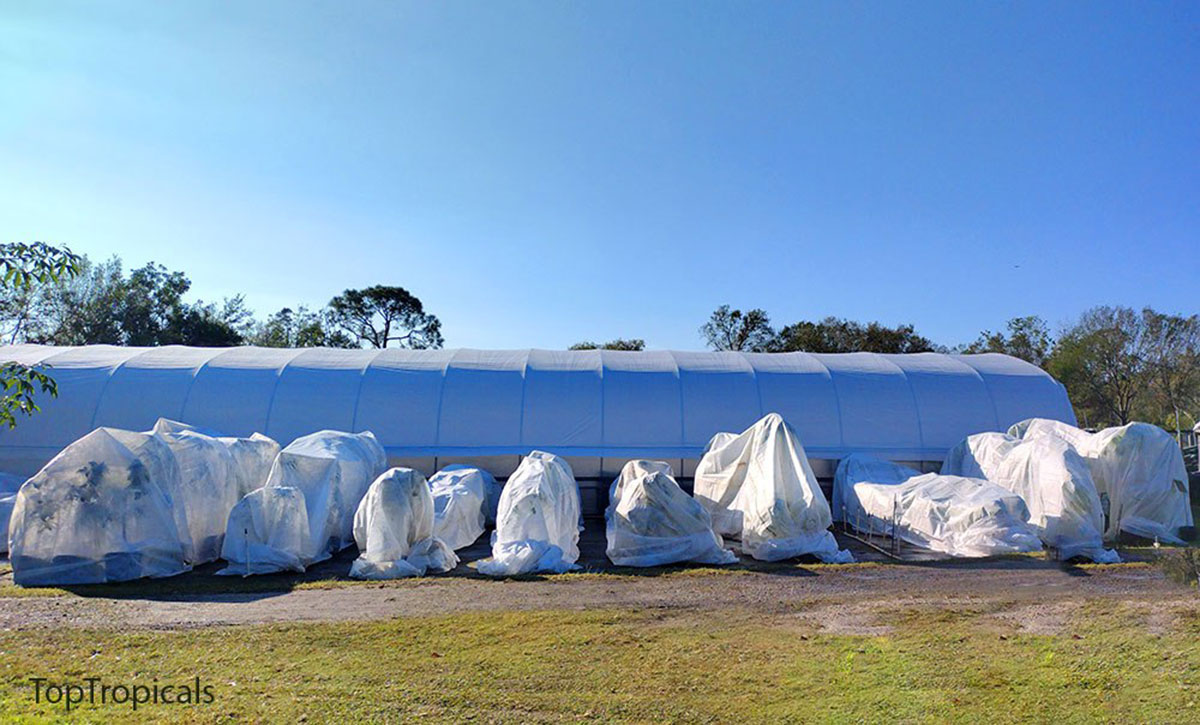
Covering large mango and avocado trees in pots at TopTropicals during
cold nights
GADGETS AND
TOOLS THAT HELP
Indoor helpers: LED lights, small heaters, bottom-heat mats,
timers.
Outdoor helpers: frost cloth rolls, mini greenhouses, non-LED Christmas
lights or small incandescent lights, smart thermometers.
Always keep electrical safety in mind, especially if you are using extension
cords outdoors. Use only weather-rated cords, keep all connections off the
ground, and protect plugs from moisture. Make sure heaters and lights are
stable, secured, and never touching fabric covers. A few minutes of safety
check
can prevent a dangerous situation on a cold, wet night.
And if you want to keep plants strong through winter, add Sunshine
Boosters to your watering routine. It is gentle, safe in cold weather,
and gives plants an extra edge.
AFTER THE
COLD PASSES
In the morning, uncover plants. Leaving covers on during the day can trap
heat and cook the tender new growth, especially under the sun. The only
exception is true frost cloth designed for all-day use, which allows air,
light, and moisture to pass through. Regular blankets, sheets, and plastic
must come off as soon as the sun rises.
Do not cut anything yet. A plant can look completely dead after a freeze,
but many branches are still alive under the bark. Cutting too soon removes
wood that would recover on its own. Wait until new growth begins in spring.
That is when you can see exactly which branches are truly dead.
Use the scratch test. Gently scratch the bark with your nail or a small
knife. If the layer underneath is green, the branch is alive. If it is brown
and dry, it is likely dead. But even then, wait until warm weather to be
sure, because sometimes only the tips die back while the lower part of the
branch survives.
Once the weather stabilizes, resume light feeding. Plants coming out of cold
stress need gentle support, not heavy fertilizer. A mild liquid feed like
Sunshine
Boosters helps them rebuild roots and push new growth without burning
tender tissue.
Your tropical garden can survive any cold night if you prepare right. Cold
snaps always feel stressful in the moment, but once you know your plants,
have the right supplies, and follow a simple plan, it becomes routine. A few
minutes of preparation before dark can save months of growth and keep your
collection healthy all winter.
Frost cloth is the true workhorse of cold protection: it keeps heat in,
keeps frost off, and will not suffocate plants the way plastic or blankets
can. Having a few rolls ready means you never have to scramble at the last
minute. Sunshine
Boosters give your plants gentle support during the colder months so
they stay strong enough to bounce back quickly when warm weather
returns.
A little planning now will pay off in spring, when your mango, banana,
citrus, and all your favorite tropicals come back happy and ready to
grow.