Date: 21 Dec 2022
Noni, the Superfruit
Nature's Food and Pharmacy
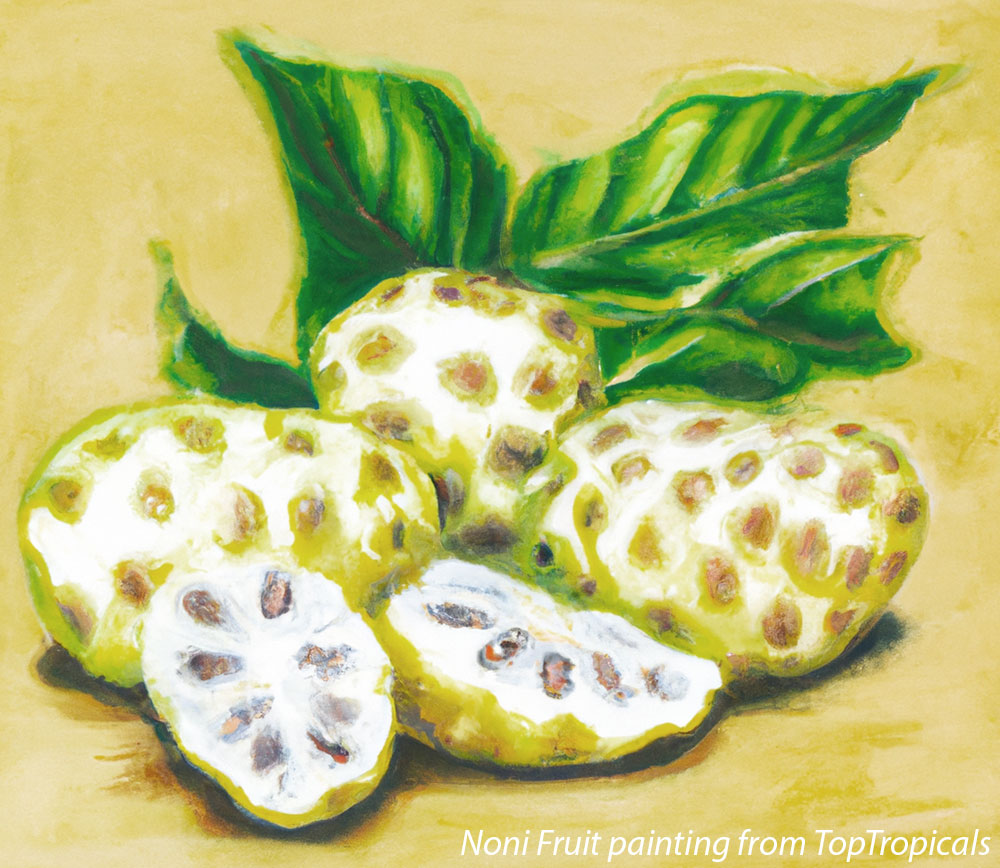
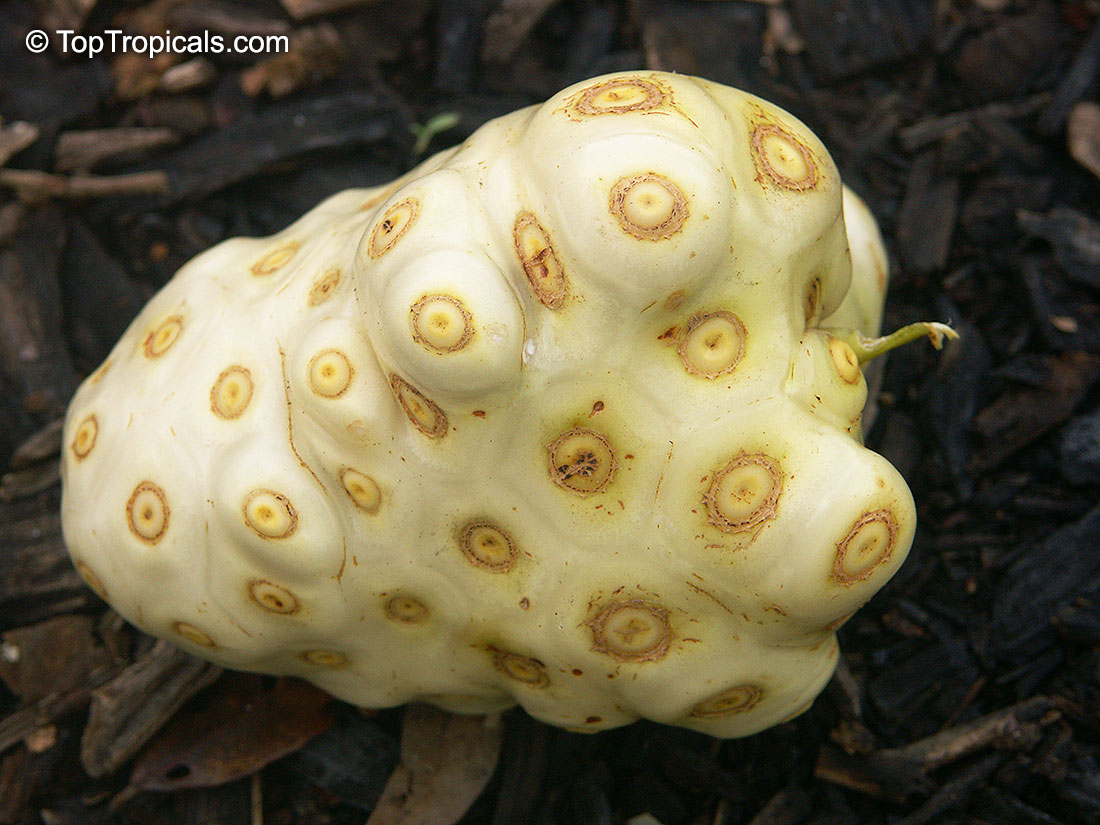
At our Christmas Plant Market a few days ago, many guests purchased a Noni tree. Everybody loved its large, beautiful leathery leaves, and were buying Noni as a present. It was appreciated as ornamental, for example as a showy specimen tree with a tropical look for a pool area. But very few people actually knew that this tree was a source of a famous Noni Juice - a unique remedy from Mother Nature... Some were surprised the plant had so many health benefits! So we promised to tell more about Noni in our newsletter.
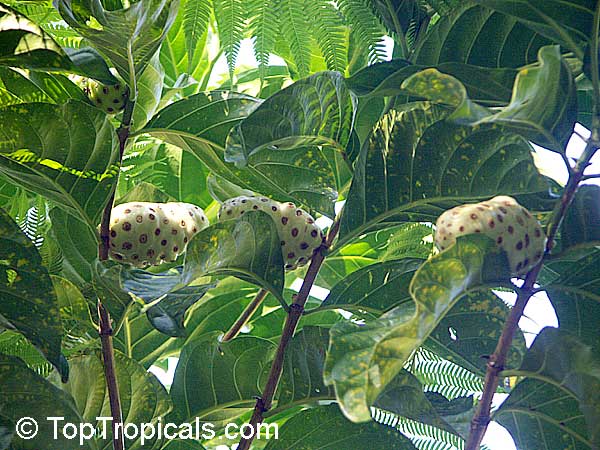
The Noni tree - Morinda citrifolia - is a beautiful ornamental tree because of its
glossy green leaves and curious fruit. The tree is prized for its medicinal
fruit.
The Noni is considered to be a "superfruit" because of its high levels of
antioxidants, vitamins, and minerals. The fruit, leaves, and roots of the Noni
tree are used in traditional medicine to treat a wide variety of ailments,
including pain, inflammation, and infections. Some people also use Noni fruit
and juice as a natural health supplement because of its potential health
benefits.
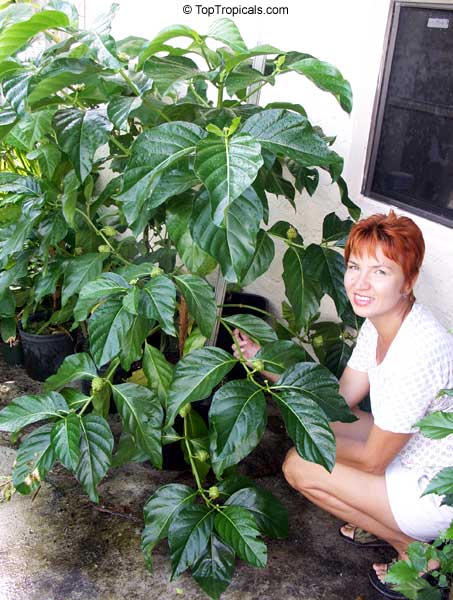
Additionally, the Noni tree is easy to grow and care for, making it a
popular choice for both gardens and houseplant collections.
For more information on health benefits of Noni, download pdf of Noni article (from our Magazine Tropical Treasures) and watch the video: Doctor Noni.
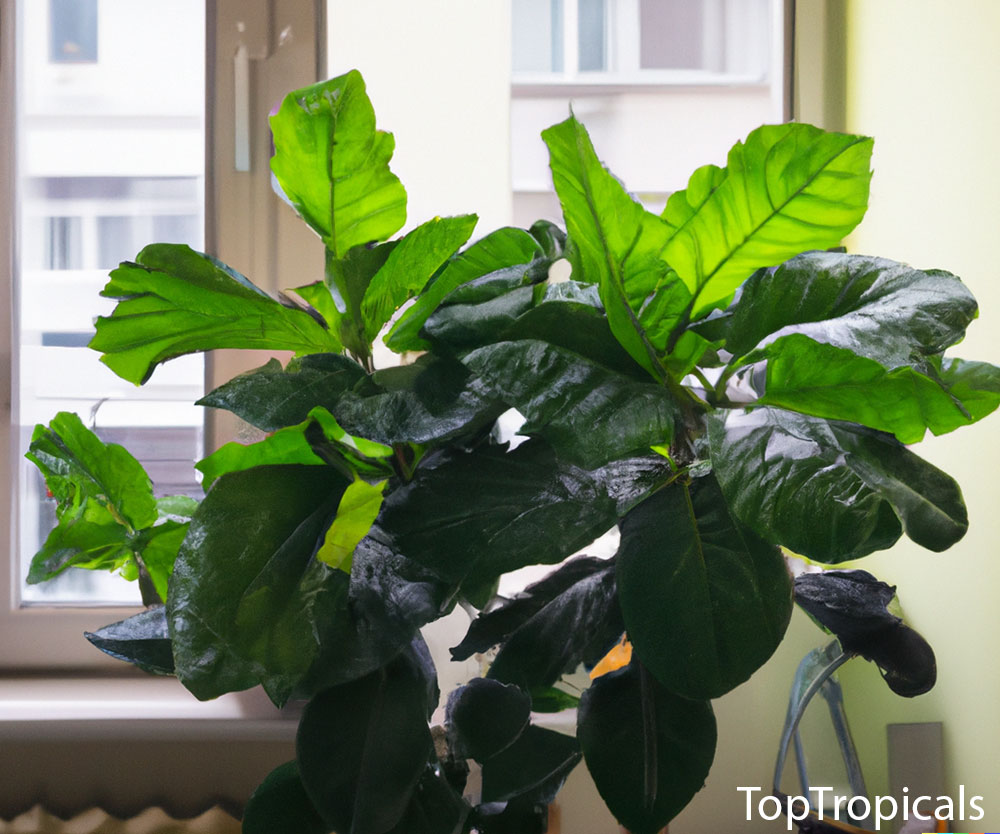
In the photo: Noni as a houseplant. So much better than a boring ficus!
Date: 1 Feb 2021
The Secret of Longevity
finally revealed!
"...Time spent in the garden doesn't count against your lifespan..."
Want to live longer? Surround yourself with plants
If you want to live longer, live around green space. The Barcelona
Institute for Global Health found that for every 10% increase in vegetation that's
within 1,600 feet of your home, your probability of death drops by 4%.
LEARN MORE >>
Why gardening could help you live longer:
1. It gets you into Nature.
2. It's good exercise.
3. You'll eat what you grow.
4. It exercises your mind, while also relieving stress.
LEARN MORE >>
Gardening helps you live to 100
Many of the world's centenarians share one common hobby: gardening. Could you extend your life and drop your stress by taking up the pursuit, too? People living in these so-called "blue zones" have certain factors in common - with daily exercise habits and a plant-based diet, for starters. But they share another unexpected commonality. People are gardening well into old age - their 80s, 90s and beyond. Could nurturing your green thumb help you live to 100? Let nature nurture you!
LEARN MORE >>
The healthiest people in the world don't go to the gym.
Moving naturally throughout the day might sound pleasant and romantic,
but the reality is that 100 years ago only 10% of us had sedentary jobs,
whereas today it's 90%. However, there are still easy ways to add more movement into your busy lifestyle. The research also showed that walking even as little as two hours per week could reduce the risk of cardiovascular disease, respiratory disease, cancer, and help you live longer.
What work out can be better than Gardening? Fresh air, lots of exercise, yet fun and rewarding!
See also: Forget the gym and get to gardening.
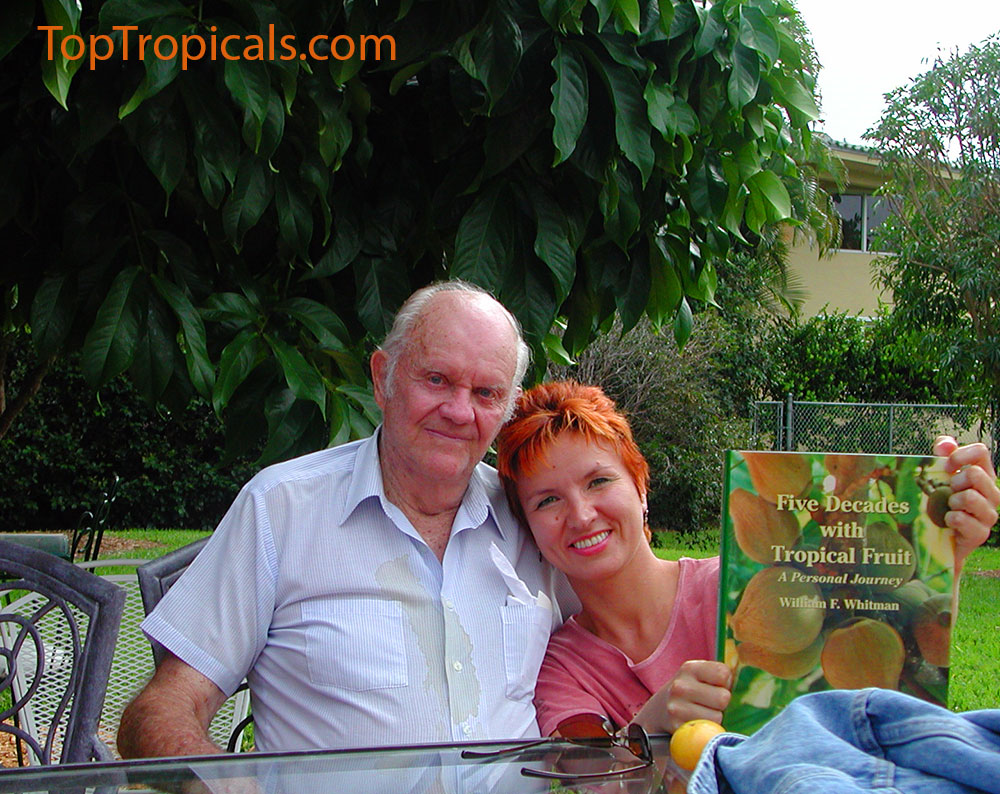
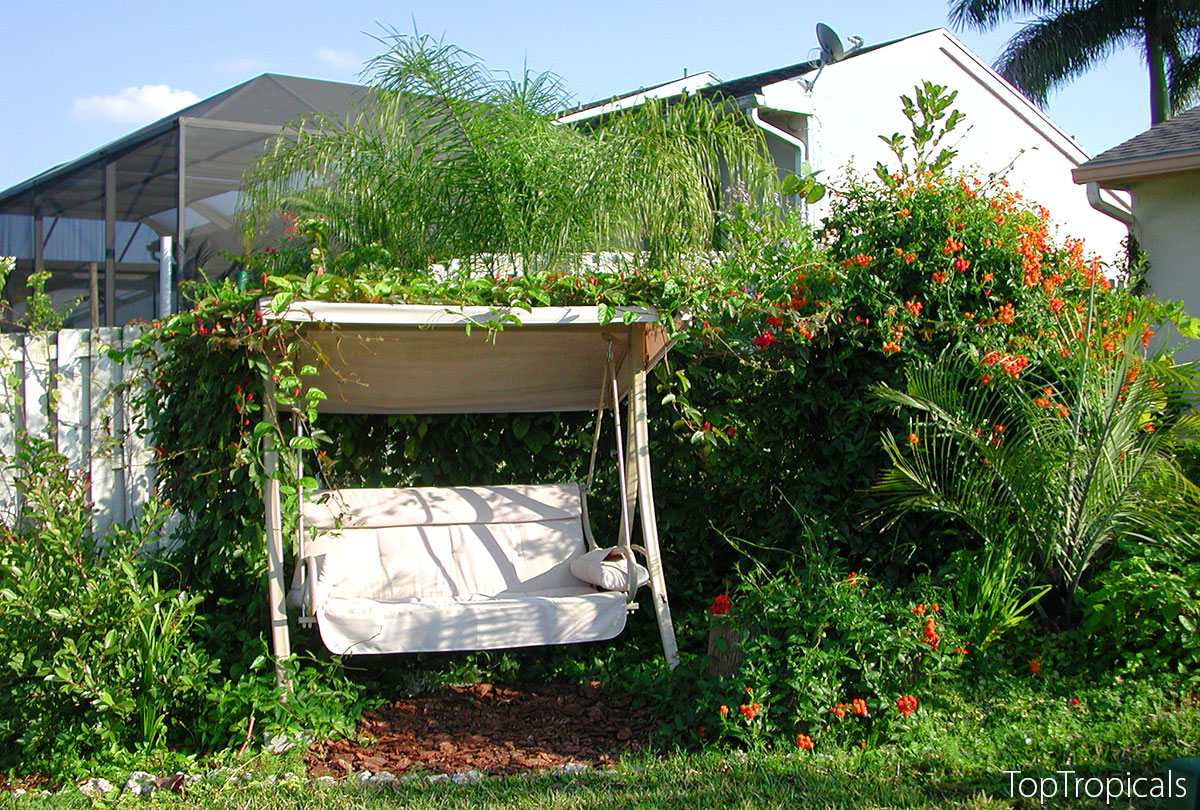
In the photo: The Father of American Tropical Fruit Horticulture Bill Whitman, age 92, is presenting his book Five decades with tropical fruit to Top Tropicals after giving a tour
Date: 1 Apr 2020
Nature's pharmacy: Star Anise or Tamiflu will beat the flu?
by Onika Amell, tropical plant expert
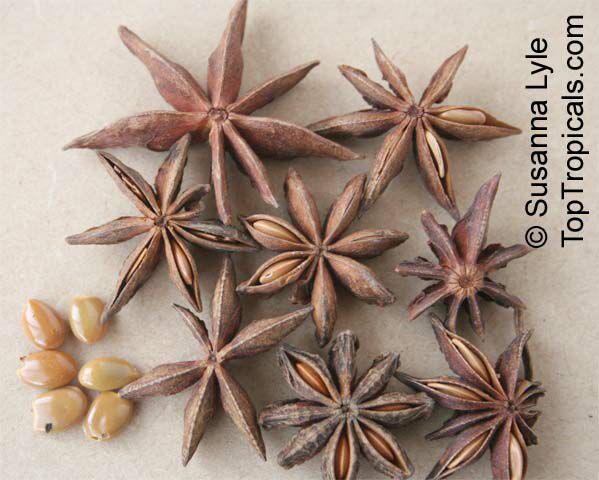
Star Anise - Illicium verum - gets its name from the star shaped fruit... with many culinary uses. So many international dishes get their unique flavor from this wonderful spice. Any lovers of wonderful Vietnamese noodle soup "Pho" out there? Did you know that beautiful, aromatic spiciness in the broth derives from this very plant? In fact, it is the signature flavor of Pho!
Not only does this spice shine in the kitchen, but it has amazing health benefits. It contains shikimic acid, which is a vital component of the influenza-fighting drug Tamiflu! It boasts with antioxidants and vitamin A and C, which help to fight free radicals responsible for premature aging and diabetes. The oil derived from this plant contains thymol, terpineol and anethole, which is used to treat cough and flu. In addition, drinking Star Anise tea will help digestive issues such as bloating, gas, indigestion, constipation and nausea. It is one of the main ingredients of Masala Chai...
CONTINUE READING >>
Date: 26 Mar 2020
Nature's farmacy: Coronavirus cure discovery? Cinchona - Fever Tree
by Alex Butova
As the world's health experts race to find a cure for the novel
coronavirus, this drug have jumped to their attention - Chloroquine. It contains
alkaloid Quinine, extracted from the bark of the Cinchona, or Fever Tree.
We receive many questions from our customers if we carry this plant.
Although we do not offer it at the moment, we definitely can tell you more about
this interesting medicinal plant!
If you like gin and tonic, you will be familiar with the bitter taste of
the tonic which is provided by quinine. While it is now mainly used
to add a flavor to our favorite tipple, the Cinchona tree bark once held a
place as one of the most important drugs in history.
Cinchona was discovered in the 1630s as a treatment for malaria and, for
350 years, was the only effective cure known in Europe until synthetic
replacements were developed in the 1940s. Malaria remains today one of the deadliest
diseases known throughout the tropics, but up until the 20th century the
disease was prevalent throughout Europe, including Britain.
The Cinchona tree is native to the Eastern slopes of the Andes with a range across Ecuador, Peru and Bolivia. Once the bark became an established medicine, particularly in the 18th and 19th centuries, demand started to outstrip supply. Threats of overharvesting and the desire to control the source of this precious bark drove various competing empires to source this plant for themselves. Understandably, the Spanish, who were in control of this area of South America, actively tried to prevent this, but failed to establish successful plantations themselves. A race to source and cultivate Cinchona ensued, and eventually both the Dutch, in Indonesia, and the British, in India, founded government controlled plantations for the mass production of quinine.
Chloroquine appears to have "broad-spectrum antiviral properties" and effects on immune response, and to be effective against severe acute respiratory syndrome... As the rest of the world, we are looking forward to the research results and hope the cure will be found soon!
In the meantime, let's just have more Gin-n-Tonic!
Date: 21 Jul 2024
How to Live Longer? Surround Yourself with Plants!
Gardening not only helps you stay active and healthy but can also be a fun and rewarding way to extend your life. Let nature nurture you!
Living Longer with Green Spaces
A study by the Barcelona Institute for Global Health found that a 10% increase in vegetation within 1,600 feet of your home can lower your death risk by 4%.
Why Gardening Could Help You Live Longer
- Nature Exposure: Being outside boosts your mood.
- Exercise: Gardening is a great workout.
- Healthy Eating: Grow and eat your own fresh produce.
- Mind Exercise: Gardening can reduce stress and keep your mind sharp.
Gardening and Longevity
- Many centenarians (people living to 100) garden.
- In "blue zones," where people live longer, gardening is common.
- Gardening promotes daily exercise and a plant-based diet.
Natural Movement vs. Gym Workouts
- 100 years ago, 90% of jobs involved physical activity; today, only 10%
do.
- Walking 2 hours a week can lower the risk of major diseases.
- Gardening offers fresh air, exercise, and fun.
Gardening vs. Gym
- Gardening can be as effective as gym workouts.
- Research shows 3 hours of gardening equals a 1-hour gym session.
- Tasks like weeding, digging, and mowing burn significant calories.
Calories Burned in 1 Hour of Gardening
- 340 cal: Chopping wood, using power tools, tilling, mowing with a hand
mower, shoveling.
- 272 cal: Carrying wood, digging, clearing land, wheelbarrow work.
- 238 cal: Blower operation, planting, trimming, weeding.
- 224 cal: Raking and sacking leaves.
- 136 cal: Picking fruit, gathering tools, walking.
- 102 cal: Fertilizing or seeding a lawn.
- 34 cal: Watering plants.
Fun Facts
- Half an hour of weeding burns 150 calories.
- Gardening five hours a week burns 700 calories.
- Over a year, that's 20,000 calories, equivalent to running seven
marathons.
- A lifetime of gardening can burn a million calories.