Garden Blog - Top Tropicals

Date: 6 Dec 2018

Seven rules of cold protection for tropicals
TopTropicals.com

Q: I was always wondering how you guys manage to grow true tropical trees in Florida? I live in Puerto Rico and we have Breadfruit trees growing here in a wild... but my sister lives not far away from you, in Orlando, which is much colder, and I wonder if I can get her a Breadfruit tree for Christmas?

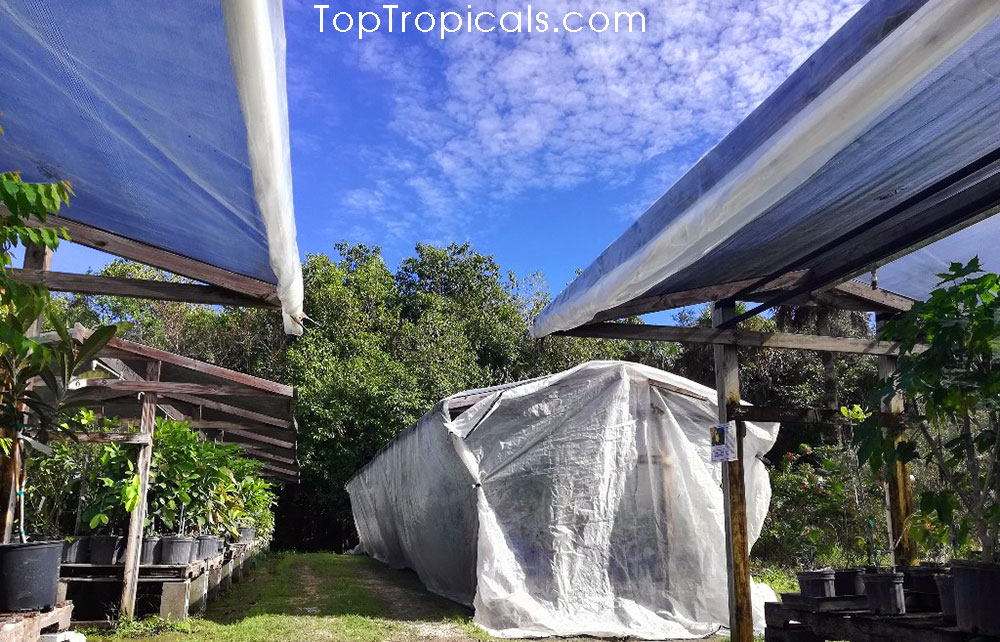
A: Your sister can grow a Breadfruit tree in Orlando either in a pot (and bring it indoors during cold periods) or in the ground inside a structure (an elclosed conservatory with heating system). See our customer's Greenhouse in Virginia. Cold protection of tropical plants is a lengthy subject and we have many interesting publications about it in our managine Tropical Treasures and on the website. In a nutshell, when growing tropicals outside of tropical climate, you need to follow these 7 rules:
1. Cut watering to a minimum. Cold+wet kills tropical roots.
2. Water thirsty plants before a cold night. Jucy leaves have fewer chances to be cold-zapped.
3. Wind protection is more important than a temperature drop. Plant tropicals close to a house or surrounded by other trees.
4. Duration of a cold period is more critical than the cold itself. If expecting long cold hours, bring up all available protection resources. Christmas lights or propane heaters - as long as there is a heat source, everything helps!
5. Remove plastic covers during the daytime so plants don't get "cooked" in the sun. Fabric covers are better than plastic.
6. Grow ultra-tropicals in containers and bring them inside the garage or even indoors during the cold.
7. Use SUNSHINE plant boosters and feed your plants well during Summer to improve cold hardiness.

Related topics:
About Cold Protection
Cold protection - winter action for your plant collection
Improving cold hardiness before winter: fertilizer and micro-elements
Cold hardy tropical fruit trees

Date: 18 Nov 2018

How to grow the biggest fruit on Earth...

TopTropicals.com

Q: When I visited Thailand I bought this huge fruit at the market and the taste was amazing and unique! Now I see you have this Jackfruit tree for sale. I am excited to grow it but not sure if it will survive our winters. I live in Huston, TX. Also are there any special conditions required for successful fruiting?

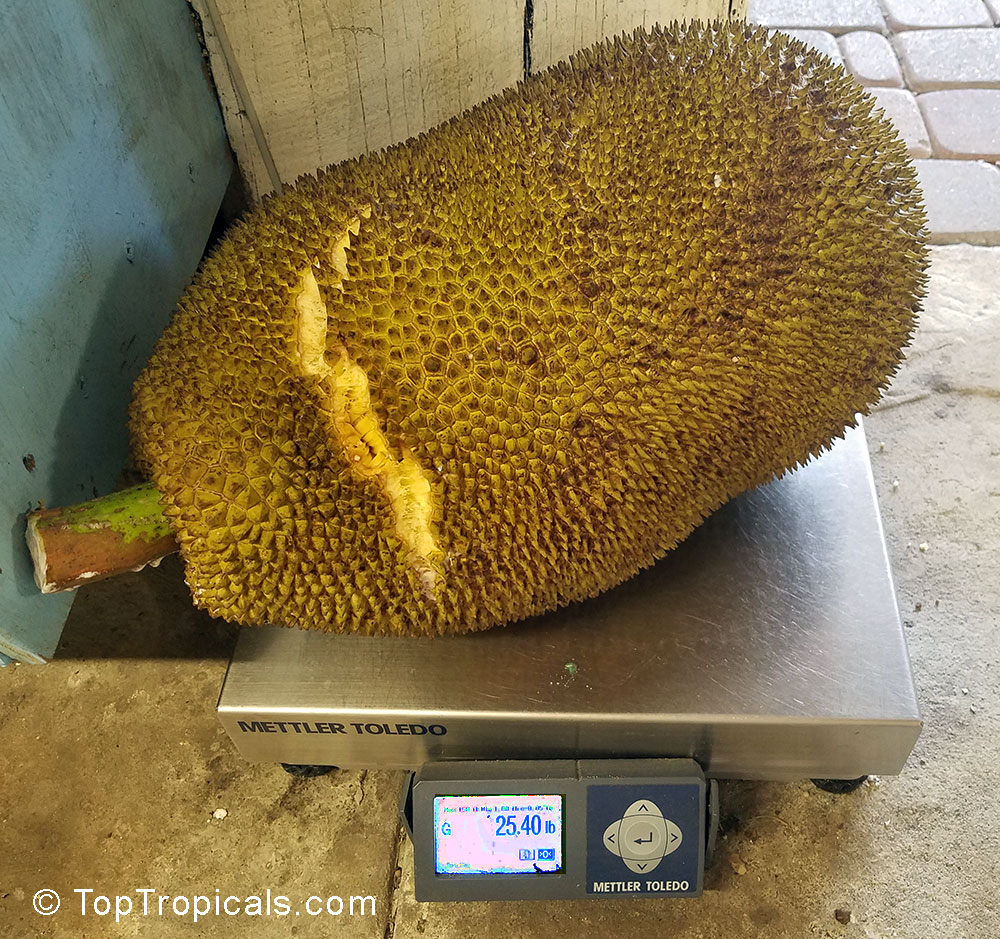
A: Jackfruit indeed is one of the most fascinating tropical fruit. In spite of reputation being ultra tropical, the tree is not as cold sensitive as everyone believes. Mature trees can withstand light frost for a few hours without significant damage. The only thing, after cold snaps it may be not as profuse producer as in frost-free climates. Keeping Jackfruit in a pot is also an option in colder areas. The tree is quite unique not only about fruit but also about growth habit. The fruit is so large and heavy that the tree has a smart feature to produce only at the base of the trunk. This makes it possible to keep Jackfruit tree at very short height - 6-7 ft tall. We have many varieties of Jackfruit, and all of them can be grown in containers considering regular topping/pruning.

5 secrets of Jackfruit successful production:
1) Frost free temperatures (occasional cold spells are not critical if SUNSHINE-T cold protection booster is used)
2) Soil rich of organic matter (compost, manure, peat moss)
3) Moist soil and regular watering
4) Constant pruning and keeping under 7-10 ft
5) Regular application of fertilizer, microelements and SUNSHINE-Honey for better quality fruit.

Read more about Jackfruit tree
See video of the fruit
See

Date: 24 Jun 2018

TopTropicals

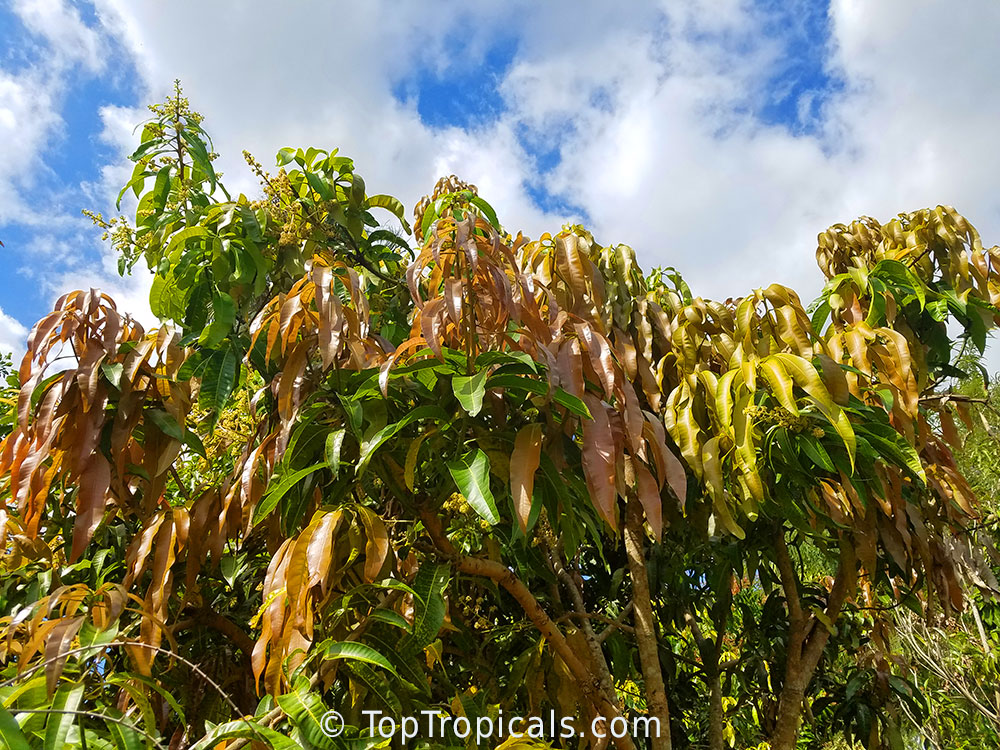
How to make a Mango tree bloom and fruit

Mango trees are especially beautiful during spring time when they flush out multi-color new leaves! But you want your mango be not only beautiful but fruitful as well. Here are some tips:

1) Fertilize Mango tree with a balanced slow release fertilizer starting March. Use 1 tsp of granulated fertilizer per 1 gal of soil, or a handful or two for an in-ground tree. You may add one application of foliar spray of a water-soluble bloom booster fertilizer (the one for Roses or Azaleas will work). This will give your tree a good macro-nutrient kick-start.

2) Spray entire tree with SUNSHINE-Superfood solution. This will provide all necessary micro-elements and keep the plant healthy and strong throughout the season. Repeat treatment once a month until harvest time.

3) For sweeter fruit, apply SUNSHINE-Honey solution several times:
- early spring before flowering
- at setting buds
- right at the beginning of setting fruit
- after harvesting, to provide the tree with all good micro-nutrients before resting season.

Date: 24 Sep 2025

The SECRET growers never tell you: simple trick how to bring plants back to life and keep green

Green Magic Fetilizer makes plants green

🌳 The SECRET growers never tell you: simple trick how to bring plants back to life and keep green


💚 Green Magic is plant food that really works. It keeps your plants green, strong, and growing steady.

💚 We call it Magic - because it even brought back plants we thought were gone! So thу Green Magic can bring dead to live!

💚 The secret is slow release. Most dry fertilizers dump everything at once, burn the roots, then disappear. Green Magic feeds little by little for six months straight. No burn, no guesswork, just steady food that plants love.

💚 It's perfect for potted fruit trees, ornamentals, and houseplants. One handful is all it takes, and your plants stay fed for half a year.

✔️ How to use:


Mix in 1 teaspoon per gallon of soil when potting, or sprinkle on top once every six months. That's it!

✔️ Why it works:


Feeds slowly and evenly for six months
Keeps leaves green and plants healthy
Strong growth, even for weak or struggling plants
Works in any climate, indoors or out
Great for containers, trees, and ornamentals
This isn’t a flower booster. It’s a growth booster. The kind of steady food that builds strong plants for life.

👉 Watch your plants come back to life and thrive with this professional-grade, controlled-release fertilizer - Green Magic. Even struggling plants can turn lush and green again.
Give it a try - your plants will thank you!

🛒 Buy once, feed for 6 months!

📚 Learn more


How to make plants green quickly? Green Magic - the fertilizer that truly works like magic!
Green Magic guaranteed analysis: give your plants their magic treat
How to re-pot a plant properly?

#Fertilizers #How_to

🟢 Join 👉 TopTropicals

Date: 14 Jul 2019

A Cup of Tea Plant

By Onika Amell, tropical plant specialist

A: I live in Ave Maria, Florida. I want to try my hand at growing my own tea. Which plant do I need?

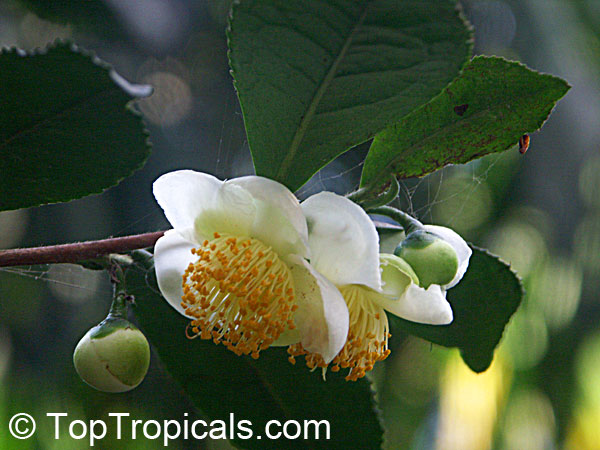
A: Most people do not realize they are actually enjoying camellias when they sip their cup of tea. True tea comes from the Camellia sinensis plant, an evergreen shrub or small tree.
In the fall and winter, the plant will produce small white flowers with a lovely fragrance. The foliage is shiny and dark green with a very nice informal and open look. Camellia sinensis (or tea plant, as it is commonly known) prefers a temperature between 65 and 86 degrees, which makes Florida an ideal area to grow them. However, if you live in colder zones, you can certainly succeed growing your own tea plants using a greenhouse. Alternatively, you can use containers which can be brought inside when temperatures start falling. Tea plants will usually survive a very slight freeze, though the leaves may be damaged or killed. It will not tolerate a hard freeze. They prefer full sun or light shade in the garden.
Tea plants will become small trees or large bushes if not pruned. Hardcore tea growers trim back the shoots repeatedly to a height of around 4 feet to encourage new growth and to contain the size.
Make sure to pick an area of your landscape where it does not flood or remain wet during our rainy season. Camellia sinensis does not like wet feet at all. They prefer well-drained, sandy and slightly acidic soil. If grown in a container, add some sphagnum moss to the potting mix. They will benefit from frequent applications of small amounts of fertilizer.
You will need some patience, too. Your plant should be around 3 years old before you start harvesting leaves.

Recommended fertilizers:

Tropical Greenhouse Plus - Plant Booster
Tropical Allure - Smart-Release Booster

Harvesting recipes

Now that you know how to grow the Tea, you need to check this out: the Harvesting recipes how to harvest and make different kinds of real tea: Green Tea, Japanese Style Green Tea, Oolong Tea, Black Tea, Orthodox Indian Tea... Continue reading...