Garden Blog - Top Tropicals

Date: 20 Aug 2025

What is your favorite variety of Jasmine Sambac?

Jasminum Sambac varieties

💮 What is your favorite variety of Jasmine Sambac?


💮 Jasminum Sambac is hands-down the queen of fragrant flowers. The scent is heavenly - so much so that it's the key to jasmine perfume and the secret behind authentic jasmine tea.

💮 Jasmine sambac comes in all shapes and sizes - from neat little shrubs to big, vigorous bushes and even climbing vines. Every variety shows off a different flower form. It’s happy in sun or shade, perfect for pots, and loved as an indoor plant.

💮 At TopTropicals we love them all, but these three are our favorites:
- Belle of India - with elegant long petals
- Arabian Nights - vigorous yet compact, always covered in blooms
- Little Duke - same big carnation-like flowers as Grand Duke, but in a smaller, tidy package

👉 At Top Tropicals, we grow every known variety of Jasminum sambac in cultivation:


Which one would you choose for your garden?

✔️ Arabian Nights - compact slow growing shrub with small delicate flowers
✔️ Belle of India - compact vine with long elegant petals, shade lover
✔️ Grand Duke of Tuscany - the most popular, vigorous bush with carnation-like flowers
✔️ Grand Duke Supreme - bigger, more vigorous version of Grand Duke with larger flowers
✔️ Gundu Malli - new hybrid between Arabian Nights and Grand Duke
✔️ Little Duke - more compact version of the Grand Duke
✔️ Maid of Orleans - vigorous full sun climber, great for hedges and fences
✔️ Mali Chat - very delicate, rare variety, with miniature 3-tier flowers, not easy to establish, shade lover
✔️ Mysore Mulli - vigorous vining shrub for sunny or semi-shade locations

👉 To get more flowers, just use Sunshine Pikake plant booster and enjoy the perfume all day long!

🛒 Smell the Difference – collect Sambac varieties

📚 Learn more:


The most wanted fragrant plant
How to tell the difference between Jasmine Sambac Varieties
Jasmine Sambac in bloom
📚 Jasminum Sambac Absolute Flower - book download
📱 Jasminum Sambac - Absolute Flower
📱 Jasminum Sambac Page

#Perfume_Plants #Hedges_with_benefits

🟢 Join 👉 TopTropicals
Date: 6 May 2020

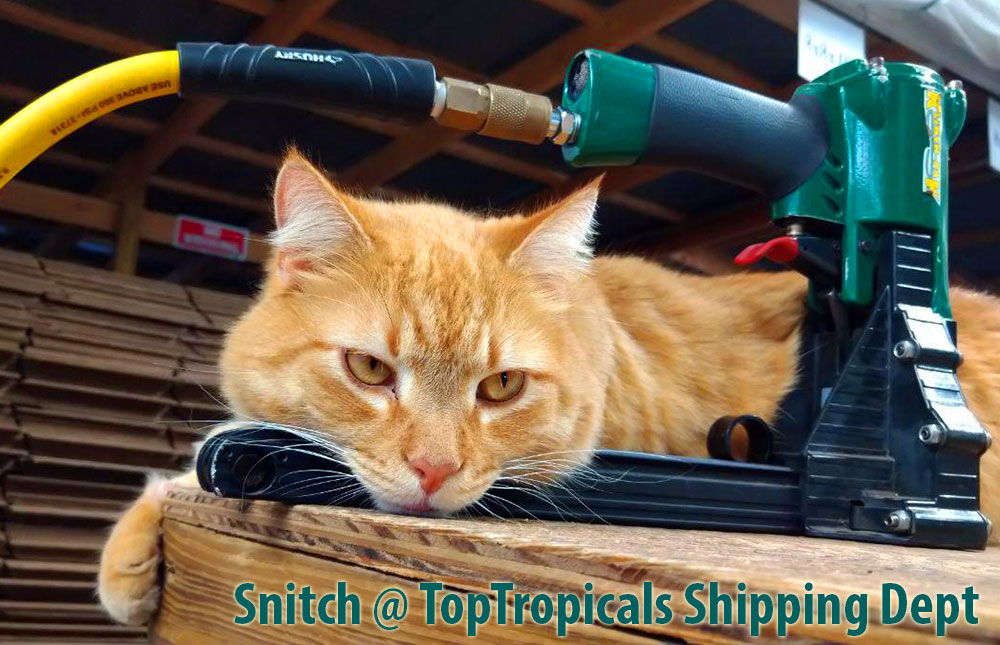
PeopleCats of TopTropicals. Cat of the day: Snitch - here, there, and everywhere

Everyone who visited TopTropicals Garden Center, most likely met Snitch. He greets customers at the front office door, and often helps them with checking out in the office. Snitch is an expert on fragrant plants and herbs. He is a great office assistant who is always there when you need him! A Purrrfect multi-tasker, Snitch even find time to give a hand in Shipping department, so don't be surprised if you find his whisker in the box! :)

TopTropicals PeopleCat Club

Thank you everybody for supporting us in helping PeopleCat Community!
Make your kind donation today and receive a surprise gift from us. Every little bit helps! Thank you and God bless you and your pets!

Date: 23 Jan 2020

Meet PeopleCats of TopTropicals. Cat of the Day: Weasley the Immigrant

Weasley came from the neighborhood cat community (our neighbor takes care of at least a dozen of cats). Whether TopTropicals dry food tastes better than neighbor's, or simply he is such an enthusiast of tropical gardening, he hangs out with us all the time.
When you see him in our Garden Center drinking milk or chilling right on the walkway with other PeopleCats, don't get him confused with other two ginger cats we have: Barcy and Snitch... as well as the Russian Blue cat with a similar name Wesley...
Although Weasley currently has a status of a legal immigrant, he feels pretty confident around our greenhouses and will be happy to give you a tour. He is still a volunteer here but has already applied for a permanent residence and a full time position, so his food needs are being added to our cat payroll.
When visiting TopTropicals nursery, feel free to add your donation to a Cat Jar located in our office by customer's computer. We appreciate everybody's help - every penny goes to PeopleCat's needs.

Check out and more Cat of the Day stories.

Date: 9 Nov 2019

Saving Fallen Papaya Tree

Q: Hope there is help for my beautiful amazing papaya tree! There where a loooooooot of fruits on it, but it broke! First of all, it was leaning and friends tried to straight my beautiful tree. What can I do? Will it get fruits again?

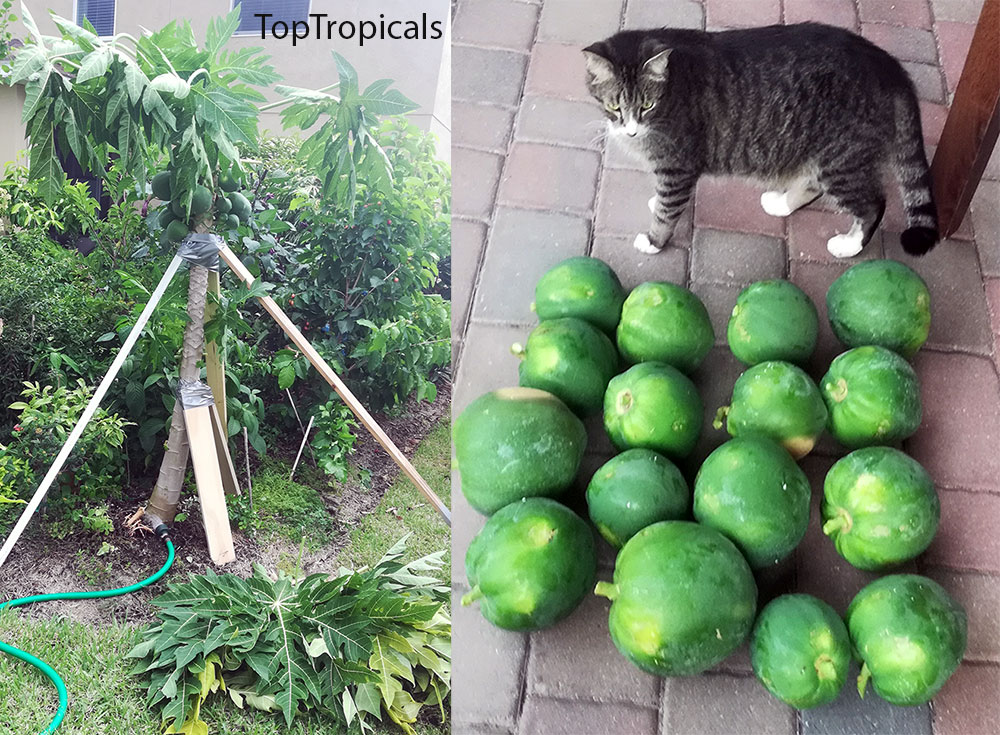
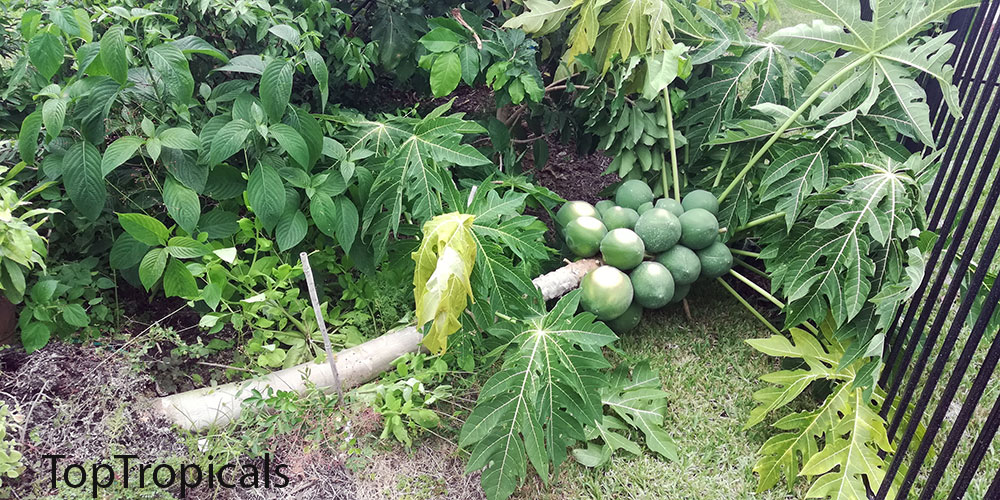
A: A couple months ago we also had a Papaya tree loaded with fruit that fell down (see photos). It was heart-breaking. We secured it and it continued growing for a couple of weeks but unfortunately, at the end the tree still died, leaving us a million fruit. The Papaya tree has a very sensitive root system and is hard to re-establish once the roots are damaged.
However, if it just has a broken top, it has a good chance to grow back from the side shoots.
Of course, remove all the fruit so they don't take energy from the recovering tree.
When a tree is loaded with fruit, it is important to provide support for heavy branches and for the trunk if needed. Always support the fruiting tree to prevent from possible falling BEFORE it starts leaning down and may become broken by even a light wind.
In the photo, you can see how we fixed boards around, but it was already after the tree fell. Unfortunately, it was too late since the roots got damaged. Always need to stake the tree up before the branches get too heavy!

RECOMMENDED FERTILIZERS:
Fruit Festival Plant Food - Super Crop Booster
Mango-Food - Smart Release Fruit Tree Booster
SUNSHINE-Honey - sugar booster

Maradol Papaya $10 Hot Sale

Only local pick up from our Garden Center
Hurry up, while supply lasts!

Date: 17 Sep 2025

Mulberry Care and Growing Tips

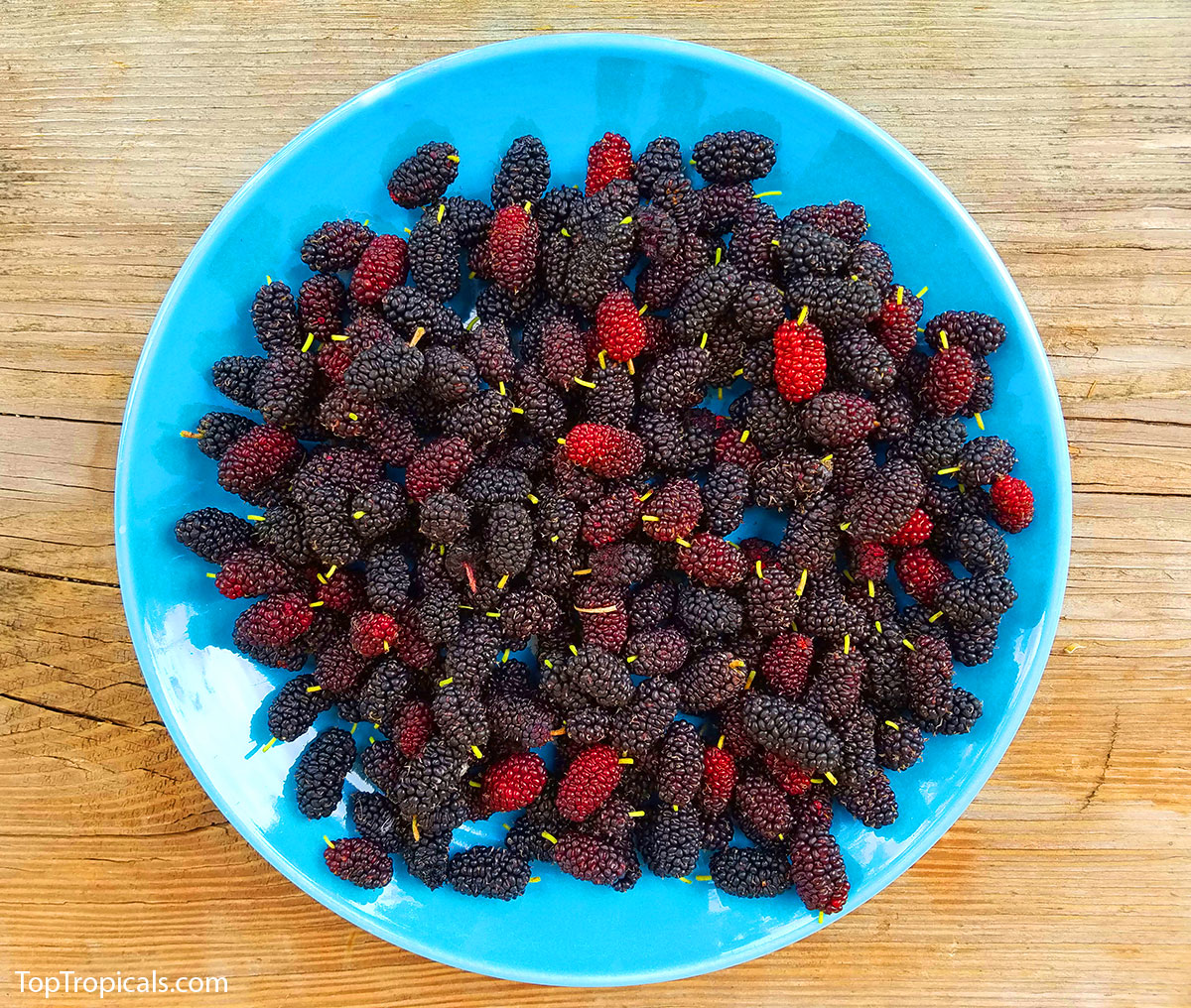
Mulberry  fruit  on  a  plate

Mulberries are tough, low-maintenance fruit trees that adapt to many conditions.

  • Climate: Hardy from USDA zone 5 to 10.
  • Soil: Grow well in almost any soil; prefer good drainage.
  • Watering: Regular watering during dry spells; drought tolerant once etablished.
  • Growth: 3–5 feet per year, producing fruit early.
  • Pruning: Annual pruning controls size and improves branching.
  • Pot culture: Dwarf types thrive in containers, staying 6–7 feet tall. Use a large pot, water consistently, and prune lightly. Use Abundance potting mix for best results.
  • Fertilizer: For reliable production, fertilizer regularly. Apply Sunshine C-Cibus liquid booster with every watering, or GreenMagic controlled release fertilizer every 5-6 months.

❓ Mulberry FAQ


How soon will a mulberry fruit?

One to two years, sometimes the very first season.

What climates are suitable?

USDA zones 5–10, from -20F winters to hot summers.

How tall do they get?

Standard trees 20–30 ft; dwarfs 6–10 ft in pots.

Do I need more than one tree?

No, they are self-pollinating.

What do they taste like?

Sweet and juicy, like a blend of blackberry and raspberry.

How long is the harvest?

Everbearing types ripen gradually from summer into fall.

Do birds eat them?

Yes, but trees are so productive there’s plenty to share.

Are they messy?

Dark-fruited varieties can stain; white mulberries do not.

Can I grow them in containers?

Yes, dwarf types (Dwarf Everbearing, Issai) fruit well in pots.

How long do they live?

Many live for decades; Illinois Everbearing can endure for generations.

What are the health benefits?

Mulberries are low-glycemic, support healthy blood sugar, improve heart health, and are rich in antioxidants.

Shop Mulberries