Garden Blog - Top Tropicals

Date: 8 Jan 2026

Root beer leaf wraps: quick-n-fun exotic recipes
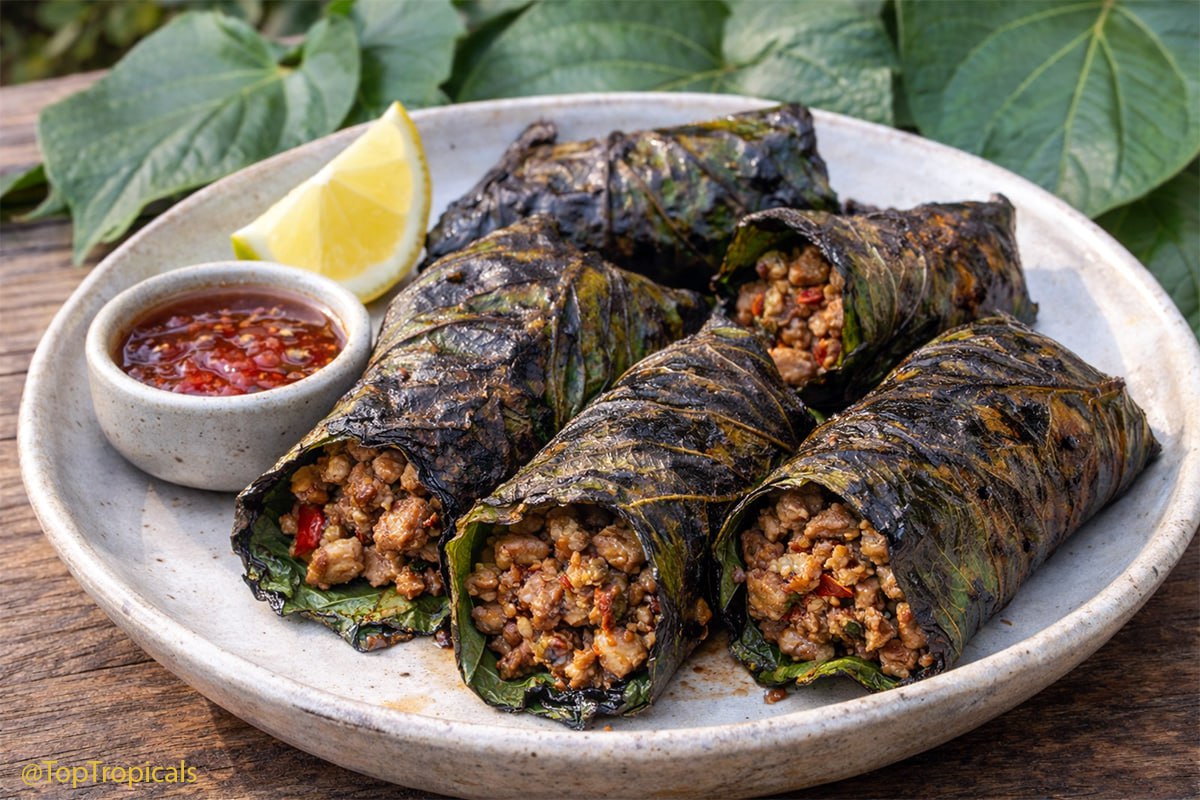
Root beer leaf wraps
Root beer leaf wraps

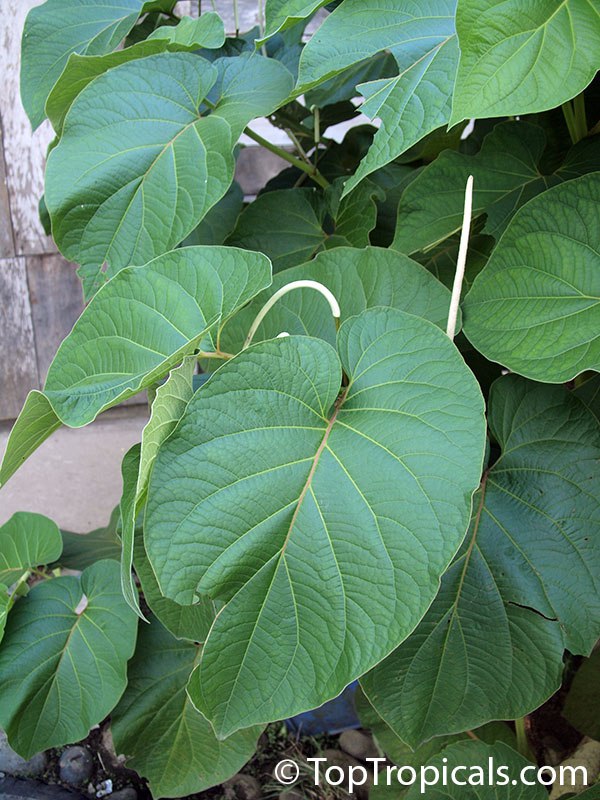
Piper auritum - Root Beer Plant

Piper auritum - Root Beer Plant

🍴 Root Beer Leaf Wraps

Ingredients

  • 6 to 8 large fresh Root Beer leaves (Piper auritum)
  • 1 lb ground meat or firm tofu
  • 1 small onion, finely chopped
  • 2 cloves garlic, minced
  • 1 tbsp vegetable oil
  • Salt and pepper to taste
  • Optional: chili flakes, paprika, or cumin
  • Lemon wedges, for serving

Instructions

  1. Rinse the Root Beer leaves and pat dry. Trim thick stems if needed.
  2. In a bowl, mix ground meat or tofu with onion, garlic, oil, salt, pepper, and spices.
  3. Place a portion of filling onto each leaf and roll tightly into wraps.
  4. Grill over medium heat until the leaves are lightly charred and the filling is cooked through.
  5. Serve warm with lemon wedges or dipping sauce.

☘️ About the plant:


Piper auritum - Root beer plant, also known as Acuyo or false Kava-Kava, is a large-leaved tropical herb native to Central and South America and also grown in the South Pacific. It belongs to the same family as Kava-Kava and black pepper. The leaves are prized for their bold, aromatic flavor, often described as root beer, anise, or clove-like. Traditionally, the leaves are chopped for seasoning or used whole as natural wrappers for meats, fish, and tamales.

🌱 In the garden:


Piper auritum is easy to grow in warm climates and forms a lush, fast-growing perennial. Its huge, soft leaves - often over a foot long - make it both edible and ornamental. It prefers warmth, moisture, and partial shade and is often mistaken for Kava-Kava due to its similar appearance and close relation.

🛒 Plant the beautiful Root Beer Plant - it always will be with you

📚 Learn more:

Root Beer Plant Facts

Botanical name: Piper auritum
Also known as: Root Beer Plant, Mexican Pepperleaf, Hoja Santa , Veracruz Pepper, False Kava-Kava, Sacred Pepper
USDA Zone: 8 - 11
Highligths Large shrub 5-10 ft tallSmall plant 2-5 ftSemi-shadeShadeFull sunWatering: Regular. Let topsoil dry slightlyKeep soil moistInvasive plantSpice or herb plantEthnomedical plant.
Plants marked as ethnomedical and/or described as medicinal, are not offered as medicine but rather as ornamentals or plant collectibles.
Ethnomedical statements / products have not been evaluated by the FDA and are not intended to diagnose, treat, cure, or prevent any disease. We urge all customers to consult a physician before using any supplements, herbals or medicines advertised here or elsewhere.Irritating plantSubtropical plant. Mature plant cold hardy at least to 30s F for a short time
Get personalized tips for your region

Piper auritum - Root Beer Plant in Plant Encyclopedia
How to always have your own Root Beer
How to grow your own Pepper plants. Five most valuable 'Pipers'

#Food_Forest #Recipes

🟢 Join 👉 TopTropicals
Date: 24 Jun 2018

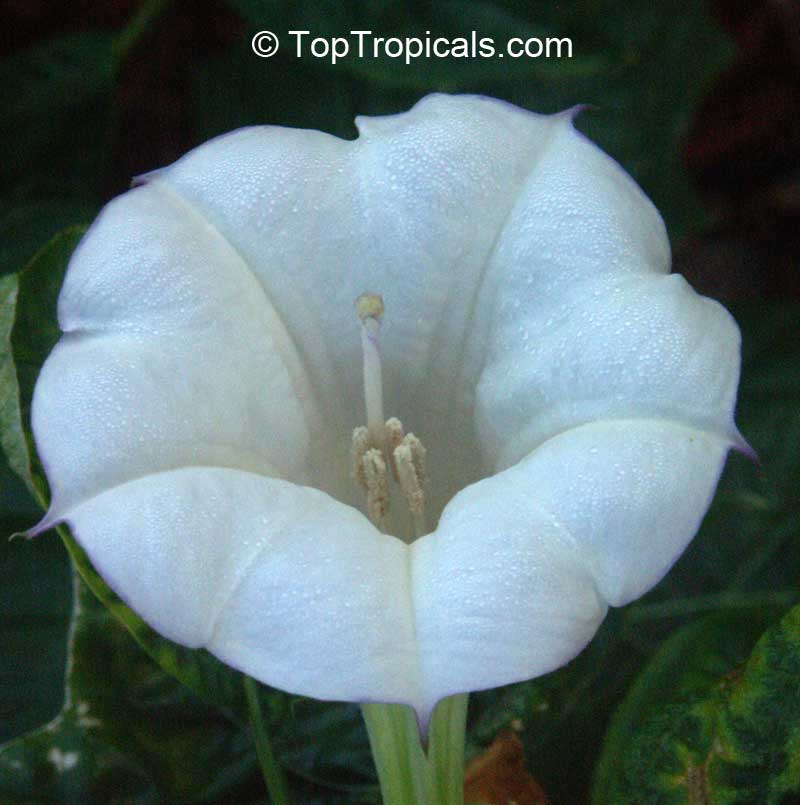
The Enchanting Datura

New article by Jane Jordan
"...Commonly known as the Devils trumpet, Datura has long been associated with witchcraft and voodoo rituals. Ideally suited for moon or night gardens, the blooms are fragrant and particularly so at night..." Continue reading...

5 important tips for successful growing Datura and Brugmansia;
1. Full sun
2. Use fertile soil that must be vewry well-drained. Plant in elevation
3. Ample water encourages fast growth, but never allow wet feet!
4. Fertilize heavily during hot season
5. Propagate Brugmansia with semi-woody cuttings, Datura - with seeds that have a long shelf live

Buy Datura and Brugmansia from our store

Date: 9 May 2017

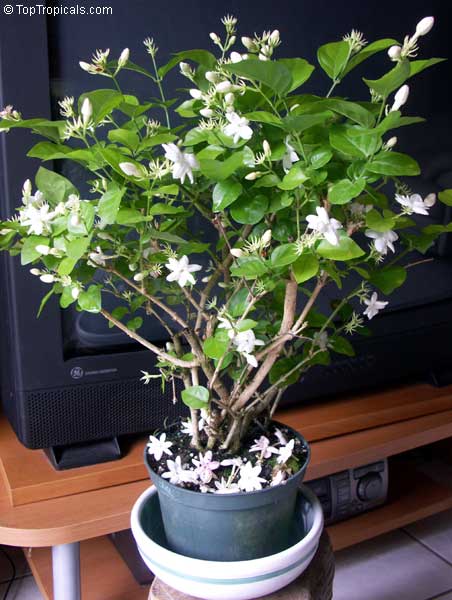
Secrets of flowering of Jasmine Sambac

Q: Q: My Jasmine sambac Maid of Orleans is growing very fast and produced lots of branches and dark green leaves, when will I see flowers? I only saw 2 or 3 flowers since since Spring. I is planted by East wall of the house. Should I use some special fertilizer perhaps?

A: Jasmine sambac is a tropical bush or vine that enjoys hot summers. Since it tolerates wide range of light conditions, it can be grown both in shade or sun; this is why it is highly recommended for indoor culture where light level is limited. Remember though that profuse blooming directly depends on the light level. Your Eastern exposure location may not be providing enough light for the flowering. Dark green leaves are also a sign of a filtered light sitution. Extra fertilizing may not help to induce flowering if the light is low, although it is always beneficial for a plant (it may just start producing even more leaves and branches). The ideal conditions for Sambac's flowering are - full sun all day long, high temperatures (upper 80's-90's, even over 100F is fine), and very good drainage. Some gardeners call Jasmine sambac "almost a succulent", referring to its low watering needs. To be exact, this plant requires regular watering, but will produce lots of flowers only providing perfect drainage. You may never see flowers if the plant has wet feet or water-logging occurs. If your summers are rainy (like in Florida), make sure your jasmine is planted with at least 4-5"elevation and not in a low/wet spot.

See Top Tropicals Video about jasmine Sambac: - varieties, history and use.

Date: 28 Sep 2016

Helping plants to survive winter:
SUNSHINE BOOSTERS - FROM SUNSHINE STATE

A magic plant hormone so wanted by gardeners, is finally here! When people purchase plants and trees either on-line, or from their local nursery, expectation and anticipation for their new find is high. Many times, however, disappointment is encountered due to a variety of reasons. These reasons include changes in light, temperature, water, soil conditions and transportation; just to name a few. So how can the stress on newly transported and transplanted plants be mitigated? Easy! There are plant stimulators able to reduce the shock encountered.

One such plant stimulator, produced at TT Laboratories is SUNSHINE, a revolutionary, broad spectrum, plant stress reliever. Extracted initially from plant pollen, SUNSHINE can bring back and keep the vigor to stressed plants in both the home and garden. Sunshine is indeed a plant stimulator on the cutting edge of plant care technology. Reasonably priced, and easy to use, SUNSHINE will be your plants' best friend, next to yourself, of course.

SUNSHINE will help your plants:
- recover from stress
- dramatically increase growth rate
- get profuse flowering and fruiting
- improve disease resistance, cold hardiness, and heat resistance
- promote seed germination and root cuttings easily

Great for indoor plants and improving cold tolerance!

Line of products:
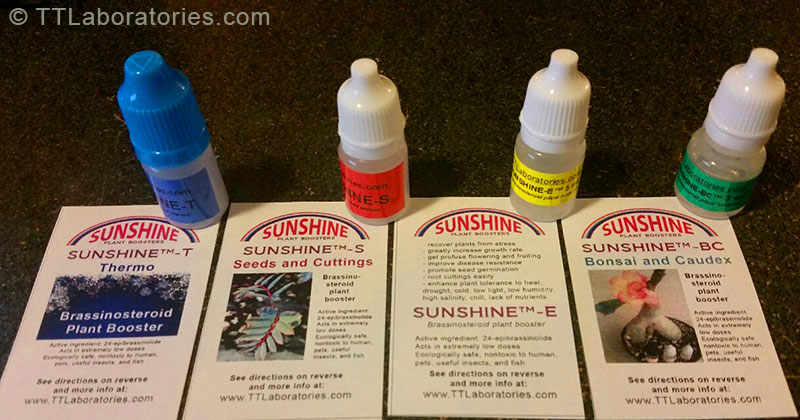
SUNSHINE-E - general plant booster, growth stimulator and immune booster
SUNSHINE-BC - Bonsai and Caudex developer
SUNSHINE-S - seeds and cuttings pre-treatment
SUNSHINE-T - Thermo-protection for overwintering tropical plants
SUNSHINE-Micro - ultimate micro-element mix from TT Laboratories

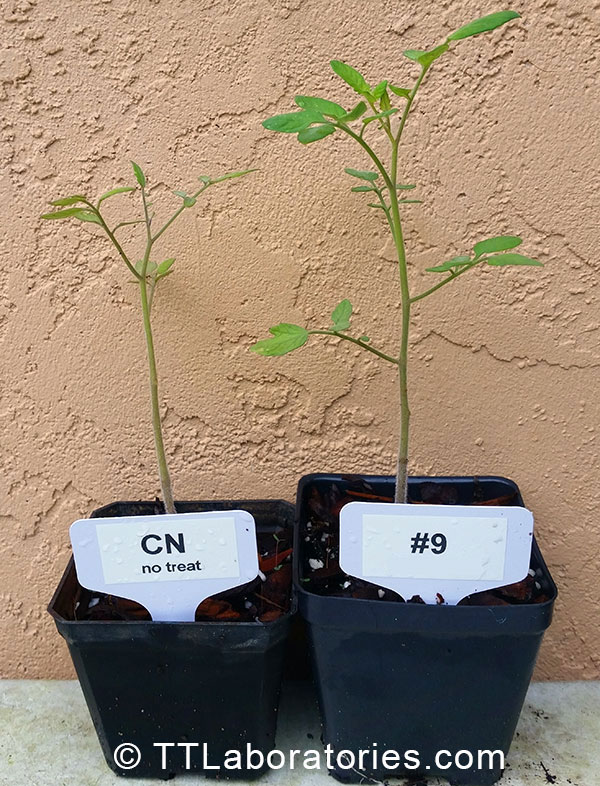
On the photo: Tomato seedlings, with and without Sunshine-E treatment; 1 week after treatment, 09-01-2016. Continue reading...

Order online

Date: 18 Sep 2016

About Cold Protection...

Q: I have a question, if I'm in Okeechobee Florida zone 9b are there any plants that you sell that would have to be protected at all? I have a lot that I've purchased from you and don't want to lose any of them winter.

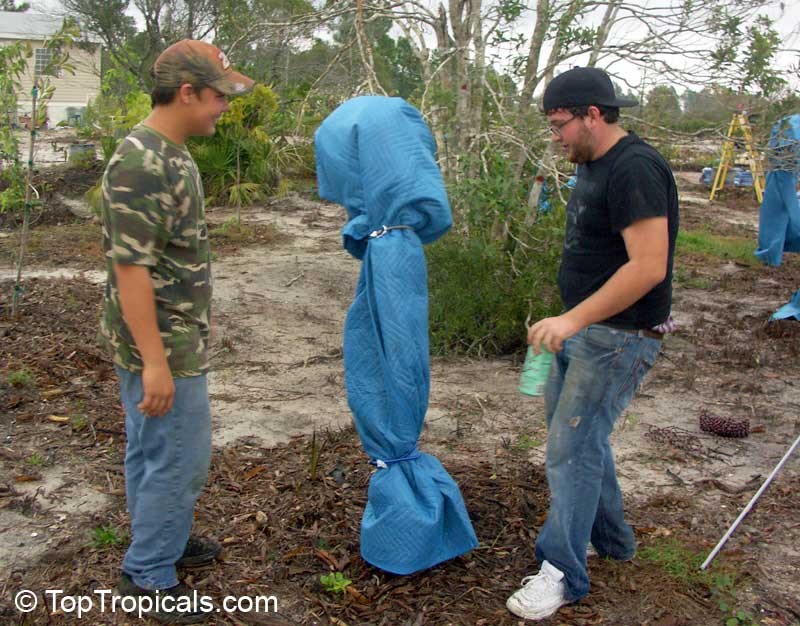
A: Sometimes it is hard to guarantee if certain plants are hardy enough in certain area. From our experience, tropical plant performance in non-tropical areas depend on many factors; a lot of times plants appear to be hardier than they are believed to be. Other times, an obviously hardy plant doesn't survive winter. So there always will be a chance of risk involved, while nice surprises are not an exception. We have been testing many tropical species throughout many years of our nursery experience. Wind protection in many cases is more important than temperature. Enclosed sections of your garden provide better chances to survive cold snaps. Generally speaking, here is the list of some plants (not complete list, just examples) that in our experience have been surviving light freezes without significant damage.

Q: I live in San Jose,CA. Got Mango Alphonso 2 yrs back and protected it for a year in a pot during winter. Last spring I planted it and during winter I put a freeze cloth to protect it but it died. How can I make sure it wont die if I buy this time plz?

A: Mango trees are tolerant only to light frost, once established. If it gets below freezing in your area for more than a few hours, and especially if you have numerous nights with frost throughout winter, we recommend to keep mango tree in a pot. This way it can be moved to protected area during cold night. The more established the tree, the more chances to survive colder temperatures.
We also use plant booster Sunshine to increase plants cold tolerance
Cold protection is a lengthy subject. You may also use propane heaters during cold nights.
Here is some more information on cold protection.
Also, we recommend to check out our magazine Tropical Treasures (about pushing the limits of tropical gardening) for a detailed article on cold protection.
These are specific articles on Zone-Pushing in different issue #s regarding dealing with cold. See downloadable issues:
(#1) Growing Tropicals in Nontropical Climate, Three Freezing Nights in Southwest Florida
(#2) Temperature drops - an alert or a rehearsal?
(#5) Dealing with cold snaps, Cold hardy beauties
(#7) When winter is around the corner, Growing exotic Cordyline in colder climate
(#8) When the weather outside is frightful
(#9) Winter champions
(#11) Ready-for-winter checklist for in-ground plants
(#13) Winter checklist
(#18) Dealing with cold damaged plants
You may also order hard copies.

If temperatures drop below freezing in your area, remember to add Heat Pack to your order!