Garden Blog - Top Tropicals

Date: 10 Dec 2025

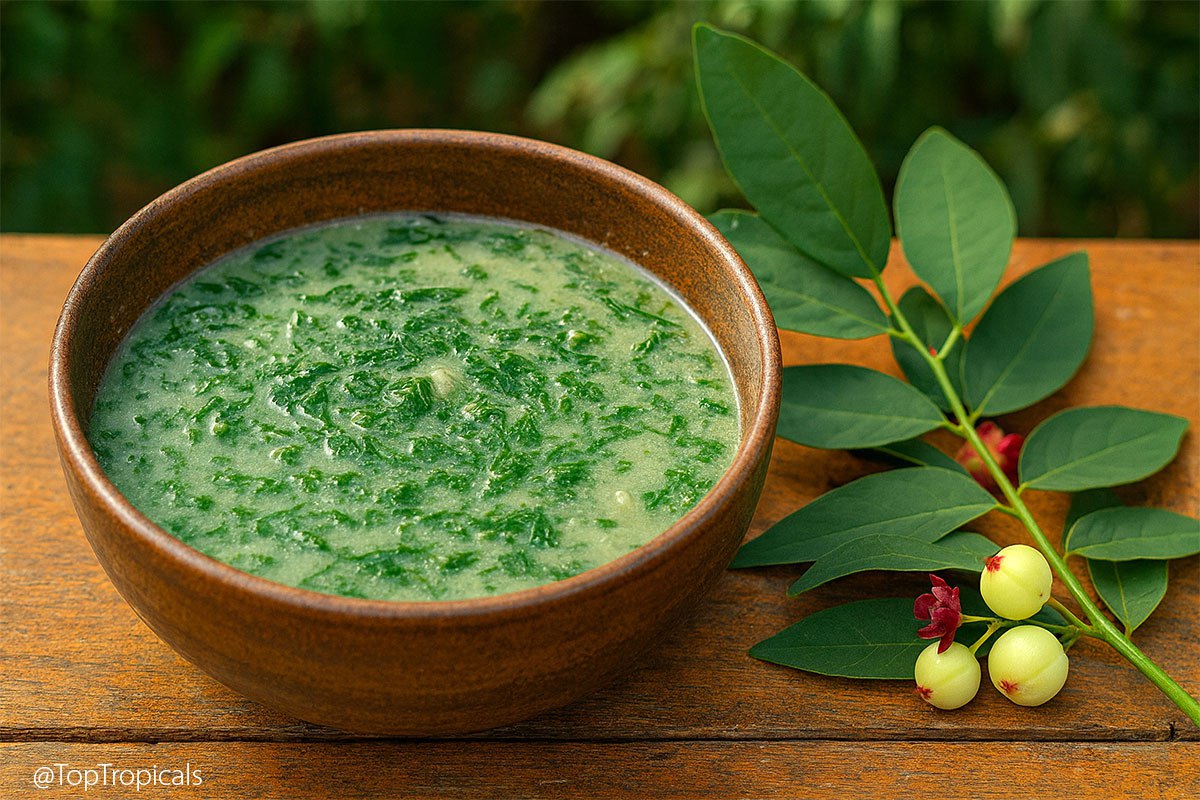
Katuk coconut soup: quick-n-fun exotic recipes

Katuk coconut soup

Katuk coconut soup

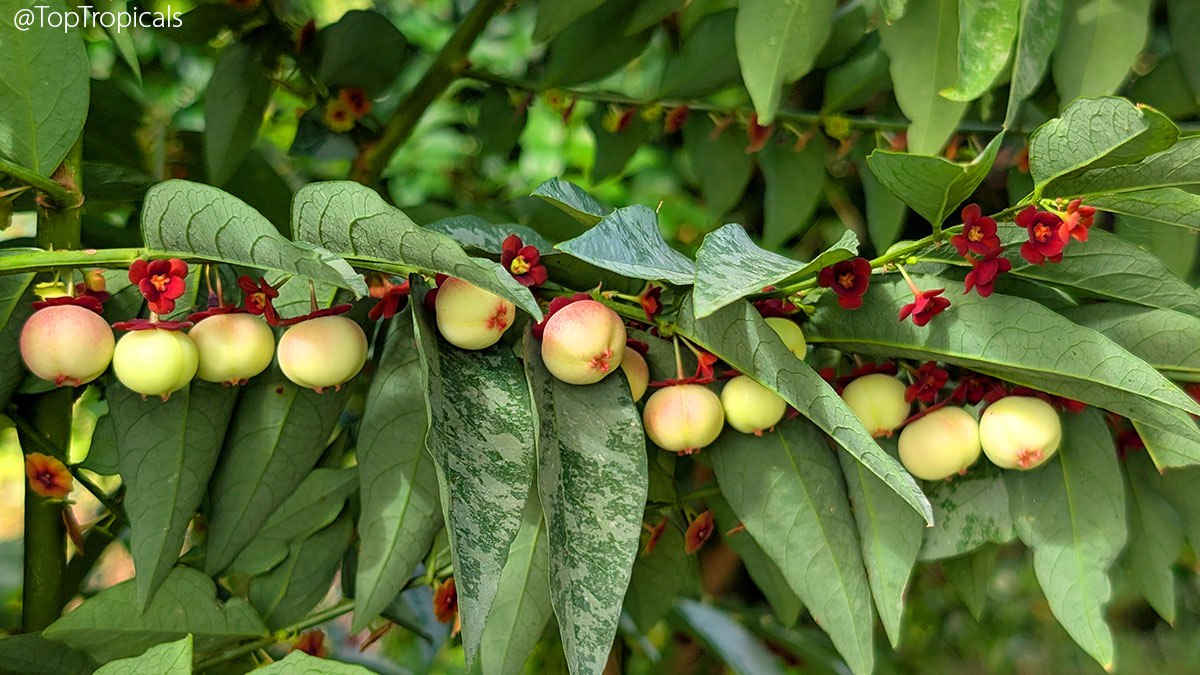
Katuk leaves - Sauropus androgynus, Tropical Asparagus

Katuk leaves - Sauropus androgynus, Tropical Asparagus

🍴 Katuk Coconut Soup

Ingredients

  • Katuk leaves (Sauropus androgynus), about 2 cups, stems removed
  • Coconut milk, 1 cup
  • Garlic, 1 clove, minced
  • Salt, to taste

Instructions

  1. Wash Katuk leaves thoroughly.
  2. Boil Katuk leaves in plenty of water for 15 minutes.
  3. Drain completely and discard the boiling water.
  4. Chop the cooked Katuk leaves.
  5. Warm coconut milk in a saucepan over low heat.
  6. Add garlic and simmer gently for 1 minute.
  7. Add the boiled Katuk leaves and cook for 3 to 5 minutes.
  8. Season with salt and serve warm.

Important Safety Note

Katuk leaves must always be boiled for at least 15 minutes and the water discarded. Do not consume raw or lightly cooked Katuk.


🛒 Add Katuk Superfood to your Food Forest

📚 Learn more:

Katuk Plant Facts

Botanical name: Breynia androgyna, Sauropus androgynus
Also known as: Katuk, Star Gooseberry, Sweet Leaf, Tropical Asparagus, Chang Kok, Manis, Nutty Leaf, Rau Ngot
USDA Zone: 9 - 11
Highligths Large shrub 5-10 ft tallSmall plant 2-5 ftSemi-shadeFull sunWatering: Regular. Let topsoil dry slightlyRed, crimson, vinous flowersOrnamental foliageEdible plantEthnomedical plant.
Plants marked as ethnomedical and/or described as medicinal, are not offered as medicine but rather as ornamentals or plant collectibles.
Ethnomedical statements / products have not been evaluated by the FDA and are not intended to diagnose, treat, cure, or prevent any disease. We urge all customers to consult a physician before using any supplements, herbals or medicines advertised here or elsewhere.
Get personalized tips for your region

Sauropus androgynus in Plant Encyclopedia
The secret Brain Food growing in my backyard (and it tastes like green peas!)
Katuk egg stir-fry: Quick-n-Fun exotic recipes
Health benefits of Katuk: a Superfood for your mind and body

#Food_Forest #Recipes

🟢 Join 👉 TopTropicals

Date: 6 Dec 2025

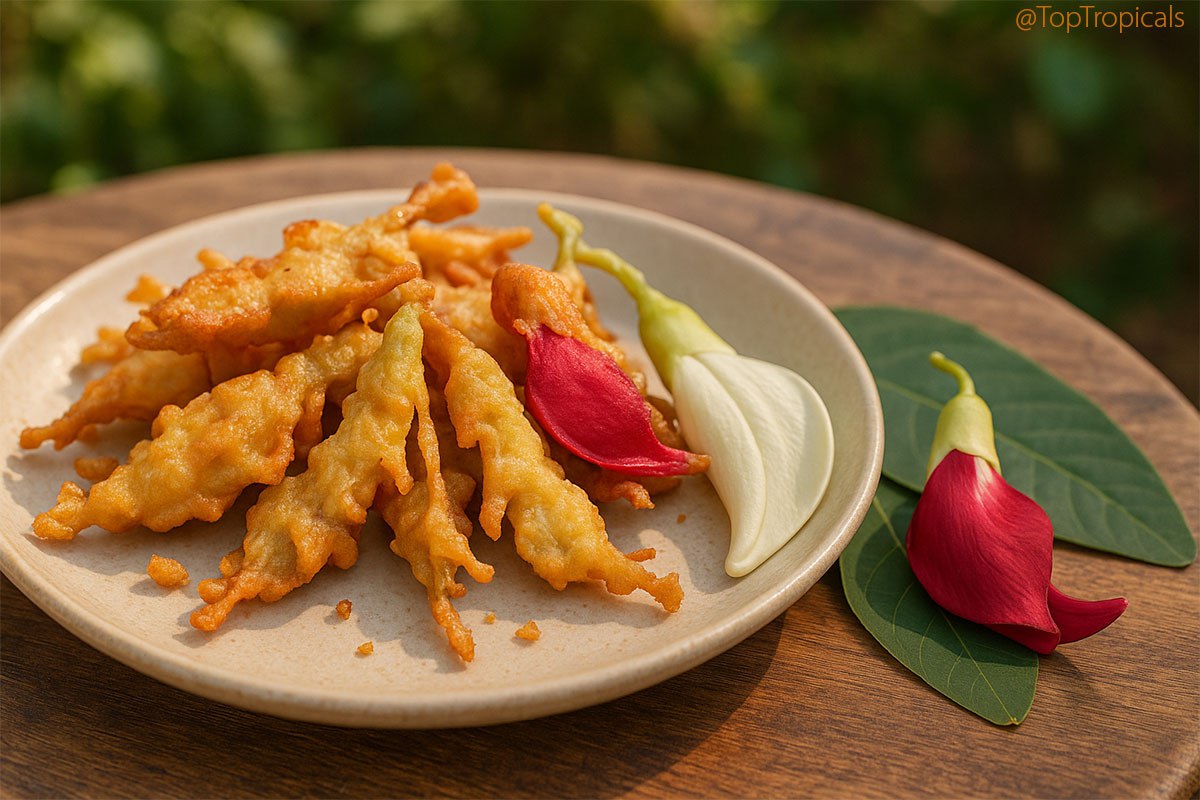
Sesbania flower fritters: quick-n-fun exotic recipes

Sesbania flower fritters: quick-n-fun exotic recipes Sesbania flower fritters: quick-n-fun exotic recipes Sesbania flower fritters: quick-n-fun exotic recipes

🍴 Sesbania flower fritters: quick-n-fun exotic recipes

🔴Delicate, floral, and fun to snack on.

Sesbania Flower Fritters

Ingredients

  • 1 cup fresh Sesbania flowers (Sesbania grandiflora), washed and trimmed
  • 1/2 cup all-purpose flour
  • 1/2 cup cold water
  • 1/4 teaspoon salt
  • Oil for frying

Instructions

  1. Rinse Sesbania flowers thoroughly and remove tough stems.
  2. In a bowl, mix flour, salt, and cold water to form a light batter.
  3. Heat oil in a pan over medium heat.
  4. Dip each flower into the batter, letting excess drip off.
  5. Fry until golden and crisp, about 1-2 minutes per side.
  6. Remove and drain on paper towels. Serve warm.

🛒 Add Hummingbird tree edible flowers tree to your garden

📚 Learn more:

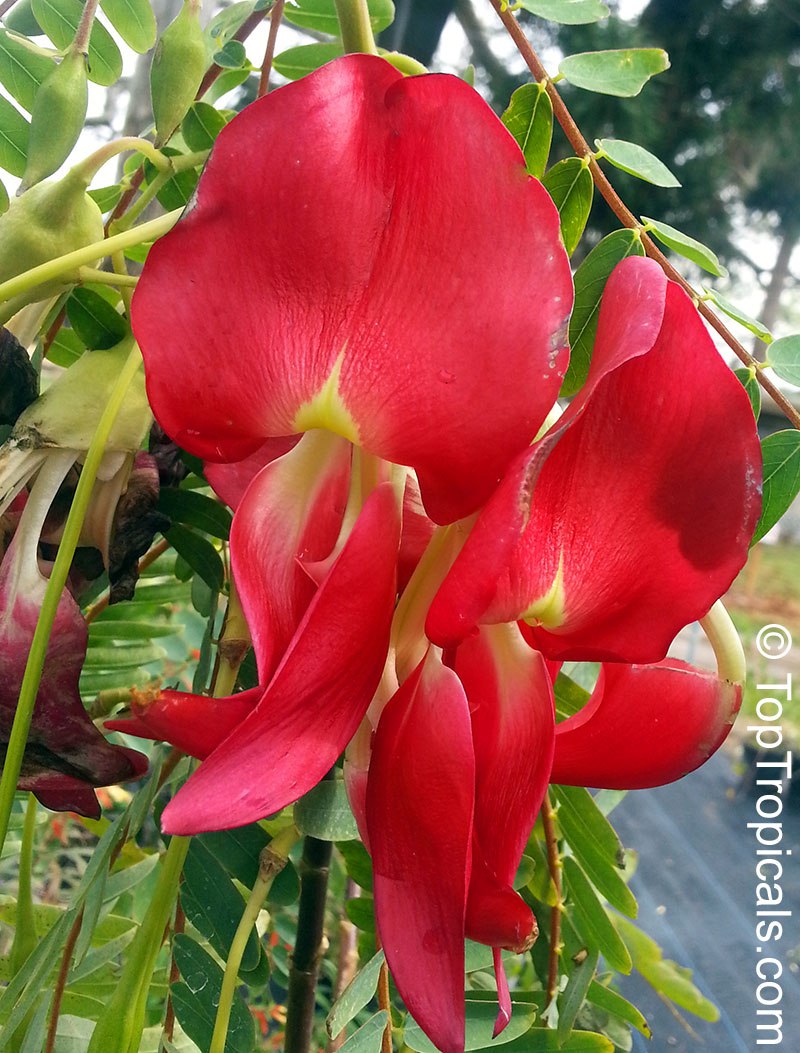
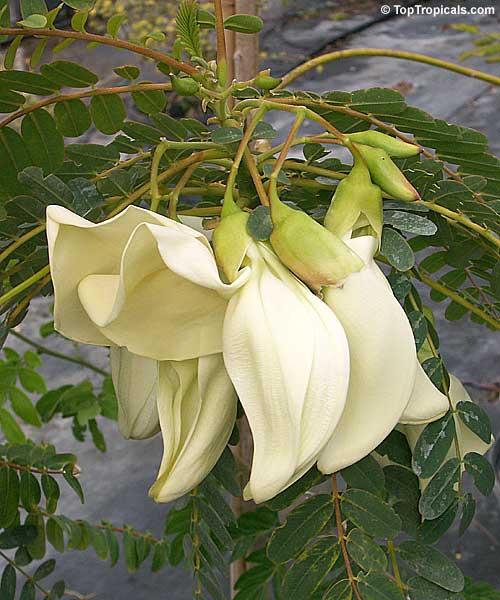
Hummingbird Tree Plant Facts

Botanical name: Sesbania grandiflora, Agati grandiflora
Also known as: Hummingbird Tree, Butterfly Tree, Agati
USDA Zone: 9 - 11
Highligths Small tree 10-20 ftSemi-shadeFull sunWatering: Regular. Let topsoil dry slightlyRed, crimson, vinous flowersWhite, off-white flowersEdible plantPlant attracts butterflies, hummingbirdsDeciduous plantEthnomedical plant.
Plants marked as ethnomedical and/or described as medicinal, are not offered as medicine but rather as ornamentals or plant collectibles.
Ethnomedical statements / products have not been evaluated by the FDA and are not intended to diagnose, treat, cure, or prevent any disease. We urge all customers to consult a physician before using any supplements, herbals or medicines advertised here or elsewhere.Flood tolerant plant
Get personalized tips for your region

Sesbania grandiflora in Plant Encyclopedia
Why it's called Hummingbird Tree
Bird-looking flowers: you can eat the whole tree

#Food_Forest #Recipes

🟢 Join 👉 TopTropicals

Date: 30 Dec 2025

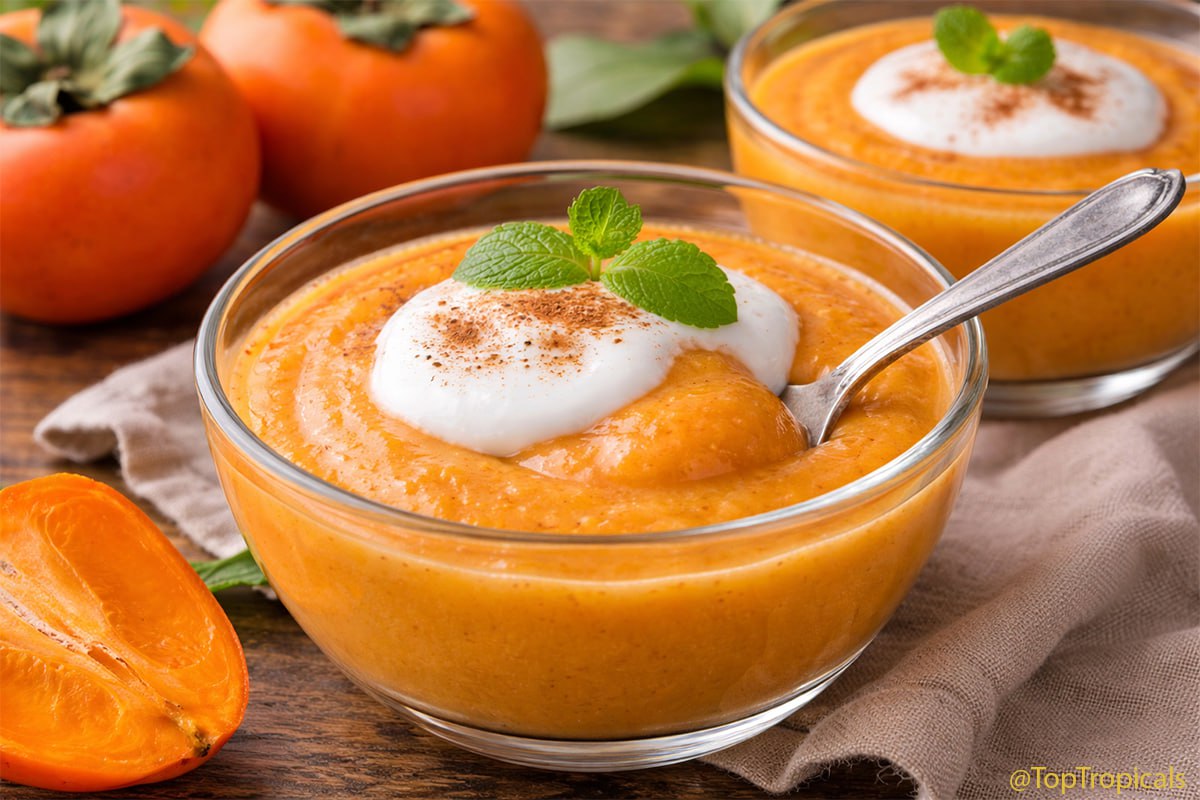
Persimmon spoon pudding: quick-n-fun exotic recipes

Persimmon spoon pudding

Persimmon spoon pudding

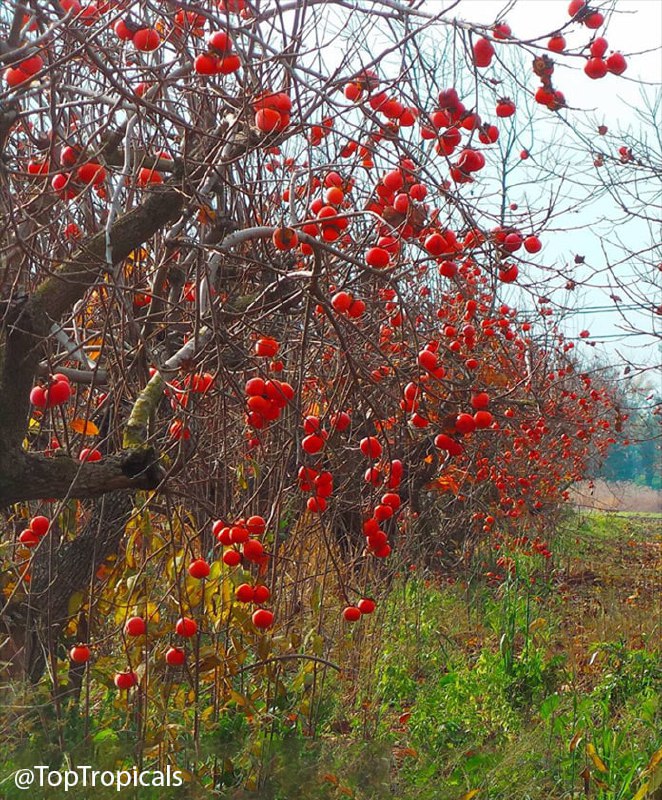
Persimmon tree (Diospyros sp)

Persimmon tree (Diospyros sp)

🍴 Persimmon spoon pudding


Ingredients

  • 2 very ripe persimmons (astringent type, fully soft)
  • 2 tablespoons plain yogurt
  • Optional: pinch of cinnamon

Instructions

  1. Scoop the soft persimmon flesh into a blender and puree until smooth.
  2. Chill the puree in the refrigerator for 15 to 30 minutes.
  3. Spoon into a bowl and top with plain yogurt.
  4. Sprinkle lightly with cinnamon if desired and serve.

🍑 About the fruit:


Persimmon (Diospyros spp.) is a graceful, cold-hardy subtropical fruit tree native to China and widely grown across temperate and warm regions. The fruit is loved for its rich sweetness, often compared to honey and apricot. Persimmons are divided into astringent types, which must soften fully before eating, and non-astringent types, which can be enjoyed firm. The fruit is nutritious and commonly eaten fresh or used in desserts.

🌱 In the garden:


Persimmon trees are highly ornamental, with drooping branches, lush summer foliage, and dramatic fall color. They thrive in well-drained soils, tolerate alkaline conditions, and are hardy in USDA zones 7-10. Many varieties perform well in containers, making persimmon a beautiful and productive choice for both edible landscapes and patio gardens.

🛒 Plant Persimmon Tree for sweet fruit and deserts

📚 Learn more:

Velvet Apple Plant Facts

Botanical name: Diospyros blancoi, Diospyros discolor
Also known as: Velvet Apple, Mabolo
USDA Zone: 10 - 11
Highligths Large tree taller than 20 ftFull sunWatering: Regular. Let topsoil dry slightlyEdible plant
Get personalized tips for your region

Explore Persimmon trees (Diospyros spp) in Plant Encyclopedia
How soon will Persimmon tree fruit?
Why so many gardeners this year planted Native American Persimmon
Hardy, dramatic looking tropical fruit tree with a sweet fruit

#Food_Forest #Recipes

🟢 Join 👉 TopTropicals

Date: 29 Dec 2025

New way to grow Vanilla Orchid, and a wise message at the end

Vanilla planifolia - Vanilla Bean Orchid

🎆 New way to grow Vanilla Orchid, and a wise message at the end


Vanilla planifolia - Vanilla Bean Orchid (they call it also Madagascar, Bourbon, or French Vanilla) discovered a new set up!

✨ I gave this vanilla orchid as a tiny plant last year: "Bathroom with a skylight, add trellis" - classic vanilla advice.

✨ Fast forward to this Christmas - and this thing has gone rogue! It climbed out of the bathroom, marched down the hallway, and claimed the concrete wall by the front door. And yes, it looks very happy doing it!

✨ Every visitor stops. Every visitor stares. And then they notice the sign underneath. Turns out vanilla orchids are excellent at pointing things out.

✨ If you’ve ever wondered where vanilla really wants to grow… this one has opinions. Add something unexpected to your garden - or your house.

🛒 Plant Vanilla Orchid the new way!

📚 Learn more:

Madagascar Bourbon Vanilla Bean Plant Facts

Botanical name: Vanilla planifolia, Vanilla fragrans
Also known as: Madagascar Bourbon Vanilla Bean, French Vanilla, Vanilla Orchid
USDA Zone: 9 - 11
Highligths Vine or creeper plantSemi-shadeWatering: Regular. Let topsoil dry slightlyYellow, orange flowersEdible plantSpice or herb plantFragrant plantSubtropical plant. Mature plant cold hardy at least to 30s F for a short time
Get personalized tips for your region

Vanilla planifolia - Madagascar Bourbon French Vanilla Bean Orchid - in Plant Encyclopedia
Climbing 10 feet for Vanilla Beans
How to properly plant Vanilla Orchid
How to grow your own vanilla orchid at home
The Secret of how to Make Vanilla Orchid bloom
The biggest in the world Vanilla dilloniana

📱How to produce your own vanilla: secrets of hand-pollination.

#Shade_Garden #Container_garden #Food_Forest

🟢 Join 👉 TopTropicals

Date: 28 Dec 2025

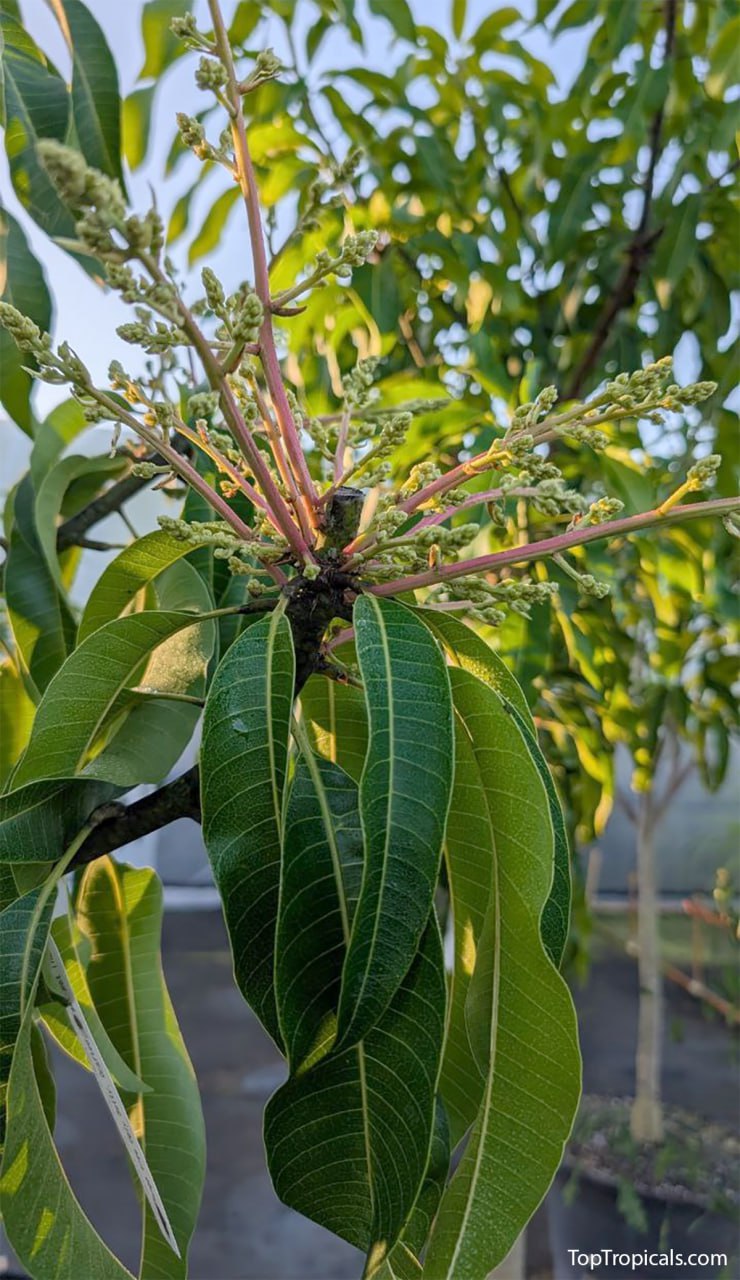
Mango tree tipping - Quick Field Guide: why it improves flowering and production

Mango tree tipping - Quick Field Guide

Mango tree tipping - Quick Field Guide

🥭 Mango tree tipping - Quick Field Guide: why it improves flowering and production


📊 Mango Tree Tipping - Quick Field Guide


It is mid-winter. While early mango varieties like Nam Doc Mai are already flowering, late varieties still have a month or two before they start. Trees such as Keitt, Honey Kiss, Kent, Venus, Beverly, Palmer, and Neelam bloom later in the season. In warm climates without expected cold snaps, this is still a good window for tipping before flowering begins. Tipping encourages more branching, more flower tips, and better fruit production. If cold weather is still possible, save this guide and tip after the risk of cold has passed - but always before the tree enters the flowering stage.

✔️ What tipping is


Tipping is the removal of the soft growing tip of a mango branch once it reaches about 20 inches long. This simple cut stops straight upward growth and forces the branch to split into multiple side shoots.

✔️ When to tip


· Young, actively growing trees
· After a flush hardens slightly (not brand-new soft growth)
· Warm weather when the tree is growing strongly
· Best during the training years, not heavy fruiting years

✔️ How to tip (step-by-step)


· Let a branch grow to about 20 inches
· Using clean pruners, remove 1-2 inches from the tip
· Cut just above a node (leaf joint)
· Do not cut into thick woody growth - this is a light heading cut

✔️ What happens next


· 2-4 new branches usually form below the cut
· The tree becomes shorter, wider, and stronger
· More branch tips = more flowering points
· Better light penetration inside the canopy

✔️ Why it improves flowering and production


· Mango flowers form at branch tips
· More branches = more tips
· A well-shaped tree puts energy into fruiting, not height
· Easier harvesting and long-term structure

❌ Common mistakes to avoid


· Letting branches get too long before tipping
· Tipping weak or stressed trees
· Over-tipping all at once (stagger cuts)
· Doing it right before cold weather
· Doing it too close to flowering

✍️ Simple rule to remember


→ grow 20 inches → tip → repeat
This builds a compact, productive mango tree from the start.
🛒 Explore mango trees

📚 Learn more:


Tipping mango trees
📱 Why tipping mango trees makes them fruiting machines (DIY Garden Tip)

#Food_Forest #Mango #How_to

🟢 Join 👉 TopTropicals