Garden Blog - Top Tropicals

Date: 8 Jan 2026

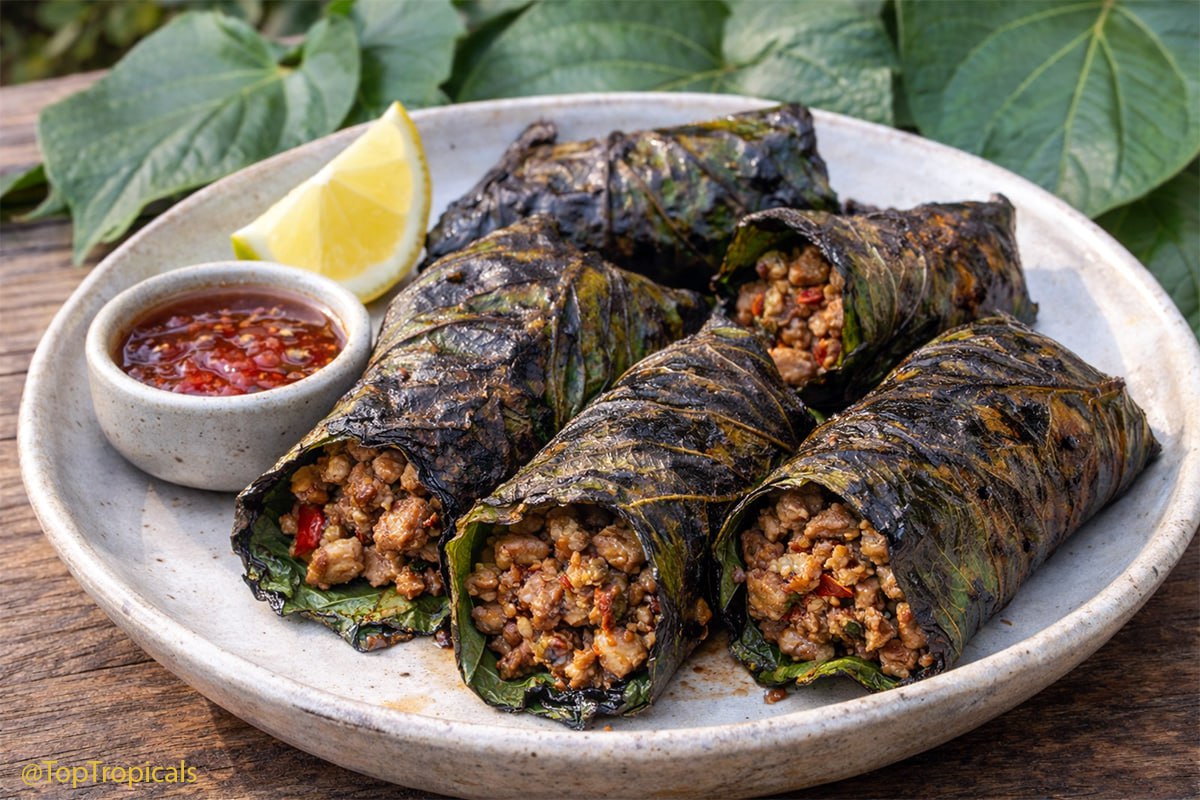
Root beer leaf wraps: quick-n-fun exotic recipes

Root beer leaf wraps

Root beer leaf wraps

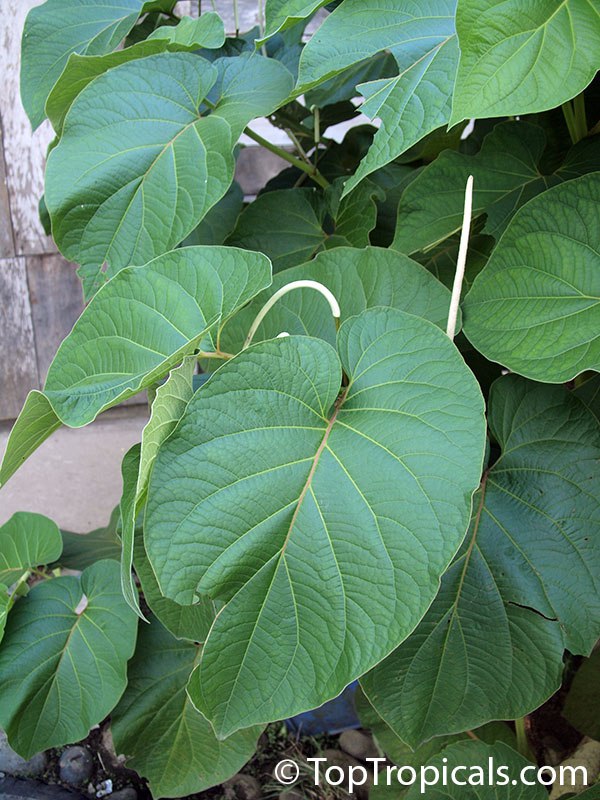
Piper auritum - Root Beer Plant

Piper auritum - Root Beer Plant

🍴 Root Beer Leaf Wraps

Ingredients

  • 6 to 8 large fresh Root Beer leaves (Piper auritum)
  • 1 lb ground meat or firm tofu
  • 1 small onion, finely chopped
  • 2 cloves garlic, minced
  • 1 tbsp vegetable oil
  • Salt and pepper to taste
  • Optional: chili flakes, paprika, or cumin
  • Lemon wedges, for serving

Instructions

  1. Rinse the Root Beer leaves and pat dry. Trim thick stems if needed.
  2. In a bowl, mix ground meat or tofu with onion, garlic, oil, salt, pepper, and spices.
  3. Place a portion of filling onto each leaf and roll tightly into wraps.
  4. Grill over medium heat until the leaves are lightly charred and the filling is cooked through.
  5. Serve warm with lemon wedges or dipping sauce.

☘️ About the plant:


Piper auritum - Root beer plant, also known as Acuyo or false Kava-Kava, is a large-leaved tropical herb native to Central and South America and also grown in the South Pacific. It belongs to the same family as Kava-Kava and black pepper. The leaves are prized for their bold, aromatic flavor, often described as root beer, anise, or clove-like. Traditionally, the leaves are chopped for seasoning or used whole as natural wrappers for meats, fish, and tamales.

🌱 In the garden:


Piper auritum is easy to grow in warm climates and forms a lush, fast-growing perennial. Its huge, soft leaves - often over a foot long - make it both edible and ornamental. It prefers warmth, moisture, and partial shade and is often mistaken for Kava-Kava due to its similar appearance and close relation.

🛒 Plant the beautiful Root Beer Plant - it always will be with you

📚 Learn more:

Plant Facts

Piper auritum
Root Beer Plant, Mexican Pepperleaf, Hoja Santa , Veracruz Pepper, False Kava-Kava, Sacred Pepper
USDA Zone: 9-11
Large shrub 5-10 ft tallSmall plant 2-5 ftSemi-shadeShadeFull sunRegular waterKeep soil moistInvasive plantSpice or herb plantEthnomedical plant.
Plants marked as ethnomedical and/or described as medicinal, are not offered as medicine but rather as ornamentals or plant collectibles.
Ethnomedical statements / products have not been evaluated by the FDA and are not intended to diagnose, treat, cure, or prevent any disease. We urge all customers to consult a physician before using any supplements, herbals or medicines advertised here or elsewhere.Irritating plantSubtropical plant. Mature plant cold hardy at least to 30s F for a short time
  • Piper auritum - Root Beer Plant in Plant Encyclopedia
  • How to always have your own Root Beer
  • How to grow your own Pepper plants. Five most valuable 'Pipers'

  • #Food_Forest #Recipes

    🟢 Join 👉 TopTropicals

    Date: 14 Feb 2026

    🍧Vanilla does not come from a bottle

    Tuxedo  cat  training  a  vanilla  vine  on  a  wooden  trellis  while  orange  cat
    drinks  coffee  beside  jar  labeled  Sunshine  Vanilla  Creamer.
    Sunshine: What are you doing?
    Smokey: Growing vanilla for your creamer. It needs support to climb.
    Sunshine: I can provide moral support and donuts. Count on me, my friend.

    🍨 The orchid behind the worlds favorite flavor

    Vanilla does not come from a bottle. It comes from a climbing orchid. Vanilla planifolia is the plant that produces real vanilla beans - and yes, you can grow it at home. It starts simply. A potted orchid with glossy leaves. Then it begins to reach. Vanilla is a climber. It wants something solid to attach to. This is where most people go wrong. They keep it in a pot and wait. Vanilla needs support - a log, a trellis, a wooden board. Once its aerial roots attach firmly and the plant matures, flowering becomes possible.

    It is not instant. You need patience. The pods form green and only develop their aroma after curing. That slow process is part of what makes vanilla so valuable. For gardeners who enjoy growing something meaningful - something edible and beautiful - vanilla is worth it. Vanilla is not a novelty plant. It is a long conversation with your garden.

    🎁 Shop Vanilla Orchids

    Close-up  of  Vanilla  planifolia  flower  with  yellow  throat  and  green 
 vanilla  bean  pods  developing  on  climbing  vine

    Vanilla planifolia Flower and Developing Vanilla Pods

    Date: 4 Feb 2026

    Top nine plants of love, desire, and the senses: aphrodisiacs and sensory connections

    Cinnamon (Cinnamomum zeylanicum)

    Cinnamon (Cinnamomum zeylanicum)

    Coffee - Coffea arabica

    Coffee - Coffea arabica

    Fig tree fruit (Ficus carica)

    Fig tree fruit (Ficus carica)

    Patchouli - Pogostemon cablin

    Patchouli - Pogostemon cablin

    Pomegranate (Punica granatum)

    Pomegranate (Punica granatum)

    Cacao - Chocolate Tree (Theobroma cacao)

    Cacao - Chocolate Tree (Theobroma cacao)

    💖 Top nine plants of love, desire, and the senses: aphrodisiacs and sensory connections


    Across cultures, love has also been expressed through taste, scent, warmth, and shared ritual. These tropical plants were valued not just for beauty, but for how they awaken the body and deepen connection.
    • 💘 1. Cacao


      Cacao - Chocolate Tree (Theobroma cacao) - has one of the strongest global associations with love. Revered by the Aztecs as a “food of the gods”, it was consumed to increase desire and emotional bonding. Chocolate contains compounds linked to feelings of pleasure and infatuation, making cacao a natural Valentine symbol.

    👉 Chocolate Tree gift
    • 💘 2. Vanilla Orchid


      Vanilla (Vanilla planifolia) is both an orchid and one of the most sensual plant aromas known. Historically paired with cacao in love remedies, vanilla represents intimacy, warmth, and attraction. Its fragrance alone carries powerful emotional associations.

    👉 Vanilla orchid gift
    • 💘 3. Ginger


      Ginger symbolizes heat, vitality, and passion. Used worldwide to stimulate circulation and warm the body, it represents spark, chemistry, and physical energy.

    👉 Ginger gift
    • 💘 4. Cinnamon


      Cinnamon (Cinnamomum zeylanicum) has long been associated with attraction and stimulation. Its warm, lingering aroma makes it a classic plant of desire, comfort, and emotional warmth.

    👉 Cinnamon gift
    • 💘 5. Pomegranate


      Pomegranate (Punica granatum) has long symbolized love, fertility, and union, with its many ruby-red seeds representing abundance and deep connection. In ancient traditions, it was linked to goddesses of love and marriage and remains a symbol of passion balanced by continuity and commitment.

    👉 Pomegranate gift
    • 💘 6. Coffee


      Coffee (Coffea arabica) represents connection through shared ritual. Sacred to African Sufis for its stimulating properties, coffee symbolizes conversation, alertness, and social bonding rather than purely romantic love.

    👉 Coffee tree gift
    • 💘 7. Fig Tree


      Figs (Ficus carica) have ancient associations with fertility, sensuality, and indulgence. Their voluptuous form, sweet flesh, and rich texture made them symbols of desire and abundance in many cultures.

    👉 Fig tree gift
    • 💘 8. Betel Leaf and Betel Nut


      Betel Leaf (Piper betle) is a powerful symbol of love, respect, and partnership across South and Southeast Asia. It is exchanged in courtship, weddings, and ceremonies, representing acceptance and shared experience. Its heart-shaped leaves reinforce its Valentine symbolism.
      Betel nut (Areca catechu) - traditionally used as a stimulant and aphrodisiac, betel nut represents intensity, ritual, and sensory awakening. In this context, it is best presented as a cultural symbol rather than a casual love plant.

    👉 Betel gift

    💘 9. Patchouli


    Patchouli (Pogostemon cablin) represents deep attraction and emotional grounding. Its earthy, musky scent has long been associated with intimacy and physical presence. Unlike sweet florals, patchouli symbolizes mature, rooted love that lingers.

    🛒 Explore gift plants
    🎁 Get a Gift Card

    📚 Learn more:


    🎥 Secret Sex Life of Vanilla Orchid: how to produce your own vanilla

    #Shade_Garden #Container_Garden

    🟢 Join 👉 TopTropicals

    Date: 23 Feb 2026

    Macadamia Tree Care

    By Tatiana Anderson, Horticulture Expert at Top Tropicals with Smokey & Sunshine help

    Mature  macadamia  tree  with  well-shaped  canopy  growing  in  Florida 
 orchard.

    Macadamia tree maturing into a productive, manageable canopy.

    🌳 Growing Macadamia Tree

    Macadamia is not a fragile tree, but it does have preferences. If you respect them from the beginning, the tree rewards you for decades.

    • Start with the site. Drainage is everything. Macadamia will tolerate cool weather better if planted in a well-drained area. Avoid low spots where water sits after rain. If your soil is dense or clay-like, build a mound or improve drainage before planting.
    • Choose full sun whenever possible for the best nut production.
    • Planting location matters. A south or southeast exposure near a wall can create a warmer microclimate that buffers cold nights. Freeze plus wind is more damaging than temperature alone. Macadamia handles cold better when protected from winter wind.
    • Dig a hole about twice as wide as the container, but no deeper than the root ball. Set the tree level with the surrounding soil. Do not bury the trunk.
    • Water regularly during the first three months while the tree establishes roots.
    • Fertilize lightly. Macadamia does not respond well to over-fertilizing. Macadamias prefer mild liquid fertilizers, SUNSHINE Boosters Robusta is ideal for it. You may also use controlled release Green Magic every 6 months, it is especially formulated for hot climate. To keep leaves healthy deep green without yellowing, micro elements must be applied on regular basis, we recommend to always have handy Sunshine Superfood micro nutrients complex.
    • Young trees should be protected if temperatures drop below freezing. Once established, they become far more resilient.
    • Harvest timing: Nuts mature 6-7 months after flowering. Husk splits naturally when ready. Fallen nuts should be collected quickly.
    • Flower and Nut Drop: Many gardeners panic when they see flowers or small nuts drop, but Macadamia naturally sheds excess fruit. It does not mean failure; the tree simply keeps what it can afford to feed.
    • Macadamia is relatively low-maintenance, but watch for squirrels and rats. They love the rich nuts as much as humans do, so be sure to collect fallen nuts quickly.
    • Root Sensitivity: Macadamia roots dislike disturbance. Transplant carefully. Avoid root damage.
    • Macadamia is not a fast-return crop. It begins producing a few years and increases gradually. But once mature, it becomes a steady, reliable part of your garden.

    Learn more: Macadamia - Hard Sweet Nut and Hardy Tree

    Fresh  green  macadamia  fruit  and  brown  hard-shelled  nuts  collected  in  a 
 bowl.

    Macadamia fruit showing green outer husk and mature brown shell inside.

    🌱 Growing Macadamia in a Pot

    • Container size: Start large. A 15-25 gallon pot is ideal for long-term growth.
    • Drainage: Critical. Use a container with multiple drainage holes.
    • Soil mix: Use a high-quality, well-draining container mix. Avoid heavy garden soil. Top Tropicals Abundance soil-less mix is specially formulated for pot growing
    • Light: Full sun is best. Strong light improves flowering and nut production.
    • Watering: Water deeply, then allow the top layer to dry slightly before watering again. Avoid constant saturation.
    • Feed lightly and consistenly. SUNSHINE Boosters Robusta liquid fertilizer is safe to use with with every watering. During hot season you may add controlled release Green Magic every 6 months. It is essential to apply micro elements on Macadamias: Sunshine Superfood micro nutrients complex.
    • Cold protection: If temperatures drop below freezing, move the container to a protected area such as a garage or greenhouse.
    • Pruning: Prune lightly to control size and maintain airflow within the canopy.
    • Expectations: Container trees may produce fewer nuts than in-ground trees, but they offer mobility and climate control.
    • Smokey says: Container trees offer mobility and climate control so you never have to worry about a freeze!

    ✍️ More About Macadamia from Garden Blog

    Green  macadamia  nuts  developing  on  tree  branch  among  glossy  leaves.

    Macadamia nuts developing on the tree before the husk splits.

    🚫 Common Mistakes When Growing Macadamia

    • Planting in poorly drained soil:
      The most common mistake. Macadamia will decline quickly in heavy, waterlogged ground. If drainage is questionable, plant on a mound.
    • Overwatering young trees:
      Newly planted trees need consistent moisture, not constant saturation. Wet roots lead to root problems.
    • Over-fertilizing:
      Too much fertilizer causes weak growth and nutrient imbalance. Feed lightly and avoid heavy nitrogen applications.
    • Planting too deep:
      The top of the root ball should sit level with or slightly above the surrounding soil. Do not bury the trunk.
    • Ignoring micronutrients:
      Macadamia is very prone to iron, zinc, and copper deficiencies. Yellowing leaves may signal a micronutrient issue. Applly Sunshine Superfood on regular basis.
    • Expecting instant production:
      Macadamia takes time. Early years build structure. Patience is part of success.
    • Skipping cold protection for young trees:
      Established trees are tougher, but young plants should be protected below freezing.

    Macadamia  tree  in  full  bloom  covered  with  long  orange  flower  racemes.

    Macadamia tree in full bloom with abundant flower clusters.

    ❓Frequently Asked Questions (FAQ)

    • Is Macadamia toxic to pets? While the nuts are a superfood for humans, they are toxic to dogs. If you have a dog that tends to forage in the garden, ensure you harvest fallen nuts promptly or fence the base of the tree during the drop season.
    • Which varieties are best for the "Survivor" garden? Look for Macadamia integrifolia (smooth-shell) or hybrids like 'Beaumont' (M. tetraphylla x M. integrifolia). Hybrids often show slightly better cold tolerance and more consistent "home garden" production.
    • How tall will my tree get? In the ground, an unpruned Macadamia can reach 20–30 feet. However, they respond very well to "heading back" (pruning the top) to keep them at a manageable 12–15 feet for easy harvesting.
    • Do I need two trees for cross-pollination? Macadamias are self-fertile, meaning one tree will produce nuts. However, planting two varieties near each other often results in a significantly heavier "nut set" due to cross-pollination.
    • Why are the leaves on my Macadamia prickly? Don't panic—this is normal! Some species, particularly M. tetraphylla, have serrated, holly-like leaves. This actually makes them a great "defensive" hedge against intruders or deer.
    • When exactly should I harvest? The tree tells you when it's ready. Don't shake the tree; wait for the nuts to fall naturally. In Florida, this usually happens between August and November. If the green outer husk hasn't split yet, let them sit in a shaded, dry spot until they do.
    • My tree has "clusters" of flowers but no nuts. What happened? Macadamias produce long racemes (flower spikes) with hundreds of tiny blooms. It is normal for 90% of these to fall off. The tree only keeps what it can afford to "feed." Boost your success by using a combination of Sunshine C-Cibus liquid fertilizer and SUNSHINE Superfood micro element supplement during the flowering stage to help the tree retain more fruit.
    • Can I grow them from a nut I bought at the store? Unlikely. Commercial nuts are usually roasted or dried at high heat, killing the embryo. Even if a raw nut sprouts, it may take 10–12 years to fruit and the quality is a gamble. Buying a grafted tree saves you a decade of waiting.

    We don’t just sell plants; we test them. The data from this February freeze proves that with the right selection and proper drainage, 'tropical' doesn’t have to mean 'fragile.' Don’t wait for the next cold front to find out what in your garden is vulnerable. It is time to replace those empty spots with proven survivors that offer both beauty and a premium harvest. If it can stand up to 25F in our fields, it’s ready for your backyard.

    Coming in Part 2...

    Smokey is already crunching the numbers on our next survivor, and Sunshine found another tree that stayed perfectly green in the wind. Stay tuned to see which fruit tree made the cut!

    Macadamia  tree  covered  in  long  pink  flower  racemes  during  peak  bloom.

    Macadamia flowers forming long cascading racemes before nut set.

    🎥 More Macadamia videos from our channel

    🛒 Add Macadamia Tree to your garden

    Date: 7 Mar 2026

    SUNSHINE Boosters: The Professional Advantage

    By Tatiana Anderson, Horticulture Expert at Top Tropicals with Smokey & Sunshine help

    Sunshine  Boosters  plant  fertilizers  lineup  including  Bloom,  Pikake, 
 Robusta,  Omnibus,  Ananas,  Mango  Tango,  Citrus,  and  MegaFlor

    Sunshine Boosters for different types of plants

    Here is why SUNSHINE Boosters are the smart choice for your garden this spring:

    • Amino Acid Stability: Unlike traditional fertilizers that use synthetic EDTA chelators, our formulas are amino-acid based. This means 100% of the nutrients are bioavailable and consumed by the plant, leaving zero toxic residues or salt build-up in your soil.
    • Safe for Every Watering: Because our concentrations are scientifically balanced and mild, they are safe for daily use. This eliminates the "feast or famine" cycle of dry fertilizers and prevents accidental root burn.
    • Pure Taste for Edibles: Our delicate formulas do not contain excess salts, urea, or ammonium salts that can ruin the flavor of your harvest. Your fruit and vegetables will retain their pure, natural taste.
    • Pollinator Friendly: Our boosters are designed to be safe for honeybees and other beneficial insects, making them the responsible choice for an organic-style garden.

    🌿For Potted Plants: Breaking the "Foodless" Cycle

    Schlumbergera  Christmas  cactus  with  abundant  red  blooms  after  feeding 
 with  Sunshine  Megaflor  fertilizer

    Schlumbergera - Christmas cactus - after boosting flowers with Sunshine Megaflor

    Container-grown plants are trapped in soilless mixes (peat, bark, perlite) that are structurally great but naturally nutrient-deficient.

    • Total Nutrition: Since pots lack the natural "buffet" of the ground, SUNSHINE Boosters™ provide every essential mineral the plant cannot find on its own.
    • No Salt Build-up: Our amino-acid based formulas are consumed entirely by the plant, leaving zero toxic residue or root-burning salts behind.
    • Daily Safety: Our mild concentrations eliminate the "feast or famine" cycle of dry fertilizers, making them safe for use with every single watering.

    For In-Ground Plants: Unlocking the Soil

    Mango  tree  blooming  produsely  after  applying  Sunshine  Mango  Tango 
 Booster

    Mango tree blooming produsely after applying Sunshine Mango Tango Booster

    Even in the ground, plants often struggle to absorb what they need because soil compounds can "lock up" nutrients.

    • Enhanced Solubility: SUNSHINE Boosters create a slightly acidic environment that helps dissolve stubborn salts in the soil, making them accessible to roots again.
    • Precision Delivery: We provide mobile elements like Nitrogen precisely when the plant needs to push new spring growth.

    🌿The Foliar Advantage: Direct-to-Leaf Delivery

    Did you know a plant leaf can absorb nutrients even more efficiently than the roots? Foliar feeding is your "emergency button" for instant results.

    • Quick Fix: Foliar applications with Sunshine Superfood are the fastest way to correct yellowing leaves or visible deficiencies.
    • Metabolism Boost: Sprays like SUNSHINE-Epi act as a bio-regulator, helping plants recover from the stress of spring temperature swings.
    • Better Fruit: SUNSHINE Honey is applied to leaves to naturally move sugars to the fruit, increasing sweetness and flavor.

    🌿The Calcium Problem: Solved

    As your plants wake up this Spring, they need structural strength. Think of Calcium as the "cement" that holds plant cells together. Without it, new spring growth is doomed to fail.

    Signs Your Plant is Starving for Calcium:

    • Deformed Leaves: New growth looks twisted, hooked, or curled.
    • Blackened Tips: The very edges of young leaves turn white, then quickly blacken and die.

    The Industry Secret: The "Missing" Mineral

    Most fertilizers, both dry and liquid, completely skip Calcium. Why? Because it’s a chemical nightmare to keep stable in a concentrated solution. Most manufacturers rely on your irrigation water to deliver Calcium, but tap water is inconsistent and often fails to provide what a hungry, growing plant needs.

    The SUNSHINE Boosters: Stable Calcium in Every Bottle

    We have successfully stabilized Calcium directly into every single Sunshine Booster formula. Whether you are using Bombino, Robusta, or Megaflor, you are delivering a precise, stable dose of Calcium with every watering. No lockout, no sediment, and no relying on the "luck" of your tap water. Just strong, healthy cell walls and perfect spring growth.

    🌿SUNSHINE-Epi: The Year-Round Bio-Regulator

    Whether it’s the transition of spring, the extreme heat of summer, or the dry air of indoor wintering, SUNSHINE-Epi is your plant’s primary defense. This natural Brassinosteroid acts as a powerful immune booster, helping plants navigate stress wherever it comes from.

    • Universal Stress Shield: Protects against temperature swings (both heat and cold), drought, and transplant shock.
    • Vigorous Development: Dramatically improves root growth and speeds up the metabolism of young seedlings and cuttings.
    • Eco-Safe: 100% non-toxic to humans, pets, and pollinators.

    Note: While Epi is highly effective, it is a performance booster, not a substitute for proper care. It works best when paired with the right light, water, and a consistent feeding program. It won't bring a dead plant back to life, but it will help a struggling one find its footing.

    🛒 Feed your plants

    Don't let your garden wake up to an empty nutrition plate.
    Smokey: Save your gas money for donuts. We're shipping the boosters for free.
    Sunshine: Agreed. My charm covers the delivery cost.

    No coupon code required: The free shipping is automatically applied at checkout.

    Complete Nutrition: Stock up on Robusta, Superfood, and Epi for the Spring growth push.
    Offer valid through 03/14/2026. Free shipping offer is valid on SUNSHINE Boosters liquid products only. Not valid on previous purchases and cannot be combined with any other offers, coupons, or discounts. Offer subject to change or cancellation without notice.

    Sunshine  Boosters  plant  supplements  including  Superfood  micro  element 
 complex,  Epi  biostimulant,  and  Honey  fruit  enhancer

    Sunshine Boosters micro elements and supplements - Superfood micro-element complex, Sunshine Epi biostimulant and Sunshine Honey supplement for better fruit

    ❓Frequently Asked Questions: SUNSHINE Boosters™

    • What water should I use for foliar spraying?
      Tap water works perfectly for most. However, if your water is very "hard" (leaving white mineral spots on leaves), switch to distilled water for a cleaner finish and better absorption.
    • How long does a diluted solution last?
      For maximum potency and to avoid nutrient degradation, try to use your diluted mixture within a few hours of preparation. Keep away from direct sun. Fresh is always best!
    • Can I use SUNSHINE Boosters as a daily foliar spray?
      Yes! You can mist your plants daily to maintain high vigor, but you must reduce the dosage (use half the recommended strength) to avoid over-feeding.
    • Can I mix boosters with pesticides or fungicides?
      It is best to apply them separately. Mixing fertilizers with chemical pesticides in one tank can trigger reactions that "lock out" nutrients or reduce the efficacy of the treatment.
    • Will the liquid stain my patio or hands?
      No. Unlike traditional fertilizers with heavy blue or pink dyes, our solutions are clear or very light-colored. If you spill it, simply rinse with water—no stains, no mess.
    • Can I mix different SUNSHINE Boosters together in one sprayer?
      Yes. All SUNSHINE Boosters are chemically compatible. You can combine a "growth" booster like Robusta with a "micro-element" complex like Superfood in the same water to save time.
    • Are these products safe to use around my pets?
      Absolutely. Our formulas are 100% non-toxic and amino-acid based. Just ask Smokey and Sunshine—they are perfectly safe for households with curious cats, dogs, and children.
    • Can I use these boosters on indoor plants?
      Yes. They are ideal for indoor use because they don't produce a "fertilizer smell" and won't cause salt crusting on your decorative pots or furniture.
    • Is it safe to use on fruit and vegetables I plan to eat?
      Yes. Because our formulas contain no urea, nitrates, or harsh salts, they don't leave a "chemical" aftertaste. They actually help improve the natural sugars and flavor profile of your harvest.
    • What is the best temperature for foliar spraying?
      Apply when temperatures are below 85°F. Early morning or late evening is best; this allows the leaves to remain wet longer, giving the plant more time to absorb the nutrients.

    What Fertilizer to Use and How?

    Green Magic controlled release fertilizer keeps plants green during active growth season - apply only once in 6 months.
    Sunshine: Smokey, you saved my coffee tree. But what do I do now so it stays happy?

    Smokey: Simple. Spray Sunshine Robusta every five days during active growth.

    Sunshine: Five days? Smokey, I barely remember where I left my coffee mug five minutes ago.

    Smokey: That is exactly why we use Green Magic.

    Sunshine: Fertilizer for forgetful gardeners?

    Smokey: Controlled release. Sprinkle once and it feeds the plant for six months.

    Sunshine: Six months? I can have a very good nap in that time.

    Smokey: Exactly. The plant keeps eating slowly while you keep napping.

    Sunshine: Perfect. Remember, I will bring the coffee. You bring the donuts.

    Smokey: And next week we will show you exactly how Green Magic works and why plants love it. Stay tuned.

    🛒 Feed your plants

    ✍️ Learn more about fertilizers