Garden Blog - Top Tropicals

Date: 24 Jun 2018

TopTropicals

SUNSHINE boosters for recovering plants after shipping

Q: I live in Garden City, NJ and have a sun room with a tropical plant collection that I keep at about 40-45 degrees in winter. I used Sunshine booster during winter for my plant collection and results were amazing! I haven't lost a single plant. Now I see you have more products and I am planning to purchase more plants, how should I use Sunshine boosters to help plants recover after shipping?

A: Spray SUNSHINE-E solution right after receiving a plant from shipping. It will boost up the plant and make it 50-60% stronger and easier to recover after shipping stress. After that, apply SUNSHINE-SuperFood microelement booster to provide everything necessary for the plant to grow vigorously and happily. SUNSHINE-E is indeed a wonderful plant stimulant and stress reliever, although it is not a "magic-cure-all" medicine where one can't find its active ingredient. The hormone (epibrassinolide) is well-known and used in different countries along with other hormones for promote growth, fruiting, blooming, rooting, etc. One of the most amazing properties of SUNSHINE is that it works in extremely low dozes. Only a few drops will be enough to make a solution in distilled water, to treat a large size plant. If you want to try it out, one 5 ml bottle will last for several applications. Large bottles of SUNSHINE 50 ml and 100 ml - great for small and big gardens. It is a good idea to start bi-weekly applications to improve your plants tolerance to Summer heat, drought and improve disease resistance. The formula works through plant metabolism within 2-4 days, repeat application not sooner than in one week. After application of SUNSHINE-E, don't forget to boost your plants with SUNSHINE-SuperFood .

Check out SUNSHINE boosters... We offer FREE shipping on them, so you can make your plants happy!

Date: 2 Dec 2021

New Video:
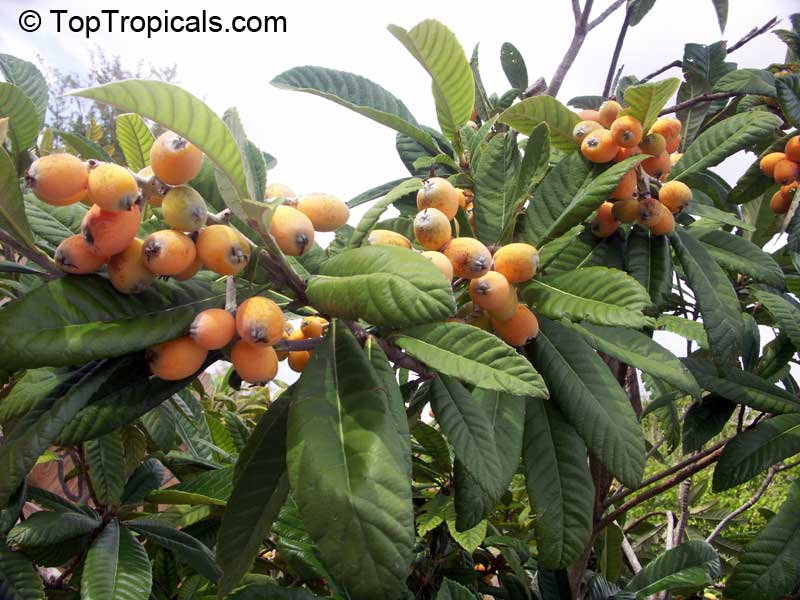
What is a Loquat?

Loquat is one of the easiest tropical/subtropical fruit trees to grow, with delicious fruit resembling Apricots (in fact, from the same family!). This video presented by our video host David Mortimer.

More information on Loquat trees:

Golden Loquat - the symbol of Prosperity
Kristi's Loquat Tropical BBQ sauce
Overlooked fruit: tasty Loquat recipes (PDF from Tropical Treasures Magazine)

WATCH NEW VIDEO >>

Stay updated with TopTropicals Videos by subscribing to our channel at YouTube.com/TopTropicals and get our latest video news of what is fruiting and blooming!

Date: 13 May 2022

New Video:
Golden Sugar Apple - Pineapple Annona

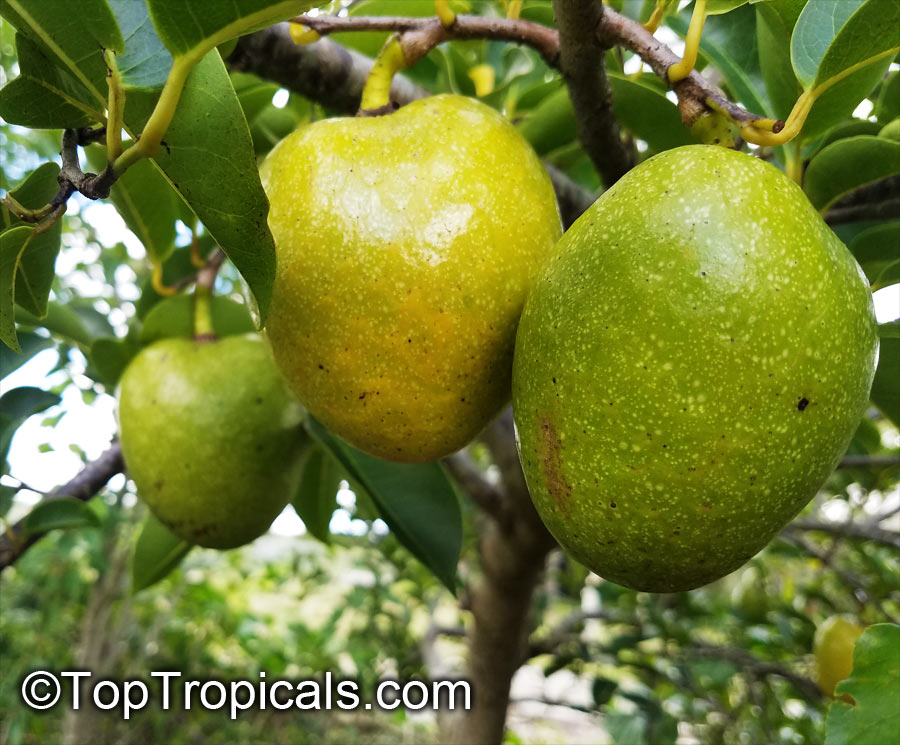
In this video we talk about a rare hybrid of Annona - Golden Sugar Apple. This rare Annona is a species originally brought to us from Costa Rica. We believe it to be a natural hybrid between A. muricata and A. glabra...
Fast growing, it forms a nice bushy specimen. It has a large, up to 1 lb fruit, green when unripe, turning dark yellow to orange on ripening. The pulp is golden to orange when ripe, with a strong Pineapple scent, and resembling Jackfruit in texture. Flavor is like the custard apple but with pineapple, papaya, apricot and melon overtones. Note that some people dislike the taste, others find it good... The tree tolerates flooding. It is also cold hardy! The plant would be very interesting for rare fruit collectors as it offers a large, exotic fruit of unusual color and taste, and appears to be much more hardy and water tolerant than similar looking but sensitive A. muricata, A. montana and Rollinia.

Annona  -  Golden  Sugar  Apple  youtube  video

Subscribe to our Channel:

Stay updated with TopTropicals Videos by subscribing to our channel at YouTube.com/TopTropicals and get our latest video news of what is fruiting and blooming!

Date: 7 Oct 2018

Featured Plant. Jasminum sambac Belle of India


Lovely Jasmine Belle of India makes you feel pretty and loved!

This one is the most wanted variety with elongated petals that are sweetly scented. Compact and slow growing shrub, it makes a great houseplant and flowers freely throughout the year. The most profuse flowering is from Spring to Summer.
Called pikake in Hawaii, Jasmine sambac is the plant used to flavor the jasmine tea and making perfumes. Perfect houseplant takes both sun or shade, it is a beautiful fragrant everbloomer for your home and garden.
Belle of India is a slow grower, with pale green pointed leaves and double flowers with elongated narrow petals. Prefers filtered light for a better look of the leaves, but will tolerate full sun. In fact the more sun the more flowers you get.

Secrets of successful culture:

1) use only well-drained potting soil
2) keep the plant a little bit on a dry side so roots don't get too wet. Water again when the soil gets slightly dry.
3) Use micro-element mix - SUNSHINE Superfood works the best. It will keep leaves nice and green and induce more profuse flowering.

Stay updated with TopTropicals Videos by subscribing to our channel at YouTube.com/TopTropicals and get our latest video news of what is fruiting and blooming!

Check out this plant...

Date: 12 Oct 2025

Sweetleaf tea: quick-n-fun exotic recipes

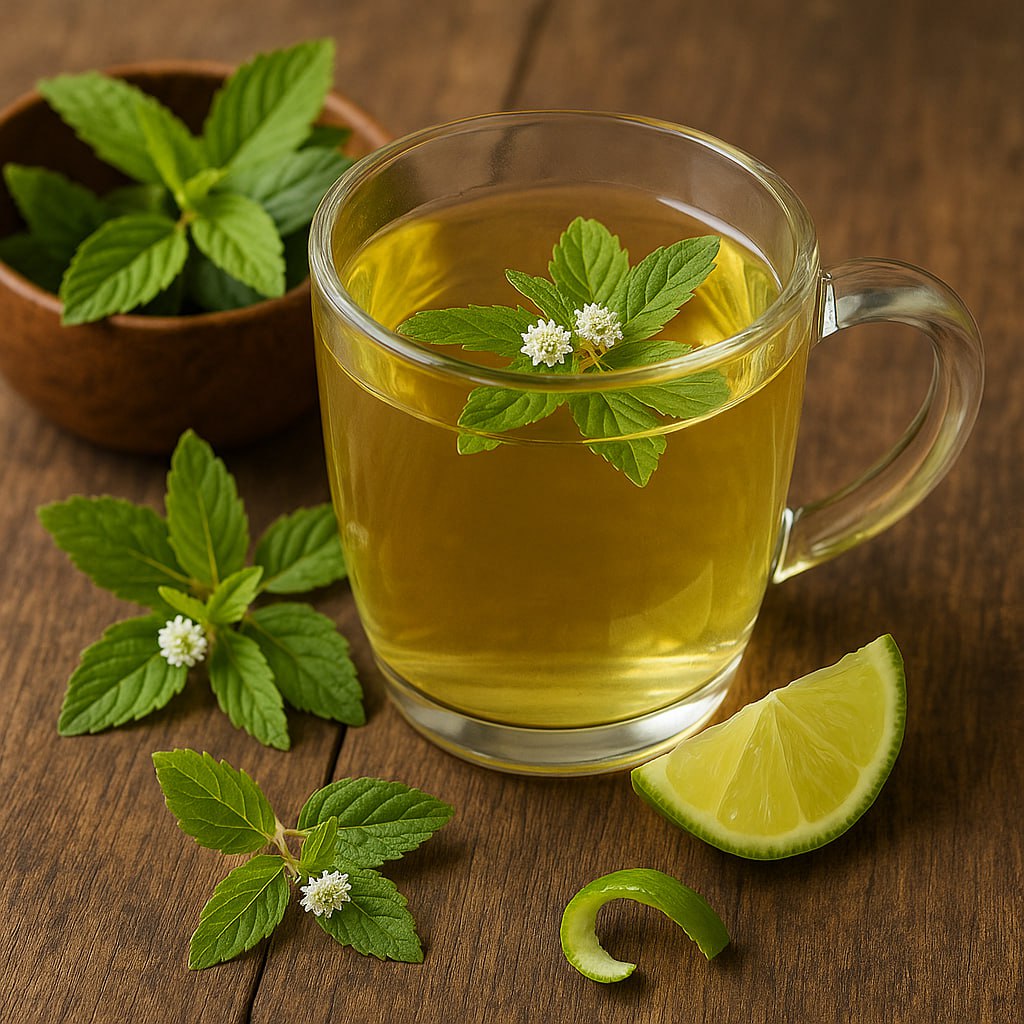
Sweetleaf tea with Mexican Aztec sweet herb (Lippia dulcis)

Sweetleaf tea with Mexican Aztec sweet herb (Lippia dulcis)

🍴 Sweetleaf tea: quick-n-fun exotic recipes


🟢Delicious Sweetleaf tea can be made with Mexican Aztec sweet herb (Lippia dulcis).
🟢Steep Aztec sweet herb leaves in hot water with lime peel.
🟢Naturally sweet, no sugar needed!

Sweetleaf tea: quick-n-fun

Ingredients

  • Fresh or dried Aztec sweet herb (Lippia dulcis) leaves
  • Hot water
  • Lime peel or a slice of lime

Instructions

  1. Bring water to a boil and pour over Lippia dulcis leaves.
  2. Add lime peel or a slice of lime.
  3. Let steep for 5–10 minutes.
  4. Enjoy this naturally sweet tea—no sugar needed!


🛒 Add sugar-free Mexican Sweetleaf (Lippia dulcis) to your herb garden

#Food_Forest #Recipes

🟢 Join 👉 TopTropicals