Garden Blog - Top Tropicals

Date: 26 Mar 2016

Growing Exotic Adeniums
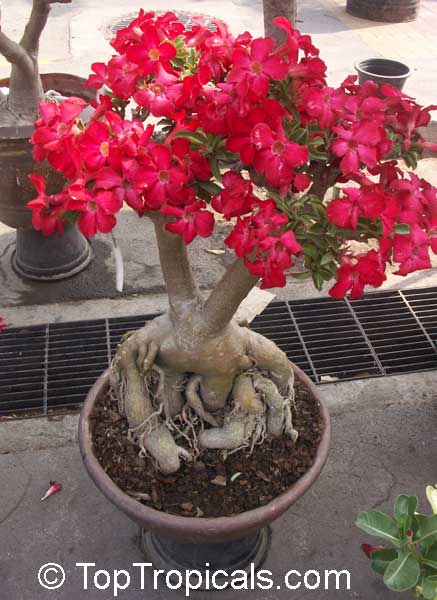
Exotic varieties of Desert Roses. Adeniums have many spectacular hybrids. The basic culture is very similar to orchids. A small pot with excellent drainage is a must. Adeniums do not like both over-watering or drying-out. There is a secret how to create a large swollen caudex: raise the plant a bit every time you re-pot it, so that the upper part of roots will be a little exposed. The plant will form more roots that will go down.

To make your plant develop a large swollen base/trunk, you'll need a good quality fertilizer. Fertilizer requirement for swelling up trunks is also used to increase flowering. It shouldn't be too high in nitrogen, the middle number should be the highest (similar to 10-50-10). Never apply fertilizer directly on roots and do not liquid feed when a plant is thirsty: always water first slightly to avoid root burn and leaf drop. Do not wet leaves. Adeniums need lots of light for heavy flowering.

Most hybrids and species start blooming in the spring when the conditions are warm and days get longer, and continue blooming through the fall and winter in warmer climates. Adeniums like a neutral to hard water. Acidic water tends to sour the soil too fast and may cause root rot. Water plants preferably in the early morning, and allow them to drink up throughout the day. Watering can be done daily to every few days. Never allow your plants to sit in a saucer of water, but don't let them to dry out too often - this causes adeniums to go into early dormancy.

Planting instructions for bare-rooted succulent plants. Position the plant in a pot, size of root system. Use only well-drained soil with high content of Perlite and/or sand (cactus mix can be used), water once and keep in warm (75-80F) place in filtered light. Do not water again until soil dries on surface. Once the plant is established and starts growing new leaves (may take a few weeks), gradually move it into brighter light. Then you can start fertilizing it.
See full list of Adeniums - plants and seeds.

Date: 20 Mar 2026

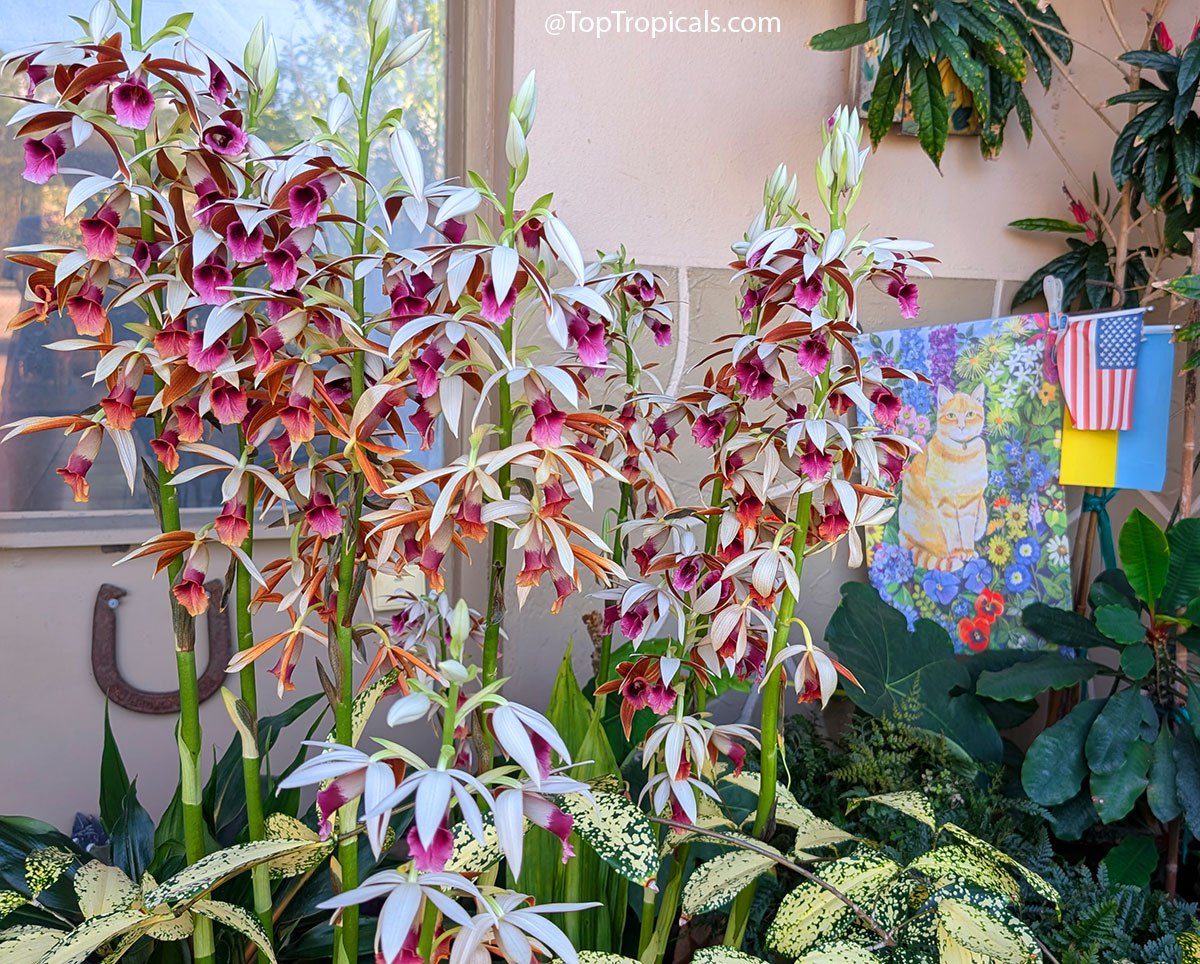
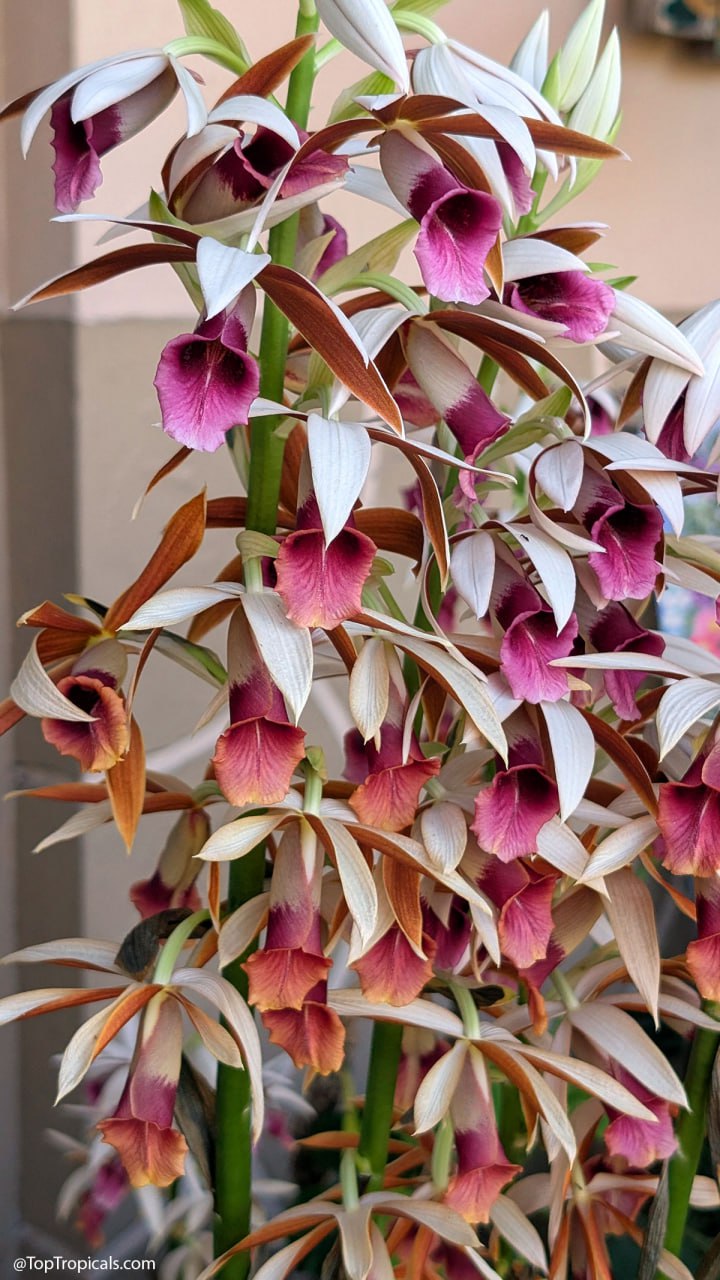
Just in time for spring: Nun Orchid blooms for months!

Phaius tankervilleae, Chinese Ground Orchid, Nut Orchid

Phaius tankervilleae, Chinese Ground Orchid, Nut Orchid

Phaius tankervilleae, Chinese Ground Orchid, Nut Orchid

Phaius tankervilleae, Chinese Ground Orchid, Nut Orchid

Phaius tankervilleae, Chinese Ground Orchid, Nut Orchid

Phaius tankervilleae, Chinese Ground Orchid, Nut Orchid

Just in time for spring: Nun Orchid blooms for months! 🌹
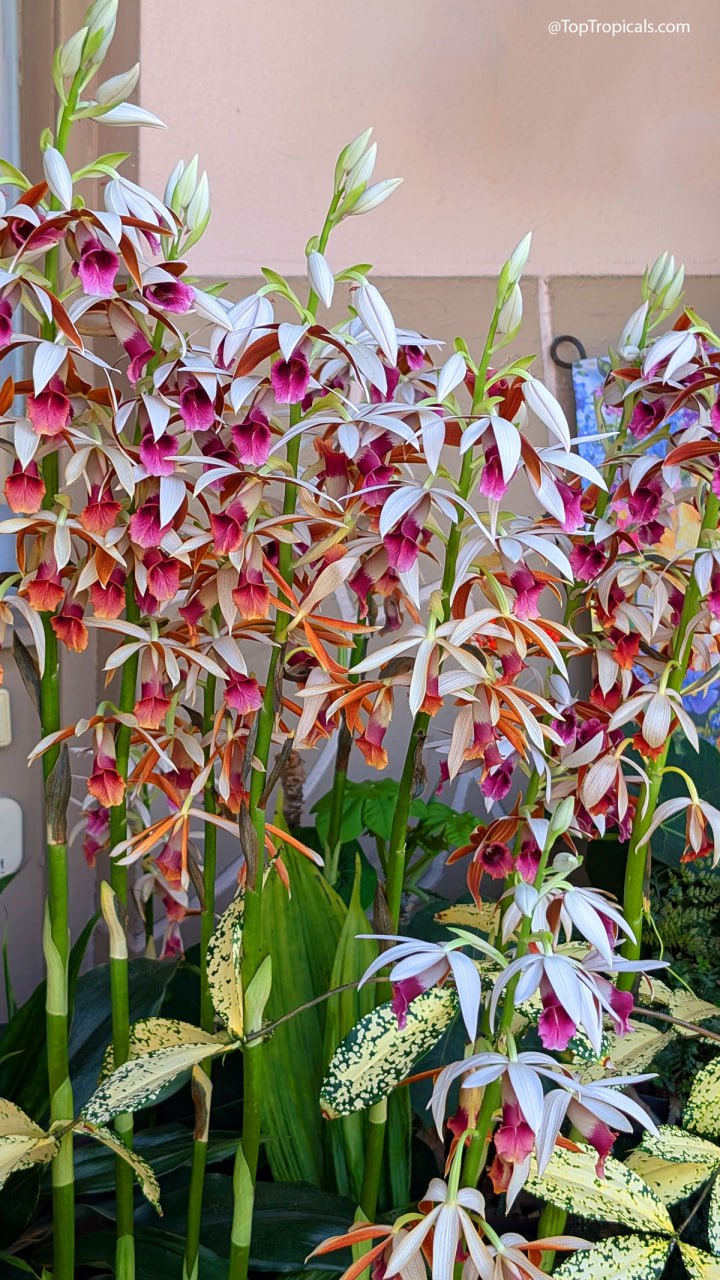
  • 🌷 What a wonderful treat after a long cold winter: Nun Orchid (Phaius tankervillea) is putting on a full show right now in the garden - and it’s been going strong since February.
  • 🌷 These plants were already loaded with buds before our Record 25F Florida Freeze, so I moved the two pots into the garage to protect them. Totally worth it - they came through beautifully and didn’t miss a beat.
  • 🌷 Now they’re in full bloom and should keep going well into April. This is one of those rare orchids that just keeps going.
  • 🌷 Unlike most orchids, Nun Orchid grows in regular soil. Big lush leaves, tall flower spikes, and it’s perfectly happy in filtered light - great for patios, containers, or a shady spot in your garden.

What’s blooming in your yard today?

🛒 Plant beautiful Nun Orchid

📚 Learn more:

Plant Facts

Phaius tankervilleae
Chinese Ground Orchid, Nun Orchid
USDA Zone: 9-11
Groundcover and low-growing 2ft plantSemi-shadeFull sunModerate waterRed, crimson, vinous flowersWhite, off-white flowersPlant attracts butterflies, hummingbirdsFragrant plant

#Container_Garden #Shade_Garden

🟢 Join 👉 TopTropicals

Date: 22 Mar 2026

Do Fruit Trees Increase Property Value? Tropical Plants That Pay Off

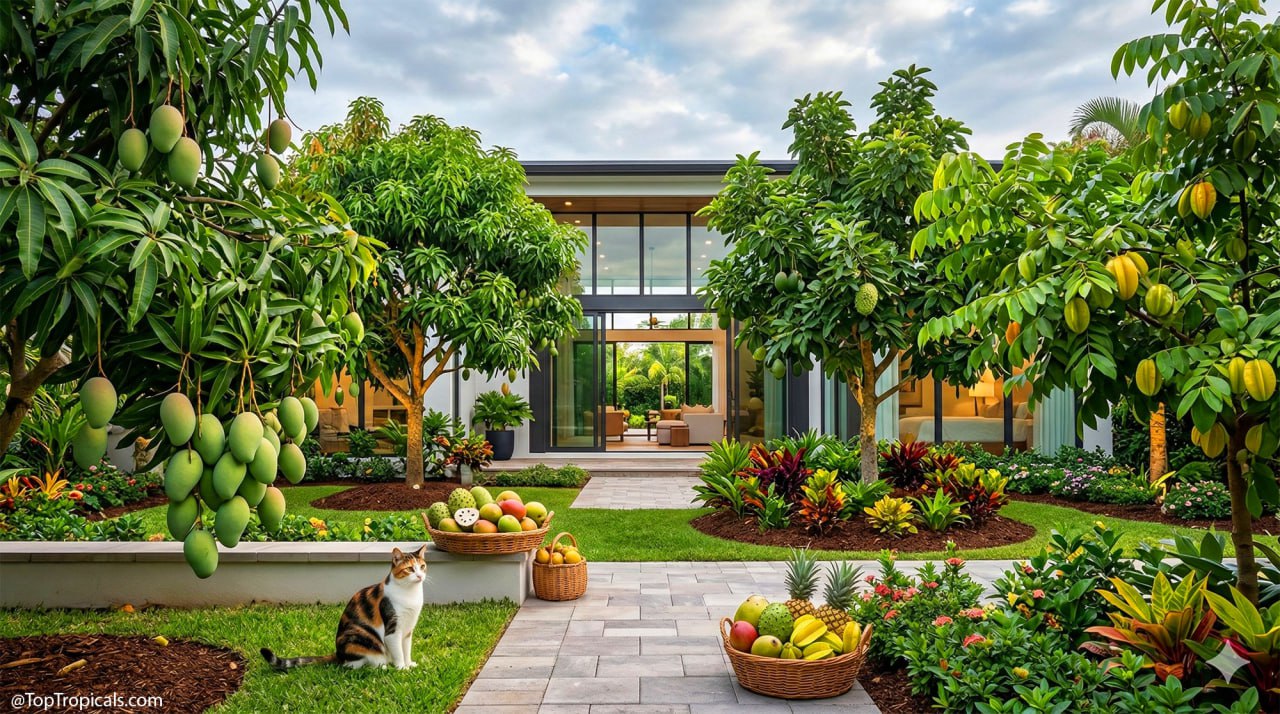
Yard with fruiting tropical trees

Yard with fruiting tropical trees

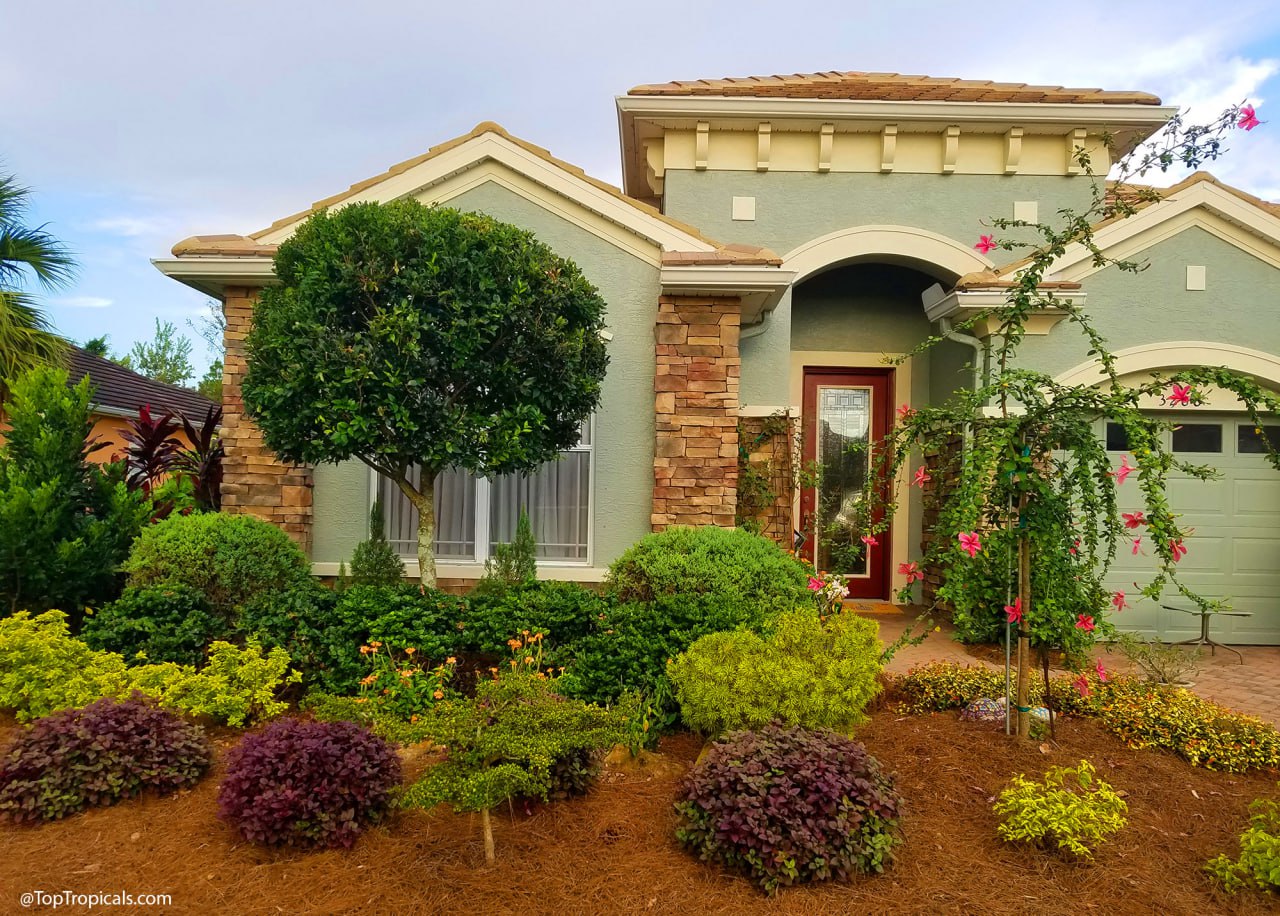
Landscaped yard in Florida

Landscaped yard in Florida

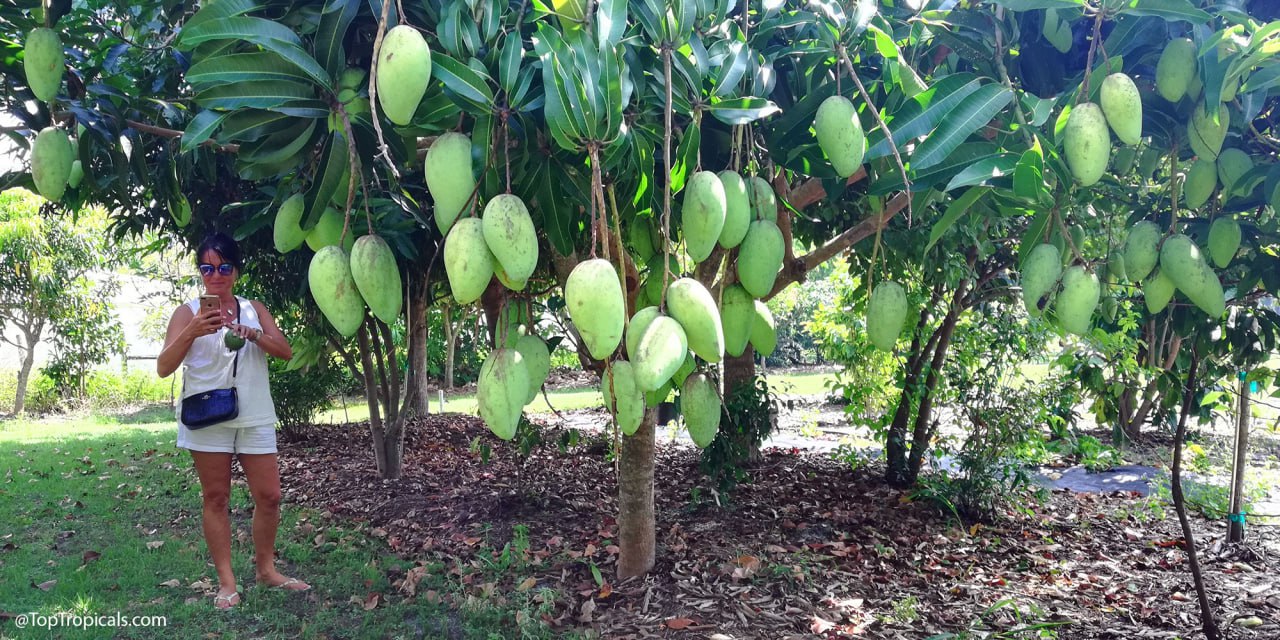
Mango tree fruiting in the garden

Mango tree fruiting in the garden

Do Fruit Trees Increase Property Value? Tropical Plants That Pay Off 🏡

Can your backyard pay for itself? Learn which 12 tropical fruit trees real estate experts say are the smartest investment for your landscape. Discover how tropical fruit trees like mango and avocado add "edible equity" and curb appeal to your property, making it more desirable to future buyers. Turn your yard into a private paradise that lowers grocery bills and boosts home value.

In warm climates like Florida, a mango tree isn't just landscaping - it’s a food-producing asset. Mature tropical fruit trees offer "edible equity," saving homeowners hundreds in grocery bills while creating a unique, memorable aesthetic for buyers.
  • 🥭 1. Focus on "Instant Recognition" Favorites


    Trees buyers already know and love provide the strongest ROI. They signal that the yard is already productive - something new builds can’t offer.

  • •  Top Picks: Mango, Avocado, Papaya, Banana, Guava, and Loquat.
  • •  The Value: A single mature avocado or mango tree can yield hundreds of pounds of fruit annually.


🥭 2. Create a "Memorable Discovery" with Exotic Varieties


Unusual fruits turn a standard yard into a tropical orchard, acting as a conversation piece during home tours.
  • •  The Exotic List: Jackfruit, Sugar Apple, Soursop, Sapodilla, Ice Cream Bean, and Star Fruit.


🥭 3. Strategic Placement for Energy Savings


Large-canopy trees like jackfruit or mango do more than provide food; they act as natural insulation.
  • •  Natural Cooling: Strategic planting reduces afternoon sun exposure and lowers AC costs.
  • •  Indoor/Outdoor Flow: Use trees to frame window views, block neighbors, and create private "outdoor rooms."


🥭 4. The Power of the "Mini Orchard"


A collection of 3–5 trees creates a stronger emotional pull than a lone plant. Buyers begin to visualize a lifestyle of smoothies and harvests.
  • •  Winning Combos: Mango + Avocado + Papaya or Guava + Star Fruit + Banana.


🥭 5. Maintenance: Health Equals Value


Fruit trees only add value if they look manageable. A neglected tree suggests a neglected home.
  • •  Pre-Sale Prep: Prune for tidiness, mulch the base, and clear fallen fruit.
  • •  Spacing Matters: Avoid overcrowding; ensure buyers can walk comfortably through the yard without feeling "closed in."


🥭 The Long-Term Play


Unlike decorative plants that may need frequent replacement, fruit trees appreciate over time. Because a mango tree takes years to reach peak production, the best time to plant for future resale value is now. By the time you list, your yard will offer shade, privacy, and a harvest that buyers find hard to resist.

🛒 Start Growing Your Edible Equity - Find the Perfect Fruit Tree for Your Yard

📚 Learn more:

Plant Facts

Mangifera indica
Mango
USDA Zone: 9-11
Large tree taller than 20 ftSmall tree 10-20 ftFull sunModerate waterYellow, orange flowersPink flowersEdible plantSeaside, salt tolerant plant

Mango trees in Plant Encyclopedia

#Food_forest #How_to #Discover

🟢 Join 👉 TopTropicals

Date: 5 Apr 2016

Jungle on Windowsill 101

Q: I got a Jasmine Sambac and a Tahitian gardenia as presents, they are very cute plants with flowers and flower buds. I would like to be able to keep them alive and hopefully happy for a long time, but I don't know much about growing tropical plants, and I am not sure if my thumb is green enough to make everything right. What do they need? How much sun? How much water? What kind of soil? Sorry for all these (maybe silly) questions, but I want to keep them alive, please help! I live in Wisconsin and we had some snow again last week.

A: Growing tropicals is not a hard work, it is a lot of fun! These plants are actually a good starters for a beginner who wants to try growing tropical plants, no matter if you live in a mild frost-free climate, or up North where you can have these beauties as houseplants. Below are a few simple steps for you:

1. Read. Follow planting instructions included with your plants. Check plant names on the tags and learn more about them from our online catalog.

2. Soil. Plant in quality potting mix - it must be porous and well-drained, never use heavy soils (top soil or garden soil are no-no), in a pot exactly the size of the root system. You can step up your plants in the next size container once you notice vigorous new growth. Next size means: 4"pot can go into 6" pot, 6"pot into 10" pot, etc. Too big of a pot may create rotting environment, root system must fill the entire container to use all the moisture from the soil. Container must have good hole(s) for excess water to drain through. Put the pot in a saucer and get rid of excess water every time after watering.

3. Light. Most tropical plants require lots of light in order to produce flowers. If you ever visited Florida, remember the bright sun? - these are ideal light conditions for tropicals. Up North, provide as much light as possible: a bright spot on a windowsill of Southern or Western exposure would work the best. If the sun gets too hot in summer afternoon, you may shade the window a little bit with a sheet of white paper to avoid leaf burn.

4. Water. Keep soil slightly moist but not soggy. The best way is to wait until the top of the soil feels dry to touch - this is time to water again. Jasmines prefer to stay on a dry side; gardenias do not like soil to dry out - keep them slightly moist as long as soil is very porous and well-drained. The main reason of most problems with potted indoor plants is over watering. With experience, you will feel the right balance of moisture in the soil: the brighter the light, the more water is consumed by a plant; the less light, the less frequent you should water.

5. Trimming. In low light conditions, plants tend to become leggy. Trim branches as they become too long: the more you trim, the busier the plant gets. New growth promotes more profuse blooming in many species.

6. Fertilizing. Fertilize indoor plants with slow-release granulated fertilizer from march to November.

7. Insects. Check for insects at least once a month, especially underneath the leaf. If notice any problems (deformed leaves, residue, holes, or tiny insects) - clean the leaves/stems with a solution of warm water (1 cup), vegetable oil (2 table spoons), and a few drops of a dish soap.

8. Fresh air and air humidity. As soon as air temperature gets above 65F, bring your tropicals outside in the sun and fresh air: porch, balcony, outside in the yard. Air circulation is essential for your plant health. Bright light and high air humidity will promote vigorous growth, and lots of flowers for you to enjoy!

For more information on growing Tropical Plants 101, see Problem solving with potted plants - how can we help them?.

Date: 21 Apr 2026

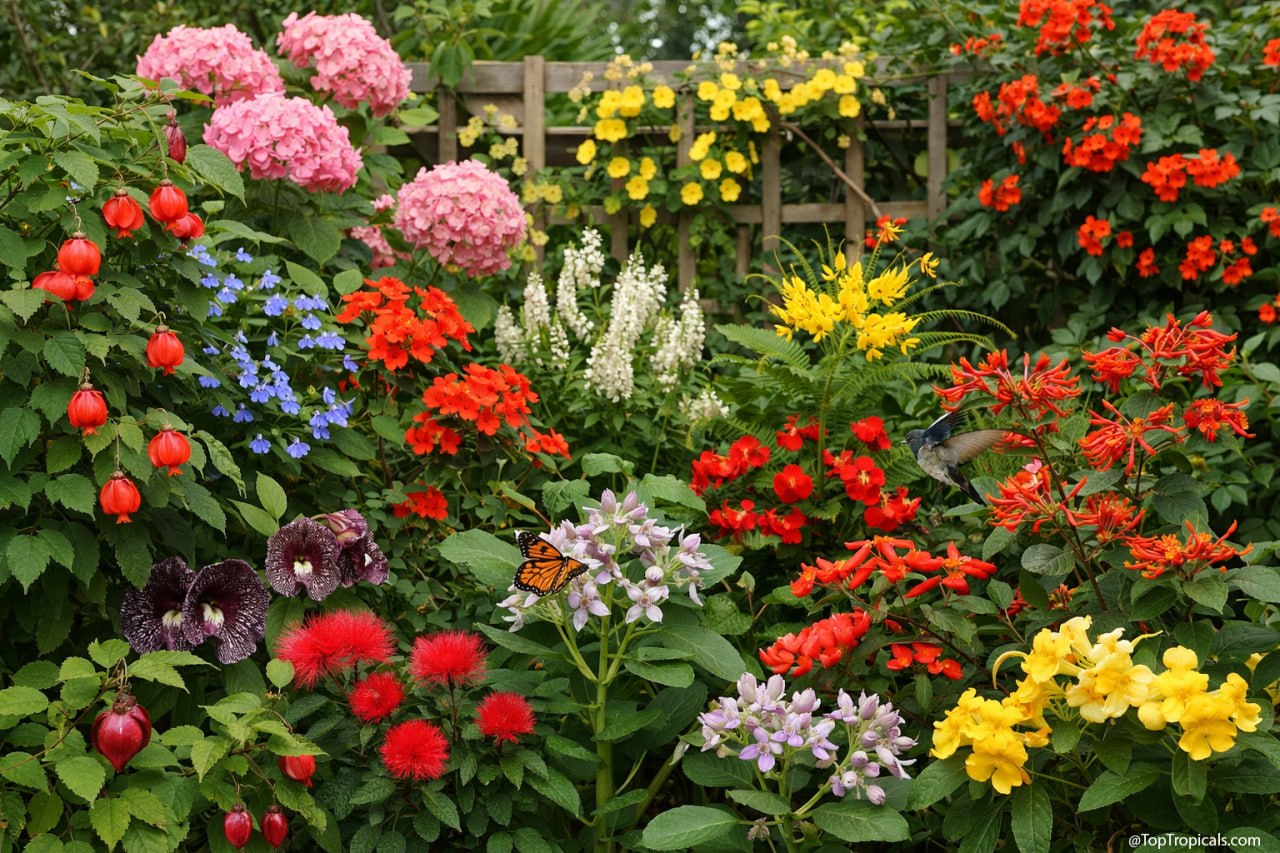
13 tropical flowers to plant in spring to attract pollinators year around

13 tropical flowers to plant in spring to attract pollinators year around

13 tropical flowers to plant in spring to attract pollinators year around


Spring is when everything wakes up - and if you plant smart now, your garden can stay alive with butterflies, bees, and hummingbirds all year long. The key is mixing tropical bloomers that flower in waves, not all at once. These plants don’t just look good - they keep pollinators coming back season after season, turning your yard into a living, moving ecosystem.

  • 1. Abutilon Fireball (Abutilon darwinii x striatum)

Bell-shaped flowers in warm red and orange tones hang like little lanterns. Very cold hardy, blooms on and off through the year, especially in mild climates. A steady nectar source for hummingbirds. More 👉

  • 2. Almond Bush (Aloysia virgata)

Light, airy clusters of tiny white flowers with a strong almond scent. Bees absolutely cover this plant when it’s in bloom. Flowers repeatedly through warm months. More 👉

  • 3. Calico Flower (Aristolochia littoralis)

One of the most unusual flowers you can grow - patterned like fabric. More importantly, it’s a host plant for butterflies, giving them a place to lay eggs. More 👉

  • 4. Pride of De Kaap (Bauhinia galpinii)

Bright orange-red blooms cover this shrub for months. Tough, fast-growing, and constantly visited by butterflies and bees. More 👉

  • 5. Mexican Bird of Paradise (Caesalpinia mexicana)

Sunny yellow flowers with a light fragrance. Handles heat, freeze, and poor soil easily. A reliable nectar plant for bees and butterflies. More 👉

  • 6. Red Tassel Flower (Calliandra tweedii With Love)

Very showy red-flowered powderpuff, fast-growing and spacey shrub. Cold tolerant to hard freeze, making it a strong choice for subtropical gardens. Forms a dense, many-stemmed plant with fine, feathery foliage that folds at night or by touch. Large scarlet tassel flowers bloom from spring to autumn and attract pollinators nonstop. More 👉

  • 7. Giant Milkweed (Calotropis gigantea)

A bold plant with thick leaves and waxy flowers. Important host plant for butterflies, especially monarchs. Handles heat and drought well. More 👉

  • 8. Blue Butterfly (Clerodendrum ugandense)

Flowers really do look like little blue butterflies. Blooms frequently and attracts actual butterflies along with bees. More 👉

  • 9. Tropical Hydrangea (Dombeya wallichii)

Large clusters of soft pink flowers appear in cooler months when little else is blooming. A major nectar source in winter. More 👉

  • 10. Fire Bush (Hamelia patens)

One of the best all-around pollinator plants and a tough bush - takes both cold and heat. Tubular orange-red flowers attract hummingbirds nonstop, plus butterflies and bees. More 👉

  • 11. Butterfly Orchid Vine (Mascagnia macroptera)

A climbing, cold hardy vine covered in bright yellow flowers and butterfly-like seeds. Great for fences or trellises, adding vertical color and feeding pollinators. More 👉

  • 12. Mexican Flame Vine (Senecio confusus)

Fast-growing, hardy vine with intense red blooms. Flowers heavily and brings in butterflies quickly. More 👉

13. Yellow Elder (Tecoma stans)


Bright yellow trumpet flowers that bloom over a long season. A dependable plant for both bees and hummingbirds. More 👉

✔️ Planting a mix of these gives you something in bloom almost every month.
That’s the real trick - not just planting for spring, but building a rotation of flowers that keeps pollinators fed all year long.

🛒 Transform your yard into a Butterfly Haven with exotic plants

📚 Learn more:


#Butterfly_Plants
Butterfly Haven or a Heaven on Earth?
Top 20 plants for a Butterfly Haven
Five best butterfly attractors for a Southern garden
Top Eight irresistible vines for a hummingbird haven: Part 1 - Part 2

#Hedges_with_benefits #Butterfly_Plants #How_to #Discover

🟢 Join 👉 TopTropicals