Garden Blog - Top Tropicals

Date: 7 Oct 2025

⭐ The Winter Stars: 8 Flowering Trees That Steal the Show
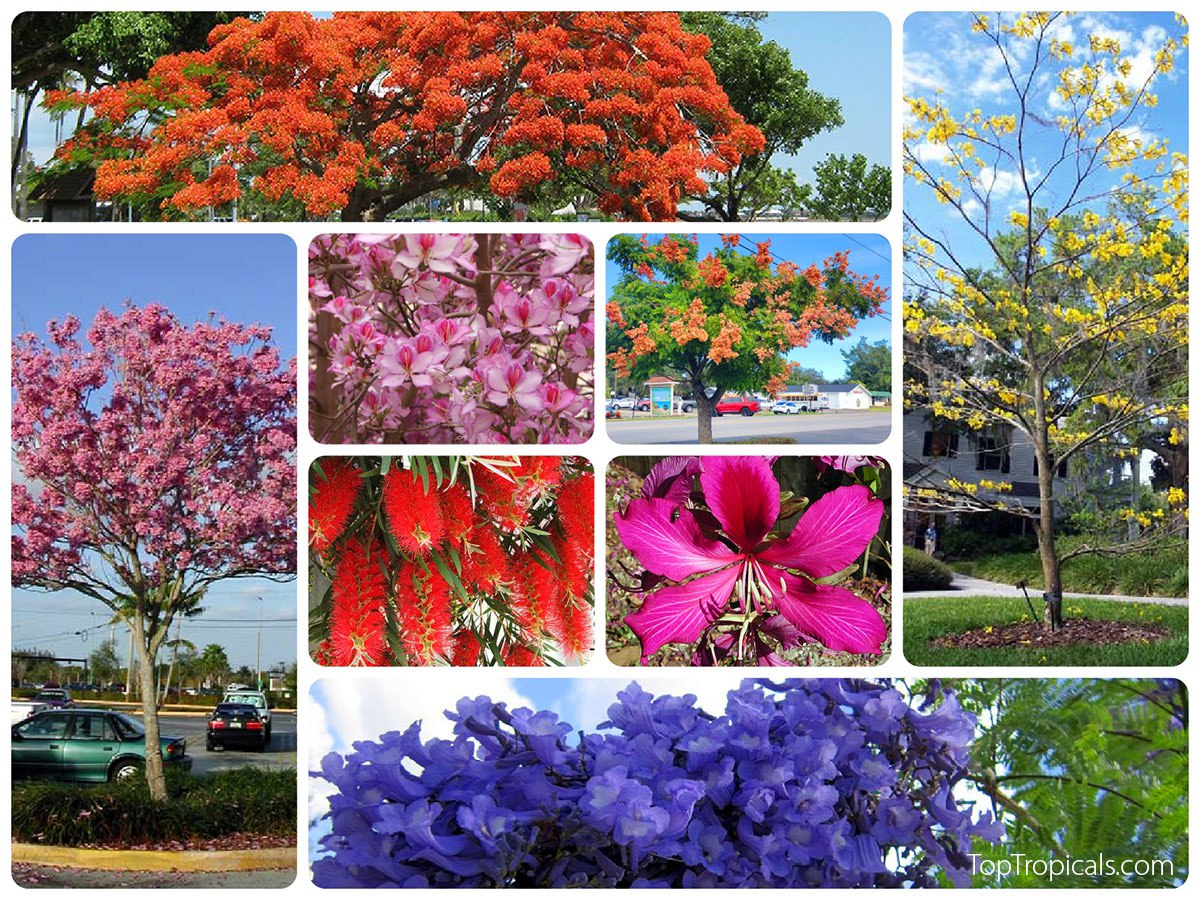
Collage  showing  eight  tropical  and  subtropical  winter-flowering  trees: 
 Royal  Poinciana  with  red-orange  canopy,  Dwarf  Pink  Tabebuia,  Dwarf  Golden 
 Tabebuia,  Pink  Butterfly  Orchid  Tree,  Golden  Rain  Tree,  Weeping  Red 
 Bottlebrush,  Hong  Kong  Orchid  Tree,  and  Jacaranda  with  purple 
 flowers.

8 Best Flowering Trees That Bloom in Winter: Royal Poinciana with red-orange canopy, Dwarf Pink Tabebuia, Dwarf Golden Tabebuia, Pink Butterfly Orchid Tree, Golden Rain Tree, Weeping Red Bottlebrush, Hong Kong Orchid Tree, and Jacaranda with purple flowers.

Royal Poinciana (Delonix regia)

The diva of tropical trees. Huge red-orange flowers blanket the branches from late winter through summer. If you’ve ever seen one in full bloom, you know — it stops traffic. Best in large yards or open spaces, but young ones do great in big pots for a few years. 🛒 Shop
Tatiana: “If you want a tree that makes people say ‘wow,’ this is it.”

Tabebuia chrysotricha – Dwarf Golden Tabebuia

Small tree, big drama. It turns solid gold just before new leaves appear. Blooms while completely bare — a stunning contrast of yellow on brown wood. Perfect for patios, courtyards, and containers. Handles cool nights down to the mid-20s F. Bright, cheerful, and forgiving — the kind of tree that always looks like it’s celebrating. 🛒 Shop

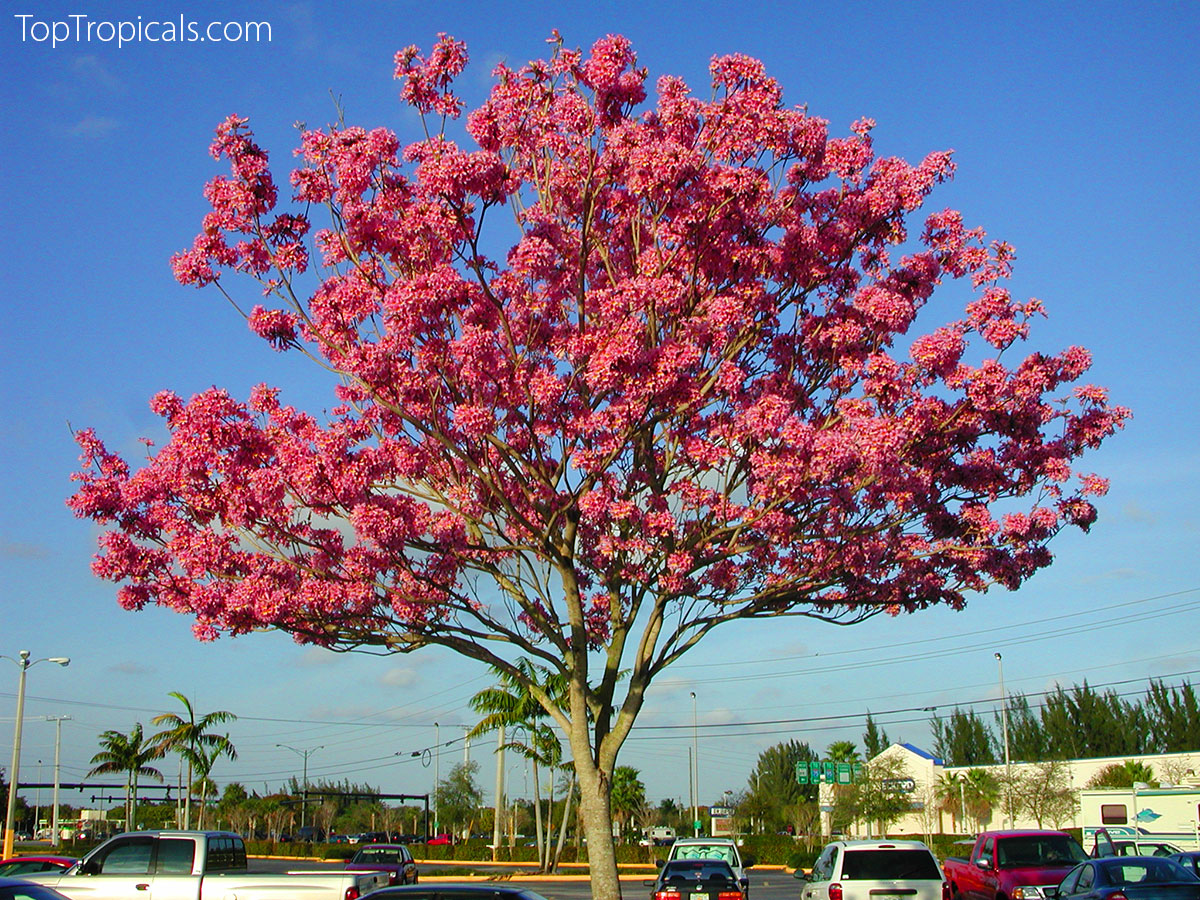
Tabebuia impetiginosa – Dwarf Pink Tabebuia (Pau D’Arco)

The Florida “cherry blossom.” Pink-lavender flowers smother the branches each winter, often before any leaves return. Thrives in sandy soil, tolerates drought, and grows beautifully in large planters or pots indoors near a sunny window. Ideal for seasonal residents or anyone who wants color when everything else is asleep. 🛒 Shop

Jacaranda mimosifolia

If color had music, this would be jazz. Soft, fern-like leaves and cascades of violet-blue trumpet flowers — airy, elegant, unforgettable. Outdoors, it makes a graceful shade tree; in containers, it stays compact with regular pruning. Jacarandas reward patience — they bloom bigger each year. 🛒 Shop

Koelreuteria paniculata – Golden Rain Tree

A favorite for its surprises — golden blooms in summer, pink paper lantern pods in fall, and bronze leaves before rest. Fast-growing, tough, and easy. Loves full sun and moderate water. Great for open lawns or patio tubs. The kind of tree that gives you something new to look at every month. 🛒 Shop

Callistemon citrinus – Bottlebrush Tree

The hummingbird magnet. Bright red, brush-shaped flowers bloom several times a year — sometimes even in cool weather. The dwarf form, ‘Little John,’ stays about 4 feet tall, perfect for pots or small borders. Trim lightly after flowering to keep it compact and colorful. 🛒 Shop
Tatiana: “If you’ve never grown a tropical tree before — start here. It’s the friendliest one.”

Bauhinia variegata – Pink Butterfly Tree

Graceful, fragrant, and forgiving. Its pink-lavender orchid-like flowers open from late winter through spring, filling the garden with color and pollinators. It’s fast-growing, drought-tolerant, and excellent for both ground and pots. Even the buds are edible — a fun bonus for adventurous gardeners. 🛒 Shop

Bauhinia blakeana – Hong Kong Orchid Tree

The queen of them all. Huge magenta-purple blooms that last for months, from fall through spring. Fragrant, clean (no messy seed pods), and perfect for patios or large decorative containers. Give it sun, a little water, and it will reward you with bloom after bloom. 🛒 Shop
Tatiana: “It’s the one tree that never lets winter win.”

A note on grafted Hong Kong Orchid Trees: Most Hong Kong Orchid Trees are grafted, and that’s actually a big advantage. Because they don’t grow from seed, grafted plants mature faster and begin blooming while still small — sometimes within the first year. That makes them perfect for patio pots or small gardens where space is limited.

Bringing the Tropics Home

Whether your garden faces the Gulf or your window faces the snow, these trees let you live in color year-round. Plant them outdoors in warm zones or grow them in pots indoors — they adapt, they bloom, they brighten every corner.

Gardening isn’t about waiting for spring — it’s about finding joy in every season. And when a tree blooms in January, that joy feels twice as sweet.

🛒 Shop Winter Flowering Plants
Tabebuia  impetiginosa  -  Dwarf  Pink  Tabebuia,  Pau  DArco,  Taheebo

✍️ Winter Bloomer Q&A

Q: Can these trees really bloom indoors?

Yes! Smaller species like Bottlebrush ‘Little John,’ Dwarf Tabebuias, and many Bauhinias bloom beautifully in pots with bright light or grow lamps.

Q: Do they lose their leaves in winter?

Some, like Tabebuias and Jacarandas, drop leaves right before blooming — it’s normal and part of their charm. Others, like Bottlebrush, stay evergreen.

Q: What fertilizer works best?

We use Sunshine Boosters — gentle, balanced, and perfect for tropicals. Feed every 2–3 weeks during active growth.

Q: How do I know when to water?

Touch the soil! If it’s dry an inch or two down, water deeply. Overwatering is the main mistake with tropicals.

Q: Can they handle frost?

A quick dip into the upper 20s F is fine for most mature trees. Cover young ones or move containers under shelter if colder.

Q: Which are best for beginners?

Start with Bottlebrush ‘Little John’ or Golden Tabebuia — compact, colorful, and nearly foolproof.

Q: When will they bloom?

Usually within few years if they get enough sun and warmth. Grafted plants blooms much sooner

Q: Which of these trees are best for pot growing?

For patios, balconies, or indoor sunrooms, choose the compact or grafted types:

🎥 Watch videos of Dwarf trees in bloom:

Dwarf Golden Tabebuia

Dwarf Pink Tabebuia

🛒 Shop Winter Flowering Plants

Date: 18 May 2026

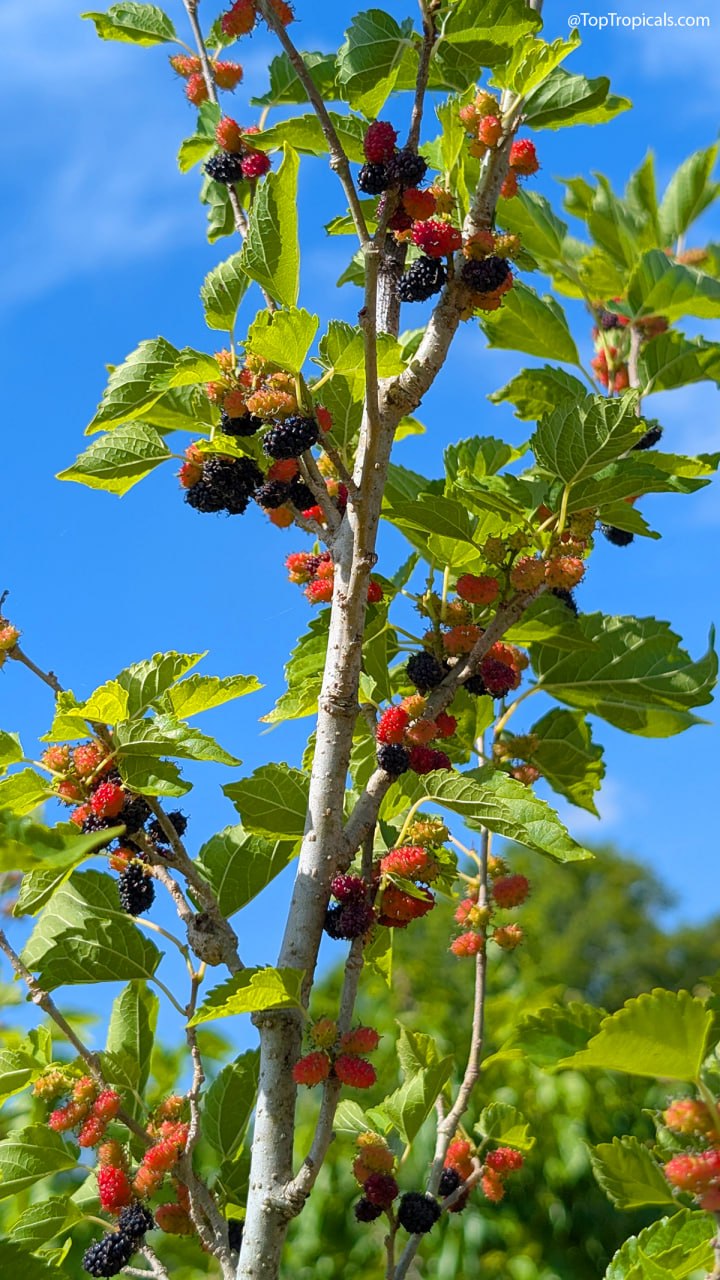
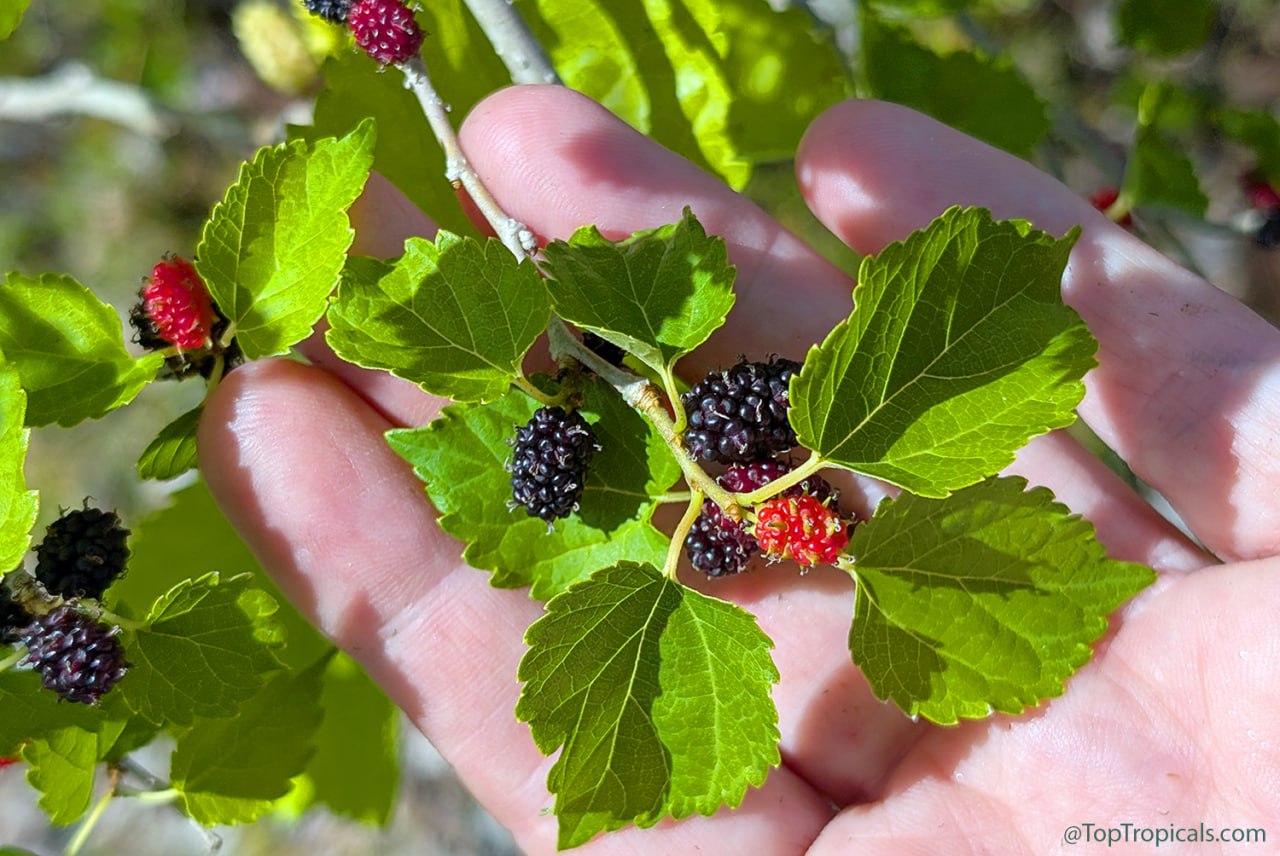
Want Massive Mulberry Harvests? Do These 5 Things Before May Ends

Want Massive Mulberry Harvests? Do These 5 Things Before May Ends Want Massive Mulberry Harvests? Do These 5 Things Before May Ends

🍇 Want Massive Mulberry Harvests? Do These 5 Things Before May Ends


Don’t let your mulberry tree fool you. While they are incredibly low-maintenance, what you do in May dictates your summer harvest. Avoid these common mistakes for a bumper crop of juicy berries.

Mulberry trees are famously bulletproof, handling intense heat and pumping out massive crops with little care. But May is the month that decides it all. Right now, they are pouring energy into fruit development. A few simple mistakes this month can quietly sabotage your harvest.

Fortunately, maximizing your crop is easy if you follow these five simple rules:
  1. 1. The Deep Soak Rule
    While established mulberries tolerate drought, moisture stress causes them to drop young berries early. Drop the sprinkler—frequent, shallow watering only wets the surface. Instead, give the tree a slow, deep soak that penetrates the root zone. Check the soil two inches down; if it’s dry, water thoroughly.
  2. 2. Lock it in with Mulch
    Late spring heat evaporates soil moisture fast. Apply a 2-to-4-inch layer of pine bark or compost to keep roots cool and suppress weeds. Crucial rule: Leave a 4-inch gap around the base of the trunk. Piling mulch against the bark traps moisture and invites devastating fungal rot.
  3. 3. Don't Over-Fertilize
    Mulberries are naturally vigorous. If you feed them this month, use a balanced, slow-release organic plant food. Avoid high-nitrogen fertilizers. Excess nitrogen triggers a massive explosion of green leaves, causing the tree to completely forget to grow fruit.
  4. 4. Put the Pruning Shears Away
    Heavy spring pruning clips off active fruiting wood and decimates your harvest. Mulberries are also notorious "bleeders" - cutting now causes them to lose significant sap, stressing the tree during fruit set. Only remove dead or damaged wood. Save major shaping for winter dormancy.
  5. 5. Exploit the Softwood Cuttings Window
    Want more trees? May is prime time for softwood cuttings. Cut a few 6-inch flexible green stems, strip the lower leaves, dip in rooting hormone, and tuck into moist potting mix in partial shade. They root incredibly fast!

    Mulberry Plant Facts

    Botanical name: Morus sp.
    Also known as: Mulberry
    USDA Zone: 8 - 11
    Highligths Large tree taller than 20 ftSmall tree 10-20 ftFull sunWatering: Regular. Let topsoil dry slightlyEdible plant
    Get personalized tips for your region

    🛒
    Choose from Mulberry varieties


📚 Learn more:


Mulberry (Morus hybrids) in Plant Encyclopedia
Mulberry yogurt swirl: Quick-n-Fun exotic recipes
Why gardeners say this is the best Mulberry ever
What are the best Mulberry varieties

#Food_Forest #Discover #How_to

🟢 Join 👉 TopTropicals

Date: 19 May 2026

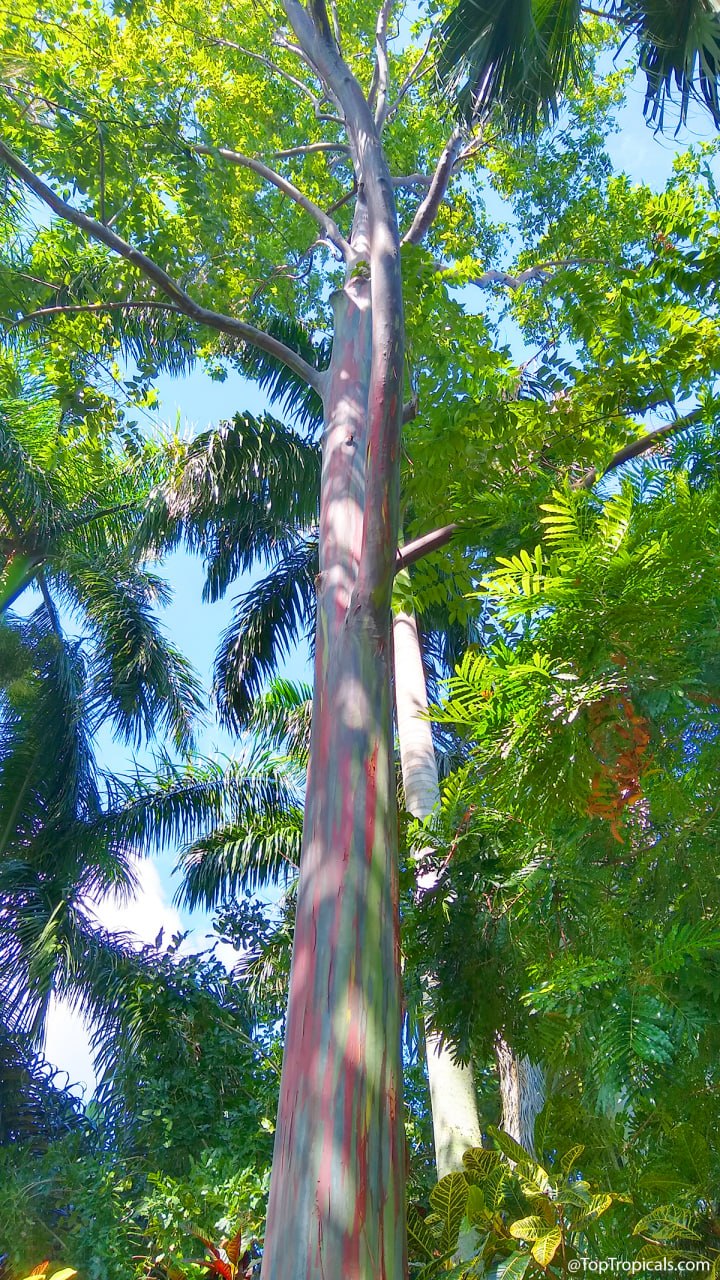
The Tree That Looks Photoshopped (But Isnt)

The Tree That Looks Photoshopped (But Isnt) The Tree That Looks Photoshopped (But Isnt)
The Tree That Looks Photoshopped (But Isn't) 🌈

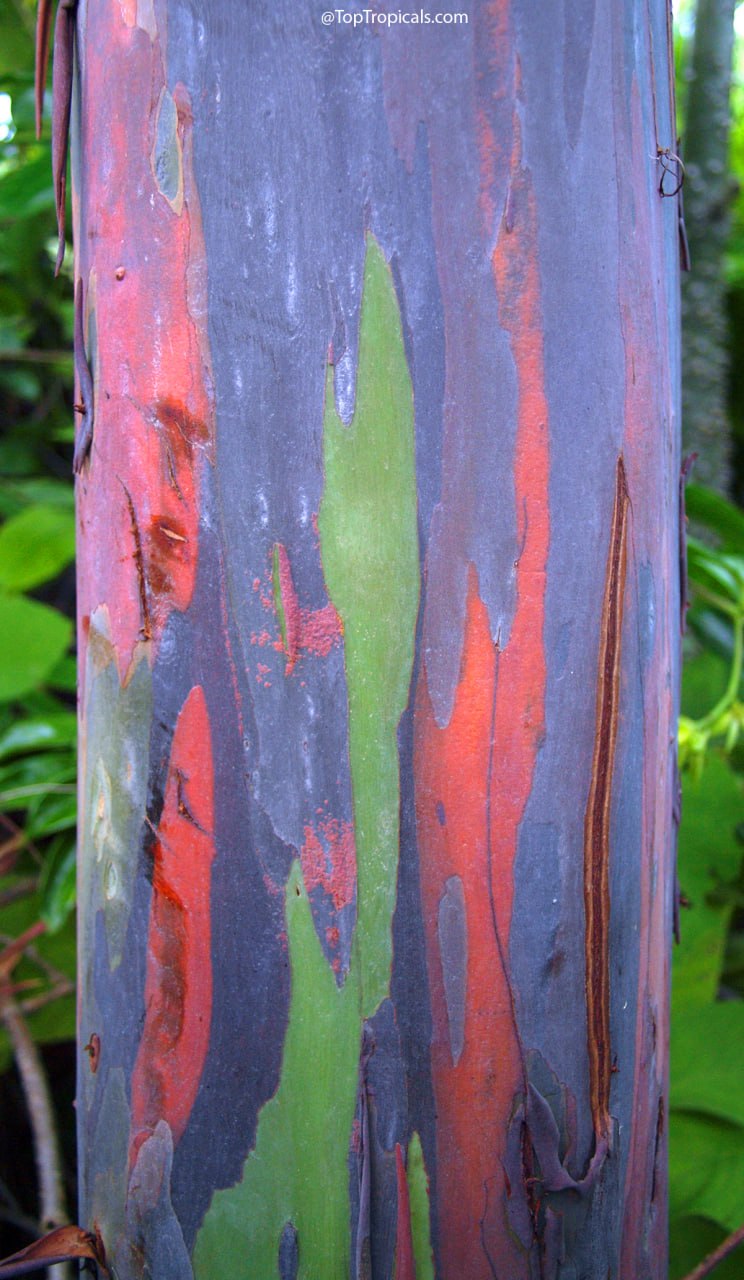
Most people see a photo of the Rainbow Eucalyptus and assume someone went heavy on the saturation filters. The trunk looks like an abstract artist got loose with neon greens, deep blues, purples, and burnt oranges - all on the same tree, all at once. It doesn't look real. But it is. And if you live in the right climate, you can actually grow one.

🎨 The Chemistry Behind the Watercolor Trunk


Eucalyptus deglupta does something no other tree quite pulls off at this scale: it sheds its bark in patches and strips throughout the year. While it seems entirely alien, this multi-colored, peeling bark is actually a family trait shared by many other members of the Myrtaceae (Myrtle) family - including common guava trees.

Rainbow Eucalyptus Plant Facts

Botanical name: Eucalyptus deglupta
Also known as: Rainbow Eucalyptus, Mindanao Gum, Rainbow Gum
USDA Zone: 10 - 11
Highligths Large tree taller than 20 ftFull sunWatering: Moderate. Water when top soil feels dryKeep soil moistRed, crimson, vinous flowersWhite, off-white flowersSpice or herb plantFlood tolerant plant
Get personalized tips for your region


However, the Rainbow Eucalyptus takes this family tradition to an absolute extreme. This constant shedding reveals a living, shifting canvas underneath:
The Fresh Layer: New bark starts out a shocking, vivid green because of the chlorophyll sitting just beneath the surface.
The Shift: As the bark is exposed to air, it oxidizes. Time and oxygen push the colors through a spectrum of blues, purples, and eventually into warm oranges and deep, reddish-browns.
The Living Canvas: Because different sections of the trunk shed at different times, the tree is never just one color. It looks like a living watercolor painting that's still drying.

🎨 A Rainforest Giant That Grows at Breakneck Speed


Native to the humid tropical rainforests of the Philippines, Indonesia, and Papua New Guinea, this isn't your average backyard sapling. In the wild, it can tower at nearly 200 feet tall.
While it stays a bit more manageable in residential landscapes, it remains fast-growing. If you give it full sun, rich soil, and plenty of humidity, a young tree can put on several feet of height per year.
Unlike its drought-tolerant Australian cousins, the Rainbow Eucalyptus loves water and can even handle occasional flooding. As a bonus, its leaves release a pleasant, spicy aroma when crushed, adding a sensory layer to its visual drama.

🎨 The Catch: It Hates the Cold


Before you run out to buy one, there is a major catch. While many eucalyptus species are surprisingly tough against the hard freeze, the Rainbow Eucalyptus is the tropical outlier of the family.

The Safe Zones: It thrives best in USDA Zones 10-11 (like South Florida and Southern California), where winters stay mild.
❄️ The Cold Threat: Hard freezes, frost, and biting cold winds will badly damage or kill it.

Can you grow it in colder climates? Yes, but you'll need a big container and a tall space to move it in. Many gardeners outside the tropics grow them in large pots so they can drag them indoors or into a greenhouse for the winter. It limits their ultimate size, but it keeps the theatrical effect alive.

🎨 Why It's Worth the Hype


If you are lucky enough to live in a climate where it can thrive, the Rainbow Eucalyptus makes the ultimate landscape centerpiece. Because its canopy is tall and airy rather than dense, it won't completely black out the sun for the rest of your garden. Instead, it just stands there looking impossible.

Photos actually undersell it. Standing next to the trunk in person, you find yourself looking for the trick. But there isn't one - just nature showing off.

🛒 Plant the Impossible Rainbow Eucalyptus

📚 Learn more: 


Eucalyptus deglupta - Rainbow Eucalyptus in Plant Encyclopedia

#Trees #Discover #Nature_Wonders #Fun_Facts

🟢 Join 👉 TopTropicals

Date: 29 Apr 2026

Soft peach tones - calm and glowing plumerias

Plumeria Morland

Plumeria Morland

Plumeria Thong Taweechok

Plumeria Thong Taweechok

Plumeria Gred Gaew

Plumeria Gred Gaew

Plumeria Moung Sangeam

Plumeria Moung Sangeam

Soft peach tones - calm and glowing plumerias. Pruning tip 🌈

Plumeria Plant Facts

Botanical name: Plumeria sp.
Also known as: Plumeria, Frangipani
USDA Zone: 9 - 11
Highligths Large shrub 5-10 ft tallSmall tree 10-20 ftFull sunWatering: Moderate. Water when top soil feels dryYellow, orange flowersRed, crimson, vinous flowersWhite, off-white flowersPink flowersPlant attracts butterflies, hummingbirdsDeciduous plantFragrant plantSeaside, salt tolerant plant
Get personalized tips for your region


This set is all about warmth without intensity - soft peach, coral, and golden tones that feel calm, balanced, and easy on the eyes. These are the plumerias you enjoy up close, where the subtle color blends really shine.

🌸 Today's featured plumerias:


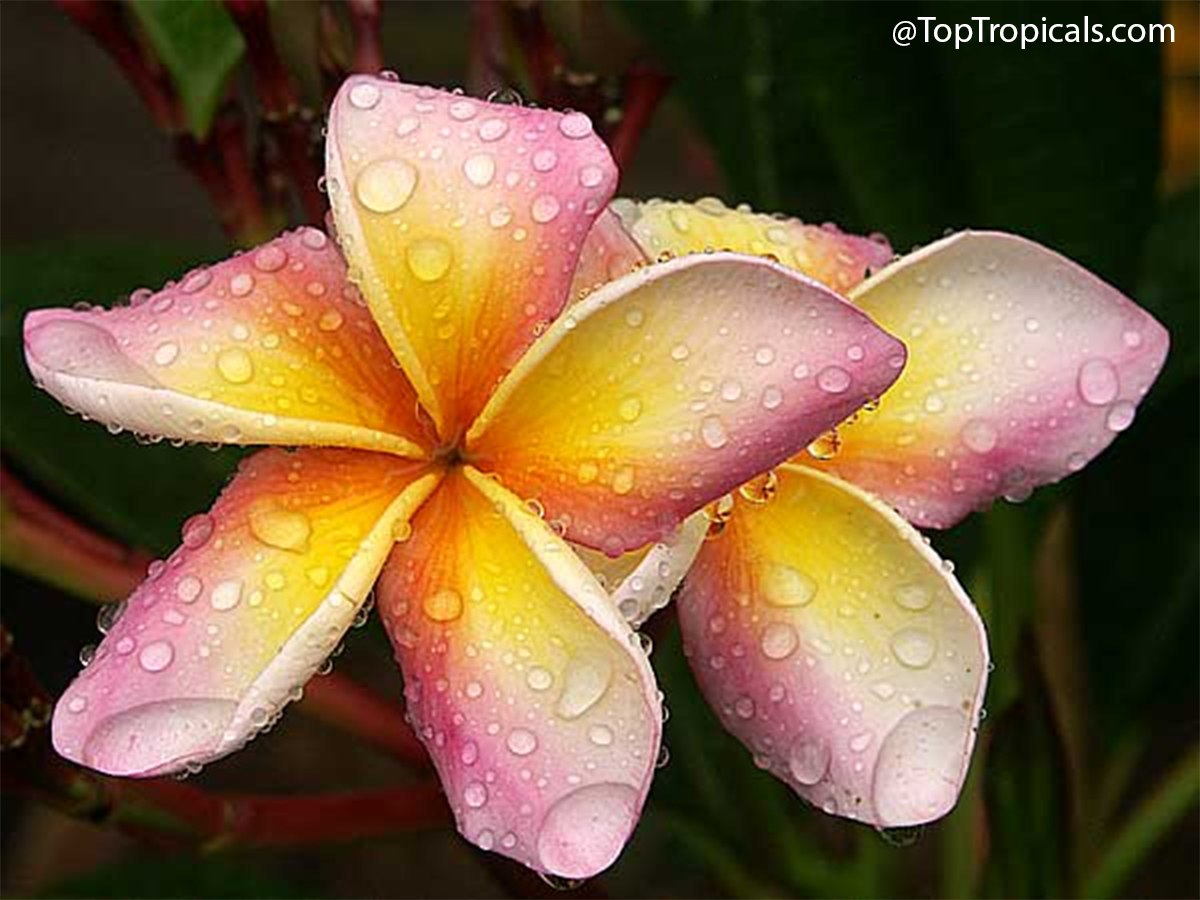
 ✦ Plumeria Morland - soft pink petals with a creamy yellow center fading into white edges. Gentle gradient with a fresh, radiant look and light fragrance.
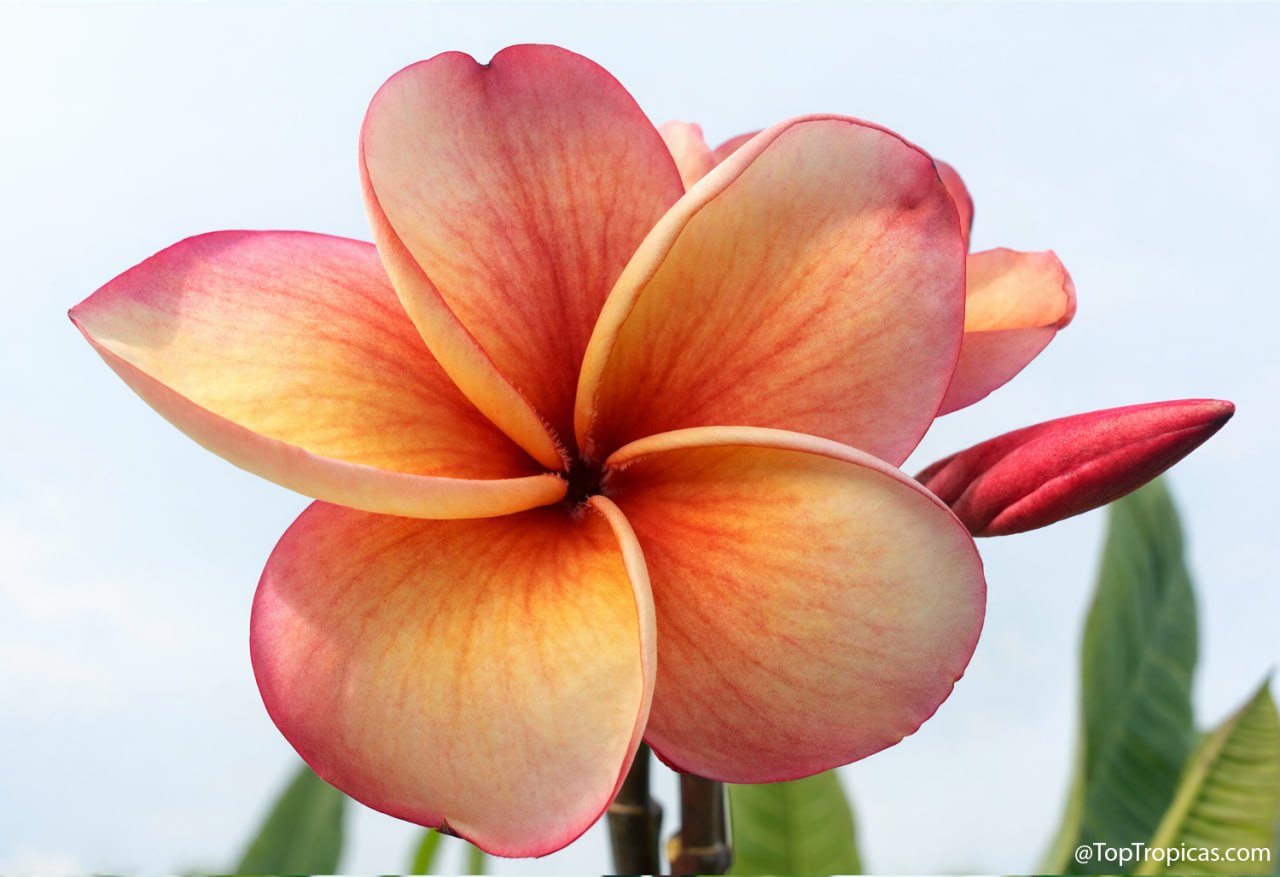
 ✦ Plumeria Thong Taweechok - warm golden-yellow petals infused with orange and coral, softening into creamy edges with a light pink blush. Smooth, glowing and well-balanced.
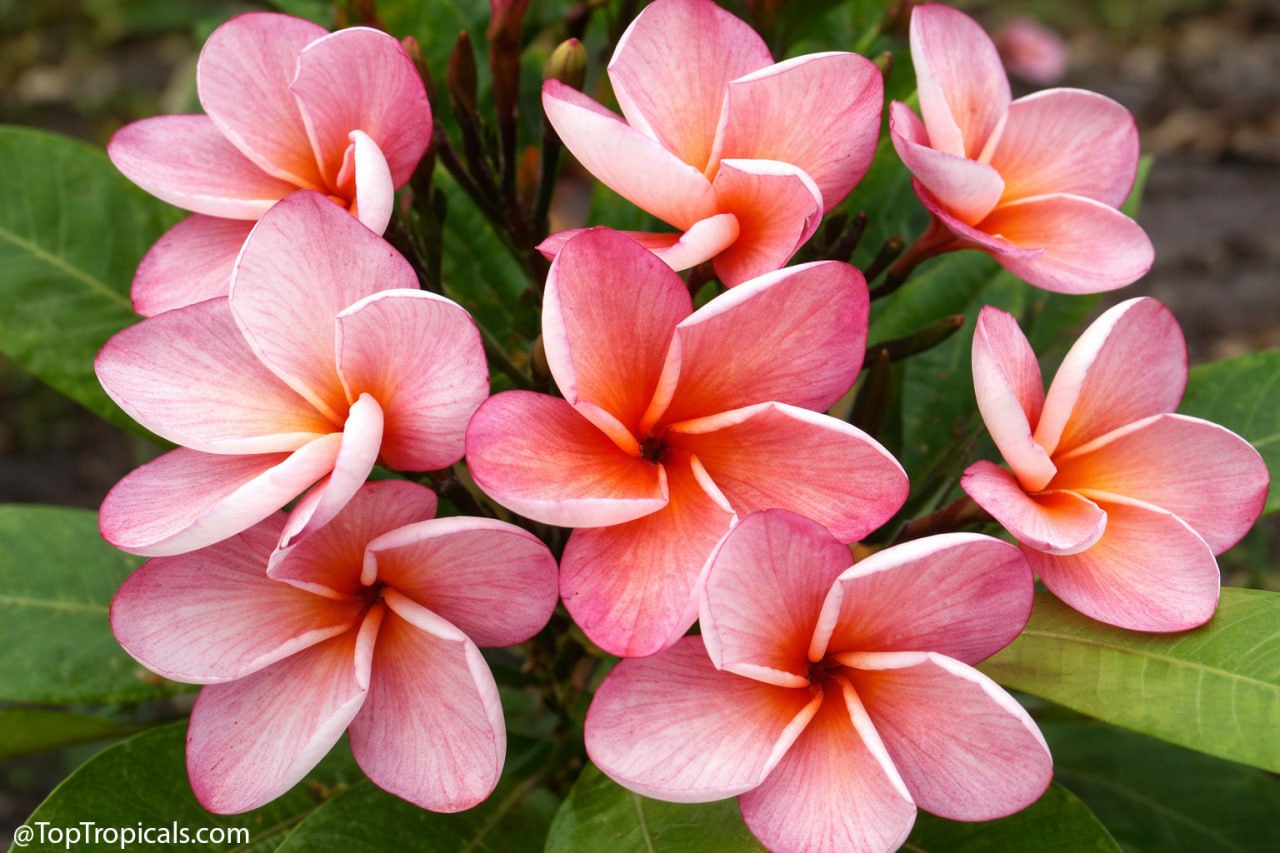
 ✦ Plumeria Gred Gaew - soft coral and peach tones with a glowing orange center and a clean white edge. Refined, crisp, and quietly elegant.
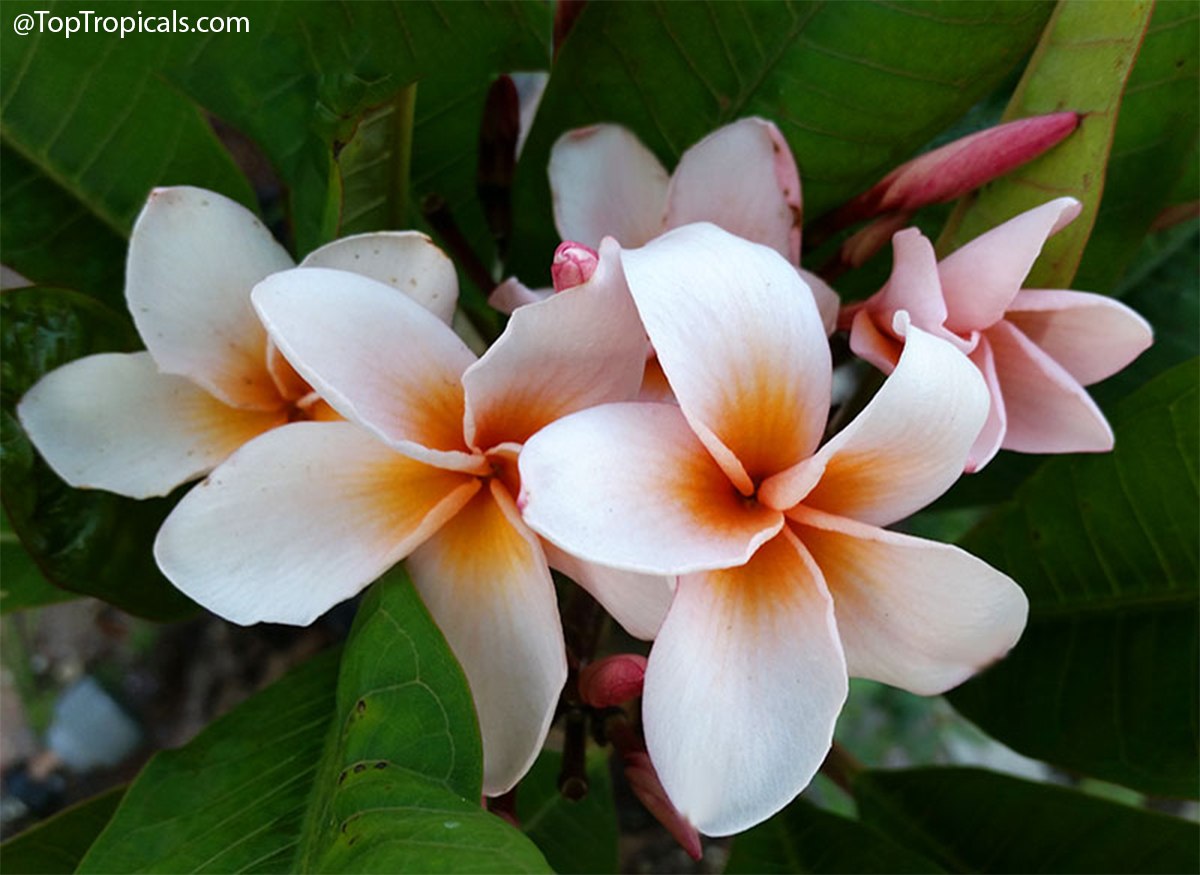
 ✦ Plumeria Moung Sangeam - creamy white to pale blush petals with a warm golden-orange center and a hint of peach at the edges. Soft, delicate, and naturally graceful.

💡 Plumeria tip: pruning for more blooms


Light pruning encourages branching - and more branches mean more flower tips. Trim after a bloom cycle or in early growing season, and your plumeria will come back fuller, bushier, and ready to produce more flowers.

🛒 Shop Plumeria Collection and Enjoy the fragrant blooms

📚 Learn more:
· Plumeria varieties in Plant Encyclopedia
· Rainbow plumerias - the wild side of color. Winter dormancy tip
· Bold reds and ruby tones - plumerias with real intensity. Feeding tip
· Dwarf plumerias - big blooms in small spaces. Sun tip
· Plumerias that stand out: bold colors and clean contrasts. Pot size tip
· 5 striking variegated plumerias you can’t ignore. Soil tip
· Plumeria rainbow: Symbol of the Tropics
· 5 simple rules to grow a fragrant plumeria and make it bloom like the pictures
· What is the most celebrated fragrant flower?
· Thailand Plumerias
🎥 How to get endless Plumeria Blooms

#Perfume_Plants #Container_Garden #How_to #Discover #PlumeriaRainbow

🟢 Join 👉 TopTropicals

Date: 27 Apr 2026

Rainbow plumerias - the wild side of color

Plumeria Mui Rainbow

Plumeria Mui Rainbow

Plumeria Pink Jaopraya

Plumeria Pink Jaopraya

Plumeria Sunset Symphony

Plumeria Sunset Symphony

Plumeria Dook

Plumeria Dook

Rainbow plumerias - the wild side of color. Winter dormancy tip 🌈

Some plumerias don’t follow rules - they mix, swirl, and splash colors all over the petals like a tropical sunset in motion. These “rainbow” types are the most playful and unpredictable, with every bloom looking a little different from the next.

Plumeria Plant Facts

Botanical name: Plumeria sp.
Also known as: Plumeria, Frangipani
USDA Zone: 9 - 11
Highligths Large shrub 5-10 ft tallSmall tree 10-20 ftFull sunWatering: Moderate. Water when top soil feels dryYellow, orange flowersRed, crimson, vinous flowersWhite, off-white flowersPink flowersPlant attracts butterflies, hummingbirdsDeciduous plantFragrant plantSeaside, salt tolerant plant
Get personalized tips for your region


🌸 Today's featured plumerias:


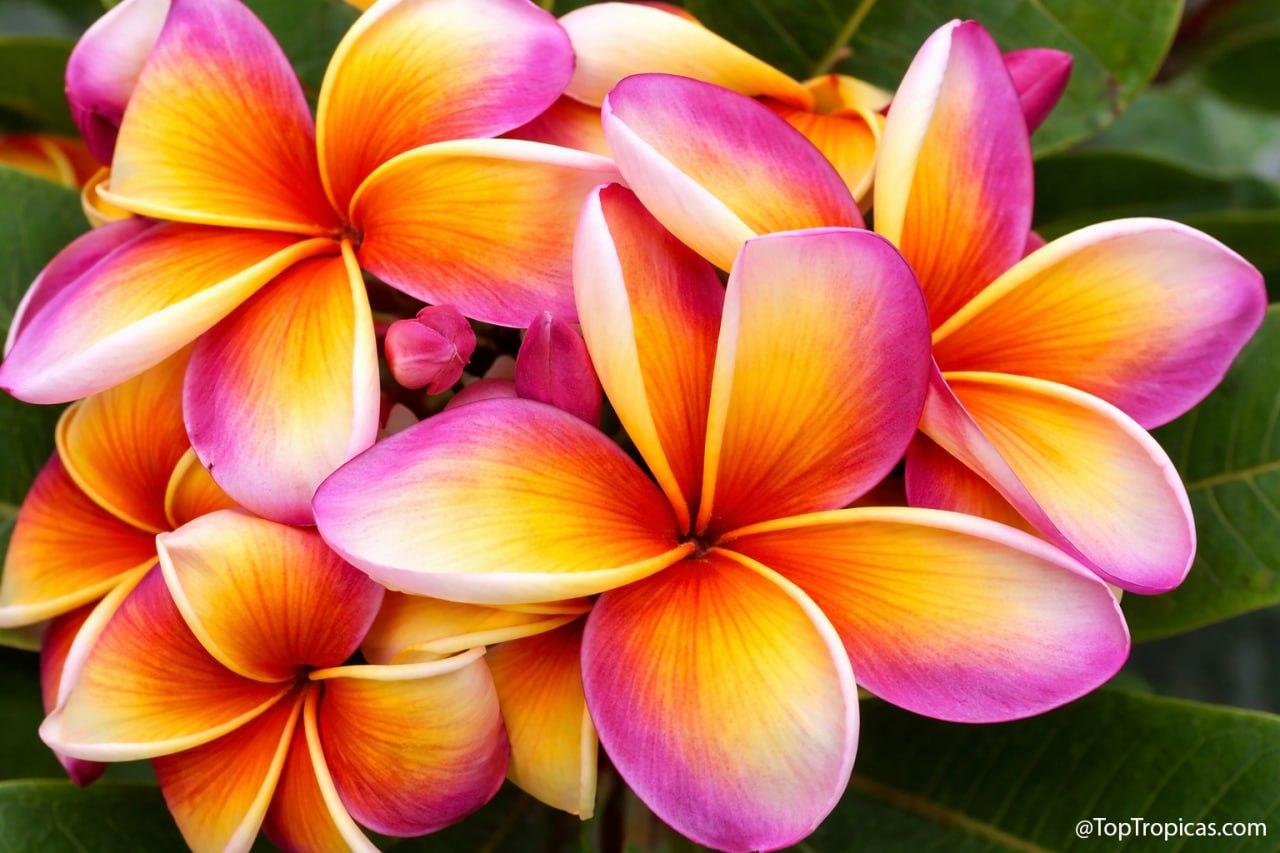
 ✦ Plumeria Mui Rainbow - deep orange-red center blending into golden yellow and finishing with pink to magenta edges. Bright, fiery colors with a smooth, glowing transition.
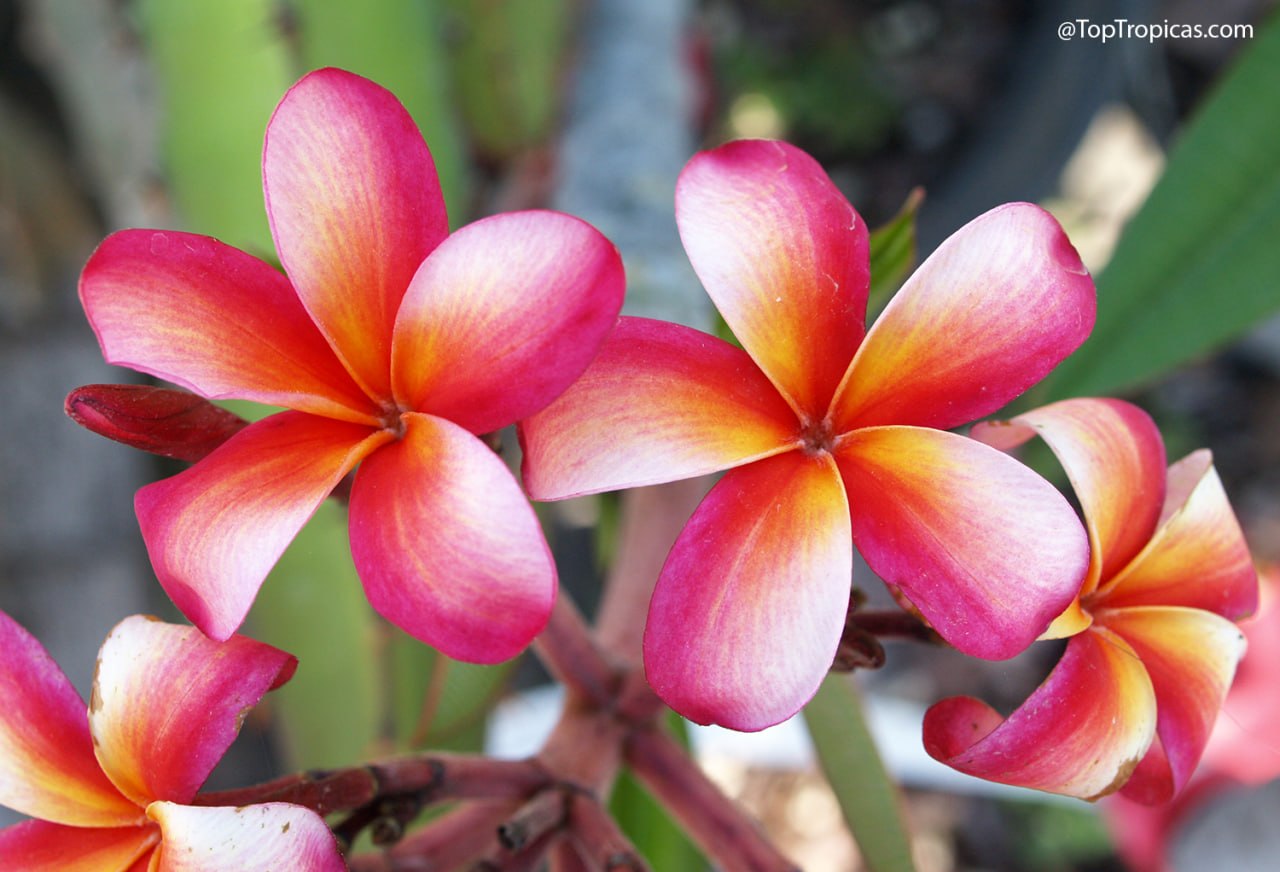
 ✦ Plumeria Pink Jaopraya - a bold swirl of red, white, pink, and yellow all in one flower. Complex, eye-catching, and impossible to ignore.
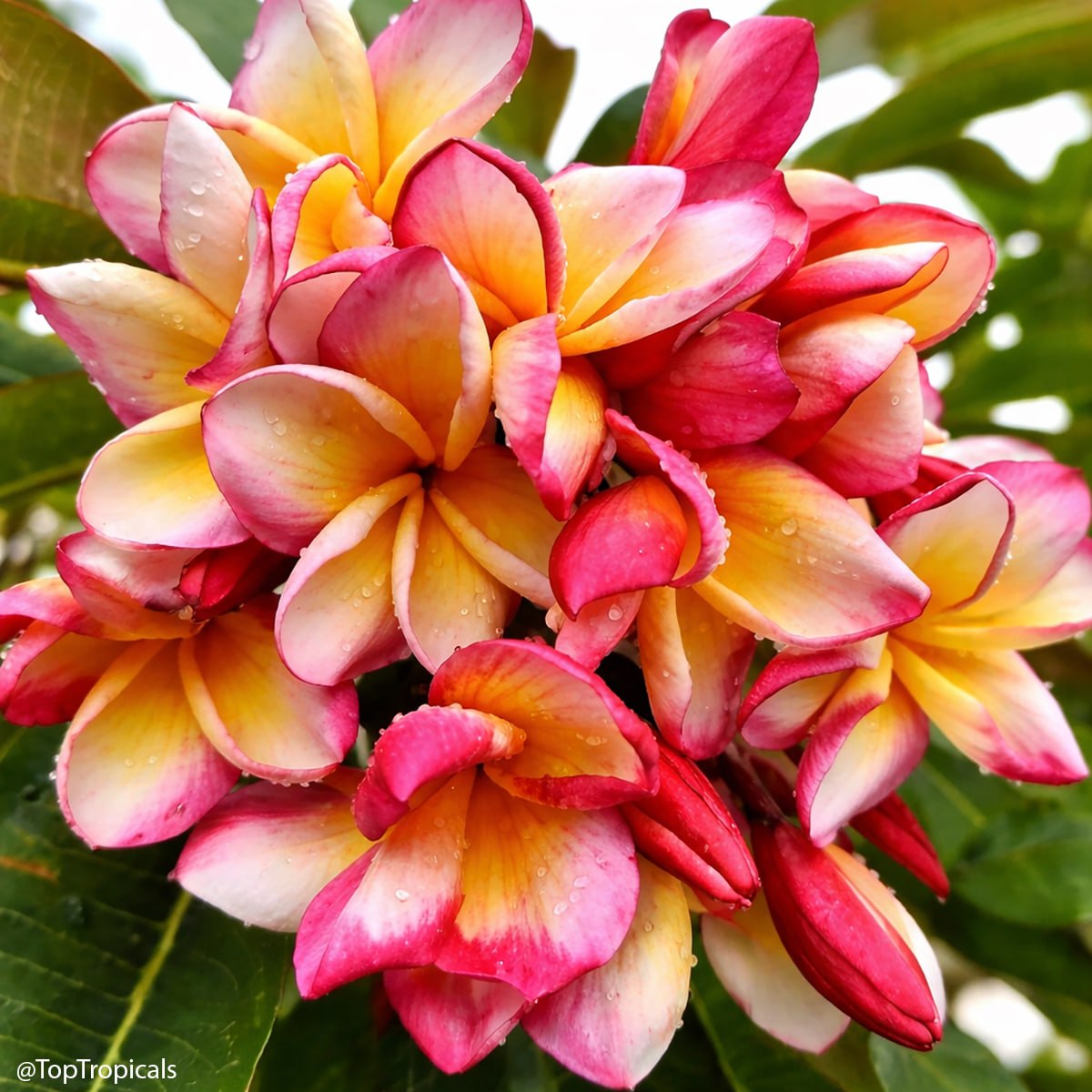
 ✦ Plumeria Sunset Symphony - creamy ivory, golden yellow, and coral-pink tones with deeper rose edges, creating a layered sunset effect that shifts from bloom to bloom.
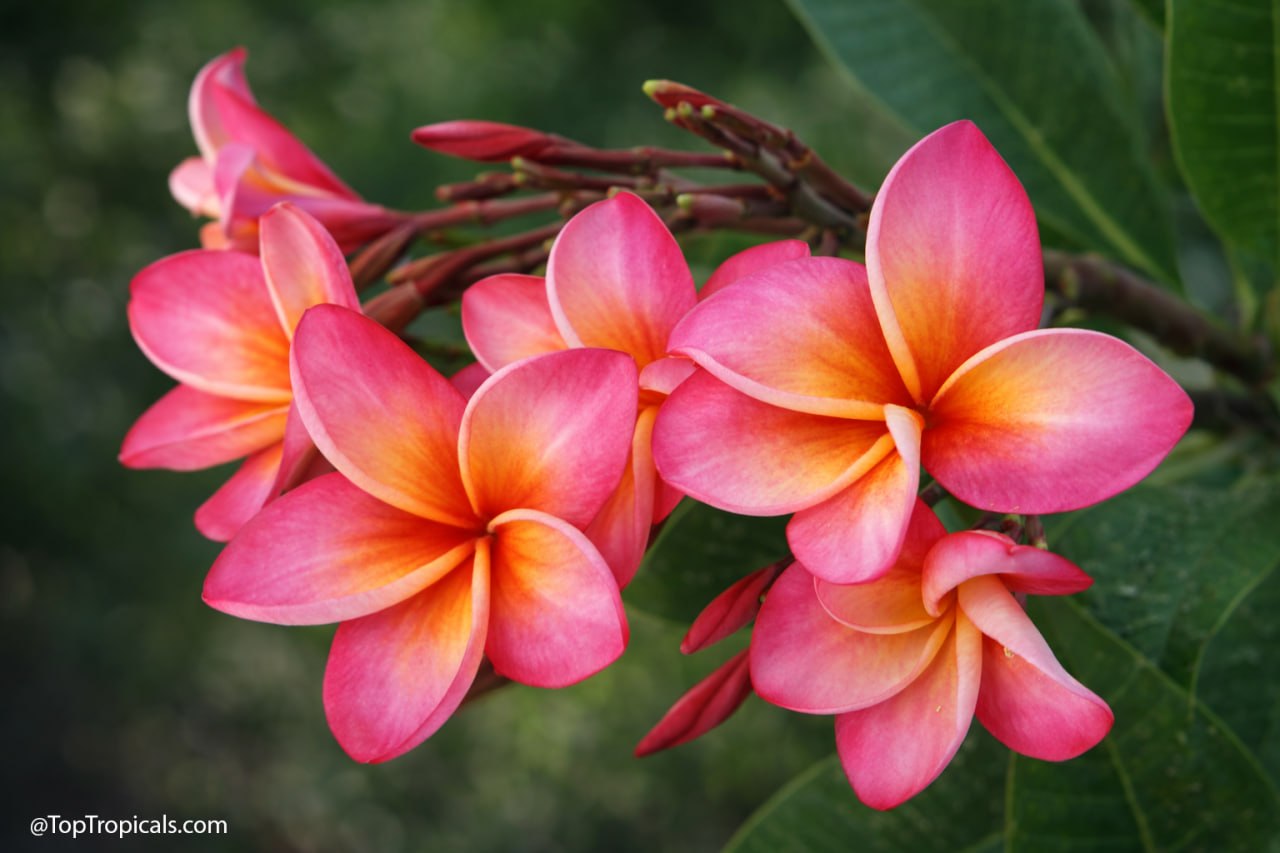
 ✦ Plumeria Dook - rich pink petals melting into a glowing orange and golden center. Bright, warm, and full of tropical energy that stands out from a distance.

💡 Plumeria tip: winter dormancy


In cooler months, plumerias slow down and may drop all leaves. That’s normal.
During this rest period, cut watering way back and let the plant sleep.
Growth will restart when temperatures rise.

🛒 Shop Plumeria Collection and Enjoy the fragrant blooms

📚 Learn more:
· Plumeria varieties in Plant Encyclopedia
· Bold reds and ruby tones - plumerias with real intensity. Feeding tip
· Dwarf plumerias - big blooms in small spaces. Sun tip
· Plumerias that stand out: bold colors and clean contrasts. Pot size tip
· 5 striking variegated plumerias you can’t ignore. Soil tip
· Plumeria rainbow: Symbol of the Tropics
· 5 simple rules to grow a fragrant plumeria and make it bloom like the pictures
· What is the most celebrated fragrant flower?
· Thailand Plumerias
🎥 How to get endless Plumeria Blooms

#Perfume_Plants #Container_Garden #How_to #Discover #PlumeriaRainbow

🟢 Join 👉 TopTropicals