Garden Blog - Top Tropicals

Date: 10 Jul 2025

🐉 New video:
Quick Guide - How to grow Dragon Fruit from a cutting
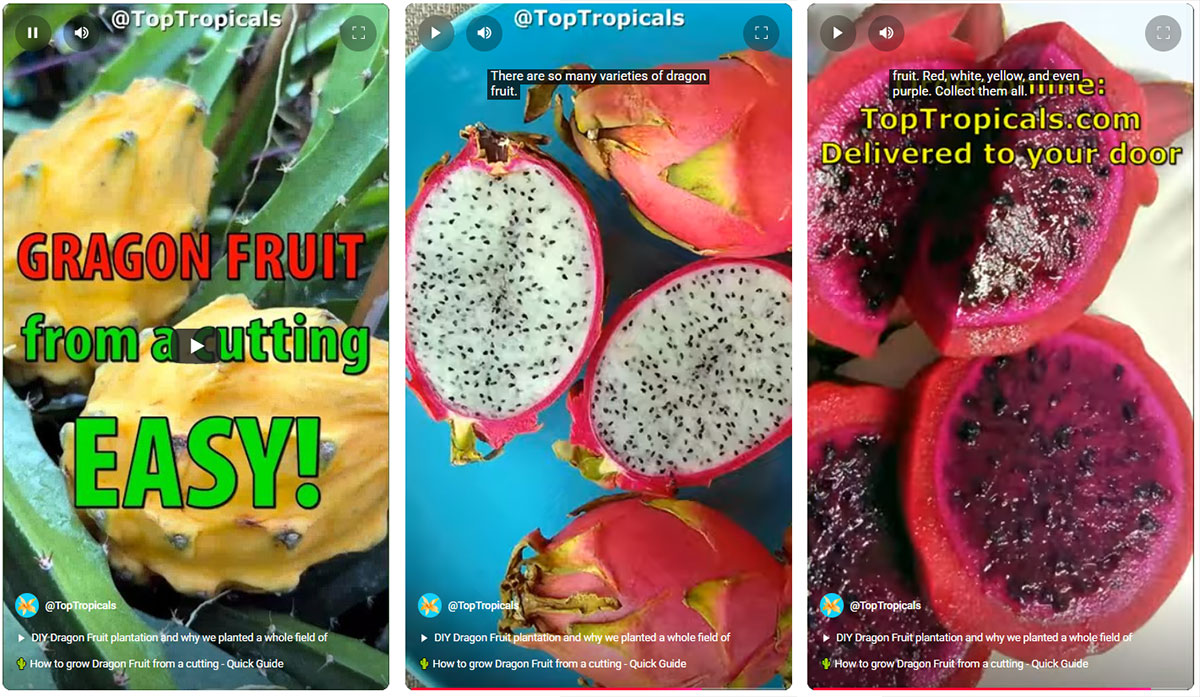
Dragon  fruit  from  cutting  video  guide

Step by step guide:

1. Use a 6-10 inch long stem cutting from a mature dragon fruit plant. Let the cut end dry in the shade for 2-5 days so it forms a callus. This also helps prevent rot and fungus.

2. Use well-draining soil - well drained potting mix, Adenium mix, or cactus mix. Dragon fruit hates wet feet!

3. Plant the cutting. Stick the callused end about 2-3 inches deep into the soil. Make sure it's planted upright (the way it grew on the parent plant).

4. Support it. Add a trellis or post. Dragon fruit is a climbing cactus and needs something to grow on.

5. Water lightly. Water once after planting, then wait until the soil dries before watering again. Overwatering can rot the cutting.

6. Give it light and warmth. Place in bright, indirect sunlight while it roots. Once established, it can handle full sun. Watch it grow! Roots usually form in 2-4 weeks. New growth means it's taking off! This is the time to Ferilize it!

Watch the 30-sec video
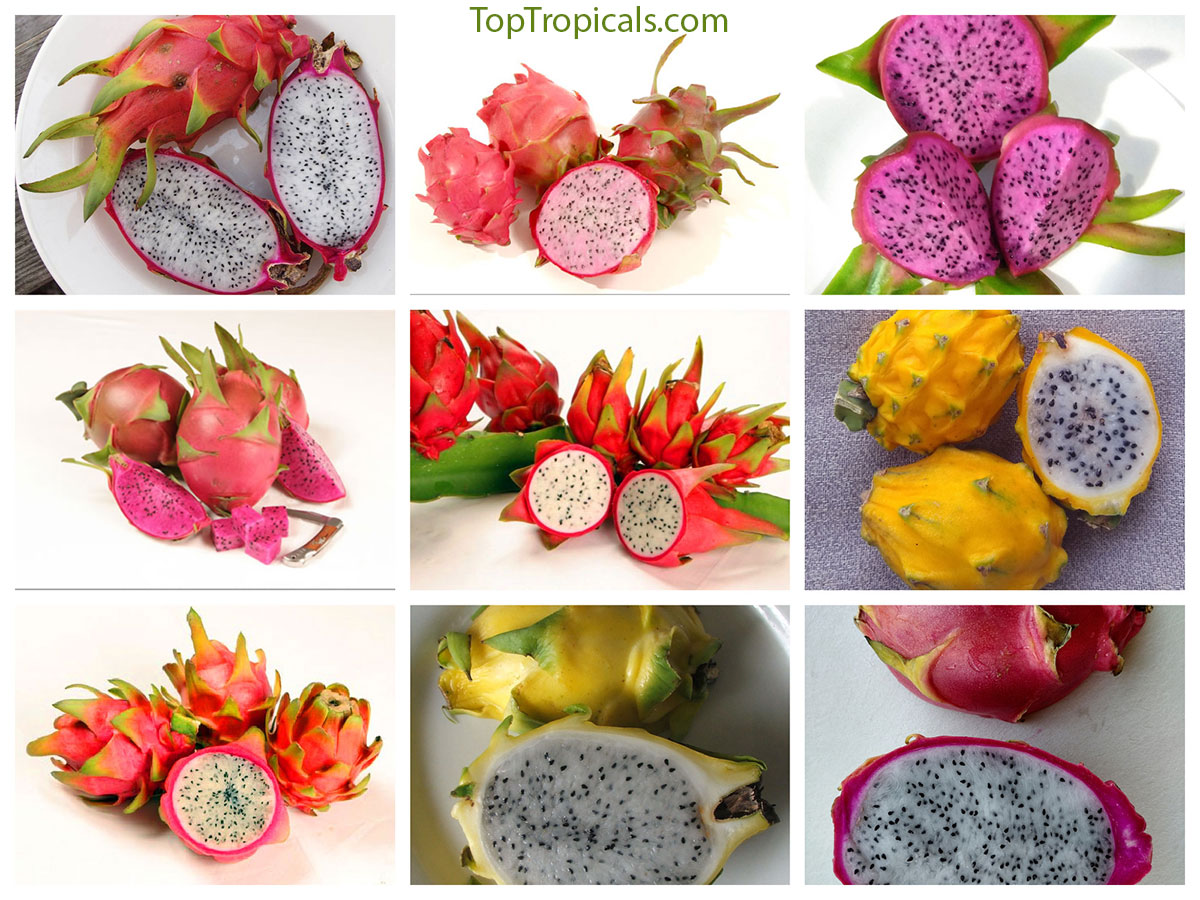
Dragon  fruit  collage Shop Dragon Fruits

Date: 21 Aug 2025

One bite, your whole day of vitamin C: Barbados Cherry that outdoes oranges!

Malpighia glabra - Barbados Cherry, Acerola

🍒 One bite, your whole day of vitamin C: Barbados Cherry that outdoes oranges!


🍒 Malpighia glabra - Barbados Cherry, or Acerola has 65 times more vitamin C than an orange! Just a single berry-sized fruit can provide your entire daily vitamin C needs, along with vitamins A, B1, B2, B3, carotenoids, and bioflavonoids. In short, this little cherry is one of the most powerful antioxidant fruits in the world.

🍒 But it isn’t just about nutrition. Barbados Cherry is a compact, fast-growing shrub or small tree that starts fruiting young, often within its first year. It produces crops several times a year, and the bright red cherries are as beautiful as they are useful. The fruit is tangy-sweet and makes excellent juices, smoothies, jams, and jellies. It also freezes well without losing its vitamin content.

🍒 Gardeners love this plant not only for its fruit but also for how easy it is to grow. Unlike many tropicals, it tolerates alkaline soils, is drought-resistant once established, and can handle light freezes. That makes it a surprisingly tough choice for a tropical fruit tree. Birds enjoy the fruit too, so planting one is also a gift to your local wildlife.

🍒 It's also a beauty in the garden, covered in pretty pink flowers and bright red fruit, often both at the same time.

🍒 If you are short on space, the dwarf variety Nana is a perfect choice. With tiny leaves, compact growth, and smaller fruit, it works well in containers, borders, or even as a bonsai. It's both ornamental and productive.

🍒 Whether you want a reliable vitamin boost, a wildlife-friendly garden addition, or just a cheerful little tree with bright red fruit, Barbados Cherry has you covered.

📚 Learn more from previous posts:
Top 10 fast-fruiting trees: #4. Barbados Cherry
10 best fruit trees to grow in Florida and Southern landscapes
Another crop of Barbados cherry
How to make Barbados Cherry Juice
Barbados Cherry Mini Version.
65 times more of vitamin C than an orange: Barbados Cherry
Learn more about Barbados Cherry

🛒 Add this vitamin C tree to your garden

#Food_Forest #Discover #Remedies

🔴 Join 👉 TopTropicals

Date: 14 Sep 2025

Banned Jamaican fruit: why you never see fresh Akee in U.S. stores?

Akee (Blighia sapida)

⛔️ Banned Jamaican fruit: why you never see fresh Akee in U.S. stores?


Did you know that fresh Akee (Blighia sapida) is restricted for import into the U.S.?
That's the bad news.
The good news: you can grow your own Akee tree and enjoy this famous fruit right in your backyard!

The reason it's restricted is because unripe Akee (Ackee) contains toxins. Only when the pods split open naturally is the fruit safe to eat, after cooking (video). That’s why it's hard to import fresh – but easy to grow and handle at home once you know the trick.

Plenty of people love this fruit (it's actually a vegetable). It's the national fruit of Jamaica, and a must-have in the classic dish Akee and saltfish. Planting your own tree means you never have to miss out.

⛔️ Why grow Akee?


✔️Fresh fruit that you simply can’t buy in U.S. stores.
✔️You decide when it's ripe and safe, straight from the pod.
✔️A taste of Jamaica in your own garden - both food and culture in one tree.

So don't wait for the fruit that never arrives at the port. Plant your own Akee tree and enjoy the harvest tomorrow!

🛒 Plant your own Akee (Achee) tree


📚 Learn more:
📱 What is Akee - Jamaica's National Fruit - and how to grow it
New Christmas ornaments? Ackee monster fruit!
Akee deliciousness
What is number one tree-grown vegetable
Grow Your Own Food: Akee
📱 How to cook perfect Akee

#Food_Forest

🟢 Join 👉 TopTropicals

Date: 18 Apr 2023

Five benefits of growing your own Pineapple

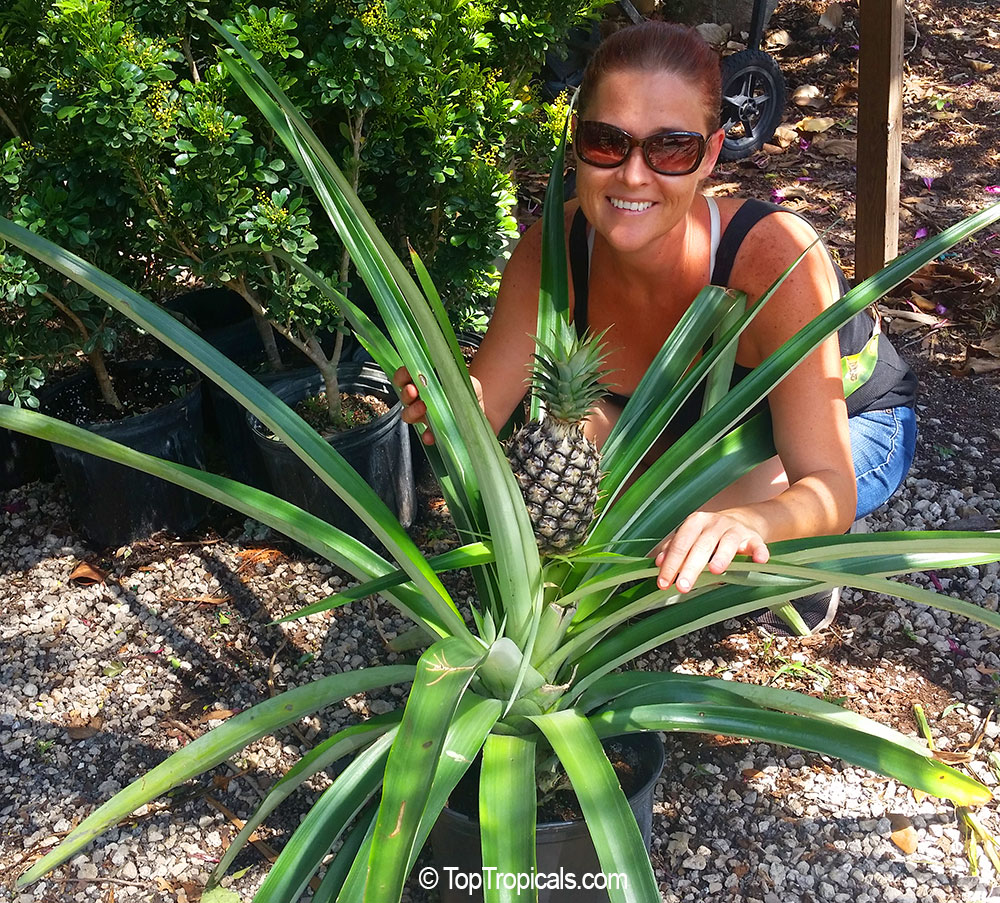
Pineapple  plant  with  a  fruit  and  a  beautiful  girl  Kristi

Q: Can I grow my own pineapple fruit?

A: Growing a Pineapple plant - Ananas comosus - is a fun and rewarding experience that offers both visual and practical benefits:

1. Fresh, homegrown fruit: One of the main benefits of growing a pineapple plant is that you can enjoy the fruits of your labor by harvesting fresh, delicious pineapples right from your own backyard.

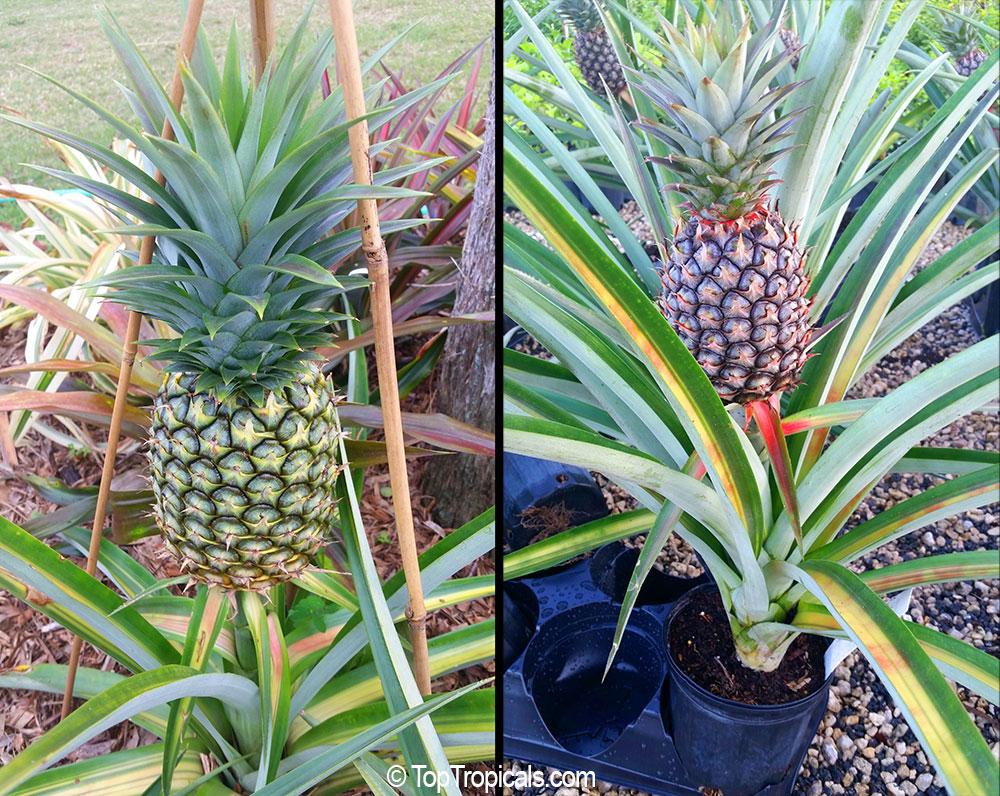
2. Aesthetic appeal: Pineapple plants are visually appealing with their long, spiky green leaves and bright, vibrant fruits. They can add a tropical, exotic touch to any garden or indoor space.

3. Low maintenance: Pineapple plants are relatively easy to grow and require minimal maintenance. They can tolerate a variety of soil and light conditions and don't require frequent watering or fertilization.

4. Health benefits: Pineapple fruit is rich in vitamins, minerals, and antioxidants that can provide a range of health benefits, including improved digestion, boosted immunity, and reduced inflammation. It is recommended to eat a slice of a pineapple after every meal to keep healthy digestive system.

5. Collectable varieties: The pineapple plant can be easily propagated by cutting off the top of a pineapple fruit. However, for those seeking excellent quality, it is recommended to choose superior hybrids from professional growers. Become the proud owner of "The King of Fruits" collection! It takes up minimal space and provides fresh fruit throughout the year.

Read more about Pineapple: The most luscious Hospitality Fruit - Pineapple.

Remember to add Sunshine Ananas fertilizer to your purchase for a long lasting Pineapple crop season.

Pineapple  fruit  growing  on  plants

Date: 28 Dec 2022

The food of the Gods:
A legend of the Guanabana

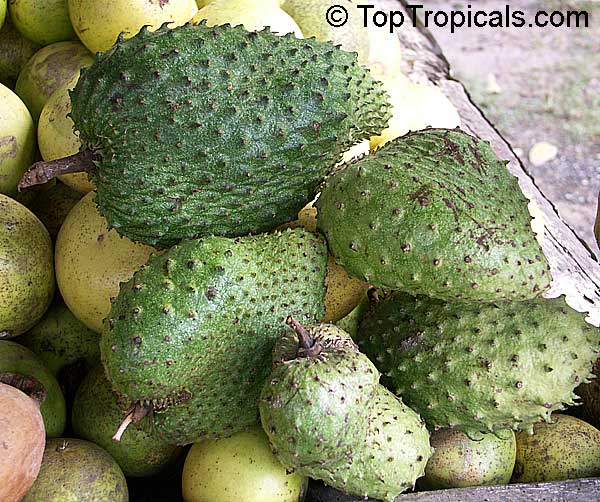
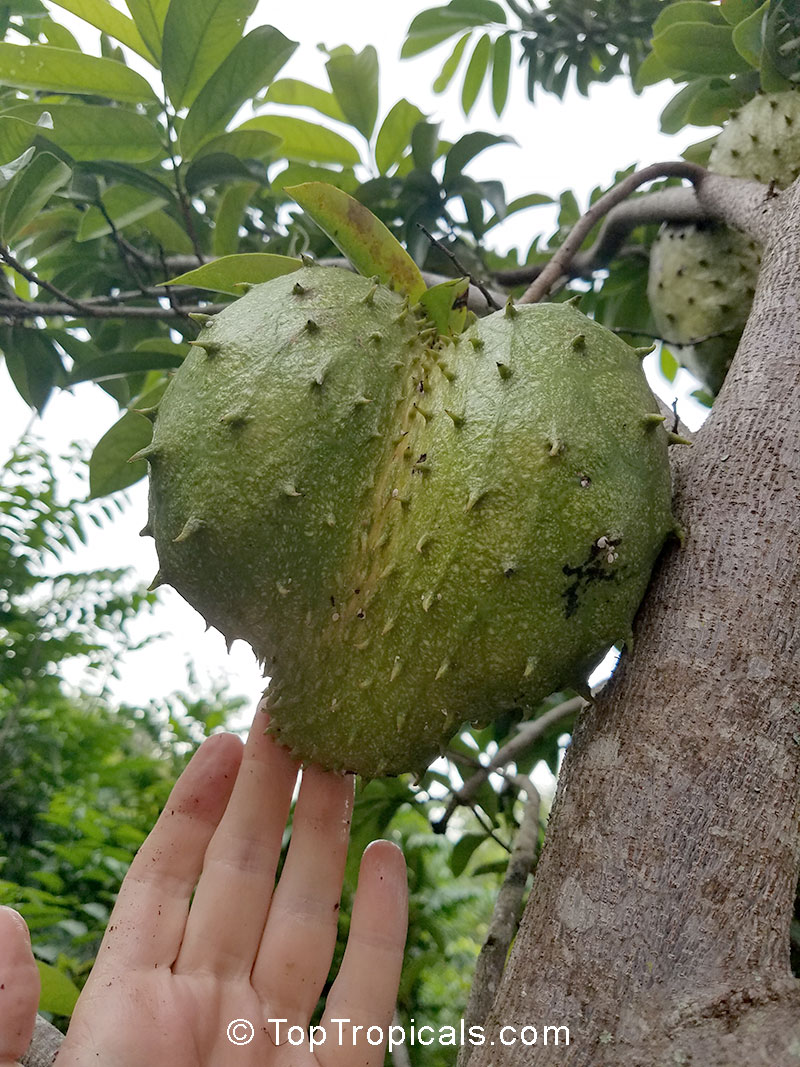
Guanabana  fruit

Grow Your Own Food

Guanabana, also known as Soursop, is a tropical fruit native to Central and South America. It is known for its sweet, juicy flesh and has a variety of medicinal properties.

According to legend, Guanabana was once a rare and coveted fruit that only grew in the highest reaches of the Andes Mountains. It was said to have mystical powers and was believed to be the food of the Gods. Those who ate the fruit were said to be blessed with good health and long life.

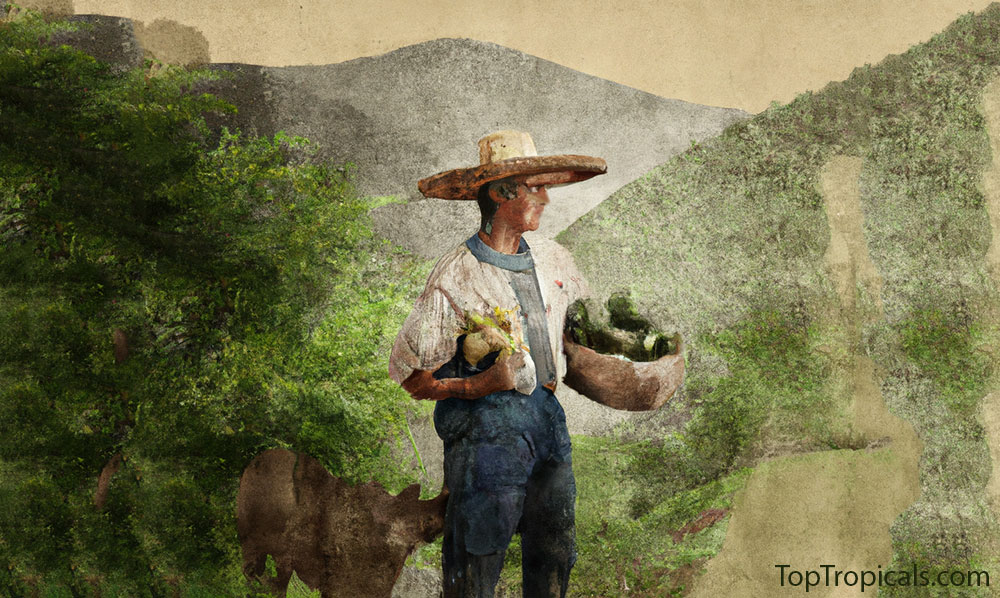
One day, a young shepherd boy came across a guanabana tree growing in a remote valley. He plucked a fruit from the tree and tasted it, finding it to be the most delicious thing he had ever eaten. The boy returned to his village and told everyone about the magical fruit he had discovered. Soon, word of the Guanabana spread far and wide, and people came from all over to try the fruit for themselves.

Painting  of  a  shepherd  in  a  valley  holding  guanabana  fruit

As the demand for Guanabana grew, the fruit began to be cultivated and grown in other parts of the world. Today, it is enjoyed by people all over the world and is known for its unique flavor and health benefits.

Download Article from Tropical Treasures Magazine: How to grow Guanabana indoors. Hand-pollinating and fruiting.

Guanabana  fruit  on  a  tree  by  a  hand