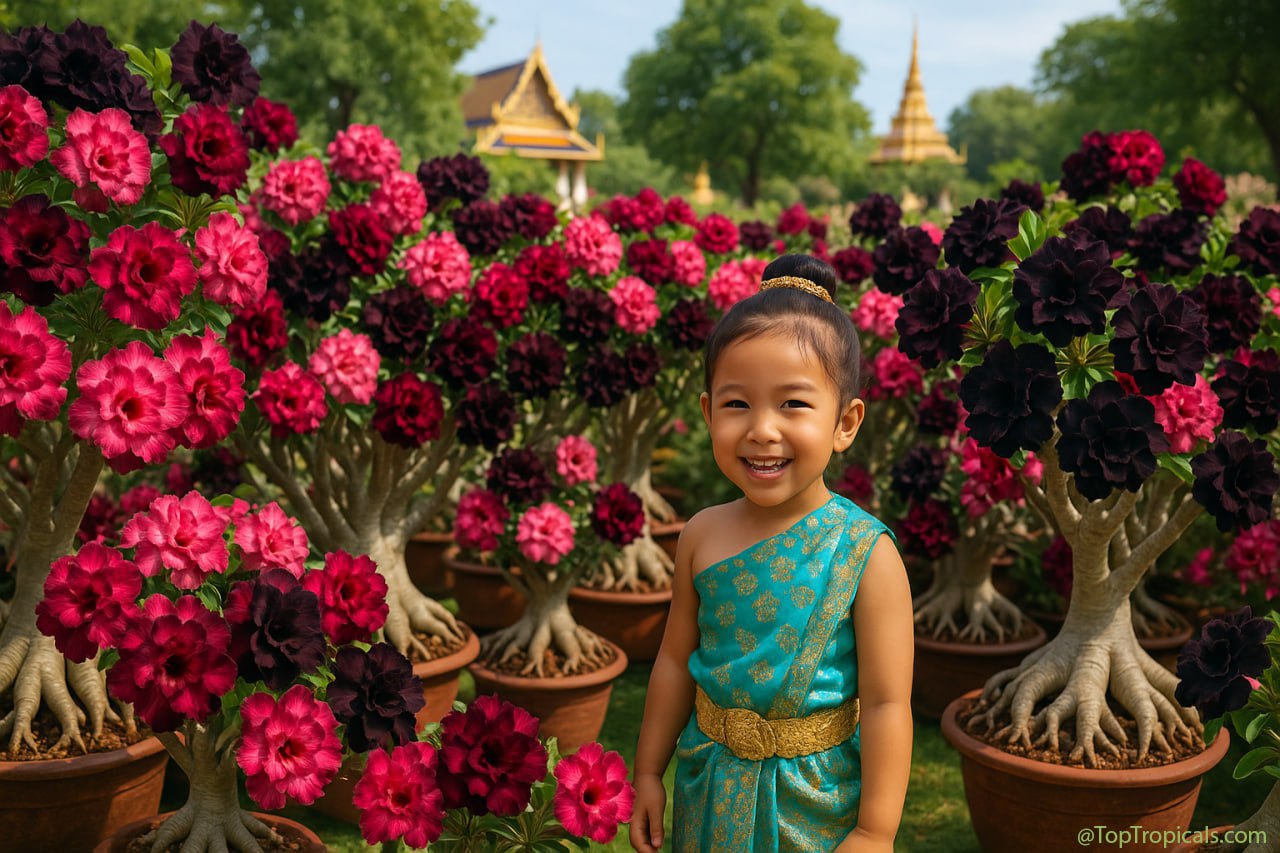
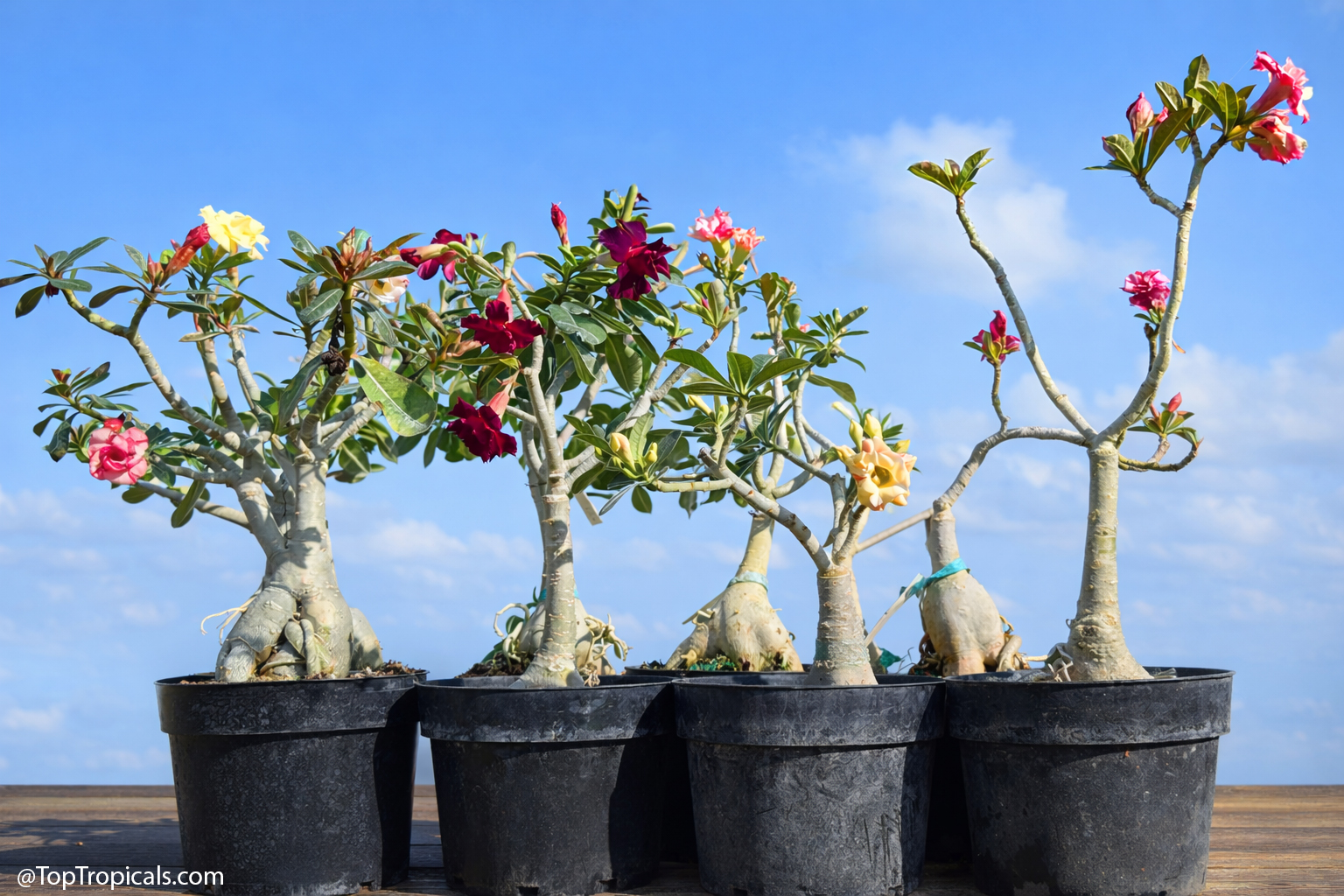
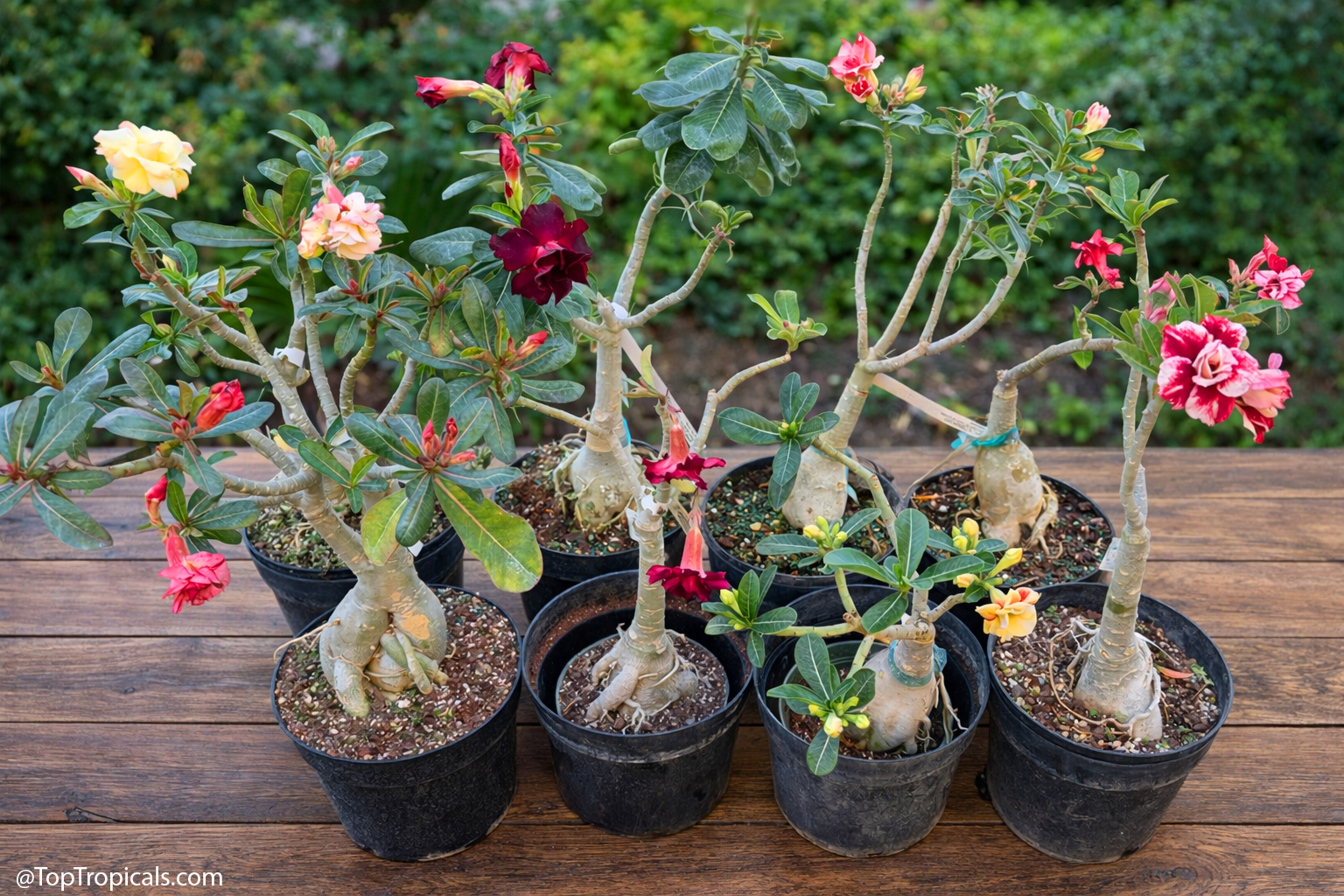
🌸 Thai flower names often sound like characters from a legend - golden spirits, celestial jewels, or lucky guardians of the garden. In Thailand, plants are not always named in a purely botanical way. Instead, breeders often choose names that carry meaning, symbolism, and a little imagination.
🌸 Looking at Adeniums through this lens feels almost magical. A flower can become a jewel, a lotus from heaven, or a golden treasure. The whimsical scenes below capture that spirit - a world where Adeniums bloom like treasures, garden fairies dance among flowers, and every name tells a story waiting to be discovered.
By Tatiana Anderson, Horticulture Expert at Top
Tropicals with Smokey & Sunshine help
Adeniums blooming inside the Top Tropicals greenhouse
during the record freeze of February 2026 - protected from the cold, kept
above 40F, and fed with liquid Sunshine
Megaflor. They responded with a spectacular, synchronized winter bloom.
Quite a surprize!
✅ Simple rules that actually make them bloom and grow well
Light - The more light, the better the growth and
flowering. Full sun is ideal, but in very hot climates, filtered
bright light keeps plants looking healthier.
Water - Water well, then let soil dry on the surface.
Sitting in wet soil damages roots, but letting plants dry
out too often can push them into early dormancy.
Pot and shaping - Use a shallow pot with excellent
drainage. To
develop a sculptural caudex, lift the plant slightly each time you repot and
remove some of the
top soil so upper roots become exposed. Over time, this creates a thicker,
more prominent base.
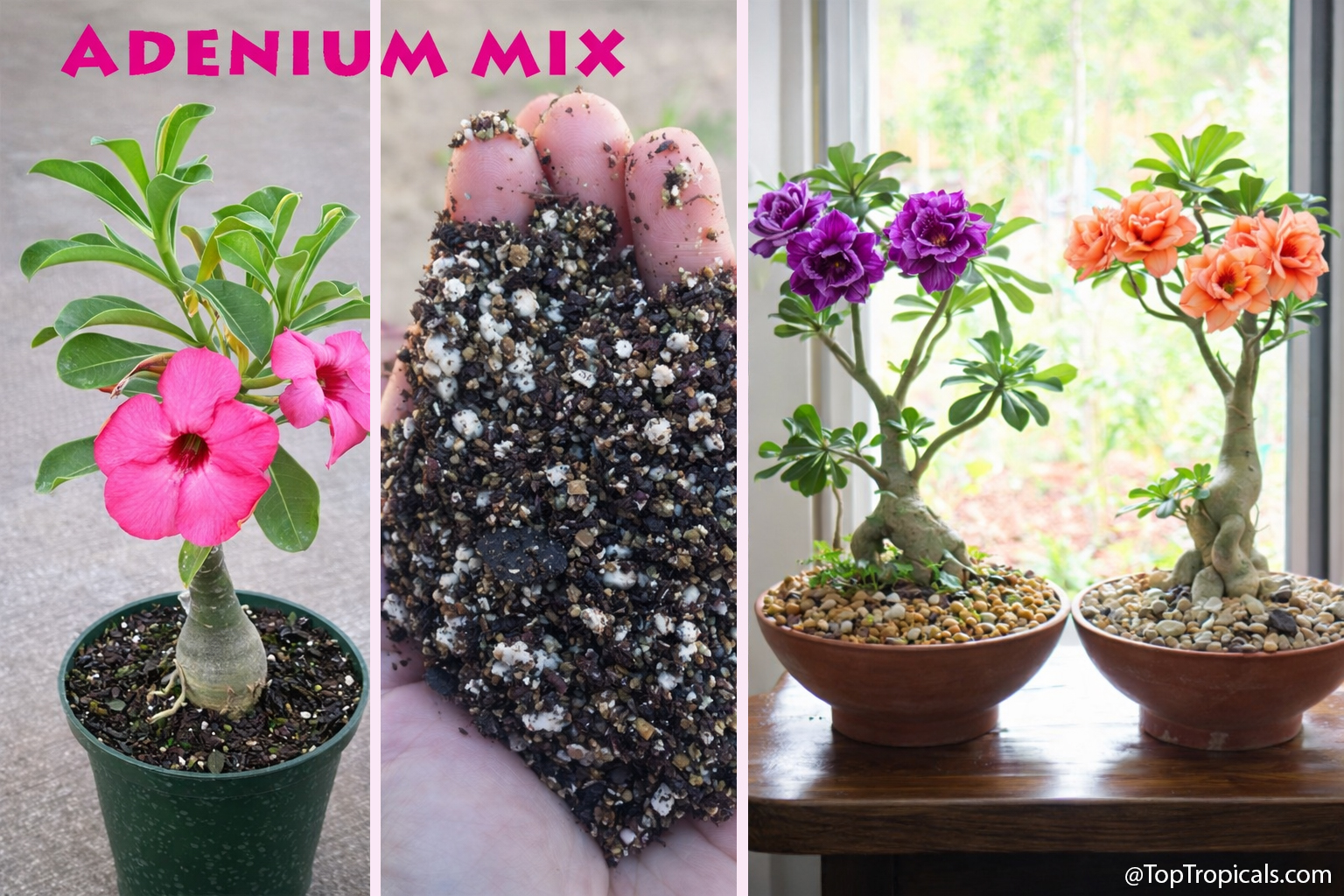
Healthy adeniums start with the right foundation - a
fast-draining soil mix and careful watering only when
dry to avoid caudex rot.
Cold hardiness - Adeniums are tropical and do not
tolerate frost. Keep above 40 F. Brief drops to mid 30s may be tolerated if
dry, but cold and wet conditions can damage or kill the plant. In cooler
climates, bring indoors or
protect during cold nights.
Indoor winter care - Move plants indoors before cold
nights. Place in the brightest spot possible, ideally a south-facing window.
Or use
additional lighting. Water very lightly and less often, as growth slows. Do
not fertilize during dormancy. Some
leaf drop is normal in winter.
Freshly grafted adeniums in
dormancy - a crucial resting phase. Keep watering low (once a month) and
avoid overcare; this is the time to let them rest and etablish.
Feeding - Adeniums respond best to liquid fertilizer.
We apply Sunshine
Megaflor Booster with each watering throughout the year. During
dormancy, watering is reduced, so fertilizer use decreases accordingly.
Consistent, light feeding promotes strong roots, a thicker caudex, and
improved
flowering.
Pruning - For multiple blooms, regular pruning is
essential. After flowering, cut back long or leggy growth to stimulate
branching. Each new branch can produce more buds, leading to a much fuller
bloom in the next cycle.
Pruned vs. unpruned - the difference is clear. The four plants on the left
were trimmed 6 months ago, while the two on the right were not. Same
species,
very different results.
The year is almost over but the winter is not. This Christmas weekend at
our Sebring B-farm we had it down to 30F. As a tropical gardener, winter can
be challenging, especially if you grow plants outside of tropical zones.
To protect your garden from the cold, consider the following:
1. Monitor freeze watches and be prepared to take action if
necessary.
2. Create temporary structures like mini-greenhouses using PVC pipes,
carport frames, or bamboo sticks to support covers.
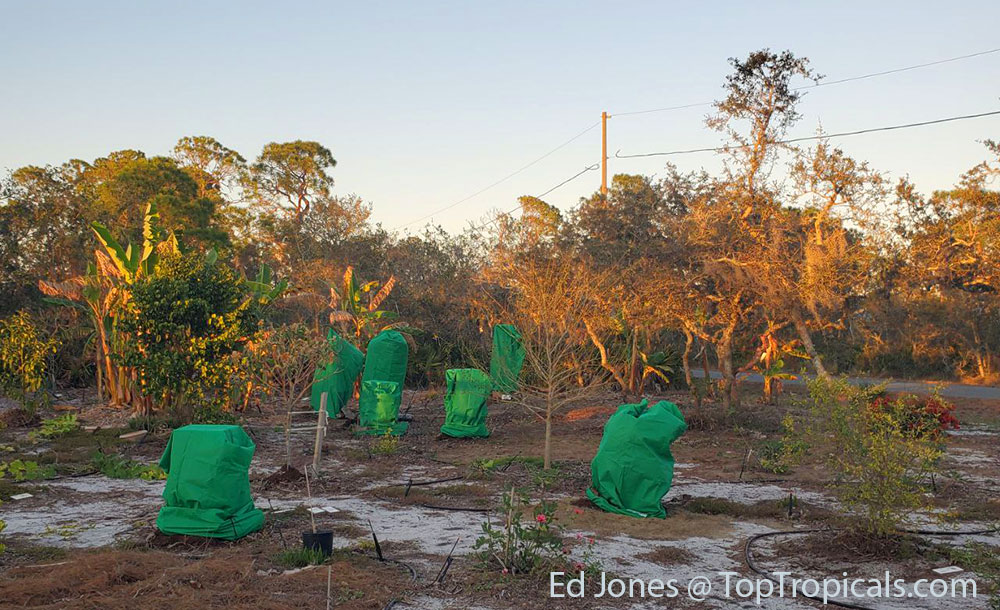
3. Use covers such as frost cloth, cardboard boxes, blankets, and bed
sheets.
4. Use Christmas lights and other heating elements, including propane
heaters, to keep plants warm.
5. Add a layer of heavy mulch around plant trunks to protect them from the
cold.
6. Apply plant boosters that improve cold hardiness, such as Sunshine Epi,
Sunshine-Si, and Sunshine Superfood.
At TopTropicals B-Farm, we sprayed our plants with a special cold hardiness treatment Sunshine-Si and covered and wrapped
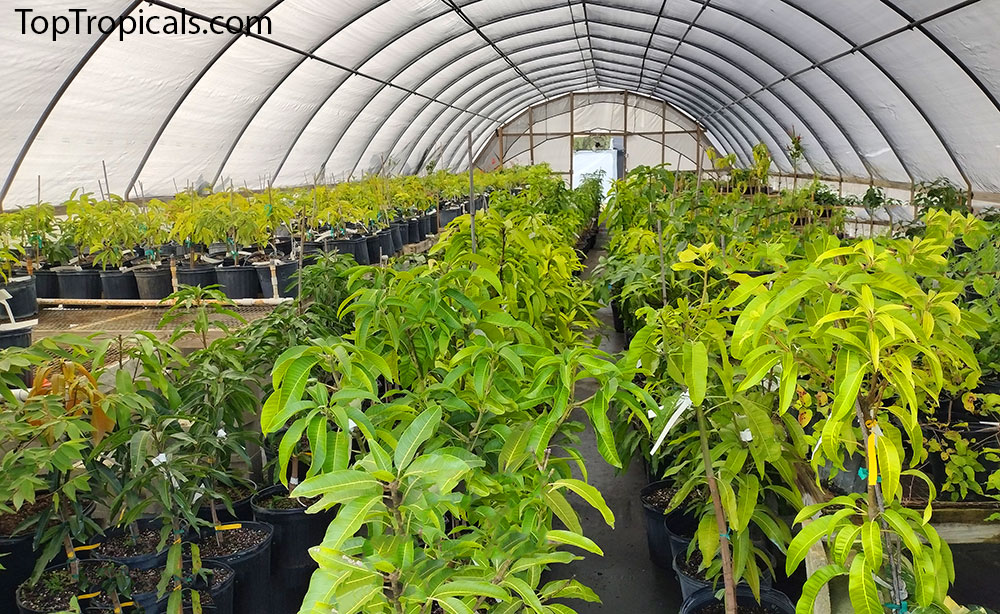
everything we could. We also moved cold sensitive species inside greenhouses.
All of our plants are looking great and happy!
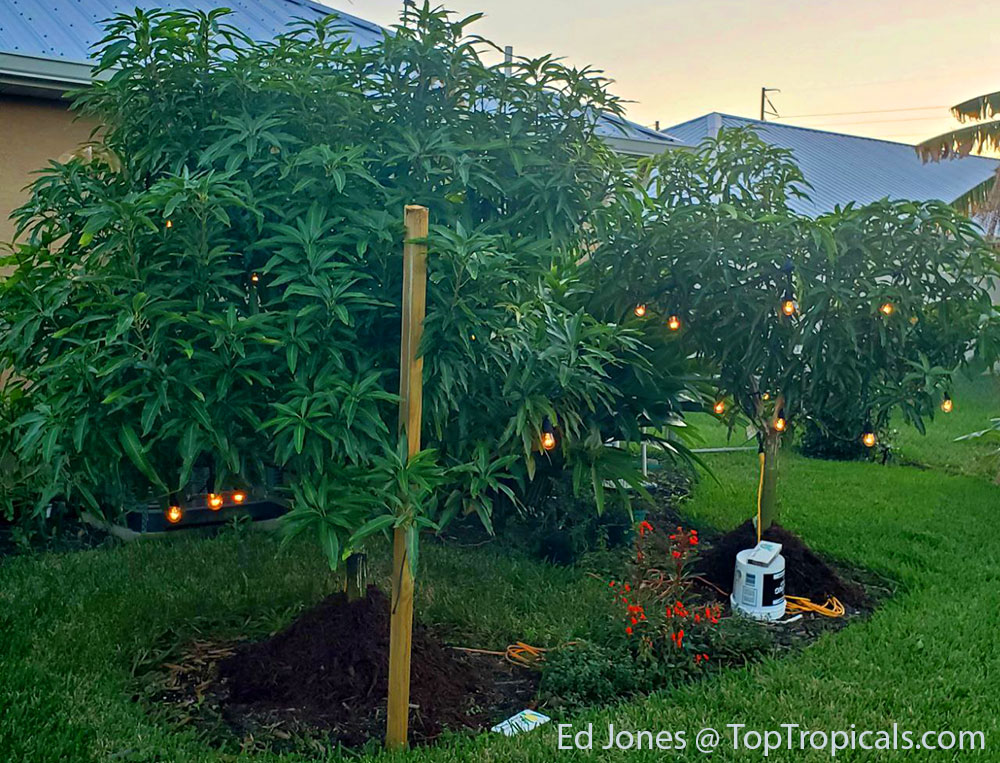
Photo above: Mulching mango trunks and using Christmas lights for
cold protection
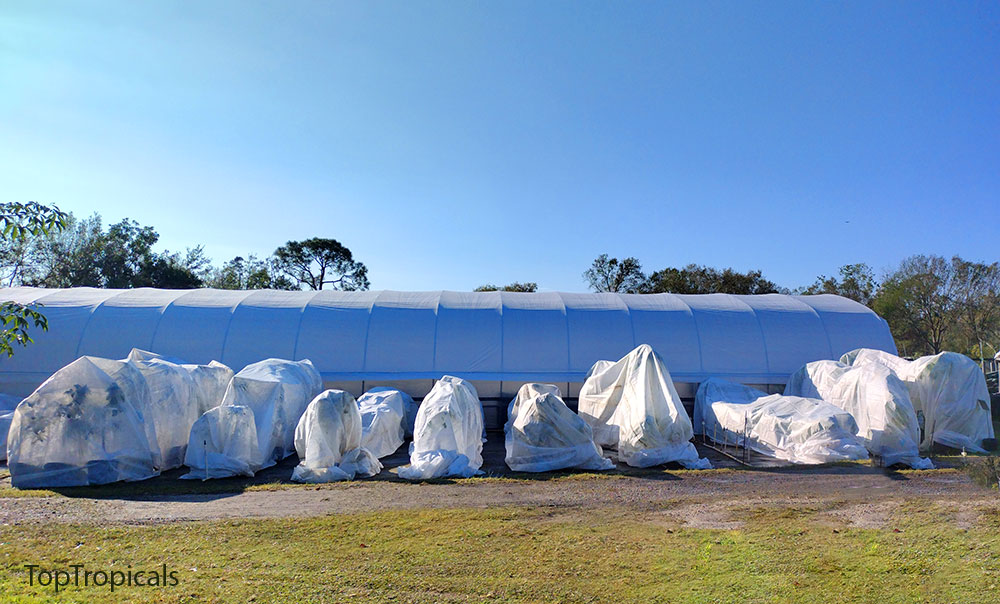
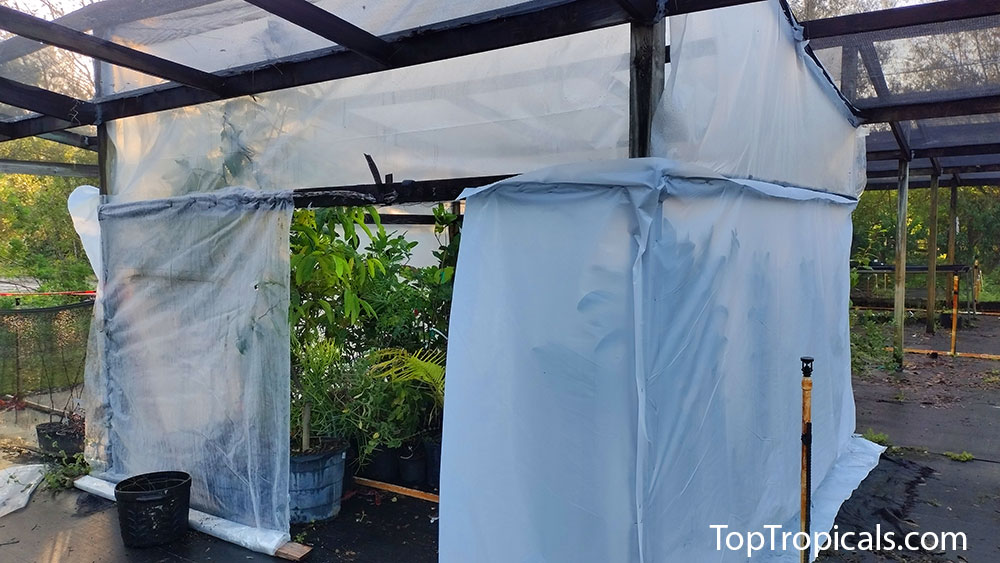
Photo above: Temporary wrapping of a section of a greenhouse with a
plastic or frost cloth protects from a windchill. It may also win you a few
degrees even without a heater. In this particular case, according to our temp
sensors, it was 30F outside, and 41F inside this "dome", no heaters used.
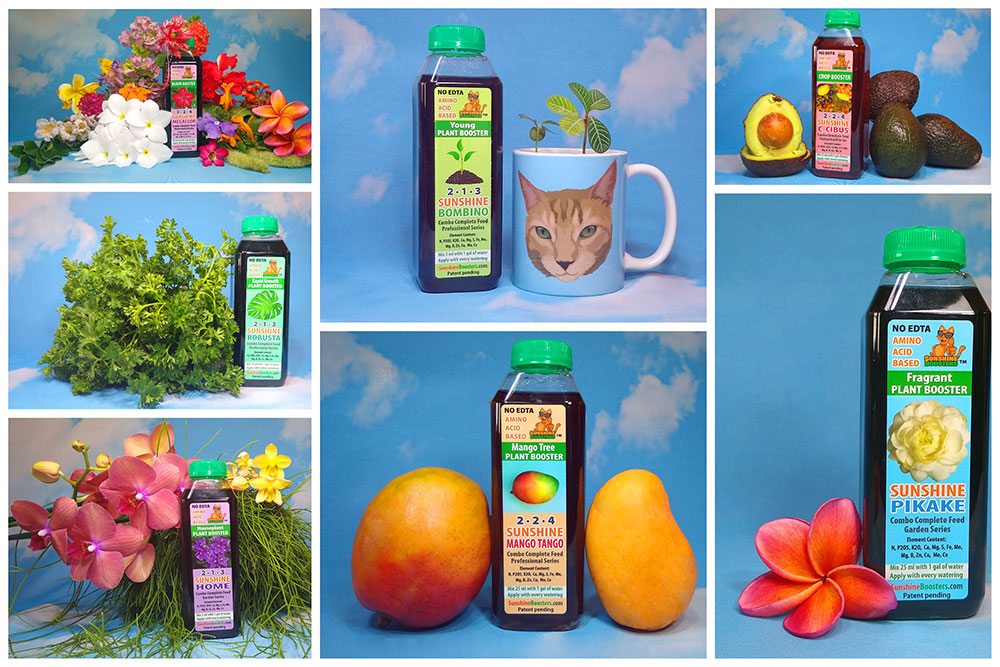
Sunshine Boosters:
Last chance to stock up at a lower price!
Sunshine
Boosters are natural, amino acid-based liquid fertilizers made with only
the highest quality ingredients. Starting in 2023, the pricing for Sunshine
Boosters will be adjusting to reflect the increasing cost of supplies. This is
your last chance to stock up on Sunshine Boosters before the end of the year!
Sunshine Boosters are safe to use year around, with every watering.
Don't miss out on this opportunity to get the best
value for your money!
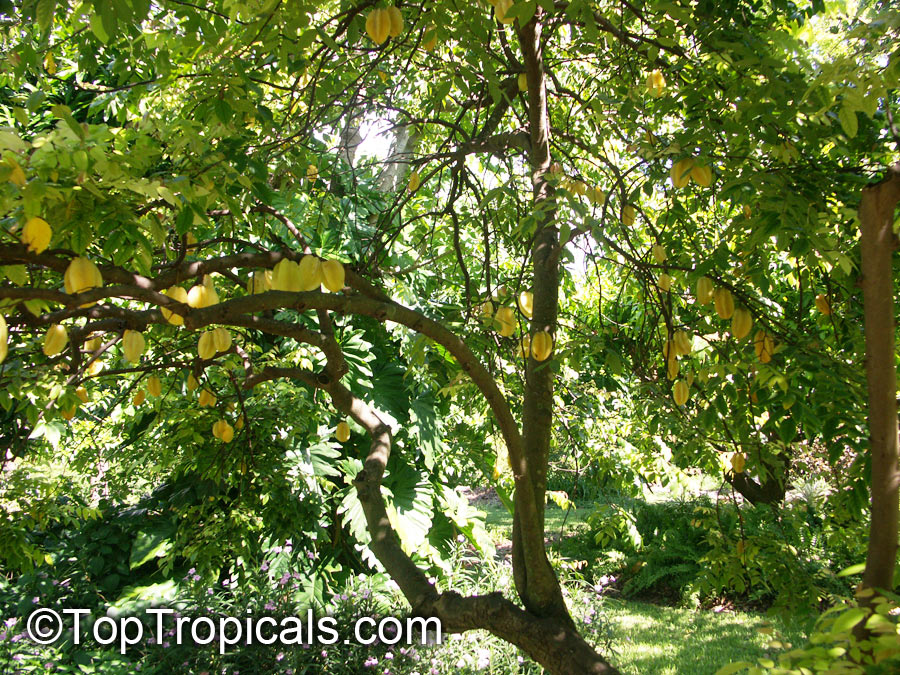
Q: I have 2 Starfruit plants from you. One on the left is B10 has a lot of flowers
but no fruit is developing. On the rite is Kenjeng. This one has no flowers
at all. Both plants are growing very well. Plenty of sun and water. I am
located in Boynton Beach Florida. So what to do?
A: Your trees on the pictures look very healthy, congratulations
with a great care!
Starfruit, as well as other grafted fruit trees (like mango, avocado, etc)
usually flower/fruit easily and readily while in pots in the nursery.
Sometimes, once planted in the ground, they may reduce flowering or even stop
flowering. What happened?
The answer is simple. In pots, we fertilize them on regular basis. In our
nursery, we have fertilizer injector inline with irrigation system that dozes
plant food with EVERY watering. In other nurseries, they may also use
slow-release fertilizers, but it is still a regular routine to provide plant food to
potted plants.
In the ground, especially in Florida poor soils, fruit trees may stop
flowering or delay fruiting due to lack of nutrients, or dis-balance of elements
in the ground. Without fertilizer, a tree may take extra time to develop
bigger root system to reach out for necessary elements, and eventually will start
fruiting anyway.
But we want it to fruit soon! The only way to fix the problem is to provide
fertilizer on regular basis for a young tree. It is especially important
during hot summer months when plant metabolism is fast due to high temperatures,
plus nutrients may get washed away with frequent summer rains (like we have
in Florida) even if you've added some fertilizer at time of planting.
But the most effective way to get a tropical tree to flowering and
fruiting, is frequent applications of liquid fertilizer. We use Sunshine Boosters
with every watering on our plants. They work great even on hard cases and
weak plants, and you see the difference in a matter of weeks, sometimes even
days.
We recommend the following fertilizer that contains all necessary elements
for young fruit trees:
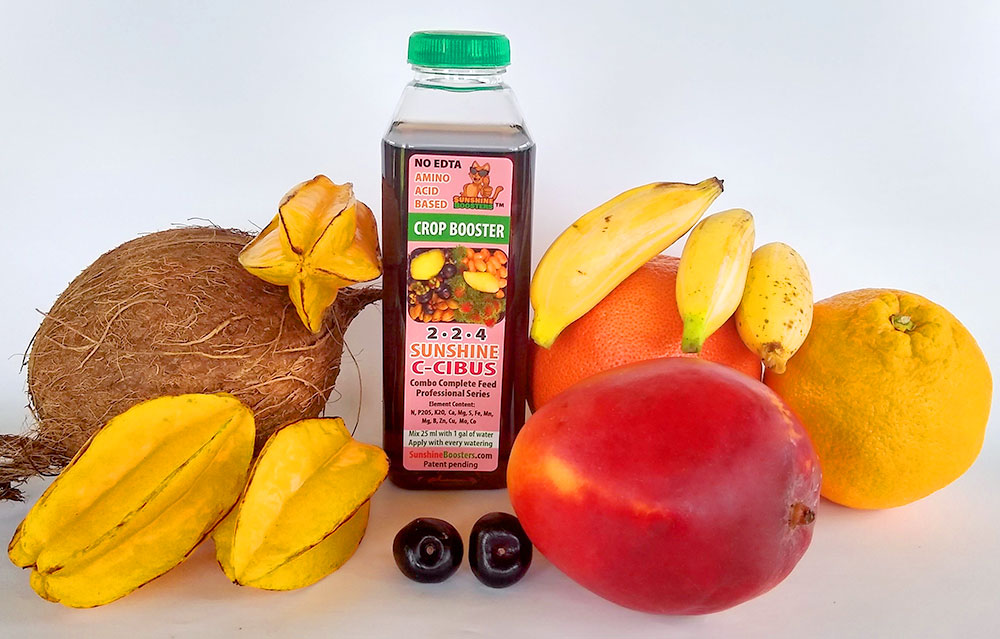
SUNSHINE C-Cibus - Crop Nutrition Booster
SUNSHINE C-Cibus - Crop Nutrition Booster from Garden Series, or Combo
Total Feed Collection - all nutrients in just one bottle, for fruit trees and
edibles.