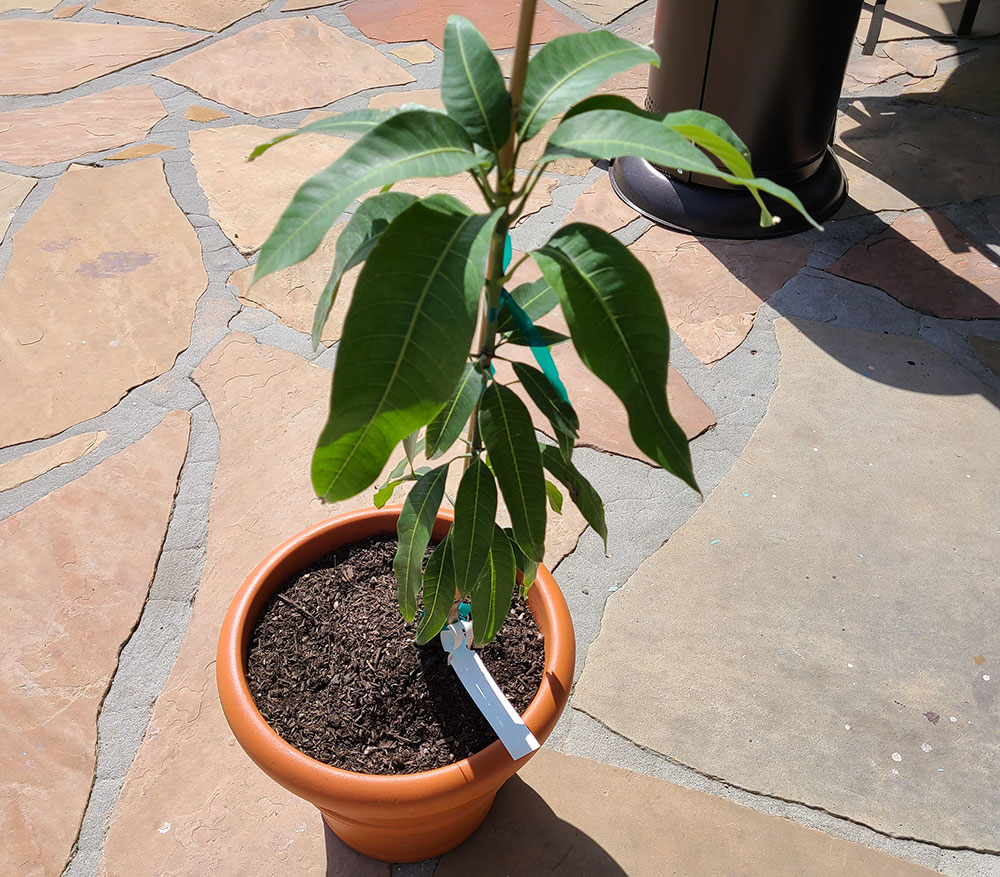
Q: I received a mango tree we ordered last week (I am in
California) and am trying to make sure we take care of it properly. I noticed the
corners of some leaves have began drying out. I wanted to see if there was
anything else we should be doing or if it is something normal. Overall the tree
looks good and the leaves have perked up, but I noticed the dry tips on a
handful of leaves. Any help is appreciated! I have not fertilized in the pot yet
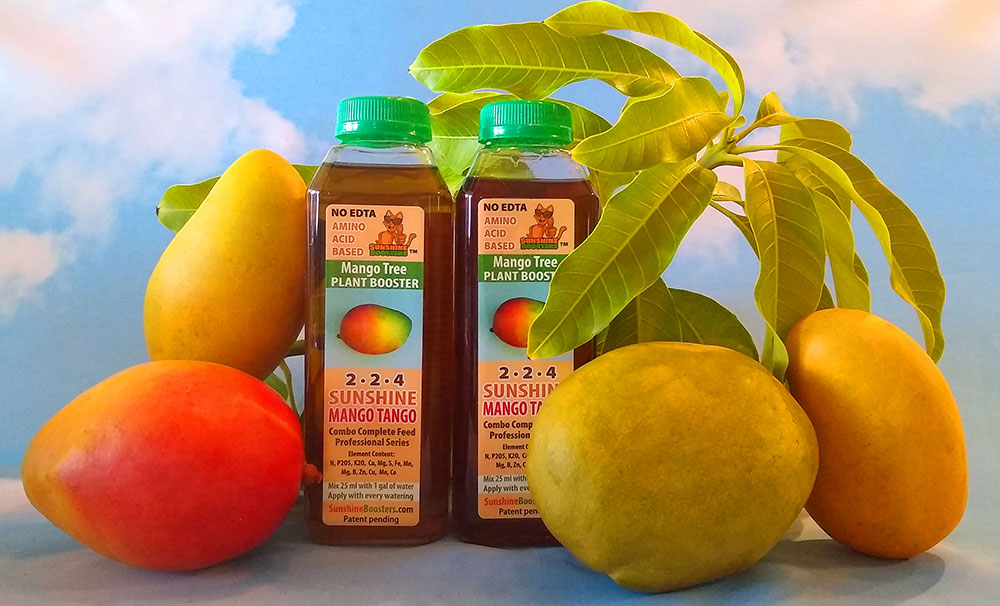
or applied the mango sunshine booster.
A:Your mango tree looks pretty healthy, and these dry leaf tips
may be caused by overall shipping stress. You have dry air in California, and
temperatures may be getting up, this may cause additional drying effect. You
may start fertilizing with a liquid fertilizer, it will help the plant to get stronger and grow
faster - then heat and dry air won't be a problem as soon as the plant becomes
better established and hopefully go into a bigger pot soon, or in the ground.
Make sure to provide regular water if you have hot dry summers.
Date: 29 Mar 2021
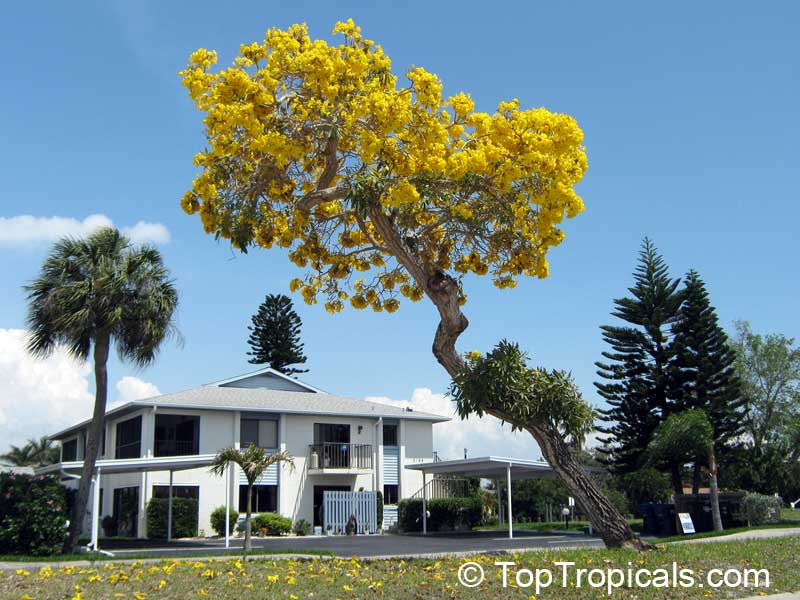
Small flowering tree for community
Q: Hi, I live on the east coast near West Palm, but I see you
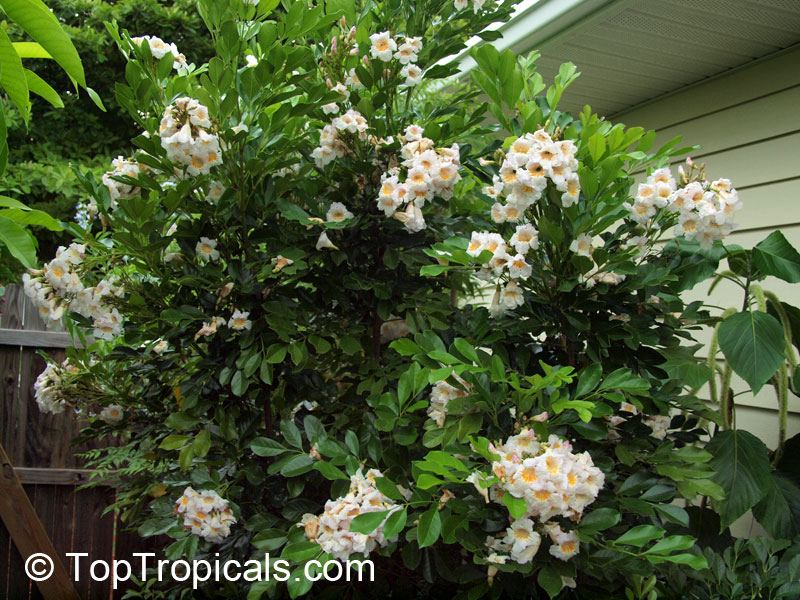
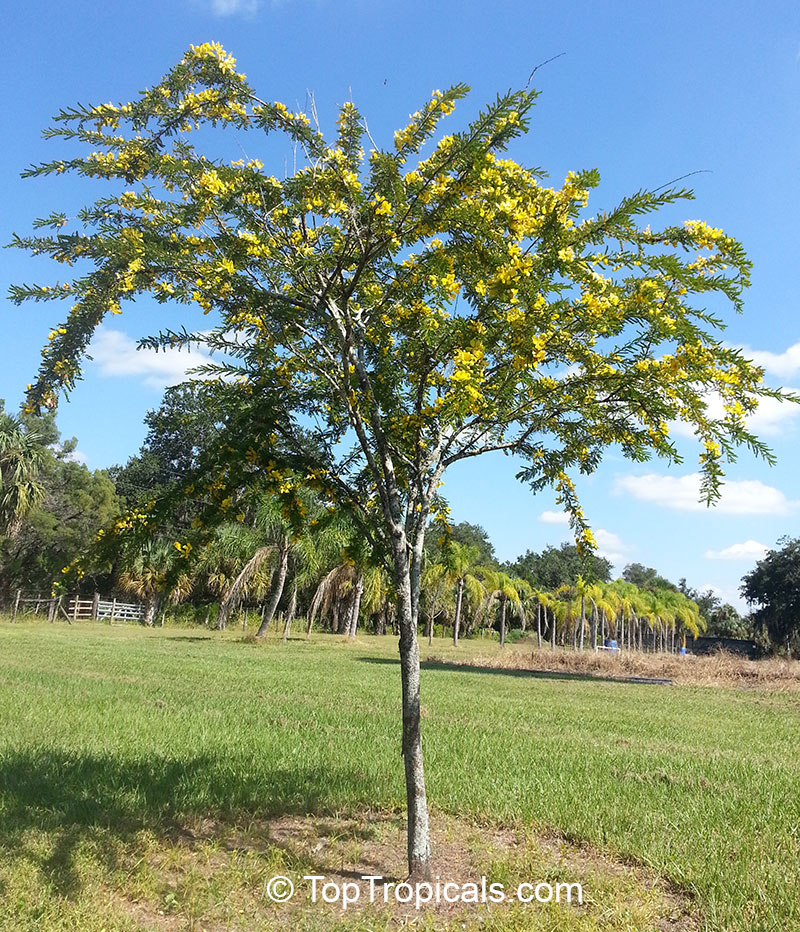
ship your plants. My HOA allows for Yellow Tabebuia species and I'm looking for two or three smaller trees that can fit in my front yard in smaller spaces. Ideally looking for trees that would stay under 20' in height, but preferably even smaller. Can you tell me the average height and spread of the Dwarf Golden Tabebuia or Silver Trumpet trees?
"...Wow is all I can say, you all sent the most beautiful plants, I
never knew the Hawaiian Bell could have so many blooms. It arrived in Excellent shape
and I am so very thrilled to have this beautiful plant again. I am keeping
inside for a few days until a front goes thru, then it is going to be back in
mid 70s.
I give aged worm castings to my plants and recently discovered the plant food that the plant can uptake right away... And lastly, I
discovered a potting soil... Some of my plants went wild when I planted them in it.
Everything in it is tailored to not burn your plants. So nothing but the very
best for Top Tropical plants. Thank you all so much for this wonderful
plant, I will treasure and take good care of it. I have over 500 plants in pots,
because of gophers and nematodes. I love nature so do not want to kill the
gophers because the owls we have here depend on them and poisoning is a horrible
death. Much love, happiness and gratitude.
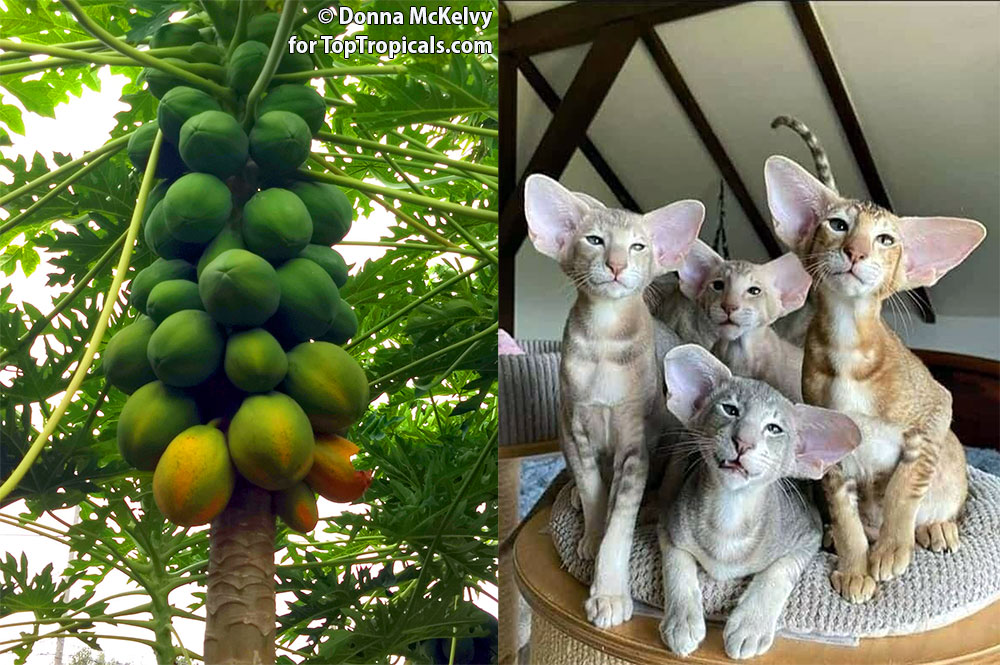
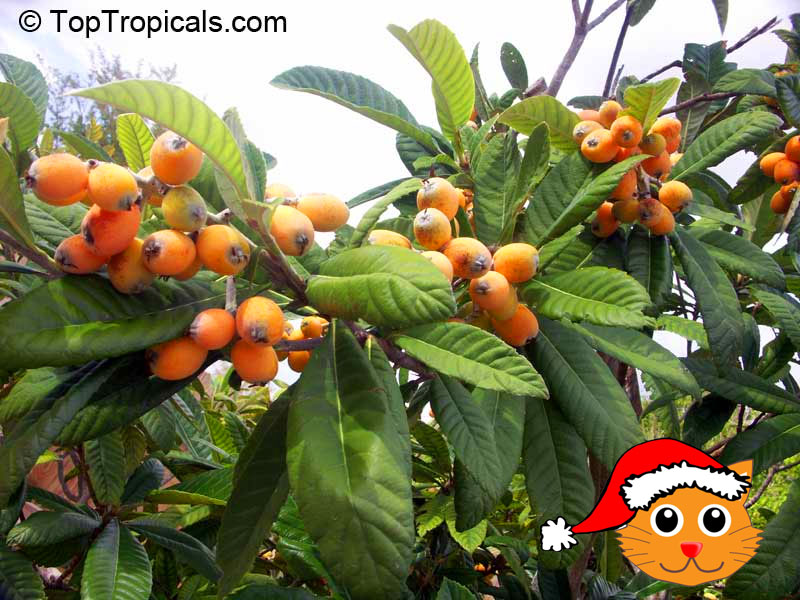
You can use pics - I love growing for the planet. I so love cats too, I
have 5 most of them Siamese. I found this pic of cats online, wow how did they
breed for a cat to have such big ears?
Much love and happiness, Donna..."
Q: A few years ago, I purchased a Barbie Loquat from you, and I'm pleased to say it's been growing very well. I
now have several loquat seedlings. I have read that a well-draining medium
should be used, and I have found that the various formulations provided on the
web for such medium seem vaguely reminiscent of the recipe provided in your
transplanting instructions. Therefore, I would like to retrieve your recipe,
unless you could recommend an even better one?
A: The main requirements for a good potting mix are:
- perfect drainage, allowing air circulation that is so necessary for
healthy roots; oxygen circulation helps to avoid root rot
- water retention: to keep nutrients in soil
- low pH (soil acidity) which is important for most tropical plants
- adequate amount of organic matter in the mix, in combination with proper
fertilizer program
In our nursery we experimented with many different potting mixes for the
past couple decades. We ended up with an ultimate mix for tropical container
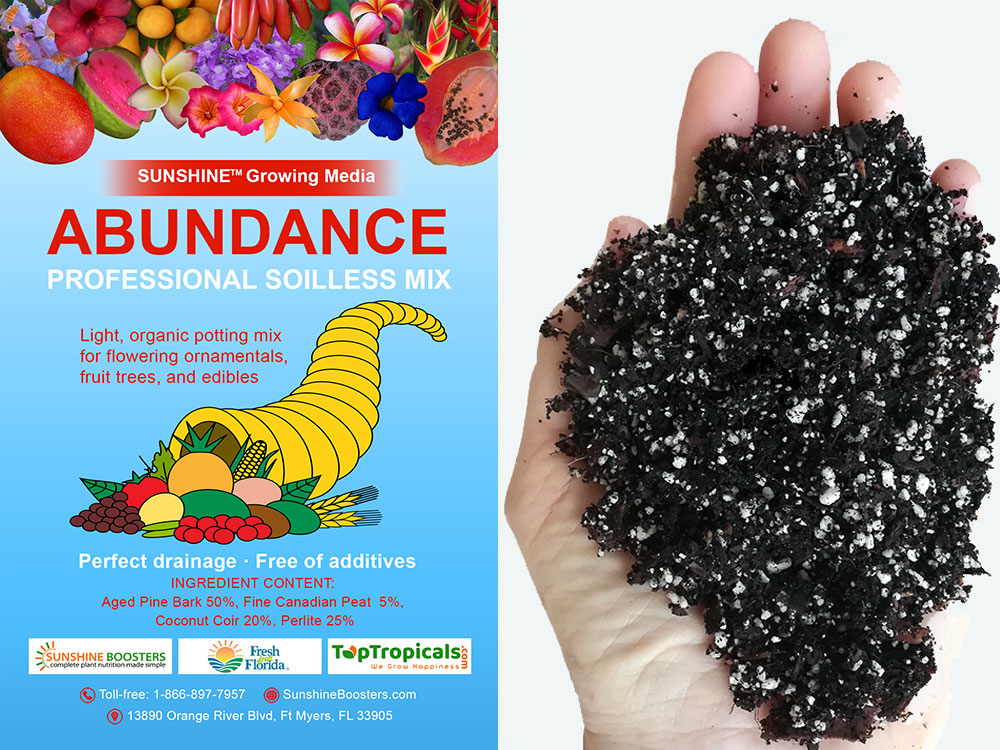
plants that we designed ourselves. This custom mix is called -
It meets all the requirements above which makes it a perfect mix. All
our plants are happy with it.
Abundance is a professional quality (nursery-grade) potting mix with great
drainage characteristics, ideal for any tropical plants. It is organically
derived soil-less mix, free of any additives.
Ingredients are:
- fine Canadian peat moss
- coconut coir
- perlite
- aged pine bark (soil conditioner).
See more info on
soil mixes.
We have this mix available for purchase in different packaging sizes - 2, 3, and 7 gal
bags.
Besides proper potting mix, all container plants require regular
fertilizing. We recommend the newest, scientifically balanced fertilizers Sunshine Boosters that are natural, eco-safe, great for all edibles and
organic gardening. They are safe to use with every watering, provide all
necessary elements for plant daily needs, and won't burn the roots.
For your loquat tree, consider Sunshine C-Cibus, it boosts both flowering and fruit production. Loquat
is Winter-Spring bloomer, hopefully you will get some crop soon!
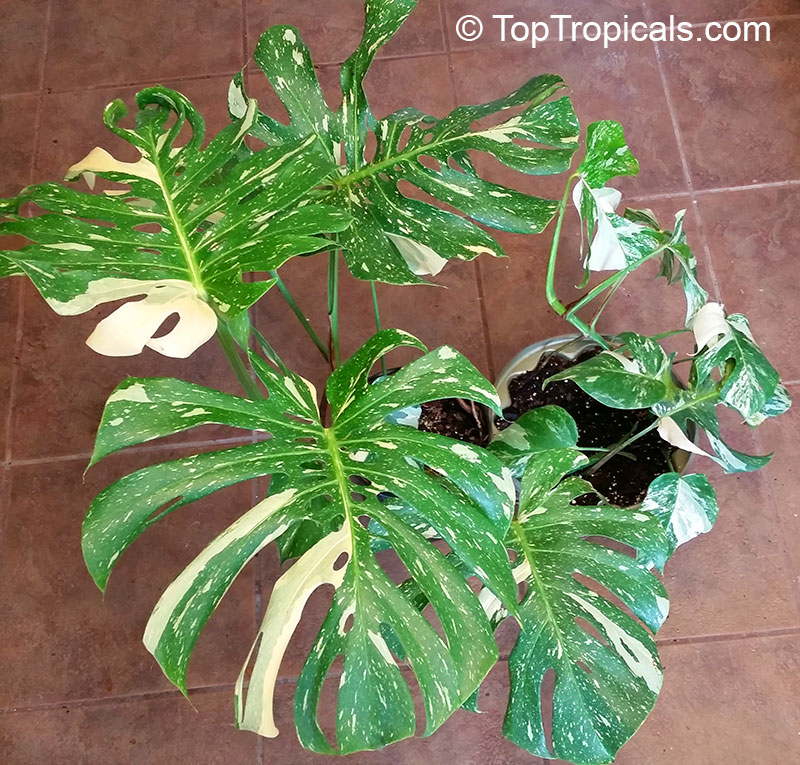
The truth about Sensational Monstera Thai
Constellation
"Nothing's making sense anymore. It's gotten out of control"
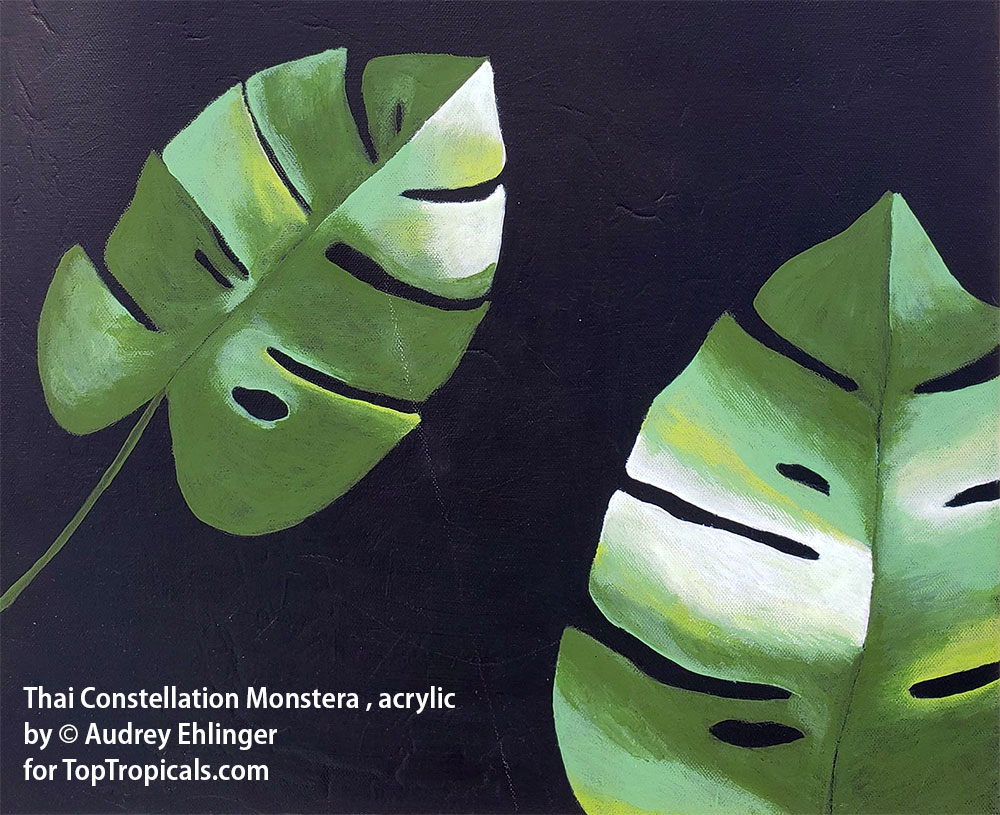
Painting above: "Thai Constellation Monstera deliciosa" with acrylic paint on textured background by Audrey Ehlinger - participant of the
2020 Tropical Plant Art Contest
Variegated Monstera... Now that this Sensational plant deserves even its
own works of art, it is time to admit: this beauty is probably one of the
most surprising phenomena in the history of rare plant industry.
Many plant collectors noticed the craziness around this unusual
variegated cultivar of Monstera deliciosa - Thai Constellatio. Top Tropicals was the first
plant nursery that originally introduced this variety into the US tropical plant
market a few years ago. Since then, popularity of this plant went above and
beyond any expectations. Everybody wants this plant! Yet it is nearly
impossible to propagate, with the only somewhat successful method as Tissue Culture.
Besides, in order to create a viable batch, one must use cells from the stem
only. Considering this plant grows about 2 inches a year (in favorable
conditions), this leaves us with very limited propagation material... Who can
sacrifice their unique mature plant for a knife of a propagator? Let us know if
you have any extra you can share ;)
No wonder very quickly Thai Constellation had become a commodity plant,
or even better - an asset compared by some people to a real estate bubble...
Some collectors sell cuttings for $2,000 each. People pay up to $250 per leaf
of this plant... Crazy? Maybe. But being rare plant collectors, we all know
the feeling! Check out this article:
The good news is - we have a few plants. They are in 4"pots. Small, but well-established. The price is not cheap. It is what it is - this is what it costs us to obtain these plants from Thailand. This is the last batch for a long while, no more available even at this price, since the growers can't find enough propagation material to satisfy the market. Next batch expected from tissue culture is probably 2022. We have over 400 customers on
wish list for this plant.If you really NEED IT, order right now!
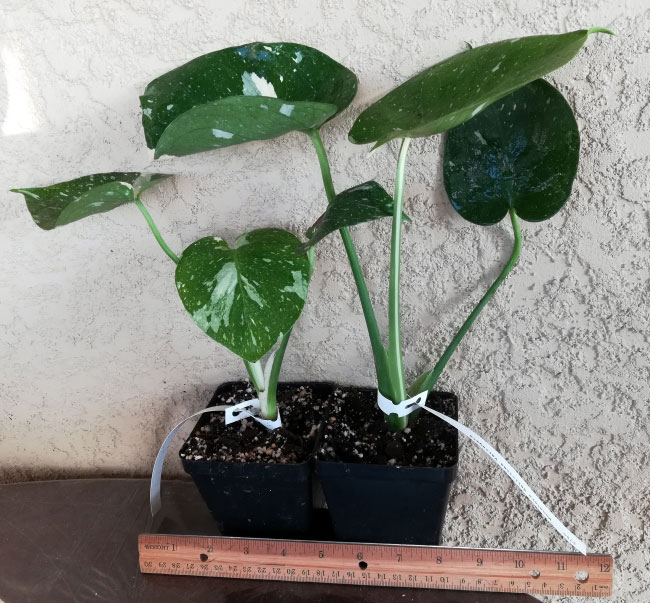
3-years old Monstera Thai Constelation from Top
Tropicals personal collection