Garden Blog - Top Tropicals

Date: 29 Mar 2021

Small flowering tree for community
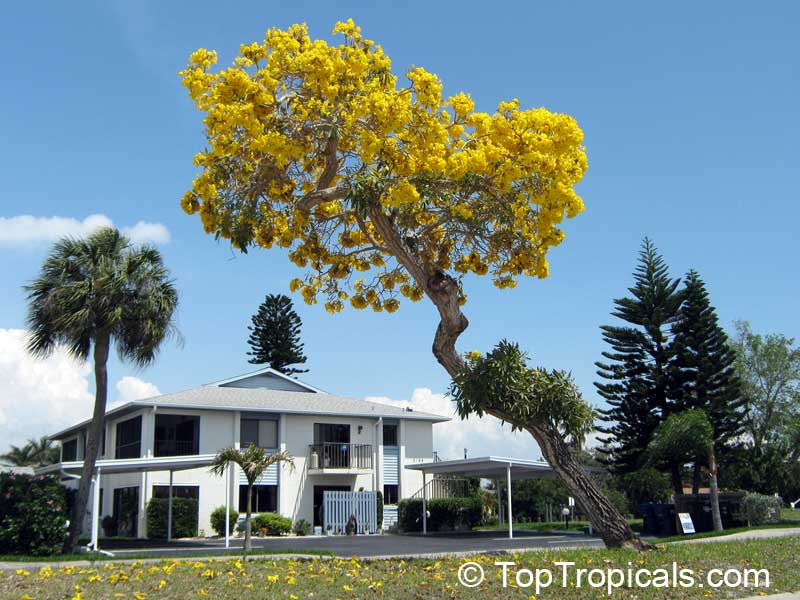
Q: Hi, I live on the east coast near West Palm, but I see you ship your plants. My HOA allows for Yellow Tabebuia species and I'm looking for two or three smaller trees that can fit in my front yard in smaller spaces. Ideally looking for trees that would stay under 20' in height, but preferably even smaller. Can you tell me the average height and spread of the Dwarf Golden Tabebuia or Silver Trumpet trees?

A: The Yellow Tabebuia - Tabebuia caraiba is a very good choice for a small yard. It grows about 20 ft average size, 7-10 ft wide. Sometimes taller, but it is slow growing and it will take many-many years to grow to a bigger size. It is a spectacular tree when in bloom, however, keep in mind that it is not very wind resistant; although it is not difficult to secure it back being a small tree. Another Tabebuia which is even more compact tree, has stronger root system and is more wind resistant:
Tabebuia chrysotricha - Dwarf Golden Tabebuia
Also some other interesting choices:
Radermachera Kunming - Dwarf Tree Jasmine
Senna polyphylla - Bahamas Cassia, Desert Cassia
Cordia sebestena - Scarlet Geiger tree

See full list of compact small trees

Tabebuia chrysotricha - Dwarf Golden Tabebuia
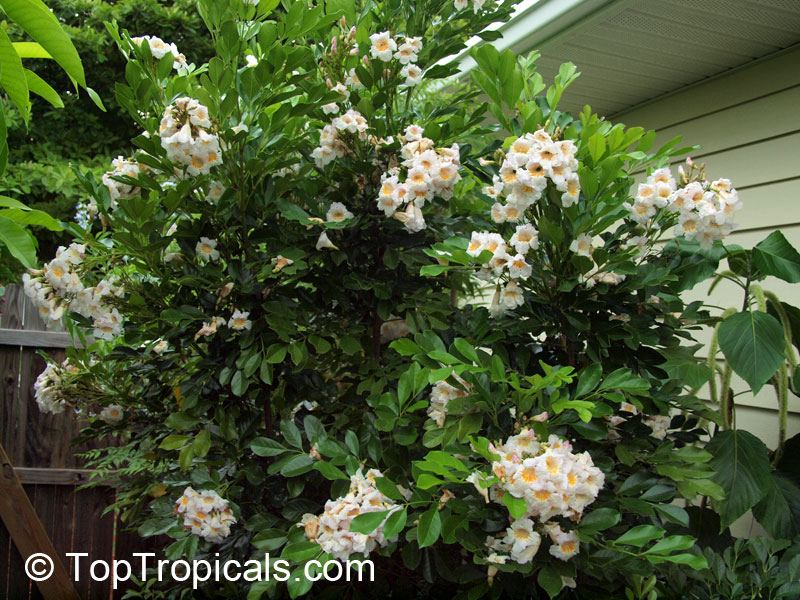
Radermachera Kunming - Dwarf Tree Jasmine
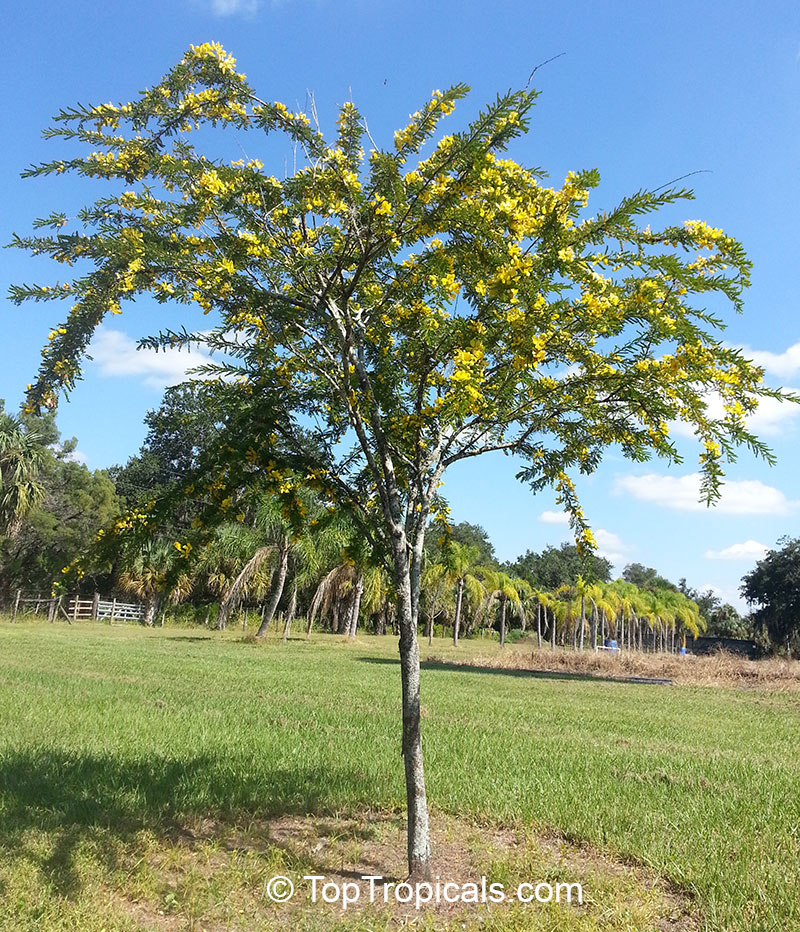
Senna polyphylla - Bahamas Cassia, Desert Cassia
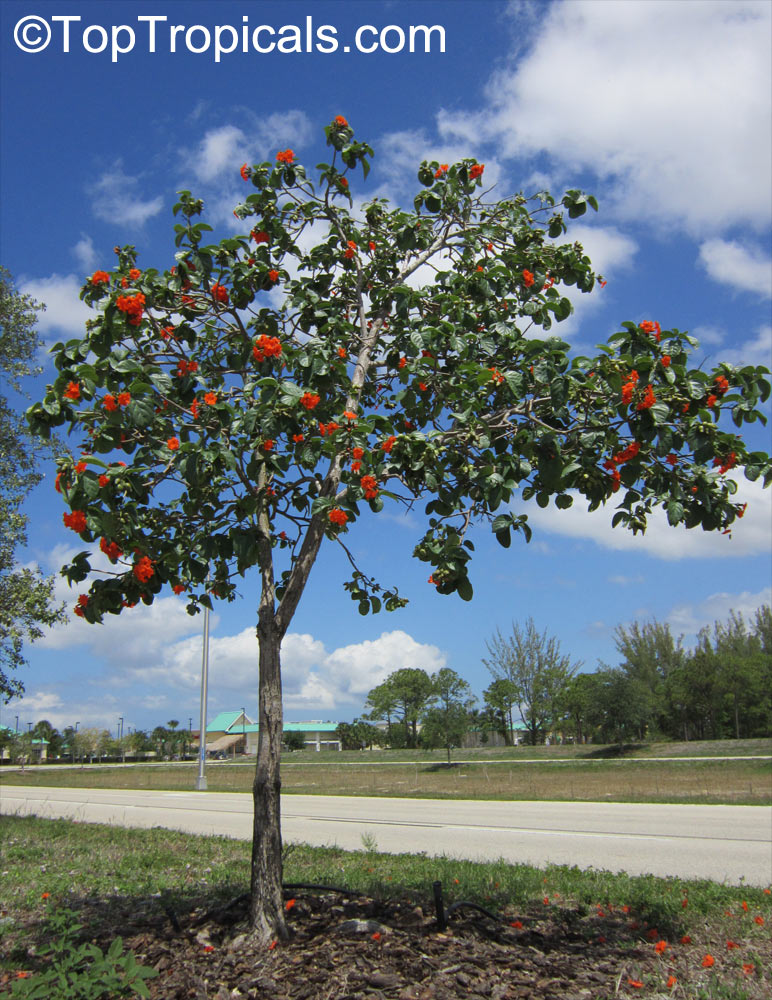
Cordia sebestena - Scarlet Geiger tree

Date: 8 Feb 2021

I love growing for the planet!

A word from a happy gardener

"...Wow is all I can say, you all sent the most beautiful plants, I never knew the Hawaiian Bell could have so many blooms. It arrived in Excellent shape and I am so very thrilled to have this beautiful plant again. I am keeping inside for a few days until a front goes thru, then it is going to be back in mid 70s.
I give aged worm castings to my plants and recently discovered the plant food that the plant can uptake right away... And lastly, I discovered a potting soil... Some of my plants went wild when I planted them in it. Everything in it is tailored to not burn your plants. So nothing but the very best for Top Tropical plants. Thank you all so much for this wonderful plant, I will treasure and take good care of it. I have over 500 plants in pots, because of gophers and nematodes. I love nature so do not want to kill the gophers because the owls we have here depend on them and poisoning is a horrible death. Much love, happiness and gratitude.
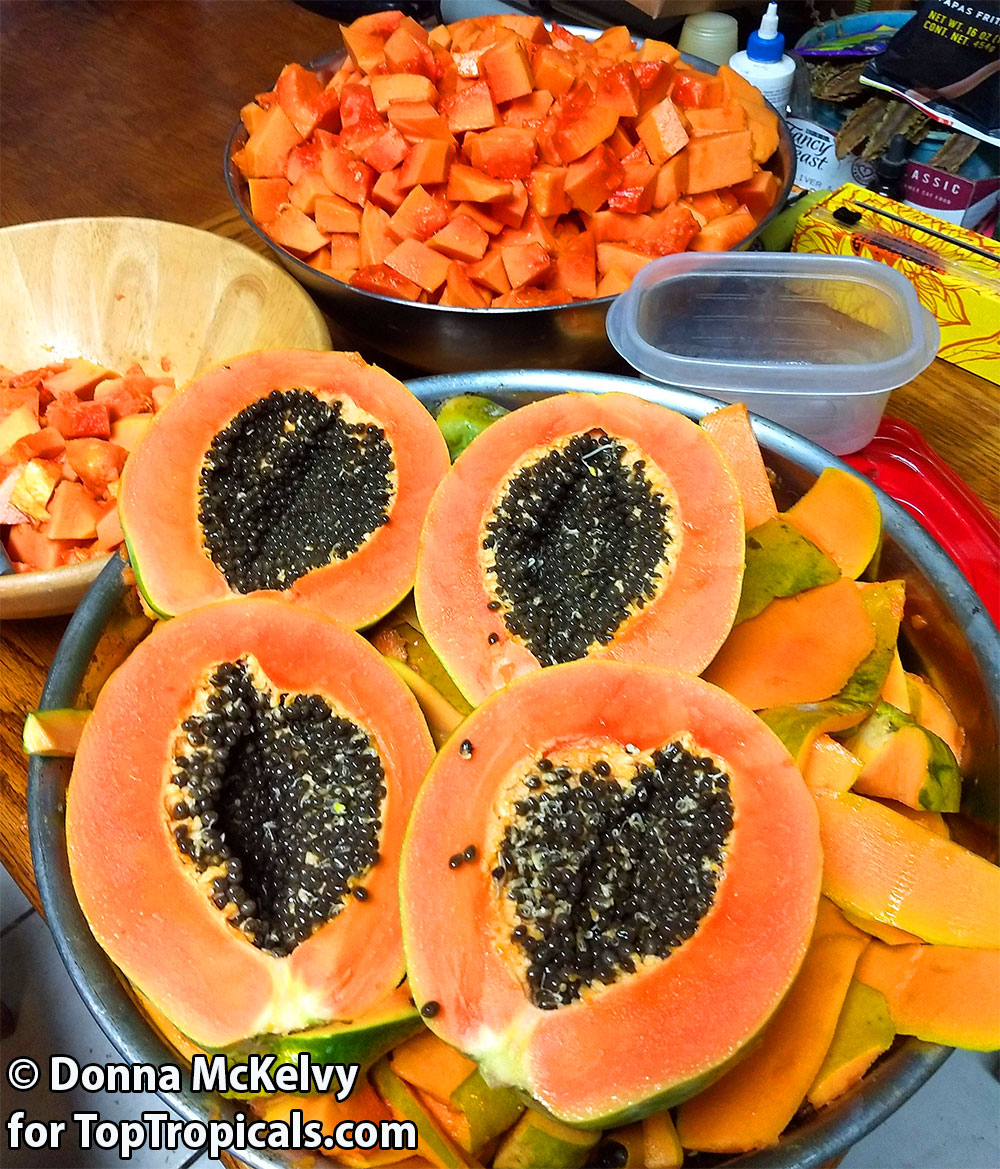
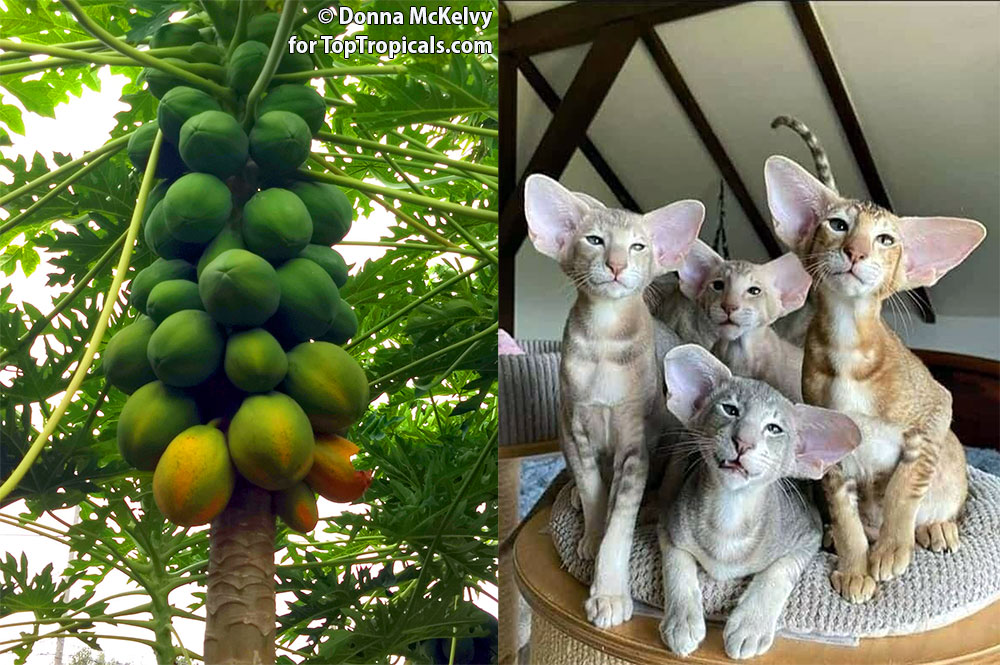
You can use pics - I love growing for the planet. I so love cats too, I have 5 most of them Siamese. I found this pic of cats online, wow how did they breed for a cat to have such big ears?
Much love and happiness, Donna..."

Date: 15 Dec 2020

Healthy Plants: Q&A from Mr Booster

What is an ideal potting mix?

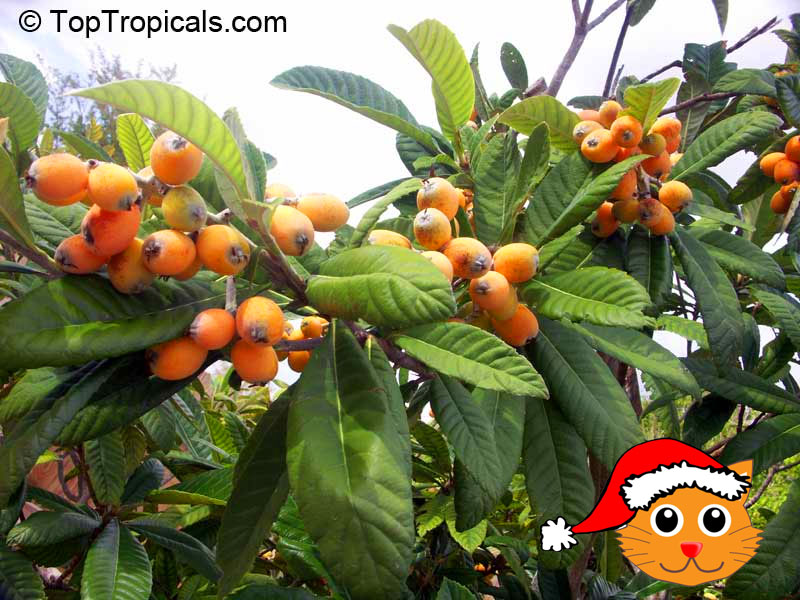
Q: A few years ago, I purchased a Barbie Loquat from you, and I'm pleased to say it's been growing very well. I now have several loquat seedlings. I have read that a well-draining medium should be used, and I have found that the various formulations provided on the web for such medium seem vaguely reminiscent of the recipe provided in your transplanting instructions. Therefore, I would like to retrieve your recipe, unless you could recommend an even better one?

A: The main requirements for a good potting mix are:
- perfect drainage, allowing air circulation that is so necessary for healthy roots; oxygen circulation helps to avoid root rot
- water retention: to keep nutrients in soil
- low pH (soil acidity) which is important for most tropical plants
- adequate amount of organic matter in the mix, in combination with proper fertilizer program

In our nursery we experimented with many different potting mixes for the past couple decades. We ended up with an ultimate mix for tropical container plants that we designed ourselves. This custom mix is called -

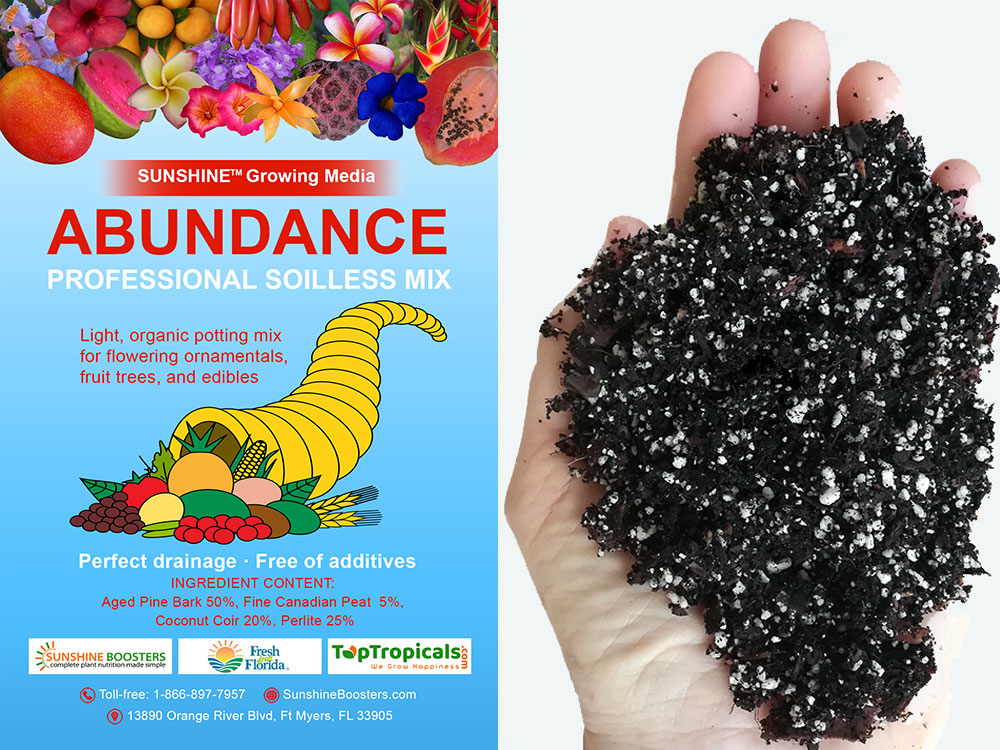
Abundance - TopTropicals professional soilless potting mix

It meets all the requirements above which makes it a perfect mix. All our plants are happy with it. Abundance is a professional quality (nursery-grade) potting mix with great drainage characteristics, ideal for any tropical plants. It is organically derived soil-less mix, free of any additives.
Ingredients are:
- fine Canadian peat moss
- coconut coir
- perlite
- aged pine bark (soil conditioner).
See more info on soil mixes.
We have this mix available for purchase in different packaging sizes - 2, 3, and 7 gal bags.

Besides proper potting mix, all container plants require regular fertilizing. We recommend the newest, scientifically balanced fertilizers Sunshine Boosters that are natural, eco-safe, great for all edibles and organic gardening. They are safe to use with every watering, provide all necessary elements for plant daily needs, and won't burn the roots.
For your loquat tree, consider Sunshine C-Cibus, it boosts both flowering and fruit production. Loquat is Winter-Spring bloomer, hopefully you will get some crop soon!

See more information about potting mix science

Date: 6 Nov 2020

The truth about Sensational Monstera Thai Constellation

"Nothing's making sense anymore. It's gotten out of control"

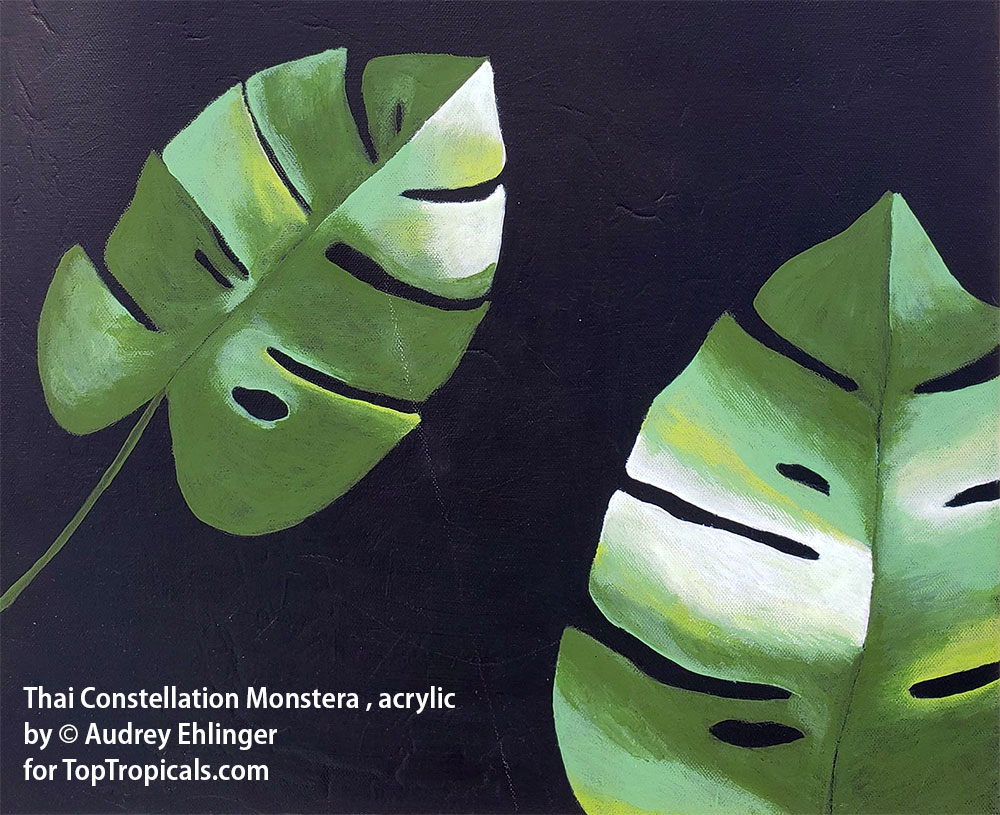
Painting above: "Thai Constellation Monstera deliciosa" with acrylic paint on textured background by Audrey Ehlinger - participant of the 2020 Tropical Plant Art Contest

Variegated Monstera... Now that this Sensational plant deserves even its own works of art, it is time to admit: this beauty is probably one of the most surprising phenomena in the history of rare plant industry.

Many plant collectors noticed the craziness around this unusual variegated cultivar of Monstera deliciosa - Thai Constellatio. Top Tropicals was the first plant nursery that originally introduced this variety into the US tropical plant market a few years ago. Since then, popularity of this plant went above and beyond any expectations. Everybody wants this plant! Yet it is nearly impossible to propagate, with the only somewhat successful method as Tissue Culture. Besides, in order to create a viable batch, one must use cells from the stem only. Considering this plant grows about 2 inches a year (in favorable conditions), this leaves us with very limited propagation material... Who can sacrifice their unique mature plant for a knife of a propagator? Let us know if you have any extra you can share ;)

No wonder very quickly Thai Constellation had become a commodity plant, or even better - an asset compared by some people to a real estate bubble... Some collectors sell cuttings for $2,000 each. People pay up to $250 per leaf of this plant... Crazy? Maybe. But being rare plant collectors, we all know the feeling! Check out this article:

It's Better Than The Stock Market: A Massive Bubble Is Forming In The Rare Plant Market...

Thai Constellation available for sale:

The good news is - we have a few plants. They are in 4"pots. Small, but well-established. The price is not cheap. It is what it is - this is what it costs us to obtain these plants from Thailand. This is the last batch for a long while, no more available even at this price, since the growers can't find enough propagation material to satisfy the market. Next batch expected from tissue culture is probably 2022. We have over 400 customers on wish list for this plant.If you really NEED IT, order right now!

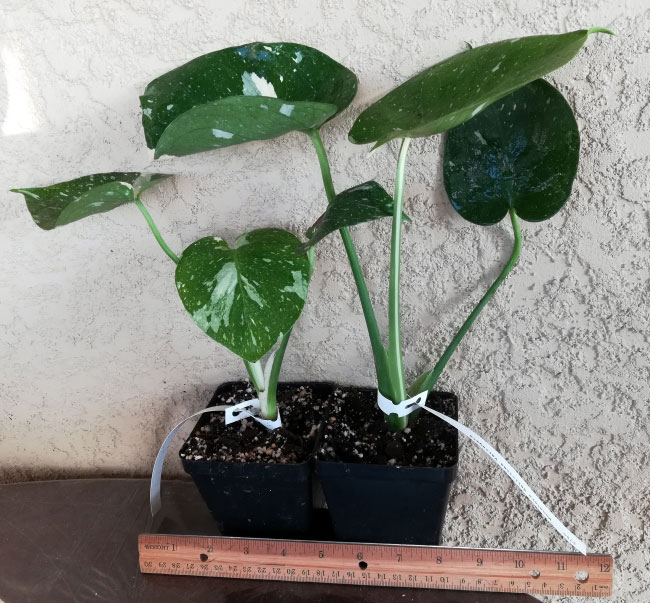
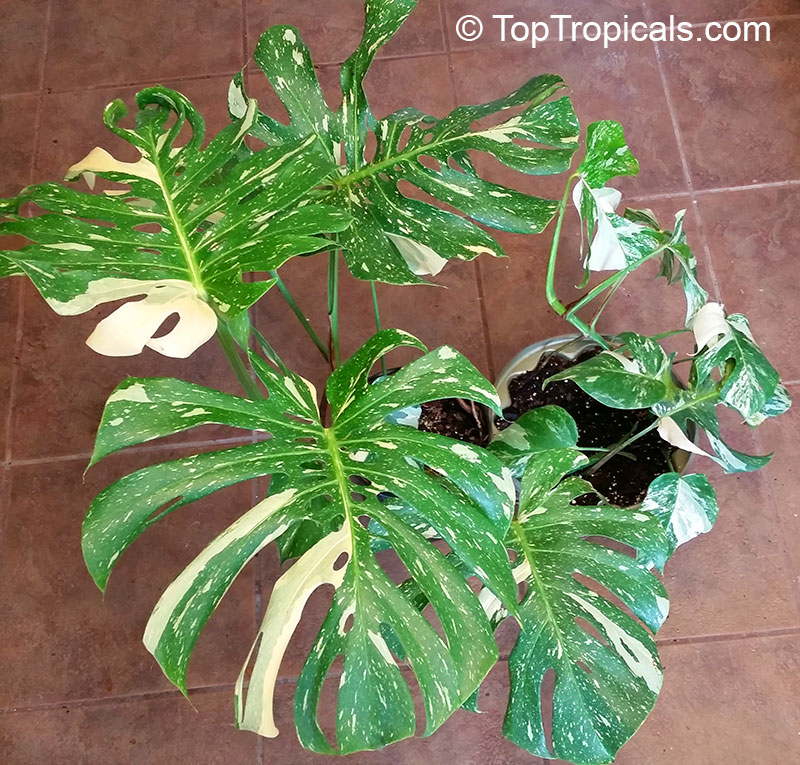
3-years old Monstera Thai Constelation from Top Tropicals personal collection

Date: 10 Oct 2020

Healthy Plants: Q&A from Mr Booster

How to keep bugs away naturally?

Q: I started moving my tropical plant collection indoors as it's getting colder... And all of a sudden, I noticed bugs on leaves! I know for sure all my plants were bug-free when I kept the pots outside in my lanai. What happened? And how can I keep them clean and healthy without using any harsh chemicals? I have many edibles and herbs that I use in my cooking and prefer to stay away from insecticides. Any suggestions?

A: It is very common when healthy looking plants, once moved indoors for the winter, get insect infestations. The main reason is change of environment that puts a plant into stress and makes it susceptible to parasites and diseases. Just think about what a plant is missing, a whole combination of necessary conditions that provided a good life:
- Bring light -> light level reduced, so beneficial UV spectrum is gone
- Air circulation -> less wind = more bugs thriving
- Warm temperature -> from upper 80's in summer to 70's in your AC room
- Air humidity -> although humid air is believed to be causing some issues (for example fungus), however, reducing humidity overall puts a plant into stress and makes it more vulnerable.

Many gardener prefer to avoid chemicals, especially when it comes to treating edible plants and indoor collections. The solution to your problems is - Organic Solution!

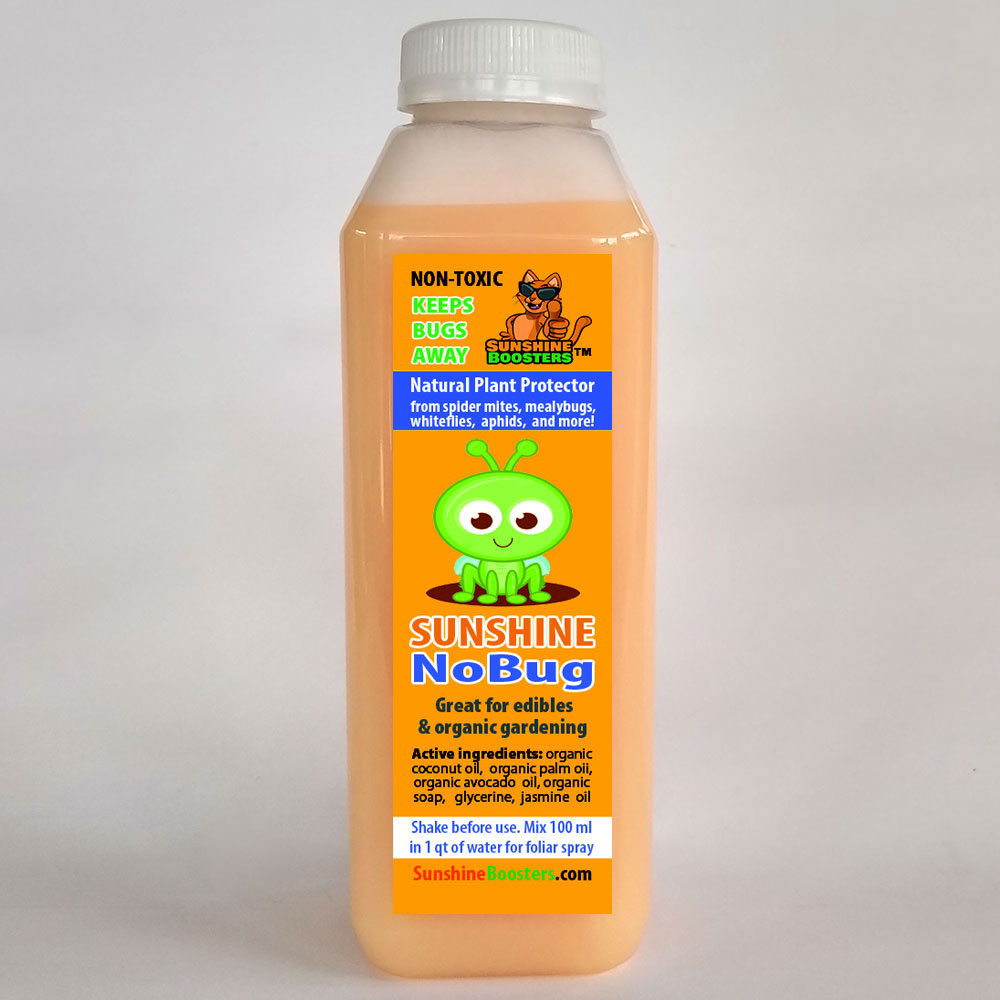
SUNSHINE NoBug - Natural Plant Protector.
Shampoo for Plants - for both indoors and garden

SUNSHINE NoBug - is a natural solution to keep your plants healthy and bug-free without harsh chemicals. It is great for organic gardening and edibles, eco-safe and non-toxic for humans and pets. It kills, repels and prevents: spider-mites, mealybugs, whiteflies, aphids and many more. No wait time required - spray and play! And it smells like jasmine, forget stinky insecticides!
How does it work? Just look at these ingredients: Kosher Glycerine, Organic Coconut Oil, Organic Palm Oil, Oat Protein, Organic Soap, Horticultural Oil, Jasmine Oil, Water. Yum! But bugs hate it - they suffocate in it! This is why your plants will have NO BUGS with NoBug, that's it!

Directions are simple:

- Mix 100 ml (3-4 oz) with 1 qt (32 oz) of water, or 500 ml (16 oz) in 1 gal of water - for larger applications
- Spray foliage to drip point, including underneath leaves.
- Repeat the treatment in 7 days.
- As a preventive care, spray leaves once a month to keep insects away.
- You may use a paper towel saturated with this solution to wipe the leaves and remove residue from insects.
- Store at room temperature.

This poor Pepper plant was tossed into garbage can by a neighbor... it looked hopeless, infested with mealybugs. We saved it with NoBug ! In 2 days it perked up, and after 4 weeks its healthy and fruiting!