Garden Blog - Top Tropicals

Date: 25 Jul 2018

Looking for the rarest plant? This is the one!
TopTropicals

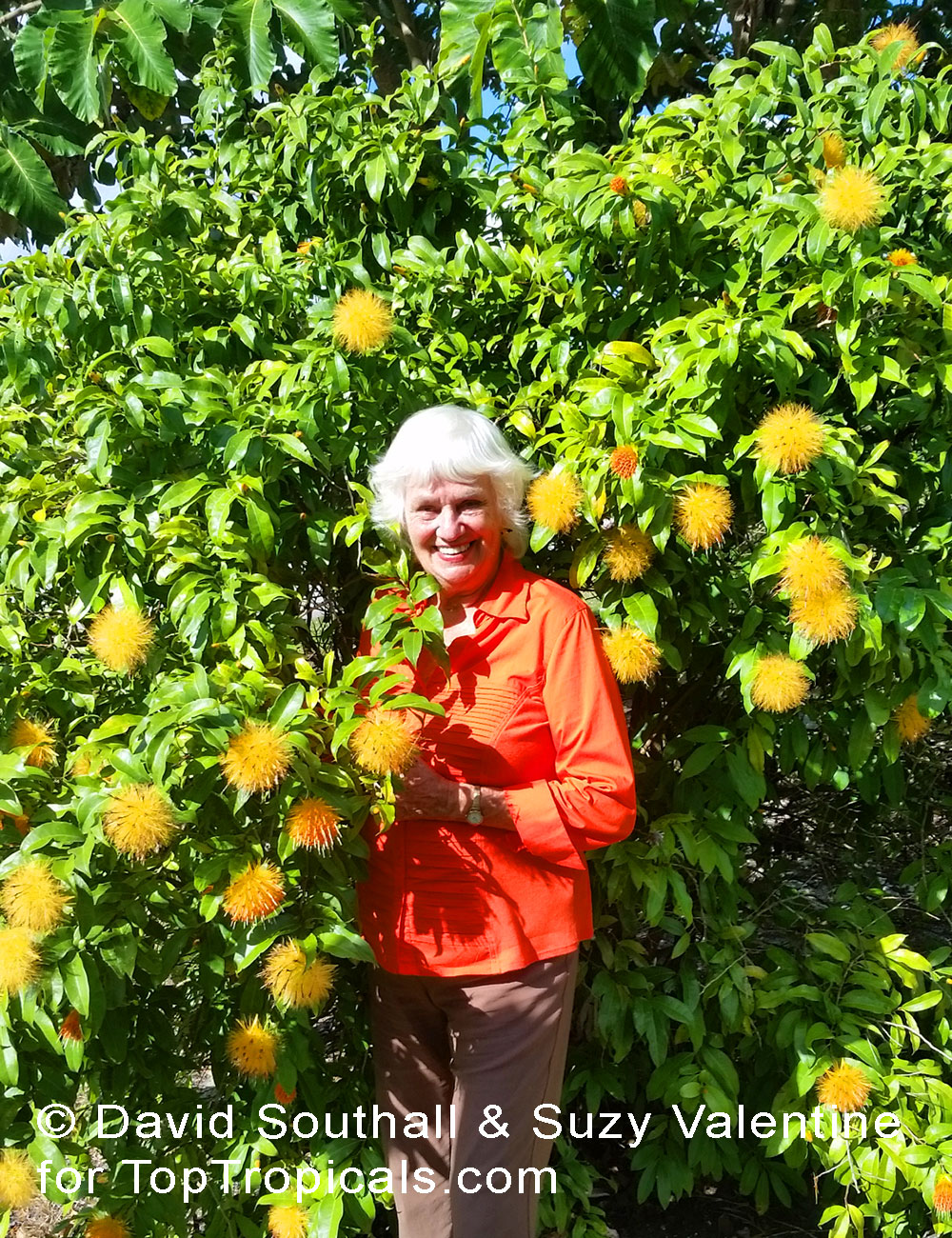
Stifftia chrysantha - Pompom, Rabo-de-Cutia

Looking for the rarest plant? This is the one!
Stifftia chrysantha is an exotic, rare flowering small tree with spectacular flowers, endemic to the vast tropical savanna ecoregion of Brazil called Cerrado. It grows into a bushy, attractive tree between 8 and 15 ft tall and starts flowering within 1.5 - 2.5 years from seed. It is a very rewarding plant that blooms 9 months out of the year, starting in Winter with great intensity during July-September, with each flower staying on the plant for several weeks. Seeds ripen from September through November.
The tree belongs to Aster family (Compositae) and has nothing to do with Powderpuffs which are from Bean (Fabaceae) family. The flower has 30 to 40 green, imbricated scales with short hairs, and actinomorphic corollas are orange below and darker above. After flowering, the inflorescence blows apart, which would scatter seeds. The dried center remaining is very attractive, like a small dried flower, and lasts for many months.
Stifftia can be grown in full sun to partial shade and is relatively cold tolerant, can take short cold spells.
The plant doesn't like wet feet and heavy/soggy soils; requires very well drained, acidic soil. We strongly recommend to use our professional soilless mix. Let soil slightly dry between waterings. It can be grown in full sun to partial shade and is relatively cold tolerant, can take short cold spells. If grown in a pot, try to keep the container shaded because roots don't like to be overheated. The plant needs monthly applications of slow release fertilizer as well as extra iron - use micro-nutrients to keep leaves green and healthy.
See more pictures of this beauty.

Check out this plant...

Date: 21 Nov 2025

How to keep your house plants beautiful all year by feeding them right

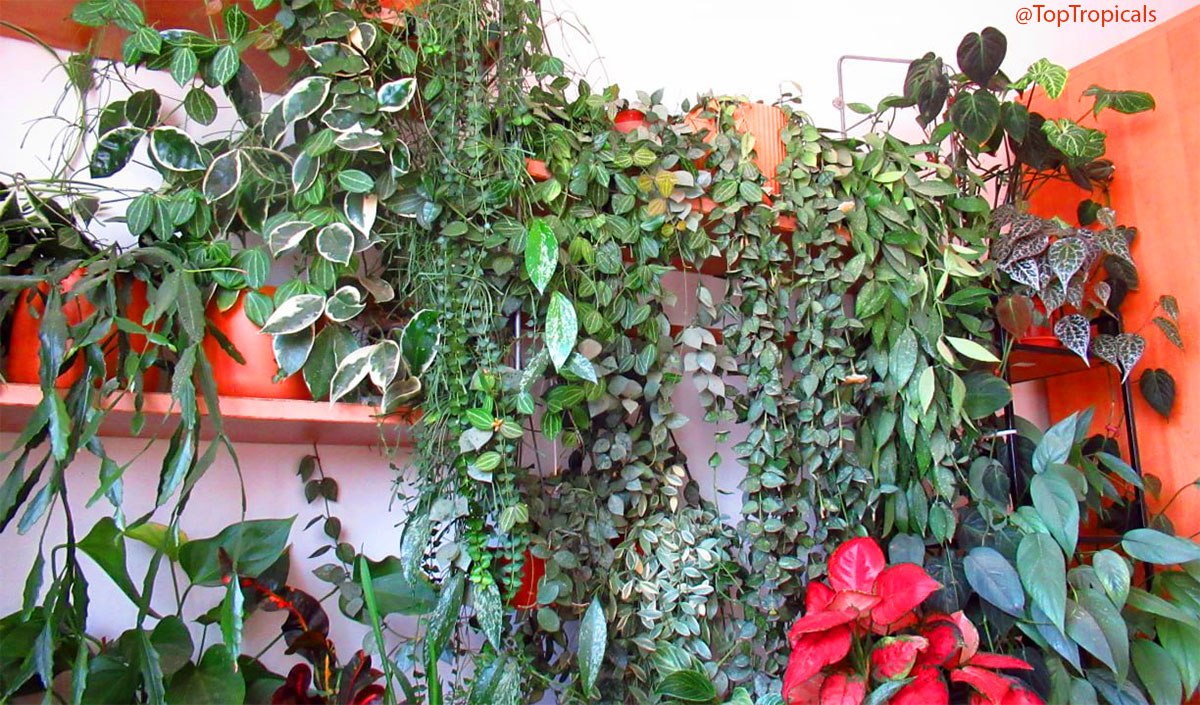
Indoor garden

Indoor garden

🍀 How to keep your house plants beautiful all year by feeding them right

  • 🌱 Healthy house plants are not just about light and water. They need food, just like we do. A good fertilizer routine keeps them green, strong, and blooming through every season. Here is a simple guide to feeding indoor plants the right way.
  • 🌱 General rules for fertilizing house plants


  • ▪️Feed lightly but regularly. Indoor plants grow in limited soil, so nutrients run out faster. Small, frequent feedings work better than one heavy dose.
  • ▪️Never fertilize dry soil. Water first, then feed.
  • ▪️Reduce feeding in winter when growth slows.
  • ▪️Watch your leaves. Pale, yellow, or slow-growing plants are asking for nutrients.
  • ▪️Use a complete formula. House plants need both macro-elements (N-P-K) and micro-elements, not just nitrogen.


🌱 What fertilizer to use


Sunshine Boosters - the everyday diet.
Sunshine Boosters are simple, balanced liquid fertilizers you mix with water. They give your plants everything they need for steady, healthy growth. They contain the right blend of nitrogen, phosphorus, potassium, and trace minerals. They do not contain harsh chemicals, so they are safe for homes with pets and kids. Regular use keeps plants growing faster, stronger, and more resilient to stress.

Sunshine Superfood - the vitamin supplement.
If a plant turns yellow or looks weak, it often needs micronutrients. These are the plant version of vitamins, including iron, zinc, copper, and manganese. Sunshine Superfood delivers these quickly and in the right proportions. Mix it with water and apply when you notice yellowing or slow growth. It corrects deficiencies fast and keeps leaves lush and green.

Green Magic - the long-term slow feeder.
Green Magic is a controlled-release fertilizer that works for six months. It uses poly-on coating technology to release nutrients slowly, without burning roots. It is perfect for repotting or for plant owners who want a set-it-and-forget-it option. Mix one teaspoon per gallon of soil during repotting or every six months. Excellent for container fruit trees and ornamentals that need steady feeding.

🌱 The simple routine

  • ▪️For regular watering: use Sunshine Boosters.
  • ▪️Once a month: add Sunshine Superfood to prevent yellowing.
  • ▪️Every six months: mix Green Magic into the soil for long-term support.

With the right diet, your house plants stay green, strong, and beautiful year-round. Feed them well, and they reward you every day.

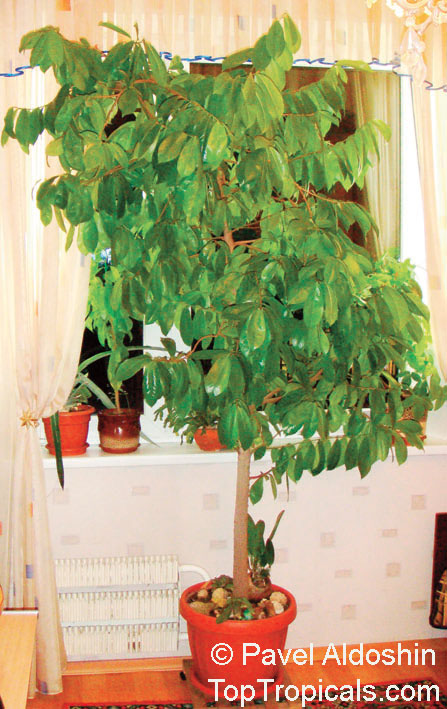
📸 In the photo: Indoor garden of Marina Rybka, Israel, the Editor of TopTropicals.

🛒 Get your plants some food

📚 Learn more:
📱 What are Sunshine Boosters

#Fertilizers #How_to
🟢 Join 👉 TopTropicals

Date: 4 Jan 2026

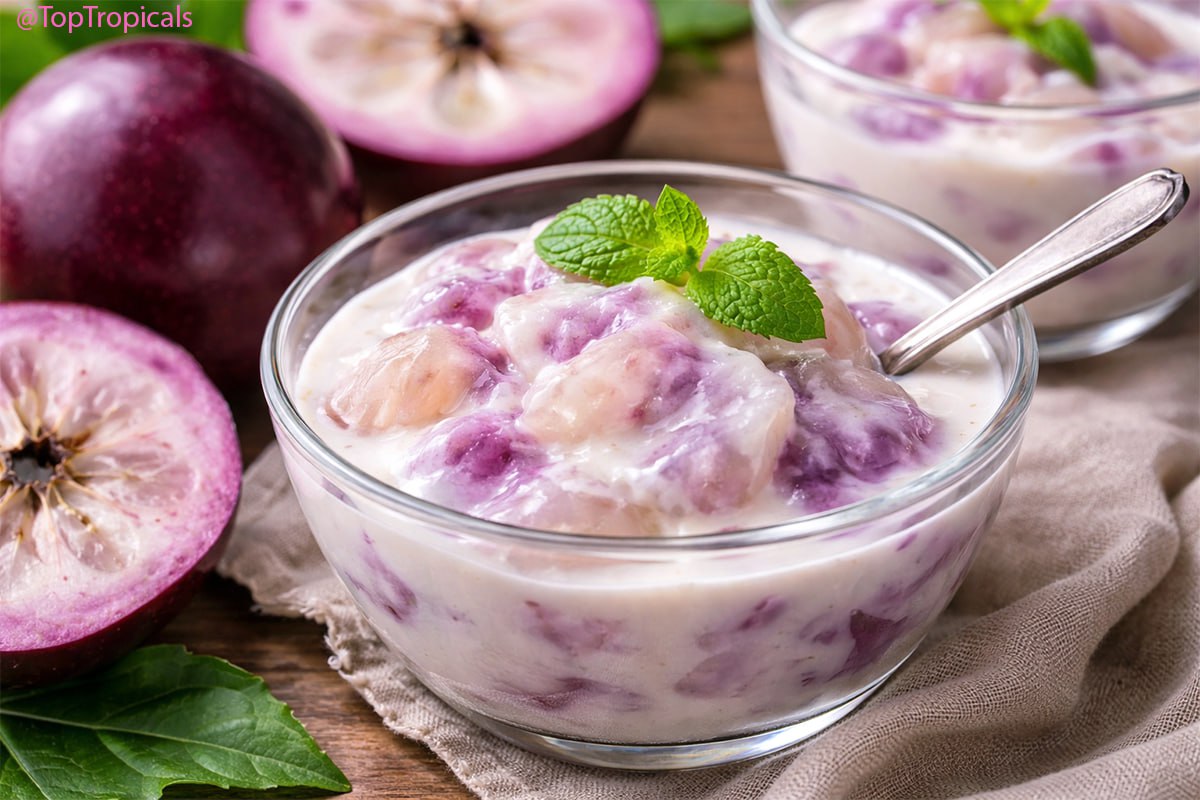
Caimito creamy scoop: quick-n-fun exotic recipes

Caimito creamy scoop

Caimito creamy scoop

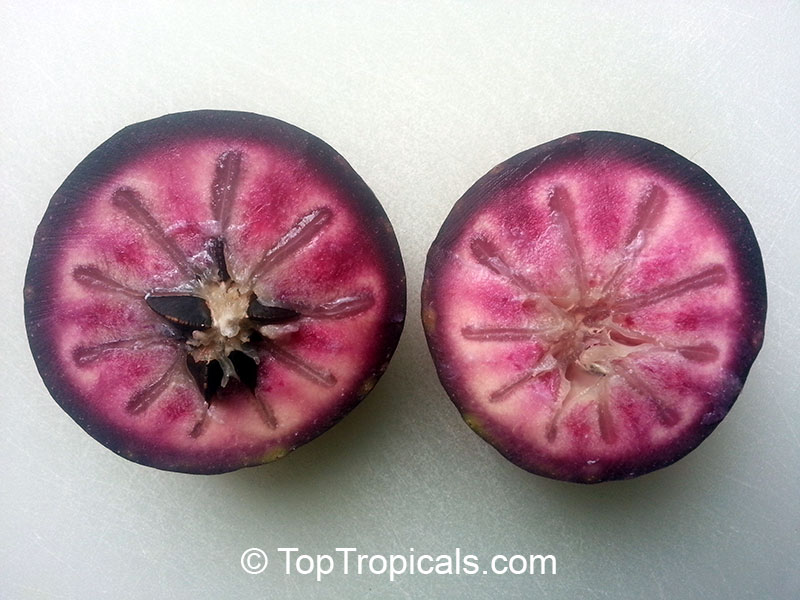
Caimito Star Apple (Chrysophyllum cainito), fruit

Caimito Star Apple (Chrysophyllum cainito), fruit

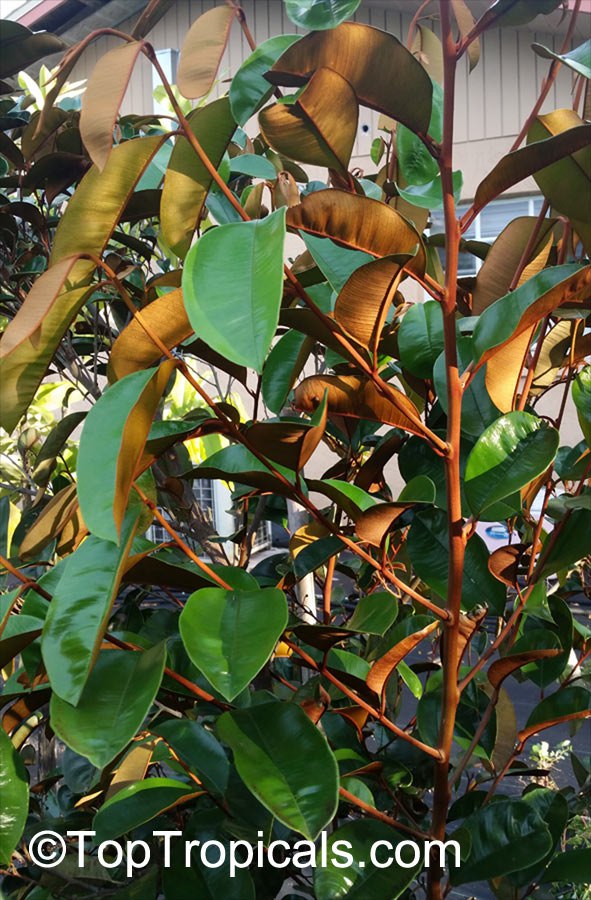
Caimito Star Apple (Chrysophyllum cainito), leaves with rusty underneath

Caimito Star Apple (Chrysophyllum cainito), leaves with rusty underneath

🍴 Caimito creamy scoop: quick-n-fun exotic recipes

  • 🔴Chill star apple halves, then scoop out the jelly-soft pulp.
  • 🔴Stir gently with cold sweet cream for a tropical dessert cup.


⭐️ About the fruit:


Caimito, also known as star apple, is a classic tropical fruit tree native to the West Indies and widely grown throughout the Caribbean, Central America, and other warm regions. It thrives in USDA zones 10-11 and can handle brief dips into the low 30s. The fruit has a mild, grape-like flavor and a soft, jelly texture, and is a good source of vitamin C and minerals. Traditionally eaten fresh, caimito is also used in desserts, drinks, and preserves.

🌱 In the garden:


Beyond its fruit, caimito is highly ornamental. Its large, glossy green leaves have a striking coppery-rust colored underside, giving the tree a dramatic two-tone effect when stirred by wind. It prefers full sun and regular watering and grows well in the ground or large containers. In cooler climates, container-grown trees can be moved indoors for winter protection, making caimito both a productive and visually stunning addition to the garden.

🛒 Plant exotic Caimito Star Apple fruit tree

📚 Learn more:

Plant Facts

Chrysophyllum cainito, Achras caimito
Caimito, Star Apple, Satin Leaf
USDA Zone: 9-11
Large tree taller than 20 ftFull sunRegular waterEdible plantSubtropical plant. Mature plant cold hardy at least to 30s F for a short time
  • Caimito Star Apple (Chrysophyllum cainito) in Plant Encyclopedia
  • Starry fruit and rusty leaves: the tropical tree full of surprises
  • Why is it called Star Apple?

  • #Food_Forest #Recipes

    🟢 Join 👉 TopTropicals

    Date: 22 Oct 2025

    Which dry fertilizer to use - slow release or controlled release?

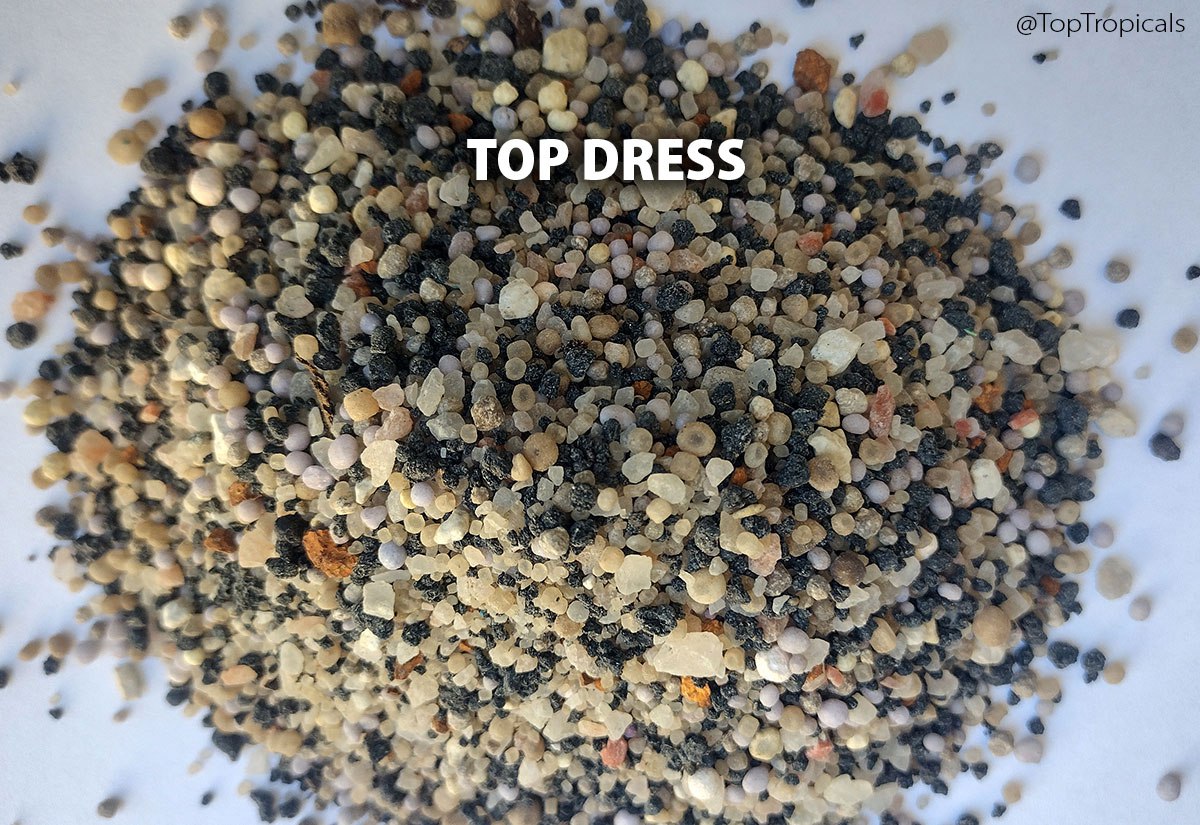
    dry top dress fertilizer

    dry top dress fertilizer

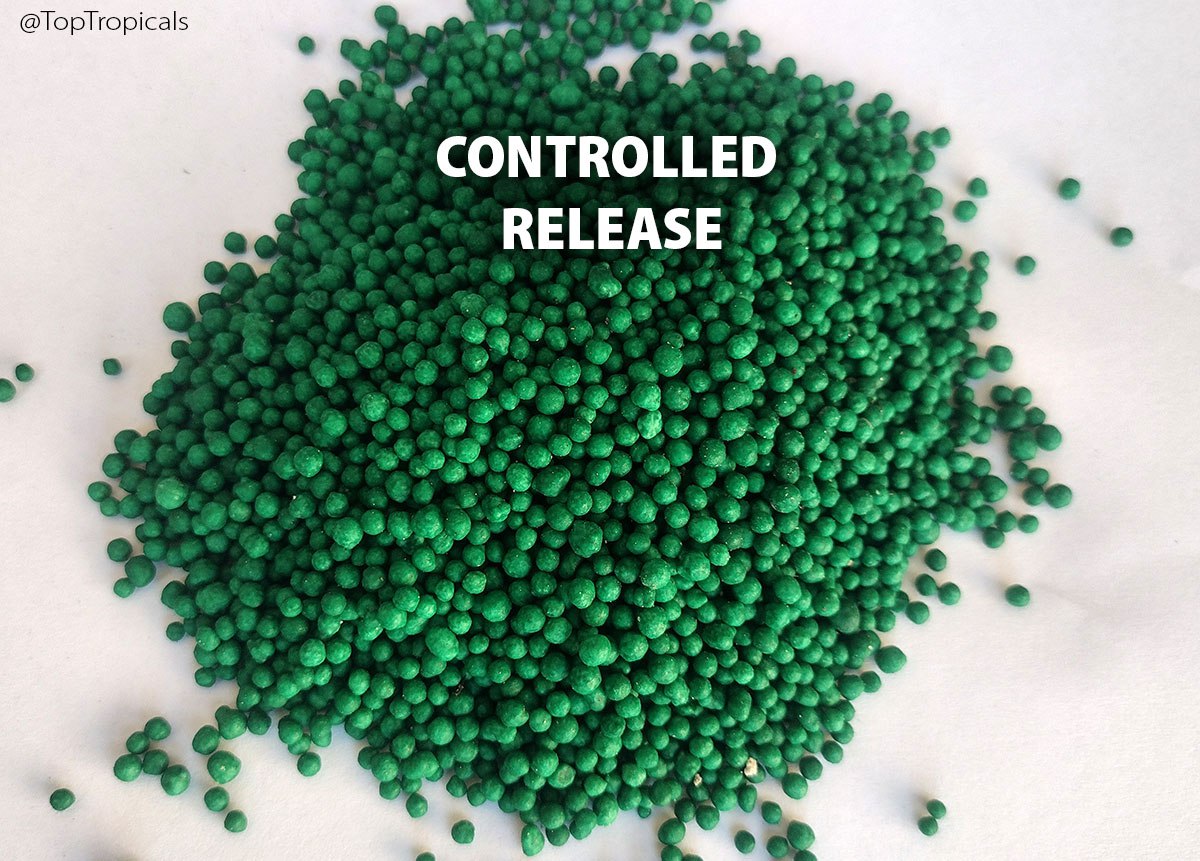
    controlled release fertilizer Green Magic

    controlled release fertilizer Green Magic

    🌳 Which dry fertilizer to use - slow release or controlled release?


    Q: You offer two kinds of dry fertilizers - Slow Release Trop Dress and Controlled Release Green Magic. What is the difference, and which one should I use? I used your water-diluted Sunshine Boosters with every watering, but now that I’ll be away for a few months, I just want to give my garden a long-lasting fertilizer.
    • ✔️ A: Top Dress Slow Release Fertilizer is used for quick greening-up. Although it’s called “slow release,” the nutrients become available fairly fast. It contains soluble nitrogen (N), phosphorus (P), and potassium (K) that dissolve with rain or irrigation, acting within a week or a few weeks depending on temperature and rainfall. It’s great for giving your plants a quick boost of “fast food.”
    • We use Top Dress mainly for in-ground plants. It can be used in pots only during warm weather and active growth, but not in cooler months, as it may burn roots. Since we introduced Green Magic, we mostly use Top Dress only for garden beds and landscapes.
    • ✔️ Green Magic Controlled Release Fertilizer is a true long-term, controlled-release fertilizer. Thanks to its PolyOn Technology coating, it provides steady, consistent feeding for 5-6 months. Unlike regular dry fertilizers that dump all nutrients at once, Green Magic releases them gradually - no burn, no guesswork, just steady nutrition.
    Green Magic ideal for potted fruit trees, ornamentals, and houseplants. One handful keeps your plants fed for half a year. We use it for all container plants when potting up or refreshing soil every six months. It can also be used for in-ground plants if you want the best, most consistent results. Green Magic: try it out! (Sample here)

    🛒 Shop Plant Food & More

    📚 Learn more:


    #Fertilizers #How_to
    🟢 Join 👉 TopTropicals

    Date: 7 Mar 2017

    Taking care of Guanabana (Soursop) after shipping

    Q: Since I have never grown a soursop tree before I need some pro help. My tree was delivered absolutely beautiful, leaves were a pretty green. I potted it and gave it a good drink of water and put it in a shaded area outside. Then the weather here became cool so I brought it in for a few days until the weather warmed, and it lost all the leaves. Is it in shock and will come around eventually? Will I be able to grow this tree indoors during winter?

    A: Soursop - Annona muricata trees are very sensitive to temperature drops. This always causes leaf loss. You seem to be doing everything right. Do not water until soil gets slightly dry; keep it in bright shade. The weather should be good now with high temperatures and humidity rising. No fertilizer until the plant shows active new growth. Be patient with your plant, it should recover soon.

    Soursop is an ultra-tropical tree and doesn't take any freeze. If you live in cooler climate, keep the plant in a pot (the good news is, Annonas in general have compact nature and are perfect for container culture). Bring the tree indoors during cold period, providing bright light.

    Remember that grafted trees start flowering and producing fruit right away, unlike seedlings of Soursop that may take a few years till fruiting.

    We have very interesting article about growing and fruiting Soursop in apartment. Check out Tropical Treasures Magazine #7.